Follow their stories of faith, family, hardship and service through pictures and historical sources, and consider the choices they faced along the way.
What would you like to understand?
Ask about pioneer lives, journeys, and faith. Follow historical sources and related focusChrist studies beneath each answer.
AI-assisted answers are study aids and may contain errors. Unreviewed questions and limited recent context may be sent to external AI providers for research and verification. Please do not submit sensitive personal information.
PIONEER TOPICS
The gathering begins
From Nauvoo to Winter Quarters
The westward story began with families leaving homes they had built, crossing the Mississippi River, and enduring the difficult first season in temporary settlements along the Missouri River.
Leaving Nauvoo, 1846Families crossed the Mississippi and began an uncertain journey west.Winter Quarters, 1846 to 1847Temporary homes became places of preparation, worship, grief, and endurance.
1846–1847
Leaving home, preparing a way
The pioneer story begins before the handcart companies. Families leaving Nauvoo crossed Iowa, endured a winter beside the Missouri and prepared for the mountains. Their road passed through Indigenous homelands, not an empty continent.
Open a picture to explore its account, read the sources, or see it at full size. As you follow these journeys, listen to the people who left a record of what they experienced.
February 1846 · Open picture study
Crossing the Mississippi
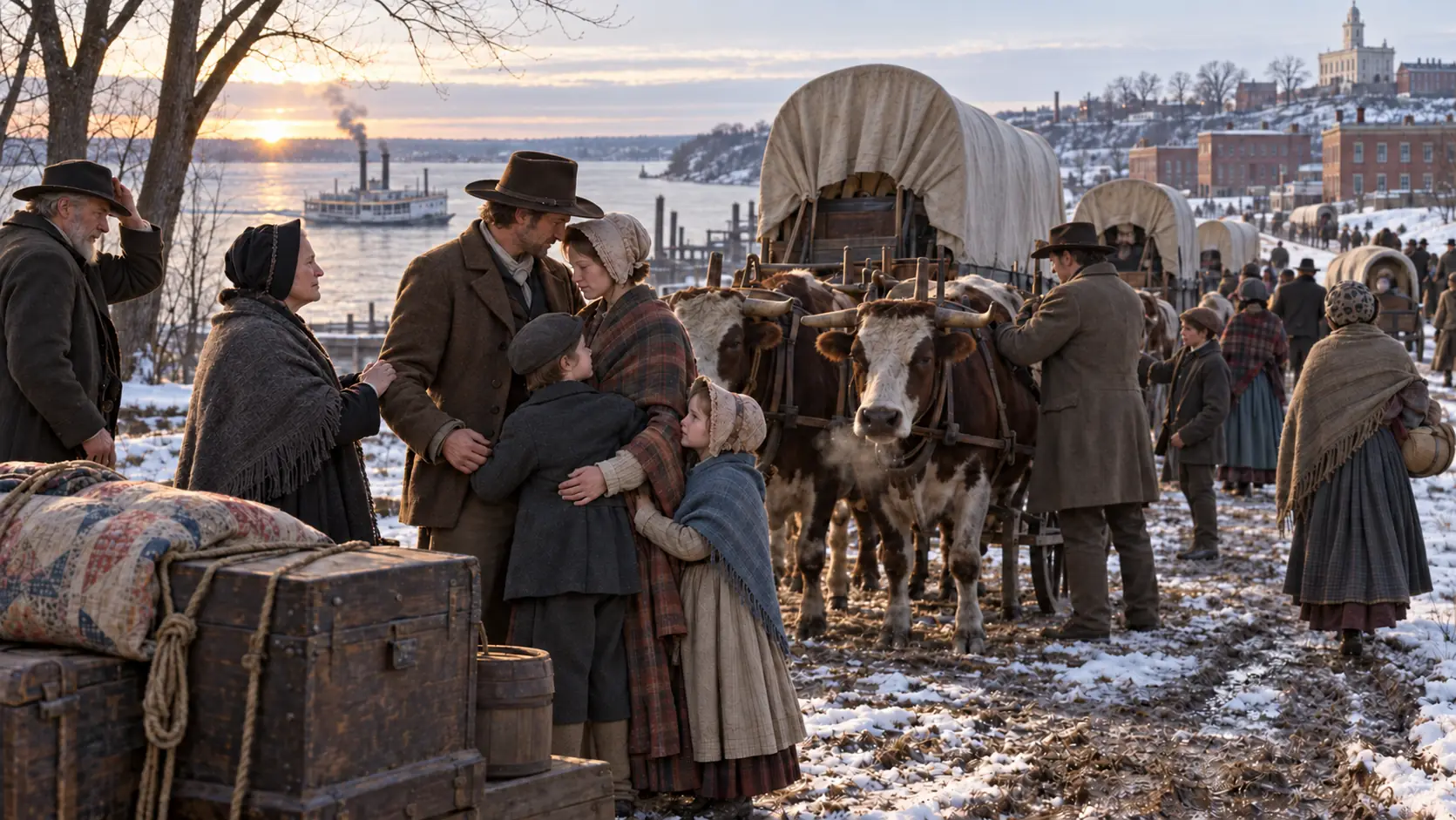
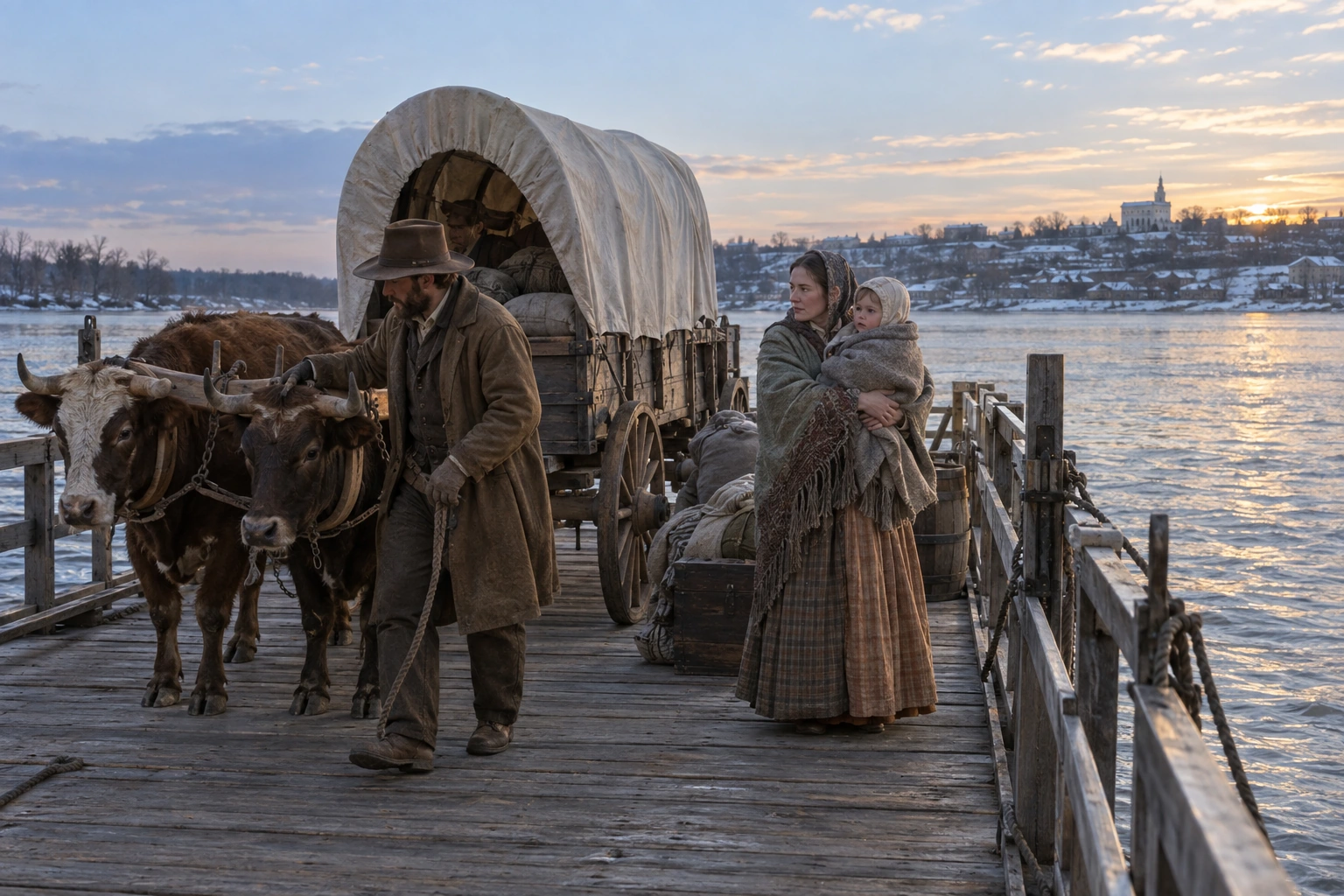
The departure from Nauvoo began with wagons ferried across the Mississippi on February 4, 1846. Families gathered at Sugar Creek in Iowa, carrying provisions and belongings into an uncertain future. When the camp moved west on March 1, the journey was only beginning: the Missouri River, not the Salt Lake Valley, would become that year’s stopping place.
Leaving home is more than a line on a map. Consider what a family could carry, what it had to leave, and the help it would need from its neighbors.
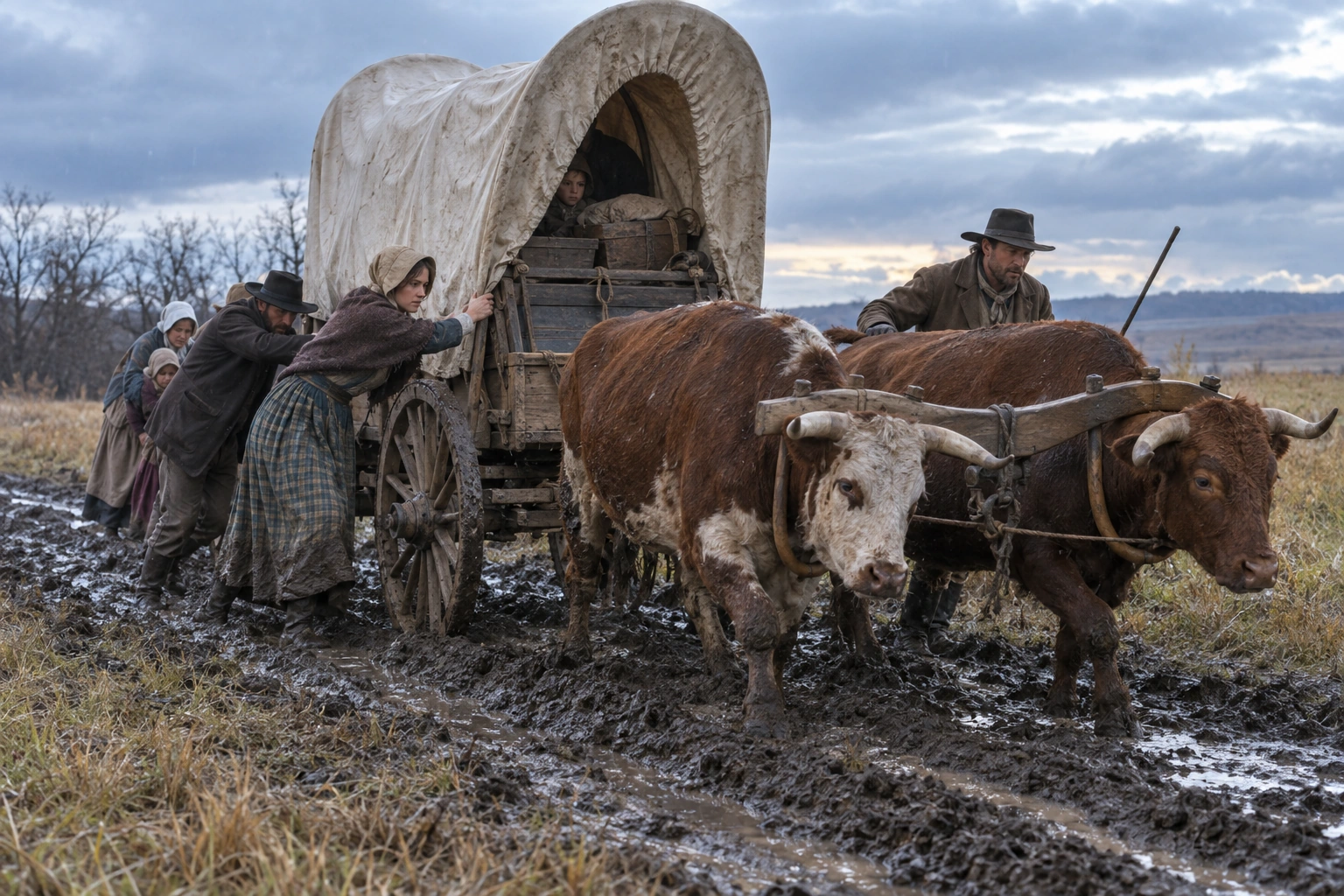
Rain, flooded streams and deep mud slowed the companies across Iowa. A wagon could carry a household’s necessities and still become a burden in a difficult crossing. Reaching the Missouri River took months; the hoped-for journey west unfolded through delays, illness and repeated work.
Faith did not make the mud disappear. This scene invites us to notice patient effort and the ordinary hands that keep another family moving.
Garden Grove and Mount Pisgah · 1846 · Open picture study
Planting for people still to come
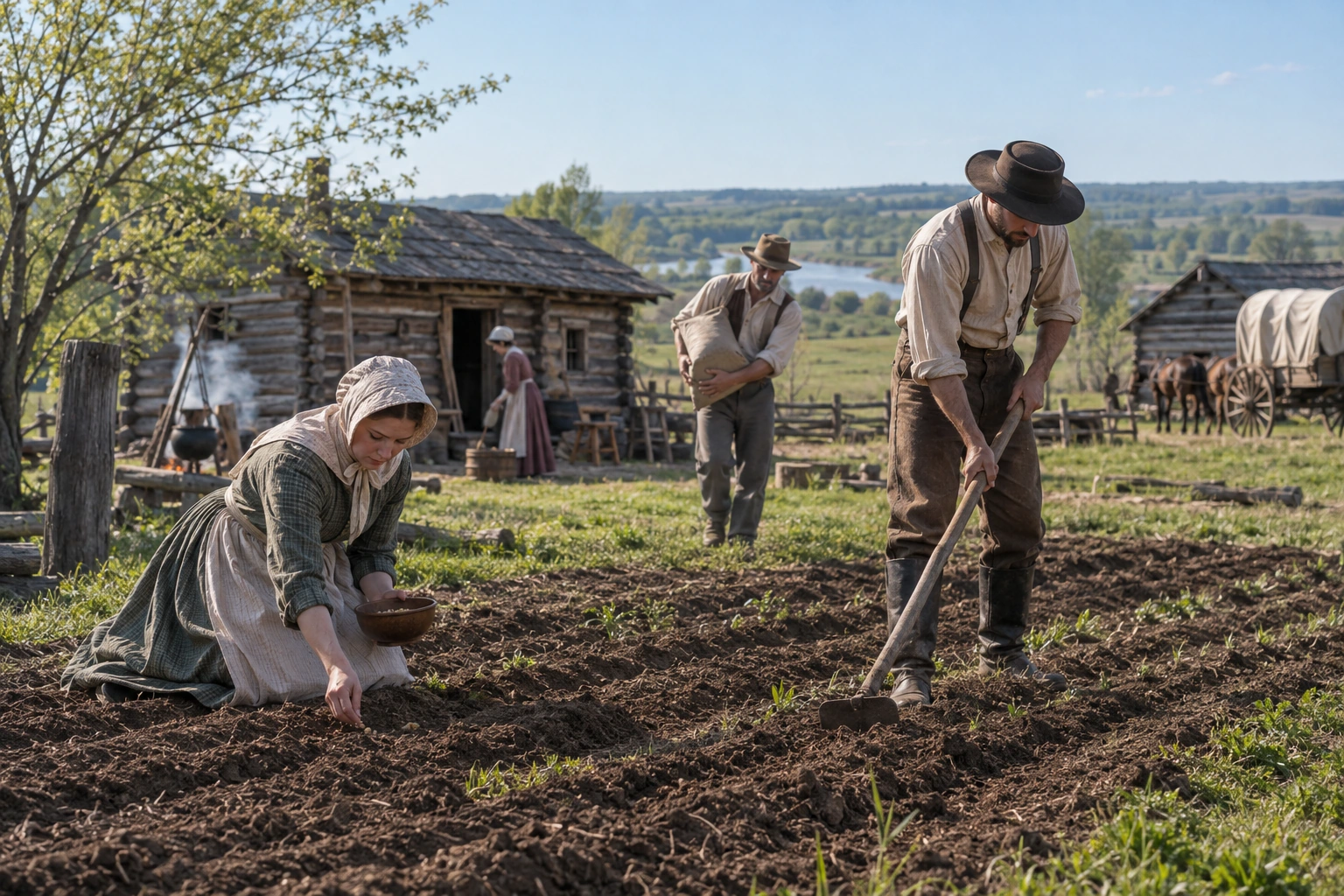
At Garden Grove and Mount Pisgah, pioneers established farms and stopping places to help later travelers. Some stayed to plant while others continued. Their service reached beyond their own immediate company: shelter and food prepared today could sustain a family arriving later.
At Winter Quarters, the revelation now recorded in Doctrine and Covenants 136 joined the practical organization of travel with care for people in need. Read Doctrine and Covenants 136:8–9 and consider whose journey your preparation might lighten.
The first wagons left Nauvoo, Illinois, on February 4, 1846, beginning the westward exodus. The National Park Service estimates that nearly 70,000 Latter-day Saint emigrants followed the trail to the Great Salt Lake Valley from 1847 through 1868.
Winter Quarters - 1846-1847
After crossing Iowa, the Saints established Winter Quarters on the west bank of the Missouri River in present-day Omaha, Nebraska. Other settlements and outfitting camps were established across the river in Iowa.
Entering the Valley - July 21-24, 1847
Members of the advance company entered the Salt Lake Valley before Brigham Young, who was ill and traveling behind them. Young's carriage entered the camp on July 24, 1847.
Pioneer Day - July 24, 1847
The arrival is celebrated. Today, Pioneer Day is a Utah state holiday commemorating this historic journey.
1850s-1900s
Temple Square Development
Temple Square evolves from a muddy lot to a spiritual center. The Tabernacle and other buildings transform the heart of Salt Lake City.
1853-1893
Salt Lake Temple Construction
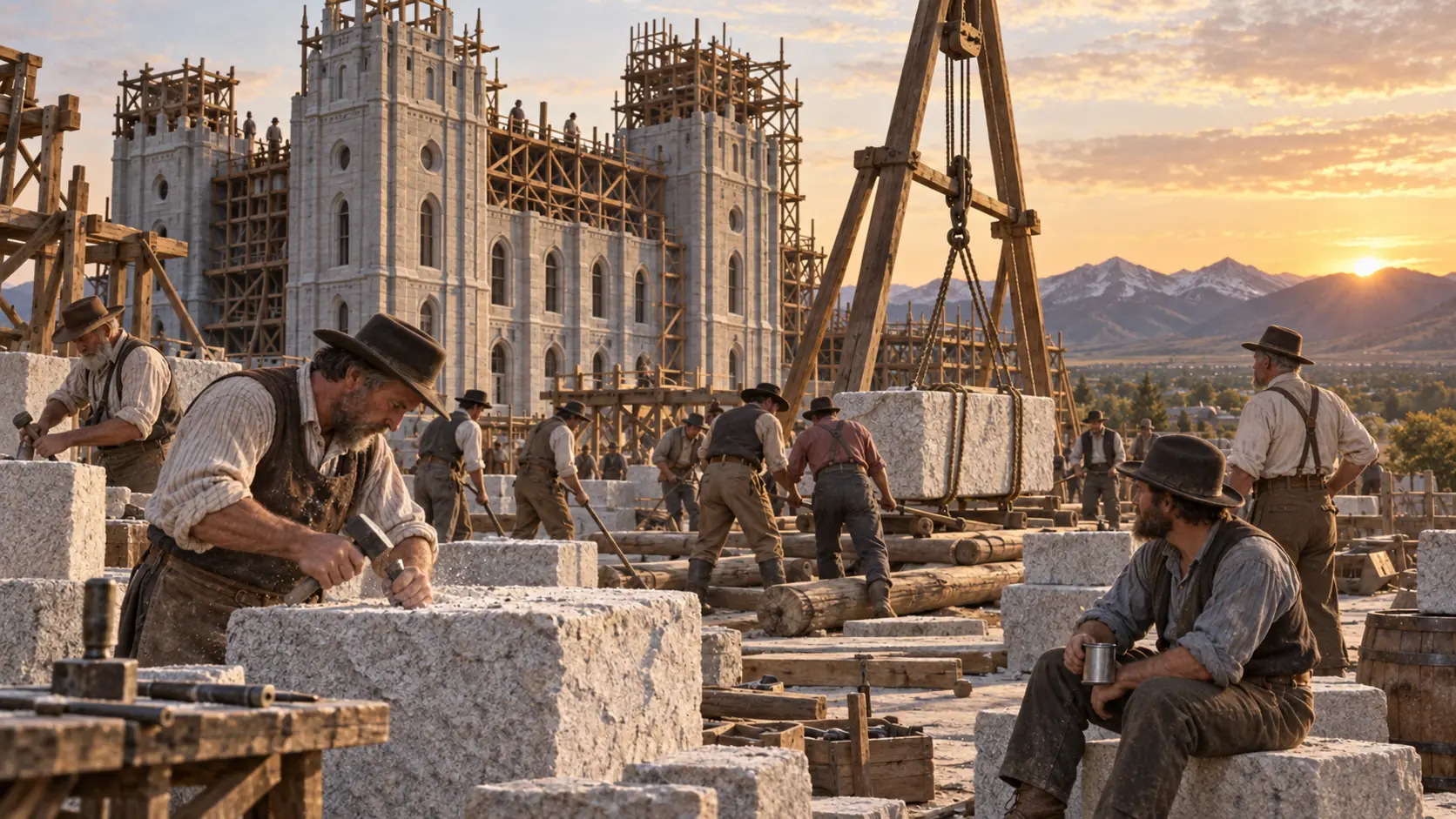
Construction of the Salt Lake Temple began in 1853. The temple was dedicated in 1893, forty years after the cornerstone ceremony.
Handcart Companies - 1856-1860
About 3,000 pioneers successfully made the trek in handcart companies by 1860. The Martin and Willie handcart companies face tragic rescues in 1856.
1869
Transcontinental Railroad
The golden spike was driven at Promontory Summit on May 10, 1869. The completed transcontinental railroad reduced a journey of months to days and brought the organized overland pioneer era to a close.
January 4, 1896
Utah Statehood
Utah became the 45th state on January 4, 1896, after a long and contested path from territory to statehood.
Life between landmarks
The trail was lived one day at a time
Beyond the dates and destinations, the journey was made through ordinary work, long stretches beside the Platte River, and difficult crossings that required the strength of the entire company.
Daily Life on the TrailRepairs, meals, animals, and family responsibilities continued with every mile.Westward Beside the PlatteCompanies followed the broad river corridor across the plains in natural traveling groups.Crossing the RiversPeople, animals, and wagons worked together against current, rock, and cold water.
A new wave of gathering · 1856
Across an ocean, then the plains
The handcart story began in homes and ports far from the American plains. Preparation, limited resources and the season of departure shaped what followed.
British emigration · 1856 · Open picture study
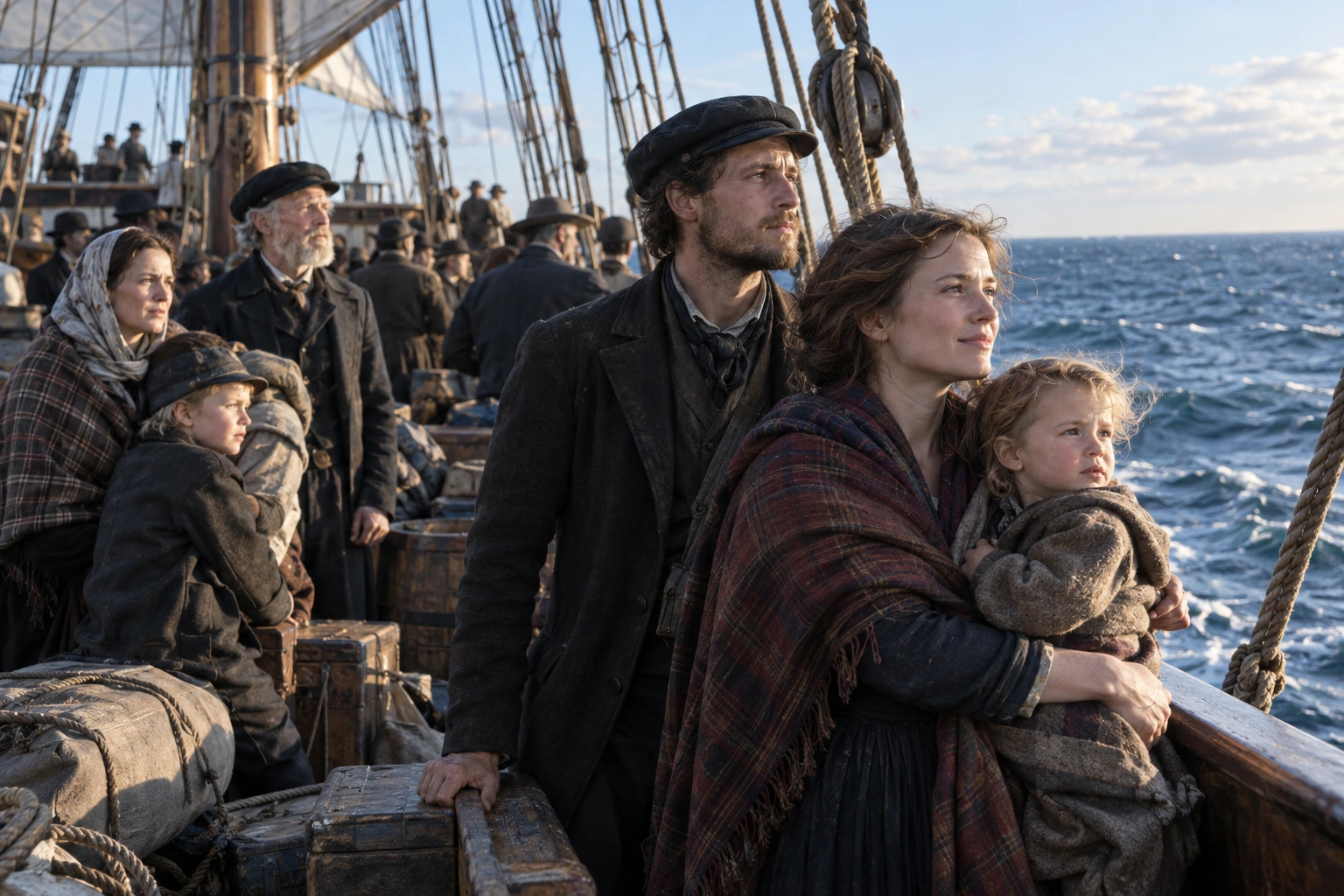
The journey began across an ocean
For Elizabeth Crook Panting, the plains came after an Atlantic crossing. She sailed on the Thornton with Christopher and Jane. Her brother Samuel Lane Crook was also aboard; Peter Madsen’s diary records his marriage to Sarah Haines during the voyage. Samuel and Sarah stayed in the East and did not make the Willie company’s overland journey with Elizabeth.
The family also remembered a fire aboard ship: Elizabeth alerted the captain and prayed with her children. This episode comes through the family history gathered in Tell My Story, Too, rather than a ship’s log examined for this page.
Tell My Story, Too: Elizabeth and Jane, pp. 101–102
Summer 1856 · Open picture study
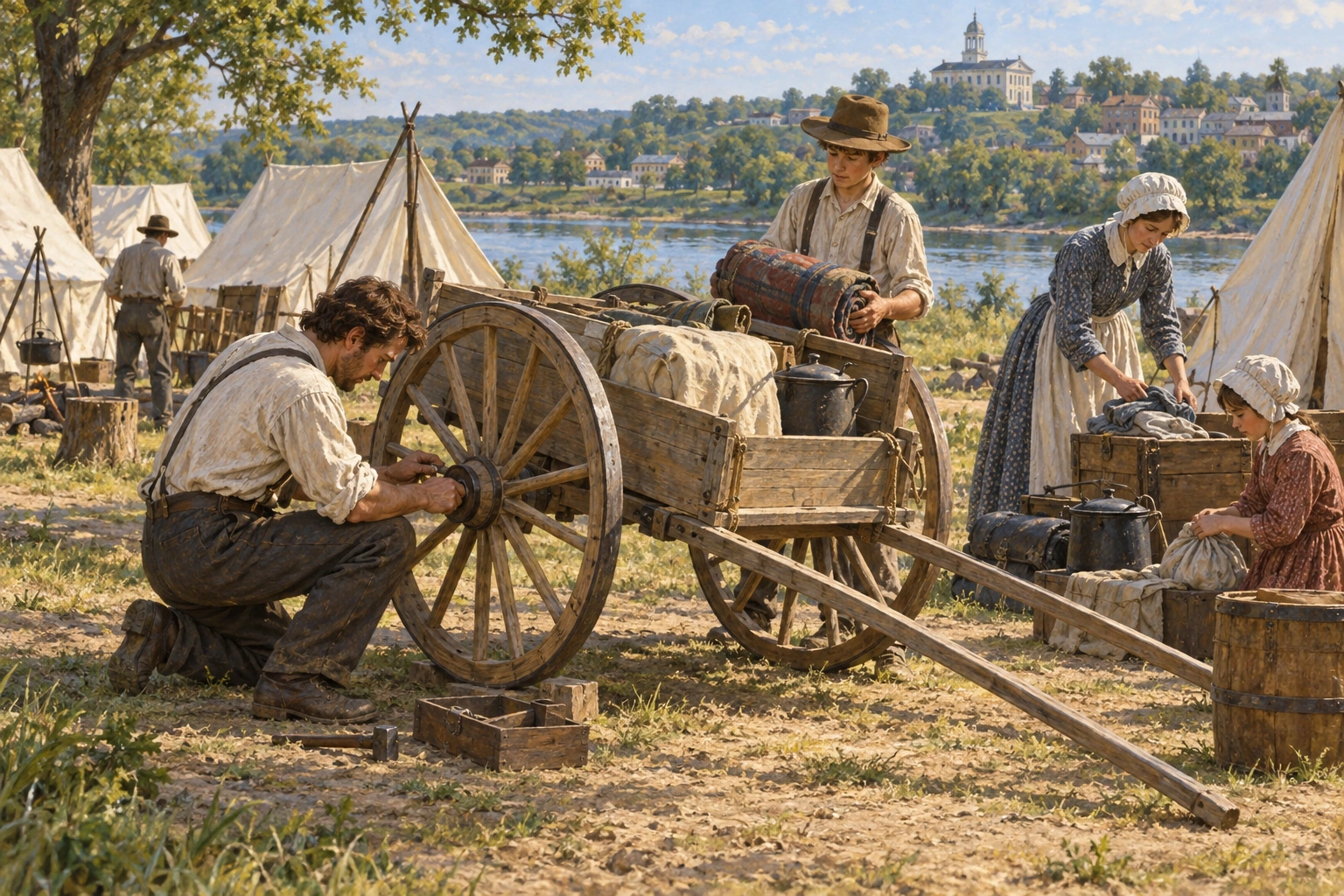
Making ready at Iowa City
The Willie company journal records making tents, building carts, preparing wagons and weighing luggage. Its July entries also record births, deaths, worship and ordinary tasks such as washing clothing. Emigration was already demanding before the company began its passage across the plains on July 15.
The same journal makes daily travel tangible: an early bugle, breakfast, prayers, greasing carts, packing tents and another stretch of road. These were people meeting practical needs while caring for one another.
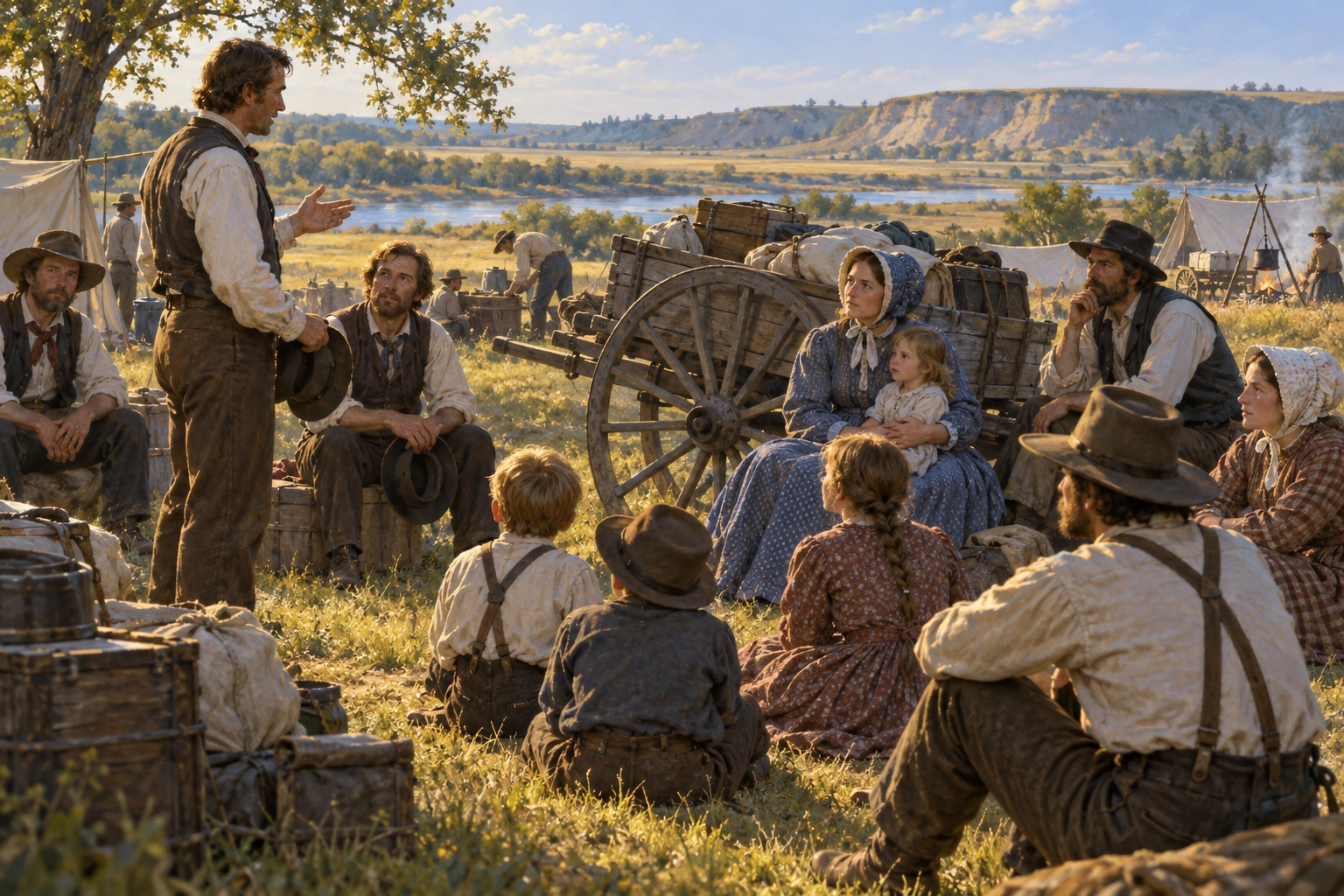
Handcarts offered a less expensive way to reach Utah, with emigrants pulling limited belongings in wooden carts. Ten companies traveled this way from 1856 through 1860. Most did not suffer the catastrophe of the late Willie and Martin companies. Their experience should not be confused with every handcart journey.
At Florence, the question of continuing so late in the season was serious. The dated rescue overview below includes Levi Savage’s warning and the companies’ separate departures. Families listen together beside a waiting cart during a camp discussion.
These landmarks trace the route; the general route labels do not give an arrival date for every company. The Church History Pioneer Sketches exhibit documents William Clayton’s June 21, 1847 visit to Independence Rock and places the surviving drawings in the wider trail landscape.
1846
Nauvoo, Illinois
The organized exodus began here in February 1846 after violence, legal conflict, and pressure against the Latter-day Saints in Illinois. Wagons crossed the Mississippi River into Iowa Territory.
1846
Garden Grove, Iowa
The pioneers established Garden Grove as an Iowa way station, where they planted crops and built shelters to help companies that followed.
Winter 1846
Missouri River Settlements
Winter Quarters stood in present-day Omaha, Nebraska, with additional camps and settlements across the river in Iowa. This Missouri River area became the principal staging and outfitting region for westward companies.
1847 route
Chimney Rock, Nebraska
Famous natural landmark on the trail. This distinctive rock formation served as a beacon for weary travelers crossing the plains.
Summer 1847
Fort Laramie, Wyoming
This established trading post on the North Platte River was an important landmark and resupply point on several western emigrant trails.
June 21, 1847
Independence Rock, Wyoming
This prominent granite landmark became known for the names and dates carved or painted by travelers on the western emigrant trails. William Clayton reached it with the vanguard company on June 21, 1847.
1847 route
Sweetwater River, Wyoming
The trail followed and repeatedly crossed the Sweetwater River. Devil's Gate, a narrow gorge cut by the river, became one of the route's best-known landmarks.
1847 route
South Pass, Wyoming
Crossing the Continental Divide. This gentle pass through the Rocky Mountains opened the way to the Great Basin.
July 1847
Fort Bridger, Wyoming
Fort Bridger was a trading post and landmark on the final portion of the route toward the Great Salt Lake Valley.
July 1847
Echo Canyon, Utah
The trail passed through this narrow canyon during the final mountain approach toward the Salt Lake Valley.
July 1847
Emigration Canyon, Utah
Steep canyon descent into the valley. Pioneers guide their wagons through narrow passages before emerging into Salt Lake Valley.
July 21-24, 1847
Salt Lake Valley, Utah
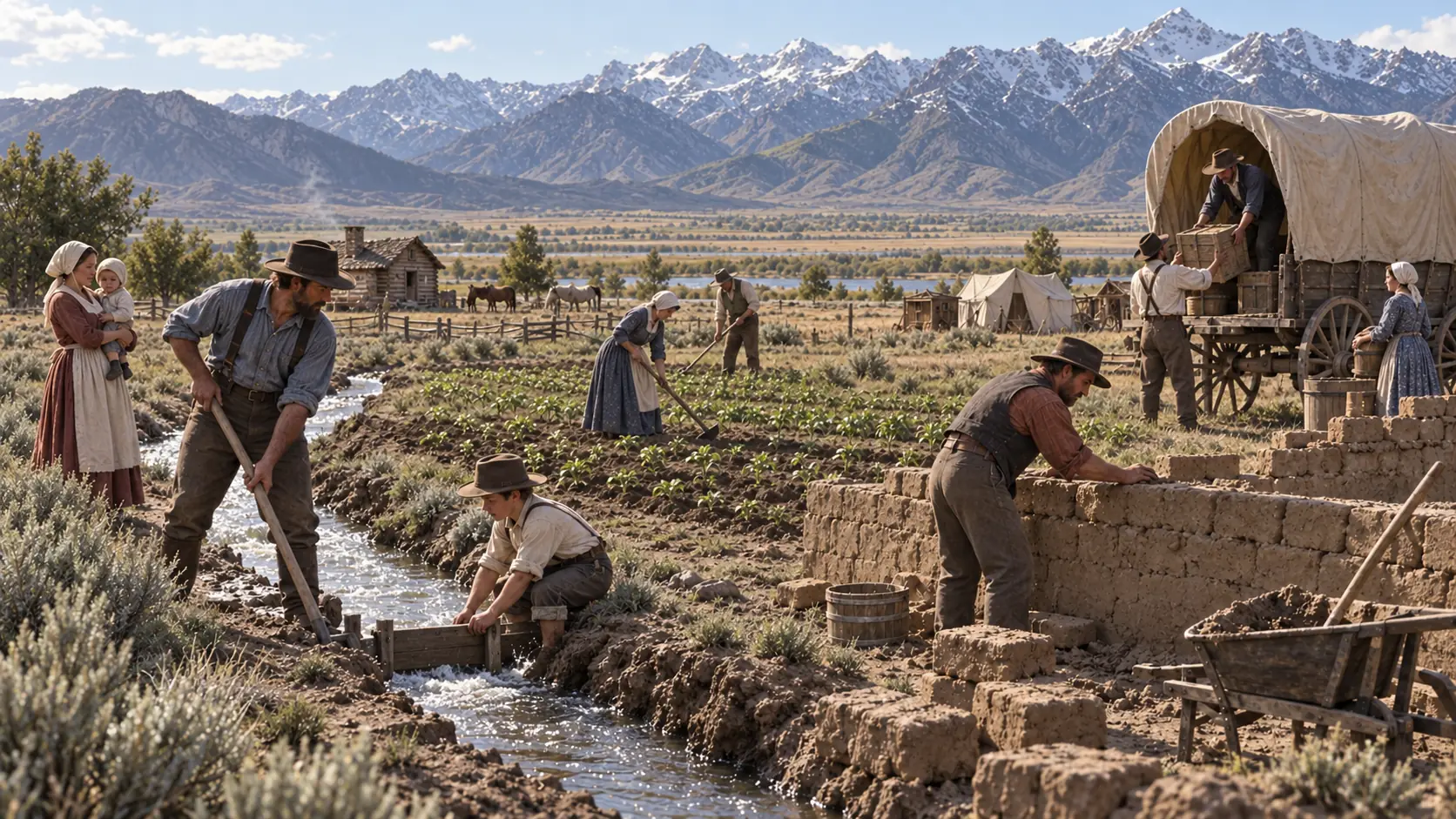
Members of the advance company entered the valley before Brigham Young arrived on July 24. The company began planting crops and digging irrigation ditches soon after arrival.
1857
Mountain Meadows, Utah
The 1857 Mountain Meadows Massacre occurred far south of the main 1846-1847 pioneer route. It is included here only as a separate and painful episode in territorial Utah history; follow the official Church History topic for a sourced account.
A mother’s faith · The Willie company
Elizabeth Crook Panting and her children
A mother, a little boy and a baby stand at the heart of this account. We can honor their testimony by telling what the family preserved, identifying how it comes to us and leaving unknown details unfilled.
The Willie company · 1856 · Open picture study
Elizabeth, Christopher and Jane
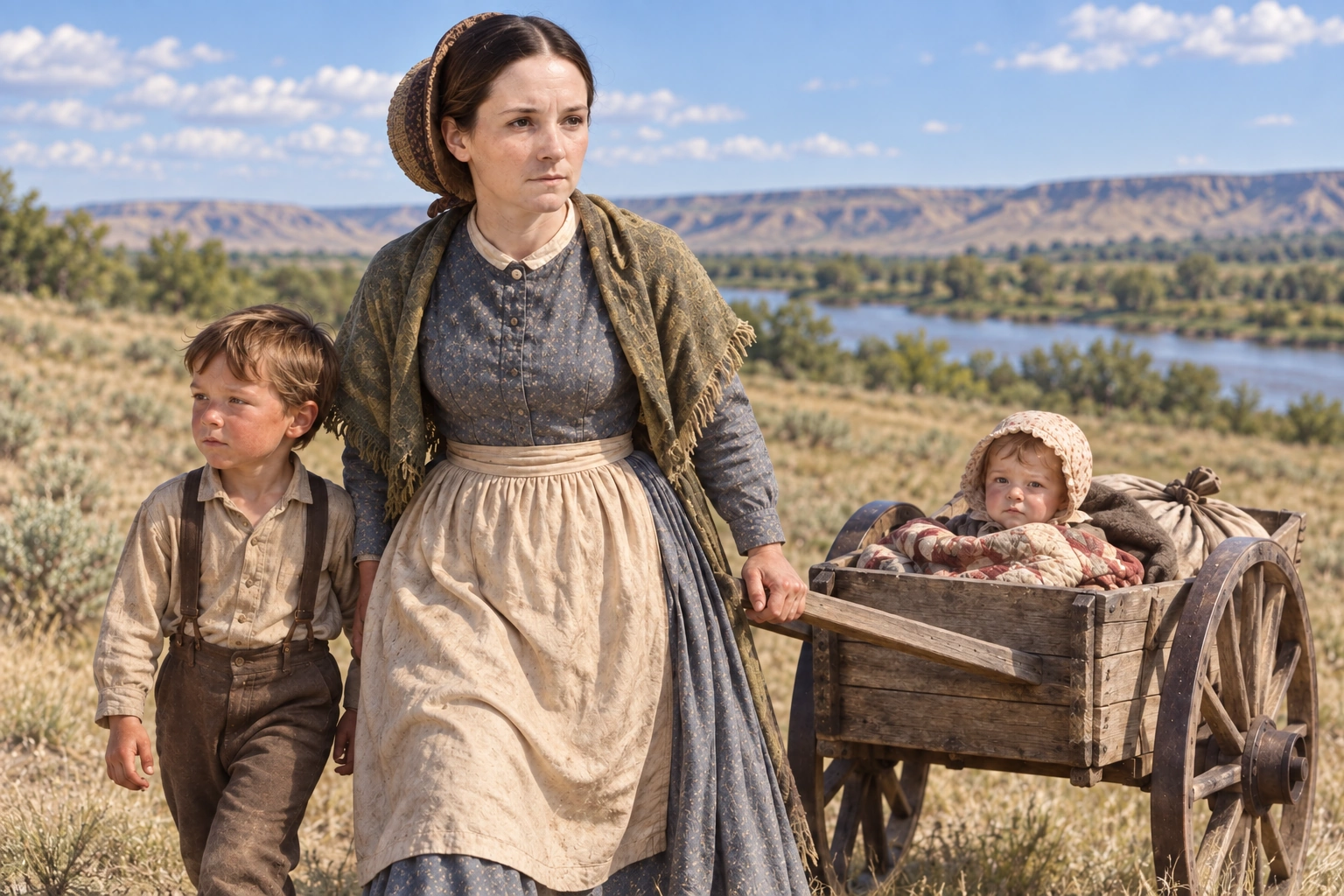
Elizabeth Crook Panting began the overland journey with Christopher, five, and Jane, one. Christopher turned six on the way west; Elizabeth turned twenty-nine in October. Their names give the migration an intimate scale: a mother, a young boy and a baby, traveling toward a hoped-for home. The Church’s historical database records all three in the Willie company.
Christopher later recalled that his father, Frederick, opposed Elizabeth’s Church participation, threatened her and hid her shoes. He remembered her borrowing shoes for worship and leaving with the children; on a train, another woman exchanged clothing with her to help her avoid recognition. These details survive as his family recollection.
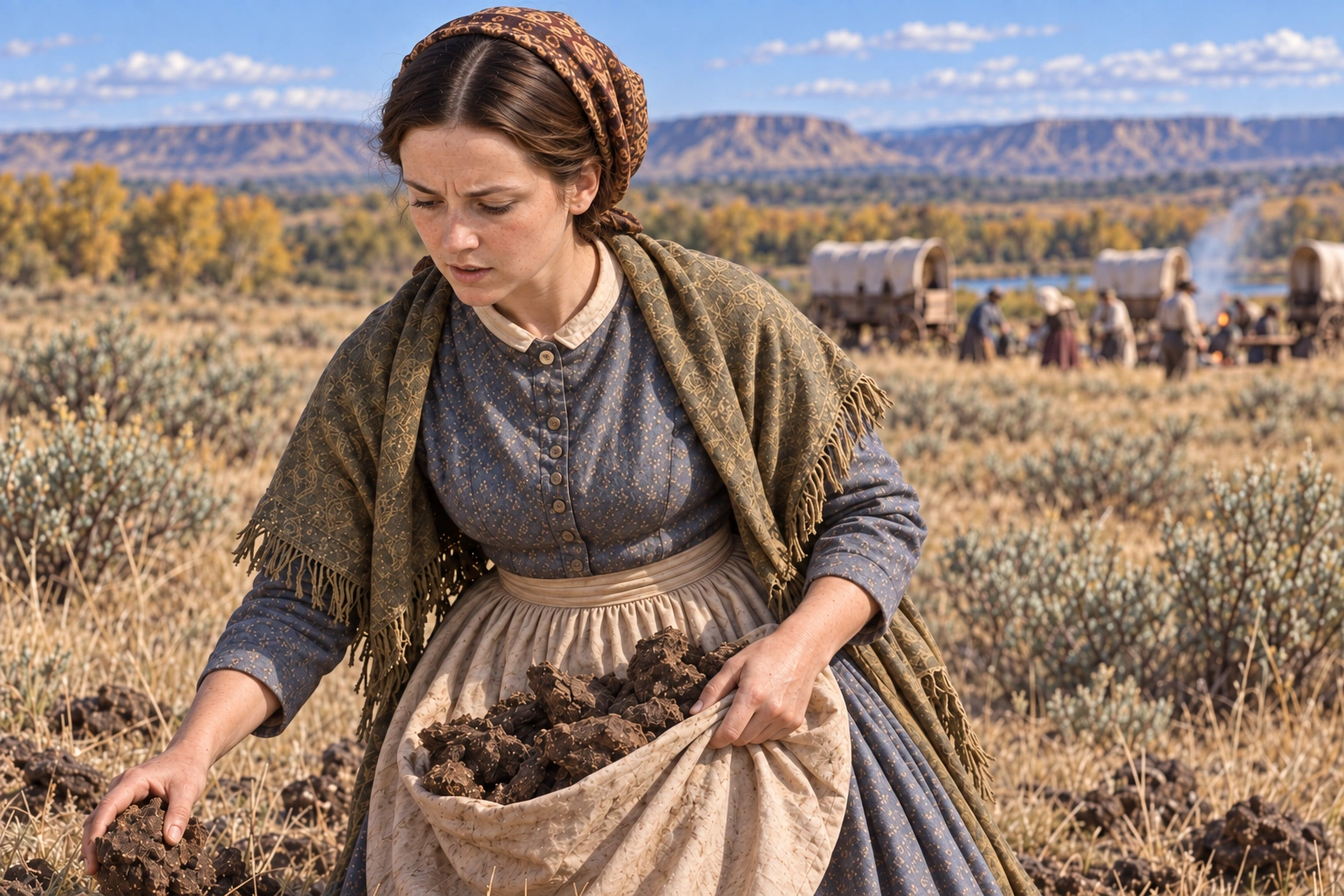
As food dwindled on the trail, the family account remembers Elizabeth going out to gather buffalo chips for fuel. She had nearly filled her apron when an unfamiliar man approached and asked about her situation. She told him of the hunger in camp. He offered help and led her over a small hill.
The remembered encounter begins with ordinary work for a family’s survival. Neither an exact date nor a securely identified cave location is supplied by the principal family account.
Tell My Story, Too: Elizabeth and Jane, pp. 101–102
The account Elizabeth’s family preserved · Open picture study
The gift in the cave
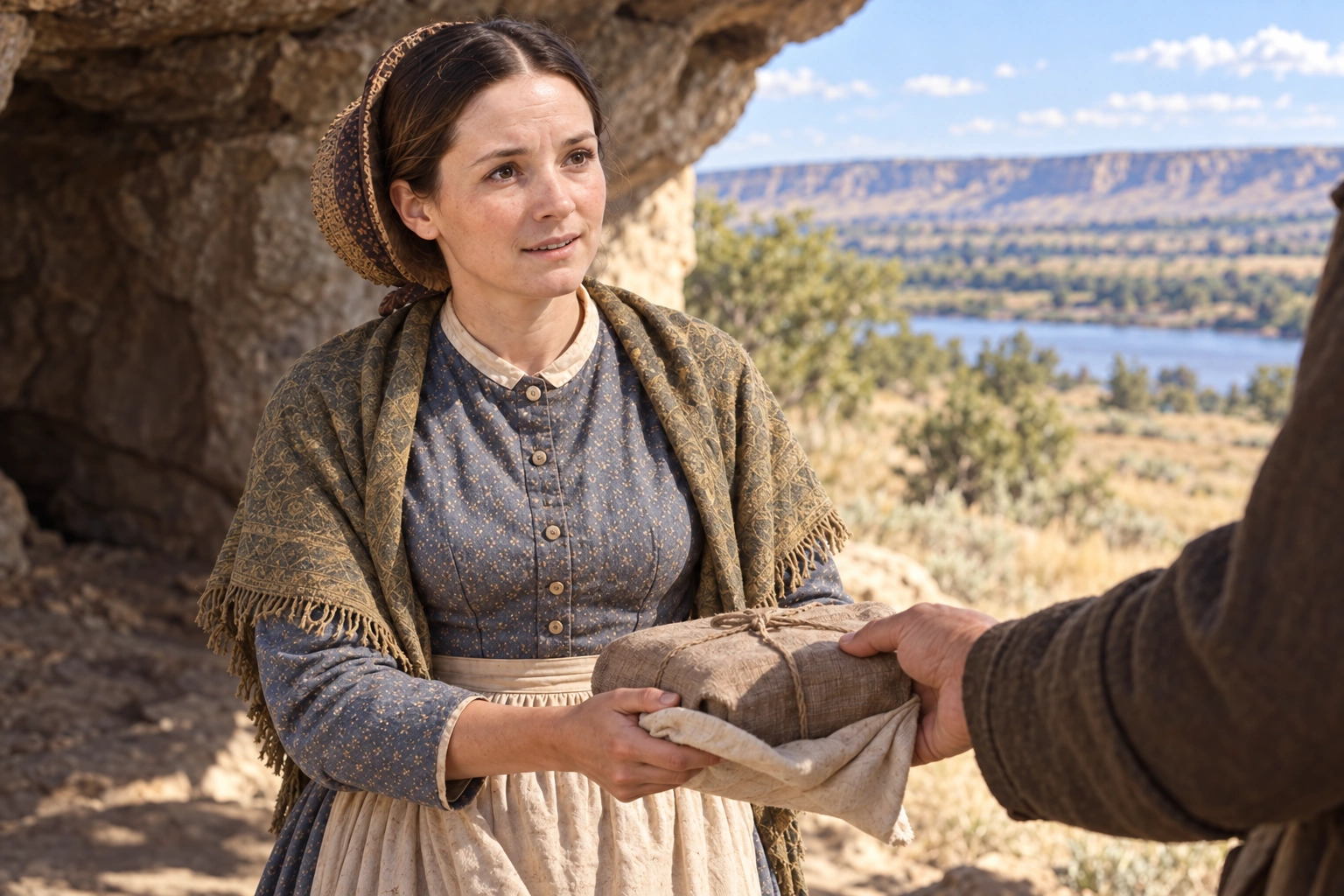
Elizabeth followed the man to a cave where dried buffalo meat was hanging. He filled her apron with meat and instructed her to share it with others in need. After showing her the direction back to camp, he was gone. When she turned to thank him, she could no longer find either the man or the cave. The meat remained in her apron.
This is the miracle as the family remembered it. The illustration leaves the stranger unidentified, as we do here. The account does not establish that he was Christ, an angel or a particular scriptural person.
Tell My Story, Too: Elizabeth and Jane, pp. 101–102
Relief among the Willie company · Open picture study
A gift meant to be shared
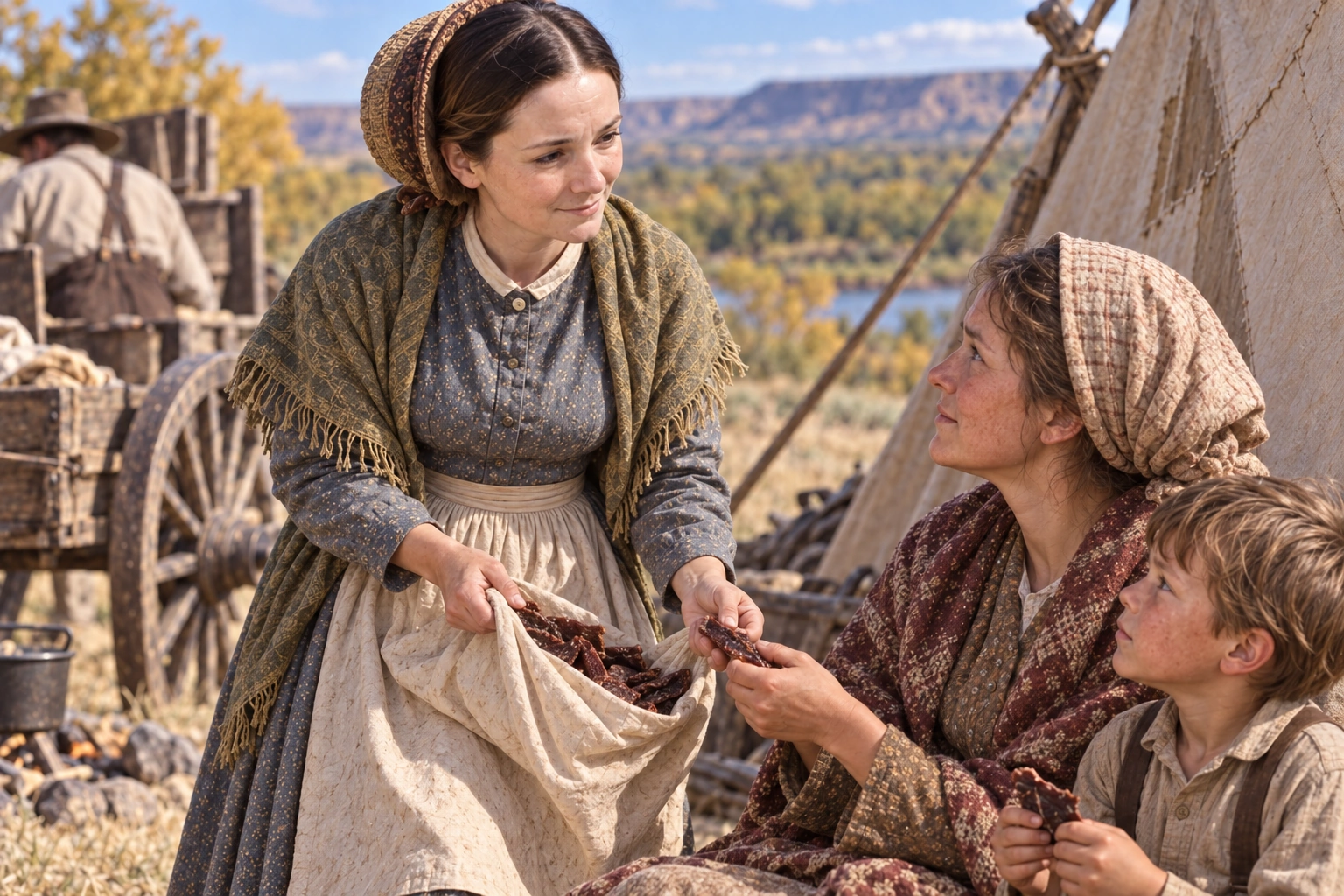
Elizabeth returned and distributed the meat to people who needed food. In the family’s telling, the blessing reached beyond her own children. Jennie Edith Bell Mason’s later biography, preserved in the Church History Library, also records the cave, the dried meat and her return to the company.
Her journey still required endurance. The family remembered Jane becoming dangerously ill in the handcart. Mason’s biography describes the children sheltered in a rescue wagon during the Rocky Ridge ordeal while Elizabeth walked. Mother and children reached Salt Lake City with the Willie company on November 9.
More of Elizabeth’s story and how it was preserved
The family remembered Elizabeth trusting a blessing that she and her children would reach the valley safely. Her son Wilford Woodruff Cranney later spoke of that trust and her continuing faith. The surviving compilation associates the blessing with Wilford Woodruff; its exact setting has not been independently established here.
The cave account comes through later family histories, including Mason’s biography and the recollections collected by Jolene S. Allphin. Allphin cites Peter Madsen’s diary, family histories, and interviews with June Cranney Monson. A family diary is mentioned in that source chain, but its location was unknown; this page does not claim to quote an inspected original diary.
Elizabeth Crook Panting is a different person from Eliza Crook. Allphin’s Eliza Crook sketch corrects an earlier misattribution of the meat account. Elizabeth’s cave must also remain distinct from Martin’s Cove and from Hanks’s later buffalo provision.
Most handcart companies reached the valley safely. The late departure of the Willie and Martin companies in 1856 placed them in severe autumn storms, where relief parties carried food, clothing, blankets, and hope east from Utah.
The Handcart Journey, 1856Families carried only what their carts and their own strength could bear.Rescue Wagons ArriveRelief parties met the companies with supplies, teams, shelter, and human care.
October–November 1856
Go out and bring them in
Willie and Martin were separate companies with different crisis points and arrival dates. Relief grew from Brigham Young’s urgent appeal into weeks of travel, giving, nursing and difficult choices.
Brigham Young · October 5, 1856 · Open picture study
Send help now
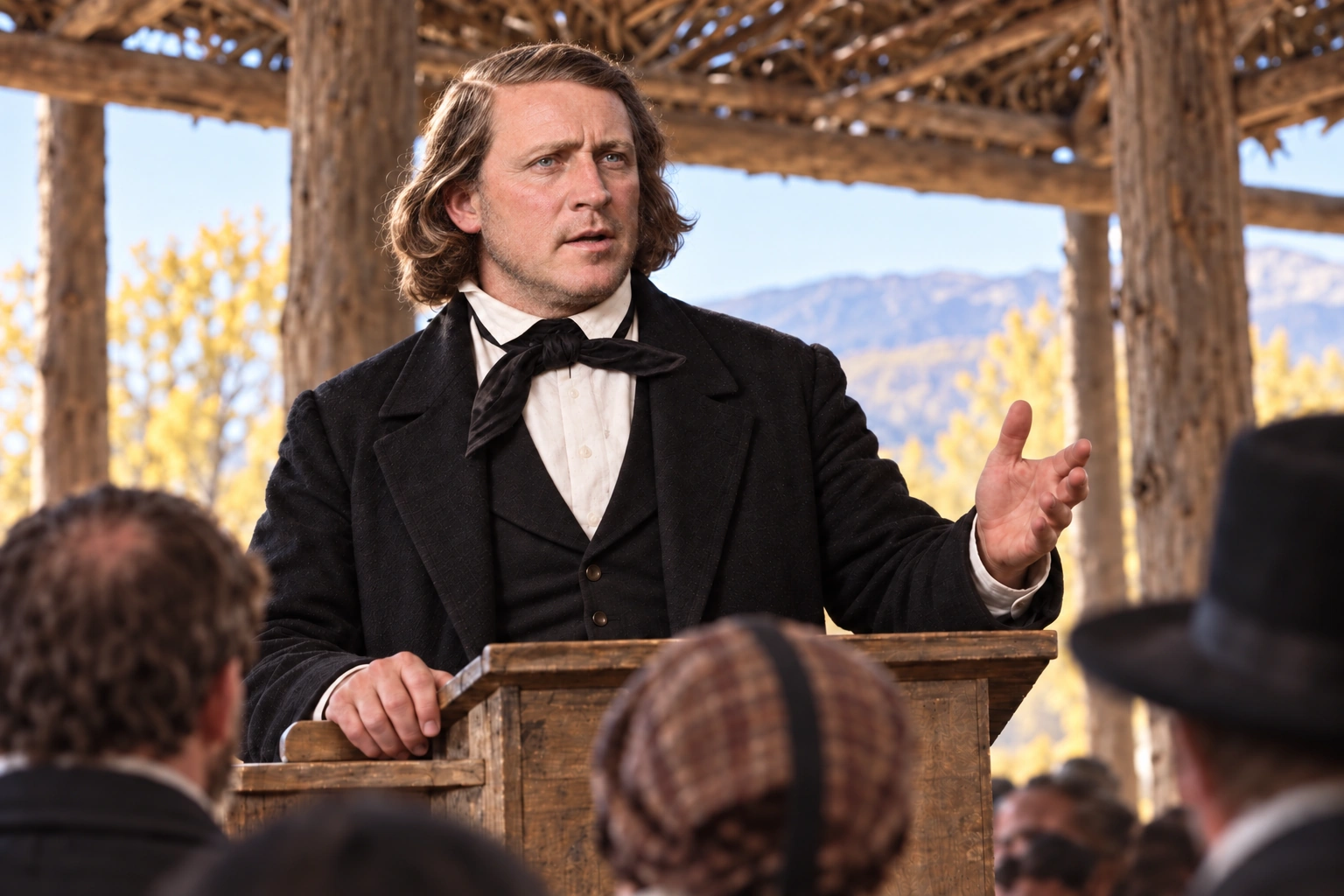
On October 5, Brigham Young called for teams, wagons, flour and men to bring in the emigrants still on the plains. Wilford Woodruff’s journal records the concrete scale of the appeal: sixty teams, twelve tons of flour and forty additional teamsters. Concern for distant travelers became an assignment requiring immediate preparation and sacrifice.
The call invites a direct question for disciples of Jesus Christ: what does another person need from me now? Read Matthew 25:35–40 beside this appeal for food, clothing and willing hands.
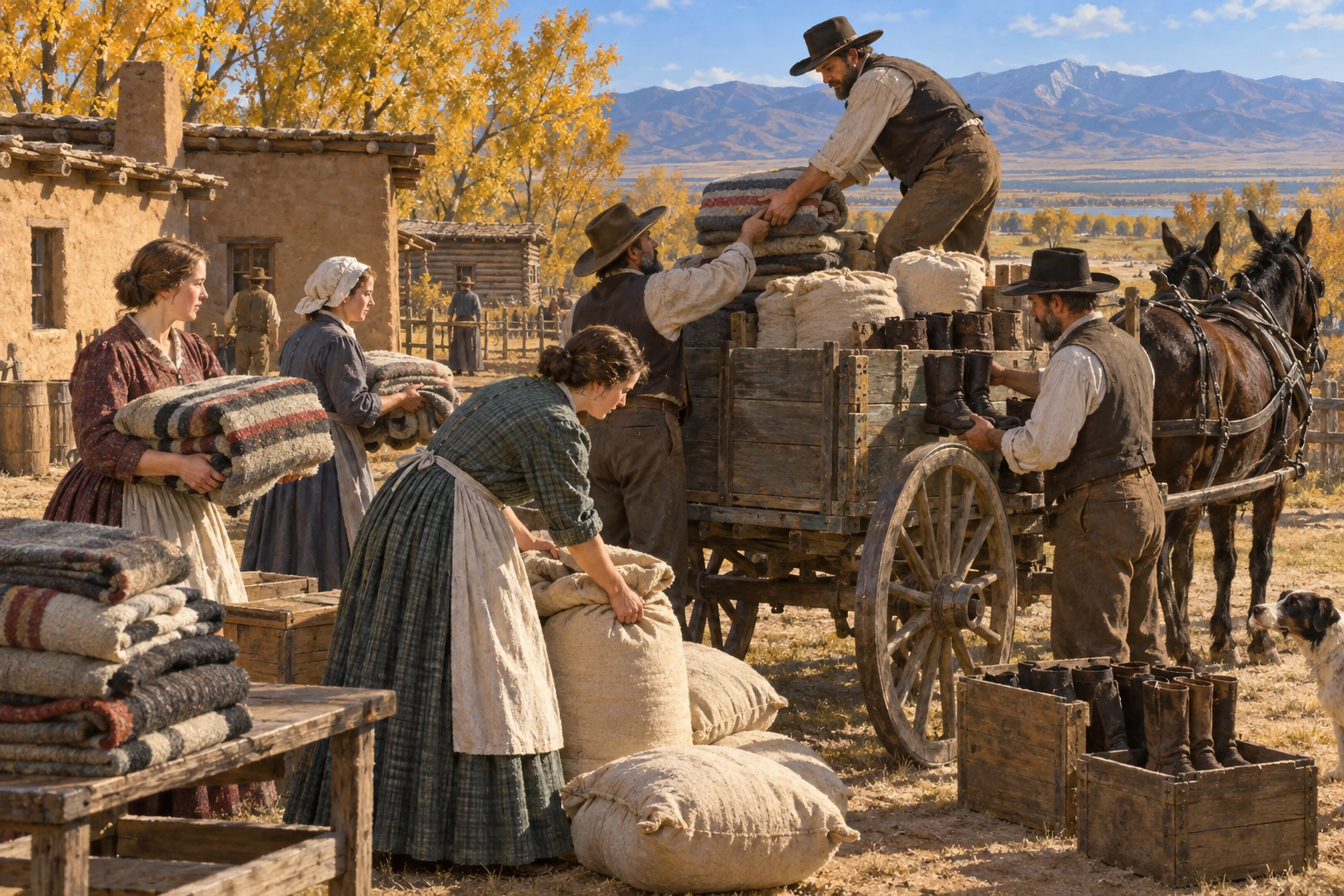
Women gathered bedding, clothing and other supplies while rescuers traveled east. Lucy Meserve Smith remembered the work of women in Provo to comfort those in need. Their service continued as survivors arrived; one delivery of food could not meet every need.
Salt Lake City was still warm when the first appeal was made. The first relief company left on October 7, before the storm caught the emigrants on October 19. Further appeals and supplies sustained the rescue over the following weeks.
Willie company · October 23, 1856 · Open picture study
The hard climb at Rocky Ridge
Relief did not instantly restore exhausted bodies. Daniel W. Jones later remembered rescuers bringing fuel, distributing provisions and encouraging the Willie emigrants. Some were already beyond recovery. The company still faced Rocky Ridge, a long, exposed crossing remembered for terrible suffering and loss.
The dated overview records the crossing and the burials at Rock Creek. Remembering rescue also means remembering those who did not survive. Alma 7:11–12 directs our faith toward a Savior who knows suffering, rather than treating survival as a measure of anyone’s righteousness.
North Platte · October 19, 1856 · Open picture study
The Martin company in the storm
The Martin company crossed the North Platte as the October 19 storm struck. It would be October 28 before express riders reached them, and October 31 before supply wagons arrived. In November they sheltered in the cove near Devil’s Gate, still suffering hunger, cold and exhaustion.
Jones identified Joseph A. Young, Abel Garr and himself as the riders sent to find the remaining companies. He also remembered helping pull exhausted families into camp. Later, baggage was stored at Fort Seminoe so wagons could carry people; Jones and others stayed to guard that property through winter.
With the Martin company · November 1856 · Open picture study
Ephraim Hanks brings food and care
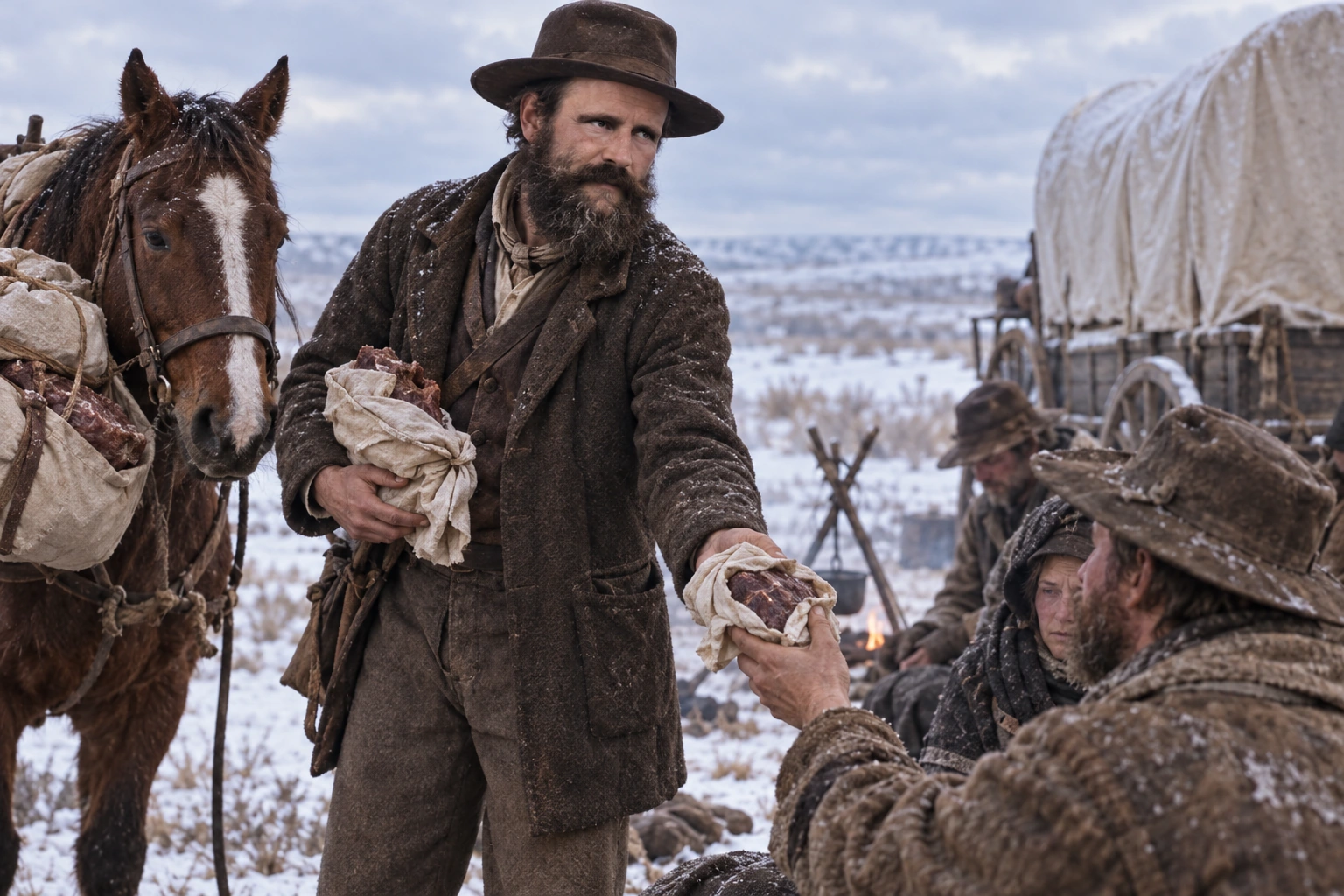
In a reminiscence recorded in 1891, Ephraim Hanks described a repeated nighttime call to help the handcart travelers. When a later appeal for volunteers came, he recalled answering, “I am ready now!” He was thirty in 1856 and joined the later rescue effort; he was not one of the riders who first reached Martin on October 28.
Hanks remembered praying for a buffalo, finding one, and killing another the next day. He loaded his horses with meat and brought it to hungry families. He also recalled caring for the sick and administering priesthood blessings, including a healing near Fort Bridger. His testimony includes miraculous help alongside the lasting effects of frostbite.
Elizabeth Horrocks Kingsford’s later autobiography remembers her children among the hungry Martin emigrants who received Hanks’s buffalo meat. Her account offers the perspective of a family that was fed. She is a different Elizabeth from Elizabeth Crook Panting, who traveled with Willie.
Hanks’s experiences come through a later reminiscence, not an 1856 diary. His account of providing fresh meat is separate from Elizabeth’s account of dried meat in a cave. Both deserve to be told in their own words and setting, without borrowing details from a film reconstruction.
The handcart rescue included many people. Avoid reducing the Sweetwater crossing to the embellished claim that only three young men carried everyone across and died because of it. The Church’s history topic explains the difference between the rescue and later retellings.
1856 · Willie and Martin · 7 study topics
Willie & Martin Companies
July 1856
The Companies Depart Late
The Willie and Martin handcart companies depart from Iowa City later than planned. The delay sets off a chain of events that will test faith and endurance to the limit.
August-October 1856
Hardships Begin
The late departure left the companies on the plains as food diminished and severe autumn weather approached. Snowstorms in October intensified the crisis.
October 1856
Stranded in Wyoming
Severe October snowstorms caught both companies in present-day Wyoming. Cold, hunger, exhaustion, and illness caused many deaths while rescuers traveled east from Utah.
October 1856
The Rescue
After learning that the companies were still on the trail, Brigham Young called for rescuers, wagons, food, clothing, and teams. Relief parties traveled east from the Salt Lake Valley and assisted the emigrants.
November 4-9, 1856
Martin's Cove
The Martin Company camped in the area now called Martin's Cove from November 4 to 9. The cove offered some shelter, but the emigrants continued to suffer from cold, hunger, illness, and exhaustion.
November 1856
Arrival in Salt Lake
The Willie Company reached Salt Lake City on November 9, and the Martin Company arrived on November 30. Residents received the survivors and helped provide food, clothing, and shelter.
November 1856
The Faith and Legacy
The Willie and Martin experience is remembered for suffering, rescue, faith, and the consequences of delayed departure and inadequate provisions. Read accounts of miracles and individual experiences with their sources identified, distinguishing records made during the journey from later firsthand recollections and family testimony.
A destination becomes a home
Arrival was the beginning of another work
Entering the valley ended the overland journey, but it began years of planting, building, worship, and community life. The same faith that carried pioneers west shaped what they built after arriving.
First View of the Valley, 1847The mountain passage opened onto the place where the advance company would begin planting.Building a New CommunityIrrigation, shelter, food, and shared labor turned arrival into settlement.Building the Salt Lake Temple, 1853 to 1893Four decades of work made the temple a lasting expression of covenant and sacrifice.
The journey’s end and what remained
Home, remembrance and a second witness
Arrival ended the miles, but recovery and remembrance continued. The witnesses who lived on carried both gratitude and grief into their homes and families.
Salt Lake City · November 1856 · Open picture study
The rescue continued inside the home
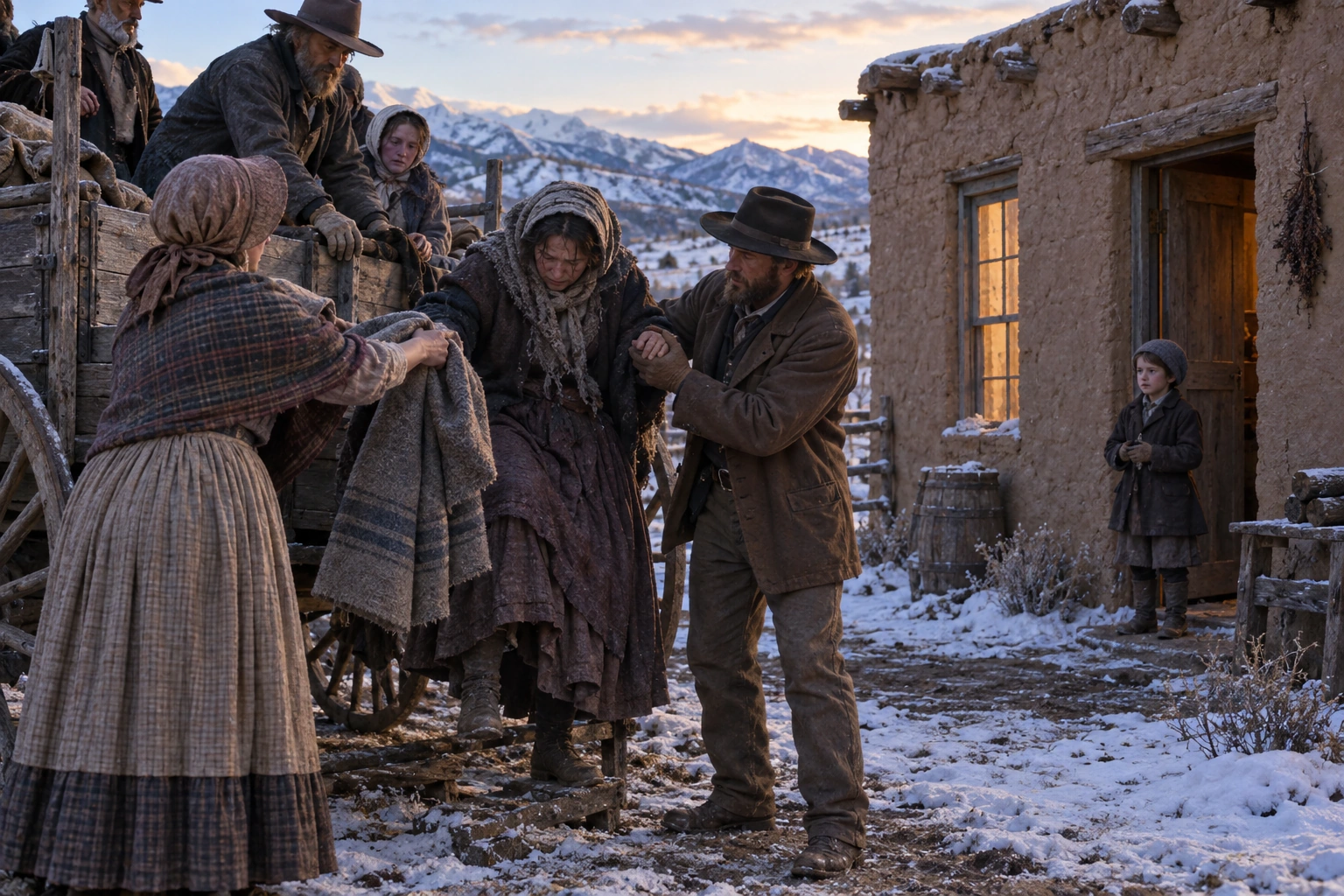
As the Martin company approached Salt Lake City on November 30, Brigham Young asked residents to receive the newcomers into comfortable family homes and provide careful nursing and nourishment. The rescue was not complete at the city boundary. Its next work belonged in kitchens, sickrooms and households willing to share what they had.
The Willie company had arrived on November 9. For Elizabeth and her children, the overland journey ended with all three alive. We remember their arrival alongside the grief of neighbors whose families had been broken by death.
A later Mother’s Day meeting in Pocatello · Open picture study
Jane hears a second witness
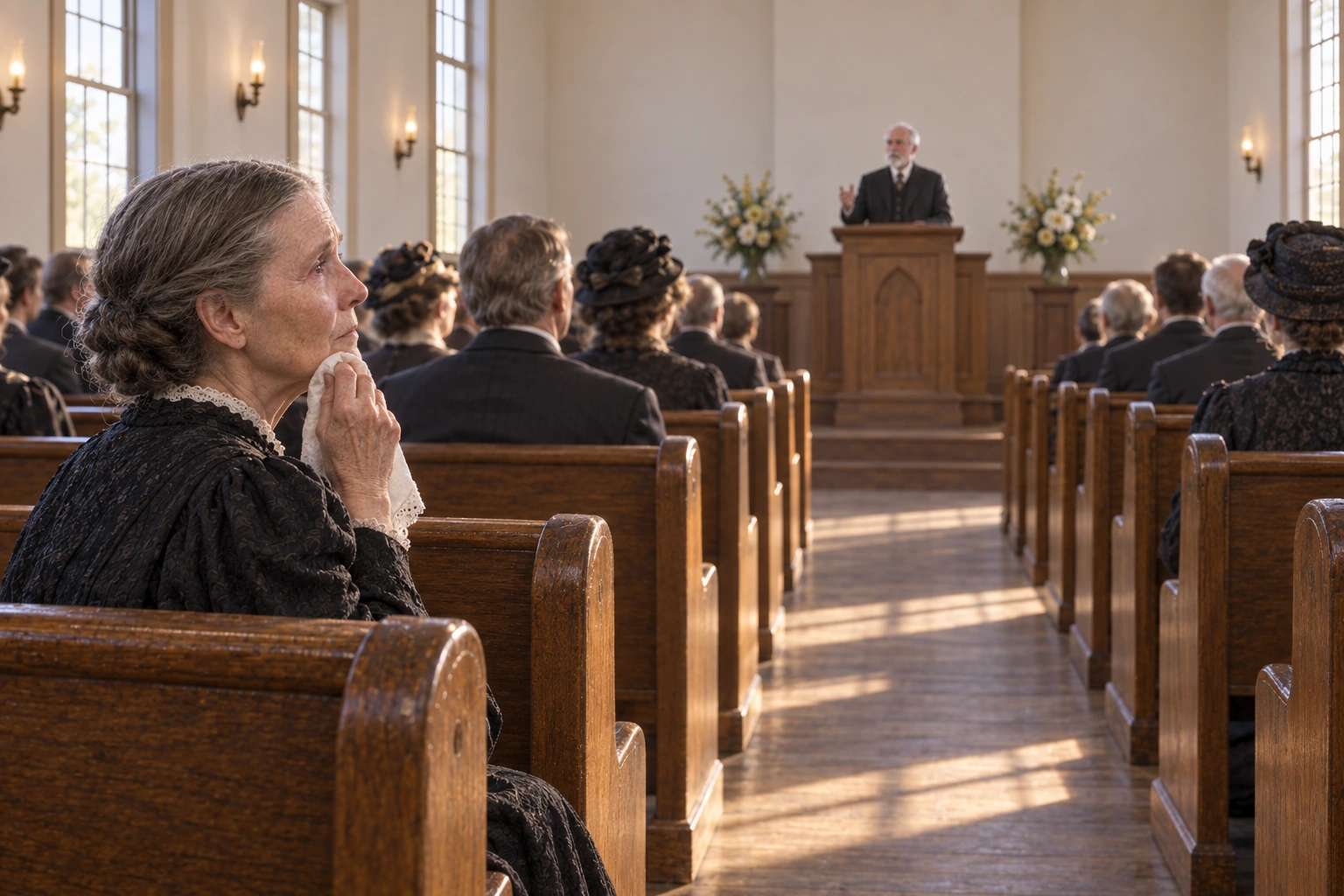
Years later, Jane was visiting a daughter in Pocatello when she attended a Mother’s Day church meeting. An elderly man recalled being a hungry boy in the Willie company. He remembered a woman sharing dried meat that she had received miraculously. Jane wept and told him that woman was her mother.
Jane later told her niece, June Cranney Monson, about this encounter. For Jane, whose mother’s account had sometimes been ridiculed, his recollection was a treasured second witness. Jane had been a baby on the trek; this is her later encounter with a recipient of the food, not a claim that she witnessed the cave herself. The surviving account does not name the man or date the meeting.
Tell My Story, Too: Elizabeth and Jane, pp. 101–102
The railroad connection · 1869 · Open picture study
The overland era gives way to rail
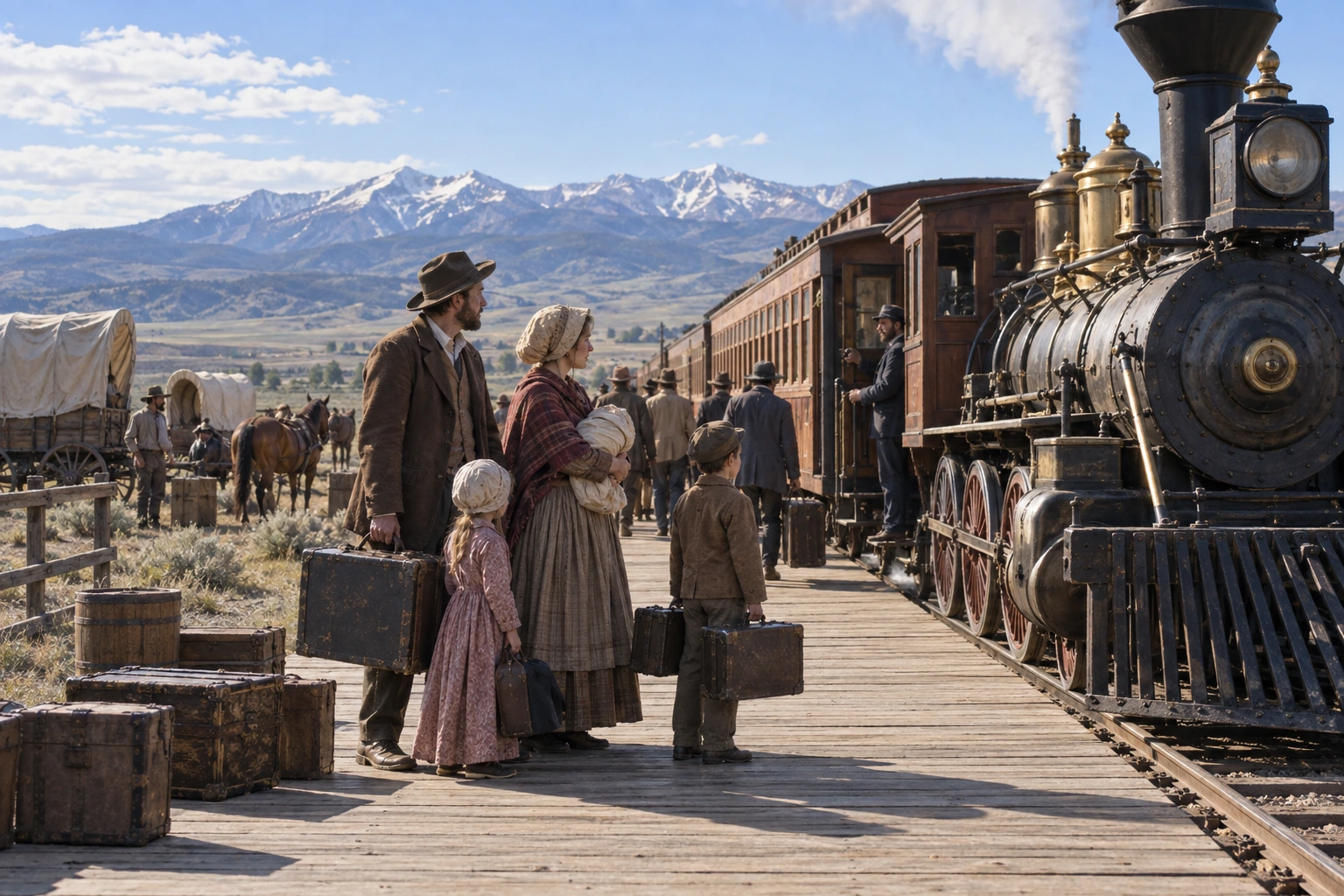
On May 10, 1869, the transcontinental lines met at Promontory Summit. Railroad travel changed the journey west that wagons and handcarts had once made over many months. The waiting family and passenger train bring that change in travel into view.
Elizabeth’s later life continued in Logan. The family history records marriages to William Wilkes and Hiram K. Cranney and remembers her enduring trust in God. She died on March 15, 1891, aged sixty-three. Jane and Christopher carried the family’s memories into another generation.
As you finish, read Mosiah 18:8–9 and Galatians 6:2. Whose burden can you help carry? The object of this remembrance is deeper discipleship in Jesus Christ.
Music for the journey
Songs of courage and redeeming love
Pause with the music that carries faith from one heart to another. Hear the pioneers’ enduring hymn, then turn toward the Savior with a personal song of gratitude.
Come, Come, Ye Saints
William Clayton’s words have helped generations give voice to courage, grief, and trust in God. Listen to The Tabernacle Choir and Orchestra at Temple Square, then open these two picture studies.
Open picture study
A song shared at the end of the day
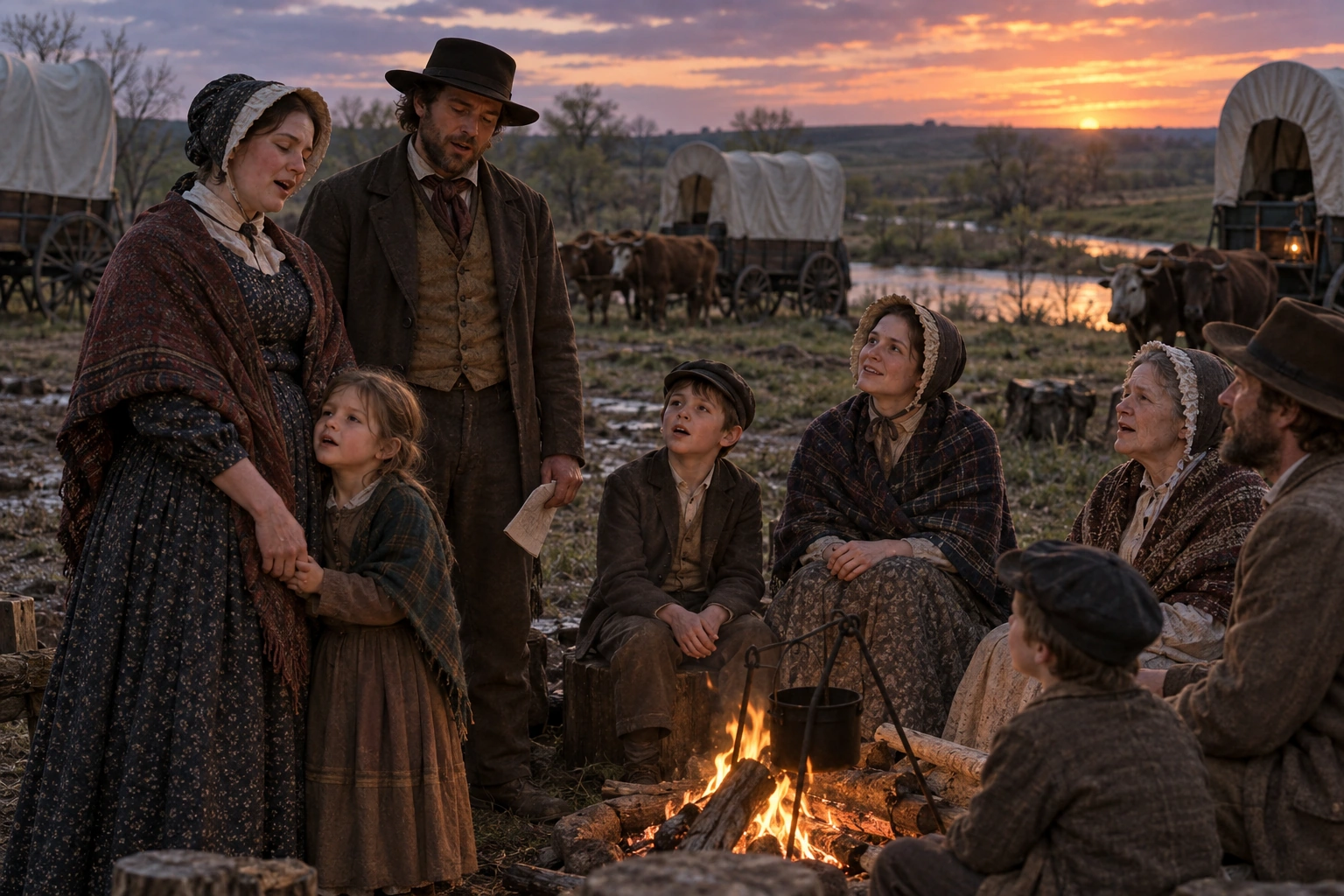
A child looks up as the adults sing. Worn clothing and muddy ground tell of a difficult day; their gathered voices offer companionship before another morning on the trail.
William Clayton wrote the hymn in April 1846 during the exodus from Nauvoo. Listen to its words beside the accounts of hardship on the trail. How can a song give people courage to continue together?
Read Doctrine and Covenants 136:28–29. The Lord’s counsel at Winter Quarters gives a place to singing in joy and praying in sorrow. What song helps you turn toward Him?
Open picture study
Hope for the road ahead
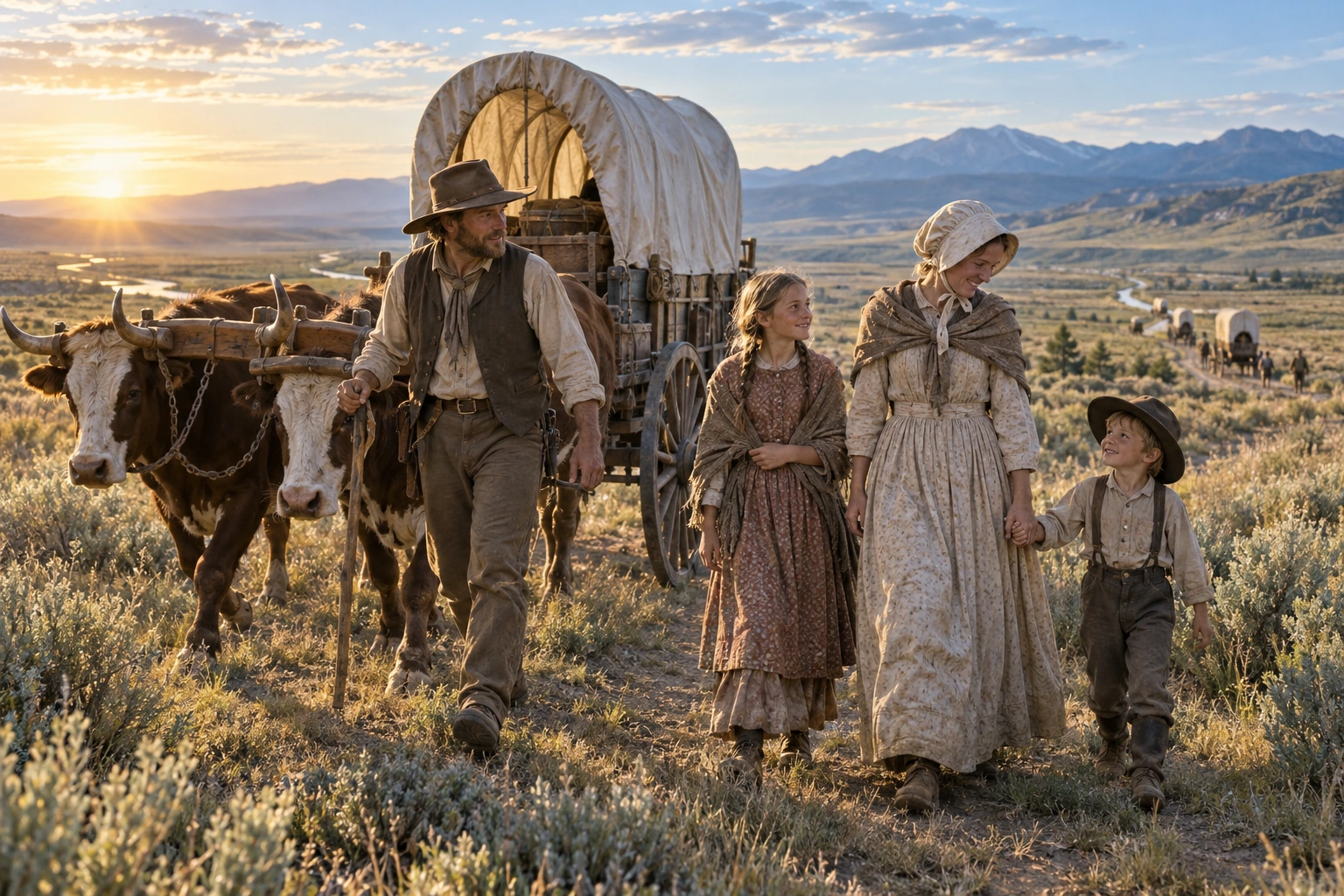
A mother and child share a glance as their family walks beside the wagon. The road still stretches ahead.
In Ether 12:4, faith in God opens a hope that steadies the soul. As you listen, remember both the people who reached a new home and those whose journeys ended along the way.
Consider one small way to strengthen someone who is still in the middle of a hard journey. Continue with faith in trials and Elizabeth’s story.
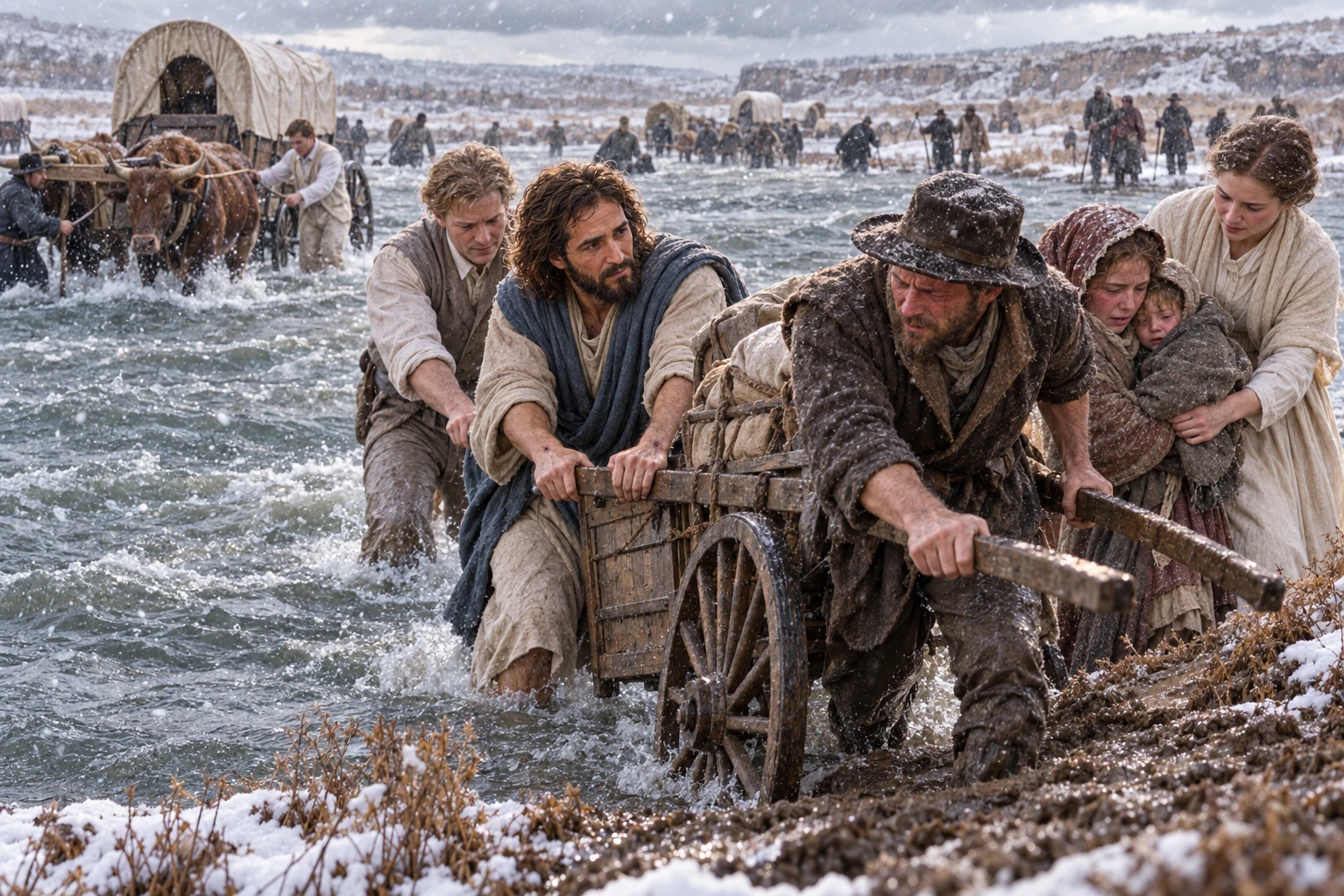
Cold water surges around the handcart as weary travelers climb toward the bank. The Savior bends to help push, His attention on the man beside Him; heavenly helpers share the effort. Consider the love and strength we seek from Him in suffering.
The Martin and Hodgetts companies crossed the North Platte on October 19, 1856, as the first winter storm struck. Read the official timeline for their journey. This devotional picture invites us to reflect on the Savior’s sustaining love.
Dallyn Vail Bayles sings Orson F. Whitney’s hymn text in Rob Gardner’s musical setting, with violinist Jenny Oaks Baker and the Lyceum Philharmonic. The published hymn pairs Whitney’s words with a different tune by Harry A. Dean. This recording is offered here as a devotional companion to the pioneer stories.
Read Matthew 25:35–40, the Savior’s teaching about feeding, clothing, and welcoming people in need. Then read Mosiah 24:14–15, where He strengthens a people to bear their burdens.
As you listen, consider where you need the Savior’s healing and how gratitude might shape your next act of kindness. Continue in the Atonement of Jesus Christ study.
Open each picture to follow its scripture connections and view it in full. These scenes invite reflection on the hymns; the river study distinguishes the historical crossing from its portrayal of heavenly help.
PRIMARY-SOURCE JOURNALS
Hear brief, verified voices from the trail, then open the Church History record to read the transcript in context. The Ask experience above also uses Tell My Story, Too to identify a pioneer before corroborating the selected person through authoritative records.
October 5, 1856
Wilford Woodruff
Woodruff recorded Brigham Young's call for sixty teams, twelve tons of flour and forty additional teamsters to bring in the emigrants.
Choose one traveler and read a journal or company record alongside the route. Notice when the words were written and whether the words were recorded during the journey or recalled later. Places such as Fort Bridger State Historic Site in present-day Wyoming can help you follow the journey without confusing old territorial names with modern boundaries. No single life can speak for every pioneer.
Remember those who died as people with loved ones and unfinished lives. Survival was not a measure of divine favor, nor suffering a measure of faith. After asking what the records tell us, consider a separate, personal question: whose burden could you help carry today? Begin by asking what help would be welcome.
Find a quieter study that does not require turning bereavement into an inspiring story.
Pause, pray, and respond
Faith for the next step
After following the journeys and reading a record, pause with the counsel given at Winter Quarters in Doctrine and Covenants 136. These questions invite a personal response; they do not ask you to compare your suffering with another person’s.
Explore and study
Make room in the journey
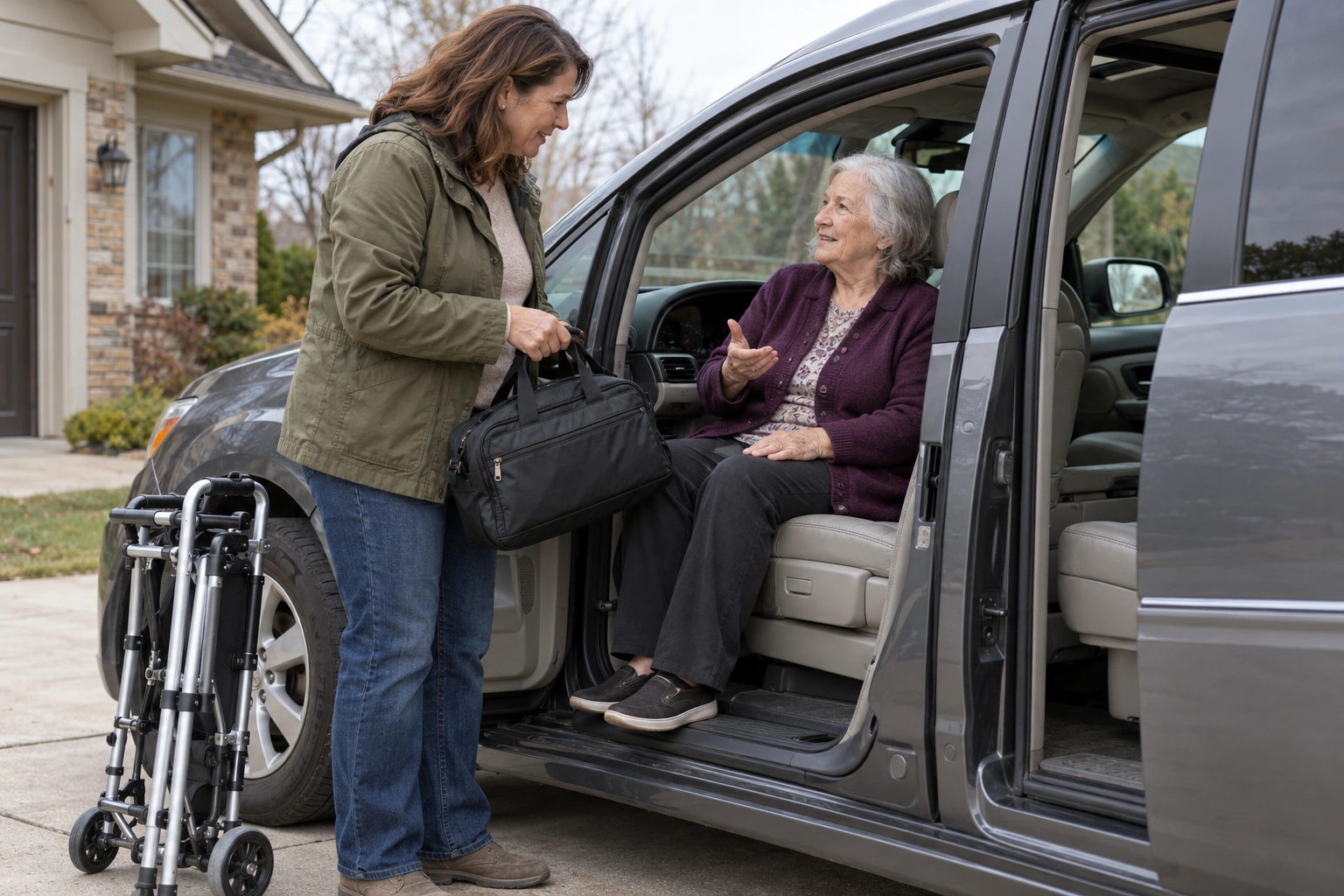
Before leaving, a traveler and her companion make sure her bag and walker will be ready for the journey. The preparations in Doctrine and Covenants 136:6–9 ask us to notice whose needs might otherwise be overlooked.
Read Doctrine and Covenants 136:6–9. Notice the preparations for people who would remain behind and the care required for vulnerable travelers. Whose needs might be overlooked in a plan you are making? Ask what would actually help before offering it.
What can I make right?
Read Doctrine and Covenants 136:23–26. The counsel includes everyday speech, borrowed property, and returning what was lost. Is there a promise to keep, something to return, or a conversation to repair? Choose a small, honest next step.
Bring joy and sorrow to the Lord
Read Doctrine and Covenants 136:28–29. The passage gives a place both to praise and to prayer in sorrow. Which invitation meets you today? You might choose a hymn, offer a quiet prayer, or sit with someone who needs company.
Come, Come, Ye Saints · Iowa, 1846A song shared at the end of the day
A child looks up as the adults sing. Worn clothing and muddy ground tell of a difficult day; their gathered voices offer companionship before another morning on the trail.
William Clayton wrote the hymn in April 1846 during the exodus from Nauvoo. Listen to its words beside the accounts of hardship on the trail. How can a song give people courage to continue together?
Read Doctrine and Covenants 136:28–29. The Lord’s counsel at Winter Quarters gives a place to singing in joy and praying in sorrow. What song helps you turn toward Him?
Come, Come, Ye Saints · A westward journeyHope for the road ahead
A mother and child share a glance as their family walks beside the wagon. The road still stretches ahead.
In Ether 12:4, faith in God opens a hope that steadies the soul. As you listen, remember both the people who reached a new home and those whose journeys ended along the way.
Consider one small way to strengthen someone who is still in the middle of a hard journey. Continue with faith in trials and Elizabeth’s story.
Redeeming love · A devotional river sceneSavior, Redeemer of My Soul
Cold water surges around the handcart as weary travelers climb toward the bank. The Savior bends to help push, His attention on the man beside Him; heavenly helpers share the effort. Consider the love and strength we seek from Him in suffering.
The Martin and Hodgetts companies crossed the North Platte on October 19, 1856, as the first winter storm struck. Read the official timeline for their journey. This devotional picture invites us to reflect on the Savior’s sustaining love.
Dallyn Vail Bayles sings Orson F. Whitney’s hymn text in Rob Gardner’s musical setting, with violinist Jenny Oaks Baker and the Lyceum Philharmonic. The published hymn pairs Whitney’s words with a different tune by Harry A. Dean. This recording is offered here as a devotional companion to the pioneer stories.
Read Matthew 25:35–40, the Savior’s teaching about feeding, clothing, and welcoming people in need. Then read Mosiah 24:14–15, where He strengthens a people to bear their burdens.
As you listen, consider where you need the Savior’s healing and how gratitude might shape your next act of kindness. Continue in the Atonement of Jesus Christ study.
February 1846Crossing the Mississippi
The departure from Nauvoo began with wagons ferried across the Mississippi on February 4, 1846. Families gathered at Sugar Creek in Iowa, carrying provisions and belongings into an uncertain future. When the camp moved west on March 1, the journey was only beginning: the Missouri River, not the Salt Lake Valley, would become that year’s stopping place.
Leaving home is more than a line on a map. Consider what a family could carry, what it had to leave, and the help it would need from its neighbors.
Spring 1846The slow miles across Iowa
Rain, flooded streams and deep mud slowed the companies across Iowa. A wagon could carry a household’s necessities and still become a burden in a difficult crossing. Reaching the Missouri River took months; the hoped-for journey west unfolded through delays, illness and repeated work.
Faith did not make the mud disappear. This scene invites us to notice patient effort and the ordinary hands that keep another family moving.
Garden Grove and Mount Pisgah · 1846Planting for people still to come
At Garden Grove and Mount Pisgah, pioneers established farms and stopping places to help later travelers. Some stayed to plant while others continued. Their service reached beyond their own immediate company: shelter and food prepared today could sustain a family arriving later.
At Winter Quarters, the revelation now recorded in Doctrine and Covenants 136 joined the practical organization of travel with care for people in need. Read Doctrine and Covenants 136:8–9 and consider whose journey your preparation might lighten.
British emigration · 1856The journey began across an ocean
For Elizabeth Crook Panting, the plains came after an Atlantic crossing. She sailed on the Thornton with Christopher and Jane. Her brother Samuel Lane Crook was also aboard; Peter Madsen’s diary records his marriage to Sarah Haines during the voyage. Samuel and Sarah stayed in the East and did not make the Willie company’s overland journey with Elizabeth.
The family also remembered a fire aboard ship: Elizabeth alerted the captain and prayed with her children. This episode comes through the family history gathered in Tell My Story, Too, rather than a ship’s log examined for this page.
Summer 1856Making ready at Iowa City
The Willie company journal records making tents, building carts, preparing wagons and weighing luggage. Its July entries also record births, deaths, worship and ordinary tasks such as washing clothing. Emigration was already demanding before the company began its passage across the plains on July 15.
The same journal makes daily travel tangible: an early bugle, breakfast, prayers, greasing carts, packing tents and another stretch of road. These were people meeting practical needs while caring for one another.
Florence · August 1856A late departure and a long road
Handcarts offered a less expensive way to reach Utah, with emigrants pulling limited belongings in wooden carts. Ten companies traveled this way from 1856 through 1860. Most did not suffer the catastrophe of the late Willie and Martin companies. Their experience should not be confused with every handcart journey.
At Florence, the question of continuing so late in the season was serious. The dated rescue overview below includes Levi Savage’s warning and the companies’ separate departures. Families listen together beside a waiting cart during a camp discussion.
The Willie company · 1856Elizabeth, Christopher and Jane
Elizabeth Crook Panting began the overland journey with Christopher, five, and Jane, one. Christopher turned six on the way west; Elizabeth turned twenty-nine in October. Their names give the migration an intimate scale: a mother, a young boy and a baby, traveling toward a hoped-for home. The Church’s historical database records all three in the Willie company.
Christopher later recalled that his father, Frederick, opposed Elizabeth’s Church participation, threatened her and hid her shoes. He remembered her borrowing shoes for worship and leaving with the children; on a train, another woman exchanged clothing with her to help her avoid recognition. These details survive as his family recollection.
Elizabeth’s family accountFuel for a hungry camp
As food dwindled on the trail, the family account remembers Elizabeth going out to gather buffalo chips for fuel. She had nearly filled her apron when an unfamiliar man approached and asked about her situation. She told him of the hunger in camp. He offered help and led her over a small hill.
The remembered encounter begins with ordinary work for a family’s survival. Neither an exact date nor a securely identified cave location is supplied by the principal family account.
The account Elizabeth’s family preservedThe gift in the cave
Elizabeth followed the man to a cave where dried buffalo meat was hanging. He filled her apron with meat and instructed her to share it with others in need. After showing her the direction back to camp, he was gone. When she turned to thank him, she could no longer find either the man or the cave. The meat remained in her apron.
This is the miracle as the family remembered it. The illustration leaves the stranger unidentified, as we do here. The account does not establish that he was Christ, an angel or a particular scriptural person.
Relief among the Willie companyA gift meant to be shared
Elizabeth returned and distributed the meat to people who needed food. In the family’s telling, the blessing reached beyond her own children. Jennie Edith Bell Mason’s later biography, preserved in the Church History Library, also records the cave, the dried meat and her return to the company.
Her journey still required endurance. The family remembered Jane becoming dangerously ill in the handcart. Mason’s biography describes the children sheltered in a rescue wagon during the Rocky Ridge ordeal while Elizabeth walked. Mother and children reached Salt Lake City with the Willie company on November 9.
Brigham Young · October 5, 1856Send help now
On October 5, Brigham Young called for teams, wagons, flour and men to bring in the emigrants still on the plains. Wilford Woodruff’s journal records the concrete scale of the appeal: sixty teams, twelve tons of flour and forty additional teamsters. Concern for distant travelers became an assignment requiring immediate preparation and sacrifice.
The call invites a direct question for disciples of Jesus Christ: what does another person need from me now? Read Matthew 25:35–40 beside this appeal for food, clothing and willing hands.
Preparing the relief wagonsThe rescue began at home
Women gathered bedding, clothing and other supplies while rescuers traveled east. Lucy Meserve Smith remembered the work of women in Provo to comfort those in need. Their service continued as survivors arrived; one delivery of food could not meet every need.
Salt Lake City was still warm when the first appeal was made. The first relief company left on October 7, before the storm caught the emigrants on October 19. Further appeals and supplies sustained the rescue over the following weeks.
Willie company · October 23, 1856The hard climb at Rocky Ridge
Relief did not instantly restore exhausted bodies. Daniel W. Jones later remembered rescuers bringing fuel, distributing provisions and encouraging the Willie emigrants. Some were already beyond recovery. The company still faced Rocky Ridge, a long, exposed crossing remembered for terrible suffering and loss.
The dated overview records the crossing and the burials at Rock Creek. Remembering rescue also means remembering those who did not survive. Alma 7:11–12 directs our faith toward a Savior who knows suffering, rather than treating survival as a measure of anyone’s righteousness.
North Platte · October 19, 1856The Martin company in the storm
The Martin company crossed the North Platte as the October 19 storm struck. It would be October 28 before express riders reached them, and October 31 before supply wagons arrived. In November they sheltered in the cove near Devil’s Gate, still suffering hunger, cold and exhaustion.
Jones identified Joseph A. Young, Abel Garr and himself as the riders sent to find the remaining companies. He also remembered helping pull exhausted families into camp. Later, baggage was stored at Fort Seminoe so wagons could carry people; Jones and others stayed to guard that property through winter.
With the Martin company · November 1856Ephraim Hanks brings food and care
In a reminiscence recorded in 1891, Ephraim Hanks described a repeated nighttime call to help the handcart travelers. When a later appeal for volunteers came, he recalled answering, “I am ready now!” He was thirty in 1856 and joined the later rescue effort; he was not one of the riders who first reached Martin on October 28.
Hanks remembered praying for a buffalo, finding one, and killing another the next day. He loaded his horses with meat and brought it to hungry families. He also recalled caring for the sick and administering priesthood blessings, including a healing near Fort Bridger. His testimony includes miraculous help alongside the lasting effects of frostbite.
Salt Lake City · November 1856The rescue continued inside the home
As the Martin company approached Salt Lake City on November 30, Brigham Young asked residents to receive the newcomers into comfortable family homes and provide careful nursing and nourishment. The rescue was not complete at the city boundary. Its next work belonged in kitchens, sickrooms and households willing to share what they had.
The Willie company had arrived on November 9. For Elizabeth and her children, the overland journey ended with all three alive. We remember their arrival alongside the grief of neighbors whose families had been broken by death.
A later Mother’s Day meeting in PocatelloJane hears a second witness
Years later, Jane was visiting a daughter in Pocatello when she attended a Mother’s Day church meeting. An elderly man recalled being a hungry boy in the Willie company. He remembered a woman sharing dried meat that she had received miraculously. Jane wept and told him that woman was her mother.
Jane later told her niece, June Cranney Monson, about this encounter. For Jane, whose mother’s account had sometimes been ridiculed, his recollection was a treasured second witness. Jane had been a baby on the trek; this is her later encounter with a recipient of the food, not a claim that she witnessed the cave herself. The surviving account does not name the man or date the meeting.
The railroad connection · 1869The overland era gives way to rail
On May 10, 1869, the transcontinental lines met at Promontory Summit. Railroad travel changed the journey west that wagons and handcarts had once made over many months. The waiting family and passenger train bring that change in travel into view.
Elizabeth’s later life continued in Logan. The family history records marriages to William Wilkes and Hiram K. Cranney and remembers her enduring trust in God. She died on March 15, 1891, aged sixty-three. Jane and Christopher carried the family’s memories into another generation.
The journey beginsLeaving Nauvoo, 1846
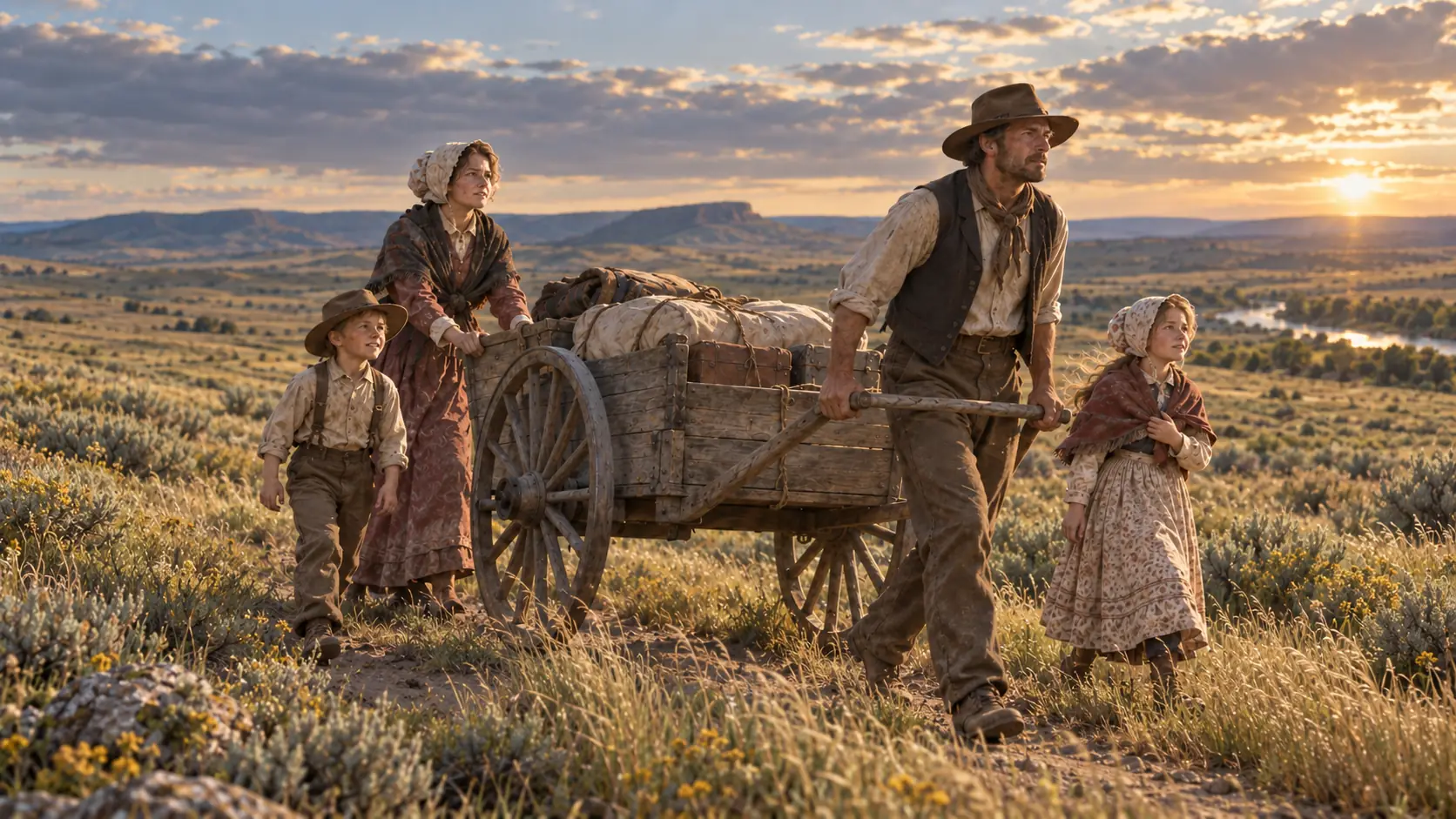
The winter departure from Nauvoo began a long migration shaped by uncertainty, sacrifice, and faith. Families crossed the Mississippi River carrying what they could preserve from homes they were leaving behind.
A family moves beside its wagon through a cold, uncertain landscape. They are leaving Nauvoo behind, carrying loss, determination and the hope that their westward journey will lead to safety.
Shelter and preparationWinter Quarters, 1846 to 1847
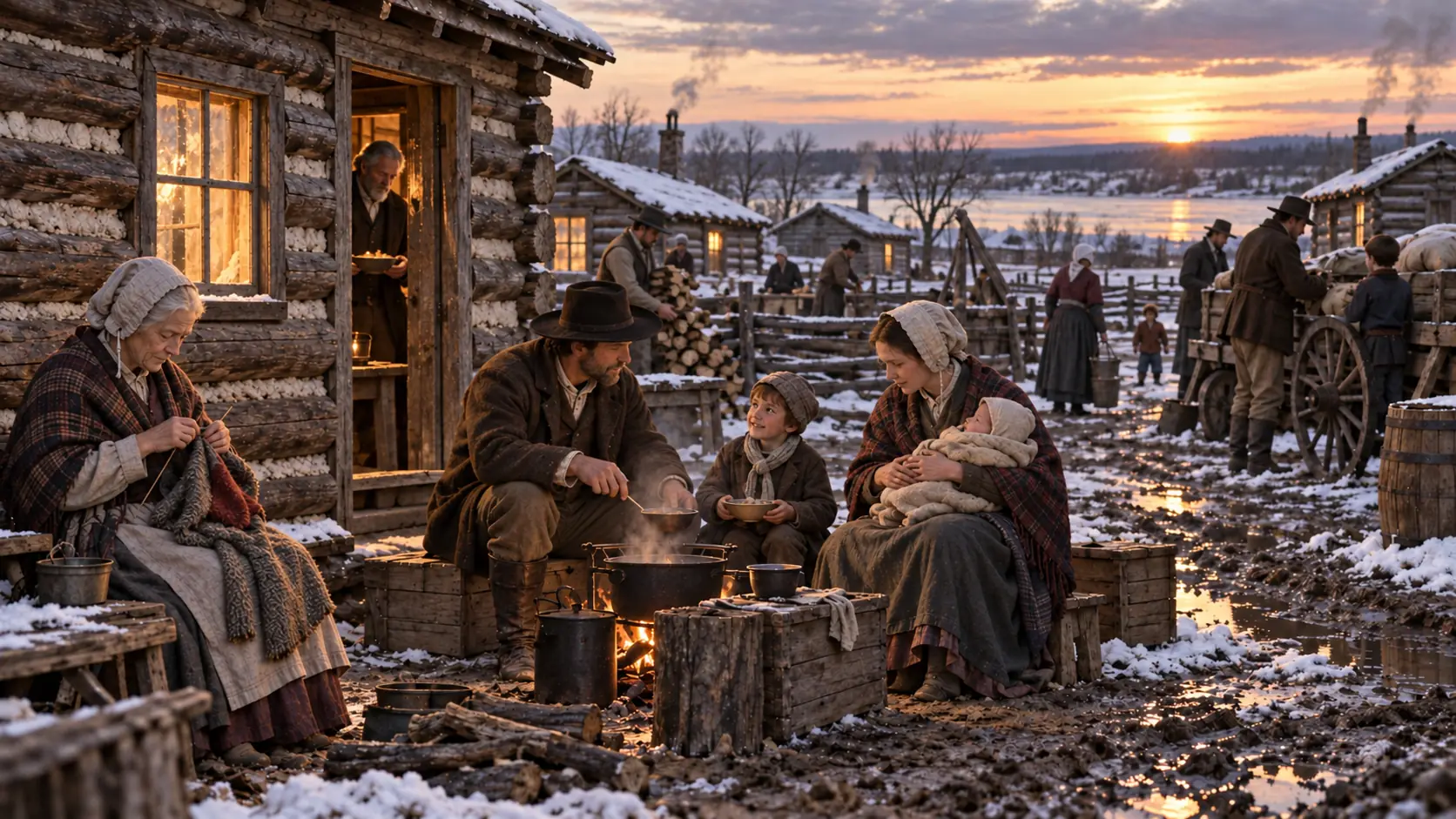
Winter Quarters became a major temporary settlement where the Saints built homes, organized companies, worshipped, and prepared for the journey west. Illness, exposure, and grief made the winter especially difficult.
Families and neighbors build together at Winter Quarters because survival depends upon shared labor. Their preparation through a season of grief and endurance helped make the organized 1847 migration possible.
Faith in ordinary workDaily Life on the Trail
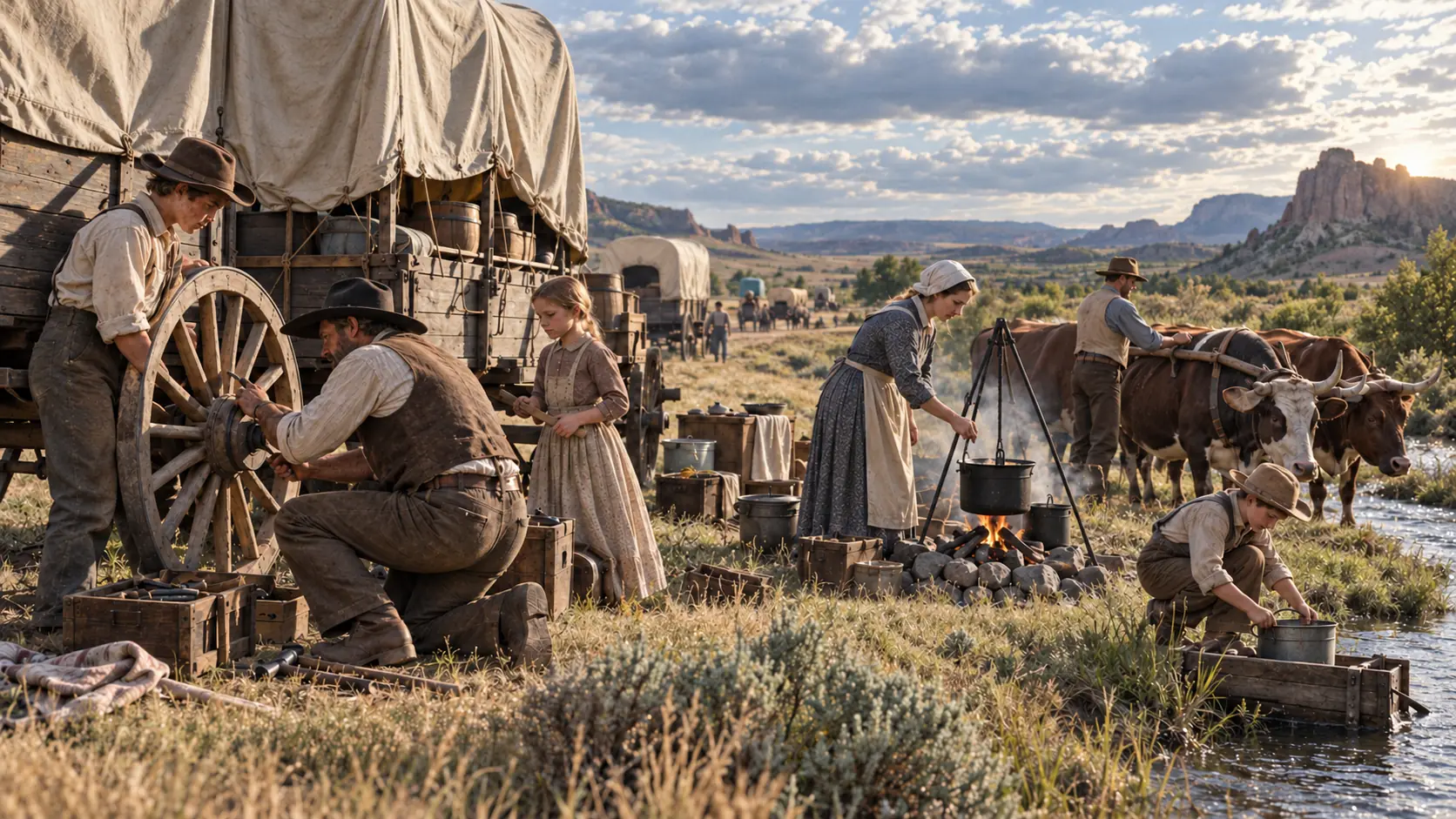
Travel across the plains included far more than forward movement. Each day required cooking, caring for children and animals, repairing equipment, finding water, and preparing camp.
The different tasks in the scene show the ordinary labor behind the migration. Progress depended on practical skill, cooperation, and the repeated choice to continue one day at a time.
Across the plainsWestward Beside the Platte
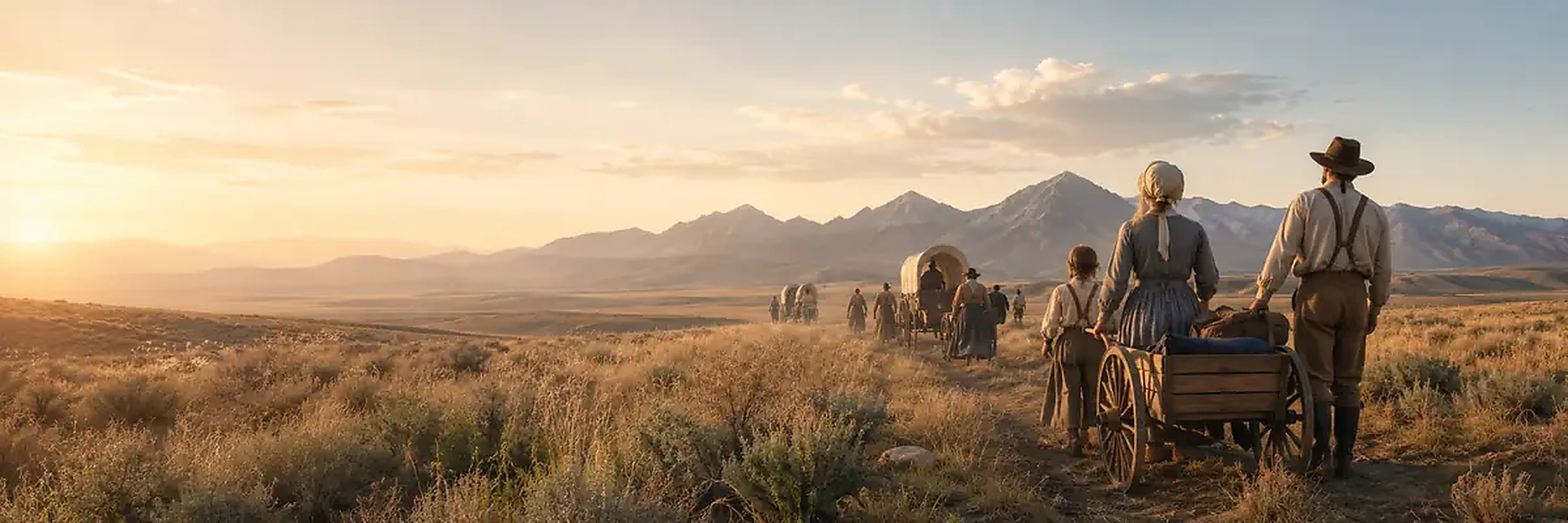
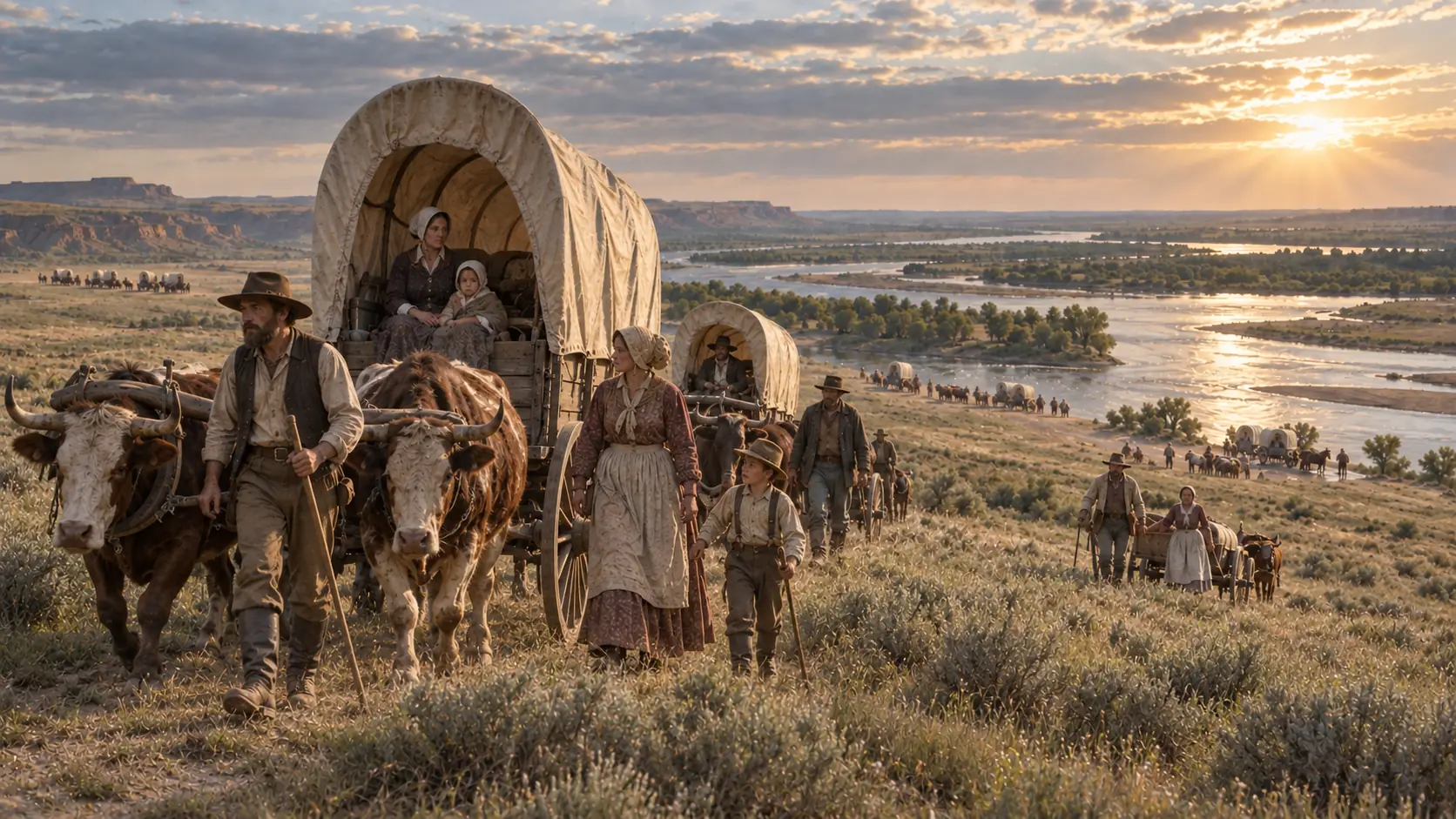
Much of the overland route followed river corridors that provided water, grass, and a recognizable path across the plains. Pioneer companies often traveled in organized groups rather than as one unbroken line.
The separated wagons and broad landscape emphasize the scale and distance of the journey. The Platte River corridor connected camps, landmarks, and difficult stretches along the westward trail.
Shared strengthCrossing the Rivers
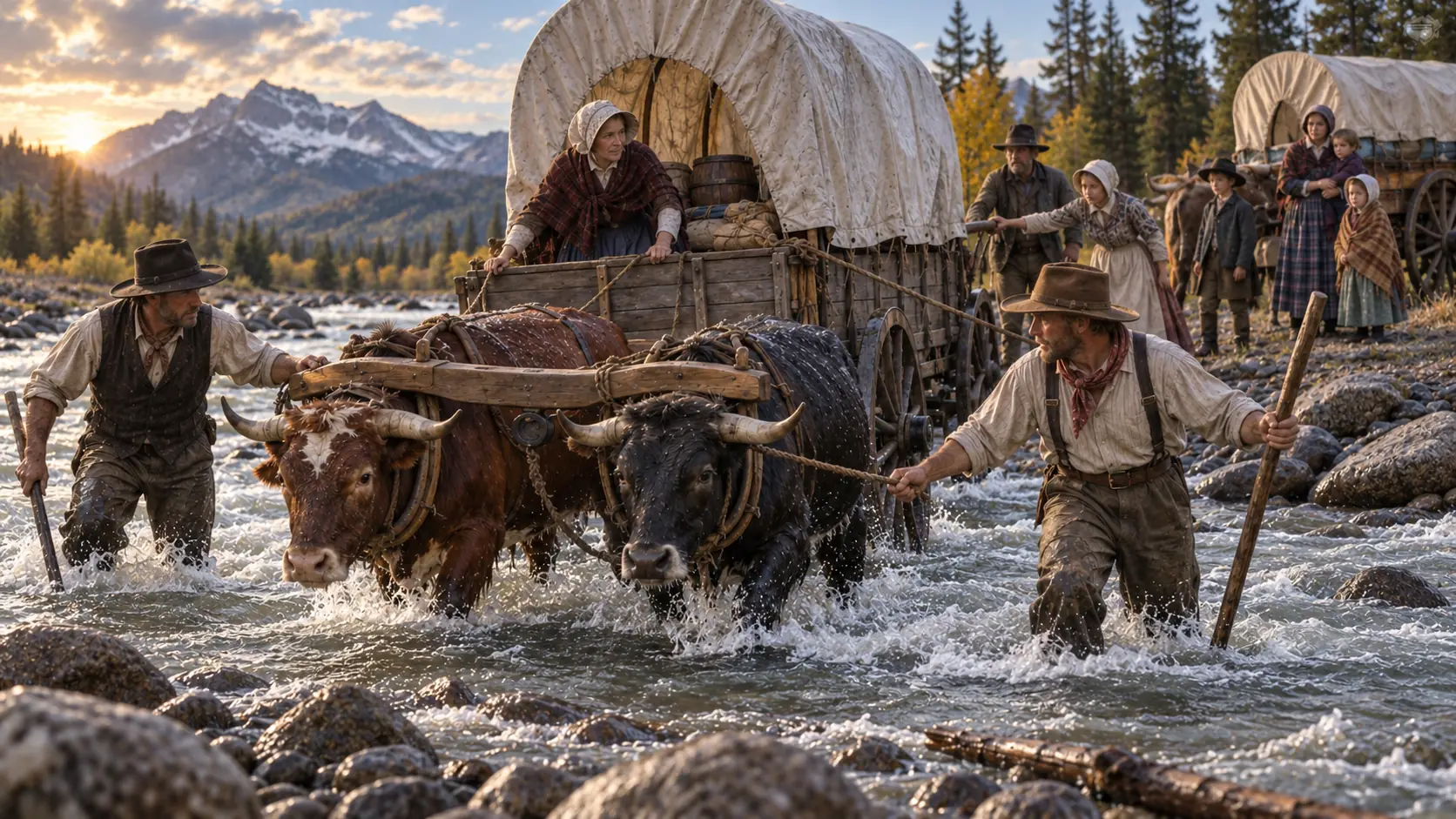
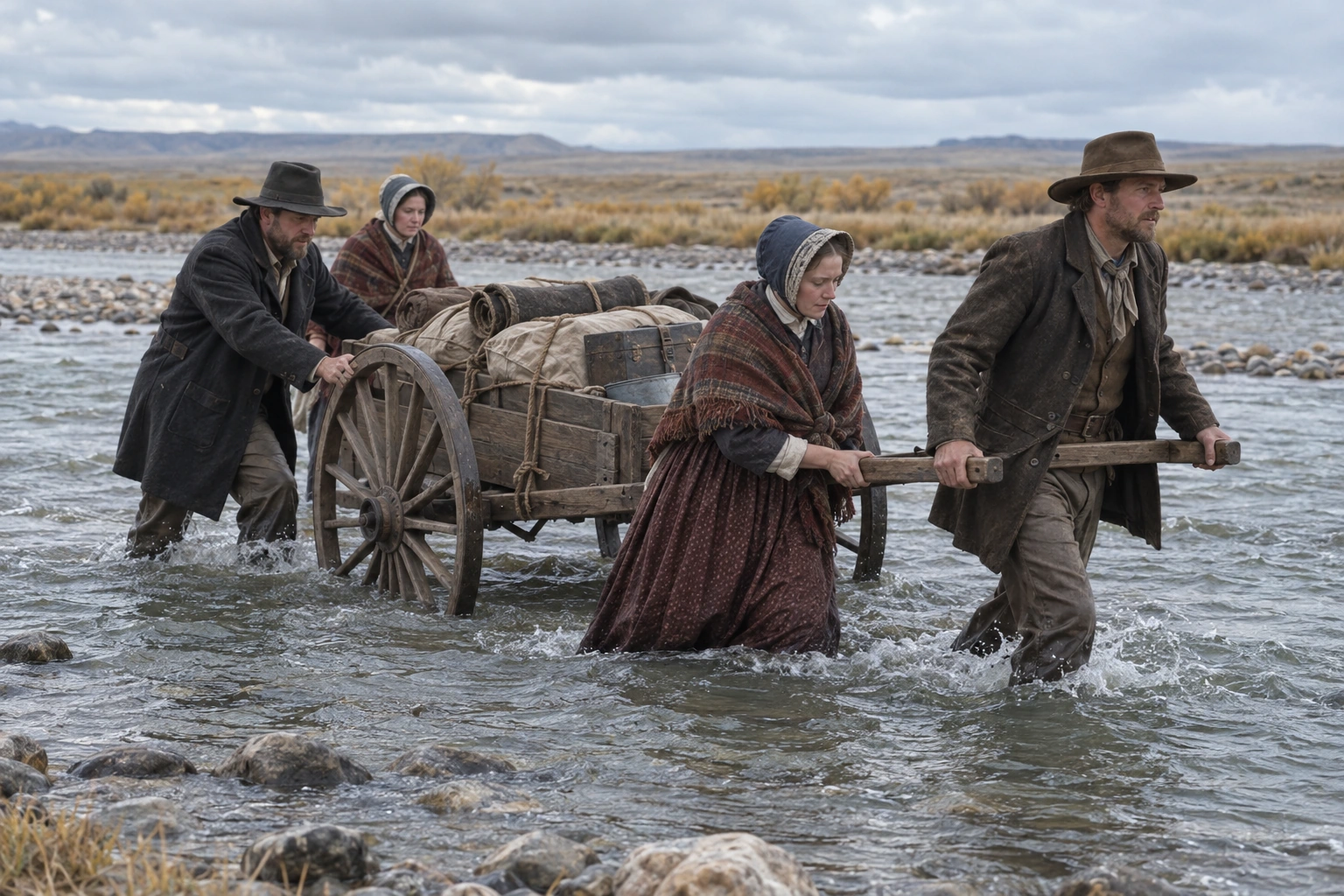
River crossings demanded careful judgment and coordinated labor. Travelers had to guide animals, protect supplies, manage wagons, and respond to changing water and weather conditions.
People crowd around the wagon as it enters the cold river. Every steadying hand matters, revealing both the danger of the crossing and the pioneers' dependence upon one another.
Carrying the journeyThe Handcart Journey, 1856
Between 1856 and 1860, thousands of Latter-day Saint emigrants traveled west in handcart companies. Their smaller carts limited what families could carry and required travelers to supply much of the power themselves.
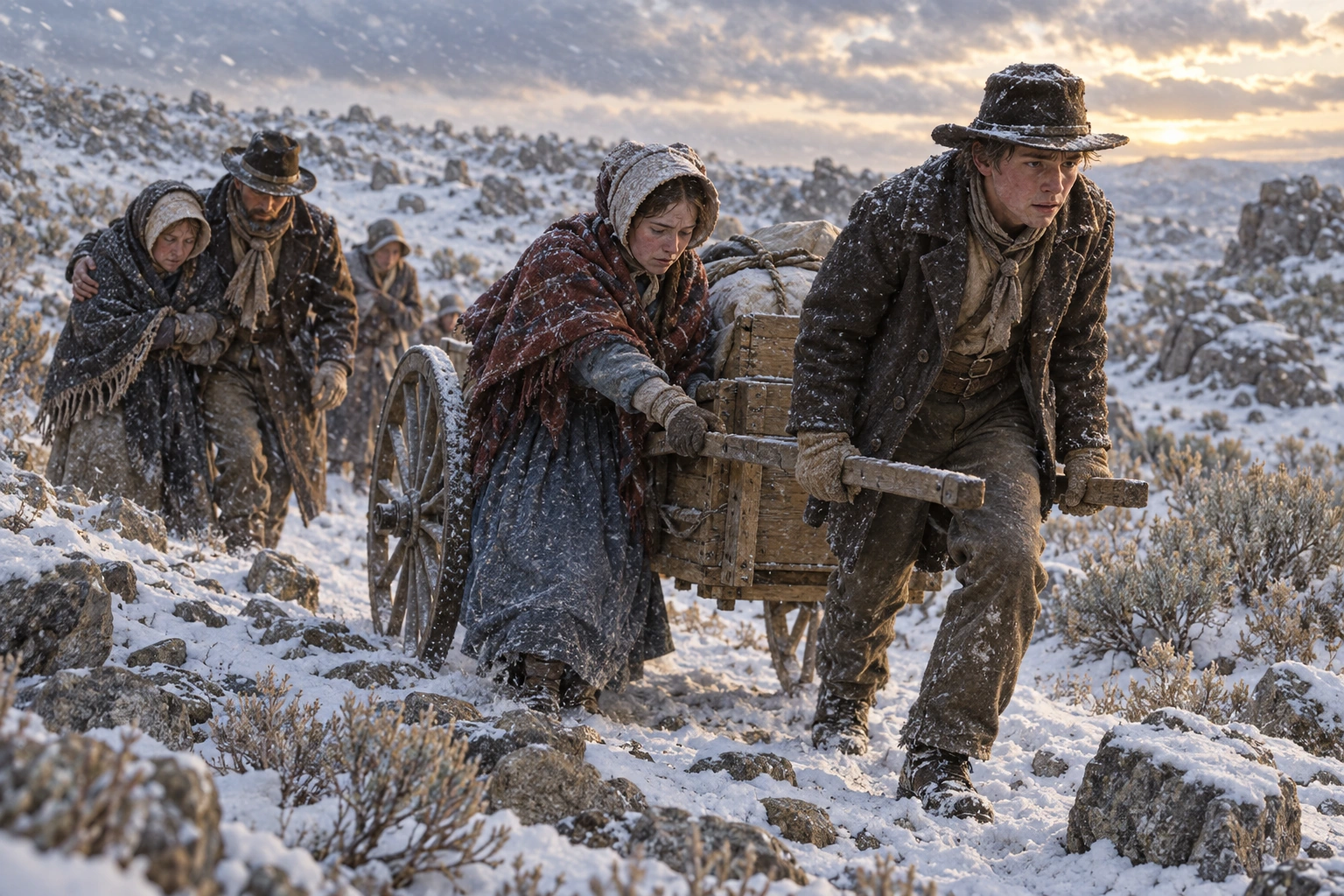
A family leans together into the weight of a handcart. Their journey would demand preparation and endurance, and for some it would also bring terrible loss, rescuing hands and lasting faith.
Relief on the trailRescue Wagons Arrive
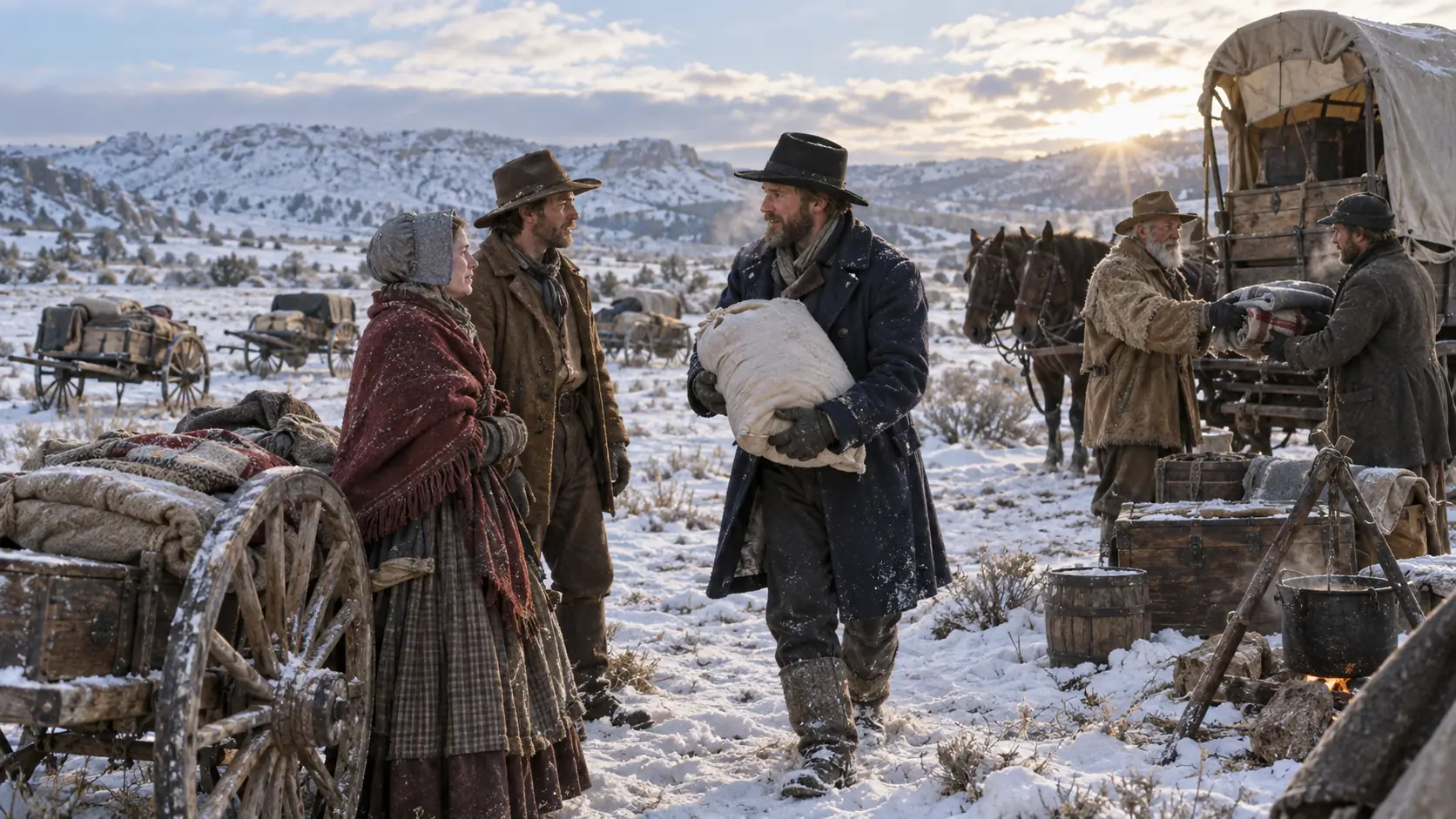
When late handcart companies encountered severe winter conditions in 1856, relief parties traveled from Utah with food, clothing, wagons, and teams. Their aid saved lives, though many pioneers had already suffered terribly.
Rescuers place food, blankets and supplies into waiting hands. The human care at the center of the moment answers tragedy with the disciples' urgent determination to go out and help.
The mountain passage opensFirst View of the Valley, 1847
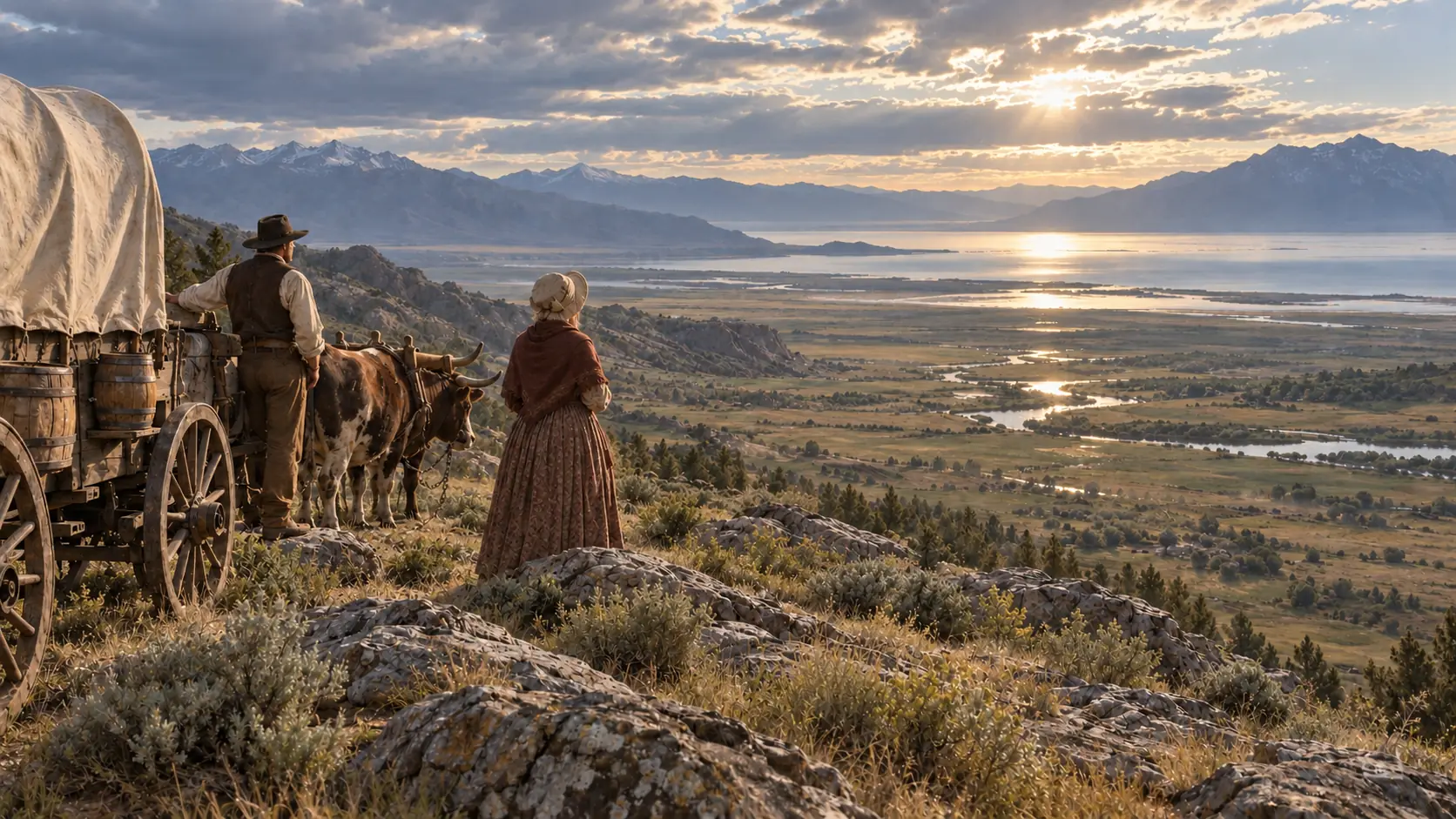
After months of travel, members of the advance company entered the Salt Lake Valley in July 1847. Arrival did not end their work; it began the immediate tasks of planting, irrigation, shelter, and preparation for others still coming.
A couple looks across the valley with relief, uncertainty and new responsibility before them. Their destination is not a finished refuge; it is a place where homes, crops and a community must now be built.
From arrival to settlementBuilding a New Community
The pioneers began organizing irrigation, shelter, food production, roads, and community life soon after arriving. Settlement required sustained effort from people with different skills and responsibilities.
Neighbors work side by side, preparing a place to live as more travelers enter the valley. Reaching their destination was only the beginning of making a home.
A forty-year workBuilding the Salt Lake Temple, 1853 to 1893
Construction of the Salt Lake Temple began in 1853 and continued for forty years before its dedication in 1893. The project endured interruptions, engineering challenges, and changes in building methods.
Workers shape stone as the temple walls slowly rise. Four decades of sacrifice turned their labor into a lasting expression of worship, covenant and devotion to Jesus Christ.