Church film · Dramatization · 6:06
Watch A Man without Eloquence
Film and preview: The Church of Jesus Christ of Latter-day Saints
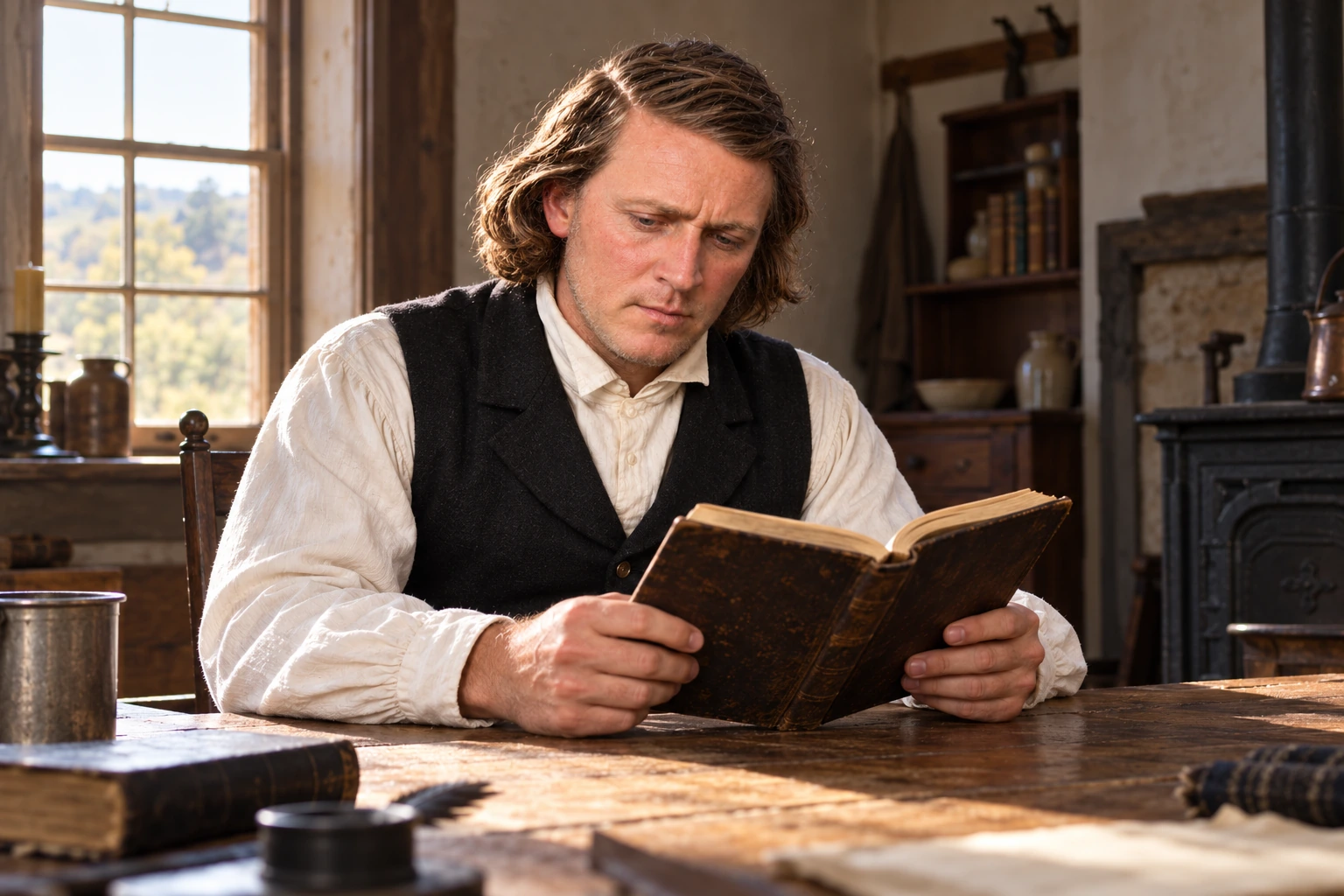
Brigham Young studied the Book of Mormon before joining the Church. This room imagines a quiet moment within that longer search.
Brigham Young encountered the Book of Mormon soon after its publication in 1830. Copies reached his family through the missionary work of Samuel Smith. Brigham examined the message for about two years before accepting baptism. He was a working craftsman in Mendon, New York, making and repairing furniture and fitting doors, windows, and other woodwork.
At home, his wife Miriam was ill with tuberculosis. Alongside earning a living, Brigham helped care for her and their two young daughters. His search for religious truth unfolded within those daily responsibilities. He read, listened, and considered what the missionaries taught before committing himself to the Church.
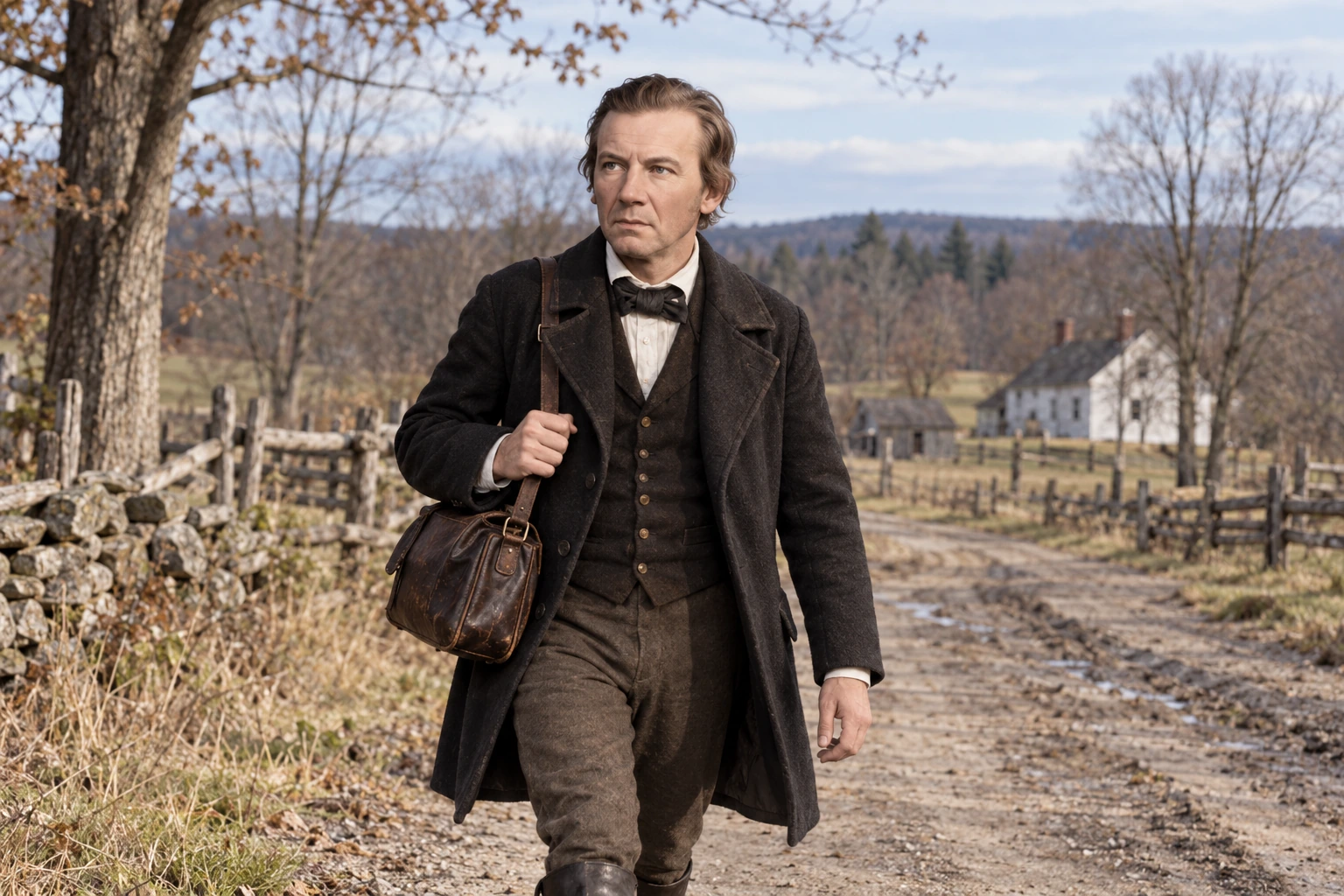
Miller carried his new faith to communities in New York, Pennsylvania, and Upper Canada. The road and surroundings imagine the journeys recorded in his missionary history.
Eleazer Miller was born in Coeymans, New York, in 1795. He married Rebecca Van Zant in 1816. The Church’s biographical database dates his baptism to May 1831 and records missionary service in New York and Pennsylvania that year, followed by another New York mission in 1832. In the spring of 1832 he was thirty-six; Brigham was thirty.
Miller carried his new faith beyond his own household. His recorded assignments would also take him to the Earnestown and Loughborough area of Upper Canada from June through September 1832. His encounter with Brigham belonged to this early period of preaching, when converts were already taking the message to other communities.
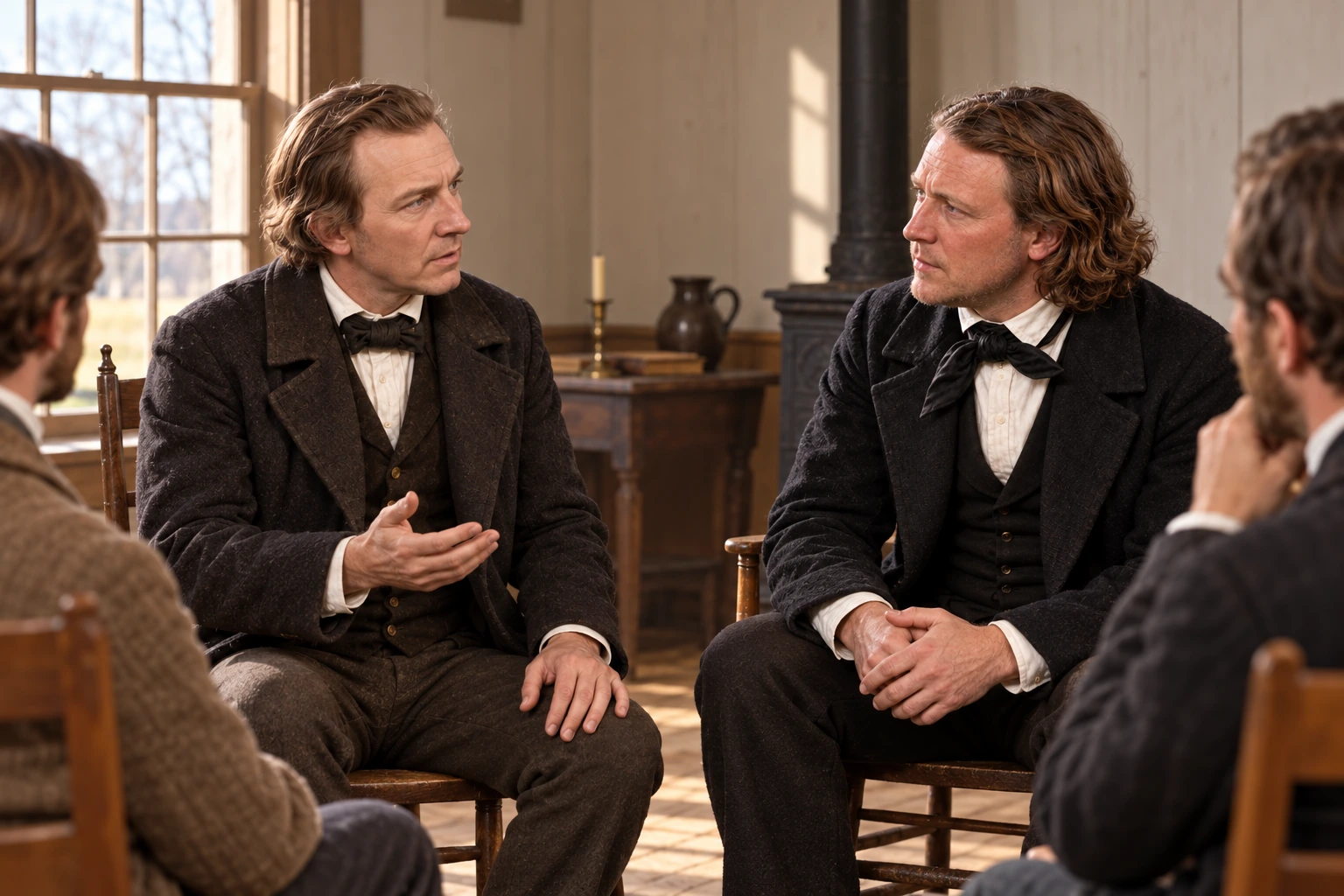
Brigham remembered the power of a simple testimony. The room and gathered listeners give a setting to that recollection; their exact arrangement is not recorded.
Brigham Young: seeking truth and testimony Teaching by the Spirit: The Language of Inspiration
Brigham later described hearing a man who lacked polished speech or conspicuous learning bear a simple testimony of the Book of Mormon and Joseph Smith’s prophetic calling. Church teaching materials identify that missionary as Eleazer Miller. What stayed with Brigham was the conviction with which the witness was offered and the spiritual confirmation he himself experienced.
In his recollection, the Holy Ghost illuminated his understanding. He became convinced that the testimony was true. Miller’s words reached a man who had already spent a long time examining the gospel. The remembered encounter joins those two parts of Brigham’s conversion: patient inquiry and a personal witness of the Spirit.
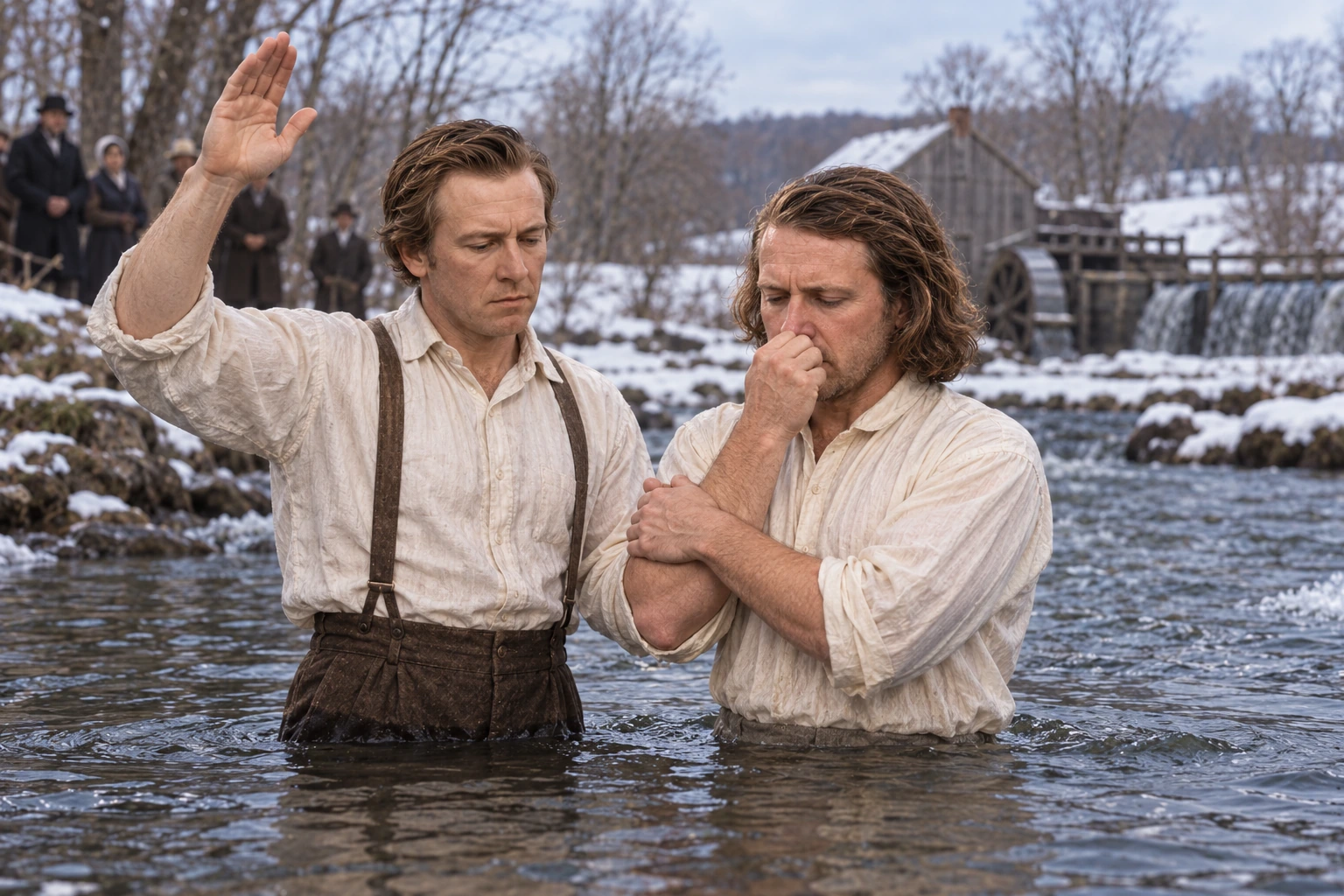
Brigham remembered being baptized by Eleazer Miller in his millstream in April 1832. The winter setting recalls his account; the scene is reconstructed.
Brigham Young: repentance and baptism Living in a Chapter of History — the Mendon branch The Ministry of Brigham Young
On a cold, snowy day in April 1832, Miller baptized Brigham in Brigham’s own millstream. Brigham later remembered feeling humble and childlike, with an assurance that his sins were forgiven. He was confirmed and ordained an elder, and soon began preaching himself.
Miriam was baptized within a few weeks. Other members of the Young family and their neighbors also joined the growing Mendon branch. That September, Miriam died. Brigham’s first months in the Church held both the beginning of a new ministry and the loss of his wife, leaving him with their two daughters.
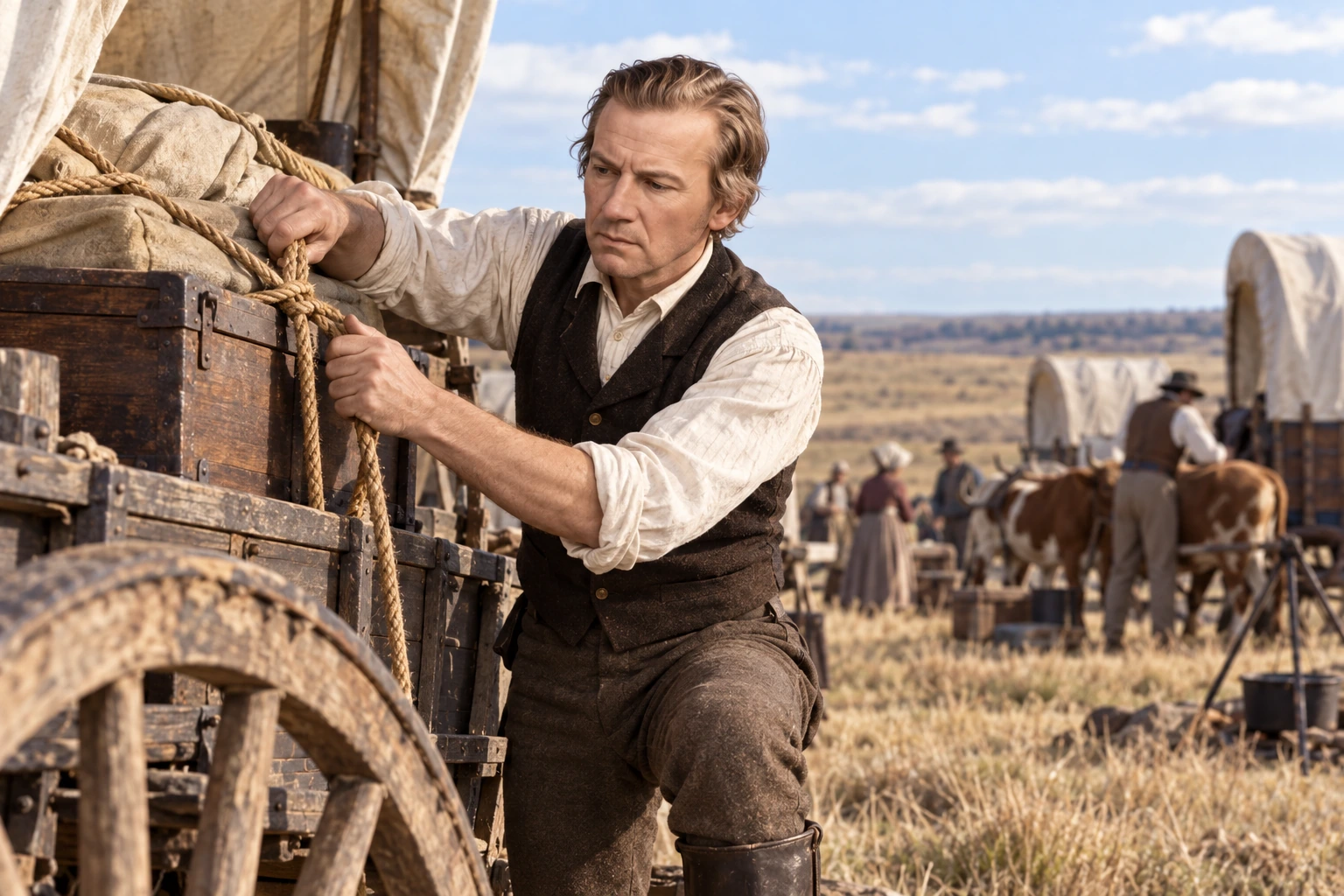
Miller crossed the plains in 1848. Preparing supplies for a wagon brings the practical work of that journey into view. The campsite and task are reconstructed.
Eleazer Miller — Church History Biographical Database John Heward’s autobiography — the 1848 journey
Sixteen years later, Miller and Rebecca traveled west in Brigham Young’s 1848 company. Miller was fifty-two. John Heward, writing about his own journey, remembered starting west in company with Miller and spending several days at Winter Quarters before moving onward. Heward described the larger journey’s practical demands: finding feed, using buffalo chips for fuel, caring for footsore cattle, and receiving help with teams as the travelers approached the mountains.
The company reached the Salt Lake Valley in September. Miller’s record continued in Utah long after the millstream baptism for which he became best known. He died in Salt Lake City on April 12, 1876, aged eighty. His service had stretched from the small branches of the early 1830s to the established communities of the American West.
Church film · Dramatization · 6:06
Film and preview: The Church of Jesus Christ of Latter-day Saints
How can patient study and another person’s testimony work together?
What can you share honestly without trying to sound impressive?
How might one meaningful moment grow into years of ordinary service?