Church film · Dramatization · 15:03
Watch Only a Stonecutter
Film and preview: The Church of Jesus Christ of Latter-day Saints
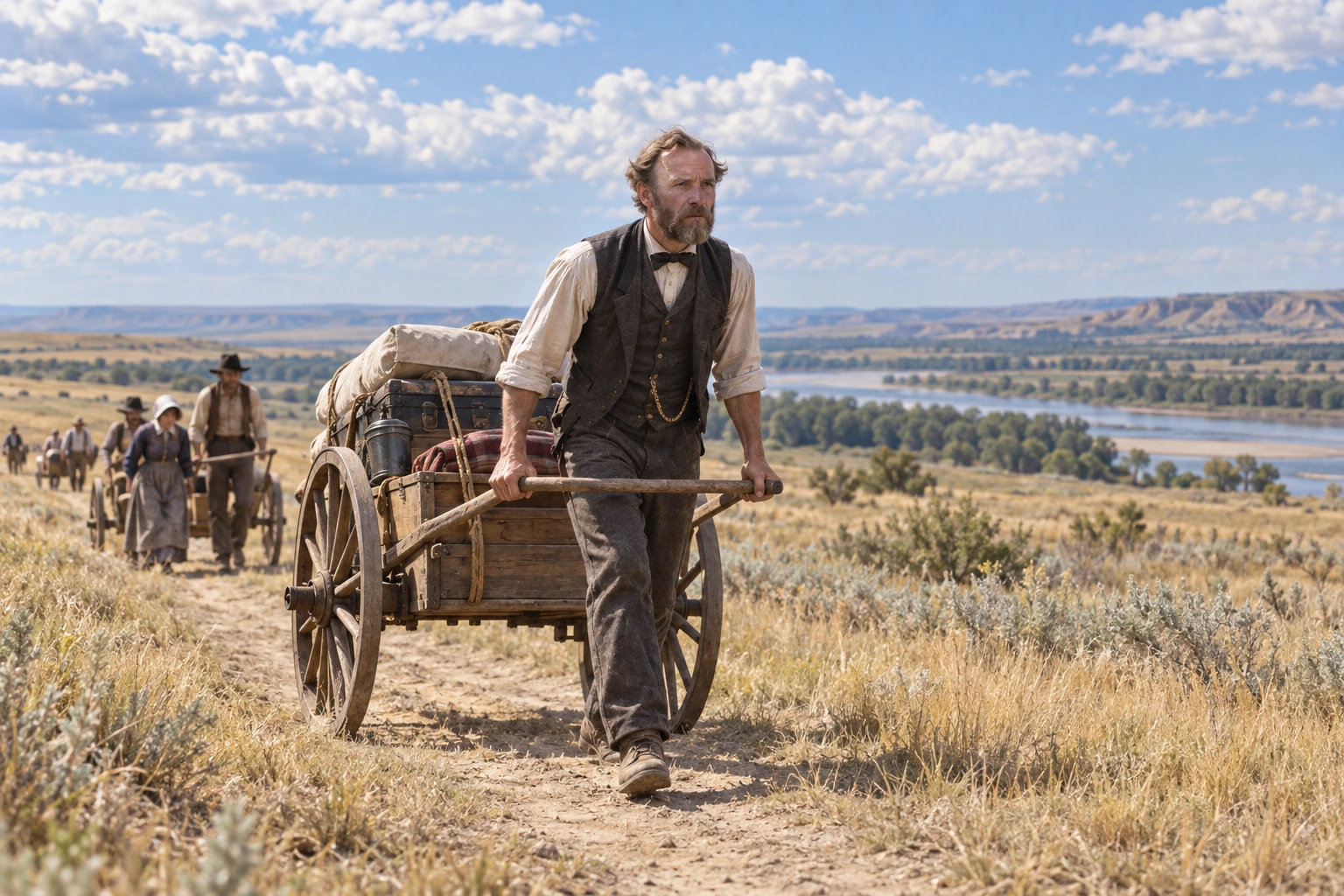
Moyle traveled with the Ellsworth handcart company in 1856. The trail and unnamed travelers imagine the overland journey recorded in his journal.
Moyle Park, Alpine — Ensign Peak Foundation site history John Rowe Moyle — Church History Biographical Database John Rowe Moyle’s journal, 1856–1858 Edmund Ellsworth handcart company, 1856
John Rowe Moyle and his wife joined the Church in England in 1851. Five years later, they emigrated with their children. Moyle was forty-eight when the family joined Edmund Ellsworth’s handcart company for the overland journey to Utah.
His own brief journal records the earlier rail journey from Boston to Iowa, arriving on June 2. After about a week in camp, he left with the first handcart division under Ellsworth. The company’s route continued from Iowa City across the plains, reaching Salt Lake City on September 26, 1856. The rail trip, camp preparations, and months on the trail were successive stages of the family’s move to a new home.
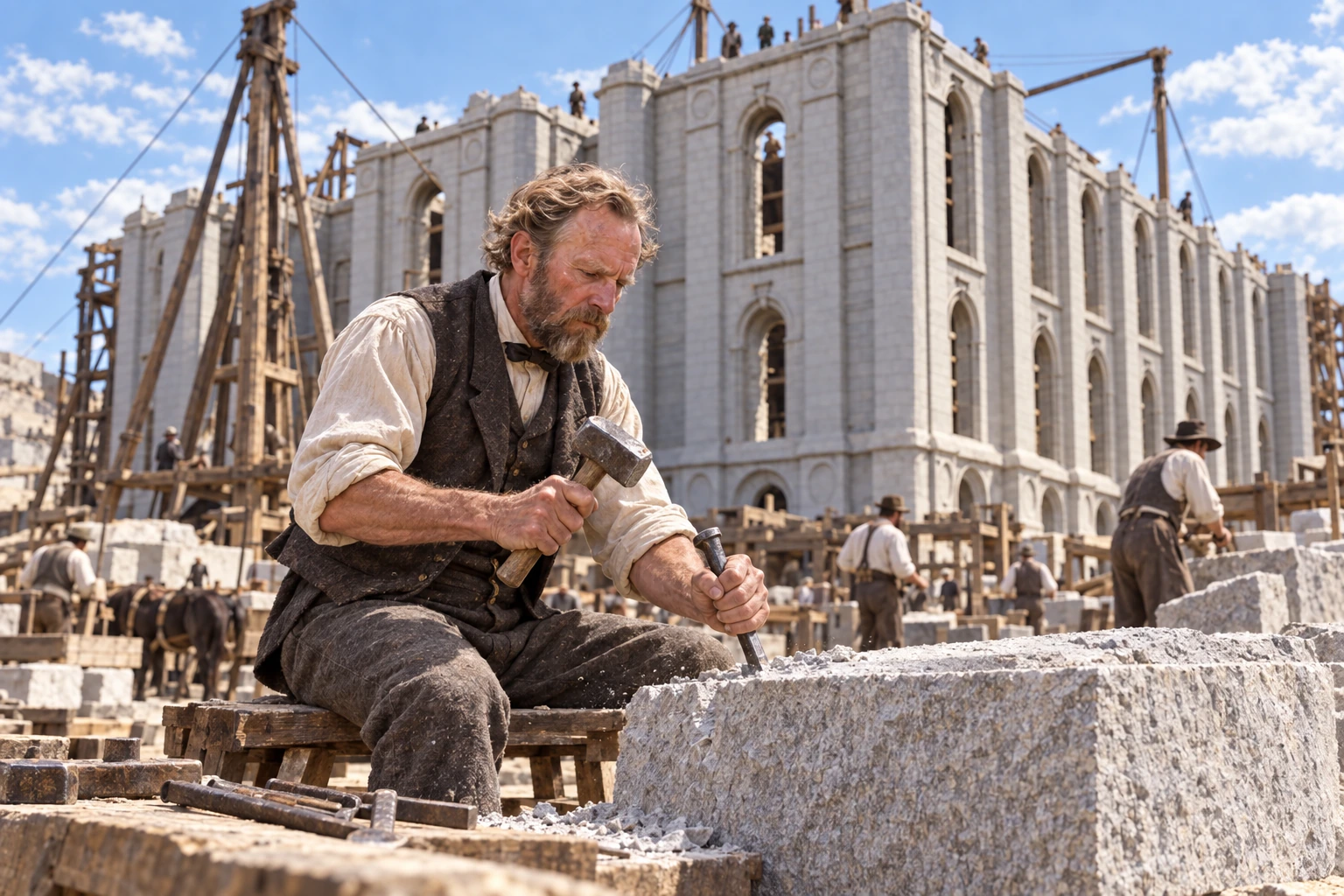
Moyle brought his skills as a stonecutter to the long work of building the Salt Lake Temple. The unfinished walls recall its construction years.
Moyle Park, Alpine — Ensign Peak Foundation site history Lift Where You Stand
The Moyles settled in Alpine, south of Salt Lake City. Their home and farm were there, while the temple site lay about twenty-two miles away. Moyle was an accomplished stonecutter, and his skill was wanted for the temple. He undertook the journey on foot, leaving the family’s horse available for work at home.
His stone house survives at the historic Moyle property, now an Alpine city park. The home preserves the setting of the family life and farm work that continued alongside his temple service.
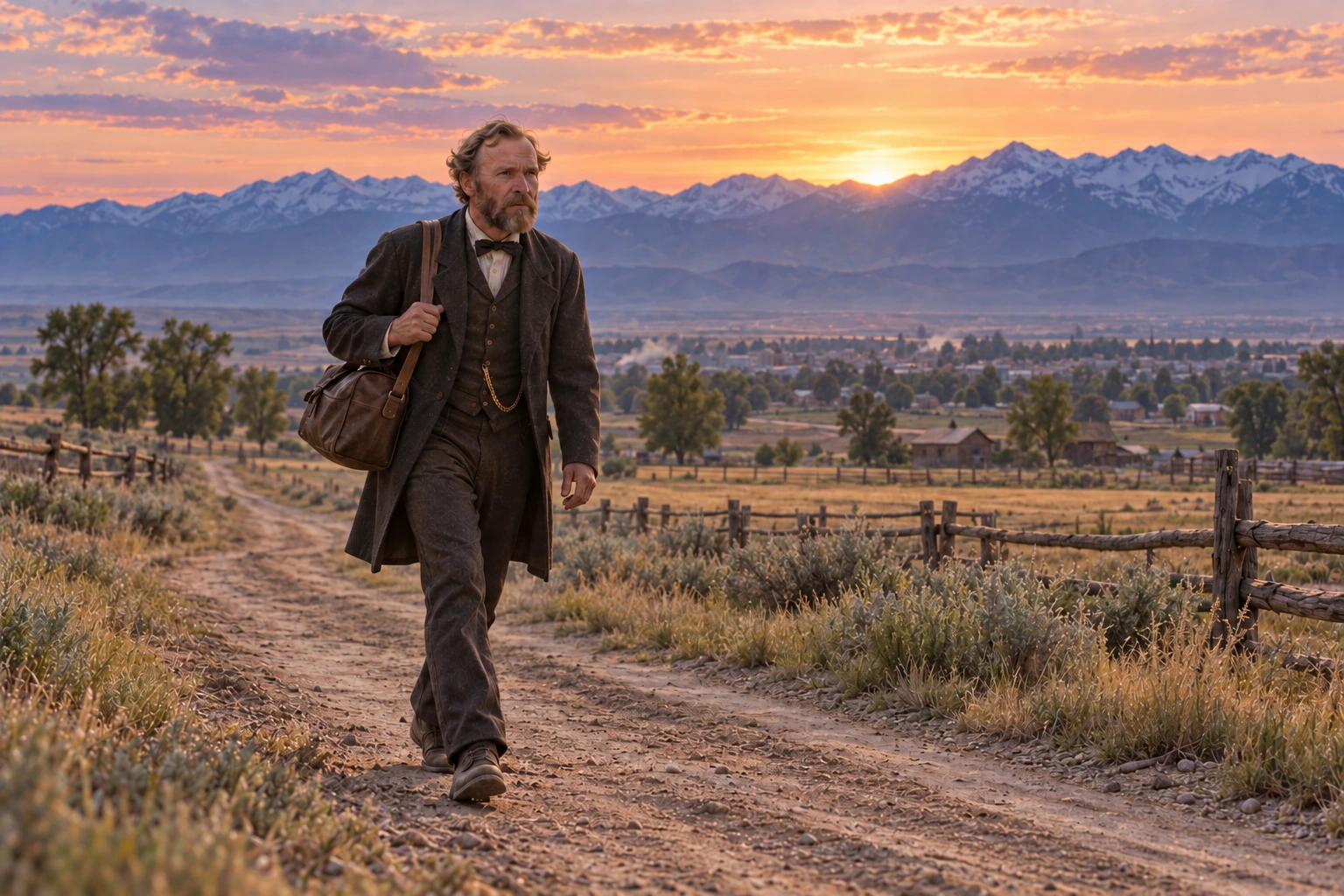
Later accounts remember Moyle walking between Alpine and his temple work in Salt Lake City. This imagined landscape recalls the persistence of those journeys.
Lift Where You Stand Moyle Park, Alpine — Ensign Peak Foundation site history
The weekly journey began before daylight. In the account retold by Dieter F. Uchtdorf, Moyle left home at about two o’clock on Monday morning to reach work by eight. He stayed in Salt Lake City during the week. After work ended on Friday evening, he walked home again, arriving around midnight.
During those working weeks he lodged with a son in Salt Lake City. Friday’s return took him back to the farm and family in Alpine; Monday brought the long outward journey again.
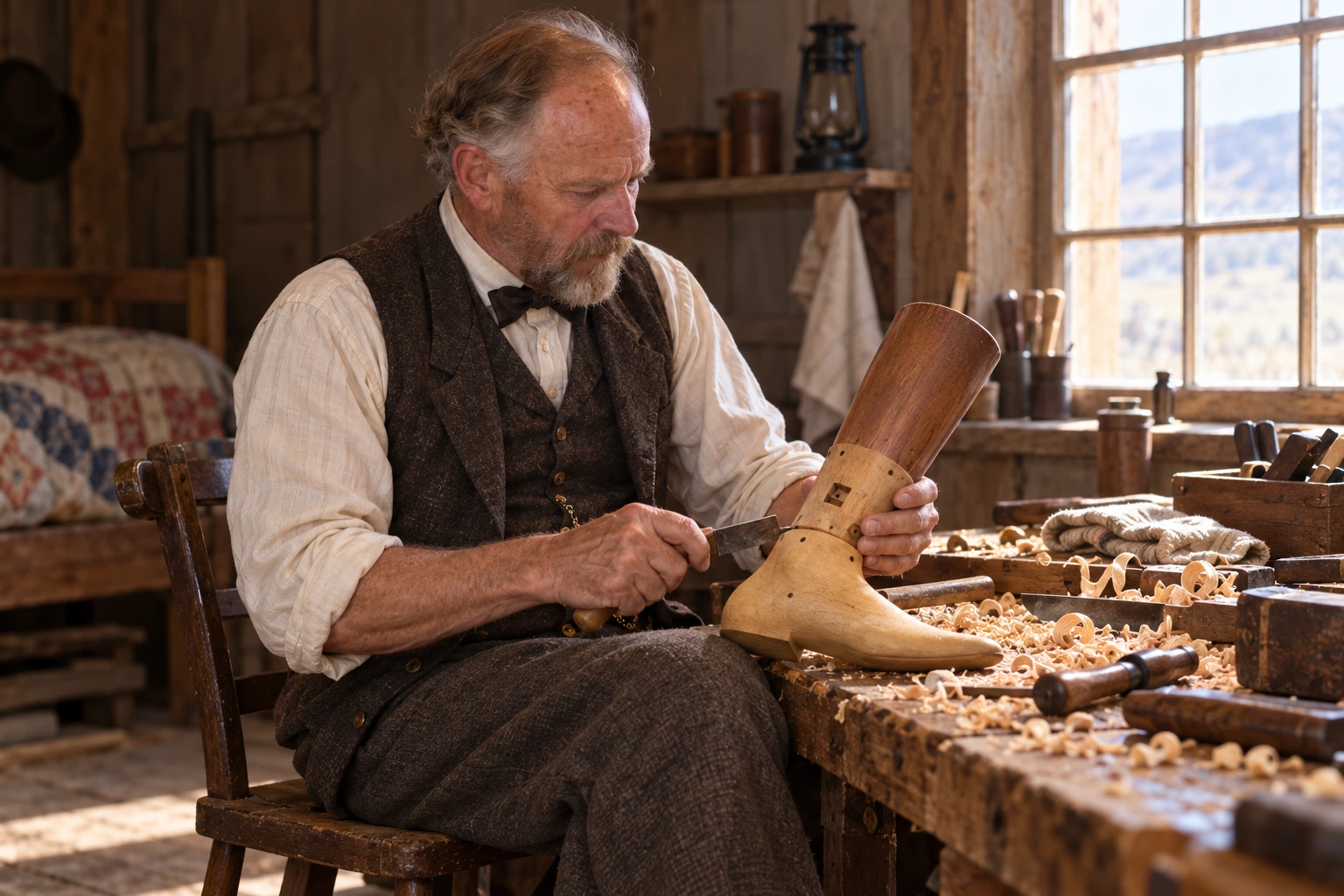
Accounts remember Moyle making a wooden leg after losing his lower leg. This reconstruction draws on a later replica; the exact original fittings remain uncertain.
Lift Where You Stand Moyle Park, Alpine — Ensign Peak Foundation site history
An injury eventually cost Moyle a leg. During his recovery, he made a wooden replacement with an articulated ankle and foot. He practiced walking on it, gradually rebuilding the endurance needed for the journey to Salt Lake City. Uchtdorf’s account describes pain and persistence as he learned to use it.
A wooden leg associated with Moyle survives in the Daughters of Utah Pioneers museum collection. It is a tangible reminder of the adaptation that enabled this stonecutter to resume his working life.
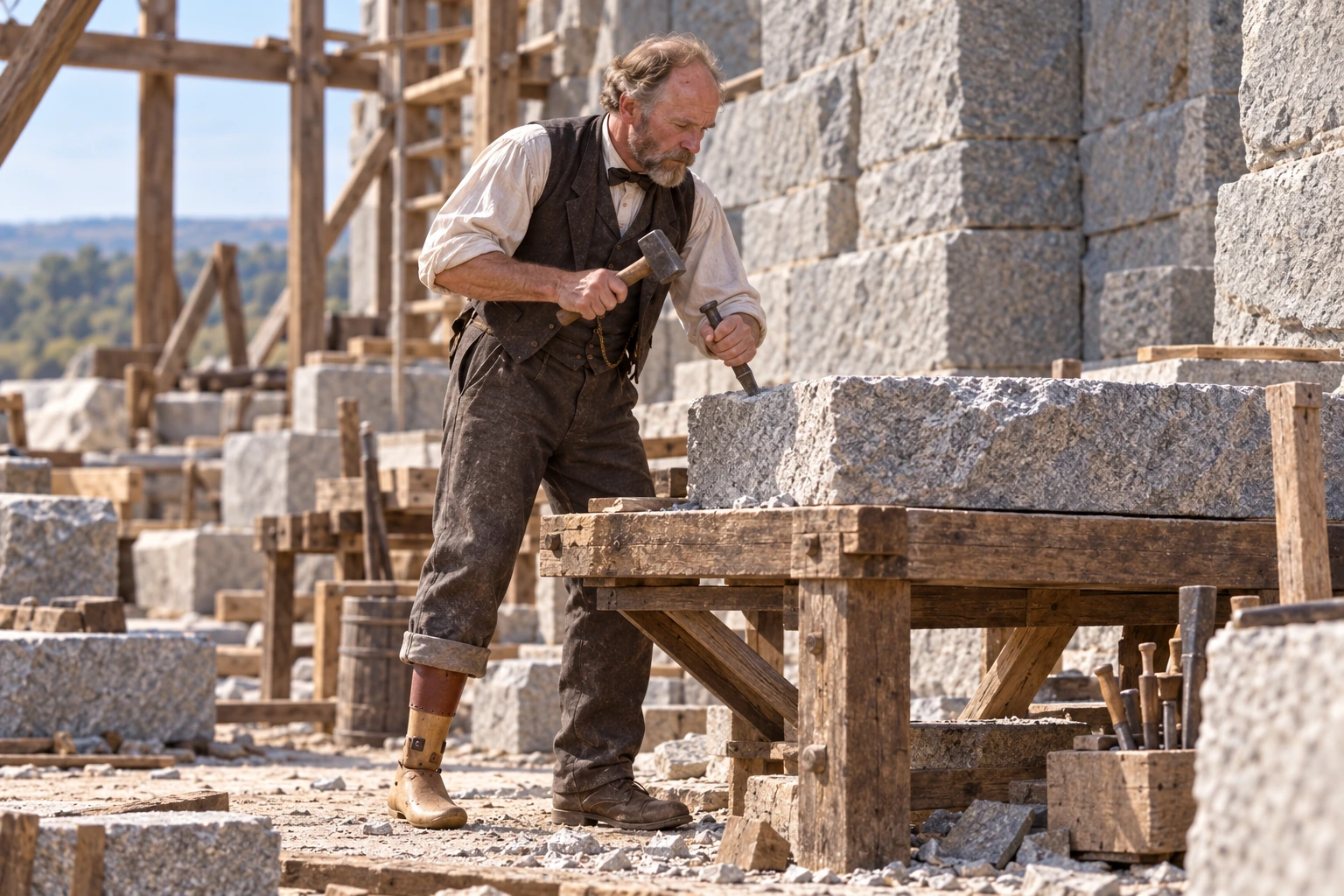
Later accounts describe Moyle returning to temple work with a wooden leg. The scene imagines that determination; the prosthesis side and fittings are not established.
Lift Where You Stand Moyle Park, Alpine — Ensign Peak Foundation site history John Rowe Moyle — Church History Biographical Database Salt Lake Temple — dedication history
Moyle returned to temple work. He is remembered for carving the dedicatory inscription on the east side of the Salt Lake Temple. The words named the purpose of the building he had helped shape over years of skilled labor: holiness to the Lord and a house of the Lord.
He died on February 15, 1889, before the completed temple was dedicated in April 1893. His story therefore ends before the great dedication gathering. The finished building carried forward work he had already given—through the long journeys from Alpine, the loss of his leg, the making of a replacement, and his return to the stone.
Church film · Dramatization · 15:03
Film and preview: The Church of Jesus Christ of Latter-day Saints
Whose skilled work do you overlook in the places you value?
How can you honor persistence while respecting another person’s limits?
What help allows each member of a community to contribute?