Read and discover
A wait longer than expected
Explore and study
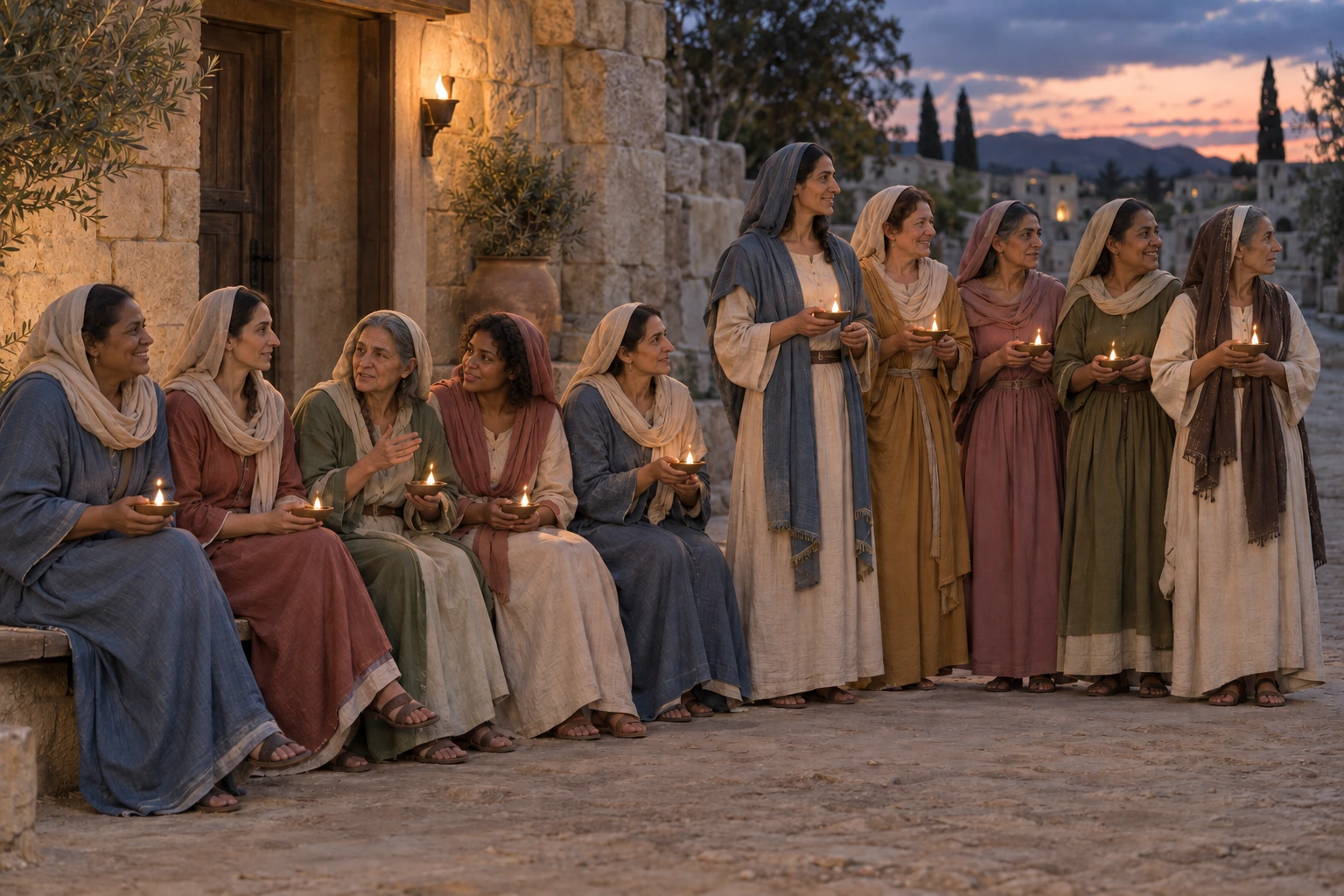
Ten women with their lamps
Ten women gather with their lamps to meet the bridegroom. The opening of Jesus' parable brings them together before the delay reveals the difference in their preparation.
Ten virgins take their lamps and go to meet a bridegroom. Five bring additional oil and five do not. The story belongs to Jesus' teaching about watchfulness, but the waiting itself becomes longer than expected. All ten grow drowsy and sleep. Matthew 25:1-13
Read and discover
The midnight call and the lamps
Explore and study
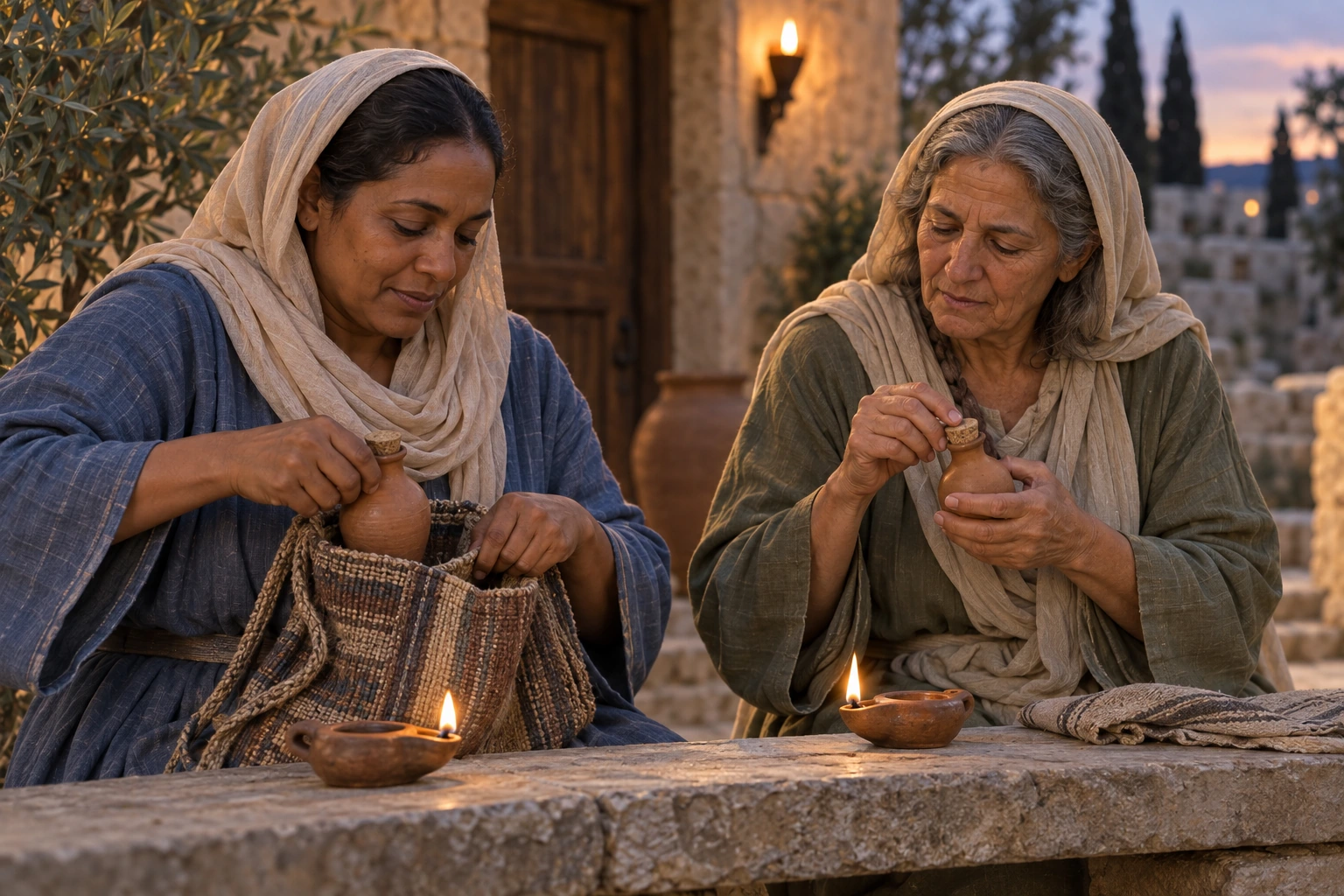
Oil kept ready
The women have brought oil in separate vessels with their lamps. Their quiet preparation pictures the provision that distinguishes the wise attendants in Jesus' story.
The midnight announcement wakes them all. They rise to prepare their lamps, and the lack of oil becomes urgent. The distinction is not that the wise never slept. Their earlier preparation enables them to respond when the moment arrives.
While the others go to buy oil, the bridegroom comes and the prepared attendants enter the marriage feast. The closed door gives the ending its seriousness. Jesus concludes with the call to watch because the day and hour are not known.
Explore and study
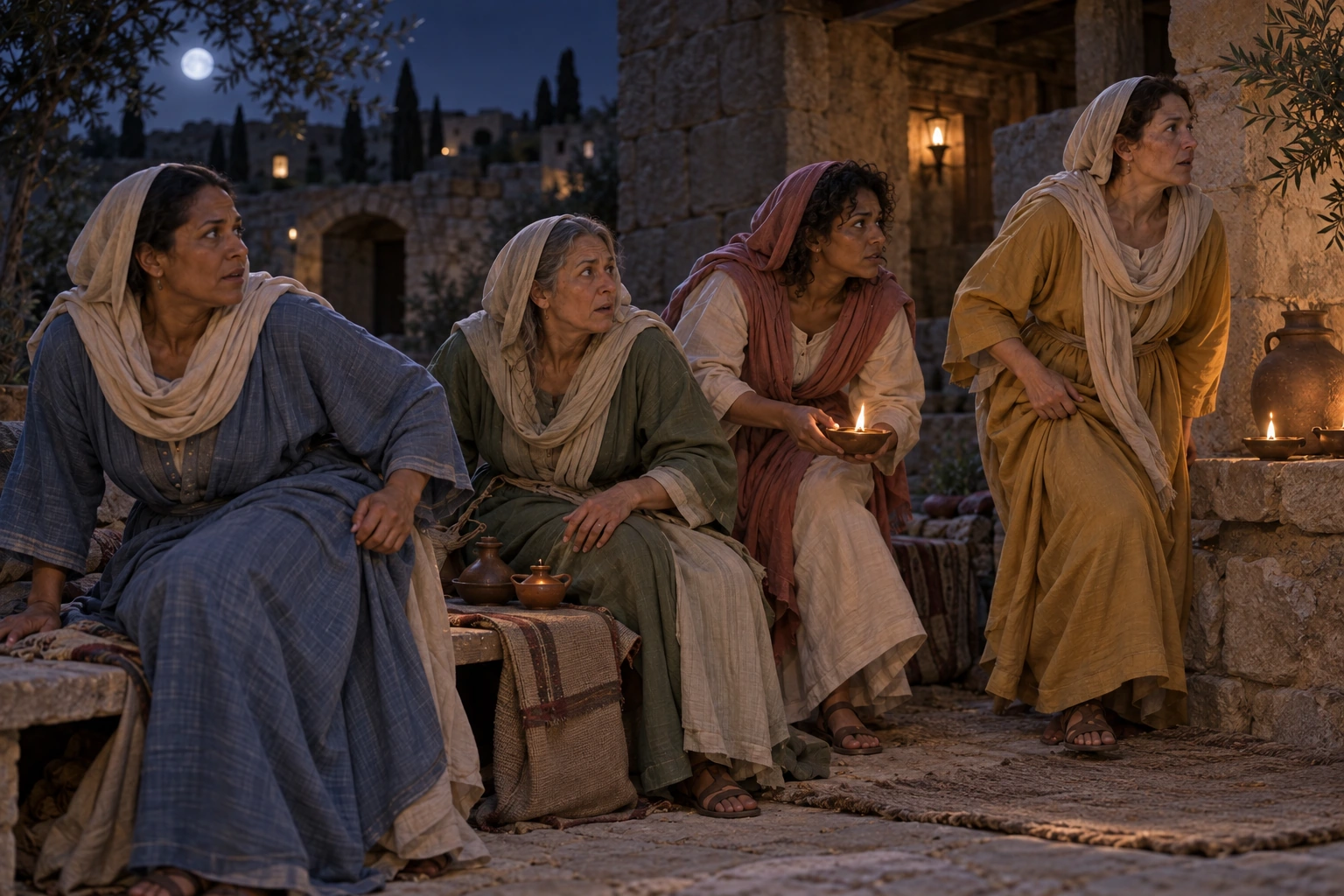
The midnight cry
At midnight, the call announces the bridegroom. Jesus says all ten had grown drowsy and slept; this close view pictures several attendants waking and getting ready to meet him.
Explore and study
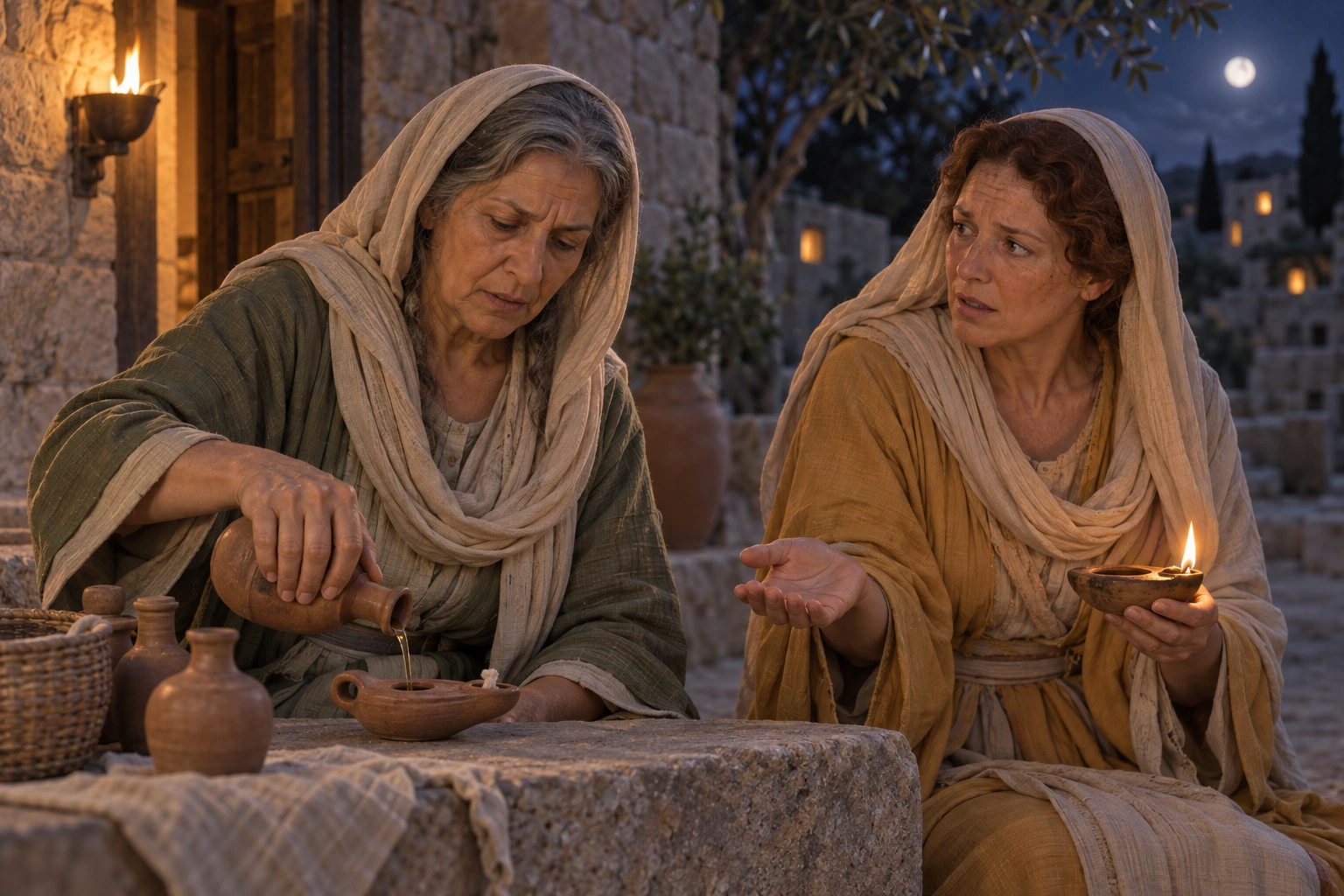
Preparing the lamps
One woman tends her lamp with the oil she brought, while another asks for help. The scene brings preparation and need together at the moment the attendants are called to meet the bridegroom.
Read and discover
Preparation cannot be borrowed
Explore and study
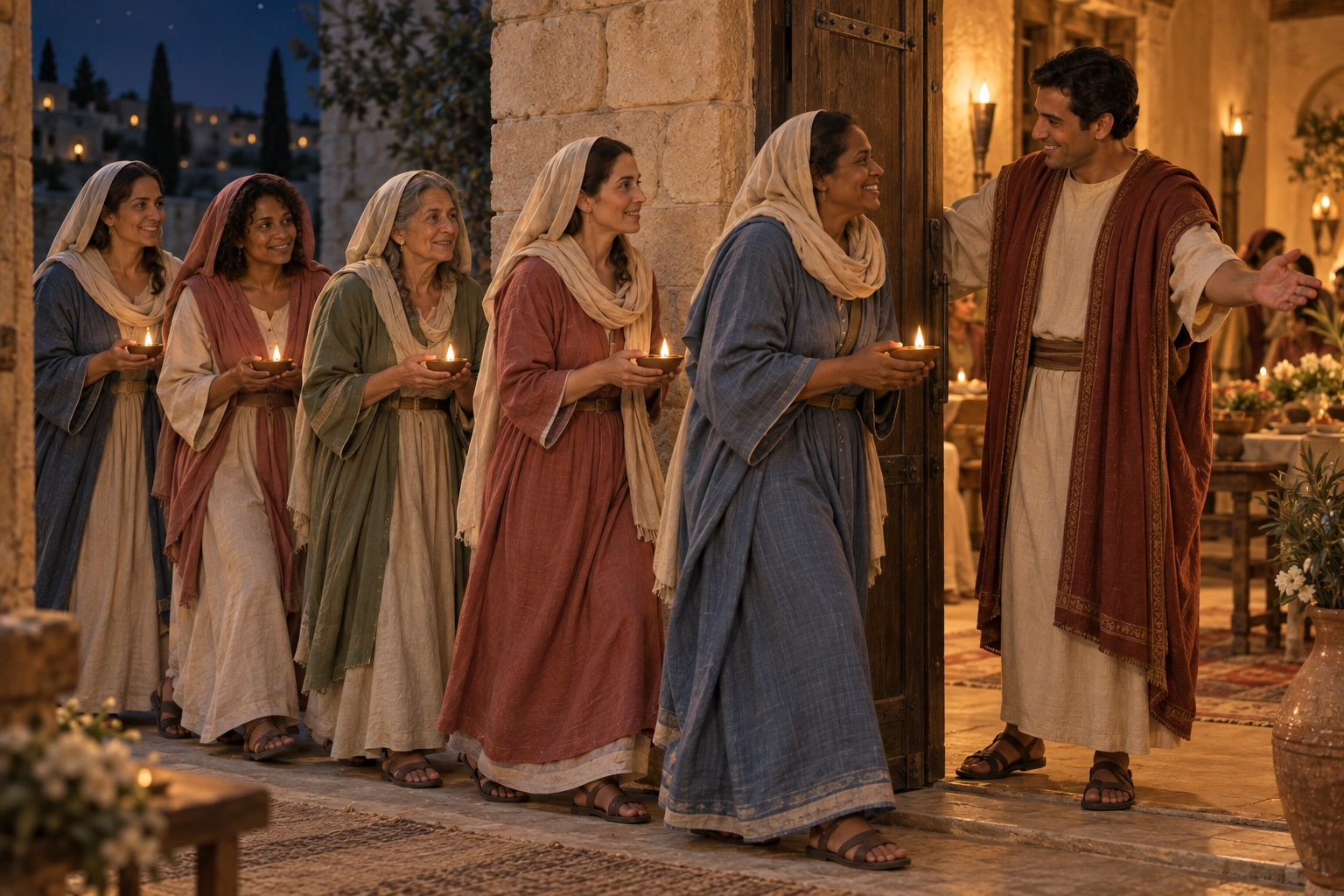
Entering with the bridegroom
The five who are ready enter with the bridegroom to the wedding feast. The open doorway pictures their welcome before the door is shut, keeping the story's call to readiness in view.
The account should not be stretched into a rule against sharing material help. Its central concern is a readiness that cannot simply be transferred at the last moment. Nor does it justify calculating the return's date from imagined meanings in the lamps or hours.
As an application, some forms of preparation grow through repeated personal response: turning to God, learning His words, and acting on them. Another person's faithfulness can encourage you, but it cannot make every response on your behalf. You might choose one small practice that helps you prepare steadily rather than fearfully.
Continue with Jesus Christ
Servants Waiting for Their Lord
The lamps are ready and the door can be opened. Jesus pictures waiting that is attentive, then surprises His hearers with the master's welcome.
Open study →The Doorkeeper
The master leaves work for each servant and watchfulness for the porter. The unknown hour does not erase their present responsibility.
Open study →Prayer, Readiness, and His Return
Continue through the connected teachings in this collection and compare their distinct settings.
Open study →