Read and discover
Sorrow in the farewell discourse
Explore and study
Supported through the pain
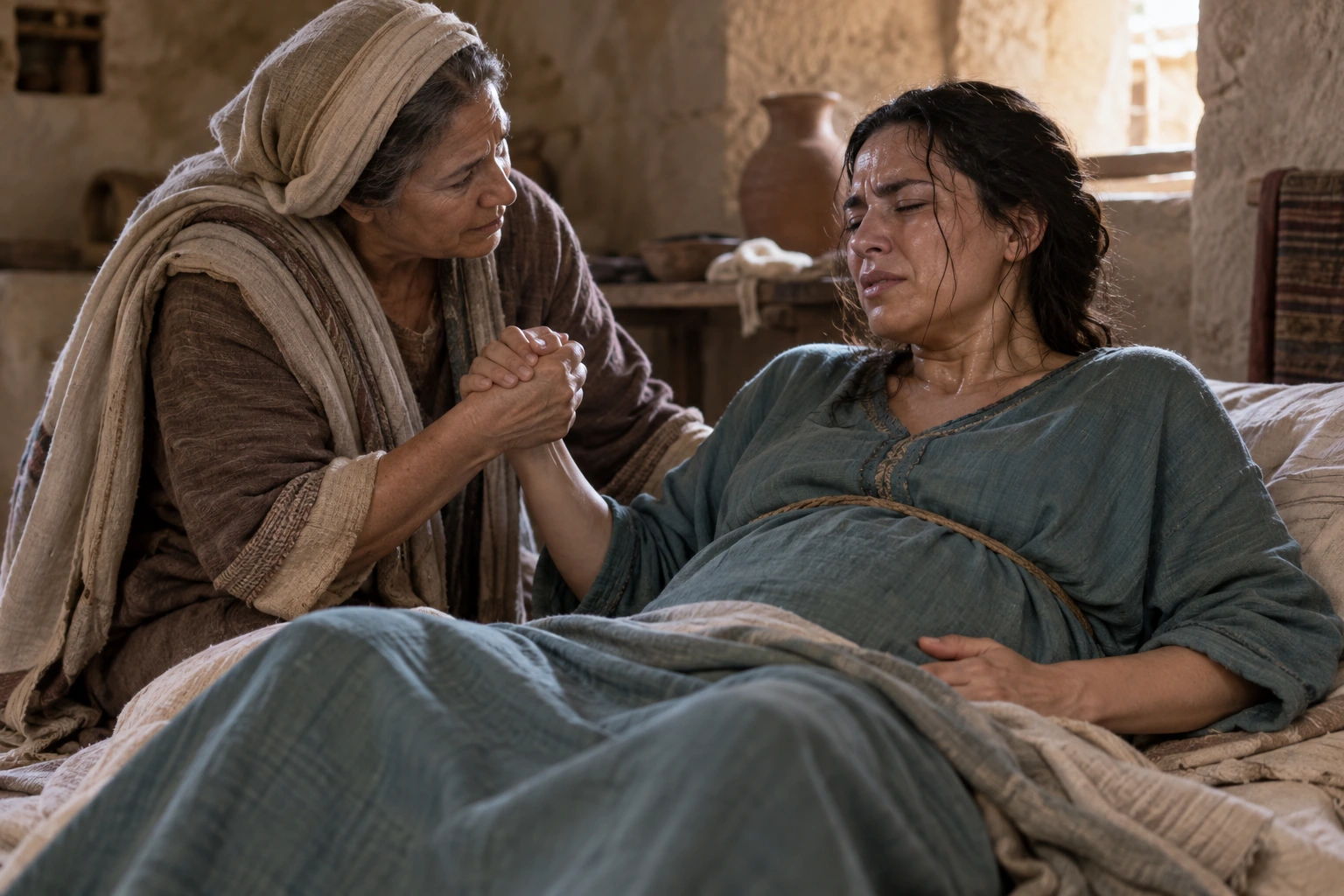
A woman in labor receives steady support through her pain. Jesus acknowledges the anguish of childbirth in the comparison He gives His disciples before speaking of joy.
In His farewell discourse, Jesus tells the disciples that they will weep and be sorrowful while the world rejoices, but that their sorrow will turn to joy. He gives the image of a woman in labor to describe a real anguish followed by a changed moment. John 16:16-24
Read and discover
The promised change and reunion
Explore and study
Joy after the birth
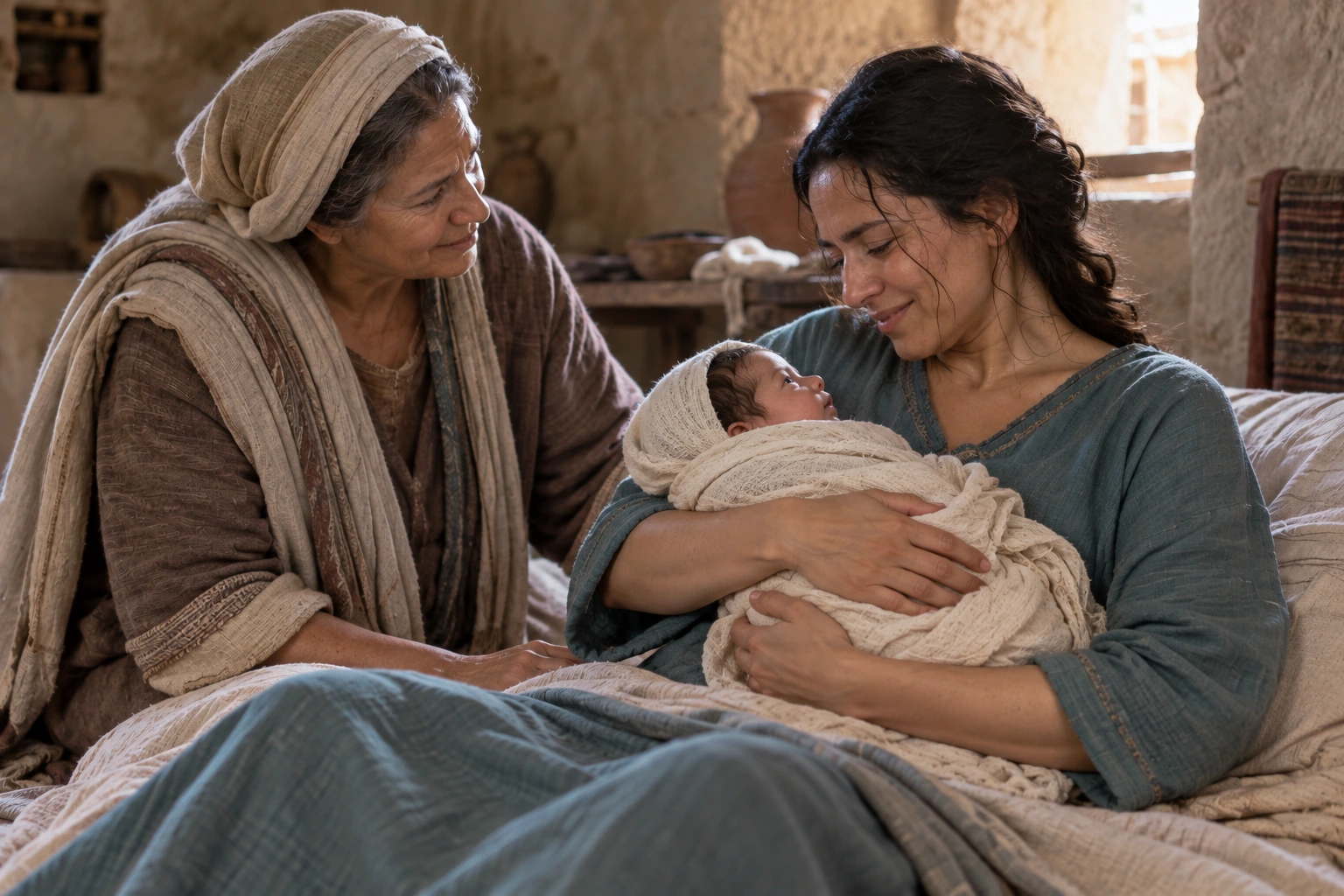
The mother holds her child close, her tired face softened with joy. Jesus uses the change from anguish to joy to speak to His disciples about seeing Him again.
The woman's sorrow is not dismissed as imaginary. The birth brings joy that changes her relation to the pain she has endured. Jesus then returns directly to the disciples, saying He will see them again and that their hearts will rejoice.
This is a comparison within a particular promise to His followers as His death and their reunion approach. It is not a general prediction that every pregnancy ends safely or that every grief will soon feel resolved. Those conclusions would exceed what the passage says.
Read and discover
Hope that does not erase pain
You may reflect on how hope can remain present without requiring denial of sorrow. The disciples are not told that they will never weep. The image allows the present pain to be named while directing attention toward the reunion Jesus promises them.
Continue with Jesus Christ
Birds and Lilies
Jesus draws attention to creatures and flowers while speaking of daily needs. The invitation is to seek the kingdom with trust in the Father's care.
Open study →A Parent's Good Gifts
A child's request for food becomes a way to think about prayer. Jesus directs trust toward the Father's goodness.
Open study →Prayer, Readiness, and His Return
Continue through the connected teachings in this collection and compare their distinct settings.
Open study →