Read and discover
A question about the guide
Explore and study
The need for a trustworthy guide
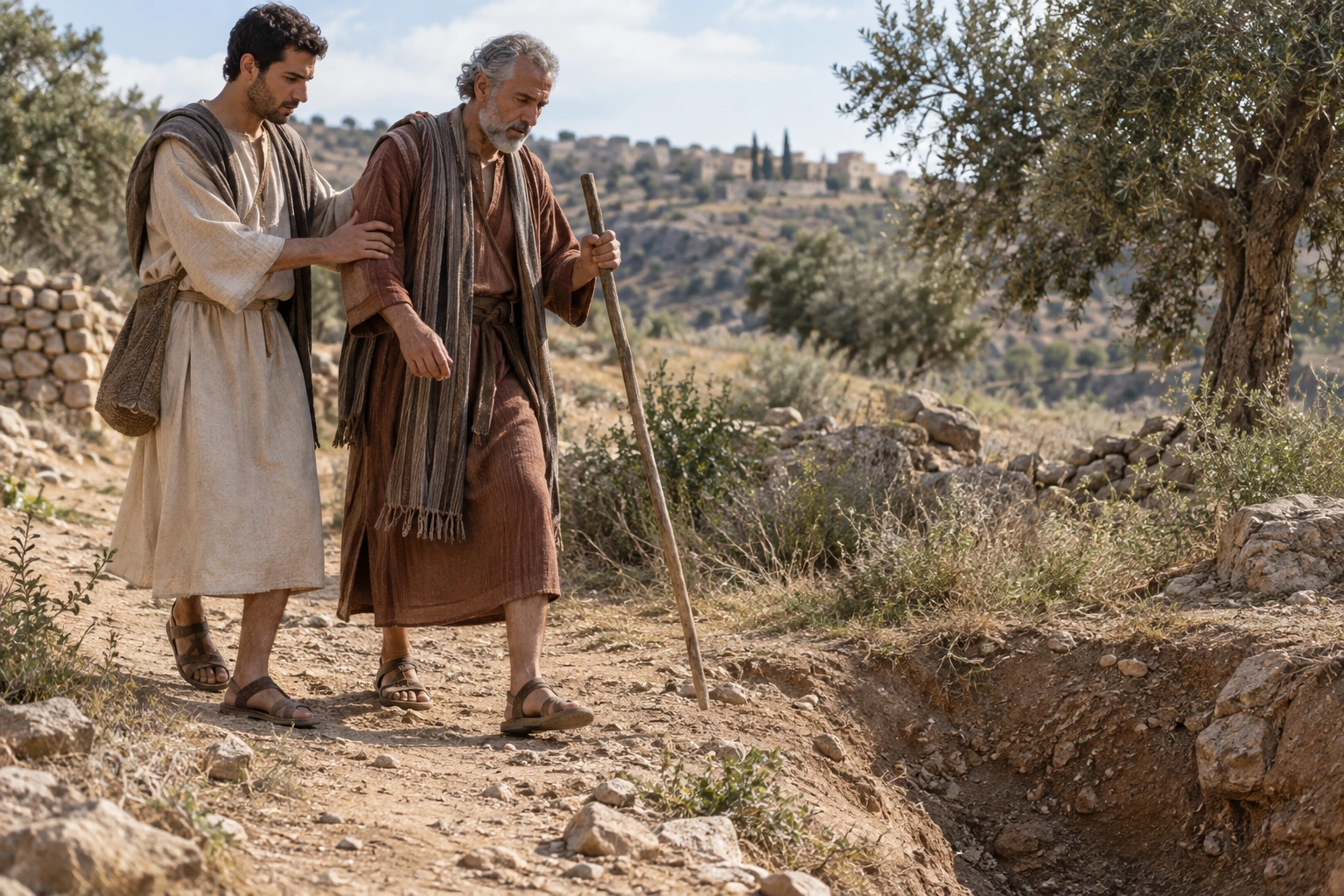
Jesus asks whether a blind person can lead another blind person without both falling into a ditch. The travelers illustrate His comparison about guidance, without equating physical disability with moral failure.
Luke explicitly calls this brief comparison a parable. Jesus asks whether one blind person can lead another and whether both will fall into a ditch. The question appears among teachings about judgment, mercy, and the relationship between a disciple and a teacher. Luke 6:36-42
Read and discover
Whom the disciple becomes like
The picture concerns the ability to guide. A confident leader cannot supply sight that the leader does not possess. The following saying about a disciple becoming like a teacher makes the choice of guidance a matter with lasting consequences.
Matthew records a related warning about blind leaders after controversy over human traditions and what defiles a person. Those surrounding passages help explain the spiritual use of the image. Physical blindness itself is not evidence that a person is morally deficient or unable to teach. Matthew 15:13-14
Read and discover
Choose guidance with care
Reflection can ask what makes guidance trustworthy and what sort of person a teaching helps you become. Confidence, popularity, and forceful presentation are not the same as sound direction. A disciple may need humility both to seek help and to examine the guidance already being followed.
Continue with Jesus Christ
A Tree and Its Fruit
Fruit reveals what an outward appearance can conceal. Jesus connects discernment with conduct, speech, and what the heart cultivates.
Open study →The Mote and the Beam
A speck and a beam expose the distortion of hypocritical judgment. Clearer help begins with truthful self-examination.
Open study →Hearing and Living His Word
Continue through the connected teachings in this collection and compare their distinct settings.
Open study →