Read and discover
Listen for the response the passage asks for
The sower includes Jesus' own explanation, so begin with the meanings He supplies. The builders explicitly join hearing with doing. The two sons distinguish agreeable words from obedience. Read those direct connections before assigning additional symbolism to soil, tools, or household objects. Matthew 13:18–23
Compare parallel accounts without flattening them. The lamp appears in teaching about visible good works and in teaching about how people hear. The new patch and wineskins answer a question about fasting. The setting helps determine what a familiar image is doing in a particular passage. Mark 4:21–25
The modern pictures imagine people learning, listening and returning to practical work. They offer ways to consider your own response to Christ's words, while the meaning of each teaching remains grounded in its scripture passage. A faithful beginning may still call for patience through difficulty.
Read and discover
Receive with attention and questions
Explore and study
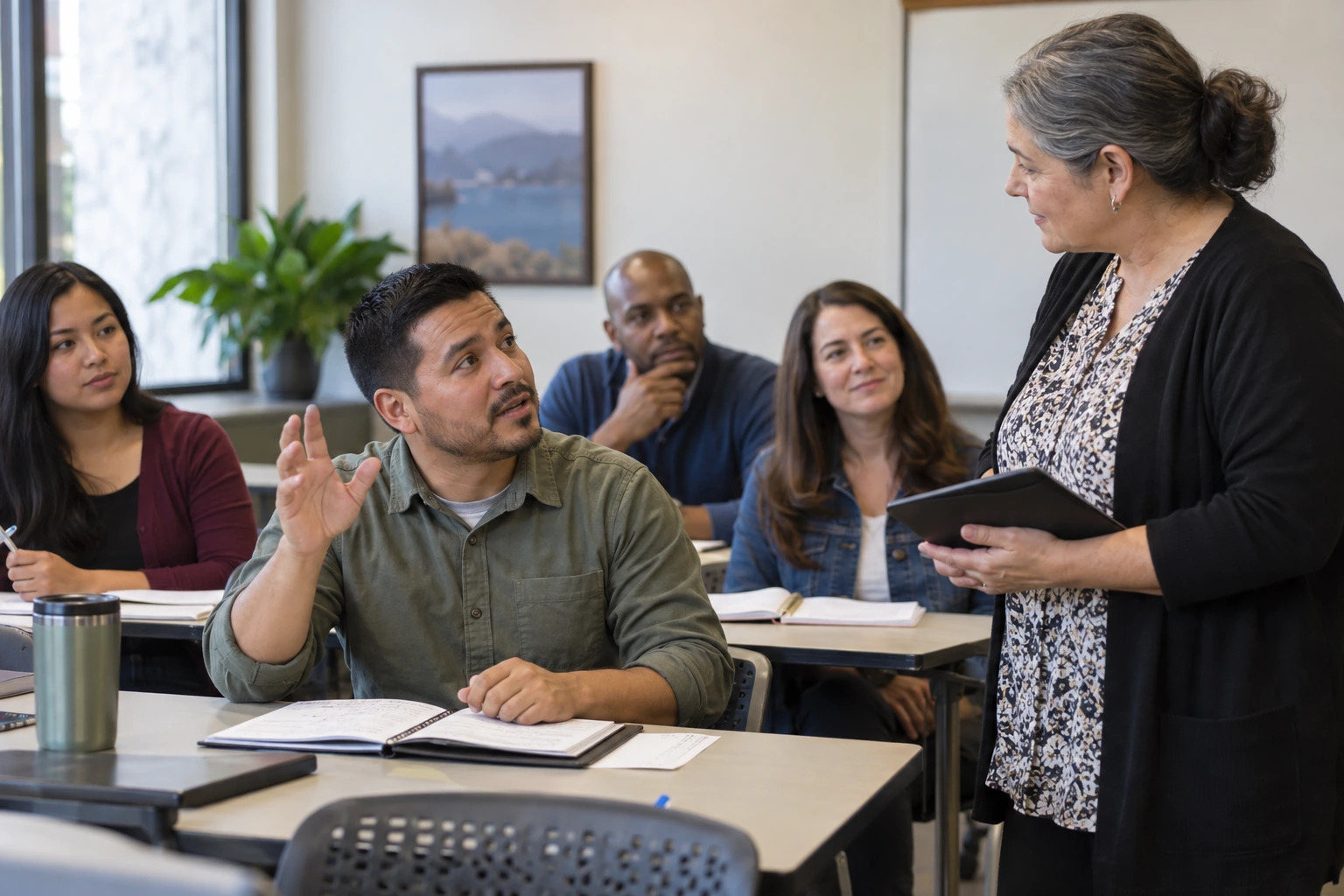
Making room for a question
A learner raises his hand, and the teacher turns toward him. The sower's teaching about hearing and understanding encourages us to ask honestly when we need help to understand.
The disciples ask Jesus about the parable, and He explains. The question is part of learning rather than evidence that the hearers should already understand everything. His later question about their understanding also connects receiving teaching with what they will be able to bring forward. Luke 8:9–18
We can practice attention in an ordinary conversation: ask sincerely, set aside a distraction and hear the answer. Such habits may help us become more willing listeners. As we return to scripture, Christ's words remain the teaching we are seeking to receive. Matthew 13:51–52
Explore and study
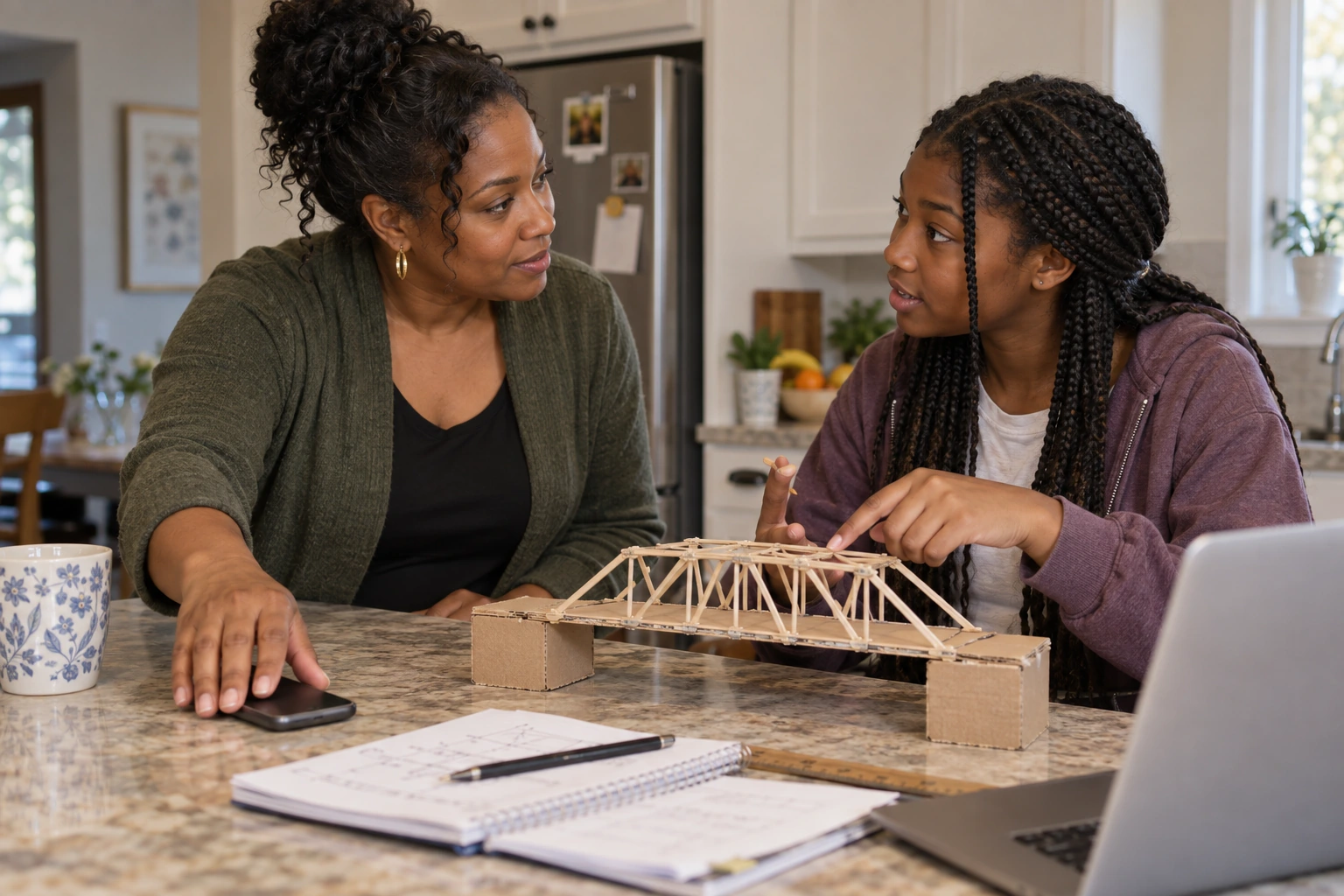
Giving attention
The young person explains a bridge model while the woman looks toward her and the phone rests on the counter. Jesus' counsel to take care how we hear gives purpose to the attention we offer another person.
Read and discover
Give the word room to take root
Explore and study
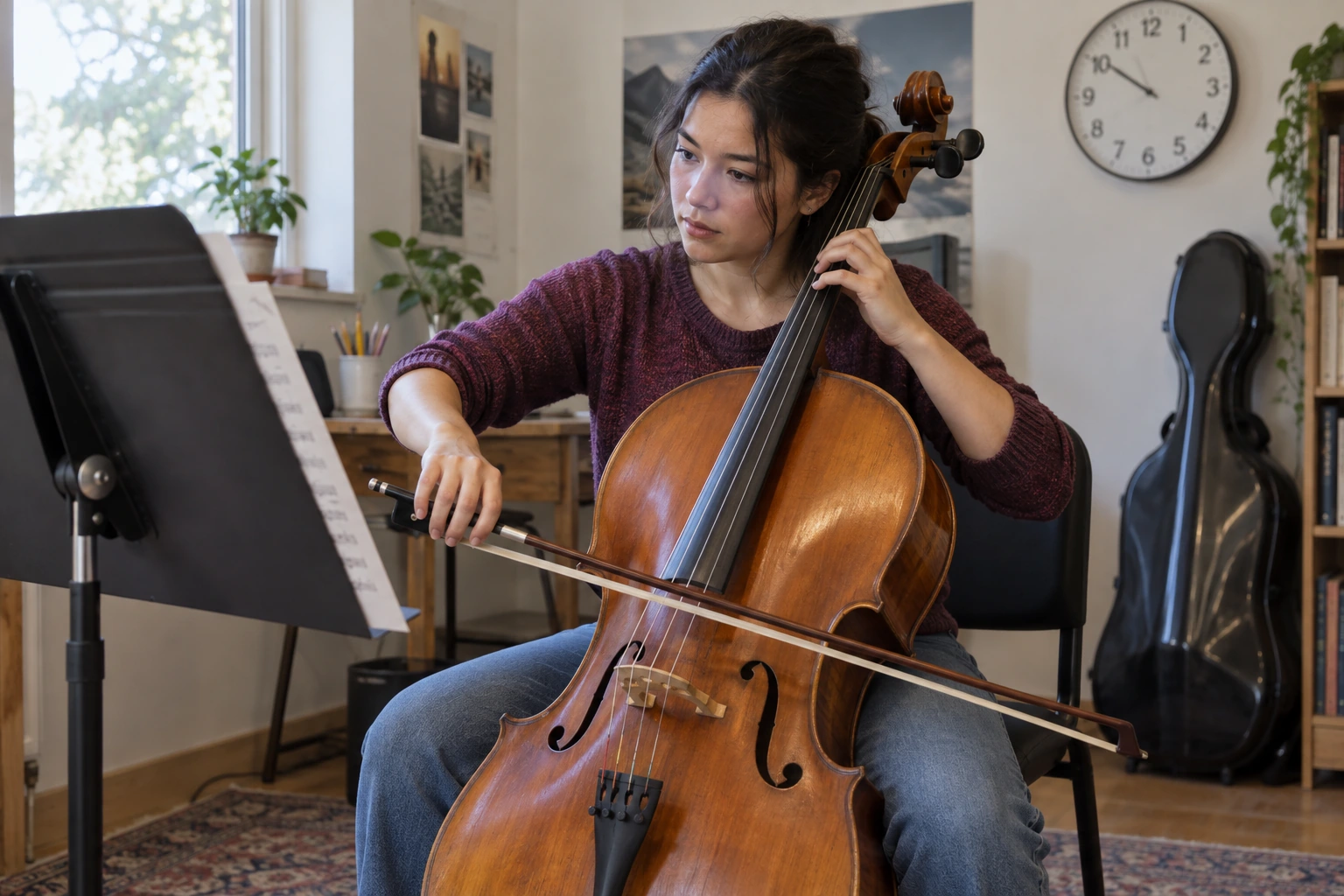
Returning to practice
The musician watches the score as her fingers and bow work together. The good ground in Jesus' parable bears fruit with patience, reminding us of the value of steady, continuing effort.
Jesus distinguishes quick reception from lasting root and describes cares and riches crowding growth. Luke names patience in the fruitful response. Enthusiasm may be a beginning, but the passage asks what remains when difficulty or competing concerns arrive. Mark 4:14–20
Practice and protected attention provide present-day ways to consider endurance. A musician returns to a hard passage; an unfinished task receives a cleared space. Spiritual growth is not identical to acquiring a skill, yet these scenes can help us ask whether a good beginning has been given time and room to deepen. Luke 8:11–15
Explore and study
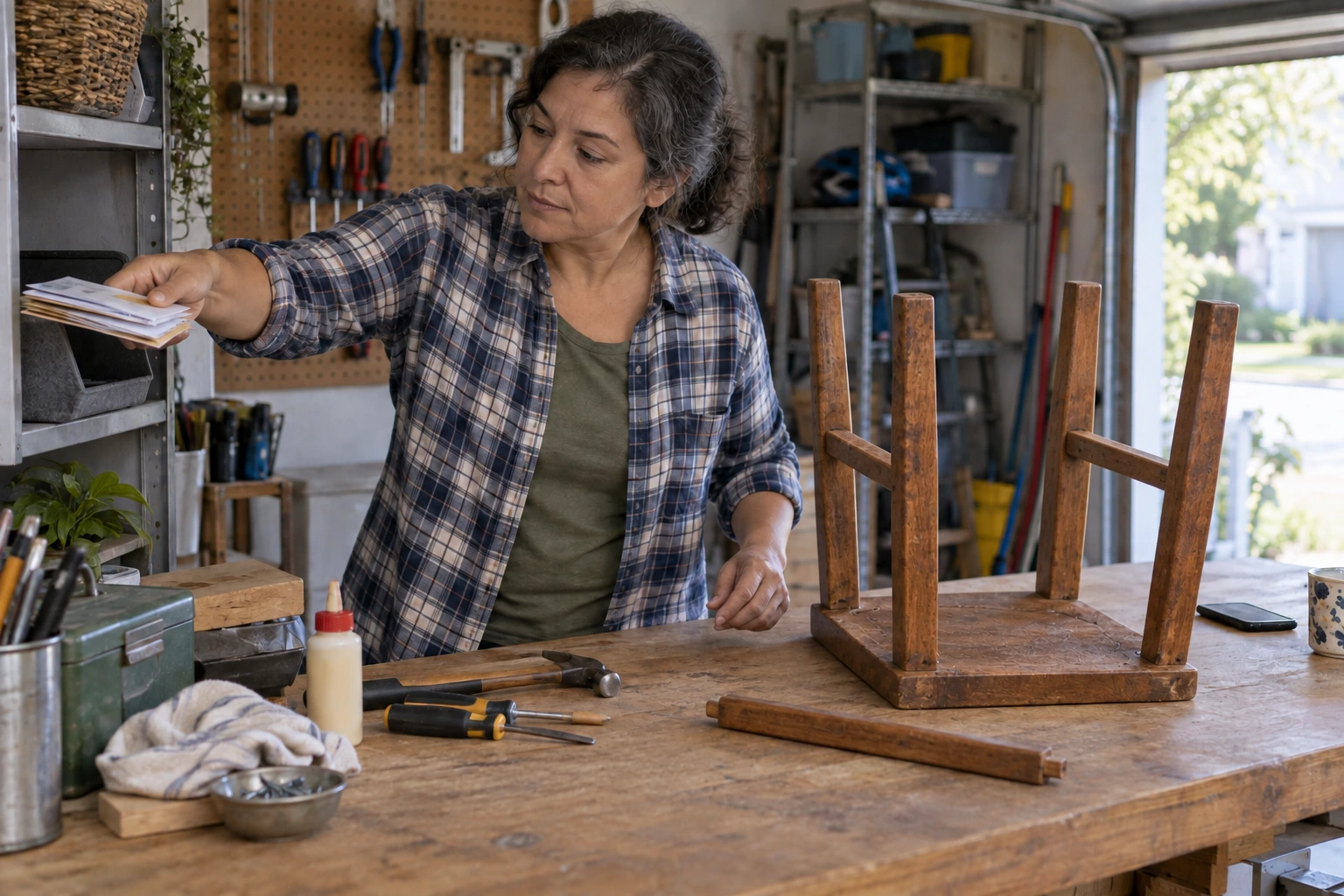
Making space to act
Papers move to a shelf while a stool and tools wait on the bench. The sower's warning about competing concerns asks us to notice what crowds out the response we intend to give.
Read and discover
Let agreement become action
Explore and study
Putting a changed mind into action
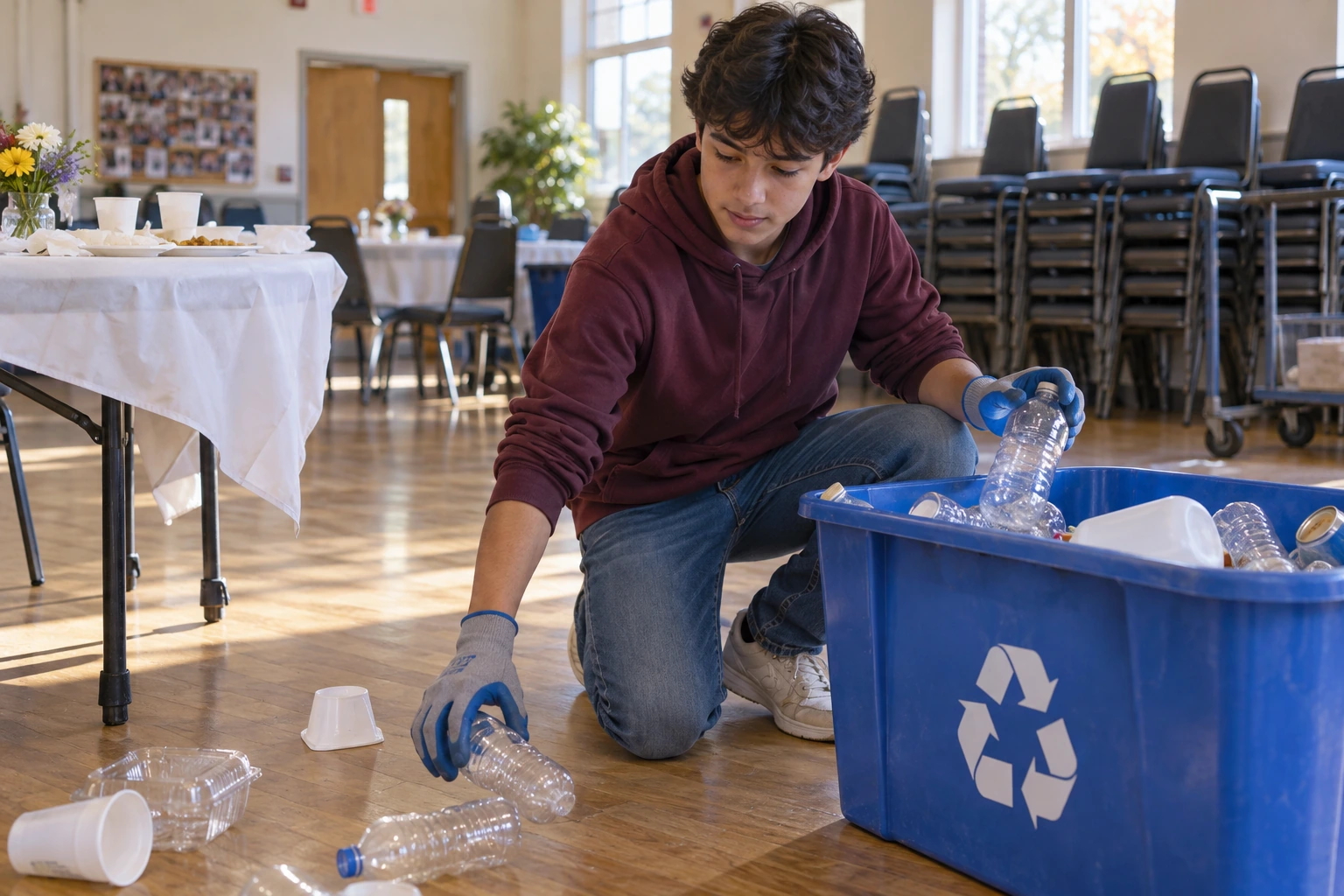
The young person gathers bottles as the hall is cleared. The two-sons parable encourages us to let a changed mind become willing action.
The son who first refuses later works in the vineyard. The son who agrees does not go. Jesus' question makes actual response central. In the builders, the foundation likewise concerns hearing His words and doing them, not merely admiring the sermon. Matthew 21:28–32
A return to finish neglected work can give a changed mind a visible form. Accepting correction and trying it can make learning more than polite agreement. These ordinary scenes invite a spiritual question: which word of Christ has remained an intention, and what would one faithful action look like? Matthew 7:24–27
Explore and study
Practicing what is learned
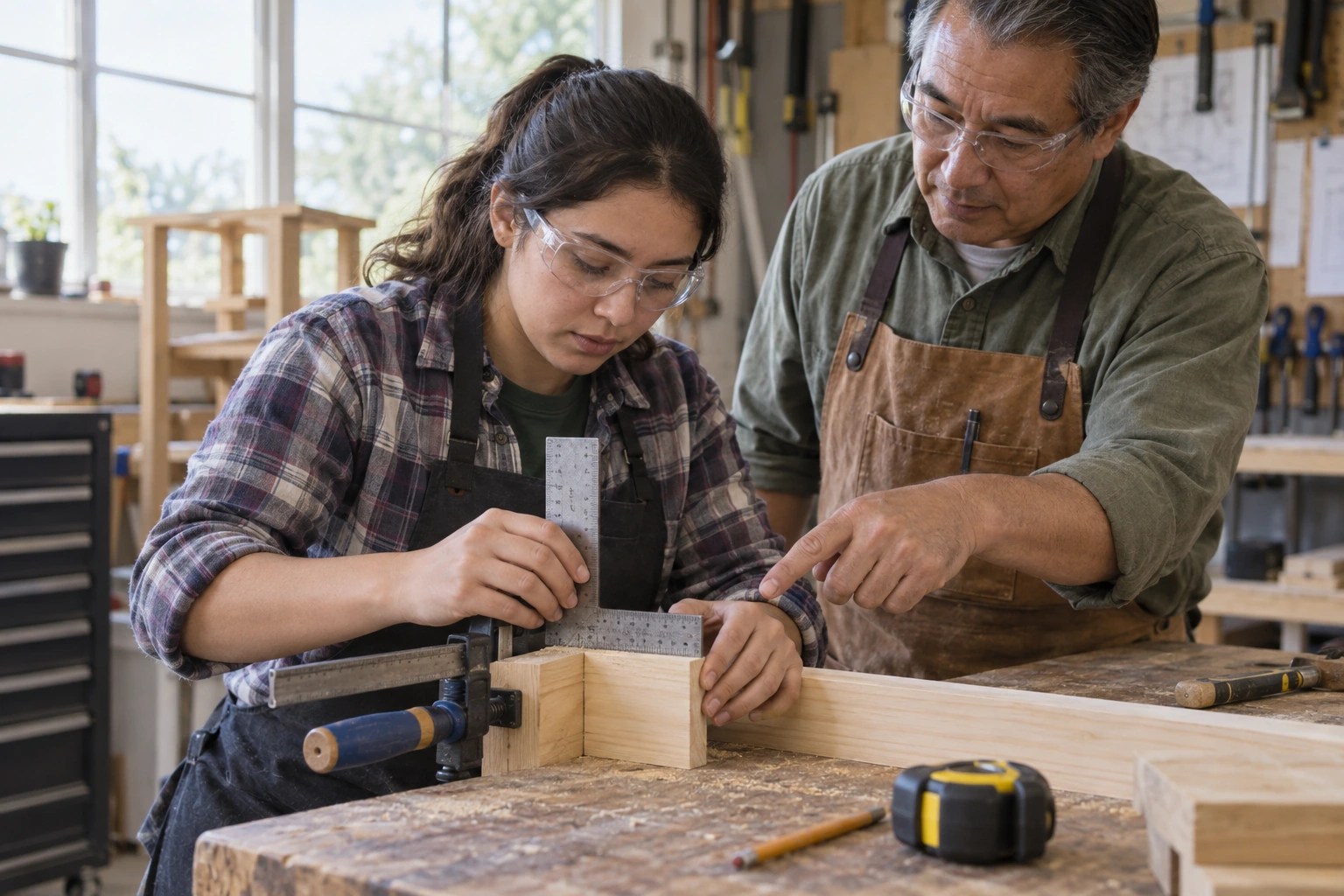
The learner holds a square against the wood while another person points toward the work. Jesus' comparison of the builders joins hearing with doing, giving instruction a place in daily practice.
Read and discover
Look at fruit and examine yourself

Explore and study
Pausing before sharing
The two young people turn toward each other beside their devices. Jesus' teaching about speech and its fruit encourages us to consider the words we share and their effect on others.
Jesus warns about unreliable guidance, speaks of a tree's fruit, and exposes the person who sees a speck while ignoring a beam. Discernment is necessary, but the comparisons do not excuse contempt. They bring the hearer's own conduct and capacity to see into the examination. Luke 6:39–45
Pausing a rumor or reviewing your own work before criticizing another can be useful applications. They do not require pretending wrongdoing is harmless. Instead, they ask whether your response is truthful, proportionate, and open to the correction you may also need. Matthew 7:1–5
Explore and study
Beginning with self-examination
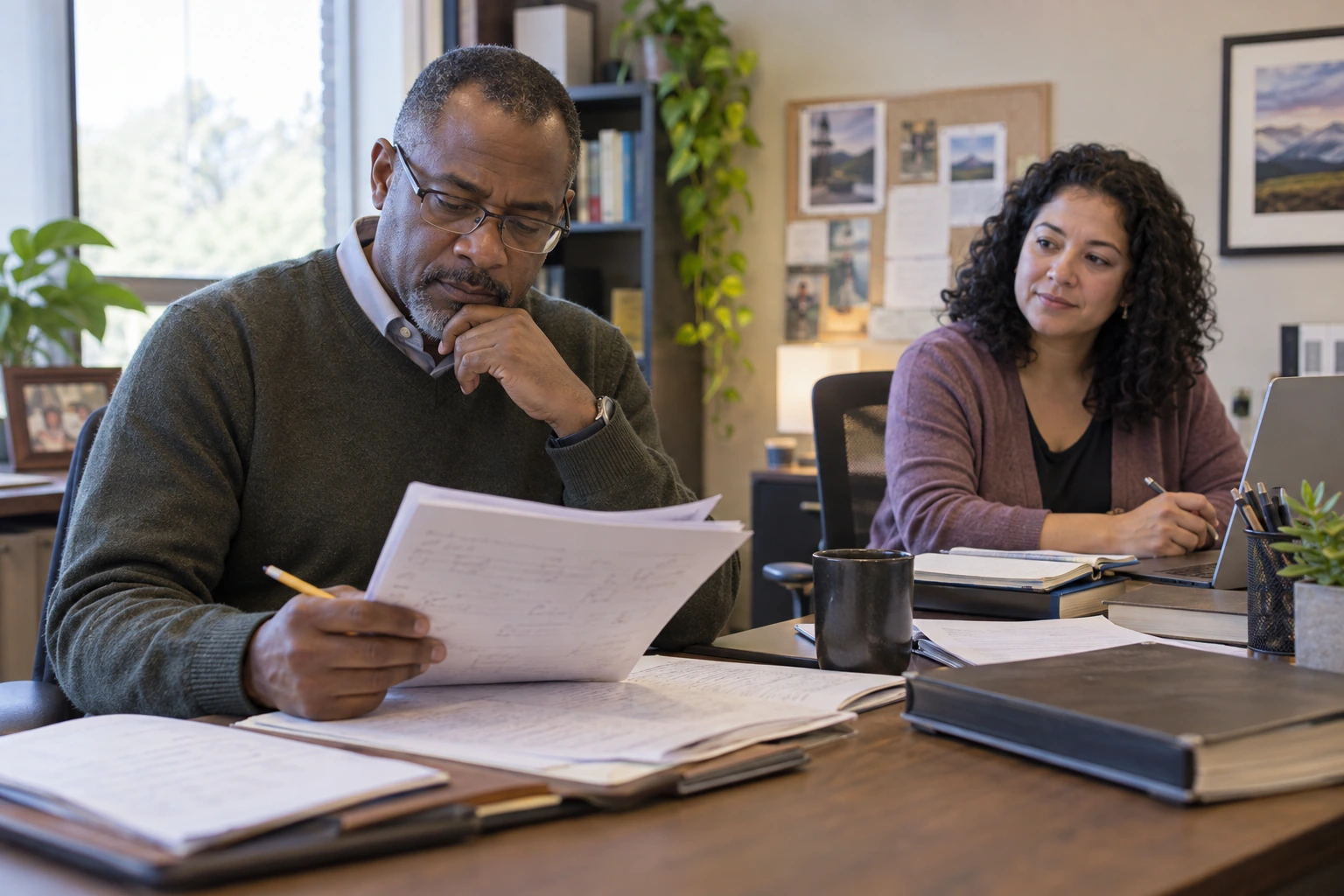
The man studies a page with a pencil in hand while a woman sits nearby. Jesus' teaching about the beam and mote asks us to examine ourselves before correcting someone else.
Read and discover
Bring the teaching into your own reflection
Read and discover
Explore every study in this collection
Parables and story pictures
The Wise and Foolish Builders
Hearing reaches its purpose in doing Jesus' words. Compare the foundations, not the weather: both houses meet the storm.
Open study →The New Patch
Read within the question about fasting. Jesus describes the damage caused by joining an unshrunk patch to an old garment.
Open study →New Wine and Wineskins
Read with the preceding garment comparison and the fasting dispute. Preserve Luke's additional observation about preference for old wine.
Open study →The Lamp on a Stand
The lamp is meant to give light. Compare the different surrounding teachings about witness, hearing, and inward light rather than merging every setting.
Open study →Children in the Marketplace
Jesus compares inconsistent reactions to John and Himself with children who reject both kinds of music. Read the accusations in the following verses.
Open study →The Sower
Jesus supplies an explanation of the seed and soils. Begin there; ask how hearing can become enduring fruit.
Open study →The Householder's Treasure
After asking whether the disciples understand, Jesus speaks of a trained scribe bringing out treasures new and old. Treat this as a compact concluding comparison.
Open study →The Two Sons
Contrasting words and actions answer a dispute about authority. Jesus names the connection to people's response to John.
Open study →The Blind Leading the Blind
Luke explicitly introduces a parable. Spiritual guidance is the subject; do not turn blindness into a moral judgment about people with disabilities.
Open study →Related comparisons and allegories
The Mote and the Beam
Exaggerated imagery exposes hypocrisy before correction of another. An application should invite self-examination.
Open study →A Tree and Its Fruit
Fruit reveals character in sayings about teachers, speech, and conduct. Keep each setting visible.
Open study →Salt of the Earth
The shared salt image occurs in different teaching contexts. It is a related comparison rather than a narrated story.
Open study →The Returning Unclean Spirit
A brief warning uses the return to an empty house. Do not present it as a diagnosis of mental illness or a medical explanation.
Open study →The True Vine and the Branches
Jesus speaks of abiding in Him, fruit, love, and obedience. The Father is the husbandman; keep these stated identities clear.
Open study →Continue with Jesus Christ
Faithful Stewardship and the Cost of Discipleship
Explore the work that follows receiving a responsibility or resource.
Open study →Mercy, Repentance, and the Joy of Returning
Consider how a changed response grows within patience, forgiveness, and welcome.
Open study →The Kingdom of God
Read the growth and value comparisons beside the teaching about receiving the word.
Open study →