Read and discover
A familiar change of season
Explore and study
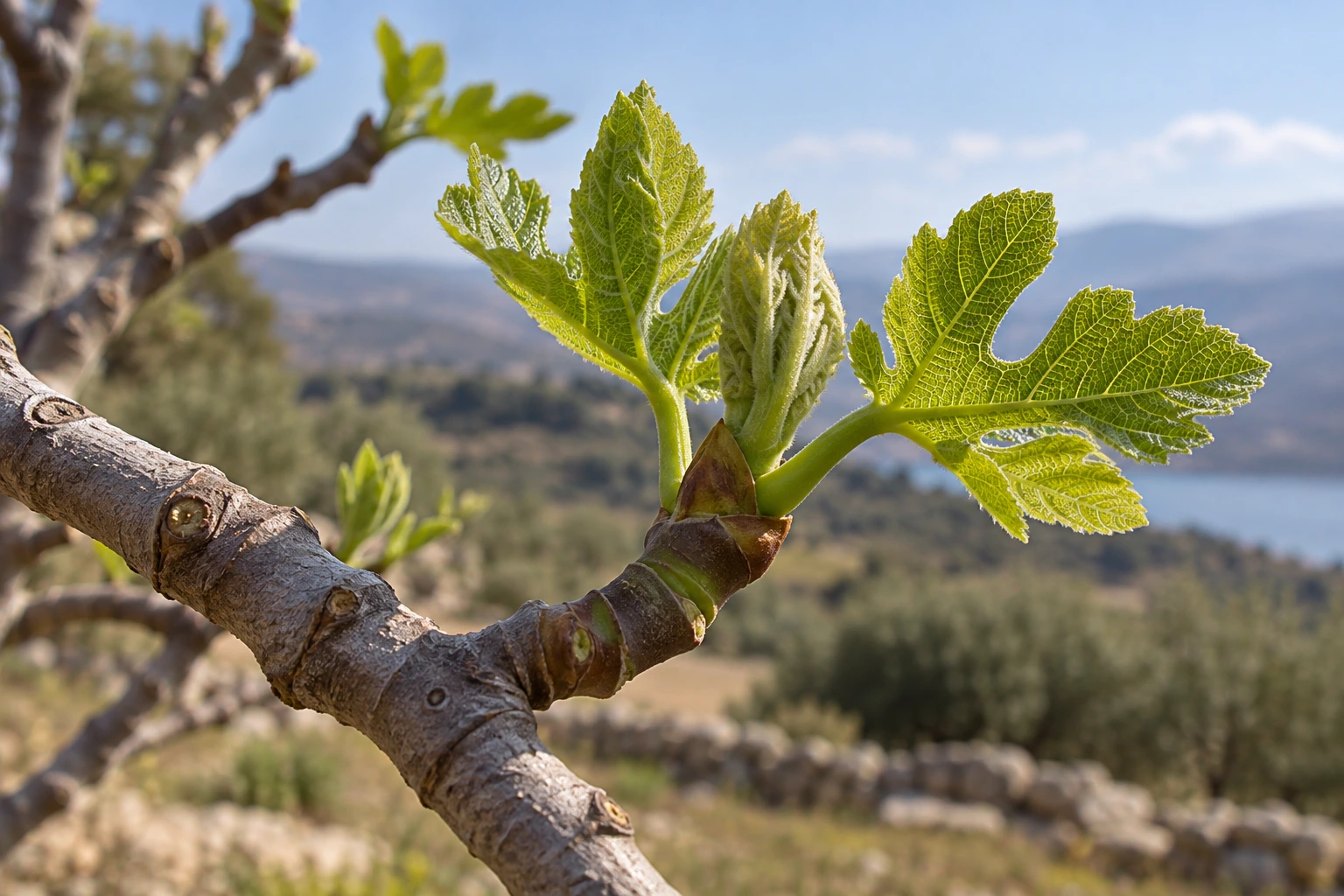
Tender fig branch leafing
Tender leaves unfold at the tip of the fig branch. Jesus draws on this familiar sign of approaching summer to teach His hearers to pay attention.
Jesus speaks of a fig tree within His discourse about coming events. When its branch becomes tender and leaves appear, observers recognize that summer is near. Luke broadens the view to the fig tree and all the trees. A familiar seasonal change supplies the comparison. Matthew 24:32-44
Read and discover
Recognition without a timetable
The hearers are invited to recognize rather than ignore what is before them. Yet the surrounding discourse also warns that the precise day and hour are unknown. Attentiveness to His words and refusal to calculate an unauthorized timetable belong together. Mark 13:28-31
This is neither the story of a fruitless tree given more time nor the account of Jesus cursing a fig tree. Shared imagery does not make those passages one event. Here the ordinary appearance of leaves illustrates discernment and the reliability of His words. Luke 21:29-33
Read and discover
Readiness in ordinary life
Explore and study
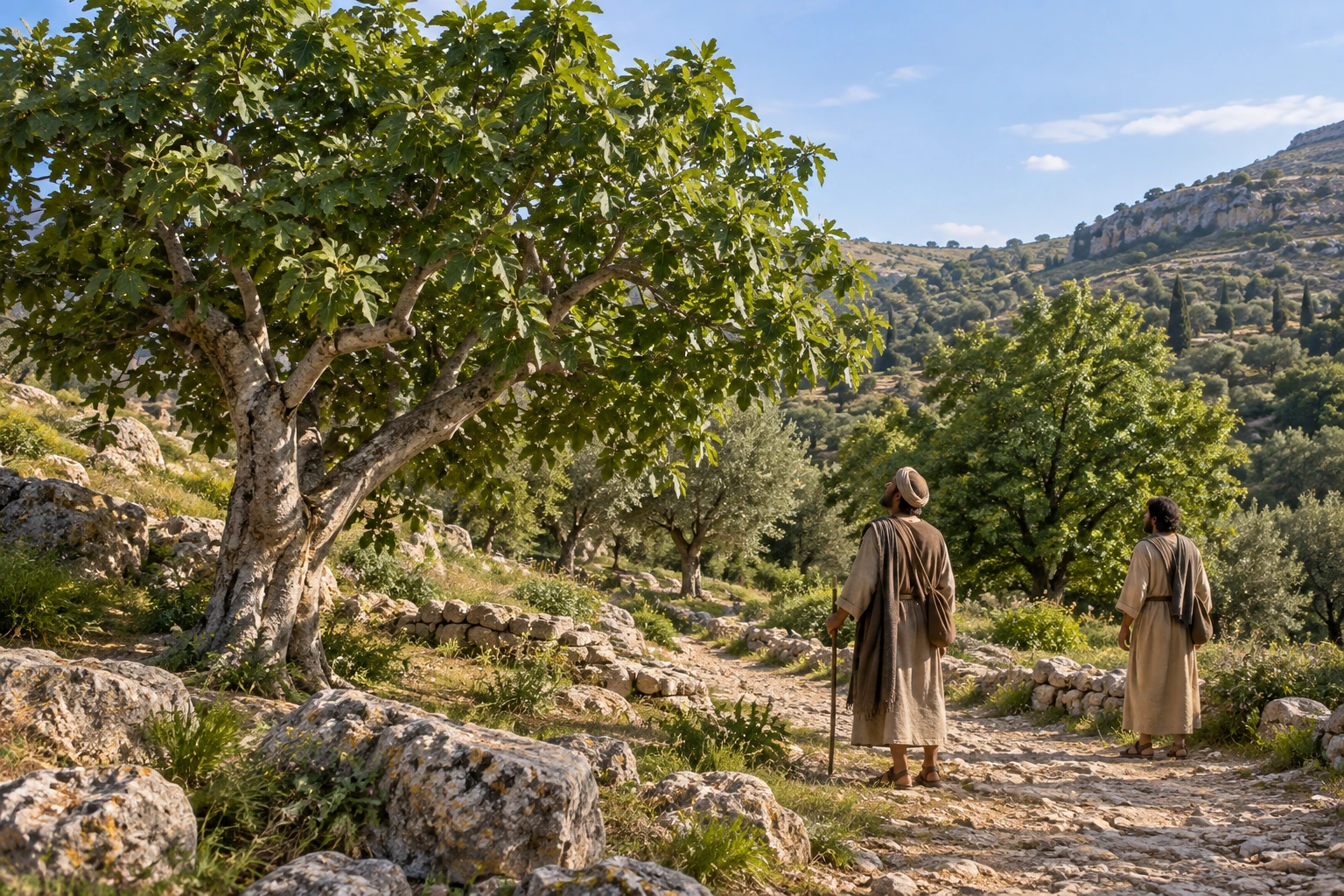
A leafy fig tree
In this imagined scene, travelers pause beside a leafy fig tree and notice the green hillside. Jesus asks His hearers to observe the fig tree and other trees, recognizing summer's approach from their growth.
Readiness can become part of ordinary discipleship rather than a cycle of alarm. You might ask what Christ's teaching calls you to do today even without knowing what tomorrow will bring. Caring for others, repenting, and keeping commitments do not depend on discovering a date.
Continue with Jesus Christ
The Doorkeeper
The master leaves work for each servant and watchfulness for the porter. The unknown hour does not erase their present responsibility.
Open study →The Barren Fig Tree
The gardener asks for time to dig and nourish. Jesus places urgent repentance beside a patient opportunity to bear fruit.
Open study →Prayer, Readiness, and His Return
Continue through the connected teachings in this collection and compare their distinct settings.
Open study →