Read and discover
Tragedy is not proof of greater guilt
Explore and study
Looking for fruit
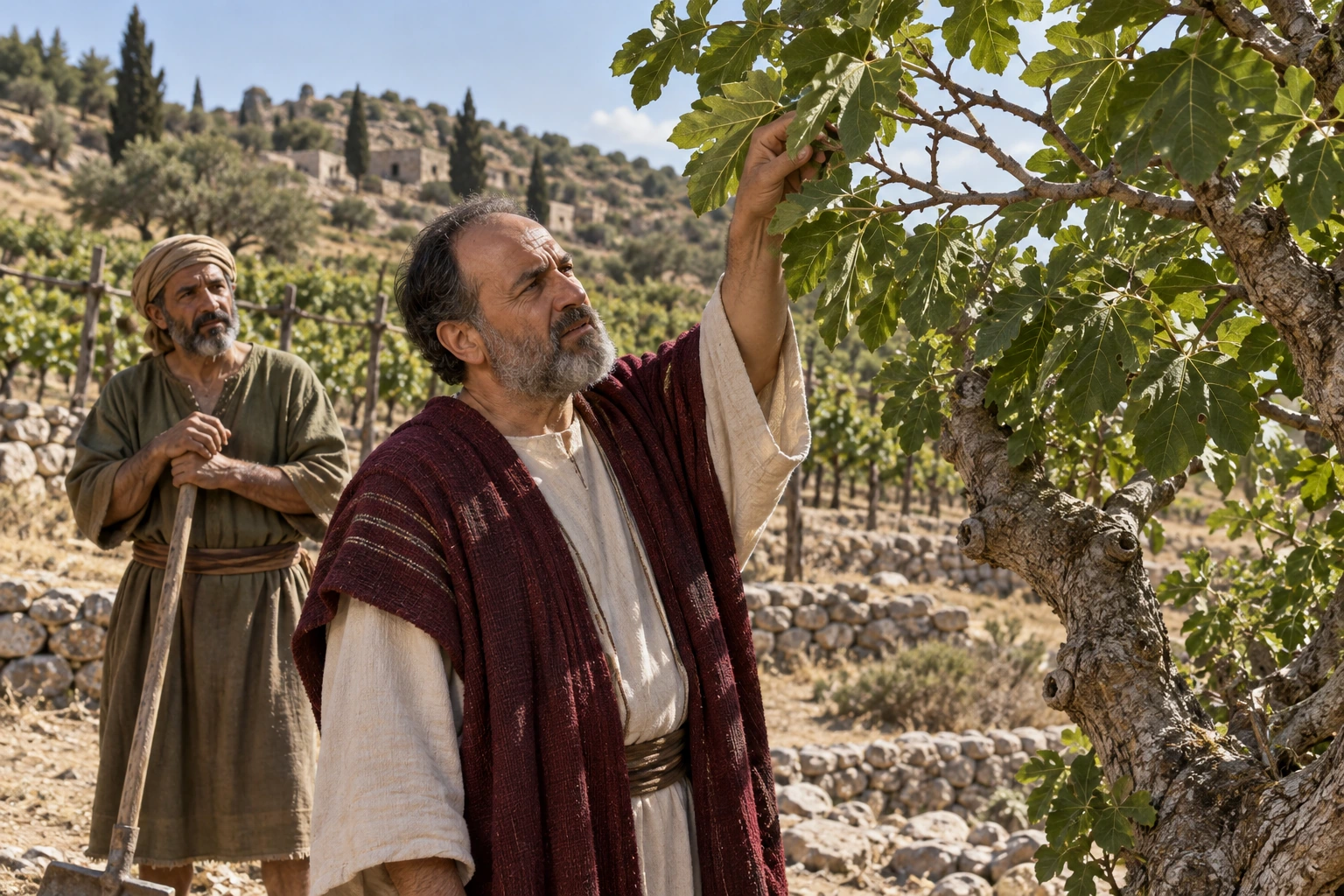
The owner looks among the leaves and finds no fruit. In Jesus' parable, his repeated search brings a serious question about the tree's place in the vineyard.
Jesus has been asked about people killed under Pilate, and He also mentions those who died when a tower fell. He rejects the assumption that their deaths establish them as worse sinners than others. In that setting, He calls His hearers to repentance and tells of a fig tree. Luke 13:1-9
Read and discover
One more season of care
Explore and study
The gardener asks for time
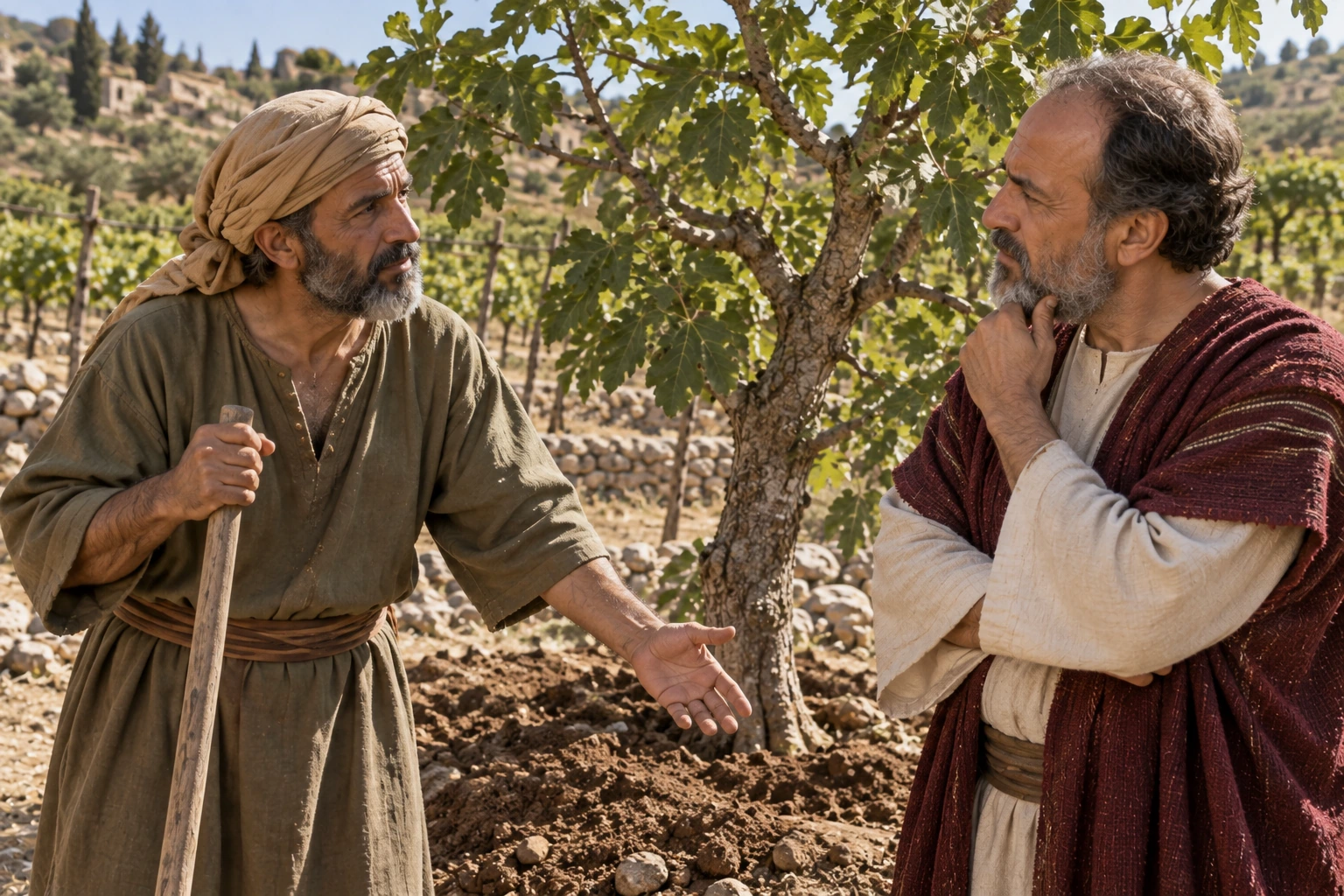
The gardener asks the owner to leave the tree for another year. His appeal includes a promise of work: digging around it and nourishing the soil.
The owner has looked for fruit for three years and found none. He proposes cutting the tree down. The gardener asks for another year in which to dig around it and nourish it, holding together the need for fruit and a willingness to provide further care.
The story ends with that proposed opportunity. It does not tell us whether the tree later bears fruit. The open ending leaves the invitation before the hearer rather than allowing the conclusion to be assigned to an imaginary person safely outside the reader's own life.
Read and discover
Cultivate a response
Explore and study
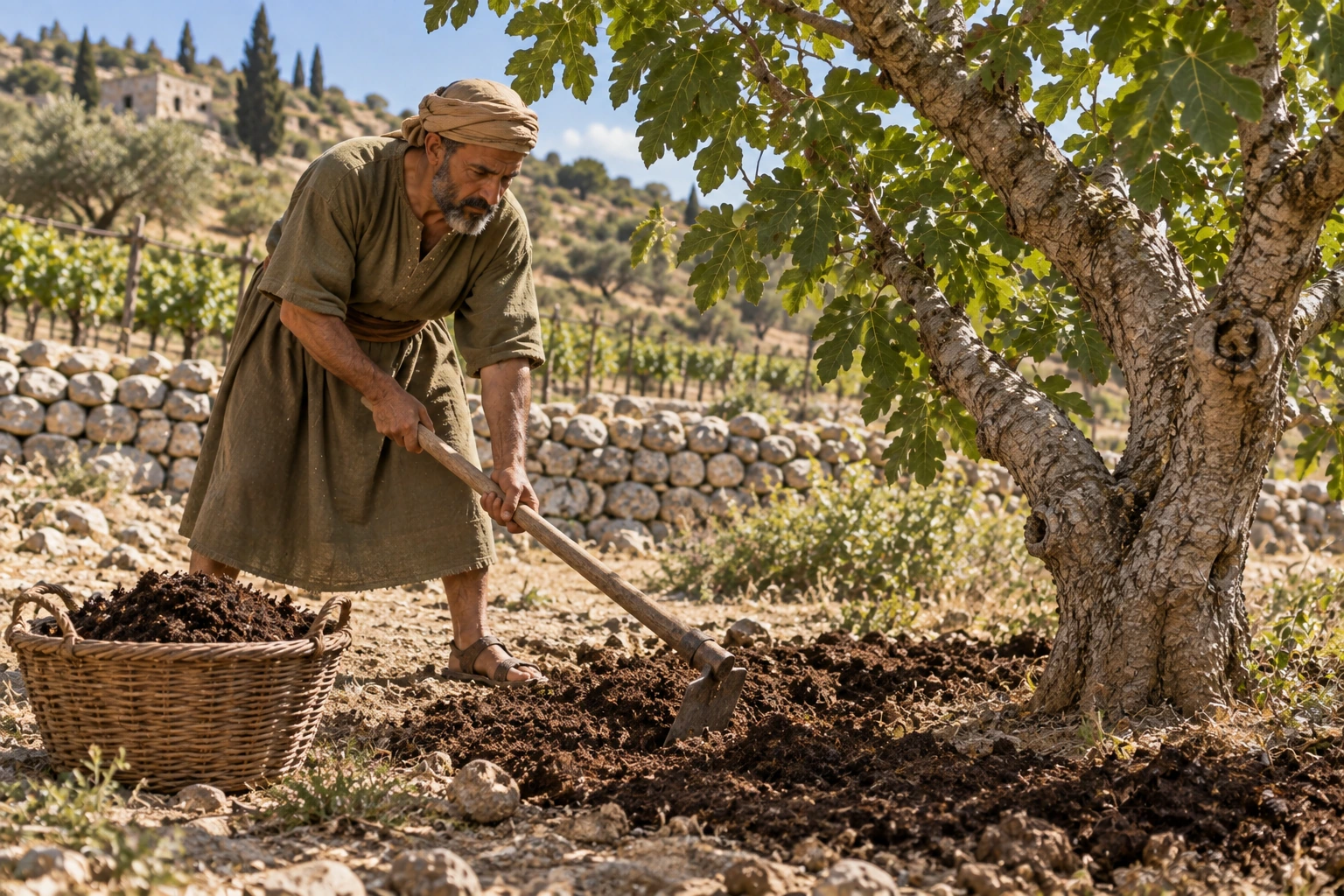
The care the gardener proposes
The gardener's proposed care is pictured here: digging around the tree and adding nourishment. Jesus leaves its later fruitfulness unstated; the image visualizes the work promised in the appeal, not a reported outcome.
Patient cultivation is a different response from either indifference or instant removal. You might consider what needs tending in your own response to God. Keep the beginning of the passage in view: this reflection should never become an explanation that other people's tragedies prove a lack of righteousness.
Continue with Jesus Christ
The Two Sons
One son changes his mind; another never turns agreement into action. Jesus makes the difference between a response and its appearance clear.
Open study →The Budding Fig Tree
New leaves tell an observer something about the season. Jesus invites discernment while leaving the day and hour unknown.
Open study →Mercy, Repentance, and the Joy of Returning
Continue through the connected teachings in this collection and compare their distinct settings.
Open study →