Read and discover
After the disciples understand
Explore and study
Treasures brought out
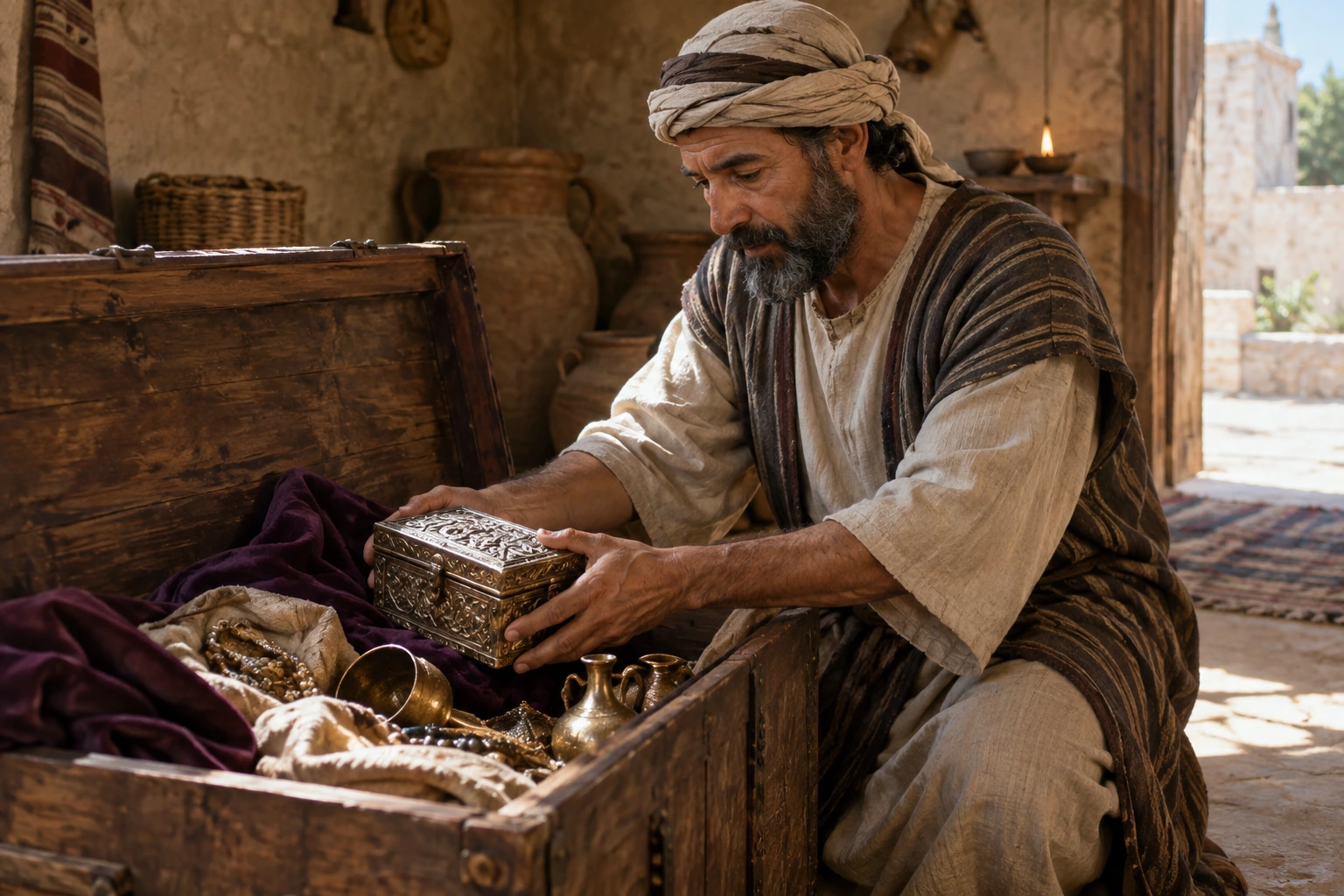
The householder brings an item out of his store of valuables. After asking whether His listeners understand, Jesus compares a scribe instructed in the kingdom to a householder bringing forth things new and old. The image can invite reflection on receiving His teaching deeply enough to share its riches with others.
At the close of the kingdom parables, Jesus asks His disciples whether they have understood. Their reply leads to one final household comparison: a scribe instructed in the kingdom brings out treasure that is both new and old. The image is connected to learning and understanding. Matthew 13:51-53
Read and discover
Treasures brought forward
The householder has resources to bring out, rather than merely objects to admire in storage. Jesus does not list the individual treasures or assign a separate meaning to each. The teaching can remain rich without turning the contents of the house into an invented symbolic inventory.
The pairing of new and old resists a careless assumption that understanding requires either discarding everything previously learned or refusing everything unfamiliar. The emphasis rests on a person instructed in the kingdom who can draw upon what has been received.
Read and discover
Learning that can help another
As an application, consider how study equips you to help another person understand. An older passage may become newly meaningful beside something you have just learned. The question is not how much information you can display, but how faithfully and usefully you can bring it forward.
Continue with Jesus Christ
The Sower
The same seed meets different ground. Jesus explains what can prevent His word from taking root and what makes room for enduring fruit.
Open study →The Lamp on a Stand
A lamp brings light into the room. Follow this recurring image through Jesus' teaching about witness, attention, and what a person receives within.
Open study →Hearing and Living His Word
Continue through the connected teachings in this collection and compare their distinct settings.
Open study →