Read and discover
Who trusts in being righteous?
Explore and study
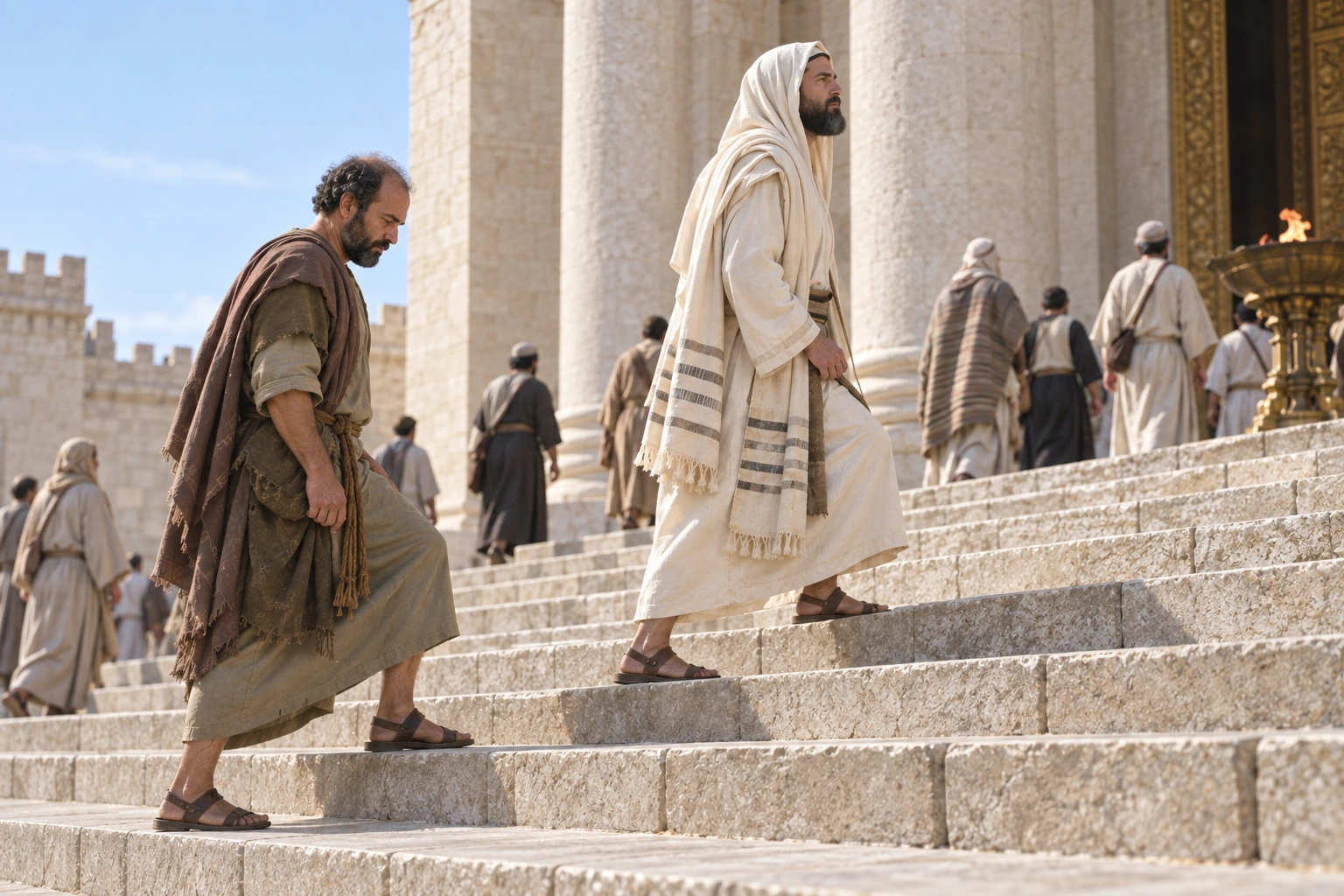
Two men go up to pray
In Jesus' parable, two men go up to the temple to pray: a Pharisee and a publican. The shared destination introduces two very different prayers.
Luke names the audience before telling the story: people who trust in their own righteousness and despise others. Two men go to the temple to pray, a Pharisee and a publican, or tax collector. The opening already directs attention toward confidence, comparison, and contempt. Luke 18:9-14
Read and discover
Two men pray
Explore and study
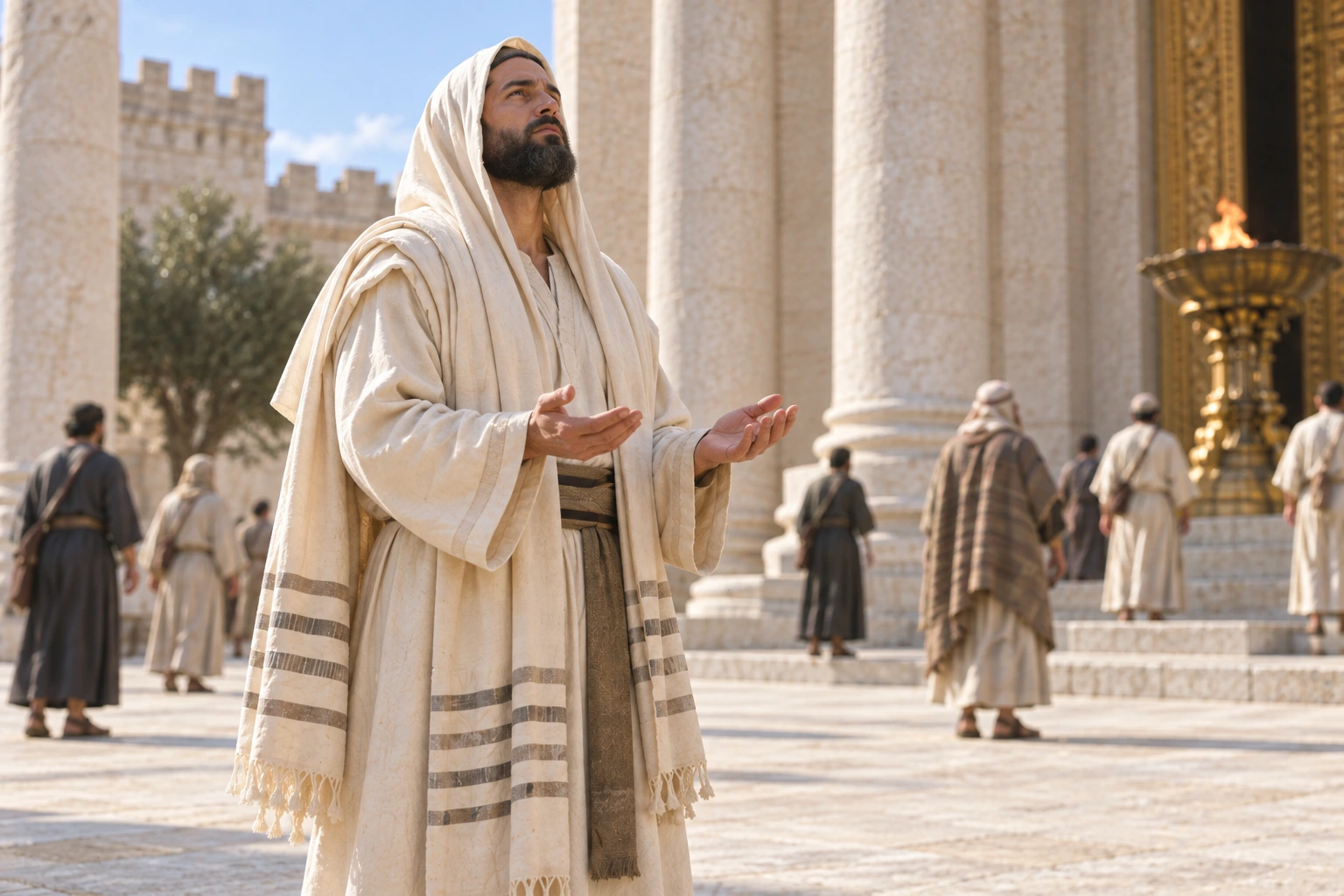
A prayer centered on comparison
The Pharisee thanks God that he is unlike other people, including the publican. He speaks of his fasting and tithing, placing his own record at the center of his prayer.
The Pharisee recounts his practices and distinguishes himself from people he considers worse, including the man nearby. The tax collector stands at a distance, will not lift his eyes to heaven, and asks God for mercy as a sinner.
Explore and study
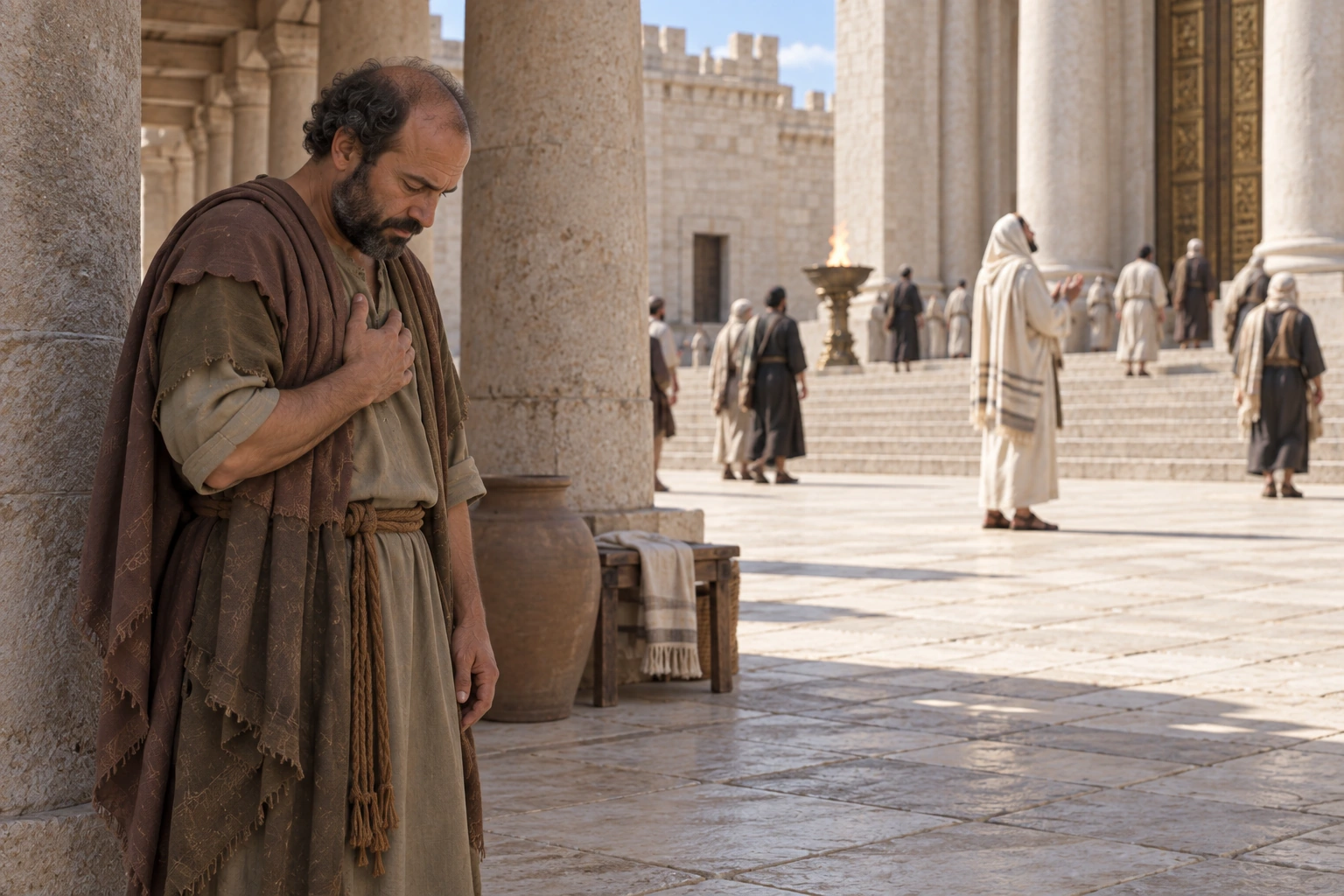
A plea for mercy
Standing afar off, the publican will not lift his eyes to heaven and beats upon his breast. His prayer is a plea for God to be merciful to him, a sinner.
Jesus says that the latter goes home justified rather than the former. His concluding statement about humility and self-exaltation explains the reversal. The issue is not that prayer, fasting, or giving are bad; it is the use of religious practice as grounds for superiority before God.
Read and discover
Let the comparison turn inward
The story can be misread if we congratulate ourselves for being unlike the Pharisee. That would reproduce the comparison it exposes. A more searching response is to examine our own prayer: are we presenting a case for our rank, or coming honestly before God with need and gratitude?
Continue with Jesus Christ
The Two Debtors
A brief story changes the conversation at Simon's table. Forgiveness invites him to look again at a woman whose love he has overlooked.
Open study →Choosing the Lower Place
At a meal, Jesus notices the places people choose. His teaching moves from seeking honor to offering generous welcome.
Open study →Prayer, Readiness, and His Return
Continue through the connected teachings in this collection and compare their distinct settings.
Open study →