Read and discover
At Simon's table
Explore and study
Neither could repay
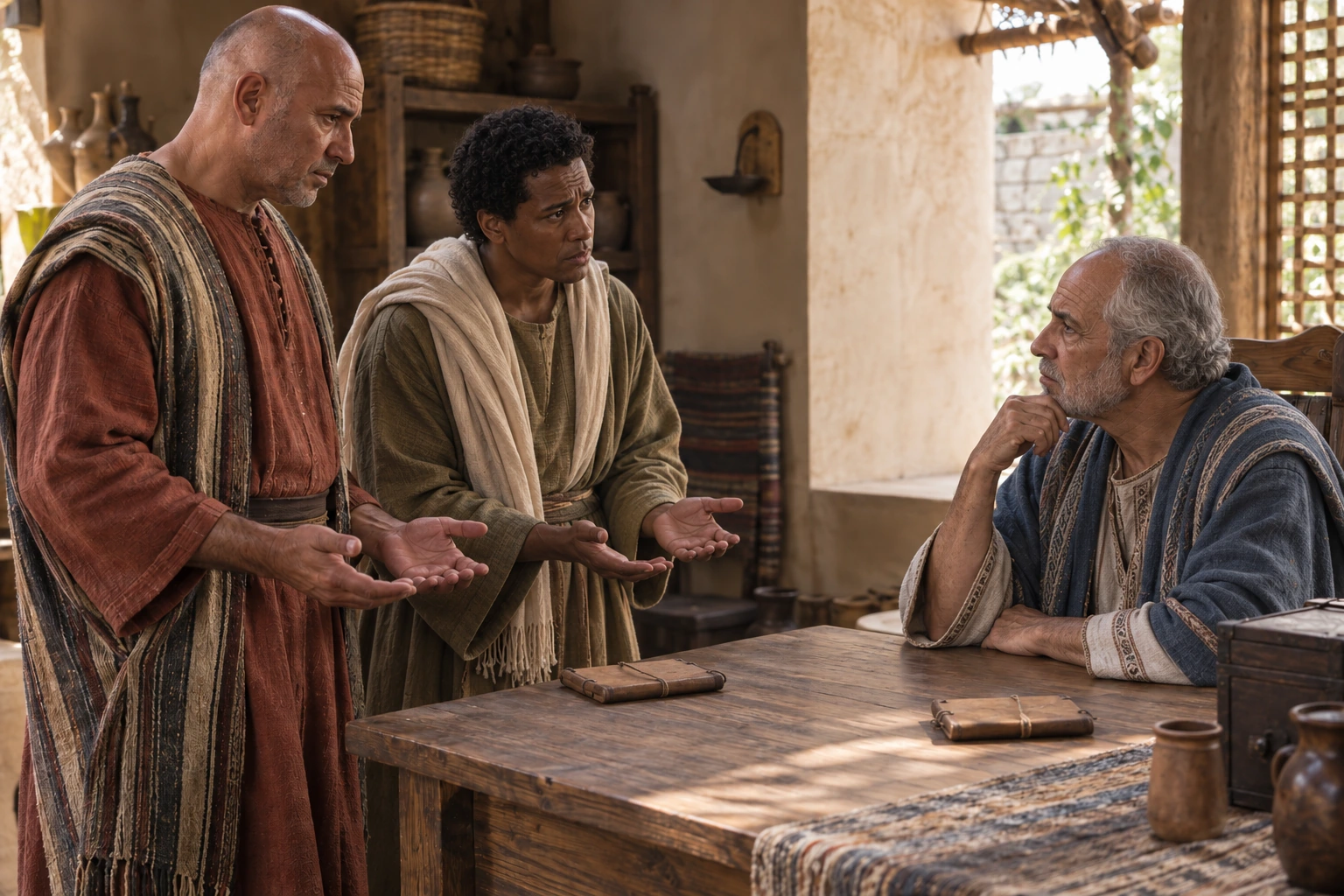
Two debtors stand before the creditor with nothing to pay. Jesus describes debts of different sizes, bringing both men to the same need for mercy.
Jesus is eating in Simon's house when an unnamed woman comes with ointment and weeps at His feet. Simon's inward judgment prompts Jesus to tell a short story about a creditor and two debtors. The surrounding encounter matters because Jesus returns to it after Simon answers His question. Luke 7:36-50
Read and discover
Forgiveness and the response of love

Explore and study
Both debts forgiven
The creditor freely forgives both debts when neither man can repay. The welcoming gesture pictures that mercy, inviting us to consider the grateful love at the heart of Jesus' teaching.
One debtor owes five hundred pence and the other fifty. Neither can pay, and the creditor forgives them both. Jesus asks which will love him more. Simon identifies the one forgiven the larger amount, and Jesus accepts his answer.
Jesus then contrasts the woman's acts of care with the welcome He received from Simon. The debt comparison helps Simon look again at the woman he had judged. Forgiveness and love are at the center; she is not reduced to the reputation through which he first viewed her.
Read and discover
Look again at the person before you
The passage does not name this woman as Mary Magdalene, and a retelling should not supply that identity. Reflection can instead stay with the question Jesus puts before Simon: how might receiving mercy change the way a person loves, and how might judgment prevent us from seeing that love?
Continue with Jesus Christ
The Unmerciful Servant
A servant receives compassion and then refuses it to another. Jesus asks how mercy received should change the way we respond.
Open study →The Pharisee and the Publican
Two people pray, but their posture toward God and others differs. Jesus invites a searching look at comparison, confidence, and mercy.
Open study →Mercy, Repentance, and the Joy of Returning
Continue through the connected teachings in this collection and compare their distinct settings.
Open study →