Read and discover
What gives salt its use?
Explore and study
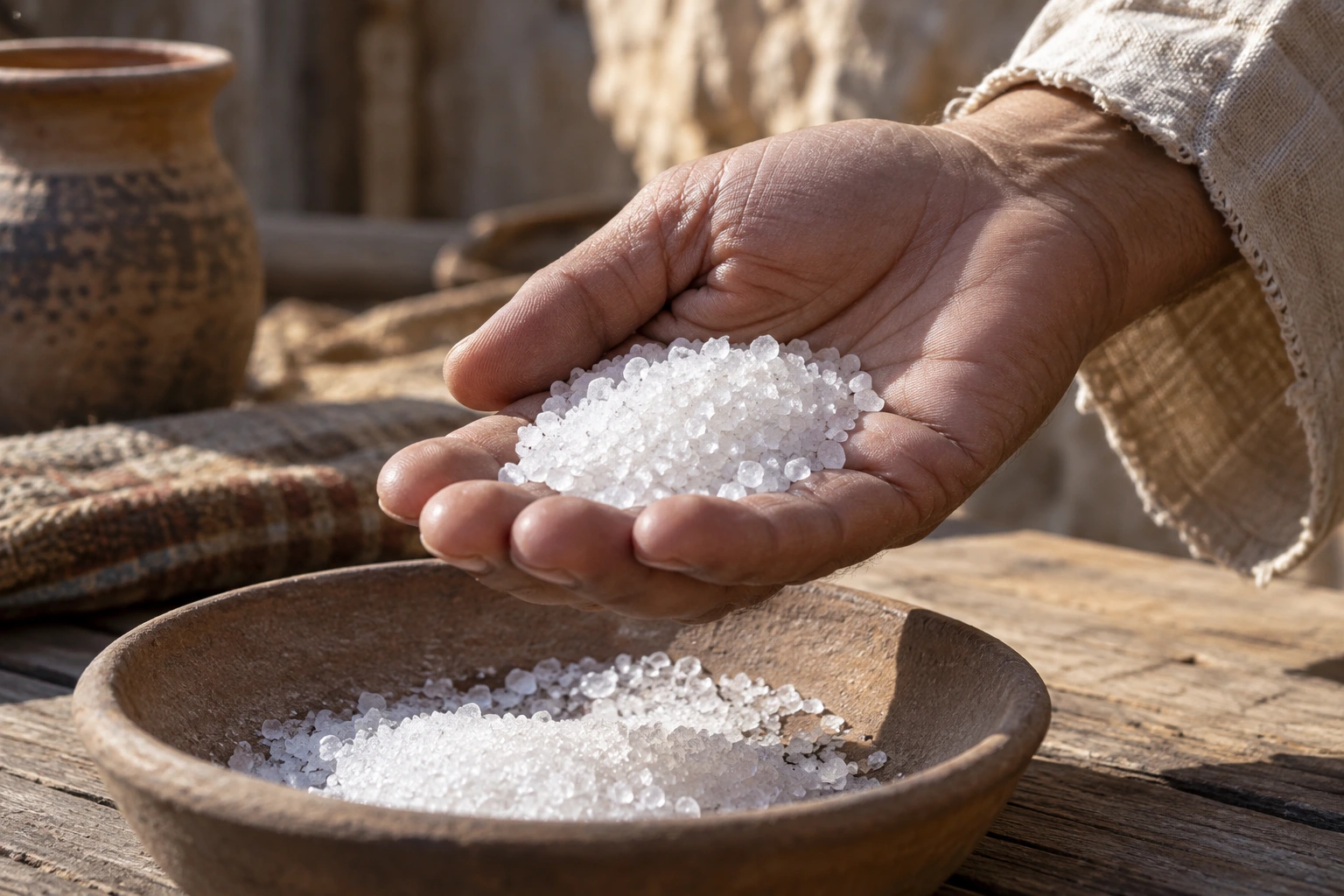
Salt in the hand
Jesus calls His disciples the salt of the earth and asks what use salt has if it loses its savor. The crystals in the hand illustrate the familiar substance at the heart of His comparison.
Jesus tells His disciples that they are the salt of the earth. The comparison asks what use salt has if it loses its savor. Its point rests on the difference between a quality that makes something useful and an outward form from which that quality is missing. Matthew 5:13-16
Read and discover
The image in different settings
Mark places salt near teaching about conduct within the disciples' community and concludes with being at peace with one another. Luke uses the loss of savor after teaching about the cost of discipleship. Those settings give the image distinct emphases while preserving its concern with meaningful character. Mark 9:49-50
Explore and study
Salt and peace
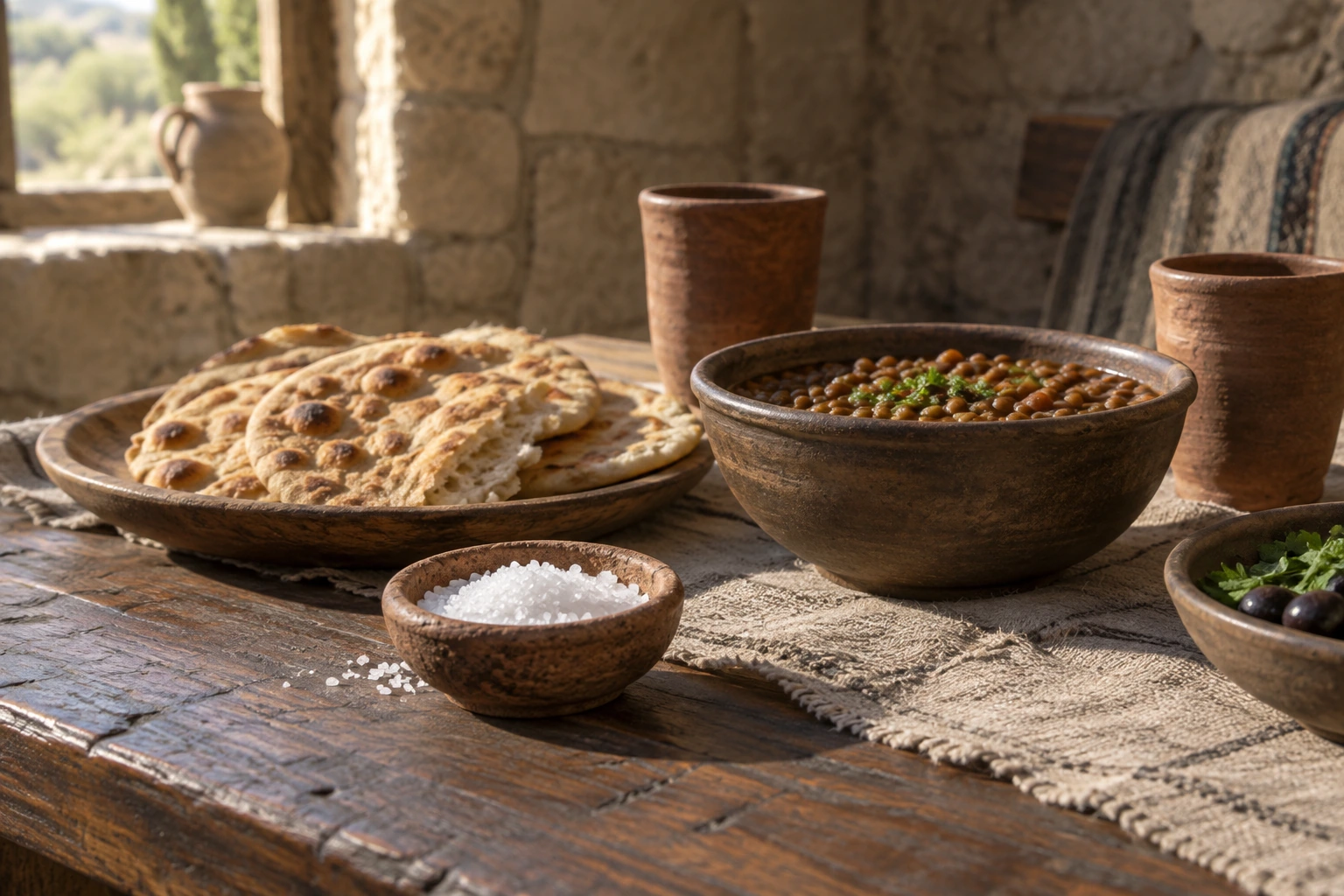
Salt rests on an ordinary table. Read Jesus’ words about retaining its savor, having salt in ourselves, and living at peace with one another.
The saying should not become a debate that forgets why Jesus uses the comparison. Nor should it become a declaration that some people have no worth. It challenges disciples to consider whether their life carries the qualities to which He calls them. Luke 14:34-35
Read and discover
Preserve what gives service meaning
What makes an act of service valuable to the person receiving it? Attention, honesty, and care may matter more than making the act visible. Mark's connection with peace also invites reflection on whether your way of defending a good thing preserves the spirit of the teaching you defend.
Related studies
The Lamp on a Stand
A lamp brings light into the room. Follow this recurring image through Jesus' teaching about witness, attention, and what a person receives within.
Open study →The Tower Builder
A foundation does not finish a tower. Jesus asks those following Him to consider the commitment they are beginning.
Open study →Hearing and Living His Word
Continue through the connected teachings in this collection and compare their distinct settings.
Open study →