Read and discover
A field with mixed growth
Explore and study
An enemy sows in the field
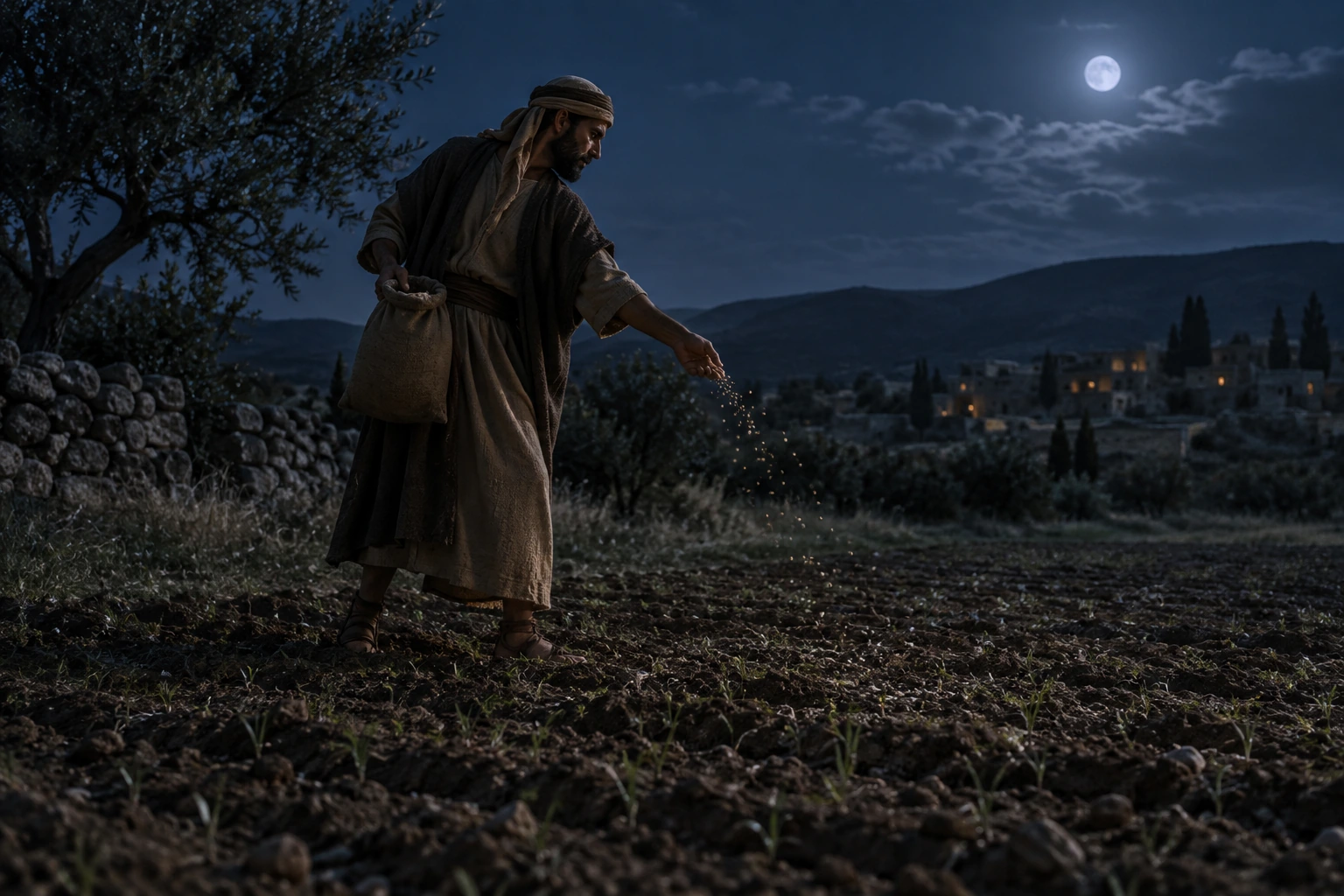
Someone moves through the planted field under cover of night. Jesus says an enemy sowed tares among the wheat while others slept. In His later explanation, the enemy is the devil; this scene illustrates the story's action without claiming to show the devil's physical appearance.
Jesus tells of a field deliberately planted with good seed. An enemy introduces tares while people sleep, and the mixed growth becomes apparent later. The servants' first question is understandable: how did the unwanted plants appear in a field that began with good seed? Matthew 13:24-43
Read and discover
Why the owner tells them to wait
Explore and study
The mixed field is discovered
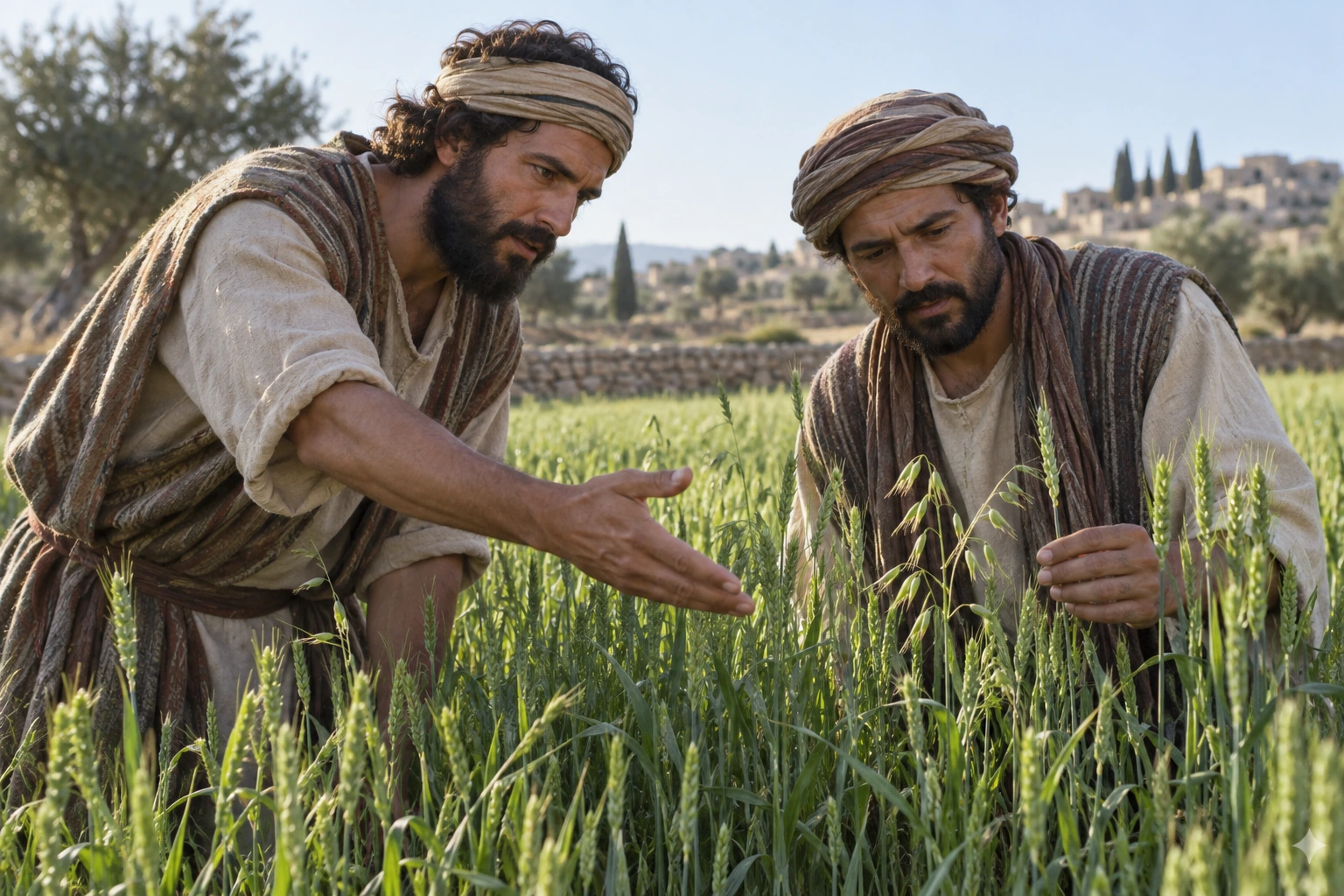
The mixed growth has become noticeable, and the workers stop to examine it. In Jesus' story, the servants ask how tares appeared in a field planted with good seed. Their question begins a conversation about the enemy's work and the owner's care for the wheat.
Their proposed solution is immediate removal. The owner refuses because pulling up the tares could uproot the wheat as well. He directs them to let both grow until harvest, when separation can take place. His restraint protects what the servants are trying to save.
After the crowd leaves, the disciples ask Jesus to explain. He identifies the sower of good seed as the Son of Man, the field as the world, and the harvest with the end. Because the passage supplies these meanings, they should guide the study rather than an imagined code attached to every detail.
Explore and study
Let both grow until harvest
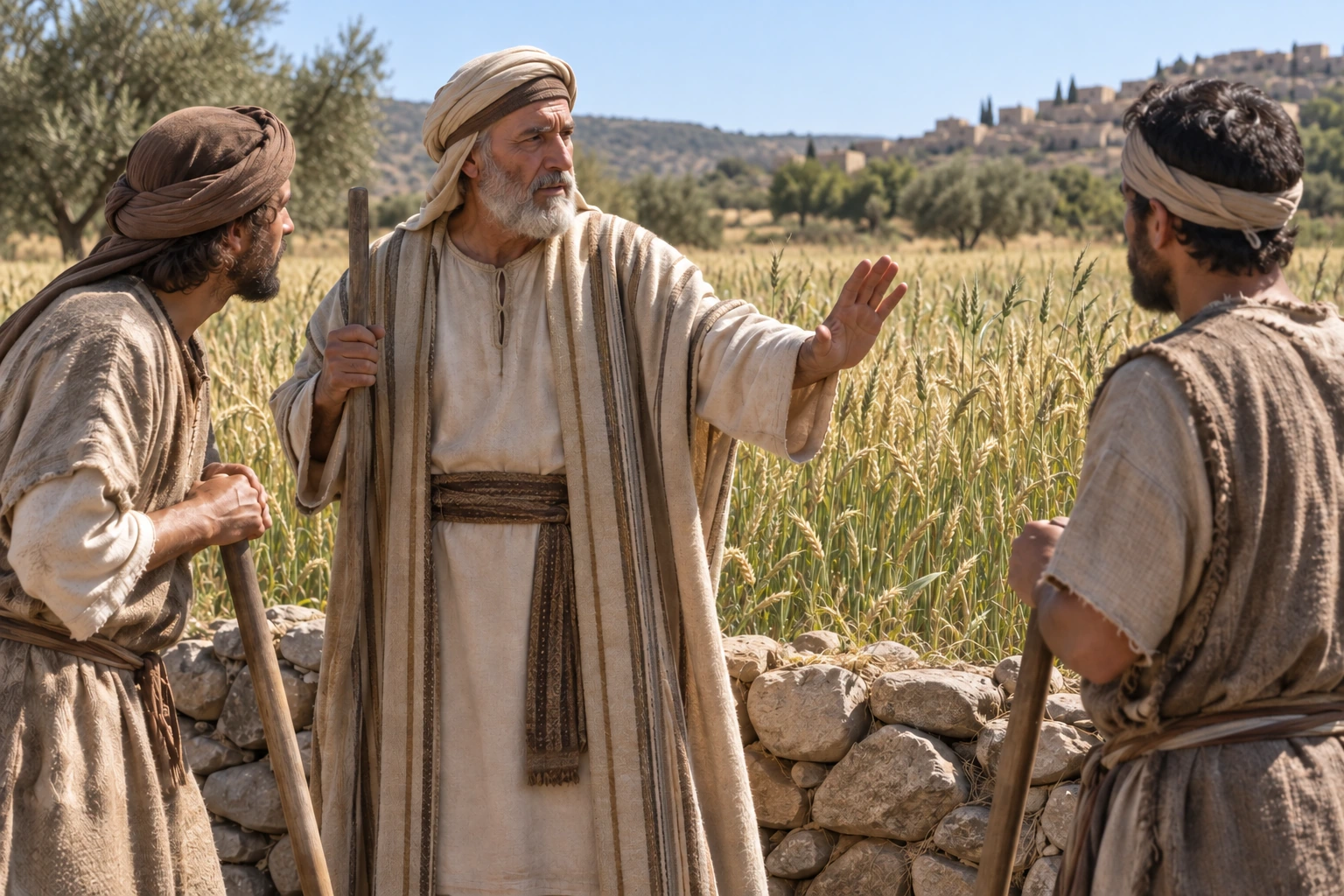
The owner stops the workers from pulling up the unwanted plants at once. Jesus explains the owner's concern: uprooting the tares could also uproot the wheat. The delayed separation expresses care for the crop; in His interpretation, the final harvest belongs to the end of the world and to God's appointed judgment.
Read and discover
Care without claiming final judgment
Explore and study
The harvest is separated
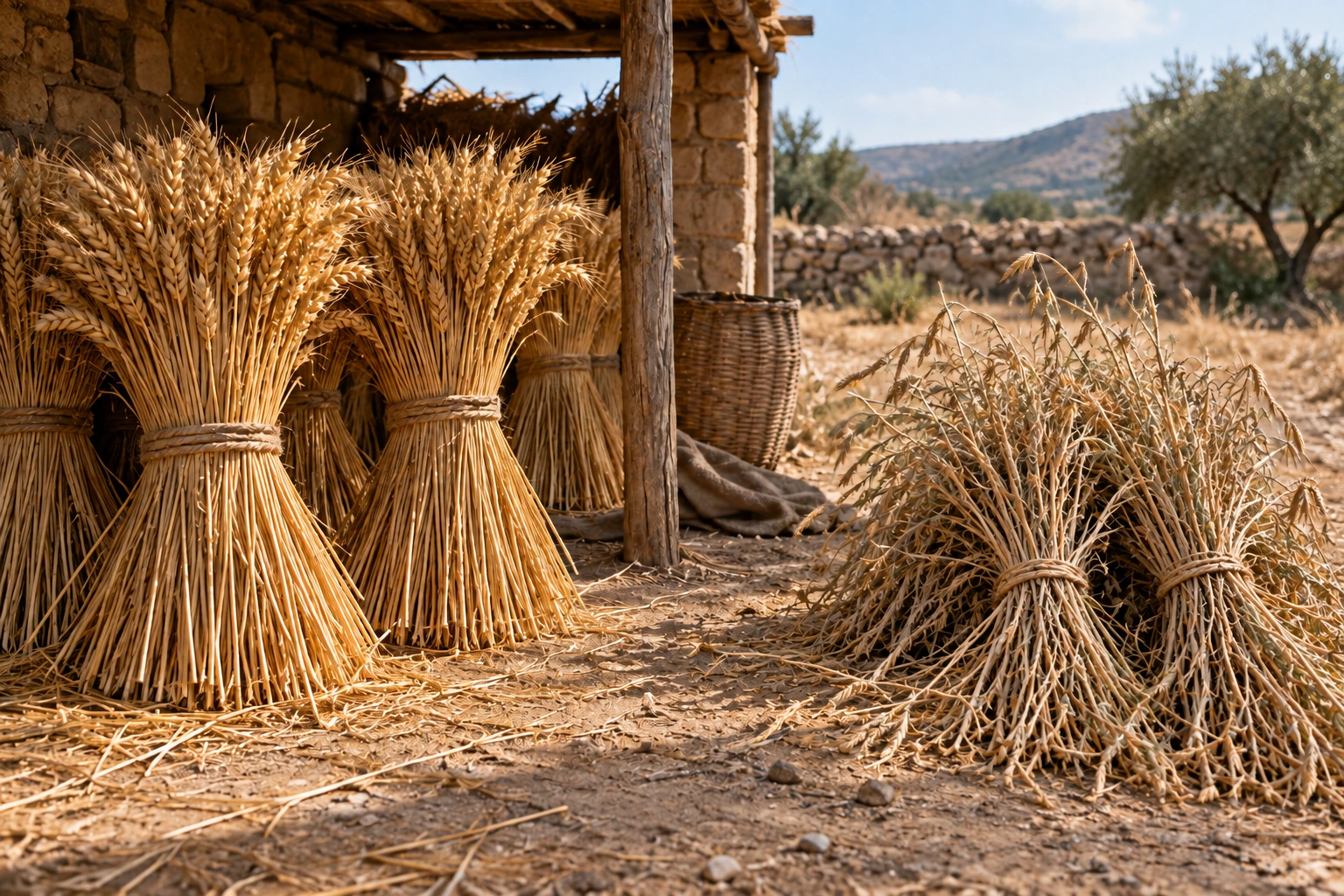
The harvested plants now stand in separate bundles. Jesus' story ends with the tares gathered apart and the wheat brought into the barn. His explanation places the final separation under God's authority, encouraging trust in His judgment rather than a rush to decide another person's final worth.
The account cautions against acting as though we possess the final discernment of the Lord. It does not ask us to call our neighbors weeds or excuse harmful conduct. A personal reflection can focus on the patience, care, and humility needed to protect people while leaving final judgment to Him.
Continue with Jesus Christ
The Fishing Net
The net gathers a mixed catch, and the shore becomes a place of separation. Jesus connects an ordinary fishing scene with the seriousness of judgment.
Open study →The Seed Growing Secretly
Between sowing and harvest, growth unfolds beyond the farmer's control. Mark's brief parable invites patient attention to God's kingdom.
Open study →The Kingdom of God
Continue through the connected teachings in this collection and compare their distinct settings.
Open study →