Read and discover
Keep the kingdom comparisons distinct
Matthew gathers several kingdom parables in one chapter, while Mark preserves the seed that grows through nights and days. Read each image on its own terms. The growing seed concerns growth and harvest; the wheat and tares adds an enemy, mixed growth, and restraint before separation. Mark 4:26–32
Jesus supplies explanations for some comparisons and leaves others brief. The treasure and pearl invite attention to surpassing worth. The net receives an explicit connection with judgment. Begin with these stated movements instead of inventing a separate doctrine for every object in the scene. Matthew 13:44–50
In the modern pictures, people plant, make bread, welcome others and choose how to spend their time. These imagined applications help us ask about patience, priorities and humble judgment. The kingdom parables remain our starting point; their promises belong to God's work, beyond what any one project may achieve.
Read and discover
Allow small beginnings to matter
Explore and study
A small beginning in shared ground
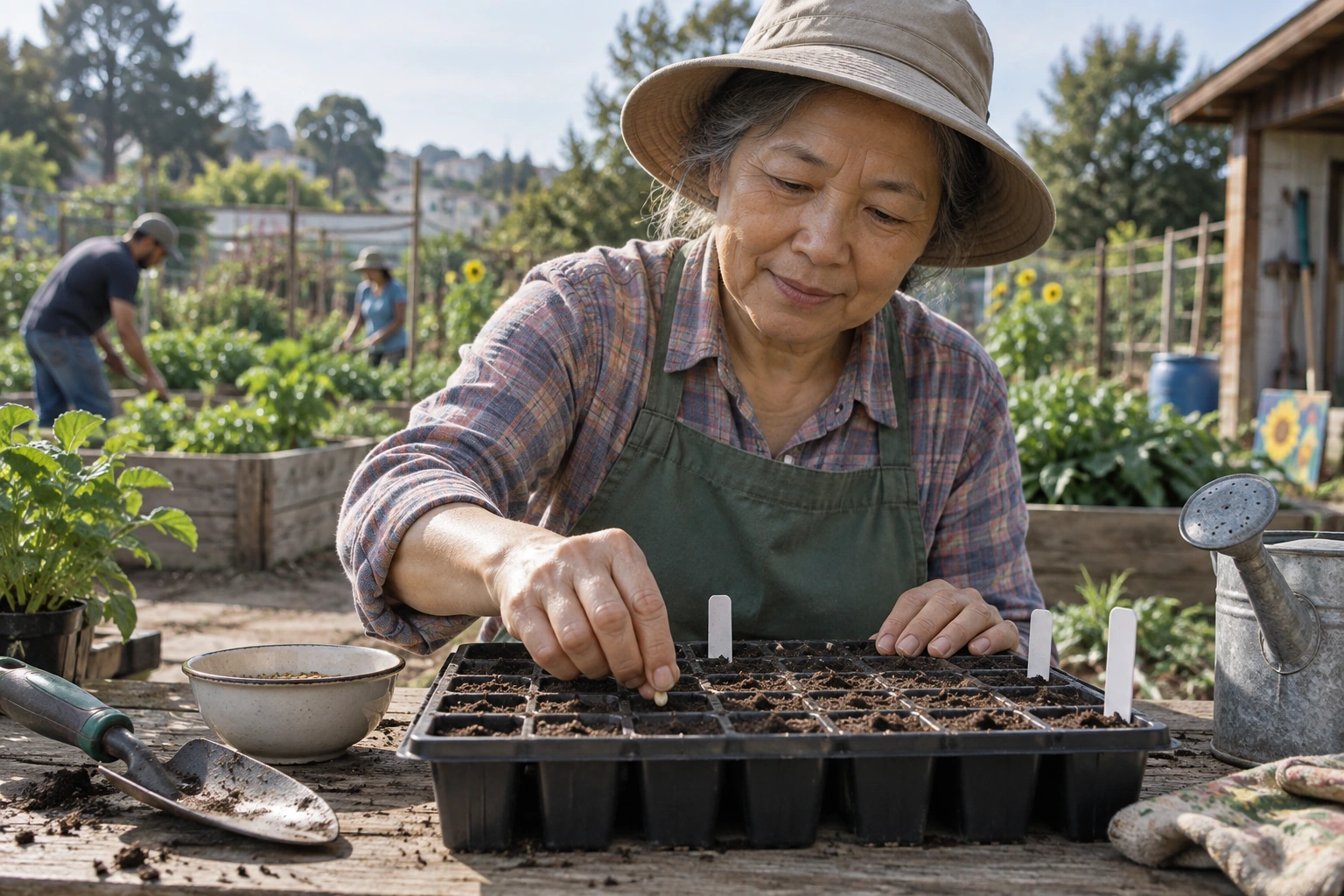
The gardener lowers a seed into a tray of soil. Jesus' mustard-seed comparison teaches us to value a small beginning in light of the kingdom's growth.
The mustard seed directs attention from an unimpressive beginning to substantial growth. The leaven directs attention to a change that reaches throughout the meal. These are related pictures, but their different actions matter: a seed grows, while leaven works through what surrounds it. Mark 4:26–32
A small planting and a baker's patient work let the original images remain visible in a present-day setting. Neither illustration claims that growth can be demanded on our timetable. The invitation is to consider the worth of faithful participation when the result is not yet fully seen. Matthew 13:33

Explore and study
Leaven worked through the dough
The baker presses and folds dough on the worktop. This familiar work recalls Jesus' comparison of leaven spreading its effect through the whole batch.
Read and discover
Let recognized worth shape a choice
Explore and study
A commitment kept amid distractions
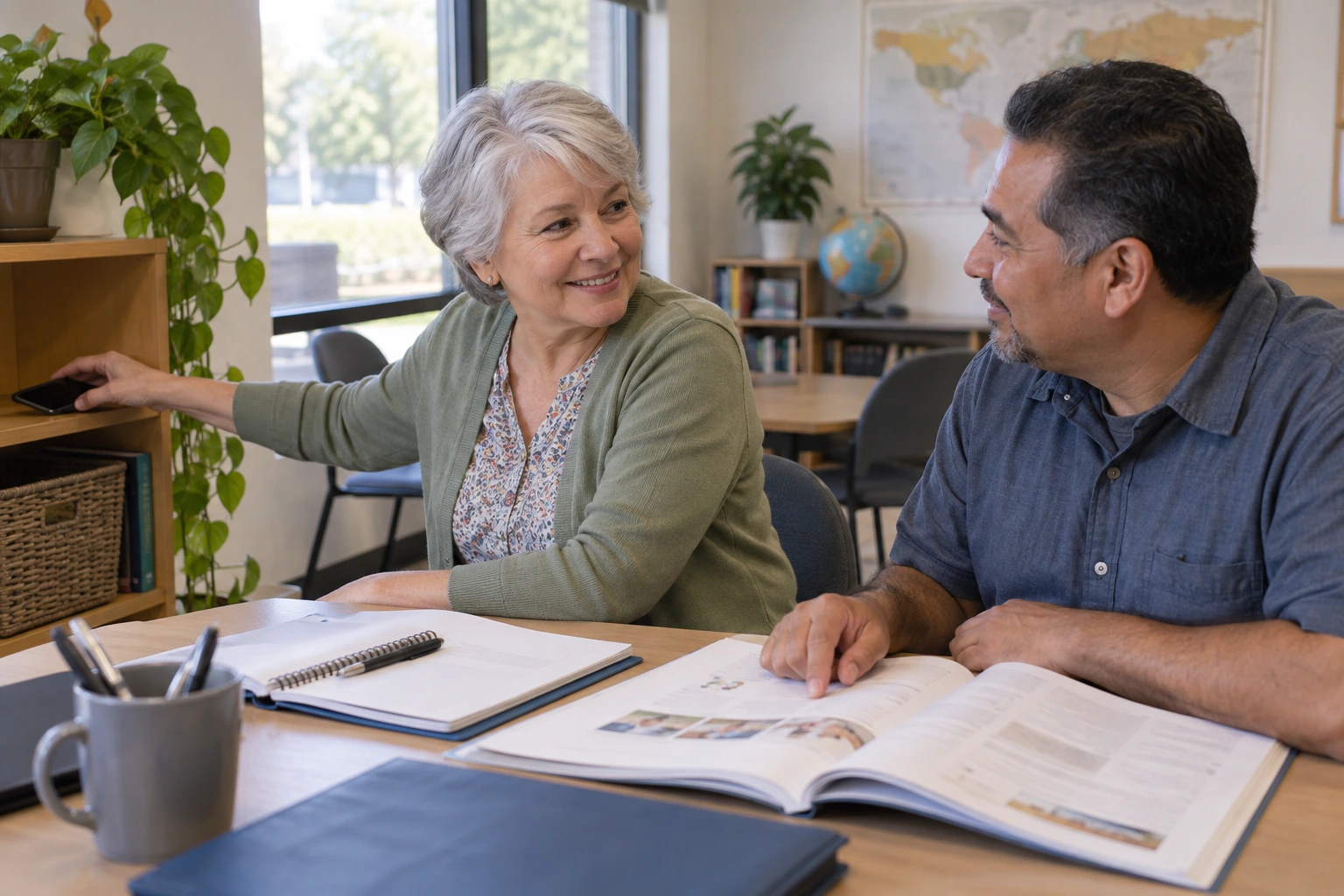
A phone is set on the shelf as the two adults give each other their attention. The pearl of great price asks us to consider how the use of our time expresses what we treasure.
The treasure is found in a field; the pearl is found by a merchant already seeking fine pearls. In each, recognition leads to a wholehearted response. The joy of discovery and the willingness to rearrange priorities belong together in these compact accounts. Matthew 13:44–46
An application can ask what your schedule and attention reveal you consider precious. Keeping a meaningful commitment or choosing substance over display may require giving something else less room. These are invitations to examine priorities, not instructions to make an impulsive financial decision or treat every sacrifice as a purchase of divine favor.

Explore and study
Choosing substance over display
One young person sets a handmade display on a shelf while the others arrange fabric at the table. The hidden-treasure parable asks what we are willing to set aside when we recognize something of greater worth.
Read and discover
Restrain haste and remember judgment's limits
Explore and study
Protecting the roots while tending
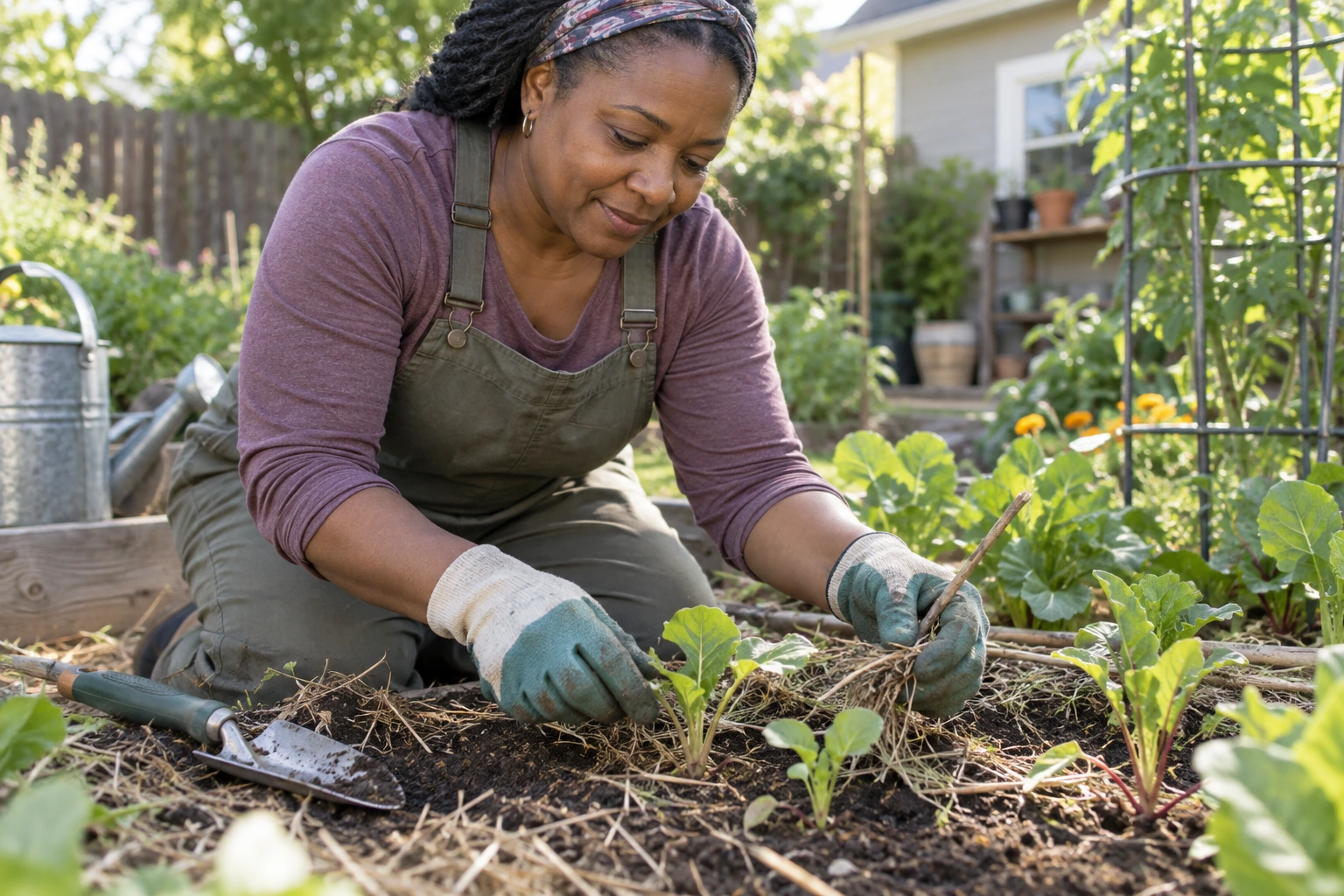
The gardener lifts dry stems from beside the young plants. The owner's concern for the wheat reminds us to consider what our actions might harm, even when we intend to put something right.
The owner restrains servants who might uproot wheat while removing tares. In the net, Jesus places final separation at the end and identifies angels with that work. The accounts take judgment seriously while refusing to make the hearer the final judge of every person nearby. Matthew 13:24–30
A gardener protecting roots or a mediator listening carefully offers an application of restraint. Ordinary decisions still have to be made, and harmful conduct still matters. Humility asks us to consider what we might damage through haste and what we do not know about another person's whole story. Matthew 13:47–50

Explore and study
Listening before passing judgment
One person speaks while the others listen across the table. Jesus places the final separation in the net parable under God's authority, encouraging humility in our own judgments.
Read and discover
Receive the invitation and follow in service

Explore and study
A place in the shared work
People prepare the table together, carrying cutlery and pointing out places. The wide invitation in Jesus' banquet teaching encourages a welcome in which others can participate.
The king's wedding invitation is widened after the first invitees refuse, yet the account continues to ask about a fitting response. Welcome and responsibility appear together. John's grain-of-wheat image, in a different setting, points toward Jesus' approaching death and the call to follow Him. Matthew 22:1–14
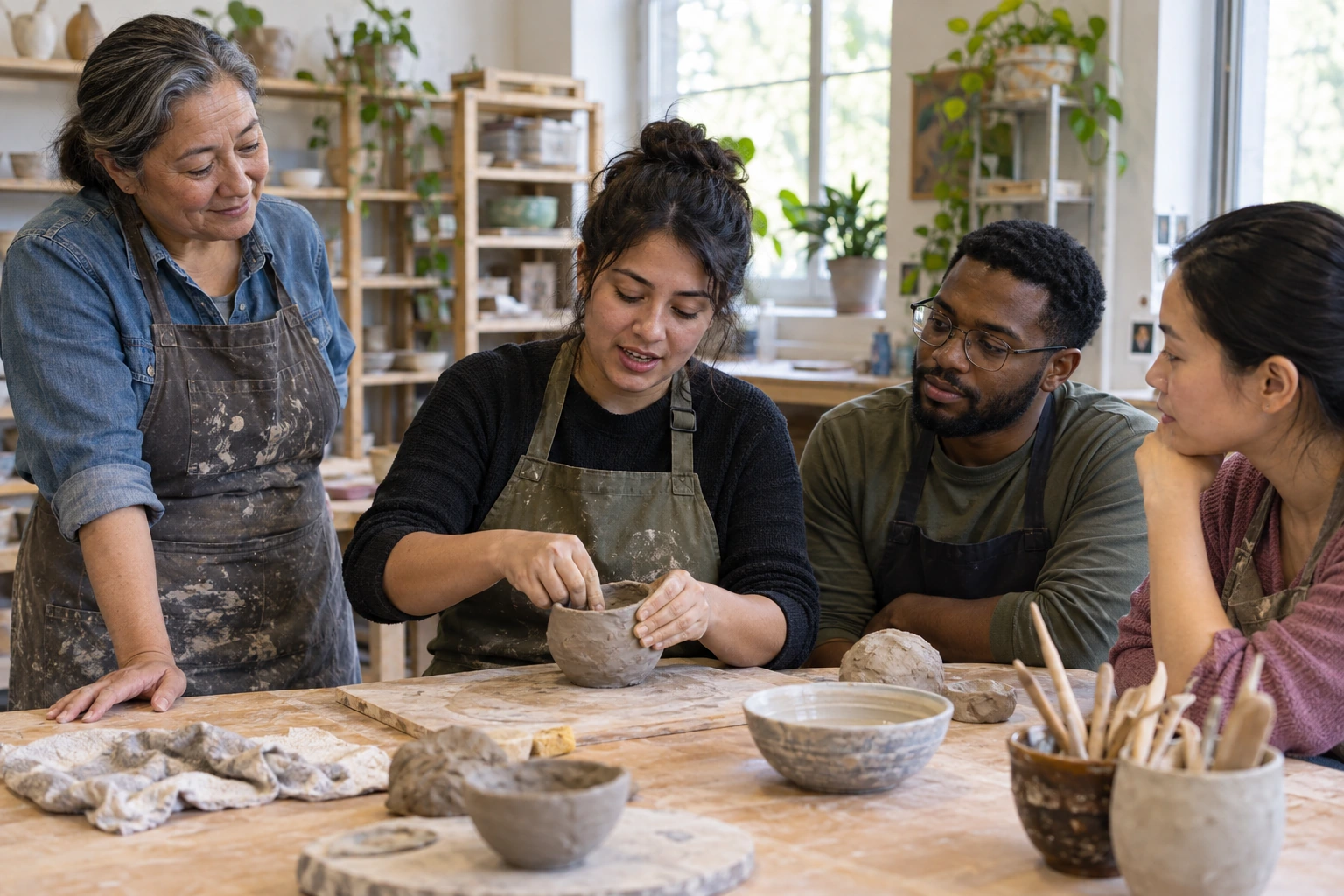
The modern scenes invite participation and generous service: a newcomer receives a real place in shared work, and a teacher gives another person room to grow. They are applications, not extra meanings supplied by the parables. Service may ask what we can release without turning another person's growth into a claim about ourselves. John 12:23–26
Explore and study
Giving time without taking the spotlight
The potter shapes the clay while those around the table watch. Jesus' call to serve Him asks us to consider how the time and attention we give can benefit another person.
Read and discover
Bring the teaching into your own reflection
Read and discover
Explore every study in this collection
Parables and story pictures
The Strong Man
Jesus answers the charge that His deliverance comes from Satan. Luke develops the image of a stronger conqueror; this is not a lesson endorsing robbery.
Open study →The Seed Growing Secretly
The farmer sows, waits through growth he cannot fully explain, and harvests. Keep this distinct from the wheat and tares.
Open study →The Wheat and the Tares
Read Jesus' explanation after the story. The servants are restrained from uprooting wheat; judgment belongs to the appointed harvest.
Open study →The Mustard Seed
The kingdom is compared with a small seed and substantial growth. Keep the kingdom comparison distinct from separate sayings about mustard-seed faith.
Open study →The Leaven
A woman works leaven into meal until it permeates the whole. Do not import the negative meaning of leaven from warnings in other settings.
Open study →The Hidden Treasure
Joy over discovered treasure leads to wholehearted action. Keep the narrative brief instead of supplying an invented biography.
Open study →The Pearl of Great Price
A merchant recognizes one pearl's value and sells all to obtain it. Study beside the treasure while preserving the difference between seeking and finding.
Open study →The Fishing Net
The catch is gathered and sorted. Jesus explicitly connects the separation with judgment; the text does not authorize us to decide another person's final standing.
Open study →The Wedding of the King's Son
Rejected invitations lead to a widened invitation, followed by the wedding-garment episode. Preserve both movements and distinguish this account from Luke's great supper.
Open study →Related comparisons and allegories
The Bridegroom and His Guests
Jesus answers a fasting question through wedding joy and the bridegroom's coming absence.
Open study →A Divided Kingdom and House
An answer to the accusation about Satan prepares for the strong-man comparison.
Open study →The Grain of Wheat
Jesus uses a dying seed when speaking of His approaching glorification and following Him.
Open study →Continue with Jesus Christ
Hearing and Living His Word
Read the sower and the householder alongside the kingdom's growth and treasure images.
Open study →Prayer, Readiness, and His Return
Explore the readiness and faithful service that accompany hope in His coming.
Open study →Faithful Stewardship and the Cost of Discipleship
Consider how recognized worth changes the use of entrusted time and resources.
Open study →