Read His words together
Bring your own questions to the Savior’s words. Explore a study of reading scripture together.
Stand Forever · Foundational study
Is this the restored Church of Jesus Christ?
ContinueWhat do Latter-day Saints mean when they speak of the restored Church of Jesus Christ? Begin with what they believe about the Savior, then explore the scriptures and history behind their faith. Your questions are welcome here.
This is the fourth foundational question in the Stand Forever study. Latter-day Saints believe that Jesus Christ restored His Church through Joseph Smith, including priesthood authority and ordinances. Understanding that belief involves more than learning an organization’s name: it includes asking what the Church teaches about Christ and what its members covenant to do.
You do not need to answer every question at once. As you read, note where a teaching or account comes from and what you want to understand better. Some questions lead into history; others may lead you to scripture, prayer, or a conversation.
Bring your own questions to the Savior’s words. Explore a study of reading scripture together.
Begin with one scripture section. The videos and linked companion studies give you places to continue, so this page can support several study sessions rather than a single quick visit.
Ephesians 2 describes reconciliation through Christ and a community whose members are no longer strangers. Verses 19–22 use the image of a household and a building, with apostles and prophets in the foundation and Jesus Christ as the chief cornerstone. The chapter places belonging within the redeeming work of Christ.
Explore and study
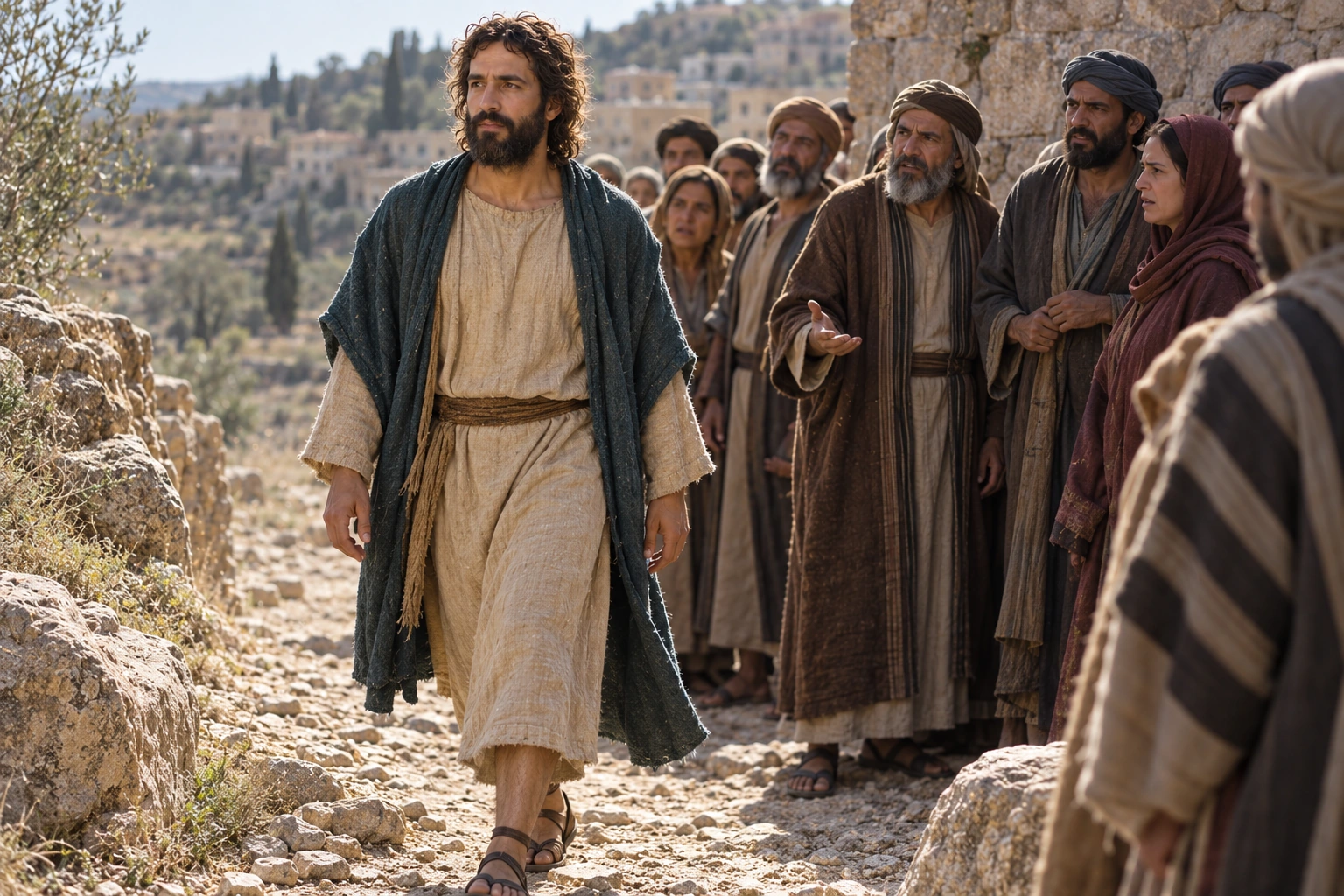
When people in Nazareth turn against Him, Jesus passes through their midst and goes on His way. Opposition does not bring His ministry to an end.
Explore and study
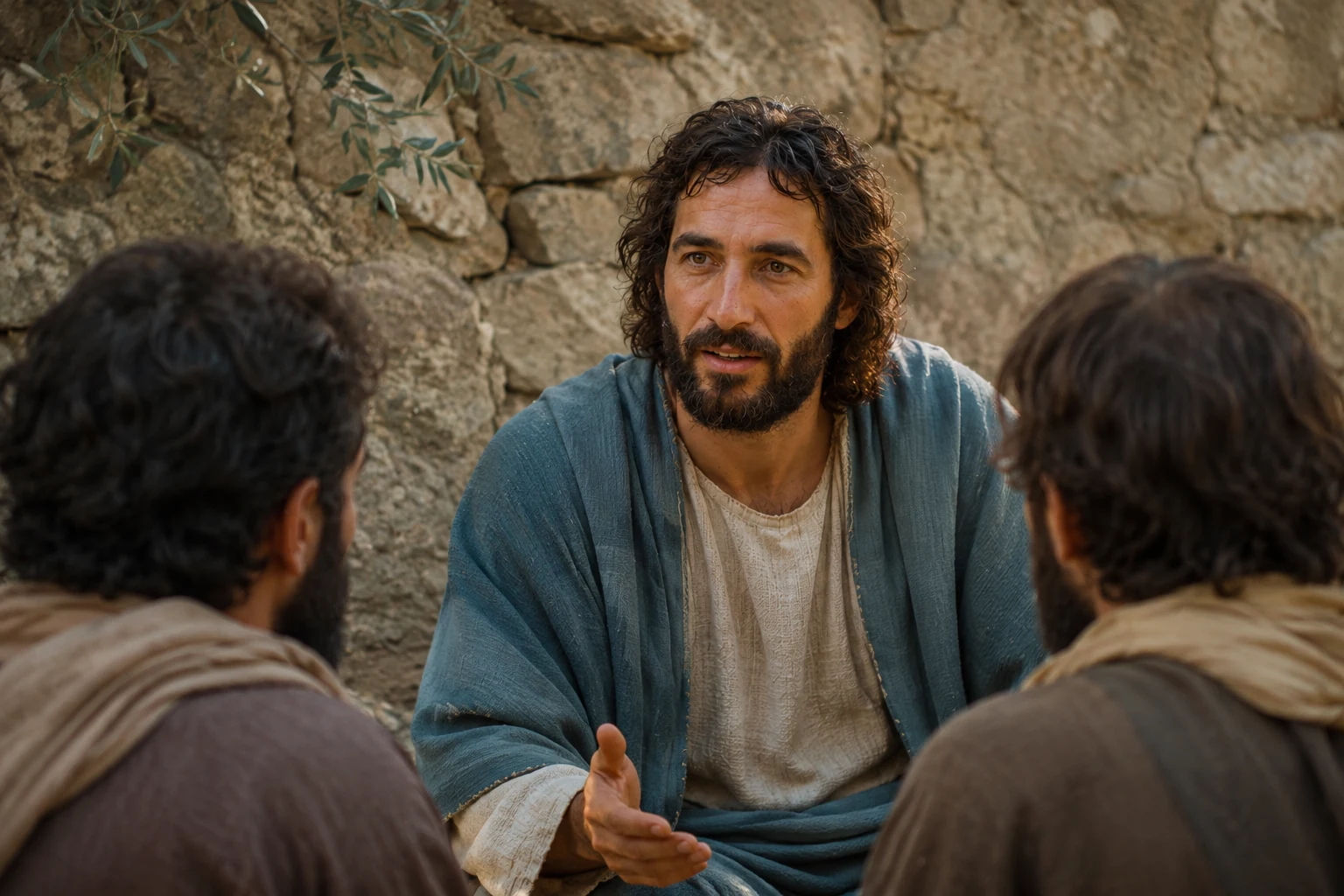
Jesus Christ stands among attentive disciples as their teacher and sure foundation. Around Him, strangers can become fellow citizens in a covenant community built upon His peace.
Read verses 13–22 together. Ask how the architectural image serves the chapter’s larger account of reconciliation. Latter-day Saints connect this language with their belief in a Church led through apostles and prophets. The passage itself does not narrate nineteenth-century events; studying that connection also requires the Restoration sources below.
What does this passage say brings people near? How should a community centered on Jesus Christ treat a person who feels like a stranger?
Doctrine and Covenants 20 combines an account of the Church’s beginnings with teachings, responsibilities, and ordinances. Its opening identifies the Church’s organization in 1830. Later passages describe faith in Jesus Christ, repentance, baptism, and the Holy Ghost, as well as responsibilities within the community.
Explore and study
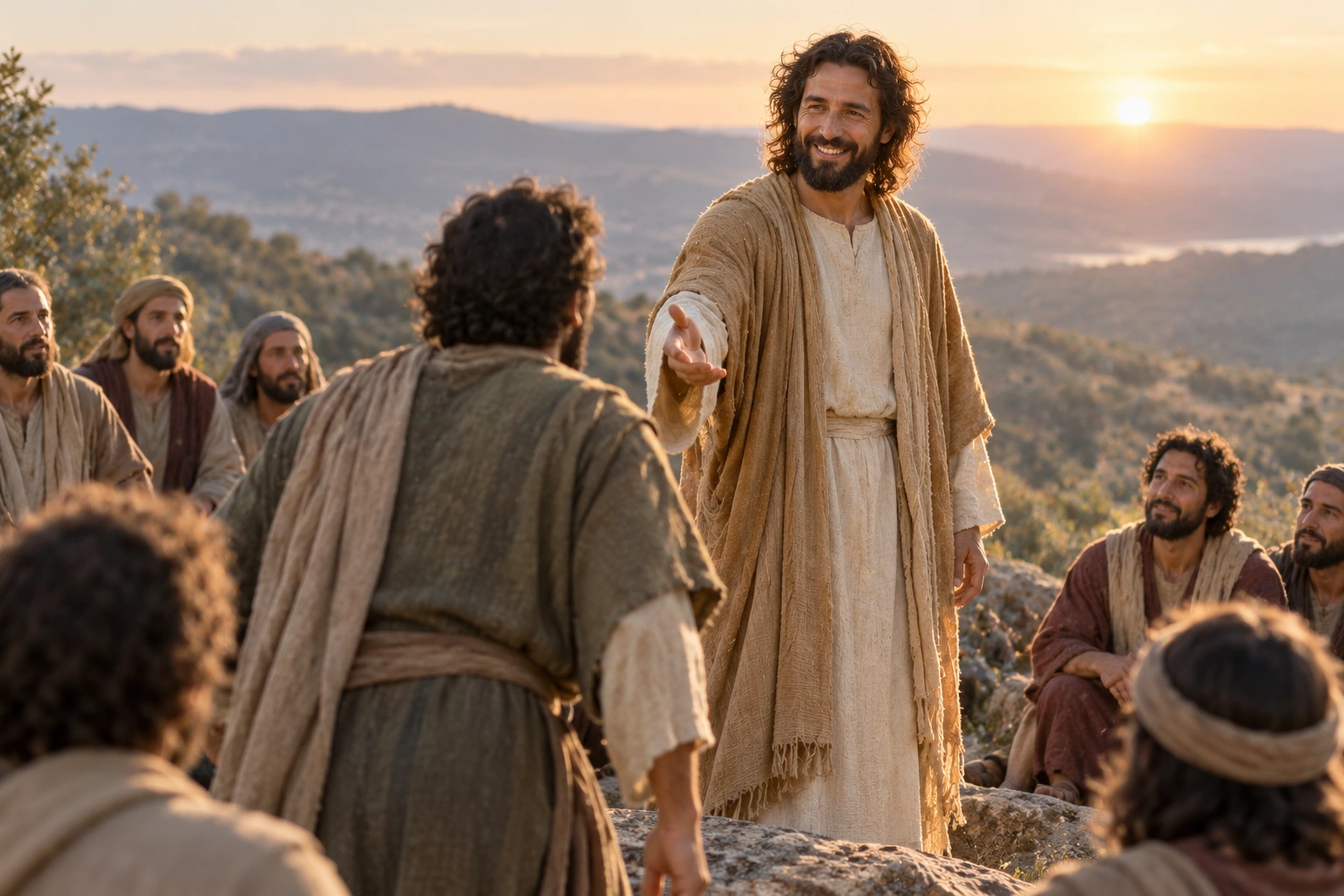
After spending the night in prayer, Jesus calls His disciples and chooses the Twelve. Their service begins with His invitation.

Explore and study
An open book, paper and inkwell bring the written revelation behind the Church's 1830 organization into view. Its doctrine, ordinances and community life all lead back to Jesus Christ.
For an initial reading, pair verses 1–12 with verses 17–37. Mark the difference between the historical statements and the theological claims. This is a primary religious text for what Latter-day Saints understand the restored Church to teach. Reading it carefully helps you ask more specific questions about authority, scripture, and the meaning of membership.
Read Doctrine and Covenants 20
Which claim would I like to understand more fully? What original account or passage would help me investigate it?
Continue with Joseph Smith and the historical record →
For a contemporary statement of these beliefs, watch the message below and read the Restoration proclamation within its transcript.
Video
Russell M. Nelson teaches about hearing Jesus Christ and presents the 2020 Restoration proclamation. Read the proclamation within the full message.
Official Church video · April 2020. Jesus Christ studies with two attentive listeners.

Explore and study
A family arrives at an older neighbor's door with groceries and a warm meal. In that simple offering, the baptismal promise to bear burdens and give comfort becomes personal.
Explore and study
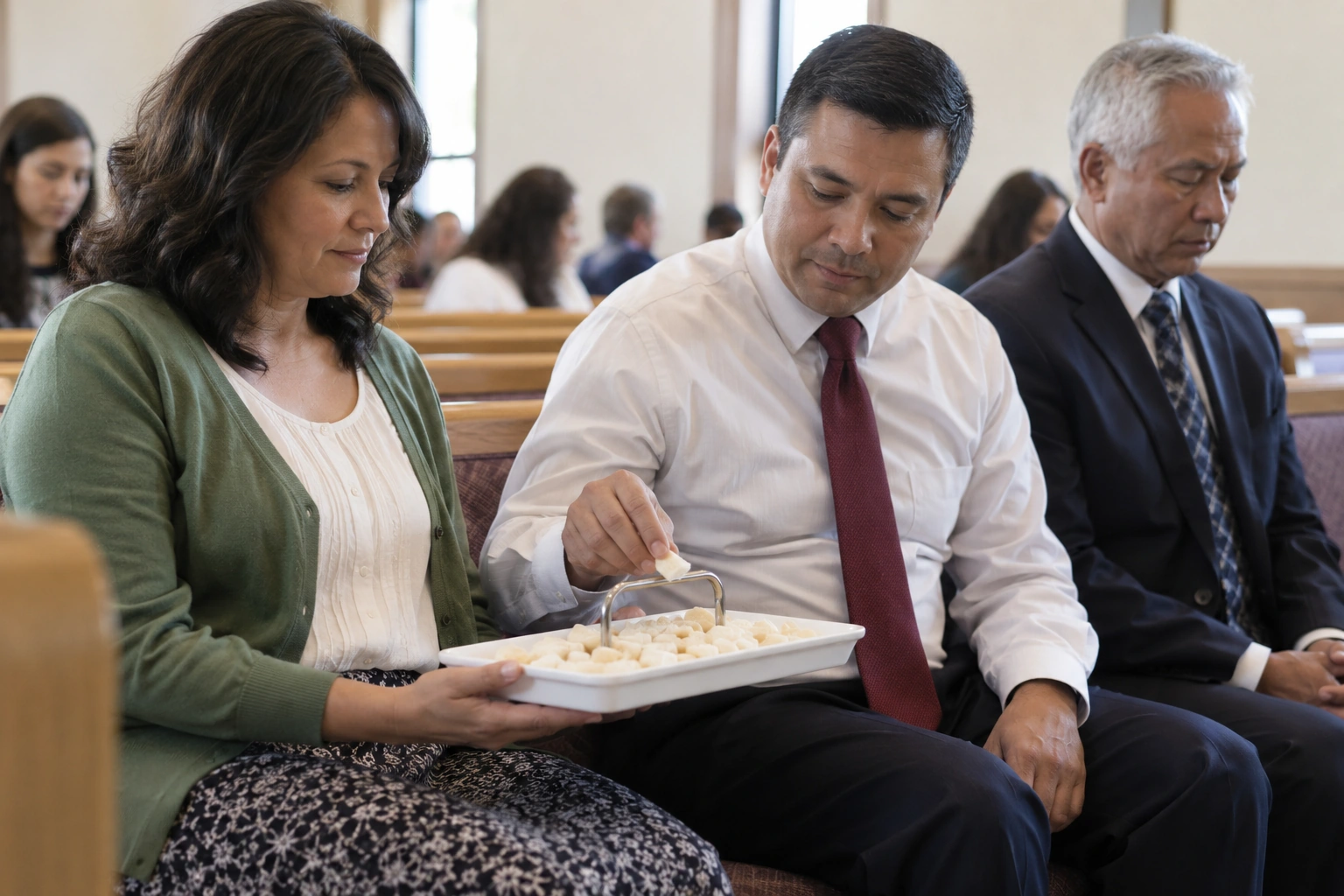
A congregation receives the sacrament together. The quiet passing of the bread gives each person a moment to remember Jesus Christ.
In Mosiah 18, Alma teaches people preparing for baptism. Verses 8–10 describe willingness to bear burdens, mourn with others, offer comfort, and stand as witnesses of God. These commitments give concrete meaning to a covenant community.
Read through verse 16 to keep the invitation connected to the account of baptism. The passage helps you examine what discipleship asks of people in relation to one another. As an application, consider a place where you have received care and a person whose burden you could help carry. Service is worth practicing thoughtfully, without assuming you already know another person’s needs.
Who needs companionship, practical help, or patient listening? What small act could I offer respectfully this week?

Practical help gives care a place in ordinary life. Continue with the invitation to serve a neighbor.
Read “Give practical help” in Jesus Christ →In 3 Nephi 27, the disciples ask Jesus about the name of the Church. His answer connects His name with His gospel. Verses 13–22 focus on His mission, His being lifted upon the cross, repentance, baptism, and sanctification through receiving the Holy Ghost.
Explore and study
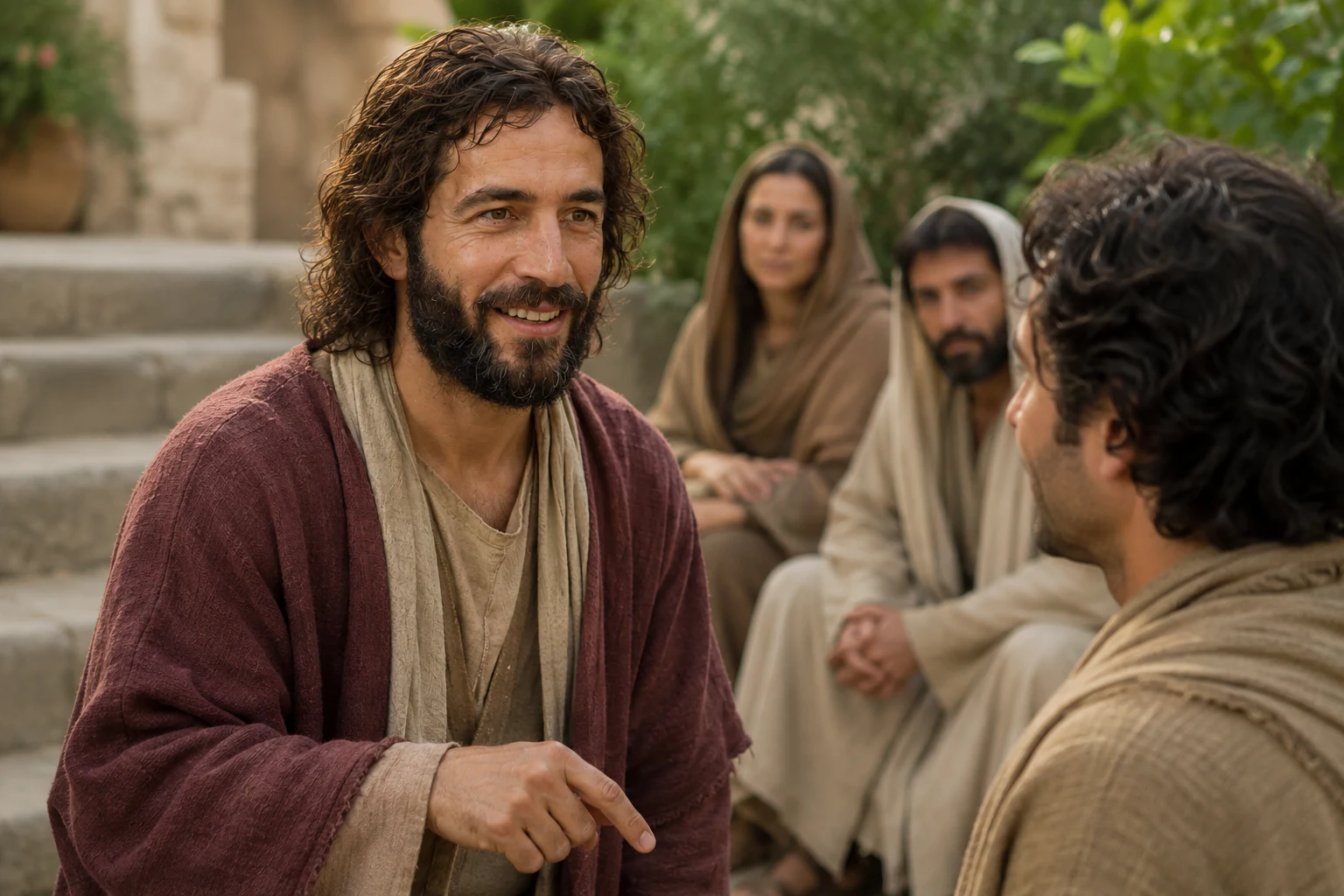
Jesus Christ teaches a disciple who listens closely. His gospel is more than a statement of belief; it is a call to repent, follow Him and become changed through His grace.
Read the chapter’s opening alongside that explanation. The name and the life of the community belong together in this account. When exploring the restored Church, look at what its sources teach about Jesus Christ, how ordinances point toward Him, and what discipleship asks people to become. Observations about a community can be meaningful while still leaving historical or doctrinal questions to investigate directly.
How does Jesus describe His gospel here? Which part would you like to study or practice more intentionally?
Continue from the Restoration message above into the invitation to belong and serve. Keep the original transcript beside your notes. Identify a teaching, follow its scripture references, and separate the speaker’s words from your own application.

Video · Original publisher thumbnail
Dieter F. Uchtdorf speaks about belonging, discipleship, and making room for people with questions. Consider how an invitation becomes daily community life.
Official Church YouTube channel · October 2013
If you study with others, give each person room to say what they understand without requiring a declaration of certainty. You can ask a Church member how a covenant shapes daily life, read a historical account together, or offer help in your own community. An encounter is one part of inquiry; it does not replace reading the sources.

Explore and study
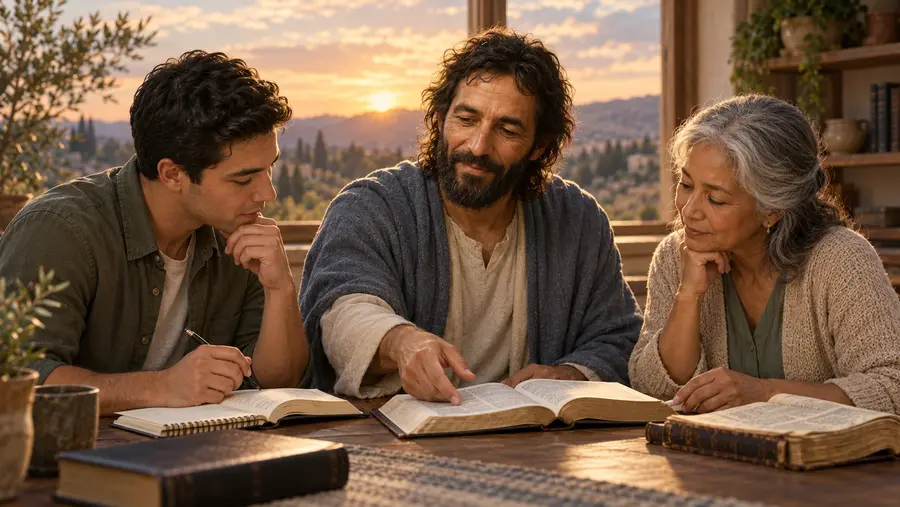
Three friends study together, listening carefully and making room for questions about faith.
Return to your notes after your chosen step. Which question became more specific? What source should come next? Let your next reading follow the question you most want to understand.
Bring a source-based question to Ask, or explore General Conference for more messages. Check AI-assisted explanations against their original references.
The scripture explanations above draw on Ephesians 2, Doctrine and Covenants 20, Mosiah 18, and 3 Nephi 27. The two videos link to official Church publications. Reading sequences and reflection prompts are focusChrist study aids, not additional Church doctrine.
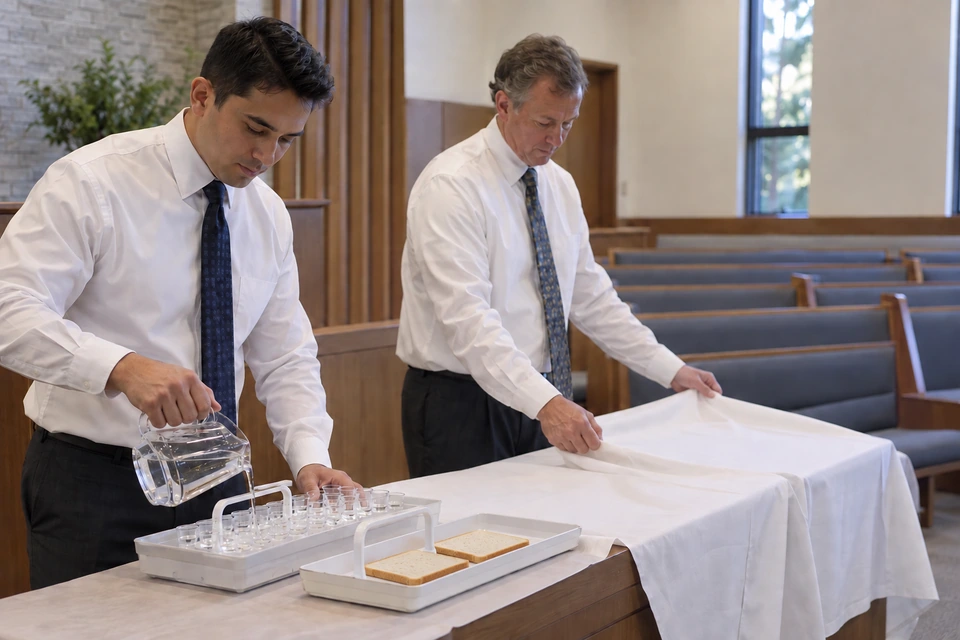
Careful hands prepare the sacrament table. Consider how ordinances turn our attention toward Jesus Christ.
Doctrine and Covenants 20:75–79
Read “Preparing the table” in Jesus Christ in the Restoration and Today →These studies belong together. Keep your notes as you move between them: what the sources teach, what you have experienced, what remains open, and what you want to do next.
Explore and study
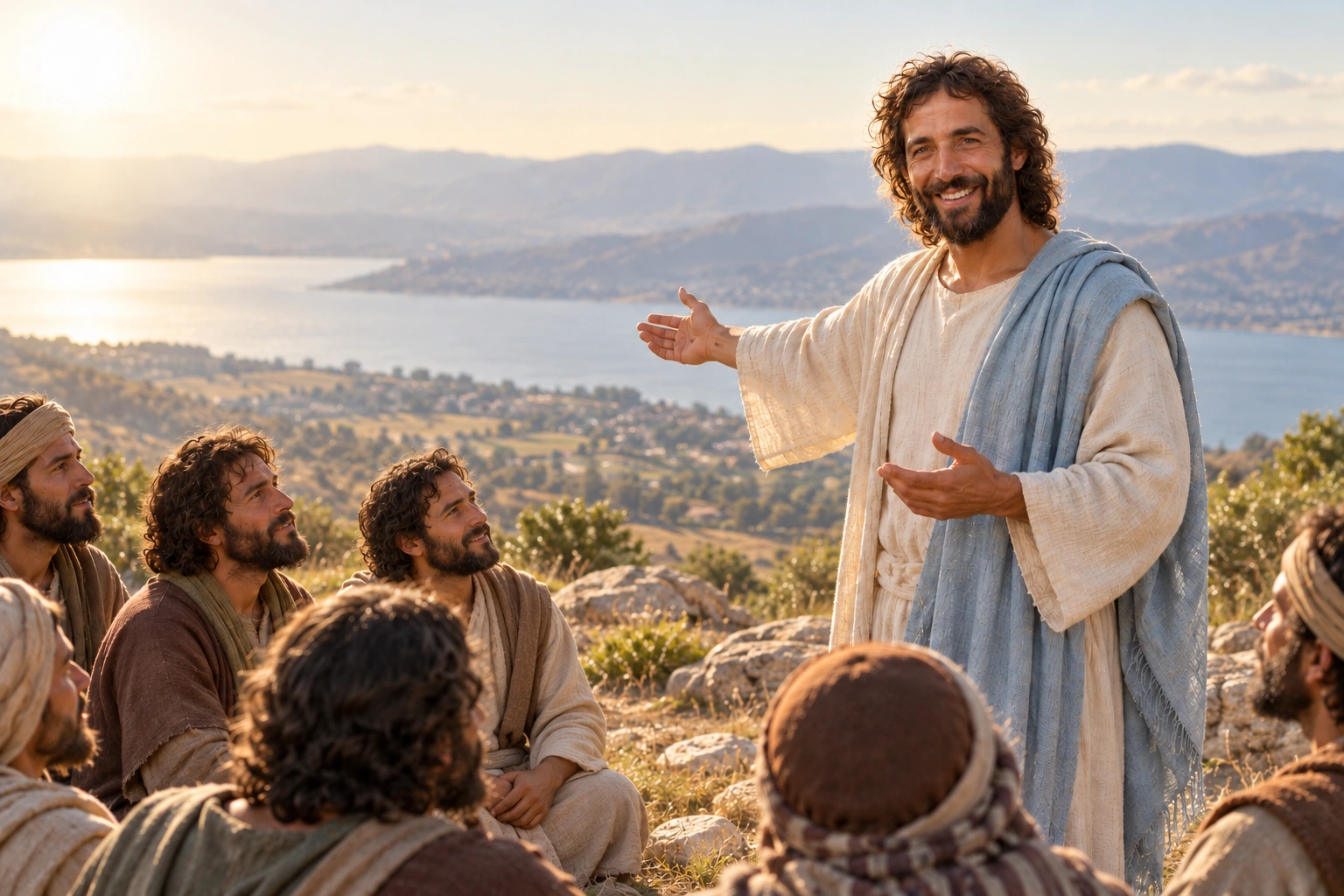
On a mountain in Galilee, the risen Jesus sends His disciples to teach and baptize. He promises to be with them.