The birth of Jesus Christ is the coming of the Savior into mortal life. Scripture invites us to see the child in the manger in light of His whole mission: to reveal the Father, redeem us from sin and death, and know how to help us in our weakness.
Follow the reading journey or choose a question to begin. The linked passages open with their surrounding chapter. The pictures invite attention to particular moments; the scriptures remain the source for the account. These witnesses speak from different settings. We can connect their testimony without turning every passage into one continuous scene.
Ancient faces, clothing, buildings, visions, and dreams are depicted through respectful artistic interpretation. Their exact appearance is not established by these texts. Look for what a passage records, what the picture helps you notice, and what remains a question.
Promises before Bethlehem
The Promised Son
Isaiah speaks into the fears of a real king and people. In Isaiah 7:3-14, he meets Ahaz and announces the sign of Immanuel. Read the encounter before isolating the familiar promise. The passage has an immediate historical setting even as later scripture draws our attention to its fulfillment in Jesus Christ.
Explore and study
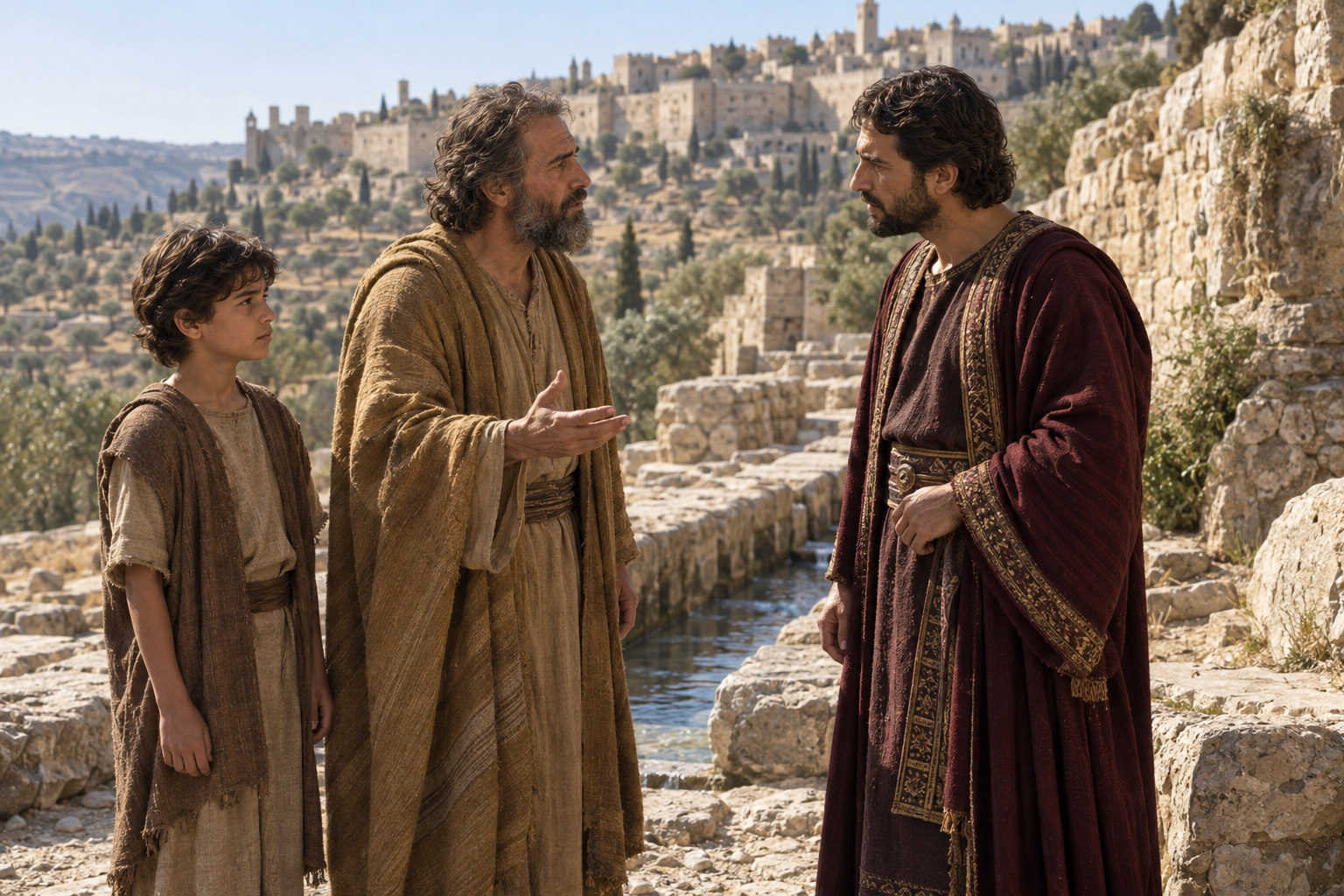
Isaiah brings the promise to Ahaz
Amid fear for Jerusalem, Isaiah brings a word from the Lord. Read the encounter and the promise of Immanuel in its setting.
Matthew 1:22-23 explicitly connects Isaiah's words with Jesus' birth and explains Emmanuel as God with us. This is the Gospel's stated connection. We need not erase Isaiah's earlier audience to receive Matthew's witness of the Savior.
The light in Isaiah 9:2 and the child and royal names in Isaiah 9:6-7 widen the promise beyond one birth scene. Isaiah 11:1-5 speaks through Jesse and branch imagery, the Spirit of the Lord, and righteous judgment. These prophecies invite us to know the Messiah through His character and to hope for the peace of His kingdom.
Explore and study
Bethlehem in the promise
The quiet hills invite us to consider Micah’s promise about Bethlehem and the ruler who would come from it.
Micah 5:2 names Bethlehem Ephratah in a prophecy of a coming ruler. In Matthew 2:4-6, the chief priests and scribes cite the connection when Herod asks where Christ should be born. A small place becomes part of a much larger promise. The coming ruler will be known through the purposes of God, even as His mortal life begins in humble circumstances.
Read the promise in its setting
Choose one prophetic passage. What concern or hope appears around it? Then read its linked Gospel connection. Write what each text contributes, keeping the original setting and the later witness in view.
Distinct prophets, one Redeemer
Witnesses across the Book of Mormon
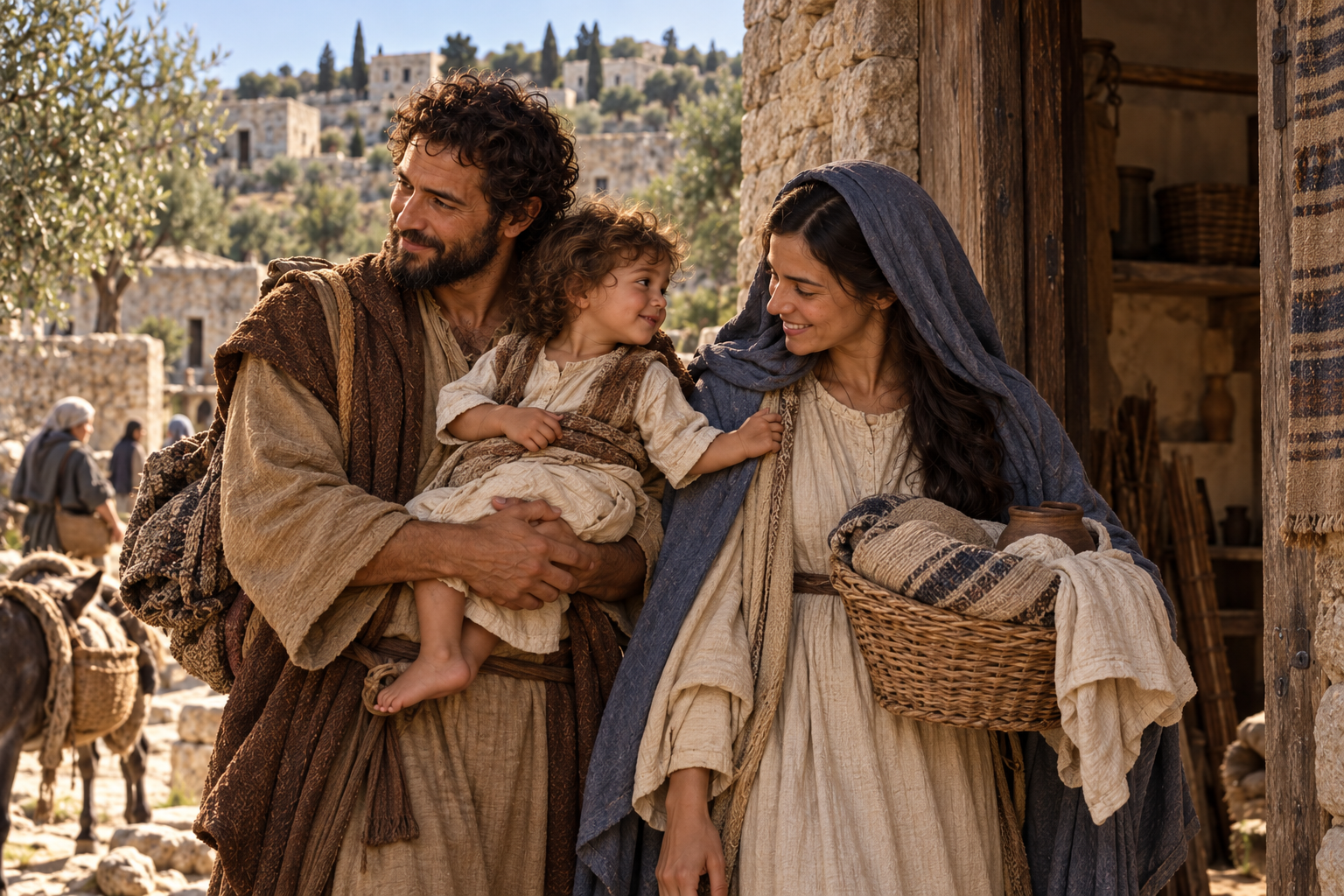
In 1 Nephi 11:13-21, Nephi sees the mother of the Son of God and the child in her arms. In this vision, his question about God's love leads toward the Son entering human life. The picture draws our attention to the mother and child Nephi sees. A child held in His mother's arms becomes part of the answer to a prophet seeking to understand divine love.
Explore and study
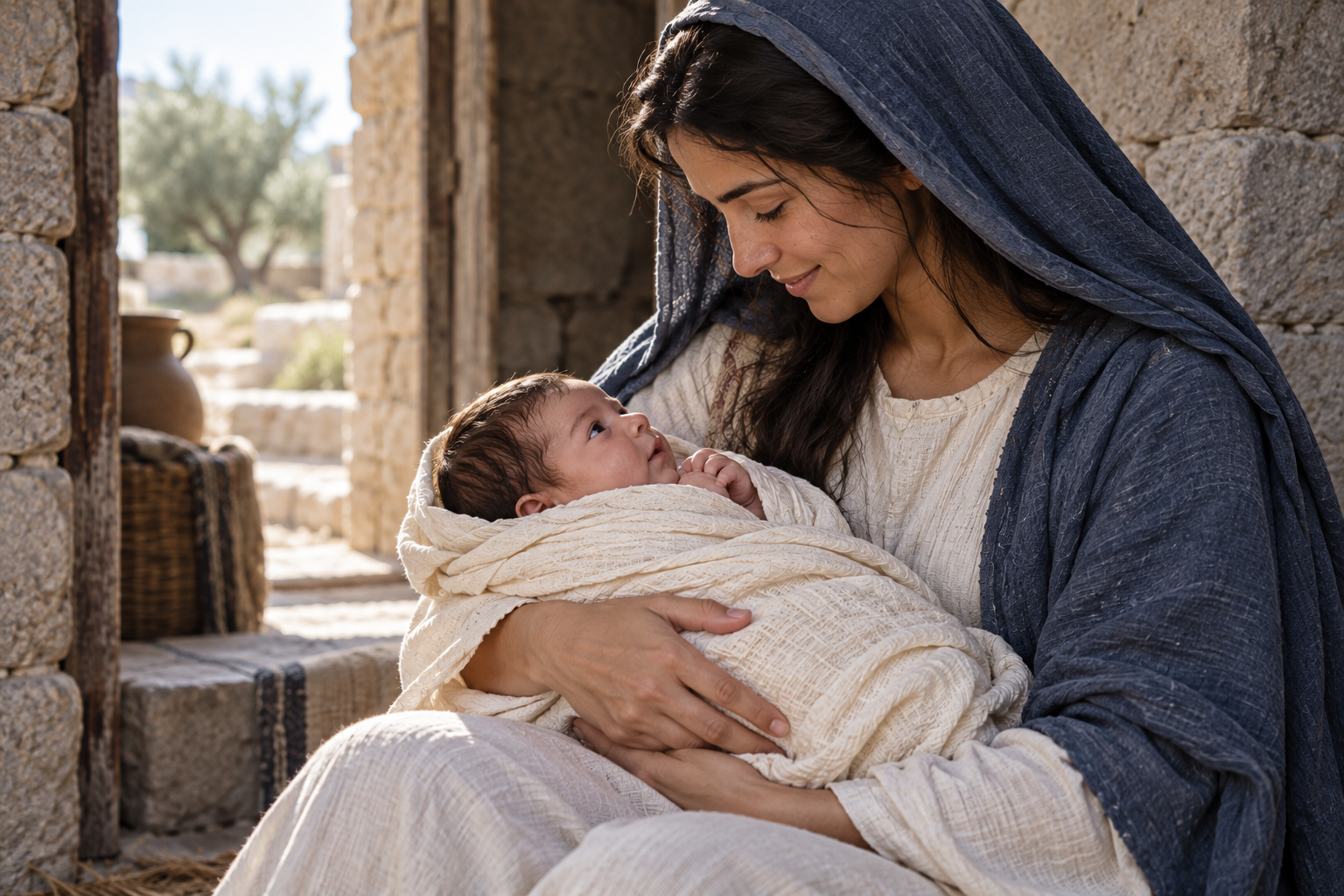
The mother and child Nephi saw
Nephi sees a mother with the Son of God in her arms. Through this vision, he comes to understand the love of God.
Nephi later connects the Messiah's coming with His death and Resurrection in 2 Nephi 25:12-19. In 2 Nephi 26:1-3, he anticipates Christ's later ministry and signs of His birth, death, and Resurrection. These are different occasions. Together they keep the Christmas story connected to the redemption the Savior will accomplish.
Explore and study
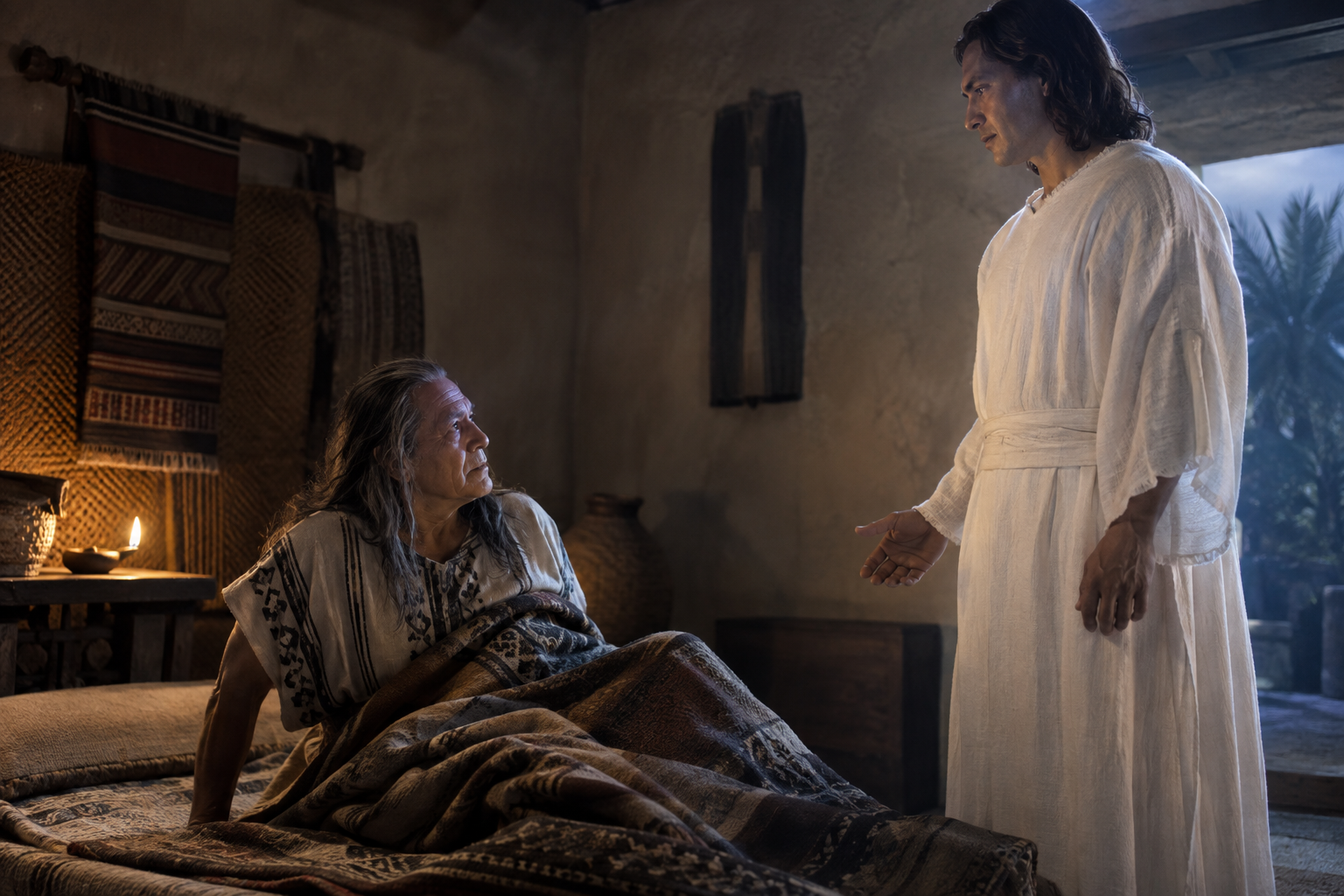
An angel awakens Benjamin
The angel brings good tidings of the Lord’s coming among His people. Benjamin will share this witness of the Savior’s birth and saving mission.
King Benjamin reports that an angel awakened him with a message. Mosiah 3:2-8 announces the Lord's coming among human beings, names Mary, and describes healing and deliverance. Benjamin shares this message with his people as a witness of the Redeemer. His account moves from the wonder of the announcement toward the mercy that Christ will extend to those who come to Him.
Explore and study
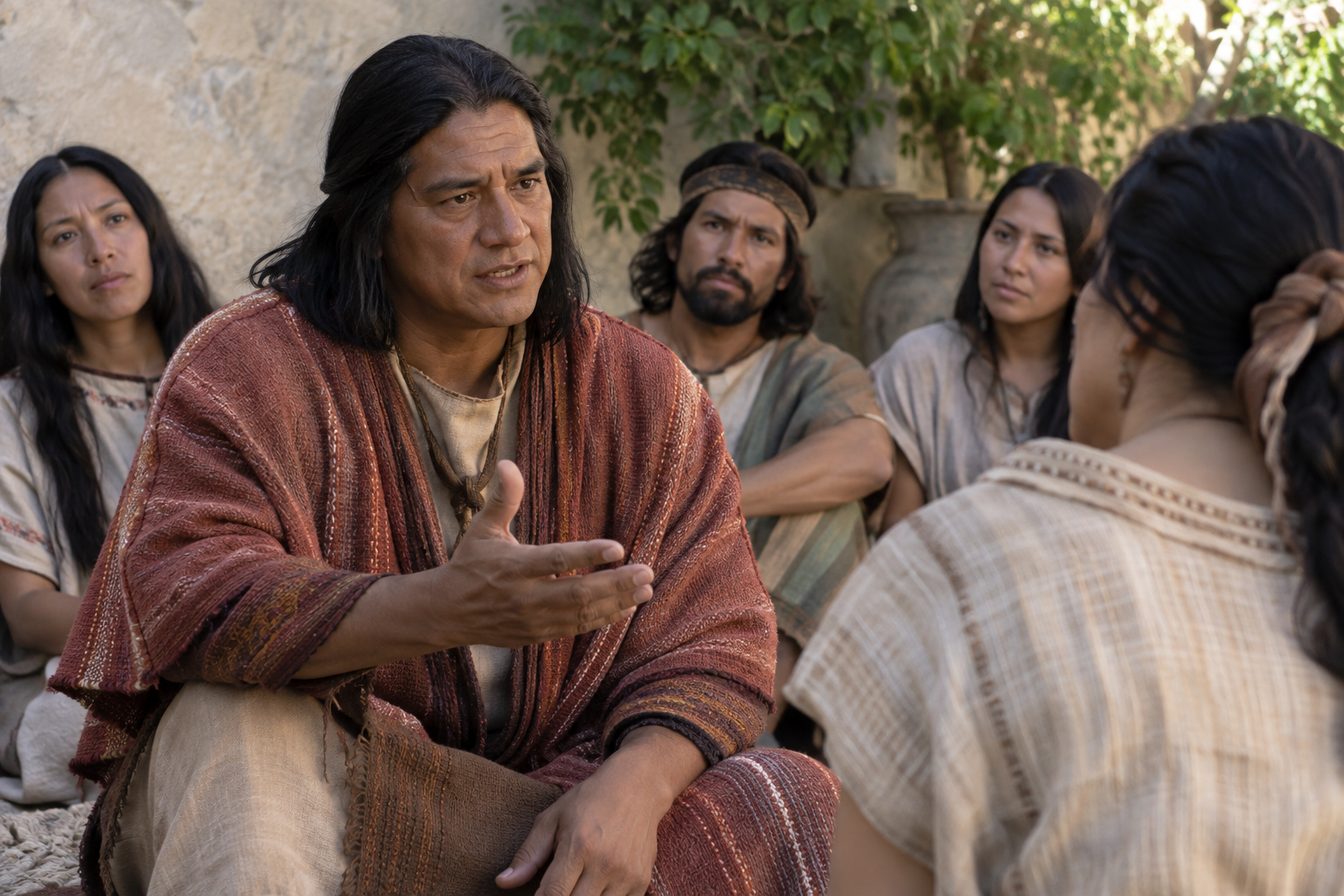
Alma teaches of the coming Savior
Alma teaches that the Son will be born of Mary and take upon Himself the pains and infirmities of His people. His coming brings help for the whole human journey.
Alma 7:7-13 gives another reason to care about the birth: the Son will know pains, sicknesses, and infirmities and know how to help His people. Alma names Mary and the land of his people's forefathers while looking ahead to her Son's ministry. Luke gives Bethlehem as the town of His birth. Alma's emphasis here is the Savior's willingness to enter our mortal experience and His knowledge of how to help us.
Explore and study
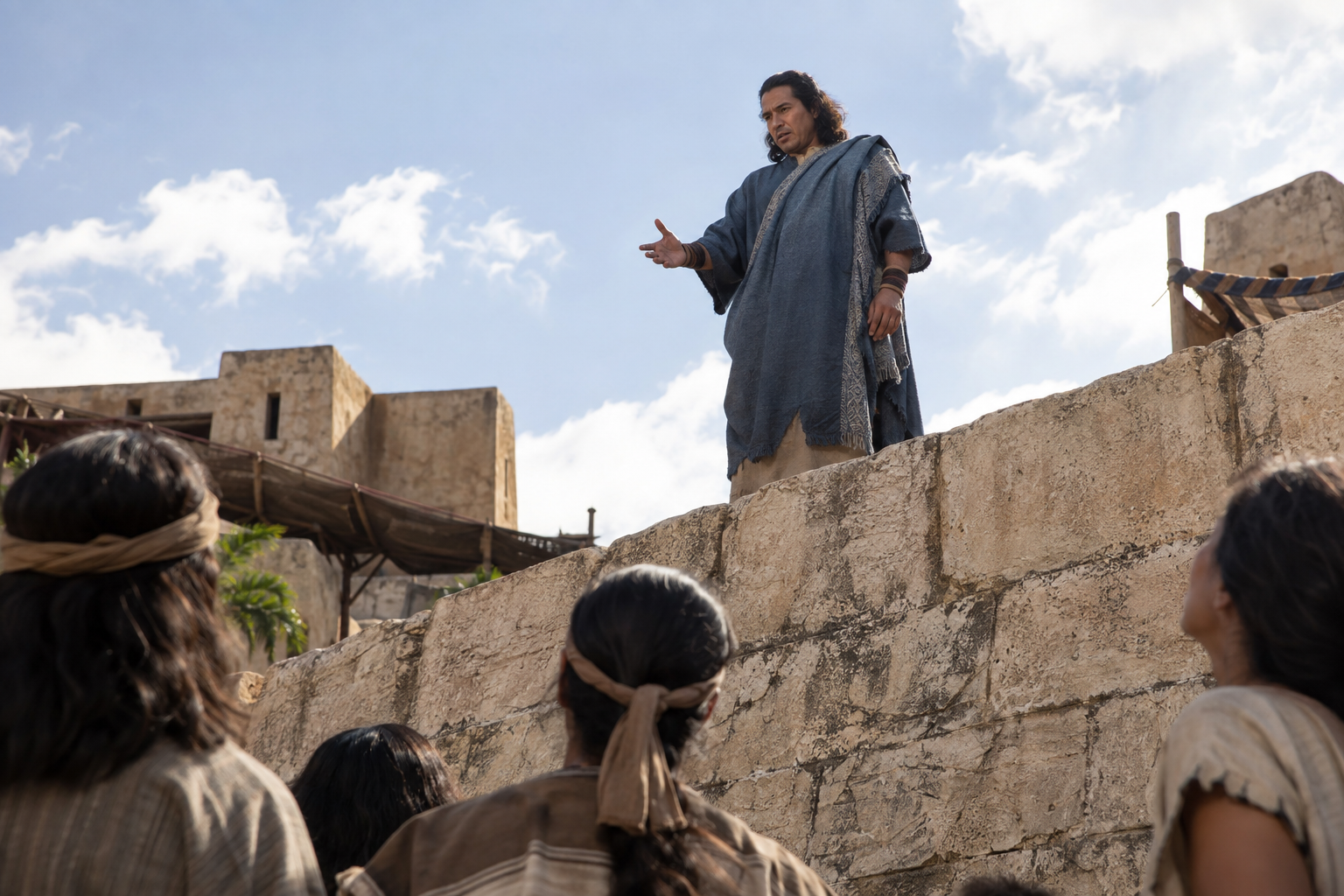
Samuel promises the signs
Samuel announces the signs that will accompany the Savior’s birth. His message asks his hearers to trust the Lord through the years of waiting.
Samuel speaks from a city wall in Helaman 13:2-4. His message in Helaman 14:2-6 looks five years ahead to the Savior's birth, a night without darkness, and a new star. At this point the signs are promised. His preaching and their later fulfillment belong to different scenes.
What does each witness add?
Nephi sees, Benjamin reports an angelic message, Alma teaches the Savior's coming ministry, and Samuel announces signs. Choose one witness and name his particular contribution. Resist filling his account with details from another.
Watch Samuel announce the signs
Listen for the difference between his promises about Christ's birth and His later death. The excerpt helps you revisit the prophet's message before reading the fulfillment.
Samuel speaks from the city wall about the promised signs of Christ’s coming. Read his prediction in Helaman 14:2-6 before turning to its later fulfillment in 3 Nephi 1:15-21.
John points to Christ
A People Prepared for the Lord
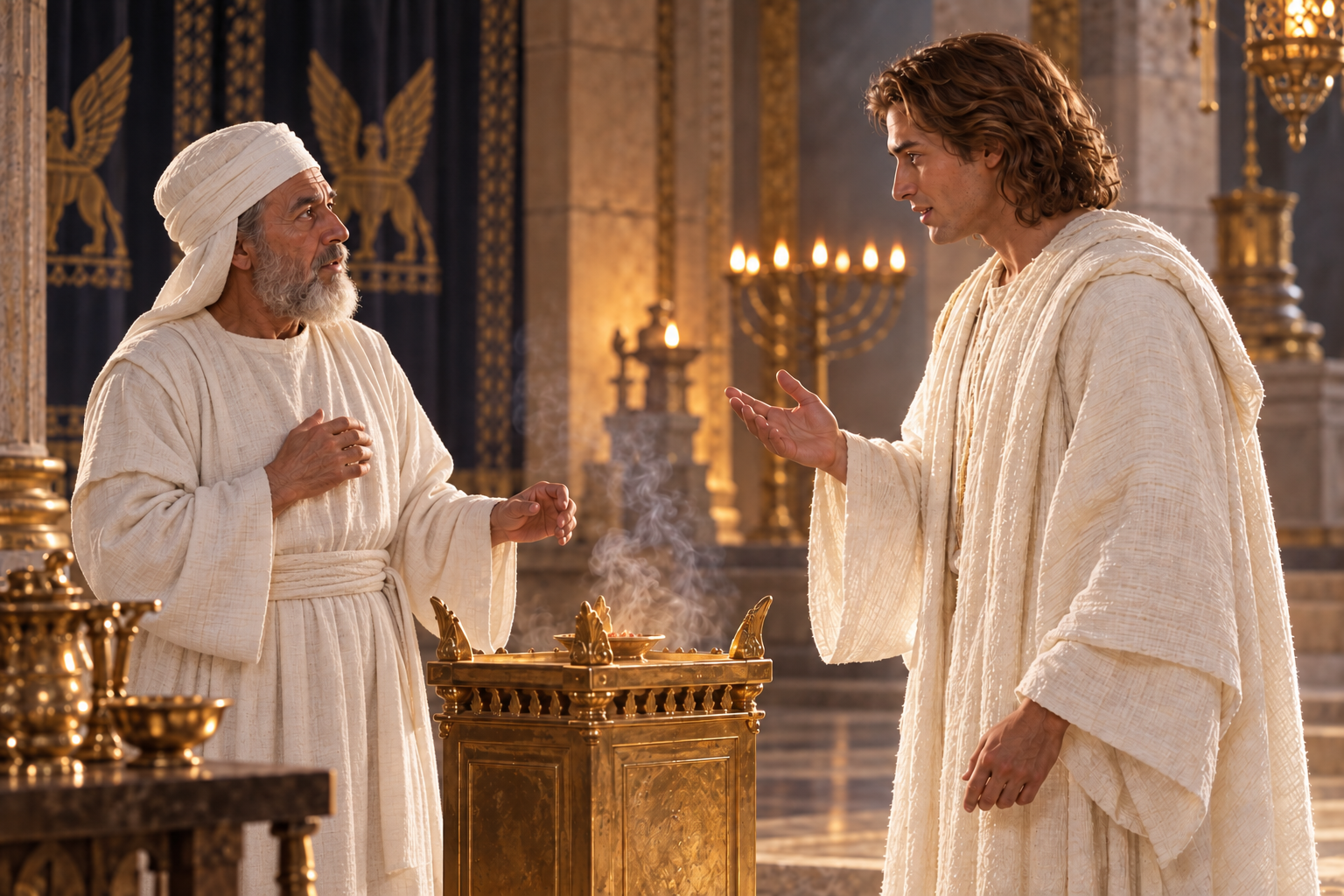
Luke begins with Zacharias and Elisabeth, their long waiting, and an announcement about a son. In Luke 1:8-19, Gabriel speaks to Zacharias at the temple. The child is John, whose calling is to prepare people for the Lord. The joy of this long-awaited birth reaches beyond one family: John will help others recognize and receive Jesus Christ.
Explore and study
Gabriel speaks to Zacharias
Zacharias hears that Elisabeth will bear a son. John’s life will help prepare a people to receive the Lord.
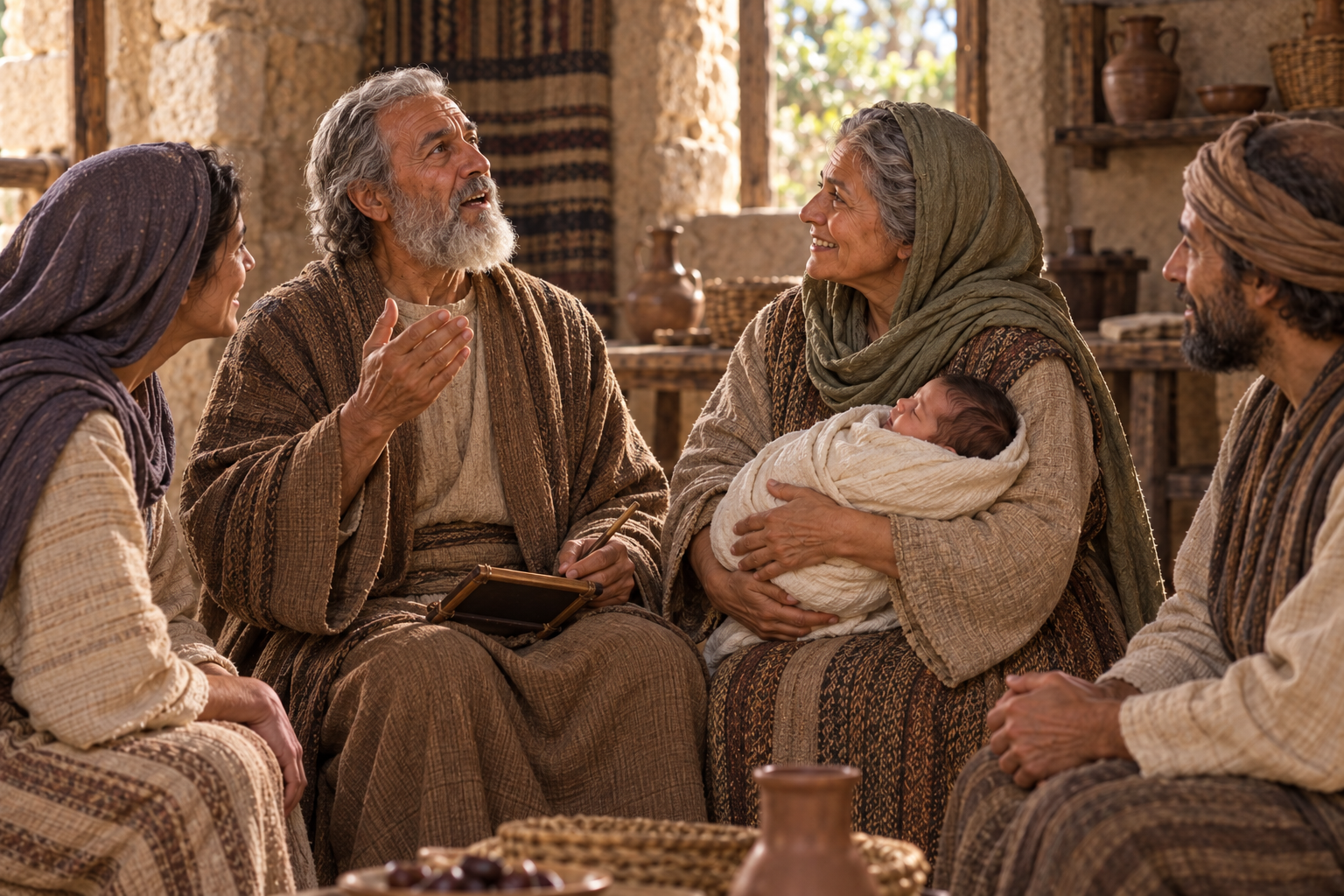
Luke 1:57-64 follows the promise into the life of the family. Elisabeth gives birth, her neighbors and relatives rejoice, and she says that the child will be named John. Zacharias confirms the name in writing. His speech returns, and he praises God. The announcement at the temple has become a child to nurture and a calling to prepare for.
Explore and study
His name is John
The child’s name confirms the angel’s message. Zacharias’s voice returns in praise, and the neighbors share the family’s wonder.
The joy is shared through a household and its community. As you read, notice the place given to Elisabeth's voice and Zacharias's response. Their son will grow into his own work, pointing others toward Jesus Christ.
Isaiah 40:3 and Malachi 3:1 supply prophetic language taken up in the New Testament. Compare John 1:19-23 and Matthew 11:7-10. These passages lead us forward to John's adult ministry, when he will prepare the way for Jesus' public ministry. Preparation is an act of love: it helps another person turn toward the One who can save.
After John's birth, Zacharias speaks of his mission in Luke 1:76-79. Preparation leads toward knowledge of salvation, forgiveness, light, and peace. John's importance lies in helping others turn toward the Savior. We can ask whether our own teaching and service help people recognize Christ rather than making ourselves the center.
Prepare room in a practical way
What helps you listen more attentively to Jesus Christ? Consider one preparation for this study: reading a chapter slowly, setting aside a distraction, or inviting another person to share a question.
Trust, questions, and shared joy
Mary Hears and Responds
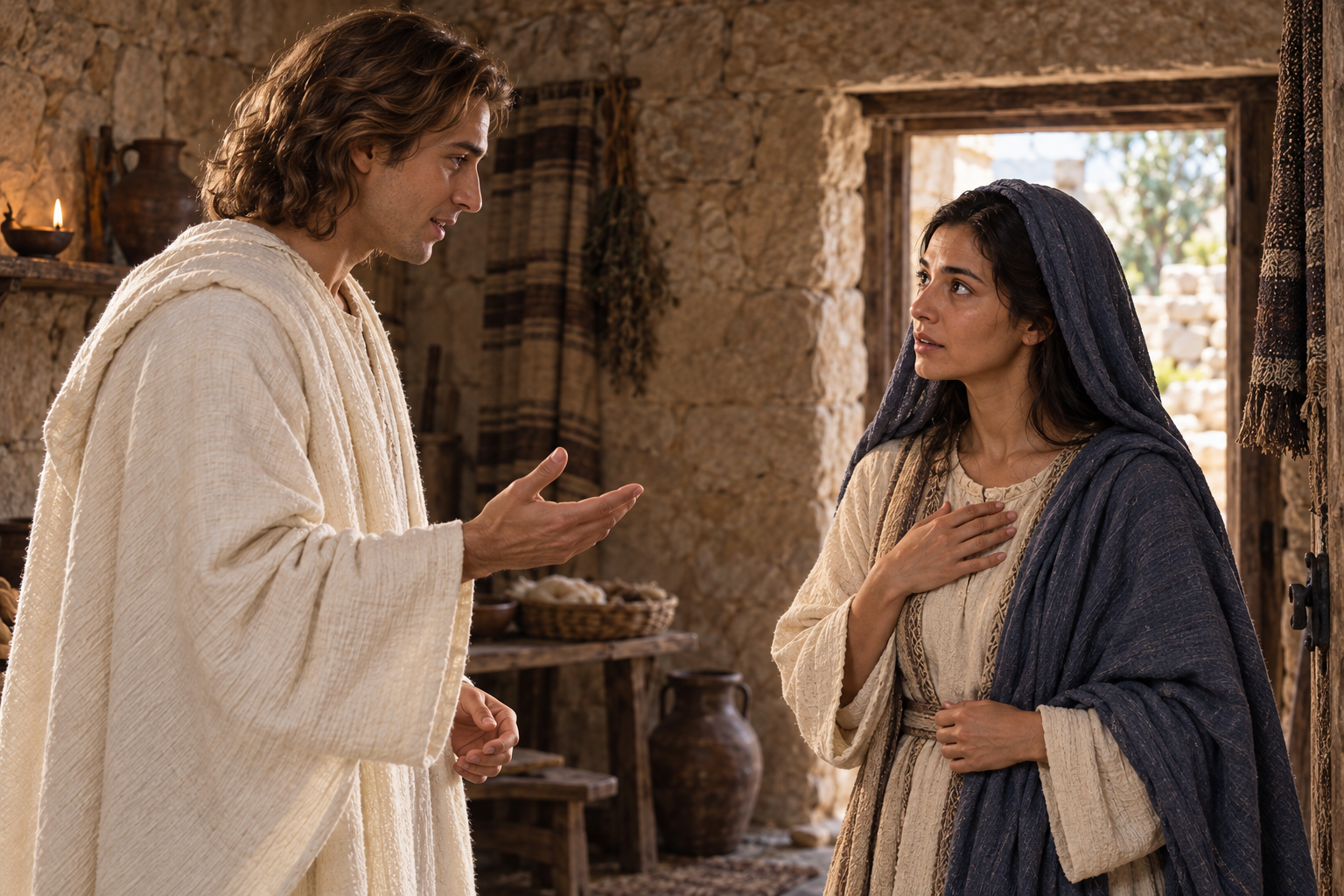
Gabriel comes to Mary in Nazareth in Luke 1:26-38. He announces Jesus' name and future greatness. Mary asks how this will be, and the account gives the angel's answer and her willing response. Her question belongs within the story of faithful response. She listens and answers with willingness, bringing her own voice to a calling whose full meaning will unfold over time.
Explore and study
Mary receives Gabriel’s message
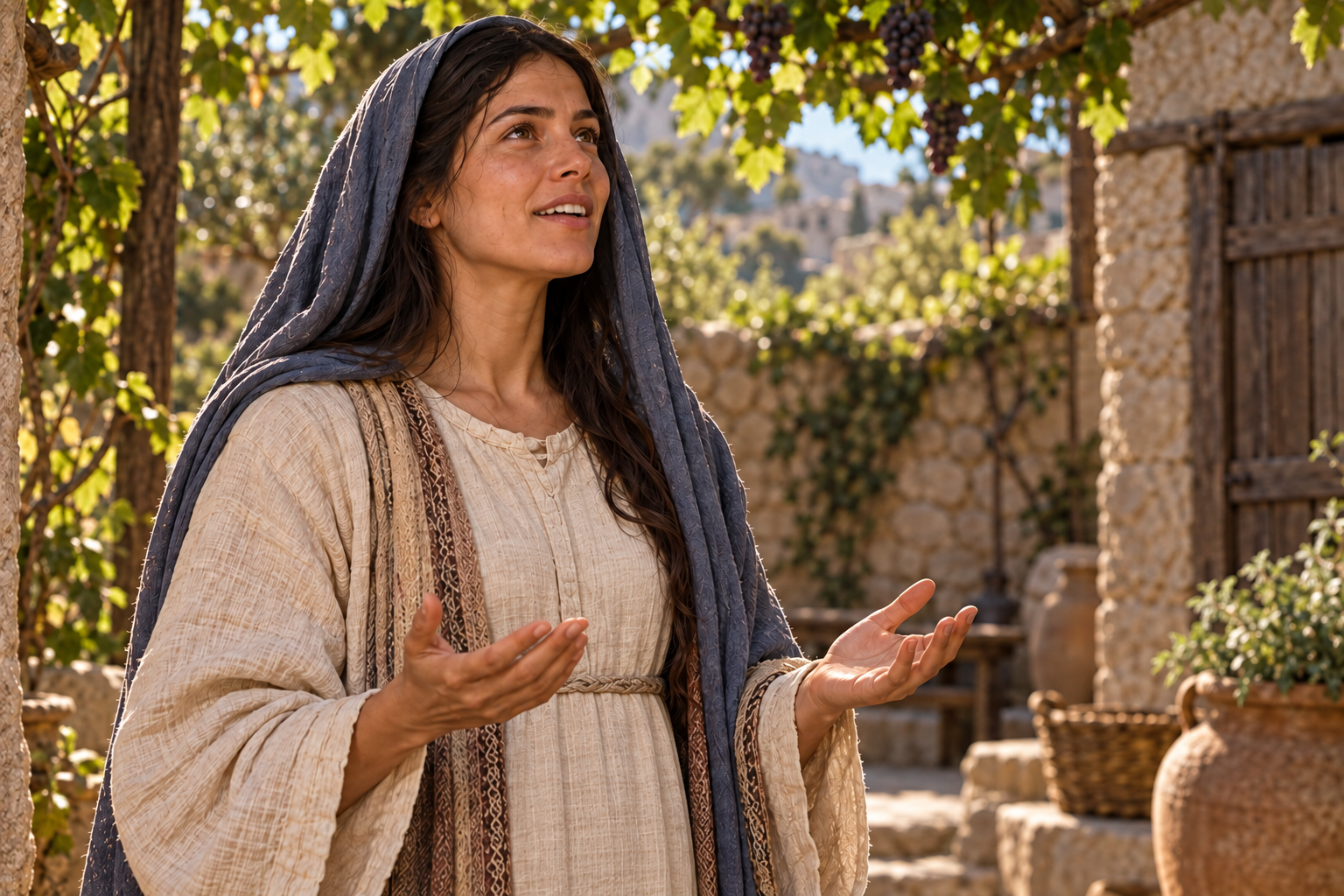
The announcement comes to Mary with an invitation to trust God. Her question and willing response are part of the account Luke asks us to hear.
Gabriel speaks of the Holy Ghost and the power of the Highest. The account invites reverence for the divine identity of Mary's Son and for her response. Her willingness offers a way to think about faith when we understand enough to take a step, even while much remains ahead.
Explore and study
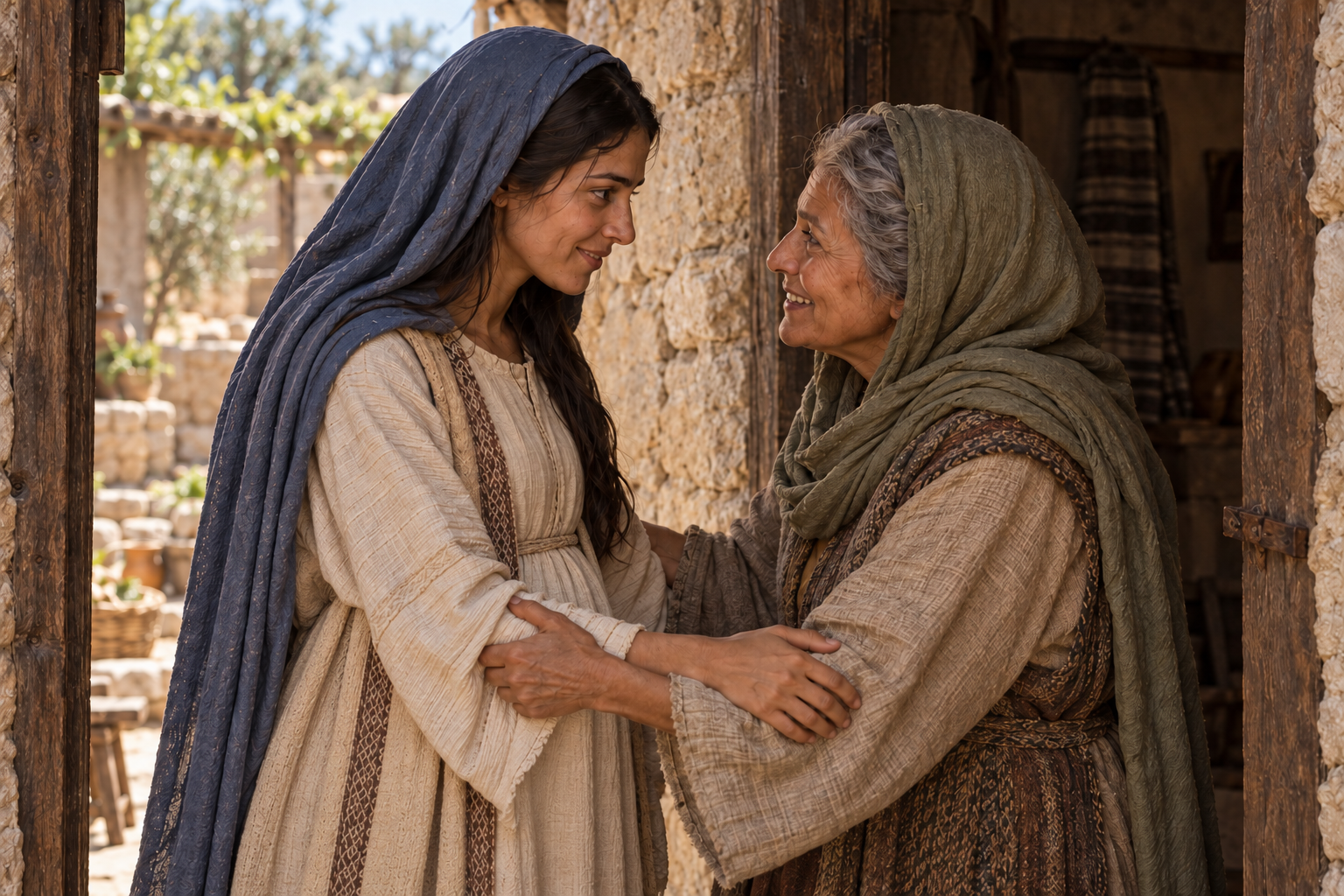
Mary and Elisabeth rejoice together
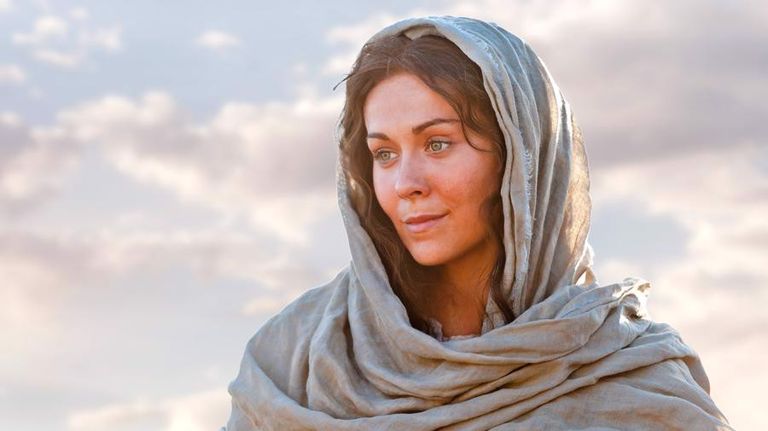
Their greeting becomes a moment of recognition and blessing. Elisabeth welcomes Mary as the mother of her Lord.
Mary then visits Elisabeth. In Luke 1:39-45, the greeting becomes a moment of recognition and blessing. Both children are still unborn. The two women meet in a household setting, and Elisabeth honors Mary's belief. Their encounter offers a picture of faith strengthened through another person's welcome.
Mary's praise in Luke 1:46-55 turns attention toward God's mercy and faithfulness. Read beyond the first line. She speaks within the hope of Israel, remembering the promises to Abraham and his descendants. The wonder of her calling belongs to a covenant story larger than herself.
Explore and study
Mary magnifies the Lord
Mary’s words celebrate God’s mercy and faithfulness. Her song joins personal gratitude to the hope of His people.
Mary's praise gathers gratitude, hope, and trust in God's care for the humble. Her words invite us to remember mercy already received and promises still unfolding. In your own prayer, you might begin by naming one gift for which you are grateful and one hope you continue to place in God's hands.
Listen to Mary's own words
Read Mary's response and praise. What does she say about God? Let her recorded words shape your understanding before adding assumptions about what she must have felt or known.
Return to the announcement
Watch the exchange, then return to Mary's recorded words. Consider what it means to respond faithfully while still asking an honest question.
This short Bible video turns attention to Mary’s calling and response to Gabriel. Read Luke 1:26-38 beside it and consider the faith expressed in her willingness to receive the Lord’s word.
Faithful choices in an unsettled time
Joseph Responds, and the Family Travels
Matthew tells the story from another angle. Matthew 1:18-25 describes Joseph's difficult decision and reassurance through an angel in a dream. The angel explains the child's name in relation to saving His people from their sins. The promise of redemption is present before Jesus is born.
Explore and study
Joseph receives reassurance in a dream
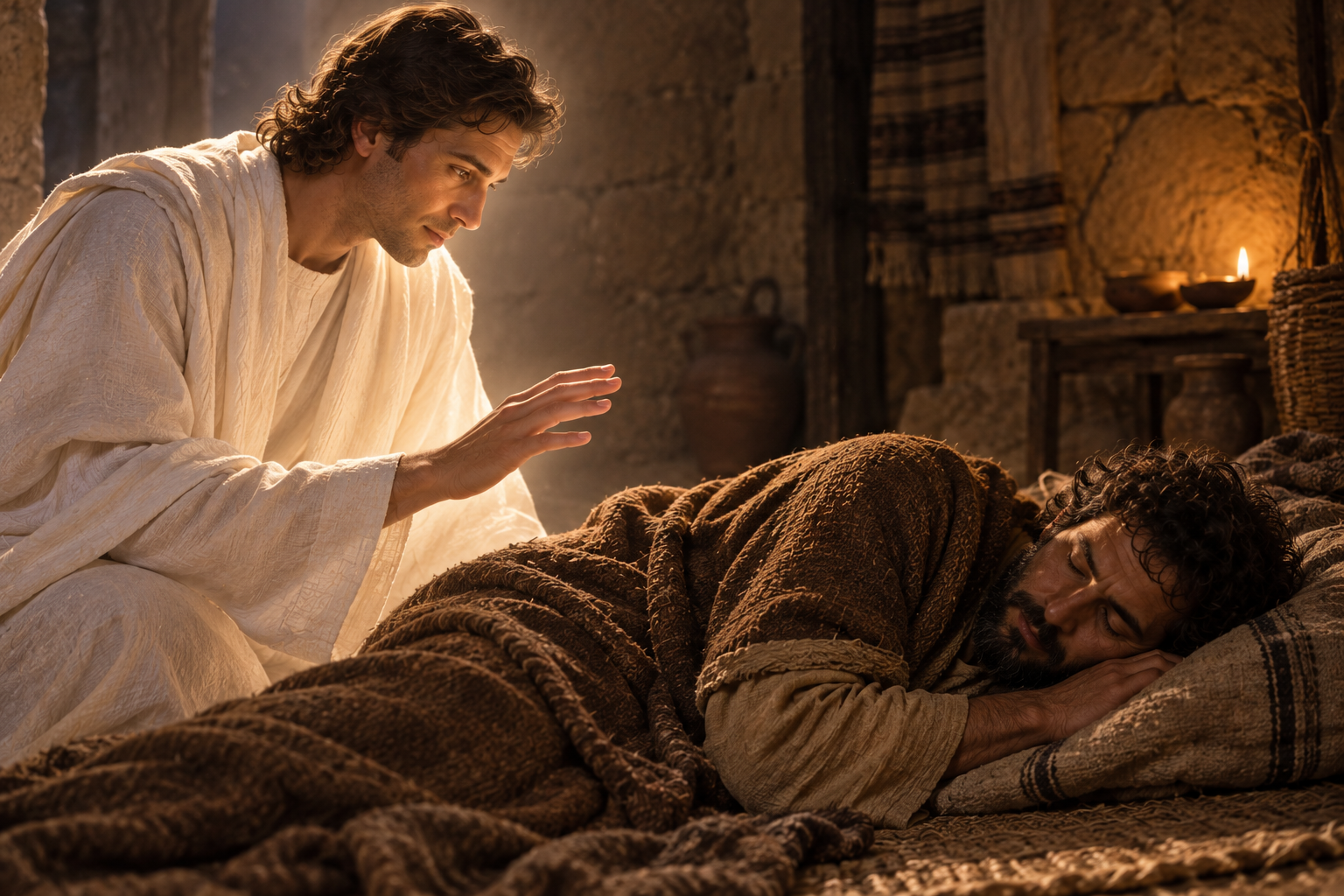
Joseph receives direction to take Mary as his wife and name the child Jesus. He rises ready to act on the message.
Joseph acts on the instruction he receives in the dream. His response gives the message a place in daily life: he receives Mary and takes up the responsibilities before him. Faith becomes visible through his care for her and the child.
Explore and study
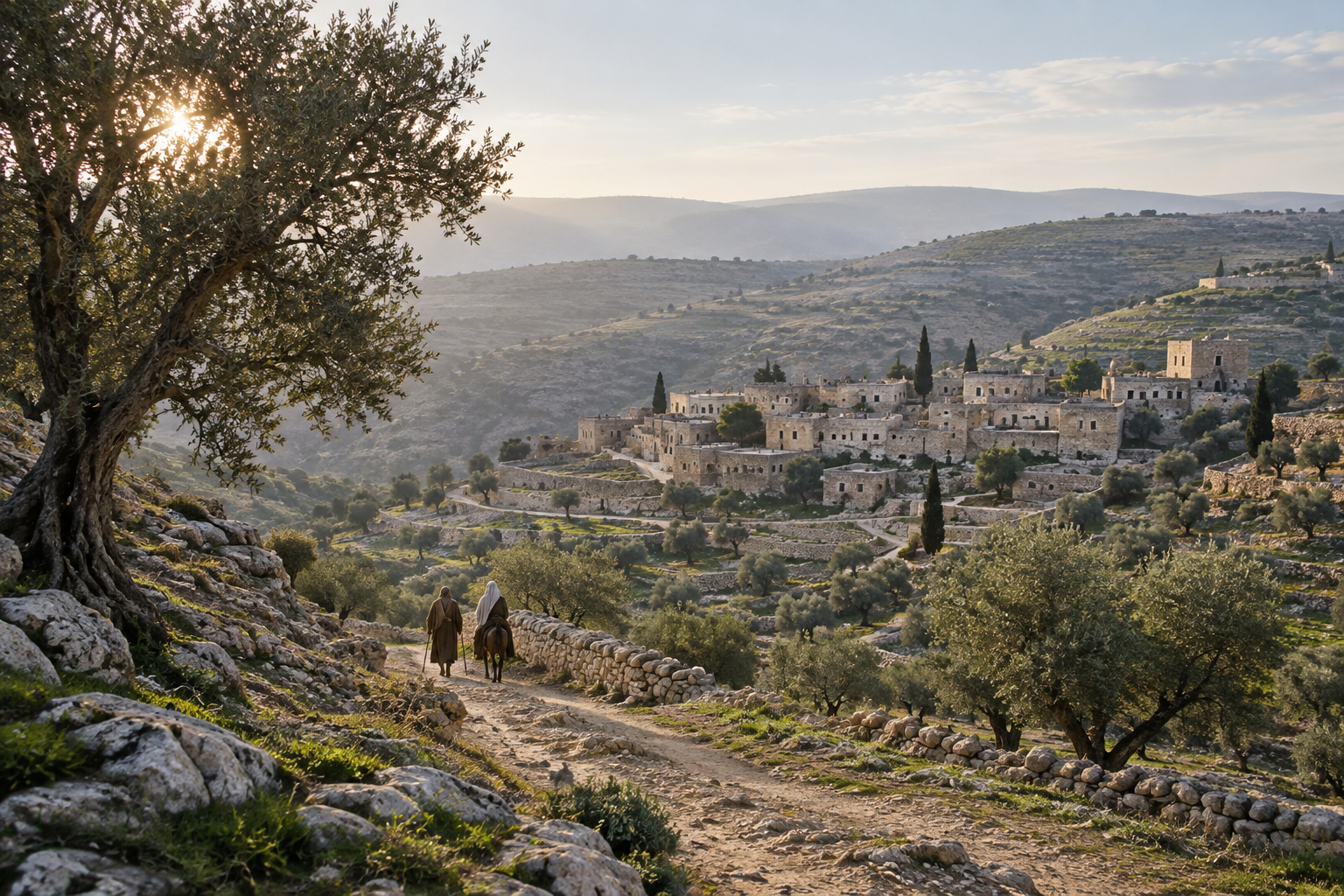
The journey to Bethlehem
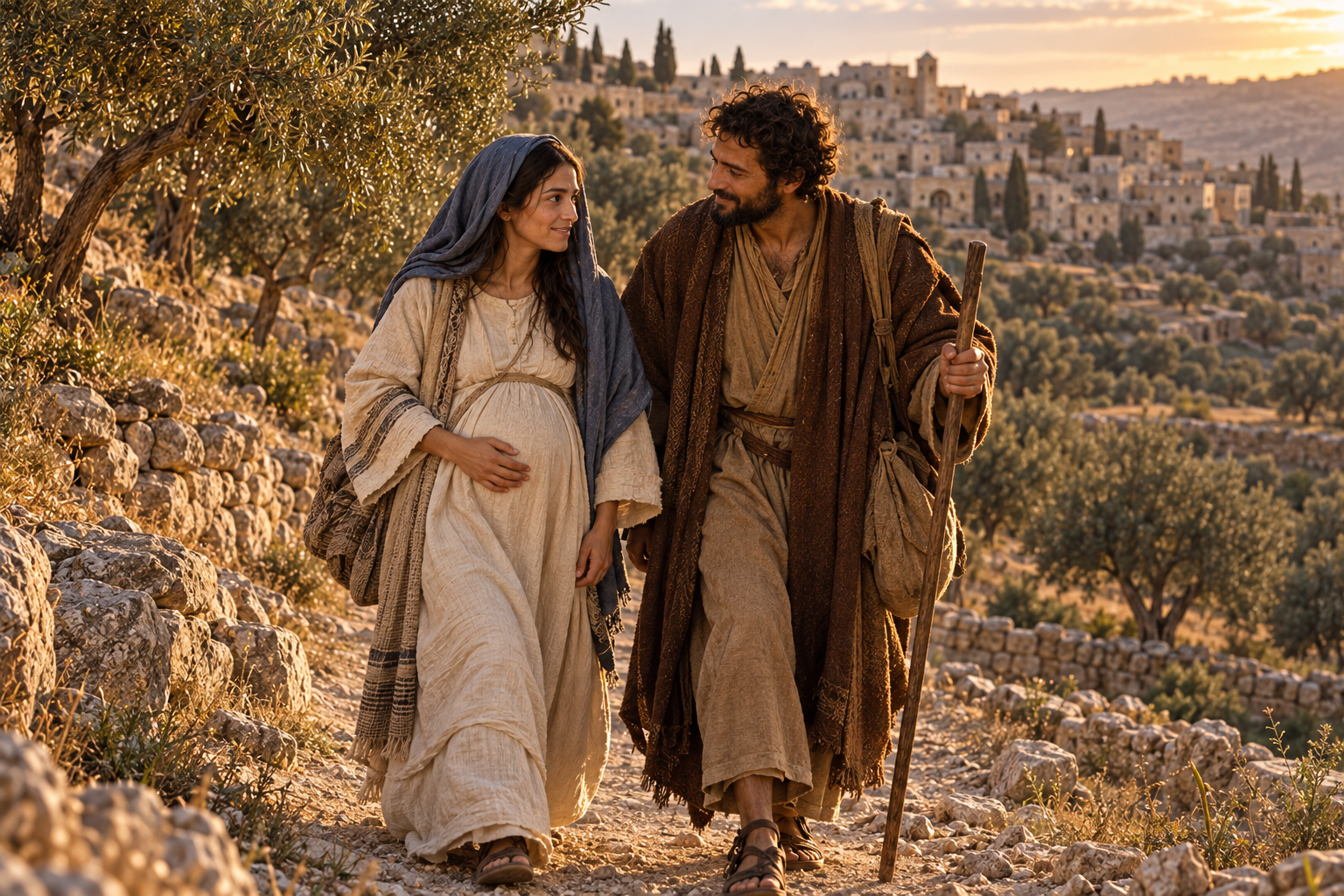
Joseph goes to Bethlehem with Mary. Their journey leads into Luke’s account of the Savior’s humble birth.
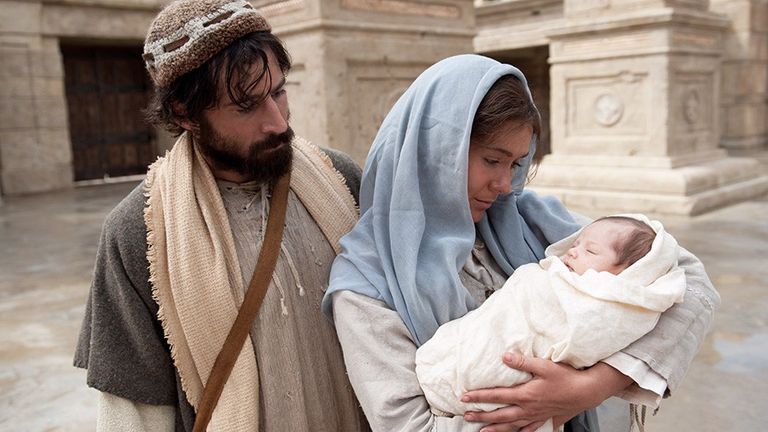
Luke 2:1-5 places the journey to Bethlehem in the setting of a decree and registration. Joseph travels from Nazareth with Mary, who is expecting a child. Their journey takes them from the familiar surroundings of Nazareth to the place connected with David's family. The promise of the Savior enters a world of travel, public obligations, and ordinary human needs.
Joseph's obedience and the family's travel invite reflection on responsibility. Caring for another person often involves tasks whose importance is greater than their outward appearance. Think of a journey, a shared burden, or a quiet act of preparation through which someone has shown you love.
The child in the manger
The Savior Is Born
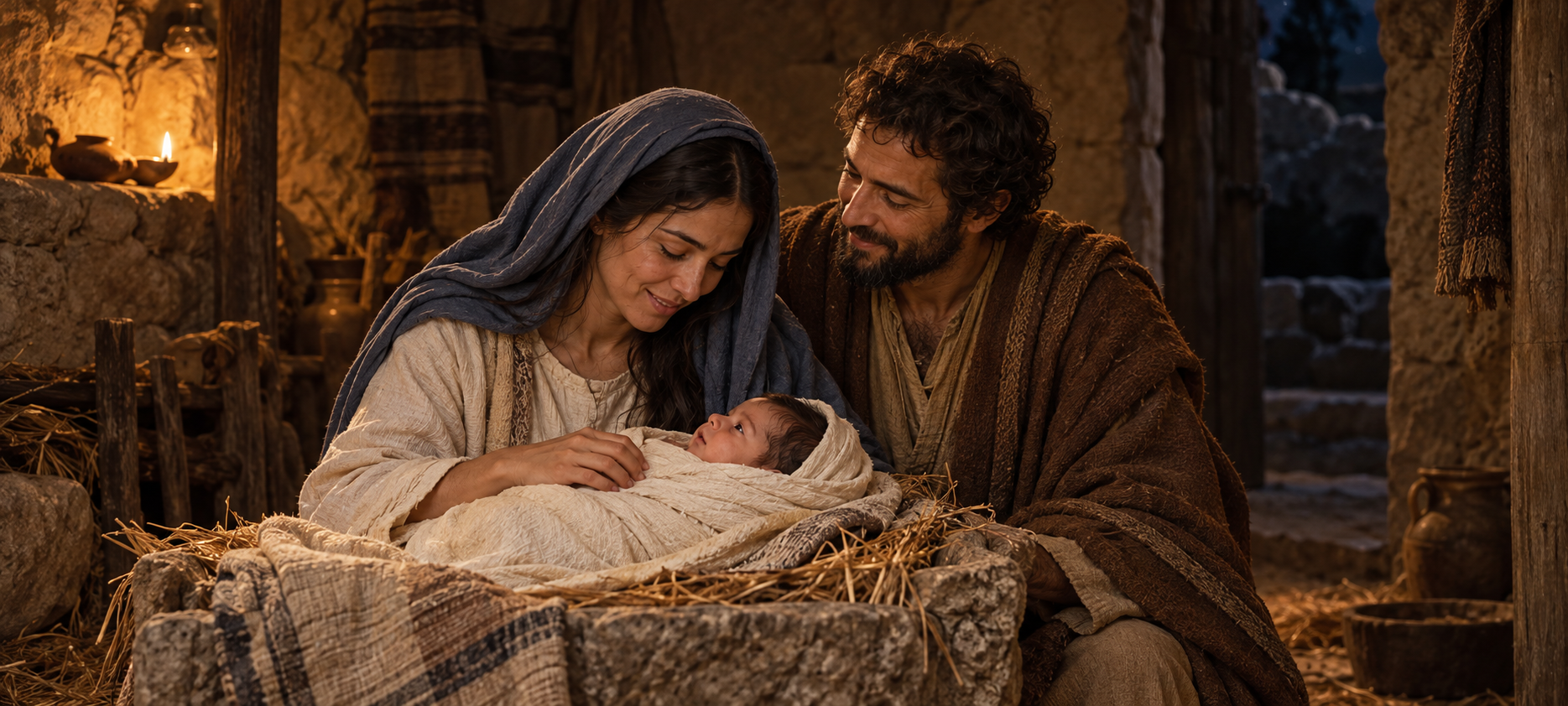
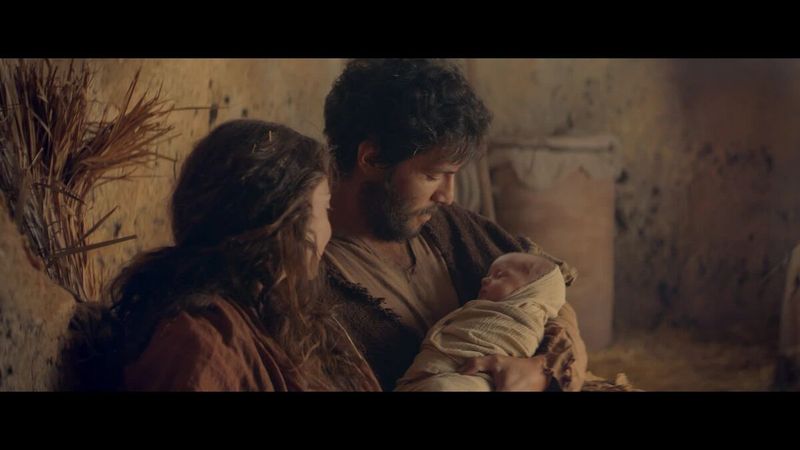
Luke 2:6-7 gives the birth in a few sentences. Mary brings forth her firstborn son, wraps Him in swaddling clothes, and lays Him in a manger because there is no room for them in the inn. The opening artwork follows that moment. Open it to study the passage and picture together.
Luke's brief account draws us close to Mary's care for her child. She wraps Him and lays Him down. The simplicity of the moment invites us to linger: the promised Savior receives the tender, practical care every newborn needs. God's love has entered the vulnerability of human life.
The child's identity gives the scene its meaning. The one Mary holds is the Son whose saving mission has been announced in both Gospels. His birth begins a mortal life of learning, ministry, suffering, death, and Resurrection. The peace we seek at Christmas is grounded in this whole mission.
Stay with the short account
Read the two verses slowly. Name what Luke records and what he leaves undescribed. What changes when your attention rests on the Savior's coming rather than on completing every detail of the setting?
A film to accompany your reading
The Church's nativity film gives a visual retelling of the story. Compare its scenes with Luke and Matthew, and let a question from the viewing send you back to the scriptures.
A dramatization follows Mary and Joseph from Nazareth to Bethlehem and the birth of Jesus. Watch alongside the Gospel accounts, keeping the film’s visual choices distinct from details the text records.
Hear, go, see, and tell
Good News Reaches the Shepherds
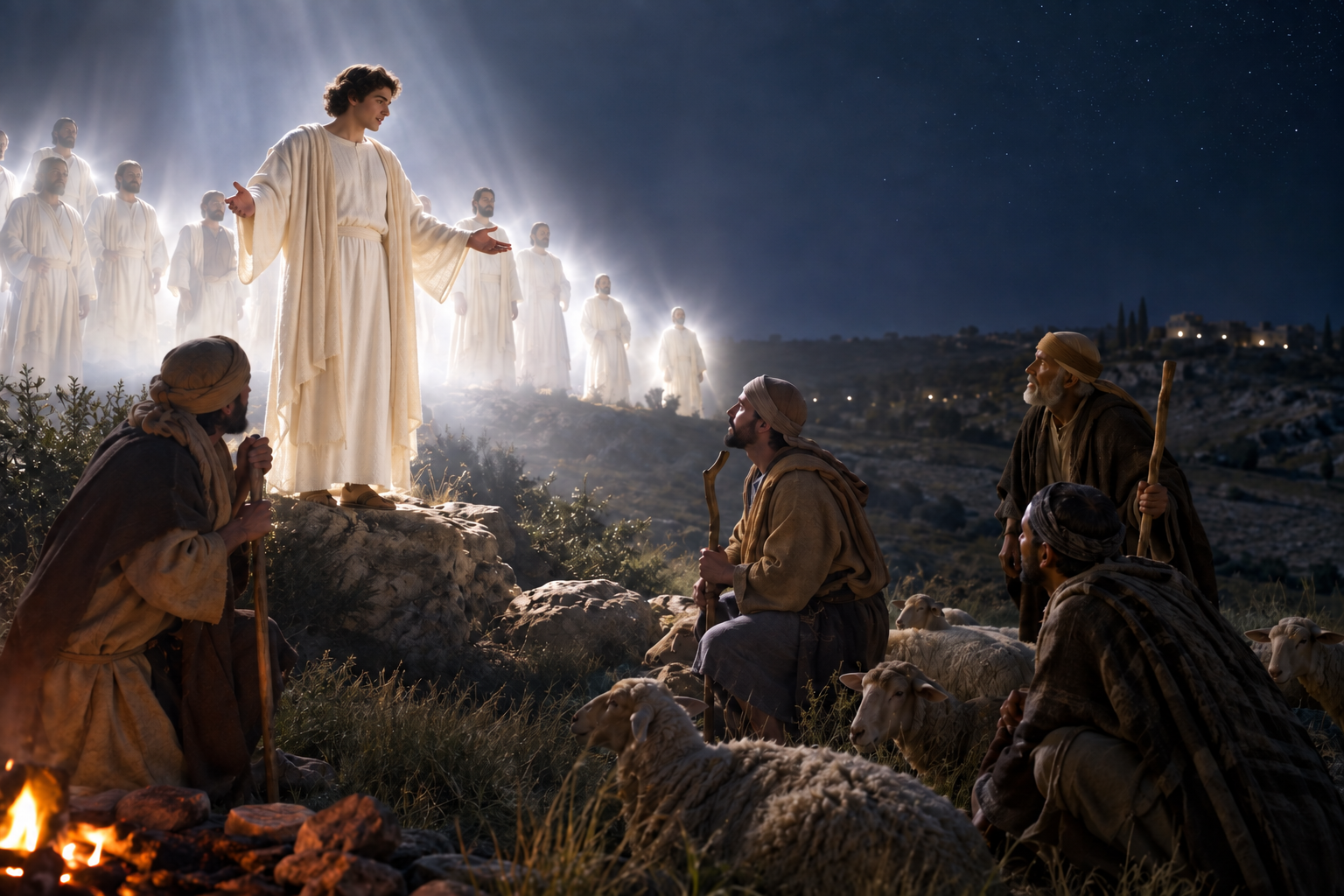
In Luke 2:8-14, shepherds are watching their flock at night. The heavenly announcement answers fear with good news and identifies the child as Savior, Christ, and Lord. Their sign is specific: a wrapped infant lying in a manger.
Explore and study
Good tidings to the shepherds
The shepherds hear news of great joy: the Savior is born. They are given a sign that will help them find the child.
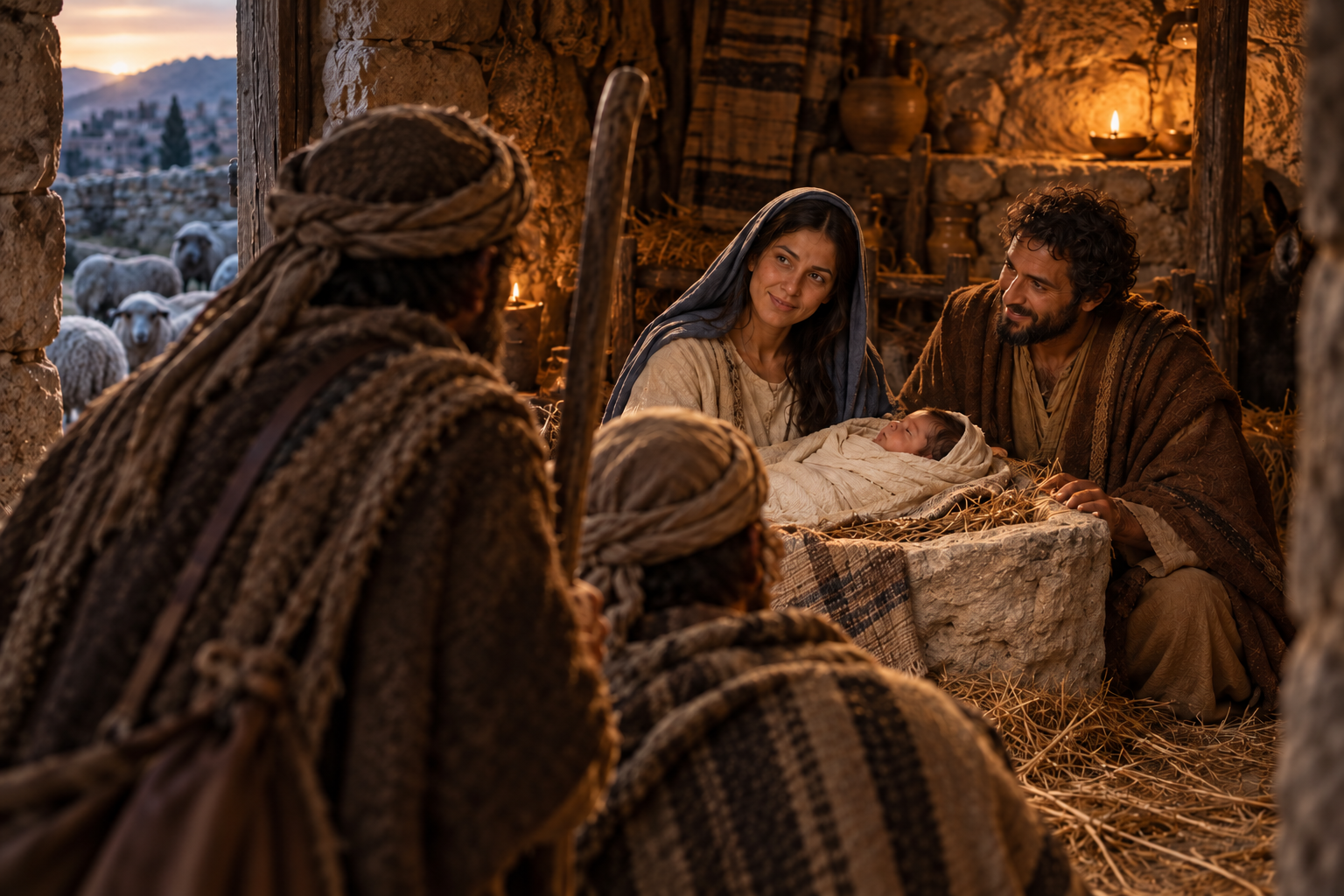
Luke 2:15-20 follows their decision to go, their finding Mary and Joseph and the child, and their sharing what they heard. Those who hear them wonder. Mary keeps these things and ponders them, while the shepherds return glorifying God.
Explore and study
The shepherds find the child
The shepherds come with haste and share what they have heard. Mary keeps these things and ponders them in her heart.
These responses differ without being opposed. Some tell, some wonder, and Mary ponders. The passage allows spoken witness and attentive reflection. A quiet reader can begin with that same attentiveness, making time to hold the message in mind and consider what it means.
The shepherds belong to Luke's birth account. Matthew's gift-bearing visitors appear in a separate account and setting later in this study. Keeping those witnesses distinct helps each retain the details and emphasis its Gospel gives.
Hope held through years of waiting
Simeon and Anna Recognize the Savior
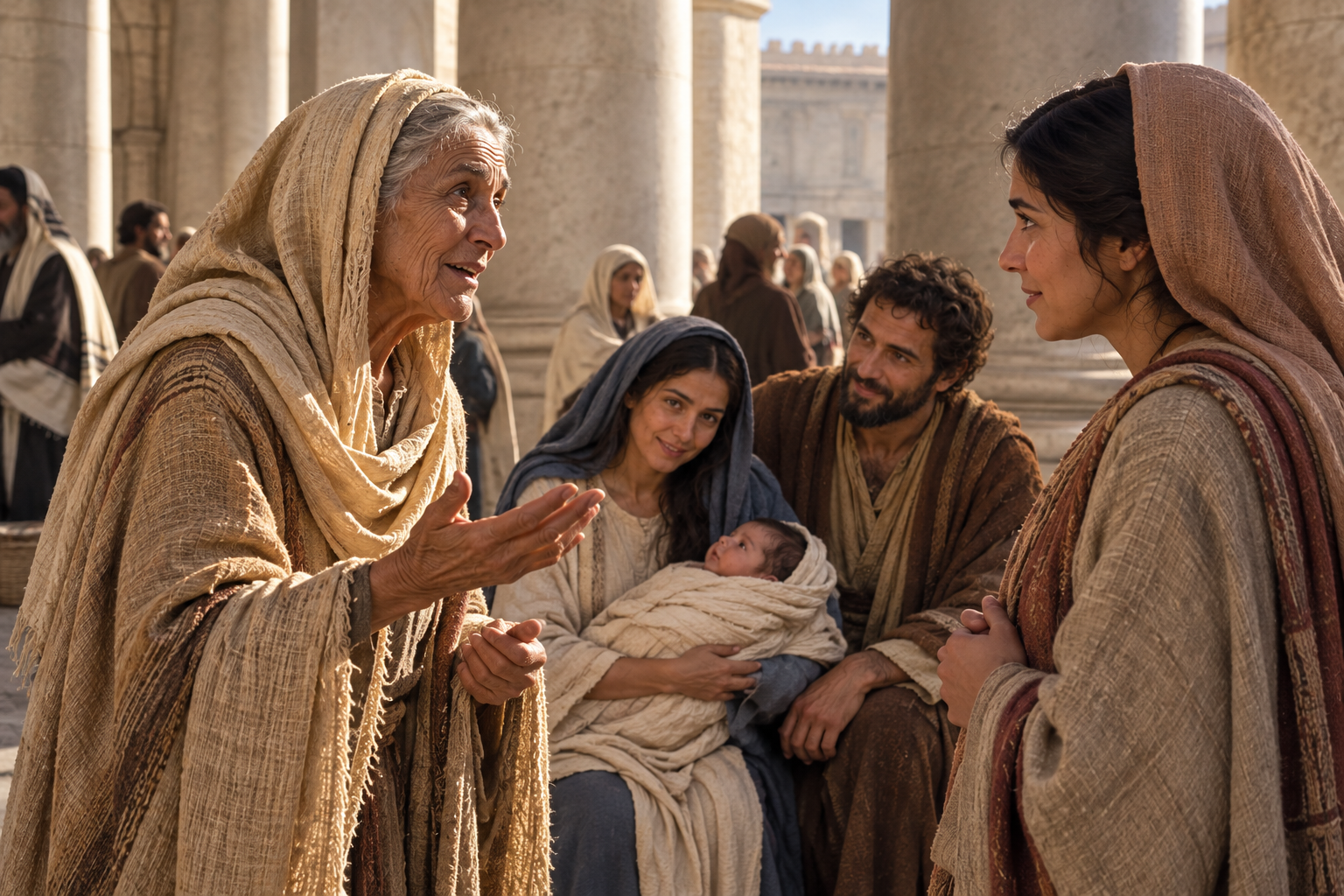
The story continues beyond the manger. Luke 2:21-24 records the child's naming and the family's later visit to Jerusalem in observance of the law. This is a new setting and occasion, not another group arriving on the birth night.
Explore and study
Simeon receives the child
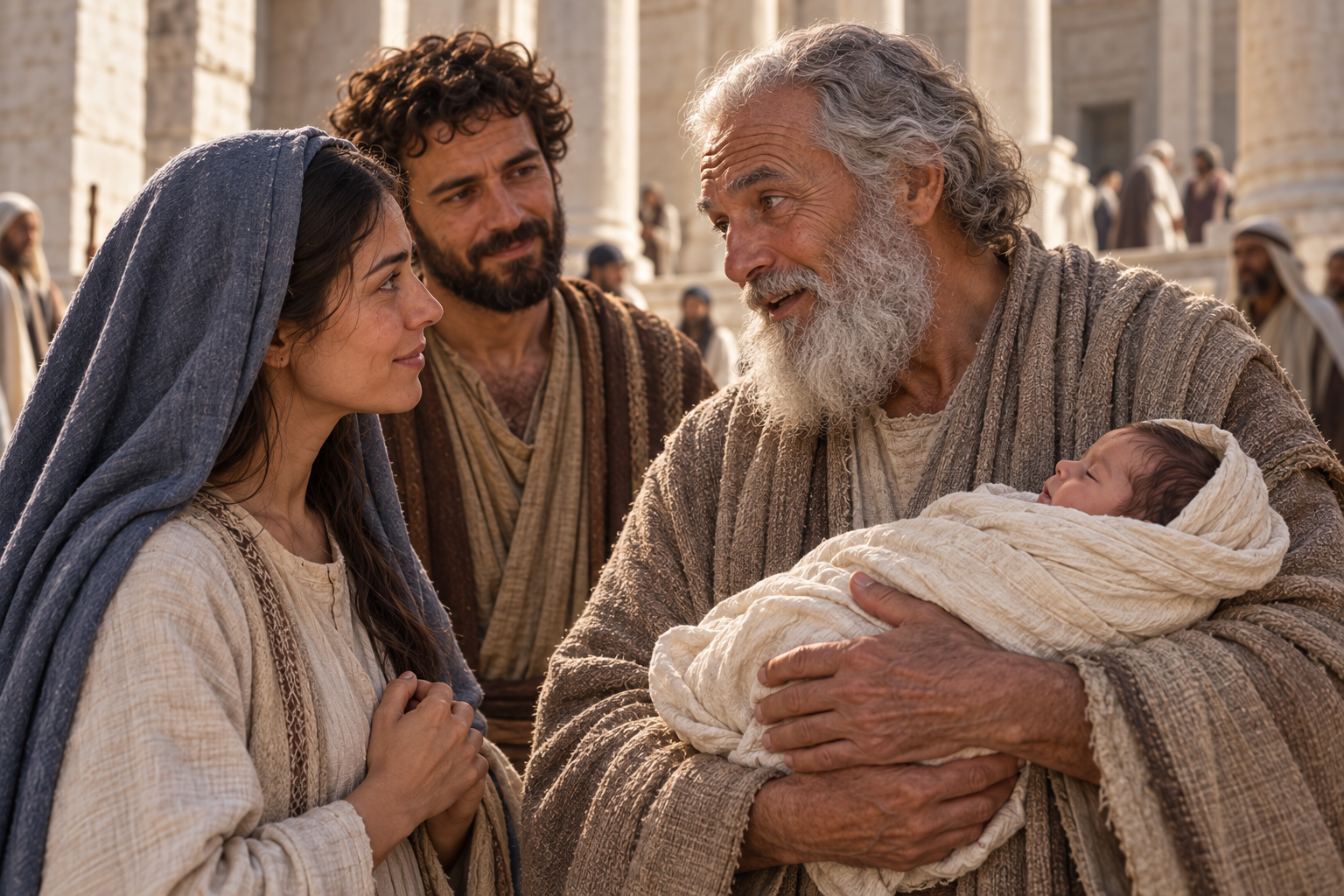
Simeon gives thanks for the salvation he has lived to see. His witness welcomes the light prepared for all people.
Simeon comes into the temple and takes Jesus in his arms in Luke 2:25-32. His words identify God's salvation and light reaching beyond one people. Luke describes him as just, devout, and guided by the Holy Ghost. His long hope finds expression in gratitude as he holds the child and blesses God.
Simeon's words to Mary in Luke 2:33-35 also speak of opposition and sorrow. Receiving the Savior is not a promise that every part of life becomes easy. Hope can remain real while carrying knowledge of cost.
Explore and study
Anna gives thanks and bears witness
Anna gives thanks to the Lord and speaks of the child to those looking for redemption. Her patient worship opens into a living witness.
Anna appears in Luke 2:36-38 as a prophetess whose life has included widowhood and sustained worship. She gives thanks and speaks of the child to others looking for redemption. Her witness adds another voice of gratitude and expectation. Through years of worship, she has remained attentive to God, and now she speaks of the child to others who are waiting.
Learn from patient witnesses
What do Simeon and Anna notice, say, and do? Consider someone whose patient faith has helped you recognize goodness. How might you receive their witness while reading the scripture for yourself?
See the temple witness in context
Watch Simeon receive the child. Then read the whole passage, including Anna's witness, so that both voices remain part of your study.
Mary and Joseph bring Jesus to the temple, where Simeon receives Him and gives thanks to God. Read Luke’s account of Simeon and Anna as witnesses of the child’s saving mission.
Matthew's distinct account
Worship, Warning, and Care for the Child
Matthew 2:1-8 introduces wise men seeking the child and Herod's troubled response. Their search leads to the scriptural witness about Bethlehem. They have come to worship, while Herod responds to the news with fear. Matthew places those responses beside one another and invites us to consider our own response to the Savior.
Explore and study
The wise men worship in the house
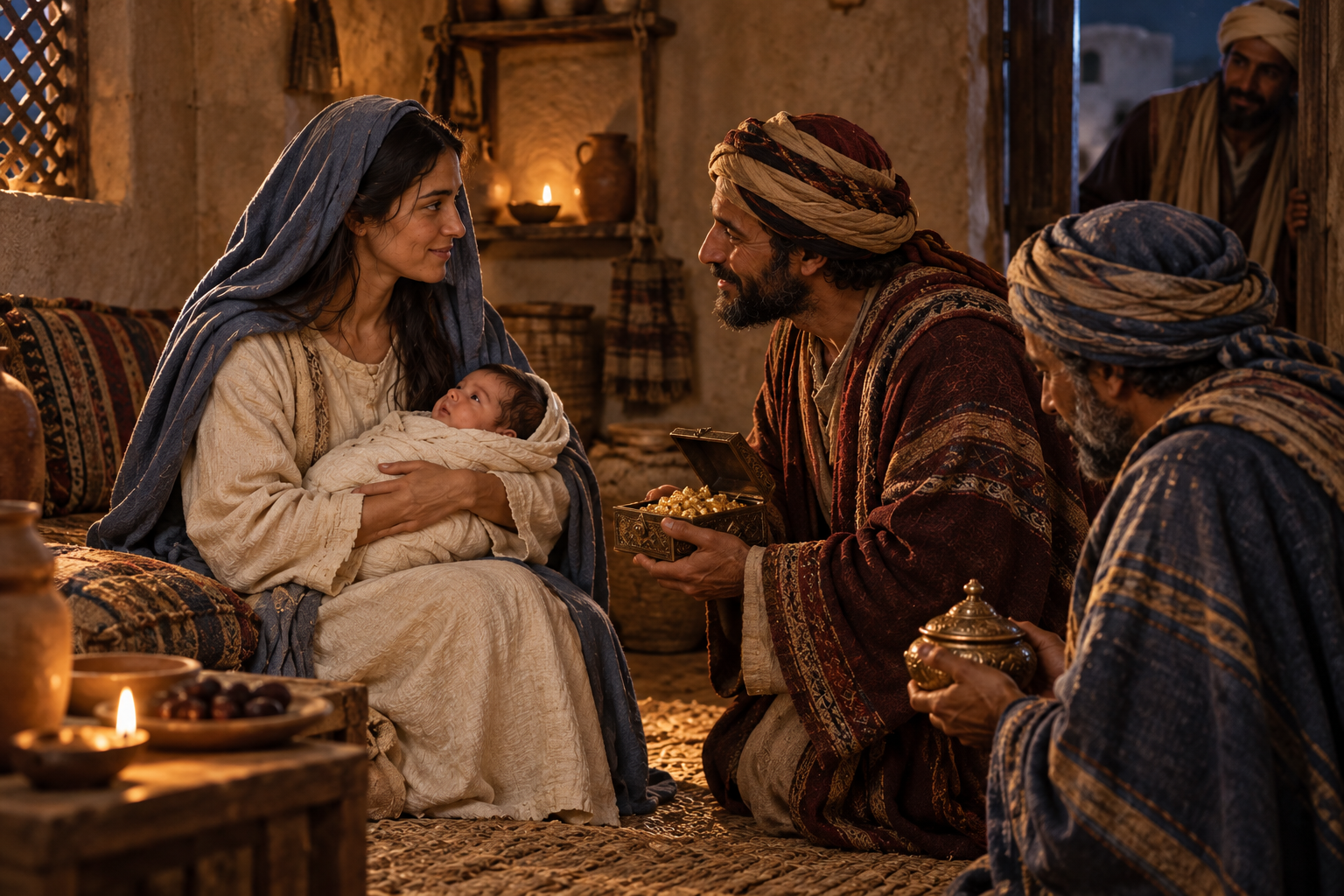
The visitors find the child with Mary, worship Him, and offer their gifts. Matthew brings us into a house for this encounter.
In Matthew 2:9-12, the visitors enter a house, see the child with Mary, worship, and present gifts. Matthew names their gifts of gold, frankincense, and myrrh while leaving their number and the child's age unstated. This visit takes place in a house, distinct from Luke's scene of shepherds at the manger. Both accounts lead toward recognition and worship.
Explore and study
Joseph takes the family away by night
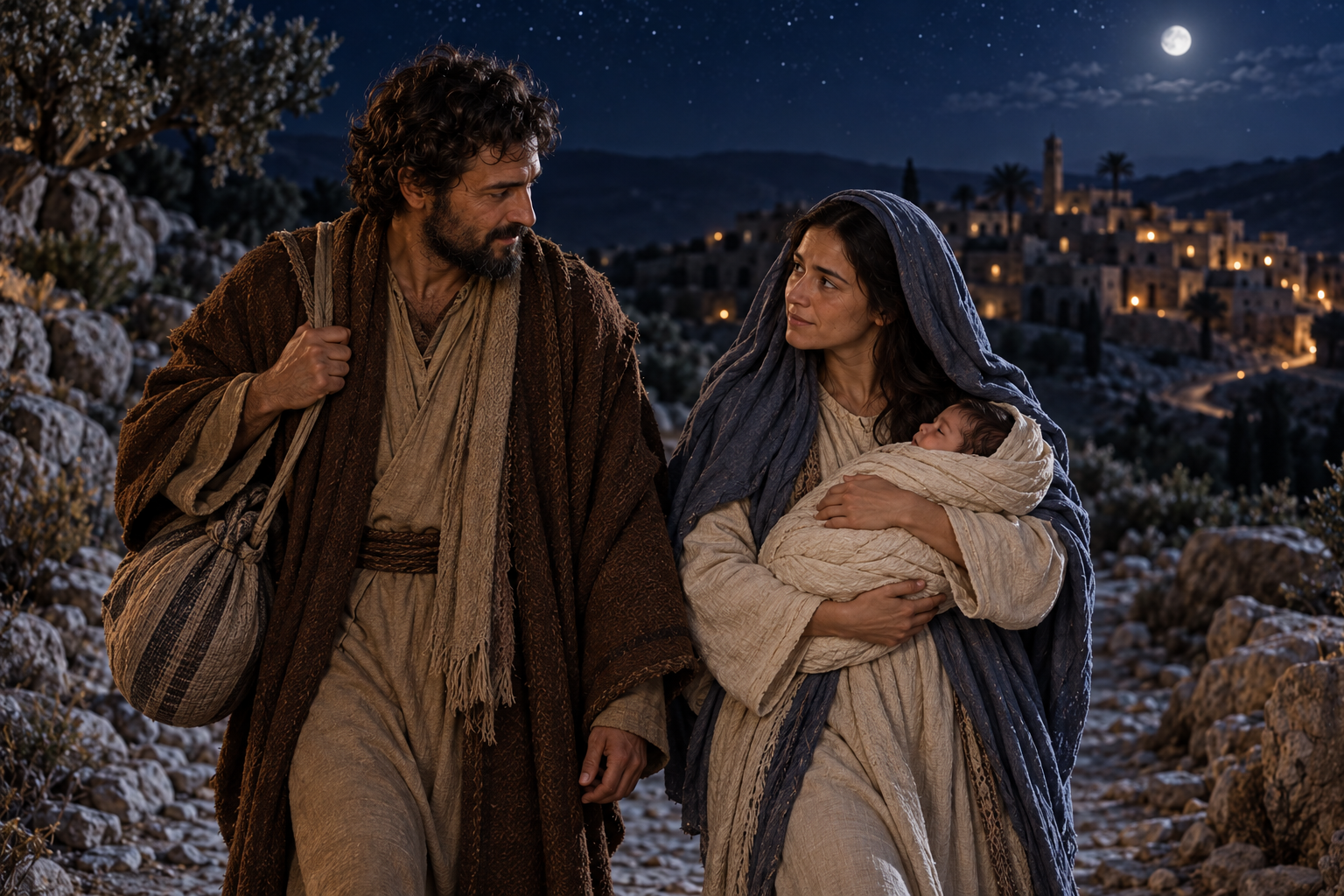
Following the warning, Joseph takes the child and Mary toward Egypt. His prompt care protects the young family through danger.
After their departure, Joseph receives another warning in a dream. Matthew 2:13-15 describes his taking the child and Mary by night and departing toward Egypt. Joseph responds promptly to the warning, caring for Mary and the child amid danger. The family's departure brings displacement into the story of the Savior's early life and invites compassion for families seeking safety today.
The family returns following further direction in Matthew 2:19-23. The Gospel follows a family whose path changes as Joseph responds to what he receives. We can attend to the child's vulnerability and to the steady care that protects Him through those changes.
Explore and study
A home in Nazareth
The family settles in Nazareth after their return. The Savior’s early years unfold within the daily care of a home.
The family makes its home in Nazareth. Matthew's account lets us follow the movement from danger toward a place where the child will grow, while leaving the length of each stage undescribed. The setting changes, but the work of family care continues. A home becomes a place for daily provision, learning, and the patient love through which a child is nurtured.
Let the two Gospels speak distinctly
Choose a detail from Luke and one from Matthew. What does each writer emphasize about Jesus and those responding to Him? A meaningful comparison need not settle every unreported chronological question.
From Samuel's warning to Nephi's prayer
The Promised Sign Comes
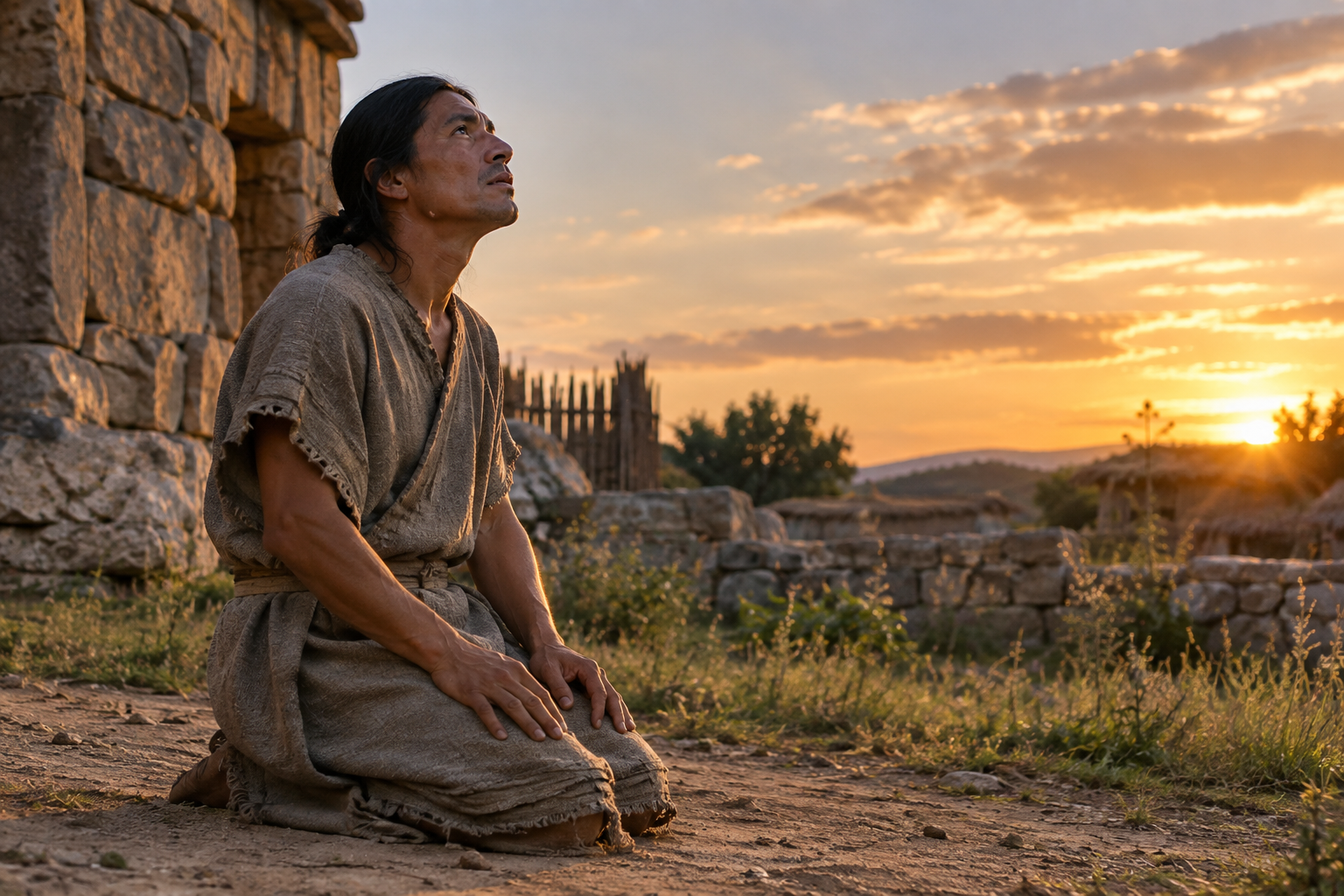
Helaman 16:1-8 describes divided responses to Samuel and Nephi's ministry among those who believe. Samuel leaves after his ministry. Later wonders appear in Helaman 16:13-14; these belong to the Book of Mormon's own account of people preparing for the promised sign.
Years later, believers face a threatened day of violence if the sign does not appear. 3 Nephi 1:9-14 describes Nephi's sorrow, day-long prayer, and the Lord's reassuring voice. This is Nephi the son of Nephi, distinct from the Nephi who saw the mother and child in the earlier vision.
Explore and study
Nephi prays for his people
Nephi pours out his sorrow for the believers. The Lord’s voice assures him that the promised sign will come.
Nephi hears the Lord's voice announcing that the sign will be given. The answer meets him in his concern for people whose lives are threatened. His prayer can invite us to bring the needs of others before God with love and persistence, trusting Him with what we cannot resolve ourselves.
Explore and study
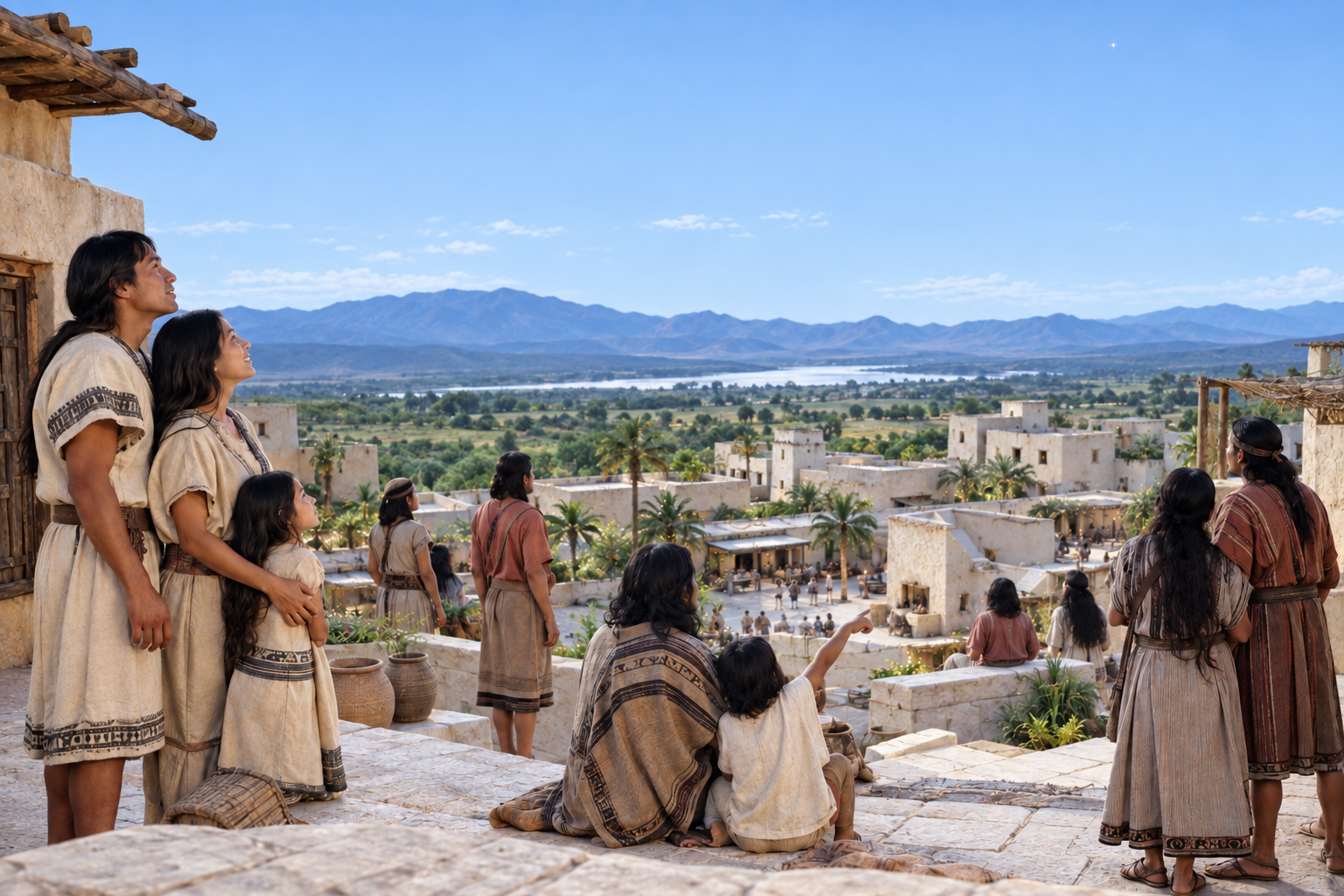
A night as light as day
The sun has gone down, yet the darkness does not come. The light and the new star fulfill the promised signs of the Savior’s birth.
In 3 Nephi 1:15-21, the night remains light and the promised new star appears. The people recognize the fulfillment of the words spoken years before. Read the promise and fulfillment together: the light directs their attention toward the birth of the Savior, whose coming brings hope to both individuals and a whole community.
Separate promise, waiting, and fulfillment
Read Samuel's announcement and Nephi's experience. What belongs to each occasion? What does this fulfillment teach, and what can you honestly carry into your life without promising yourself an identical experience?
This Church teaching video portrays the fulfillment of the promised birth sign. Compare the account with 3 Nephi 1:9-21, where Nephi prays for the believers and receives the Lord’s reassurance.
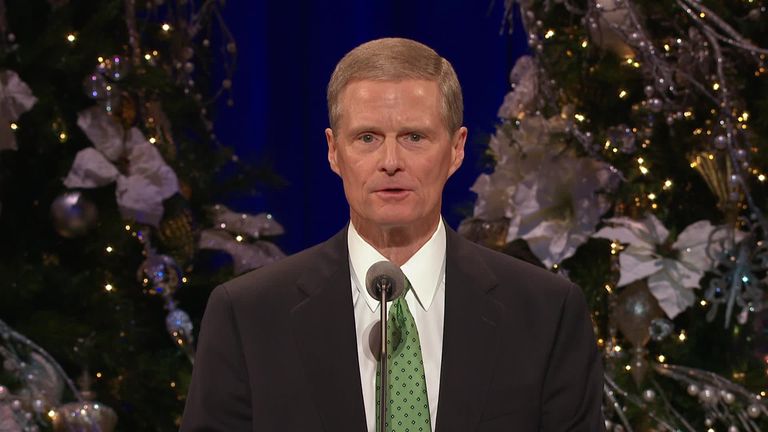
Elder David A. Bednar follows the Book of Mormon’s witness of Christ as light, from Samuel’s promise to the fulfilled birth sign and the risen Savior’s ministry. He invites us to remember that light in our own lives.
His birth belongs to His saving mission
The Word Was Made Flesh
John 1:1-14 approaches Christ's coming through the Word, life, light, and the Word becoming flesh. It is theological testimony to who Jesus is, rather than another narration of travel or delivery. The child of the birth accounts is the divine Son who comes to dwell among us.
The John introduced within this passage as a witness to the Light is John the Baptist. He should not be confused with the Gospel writer simply because they share the name. The passage insists that the witness is not himself the Light. Both the Baptist's mission and the written testimony direct attention to Christ.
Return to Mosiah 3:5-10 and Alma 7:11-13. The promised birth opens into healing, suffering, Atonement, death, and Resurrection. To celebrate His coming is to receive the Savior of the whole mortal journey. His knowledge of weakness and sorrow gives this study meaning beyond a season.
You may approach these accounts with joy, unanswered questions, loneliness, or memories of someone missing from home. Their invitation is to turn toward Jesus Christ. Reading carefully, praying honestly, and giving practical care are ways to respond without pretending life's circumstances are simple.
Read and watch with the scriptures open
The official resources below offer further study. Notice whether a resource explains a passage, bears testimony, or dramatizes a scene. Return to the text when you want to distinguish a recorded detail from an artistic choice.
Sister Susan H. Porter reads the birth of Jesus beside the Book of Mormon account of a night without darkness. She connects those witnesses with the hope and light of the living Savior.
Elder José A. Teixeira recalls his family’s nativity tradition in Portugal and invites us to consider what Jesus Christ gives us. His message connects remembering the birth with following the Savior.