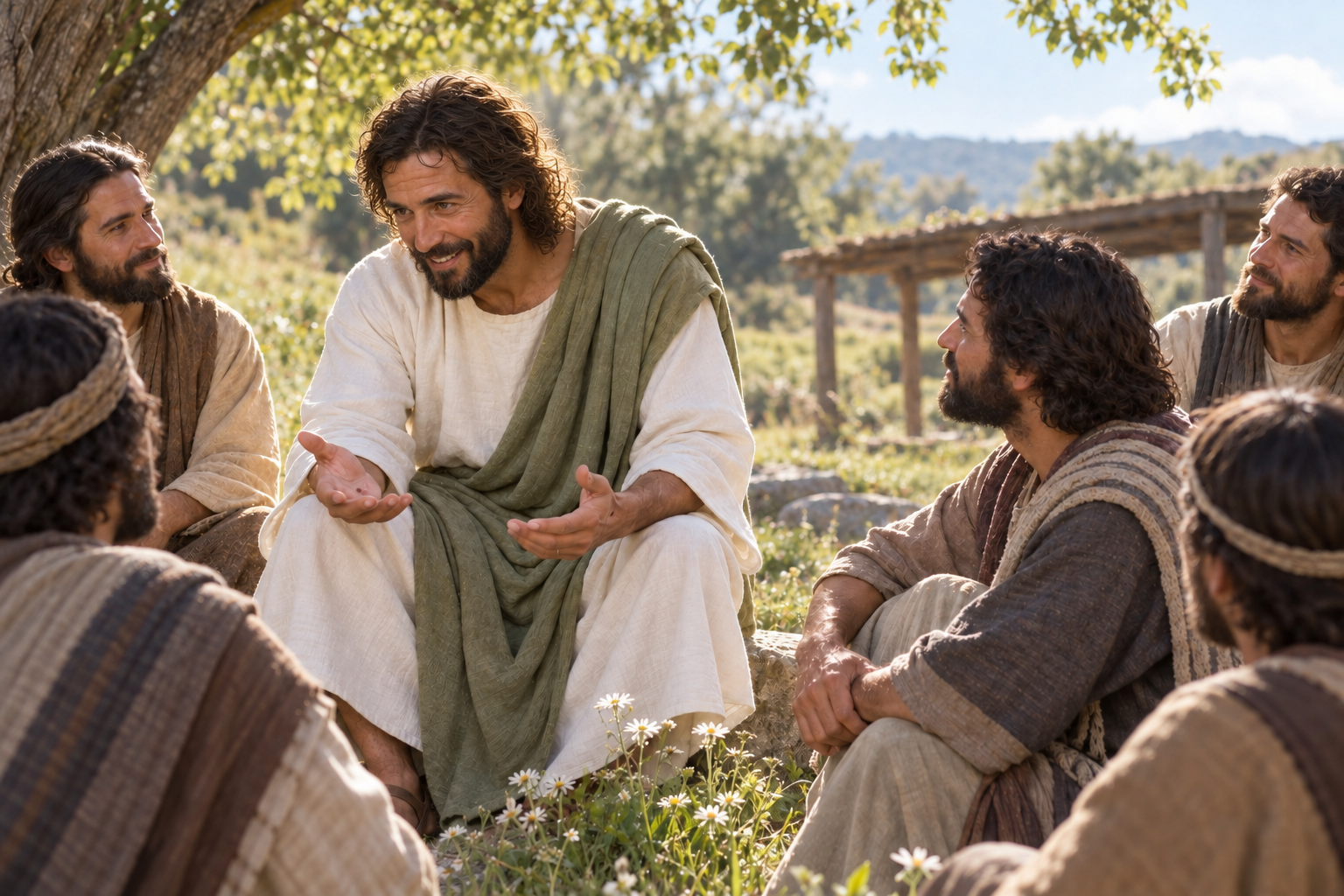
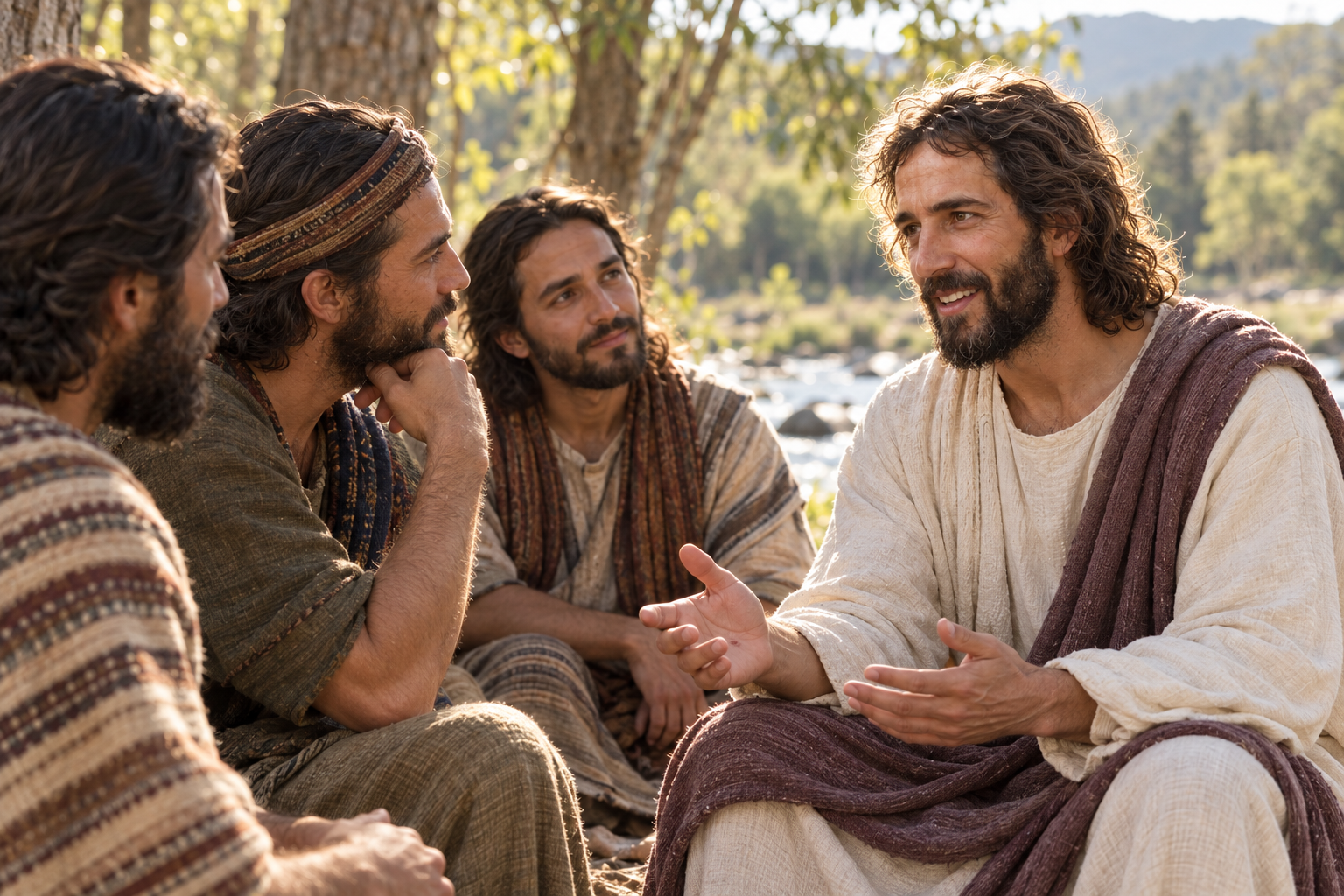
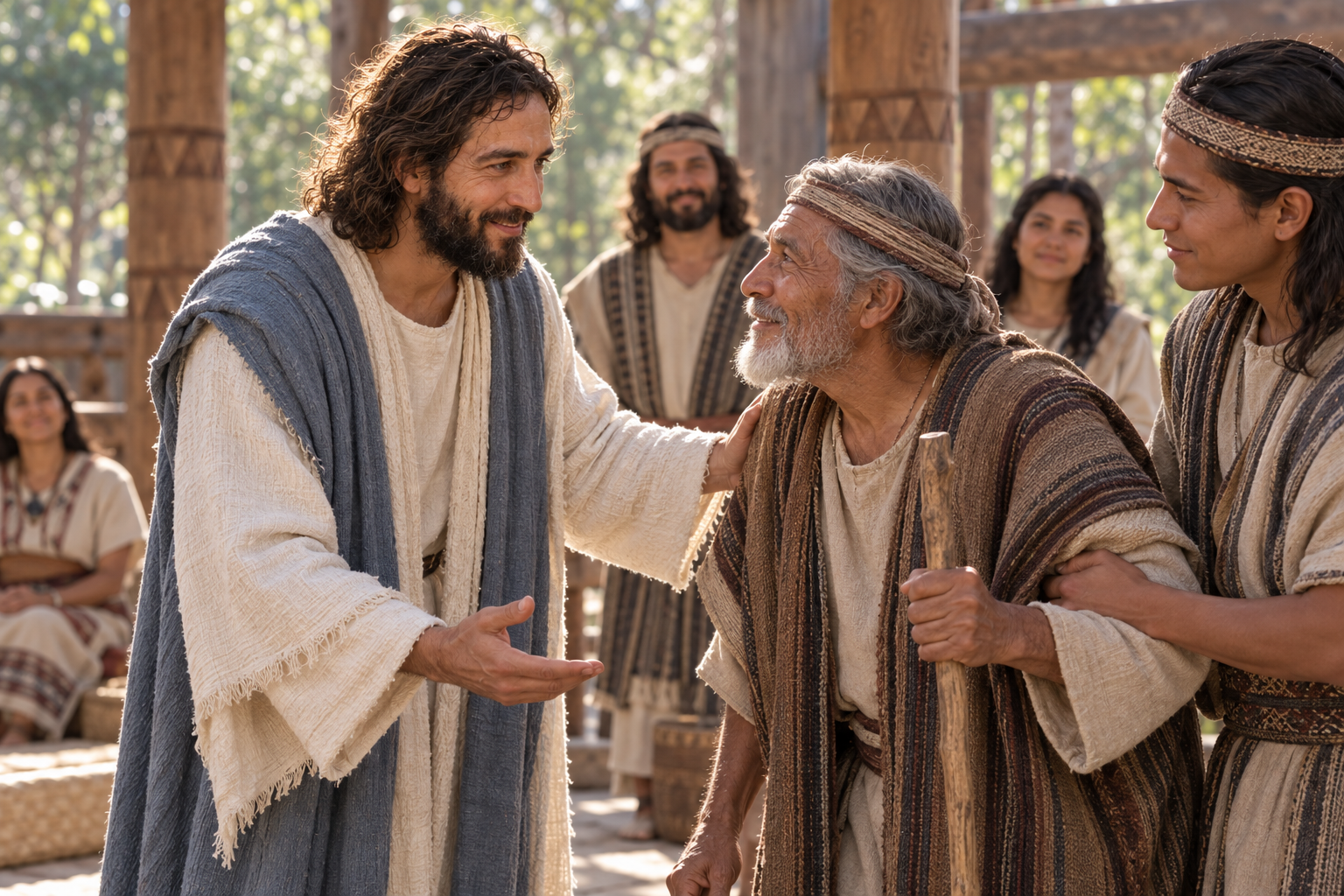
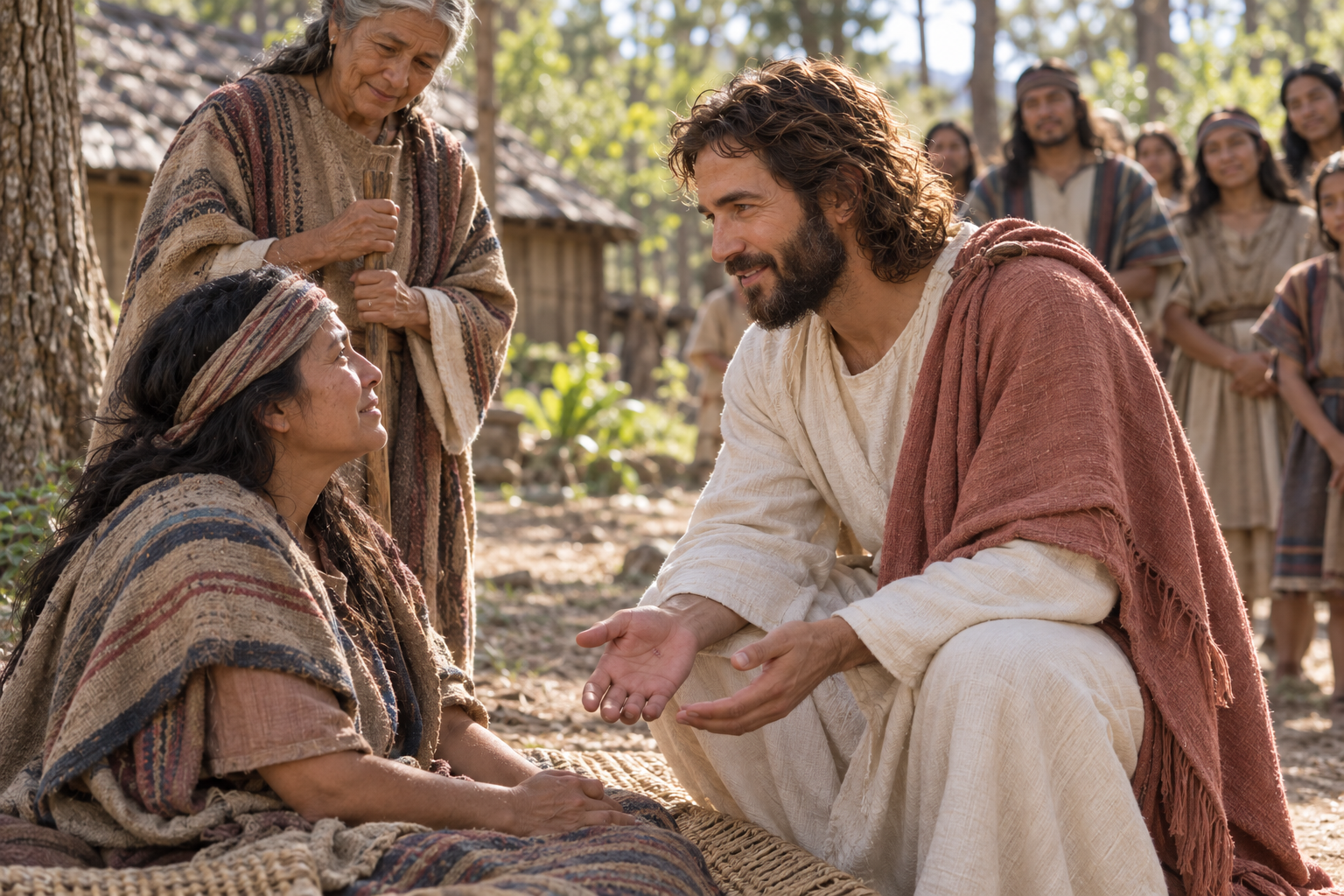
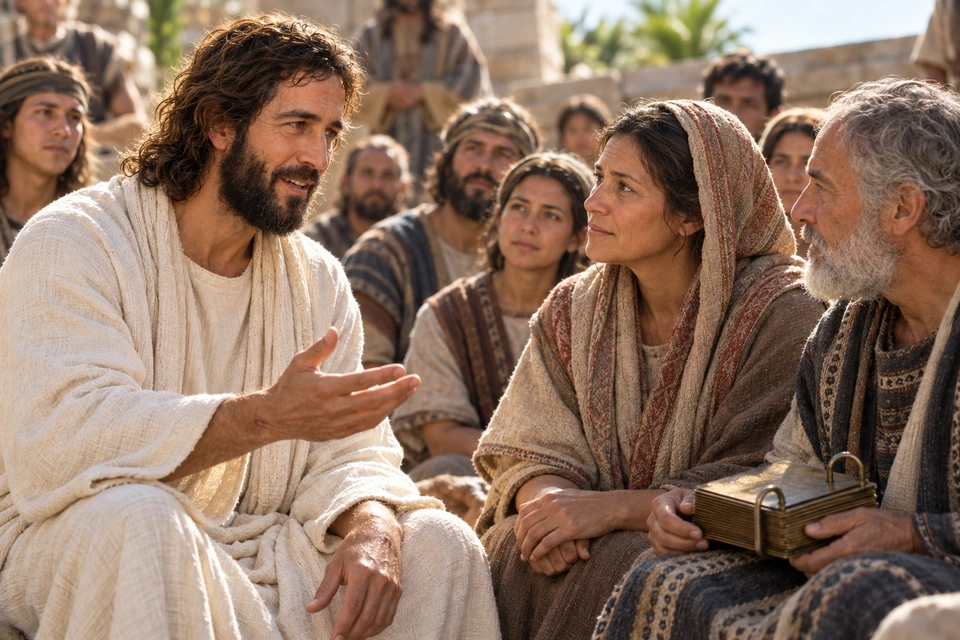
Latter-day Saints accept the Book of Mormon as scripture and call it “Another Testament of Jesus Christ.” They do not see it as a replacement for the Bible, but as an additional witness of the Savior and His gospel.
Study the translation, Royal Skousen’s manuscript research, witness accounts, chiasmus, stylometry, and ancient context. Follow original sources, consider sincere questions, and return to the book’s witness of Jesus Christ.
This is an independent Latter-day Saint study page. Official Church resources are linked for verification and further reading.
Watch and study
An Introduction Before You Begin Reading
The official short explainer What Is the Book of Mormon? introduces the record, its setting, and its witness of Jesus Christ. Watch for the question that matters most to you: what the book contains, why Latter-day Saints read it, or how it relates to the Savior.
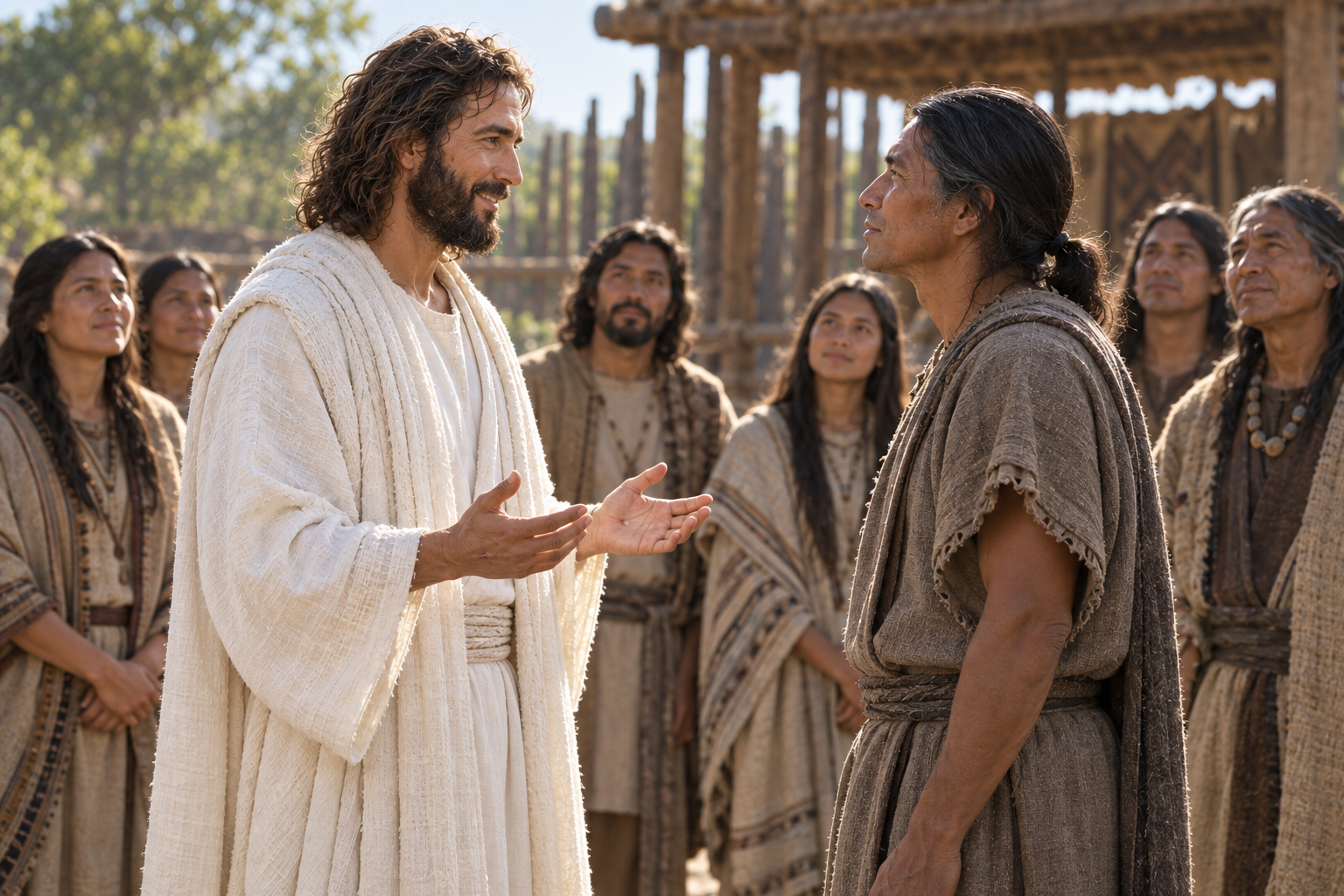
Then begin with the people gathered at Bountiful in 3 Nephi 11:1-17. They hear a voice, turn their attention toward heaven, and encounter Jesus Christ. His introduction connects His identity with His suffering for the sins of the world. The people are invited to approach Him individually. How does reading this account add to the overview you just watched?
What the Book Claims to Be
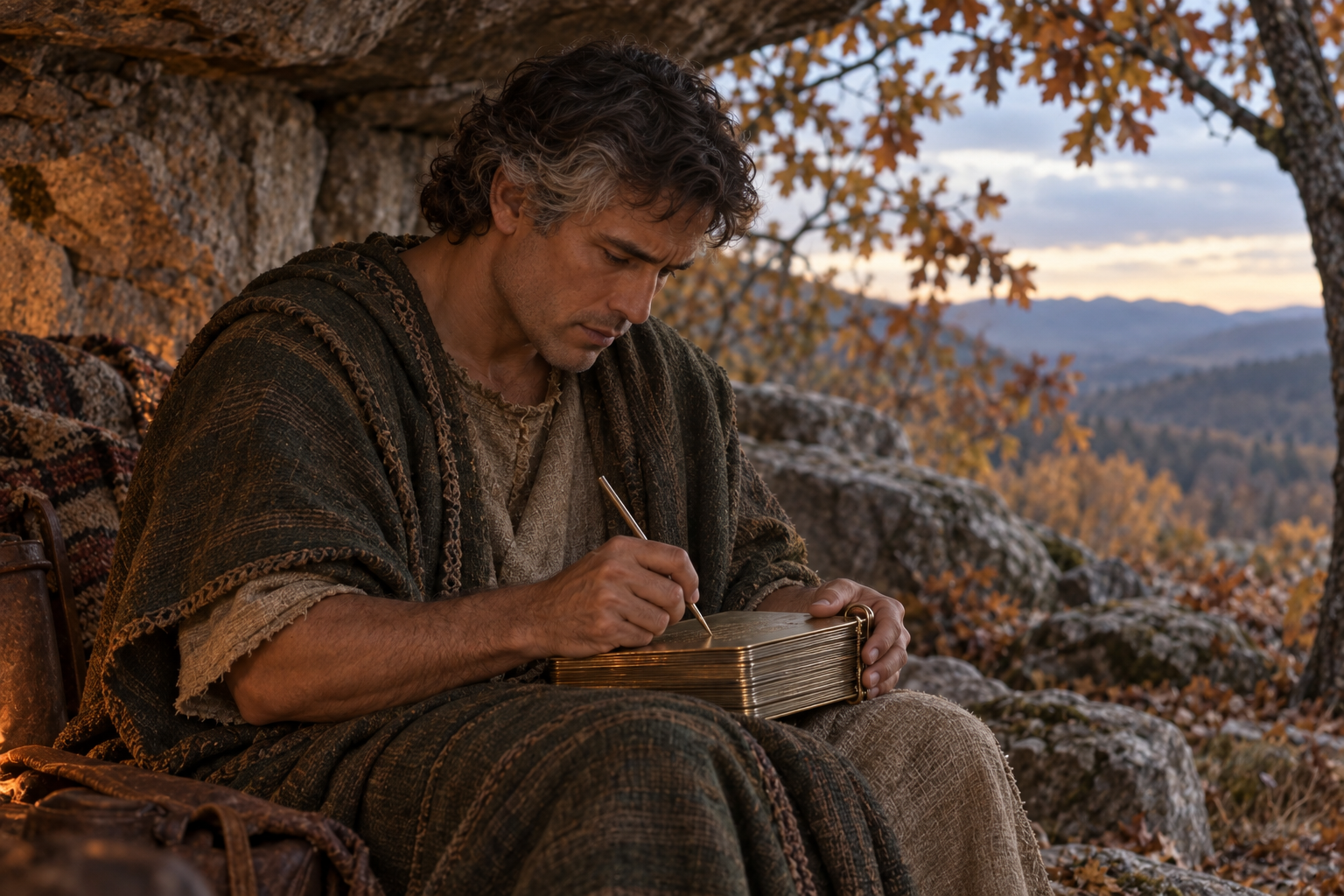
The Book of Mormon presents itself as an ancient record of peoples in the Americas, written and abridged by prophets and translated by Joseph Smith through the gift and power of God. Its stated purpose is to persuade readers that Jesus is the Christ and to invite them to come unto Him.
Why It Is Called Another Testament of Jesus Christ
The book contains prophecies of Christ before His birth, teachings about His Atonement and Resurrection, and an account of the resurrected Savior appearing to people in the Americas. Jesus Christ is therefore not a side subject in the book; He is its central witness.
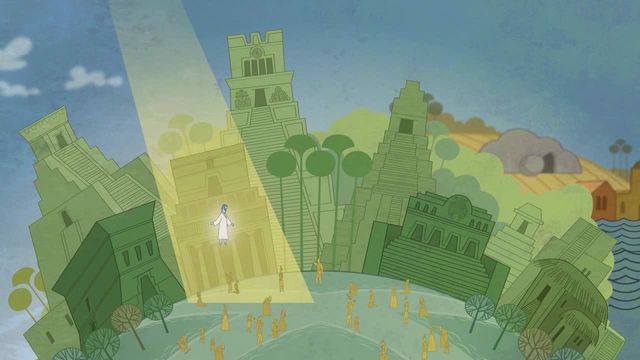
They turn to listen
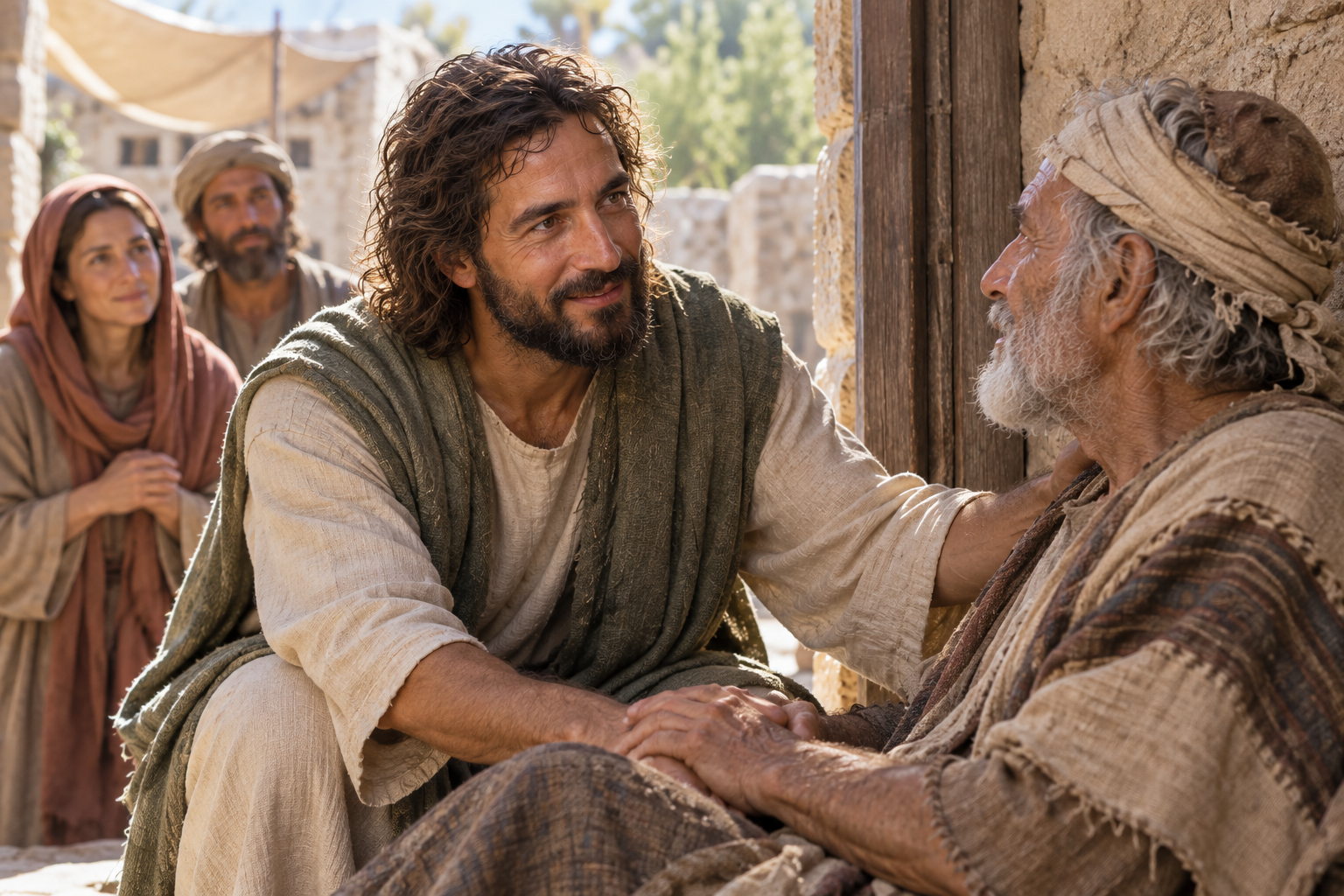
The people turn to listen at Bountiful. Follow their encounter with the risen Savior.
No. Latter-day Saints study the Old and New Testaments as scripture and cherish the Bible’s witness of Jesus Christ. The Book of Mormon is understood as a second scriptural witness that supports biblical teachings and can clarify or reinforce doctrines such as faith, repentance, baptism, resurrection, grace, and discipleship.
Why Have More Than One Scriptural Witness?
The Bible itself uses the principle that important truth can be established by multiple witnesses. Latter-day Saints see the Bible and Book of Mormon as separate records that converge on Jesus Christ. Their different histories and settings make the shared witness meaningful rather than redundant.
How a Seeker Can Approach It
The Church invites people to read the Book of Mormon, compare its teachings with the Bible, ponder its message, and pray for spiritual confirmation. The point is not simply to learn facts about a new book, but to test whether its teachings lead a reader toward Jesus Christ.
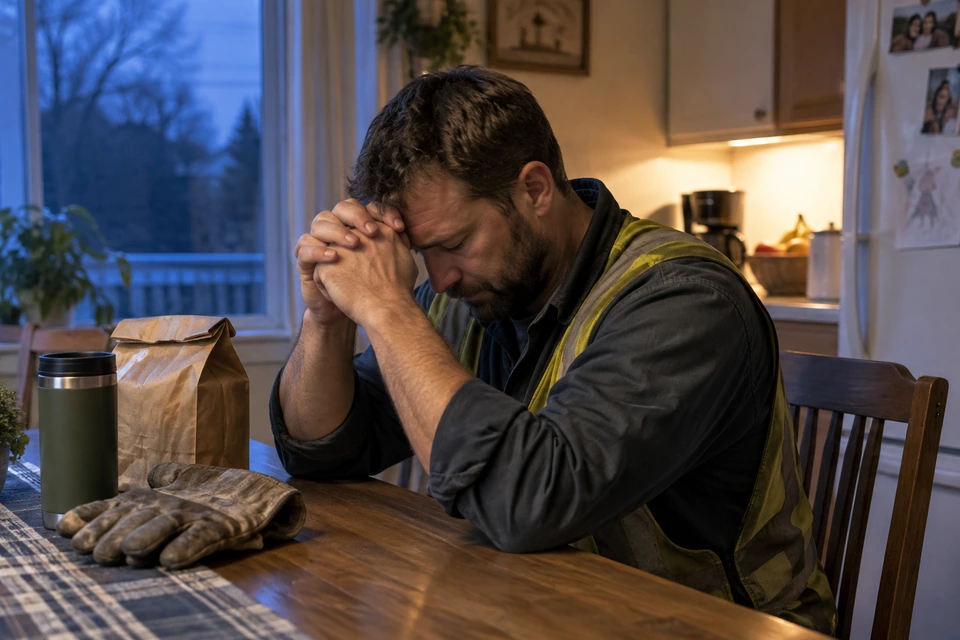
Turn to God before the day begins
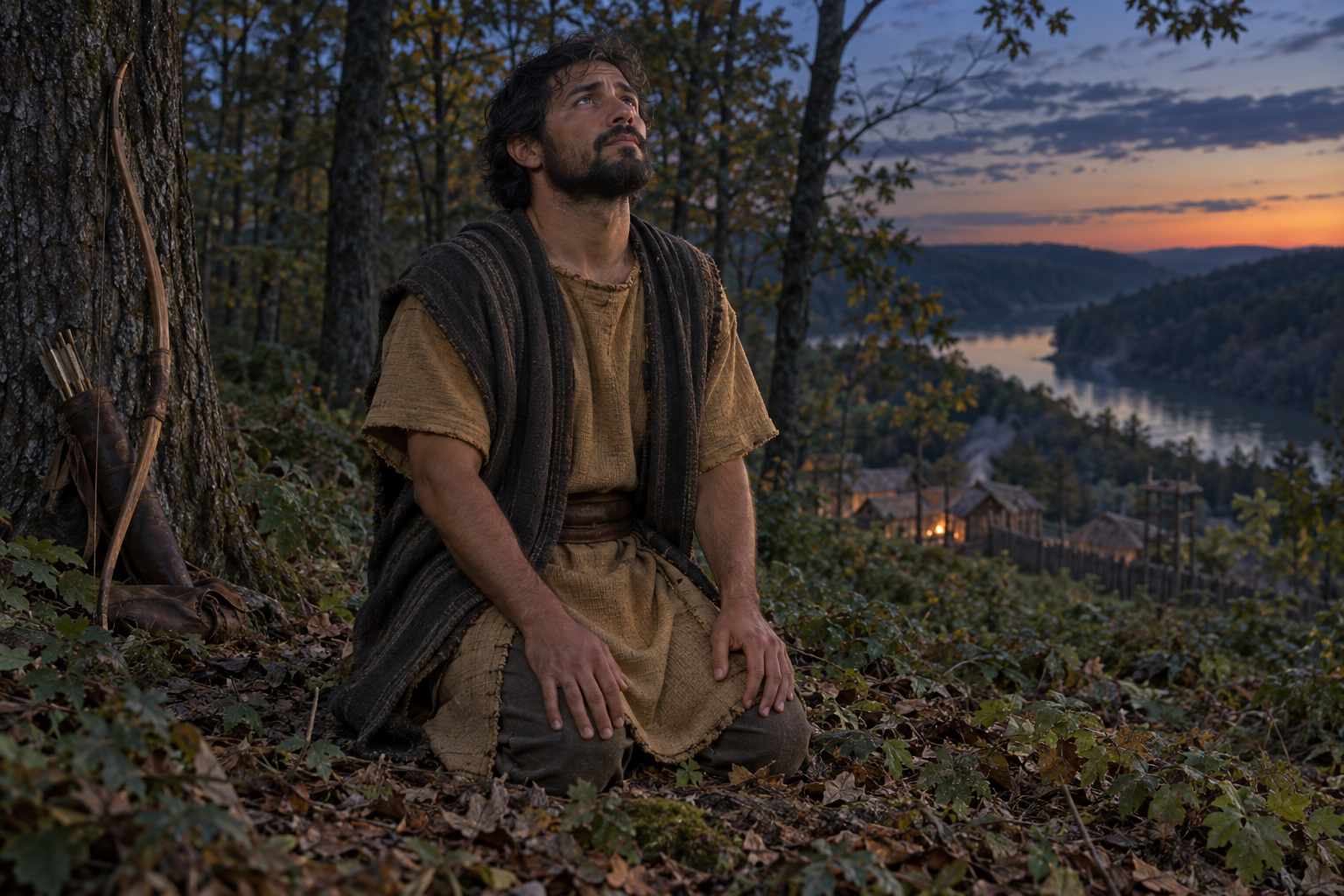
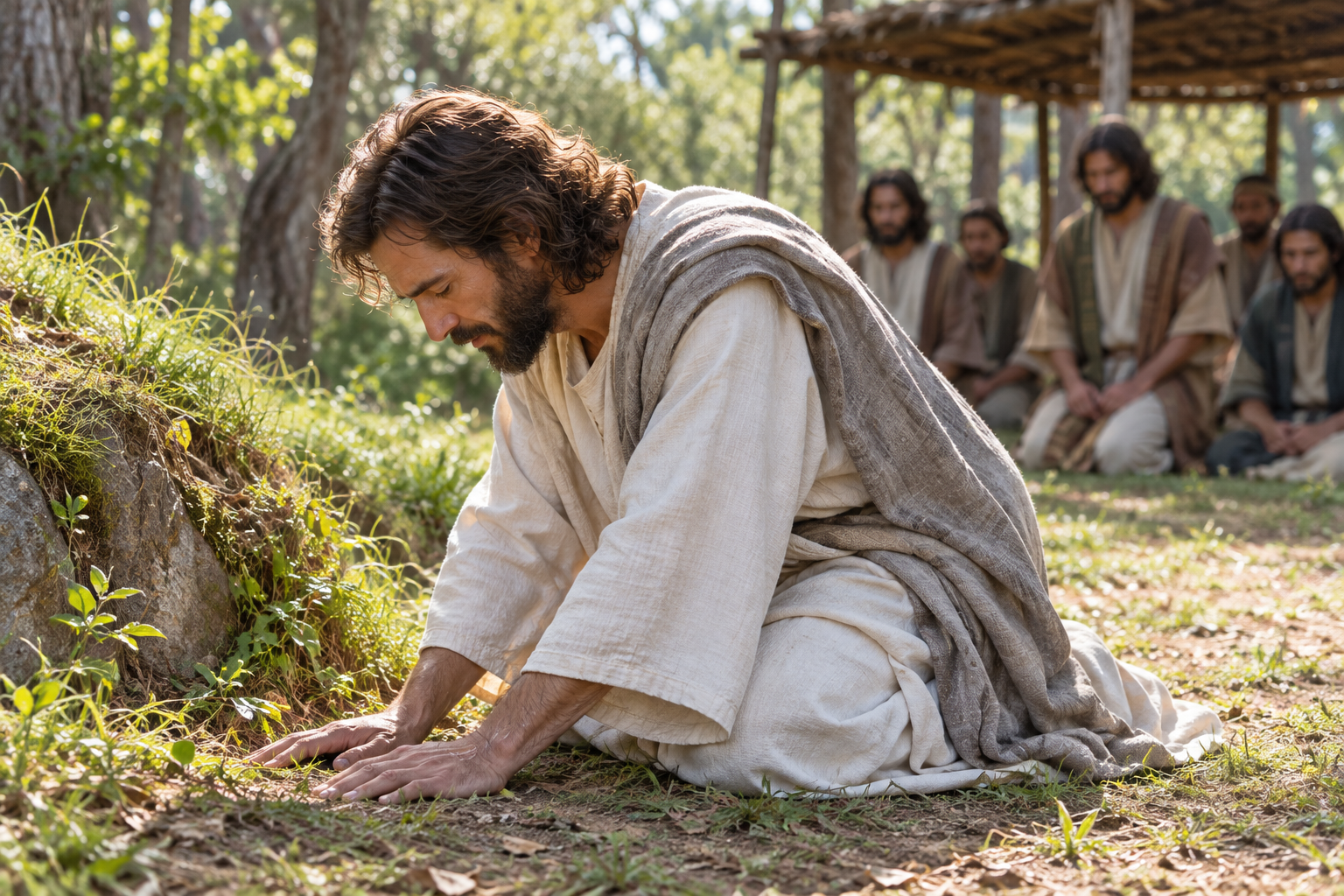
A man pauses to pray before the day begins. Continue with an invitation to bring our concerns to the Father.
If the book is unfamiliar, 3 Nephi 11:1-17 is a useful starting point. It tells of the resurrected Jesus appearing to a gathered people and inviting them to come forward individually. Read at your own pace, note what stands out, and keep track of your questions. You can also explore a short comparison with a Bible passage.
What Does the Invitation to Pray Include?
Moroni 10:3-5 invites readers to remember God's mercy, ponder, and ask sincerely in the name of Christ. Reading and reflection are part of that invitation. It need not become a demand to report a dramatic feeling after a single reading.
If you are uncertain, keep track of the passage or claim you want to understand. A conversation can be more helpful when you can point to the actual words. The prayer and revelation study discusses discernment and questions that take time.
Watch and study
Why Nephi Keeps Returning to Jesus Christ
Explore and study
Follow Nephi’s stated purpose
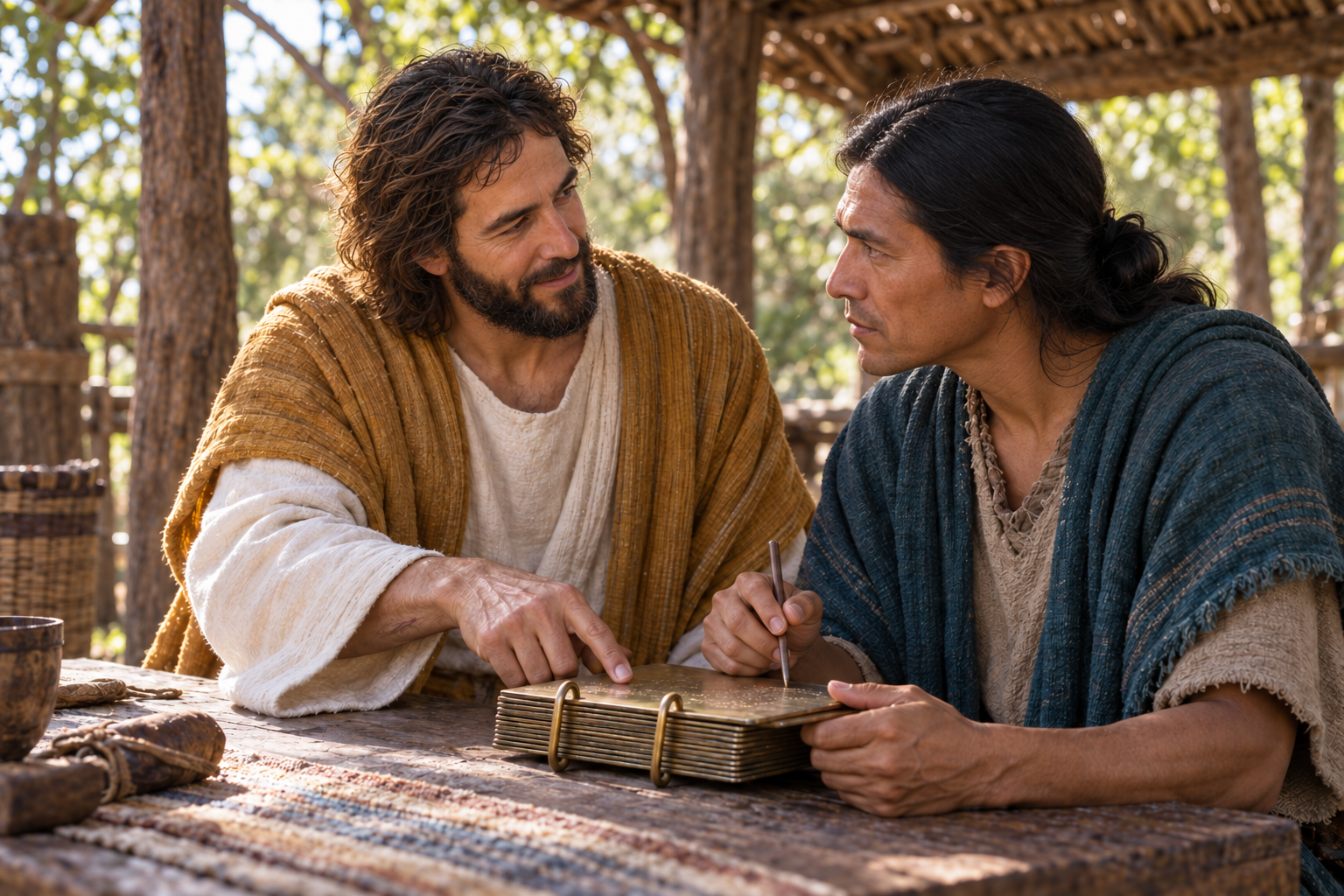
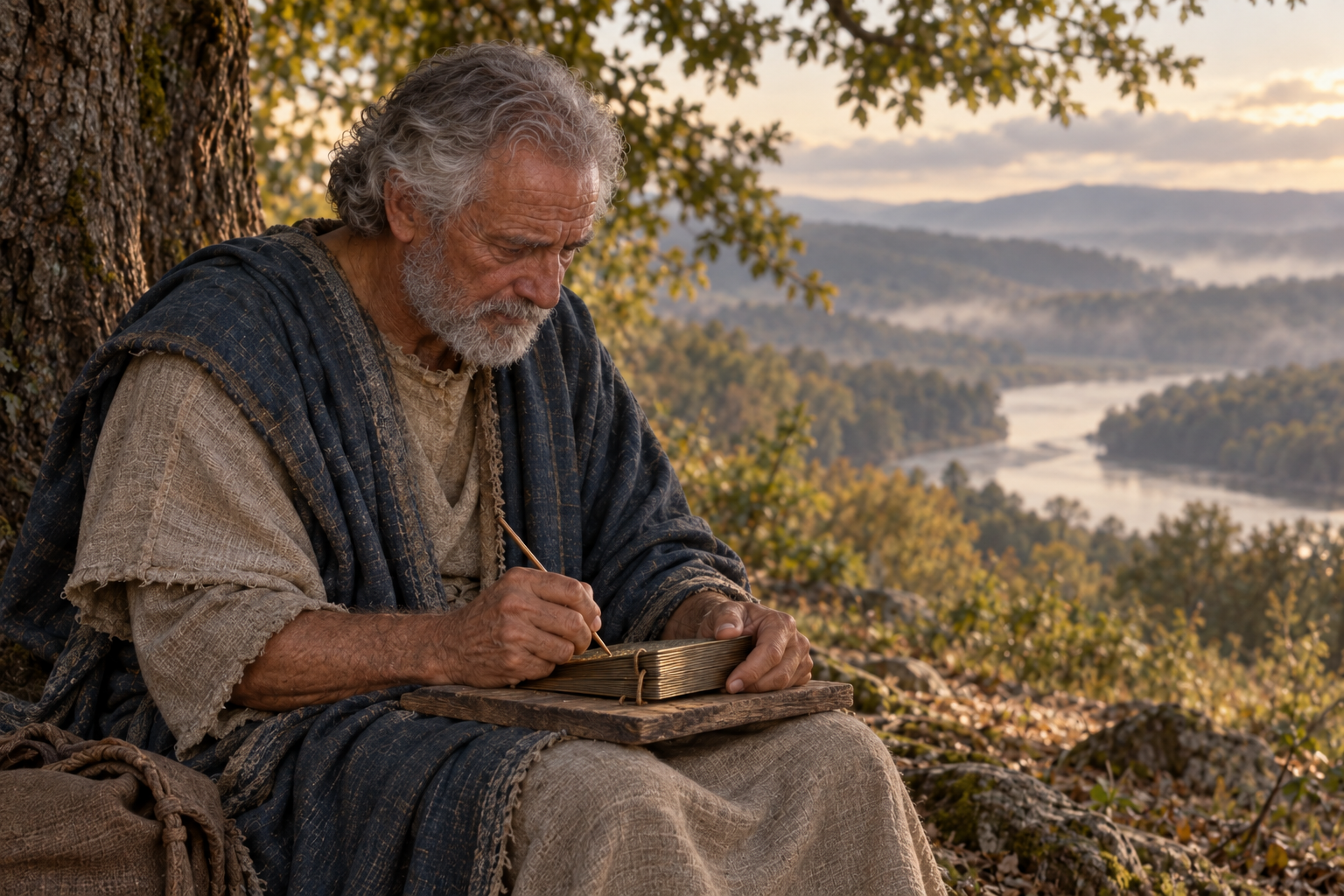
A reader pauses over an open book above a green valley. Nephi's stated purpose gives the study its center: persuading people to believe in Jesus Christ and be reconciled to God.
In 2 Nephi 25:23-29, Nephi explains why he writes and teaches about Christ. His concern includes the next generation: he wants children to understand where forgiveness is found. Read the verbs in verse 26, then read the invitation to worship in verse 29.
The accompanying Seminary lesson explores salvation through Jesus Christ. After reading it, put Nephi's purpose into your own words. How would a family conversation change if it helped someone understand the Savior's mercy? You can begin with one experience of gratitude or one sincere question. A polished religious speech is unnecessary.
Get to Know the Book by Reading It
Meet the people behind its familiar passages in the Book of Mormon story journey, or begin with the Savior’s own words below.
Explore and study
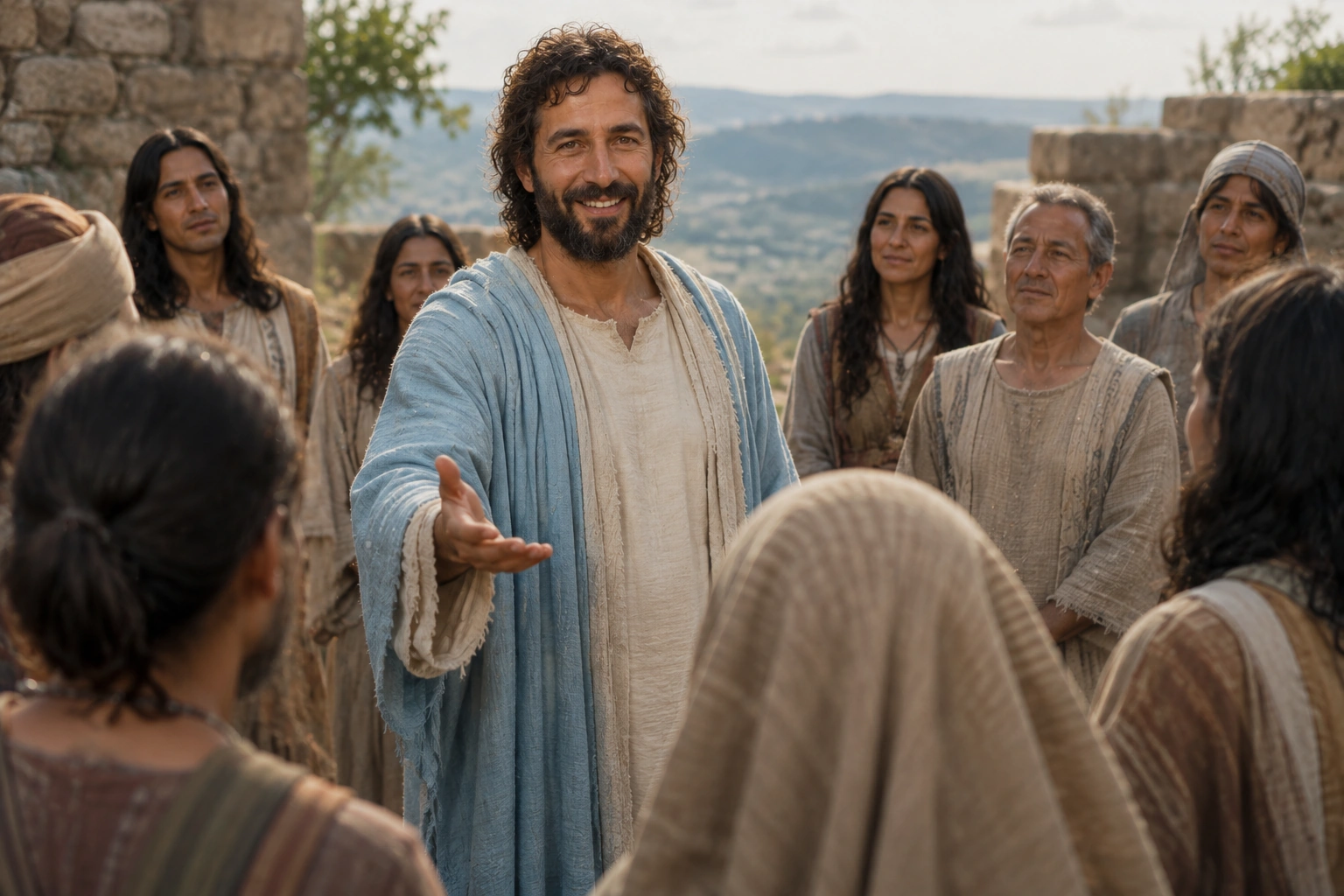
Come forward and know
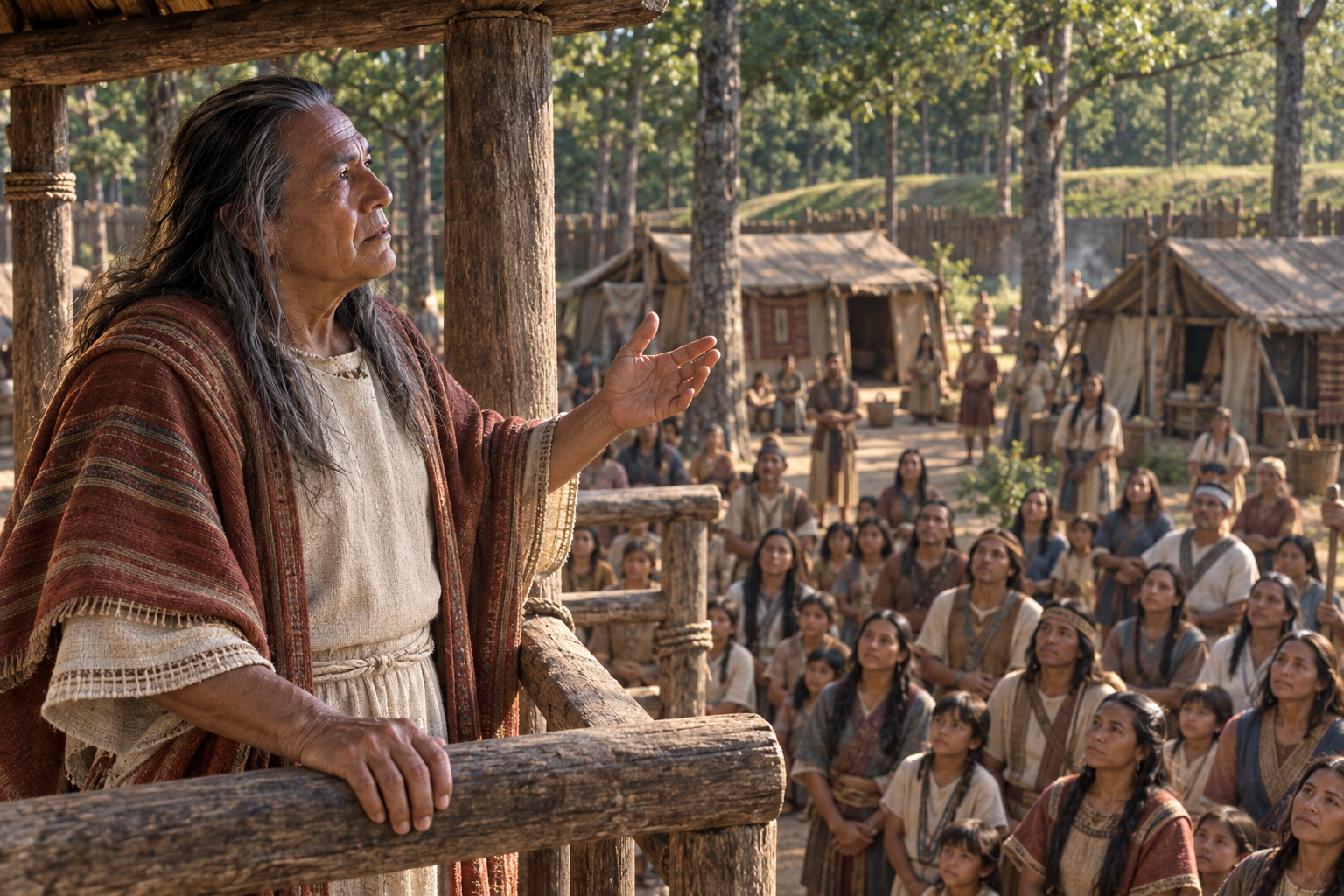
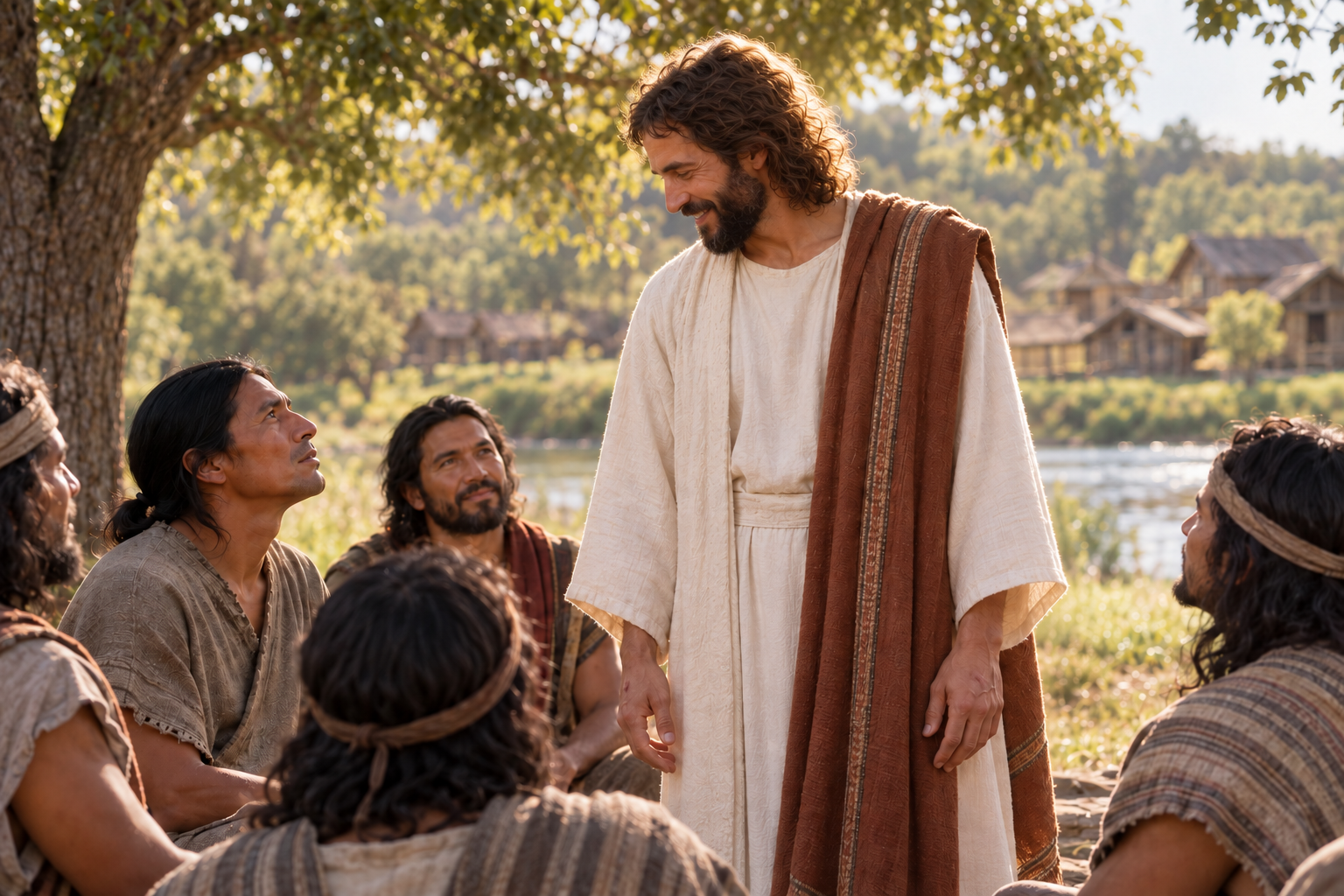
The risen Jesus Christ extends His invitation to people gathered at Bountiful. Each person is welcomed to come forward and know for themselves that He is the God of Israel.
Alma 32:21-28, 37-43 uses the image of a seed to discuss faith and the patient care that follows an initial willingness to believe. The setting includes people who have been excluded from worship because of their poverty. Notice both the invitation to begin and the warning that growth requires continued nourishment. This is a religious account of developing faith; it is not a scientific experiment that establishes every historical claim about the book.
Read the gospel invitation
2 Nephi 31:5-13, 17-21 connects Jesus's example with baptism and an ongoing life of faith, hope, and love. Read this beside the account of His ministry in 3 Nephi 11 already linked above. One explains a path of discipleship; the other portrays an encounter with the risen Savior. Together they show why the book matters in Latter-day Saint worship.
Separate the questions you are asking
You may be asking what the book teaches, how it came into print, whether its account is historical, or how to evaluate a spiritual conviction. Those are related but different inquiries. Reading a passage can illuminate its message; historical questions require historical evidence too. Keep a question list so one unresolved issue does not get quietly replaced by another.
Read His words together
Bring your own questions to the Savior’s words. Explore a study of reading scripture together.
Record a passage, its speaker and setting, one teaching in your own words, and one question. On your next visit, start with that question rather than feeling you must begin the whole book again.
People, promises, and the living Christ
Walk through the stories. Come to know the Savior.
The Book of Mormon carries us into homes and wilderness camps, royal courts and prisons, places of worship and fields of battle. We meet people who trust God, people who resist Him, and people who discover that repentance can change the direction of a life. Their experiences keep returning to Jesus Christ: His coming, His redeeming power, His ministry among the people, and His invitation to us.
Begin with a person or moment that draws you. These stops follow the broad course of the record, beginning with the earlier Jaredite history. Some accounts overlap in time; the books sometimes return to an earlier event or follow another community. You can linger in one story and return to the journey later.
He sees the finger of the Lord
The brother of Jared sees the Lord’s finger. Continue with this earlier witness of Jesus Christ.
Each picture accompanies a passage you can open and read. The scriptures do not settle the precise locations of these events in the ancient Americas. Follow the people and their choices in each account without treating a familiar landscape as evidence of where they lived.
01 · Before Lehi’s journey
The brother of Jared brings his need to the Lord
Long before Lehi’s family leaves Jerusalem, Jared asks his brother to pray for their families and friends. The Lord hears, preserves their language, and leads them toward a promised land. The journey begins with concern for other people, not only personal deliverance. Follow those widening prayers in Ether 1:33–43.
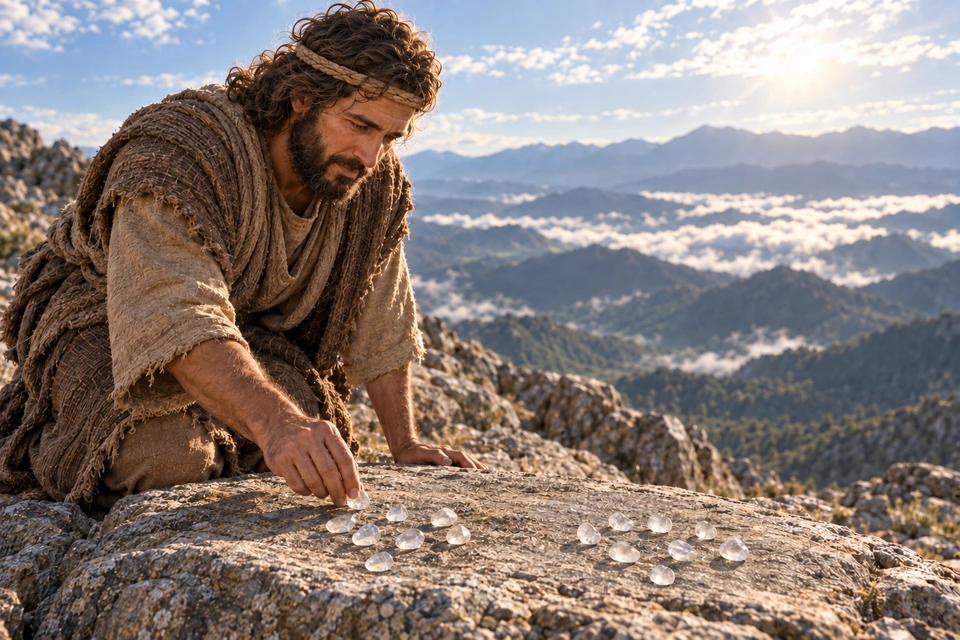
Preparing to cross the sea, the brother of Jared faces a practical difficulty: the vessels need light. He brings sixteen small stones to the Lord and asks Him to touch them. In Ether 3:1–16, the Lord reveals Himself as Jesus Christ. This is an appearance of the premortal Savior in His spirit body, before His birth in mortality. His power to redeem does not begin at Bethlehem; His purpose already embraces the people who will trust Him.
Explore and study
Known by the Redeemer
The brother of Jared comes to know the Redeemer who has spoken to him. Read how the Lord identifies Himself and explains why He has shown Himself.
The ocean crossing still includes wind and waves. The people sing praises and give thanks while the Lord carries them toward shore in Ether 6:4–12. Help has not removed the journey. It has given them light and a way forward within it.
Bring a real need into your prayer
What problem are you carrying? Describe it plainly. Notice how the brother of Jared combines preparation with dependence on the Lord. Consider one faithful step you can take while asking for the help you cannot provide yourself.
02 · A family leaves Jerusalem
Lehi and Sariah’s family learns to follow
Lehi’s call draws an entire household into the wilderness. In 1 Nephi 2:1–16, their tents replace the familiar life they have left behind. Laman and Lemuel resist their father’s direction. Nephi also has something to work through: he cries to the Lord, and his heart is softened. Sam believes Nephi’s words in 1 Nephi 2:17–18. These brothers share a family and a journey, but their responses are their own.
Lehi counsels his son Joseph
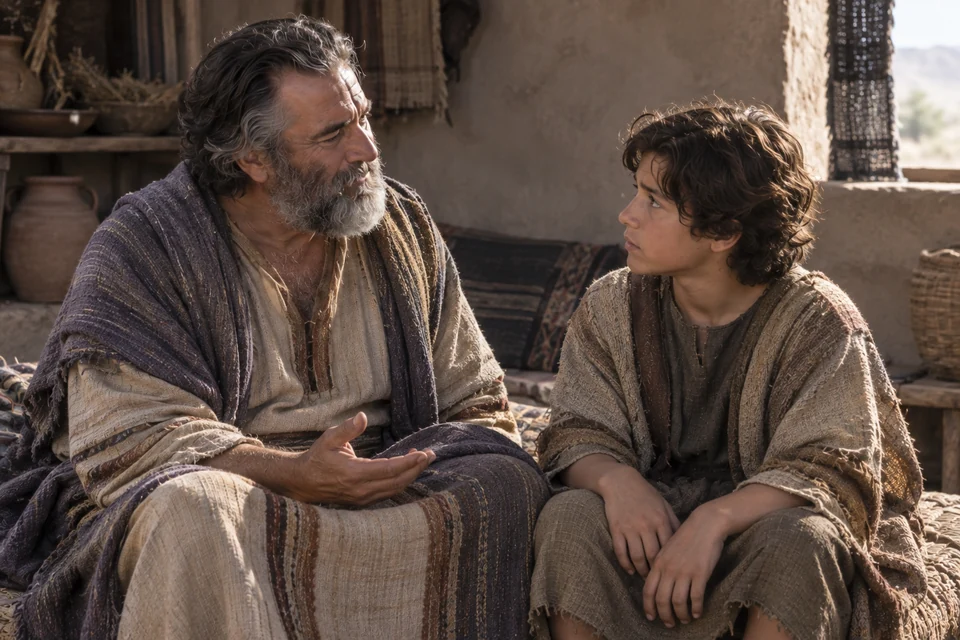
Later in the family’s journey, Lehi speaks to his son Joseph about the Lord’s covenants. Read his counsel near the end of his life.
Sariah’s voice becomes especially clear when her sons return safely from Jerusalem. She has feared that she has lost them. In 1 Nephi 5:1–9, relief leads into a declaration of what she now knows about the Lord’s care. Her place in the account is more than standing beside Lehi: she speaks, struggles, rejoices, and bears witness.
The wilderness story also includes hunger, a broken bow, the death of Ishmael, and a ship that must be built. Read 1 Nephi 16:18–35 and 1 Nephi 17:1–8 with those human needs in view. Nephi seeks direction and works; even Lehi needs correction. Faith is learned among imperfect people who still need food, guidance, forgiveness, and each other.
At the seashore, Nephi does not simply wait for a ship to appear. The Lord teaches him, and he works the timbers. His brothers help, and the family sees that the completed vessel is good in 1 Nephi 18:1–4. Guidance and patient work meet in a task the family could not accomplish through Nephi’s skill alone.
Explore and study
Learning to build, learning to trust
Nephi describes work that grows out of repeated instruction from the Lord. His brothers help, and the finished ship exceeds their expectations. Consider how prayer, learning, and practical effort belong together in this account.
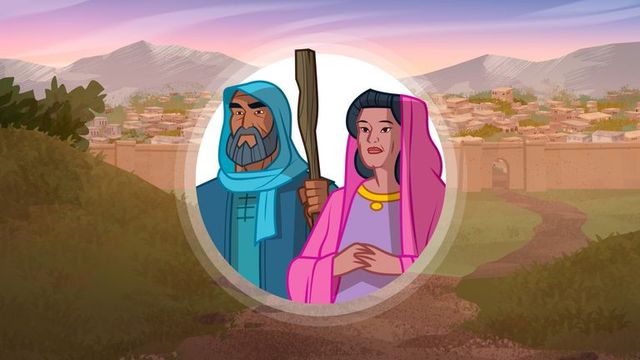
The Church’s illustrated story follows Lehi and Sariah as they leave Jerusalem with their family. Read or watch it alongside the opening chapters, noticing the Lord’s warning, the family’s departure, and the trust the journey will ask of them.
Book of Mormon Stories · The Church of Jesus Christ of Latter-day Saints
Explore and study
A family receives its sons again
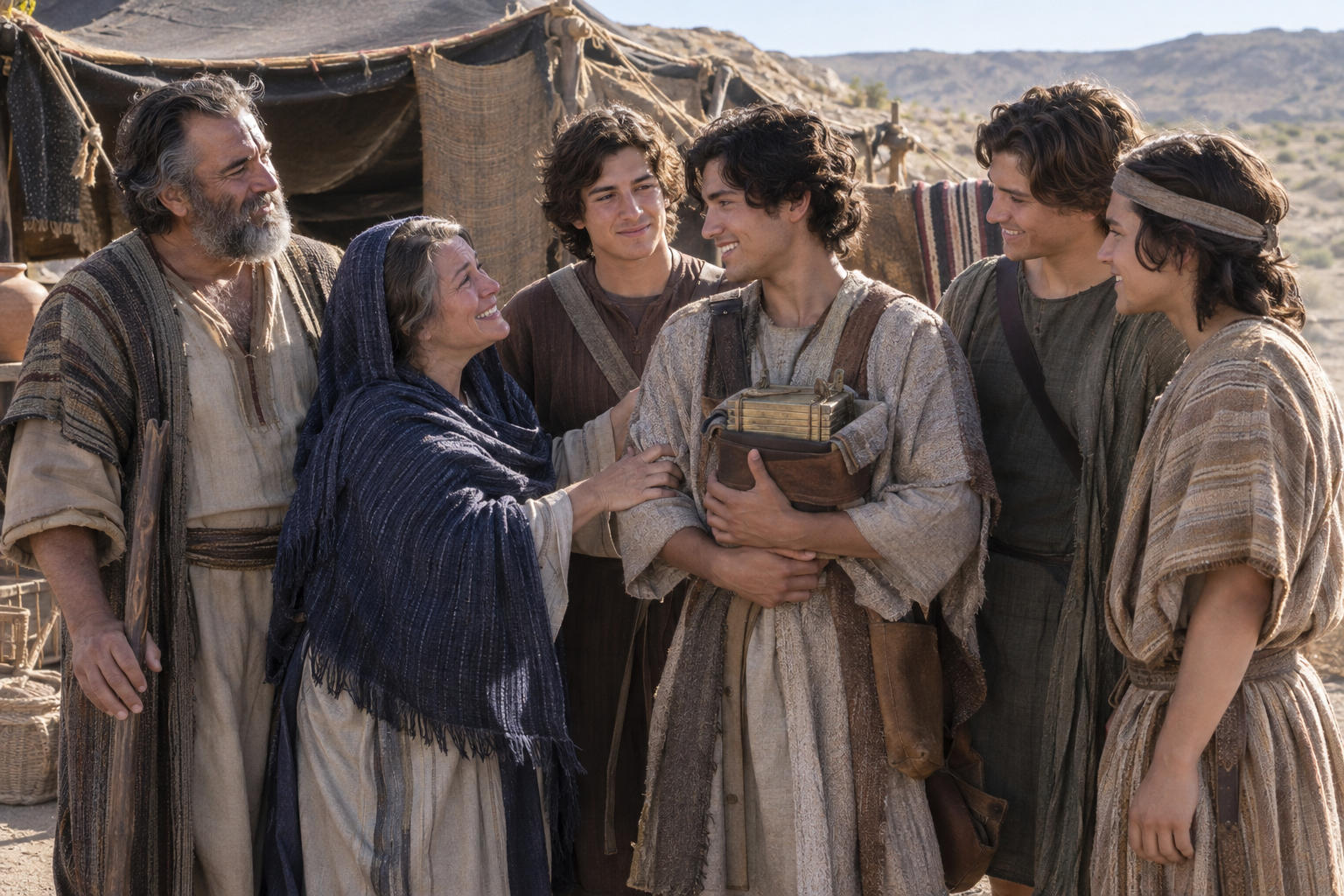
Sariah’s fear gives way to relief when her sons return. This family has not traveled without anxiety or disagreement. Their reunion brings gratitude and Sariah’s own testimony of the Lord’s care.
Nephi wants his family to know where life is found
Lehi’s dream begins with a man asking for mercy in darkness. When he reaches the tree and tastes its fruit, he wants his family to share it. Read his desire alongside the different responses of Sariah, Sam, Nephi, Laman, and Lemuel in 1 Nephi 8:5–18. The dream speaks to the love and sorrow of someone who cannot choose for the people he loves.
Nephi seeks to understand what his father has seen. His vision turns toward the Savior’s birth, ministry, and sacrifice. 1 Nephi 11:13–33 connects the love of God with the Son of God coming among His children. Nephi sees these events in vision; the passage is not an account of the mortal Jesus visiting Nephi’s wilderness camp.
Explore and study
A vision of the Savior’s compassion
Nephi’s vision includes the Son of God ministering to people who suffer. What does that compassion add to Nephi’s understanding of the love of God?
As a teacher, Nephi returns to Christ with remarkable steadiness. He wants the next generation to know where to look for remission of sins in 2 Nephi 25:23–29. His final invitation is to follow the Savior through repentance, baptism, the Holy Ghost, and enduring discipleship in 2 Nephi 31:17–21. The journey has a direction: forward with faith in Christ and love for God and all people.
What do you want those you love to receive?
Consider Lehi’s desire to share the fruit. Name one blessing of knowing Christ that you want someone else to experience. How could you offer an invitation with patience and respect for that person’s agency?
04 · The witness passes from hand to hand
Jacob, Enos, and the quieter keepers of the record
Jacob teaches about the Redeemer’s power over death and sin in 2 Nephi 9:6–23. Later, as a leader among his own people, he challenges pride, the misuse of wealth, and conduct that wounds wives and children. Jacob 2:17–19 joins the desire for riches to the obligation to clothe, feed, and relieve others. Jacob 2:31–35 insists that God hears the pain of those who have been hurt. Covenant language never excuses cruelty at home.
He eats before them
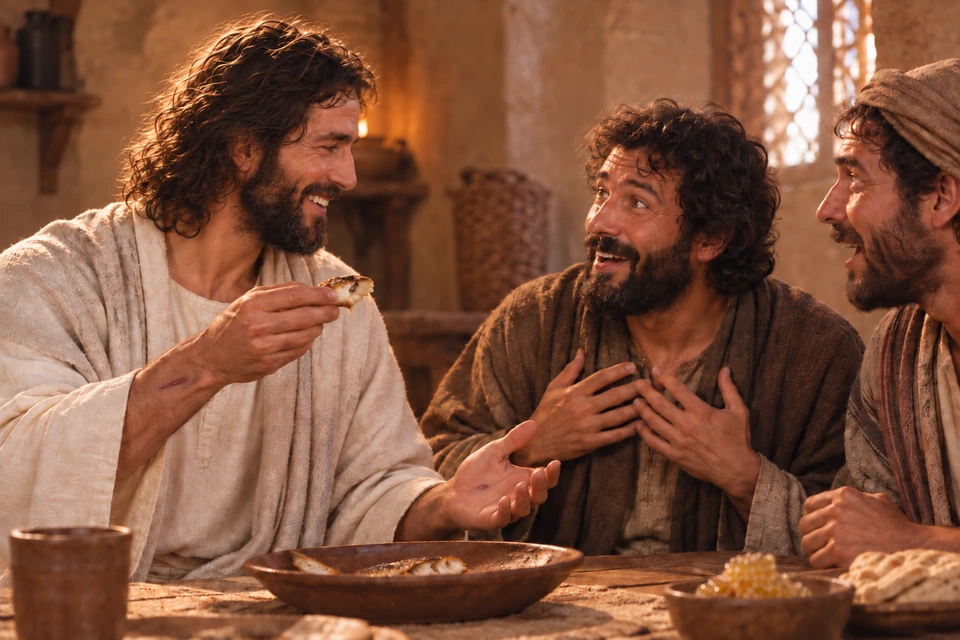
The risen Savior eats before His disciples. Continue with their witness of His bodily Resurrection.
Jacob’s son Enos carries his father’s teaching into a long prayer. Forgiveness changes the reach of his concern: he prays for his own people and then for the Lamanites. Follow that movement in Enos 1:1–18. The Lord’s assurance comes through faith in Christ, not through a claim that Enos has seen Him face to face.
Jarom describes prophets patiently persuading the people to look forward to the Messiah in Jarom 1:10–12. Omni, Amaron, Chemish, Abinadom, and Amaleki then preserve brief pieces of the record. Their entries remind us that preserving a record can be quiet work. At the close of Omni 1:25–26, Amaleki invites us to bring our whole souls to Christ. Even a short record can leave a generous invitation.
A prayer reaches beyond one person
Follow Enos from his desire for forgiveness to his concern for other people. This illustrated story offers a clear way to revisit the account with a child, a friend, or someone meeting the Book of Mormon for the first time.
Book of Mormon Stories · The Church of Jesus Christ of Latter-day Saints
Explore and study
Prayer grows beyond one person
Enos begins with the needs of his own soul. As he receives assurance, his concern widens to his people and then to the Lamanites. Follow that change in the direction of his prayers.
The first Mosiah leads a people out of the land of Nephi and meets the people of Zarahemla. Omni 1:12–19 describes the bringing together of communities whose histories and languages have diverged. His son Benjamin later gathers families to hear his farewell teaching. The Mosiah who succeeds Benjamin is Benjamin’s son, a second king with the same name; Mosiah 1:9–16 helps keep the generations clear.
Benjamin has worked alongside his people, and he asks them to see service to one another as service to God in Mosiah 2:10–19. His message then turns to Jesus Christ’s future mortal ministry, suffering, and Resurrection in Mosiah 3:5–11. The king’s teaching rests on the Savior’s redeeming work, not on his own position.
The gathered people plead for mercy and receive joy and peace through faith in Christ. Read Mosiah 4:1–4 together with Benjamin’s counsel to care for children and people in need in Mosiah 4:14–26. Their changed hearts take the form of a covenant in Mosiah 5:2–9. The name of Christ is to shape daily life after the gathering ends.
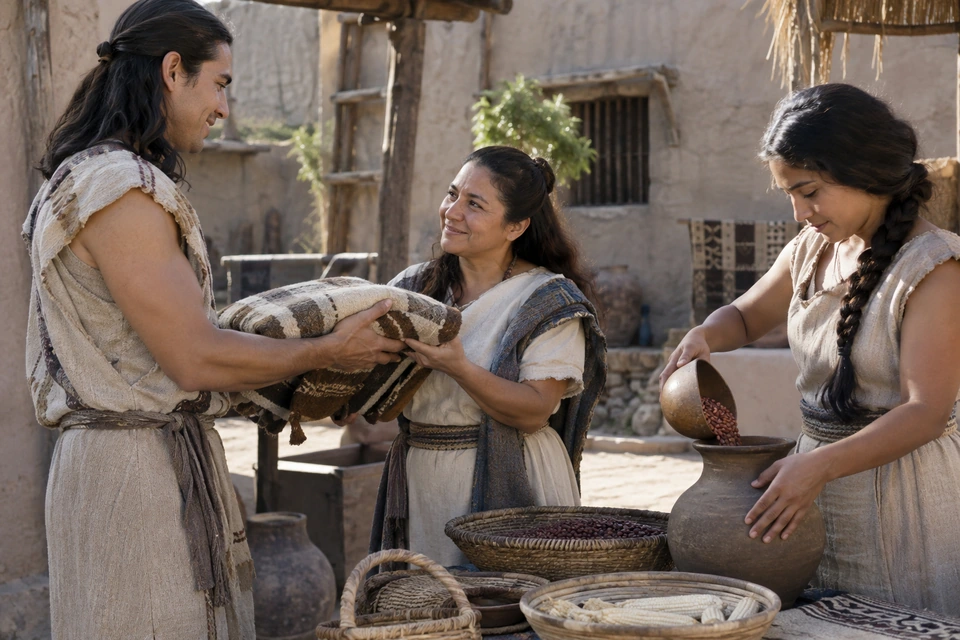
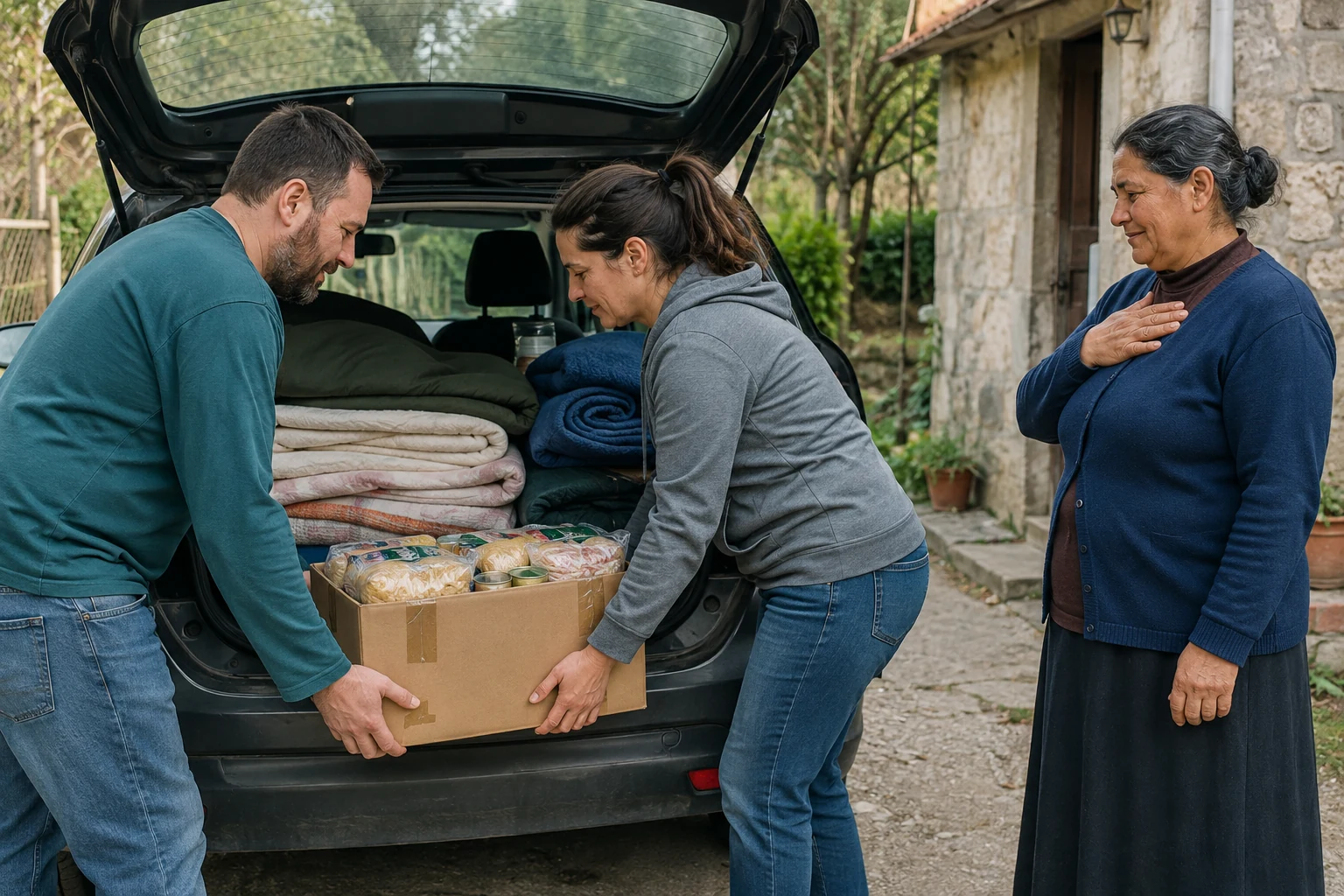
Give practical help
Practical help gives care a place in ordinary life. Continue with the invitation to serve a neighbor.
The illustrated story of King Benjamin brings the gathering and his teaching into focus. As you read or watch, notice how remembering God’s goodness leads the people toward faith in Christ, service, and a changed heart.
Book of Mormon Stories · The Church of Jesus Christ of Latter-day Saints
Explore and study
A king teaches the worth of service
Benjamin speaks as a king who has labored alongside his people. He connects ordinary service with devotion to God. Look for what his example asks of a parent, neighbor, leader, or friend.
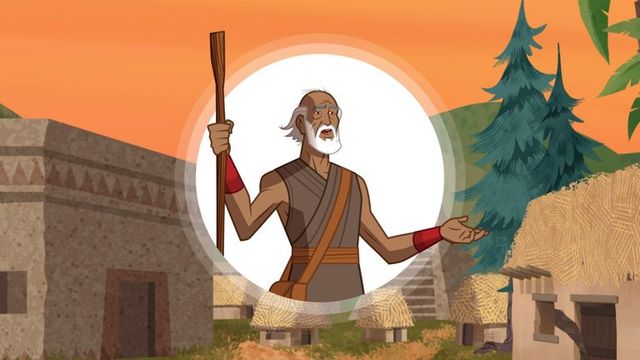
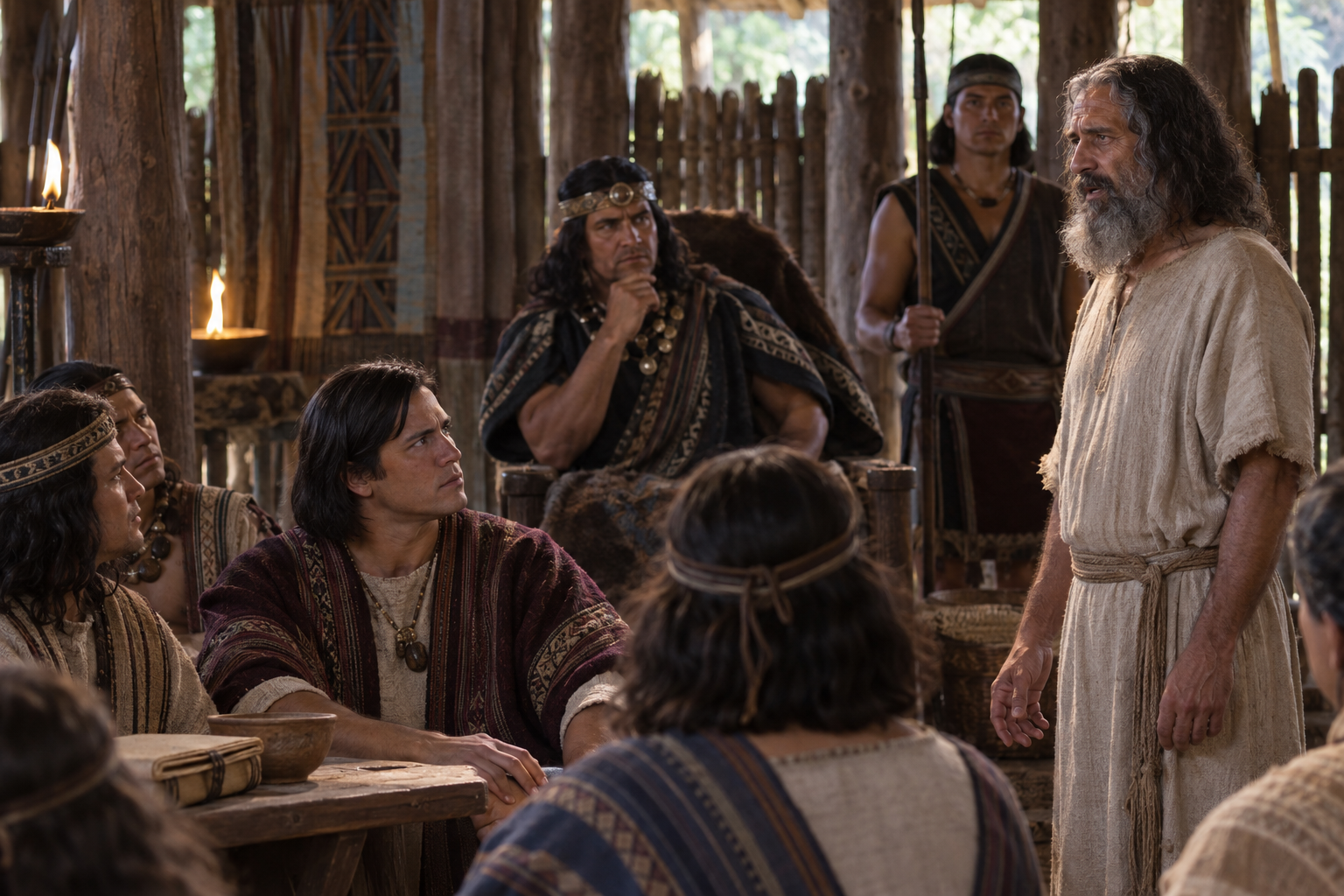
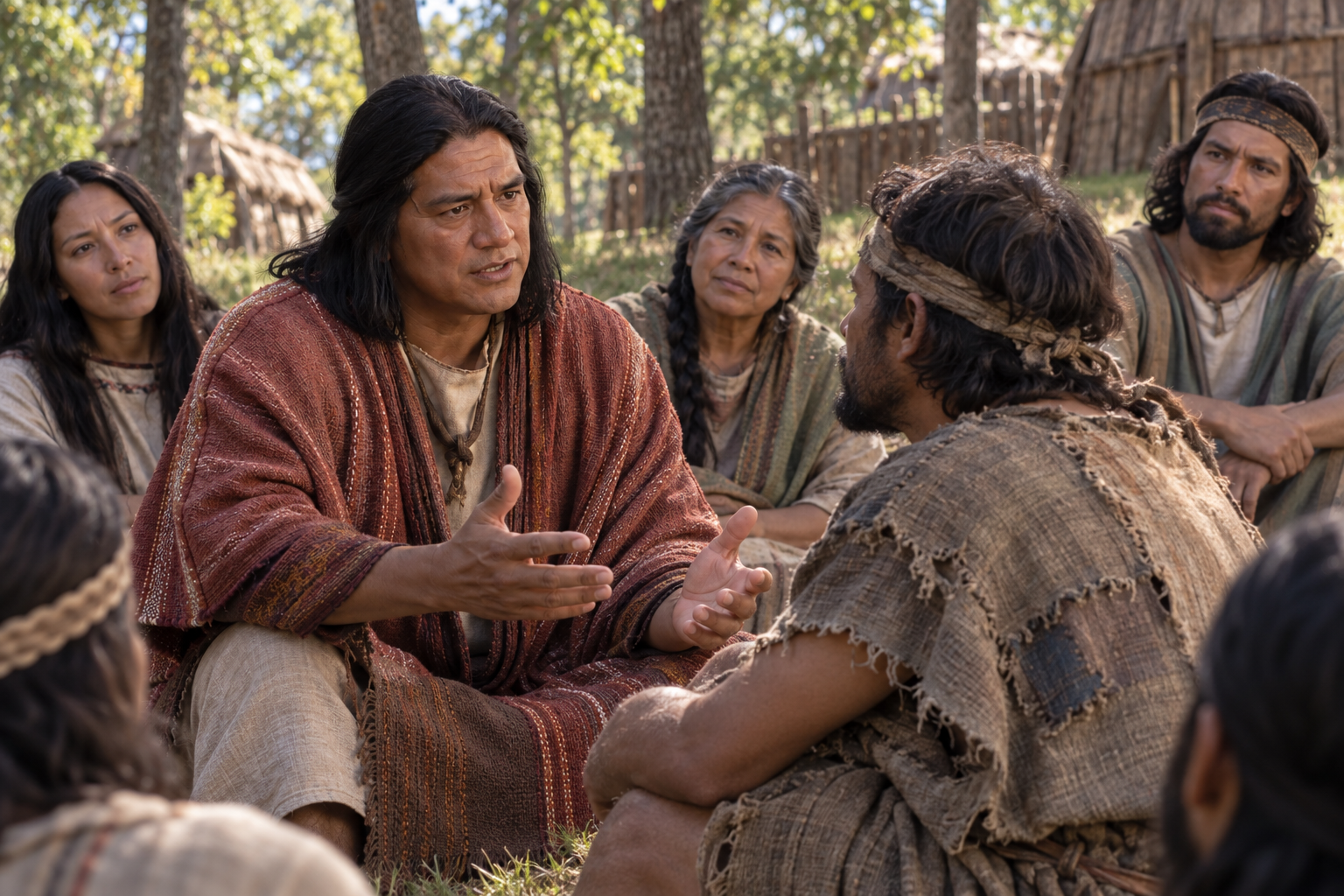
The record now follows another community, descended from people who returned to the land of Nephi. Before King Noah and his priests, Abinadi teaches that salvation comes through Christ. One priest, Alma, believes and speaks in Abinadi’s defense. Forced to flee, he writes the prophet’s words. Abinadi is killed for his witness in Mosiah 17:1–20. His death is terrible, but his testimony has not been silenced.
This Alma, often called Alma the Elder to distinguish him from his son, teaches at the Waters of Mormon. Mosiah 18:7–17 links baptism with bearing burdens, mourning with others, comforting those who need comfort, and standing as witnesses of God. The people also share their resources in Mosiah 18:21–29. Belonging meant caring for one another in daily life.
Two deliverance stories follow. Limhi, Noah’s son, leads a people whose escape involves a plan, watchfulness, and a journey to Zarahemla in Mosiah 22:1–14. Alma’s people receive strength to bear oppression before their eventual escape in Mosiah 24:8–22. Read the stories separately, then consider what each teaches about turning toward God amid burdens that are not lifted immediately.
Listening before offering help
A resident explains what would help while others listen. Let the person receiving care help shape the response.
Return to Abinadi’s witness through the Church’s illustrated account. Notice the contrast between King Noah’s response and Alma’s willingness to believe, then return to the scripture to follow how that testimony reaches the people at the Waters of Mormon.
Book of Mormon Stories · The Church of Jesus Christ of Latter-day Saints
Explore and study
One listener chooses to believe
Abinadi’s testimony reaches Alma even when the court rejects it. Alma speaks in his defense, then preserves his words after fleeing. This is Alma the Elder, whose son will later recount a different conversion.
Alma the Younger and Mosiah’s sons choose to repair
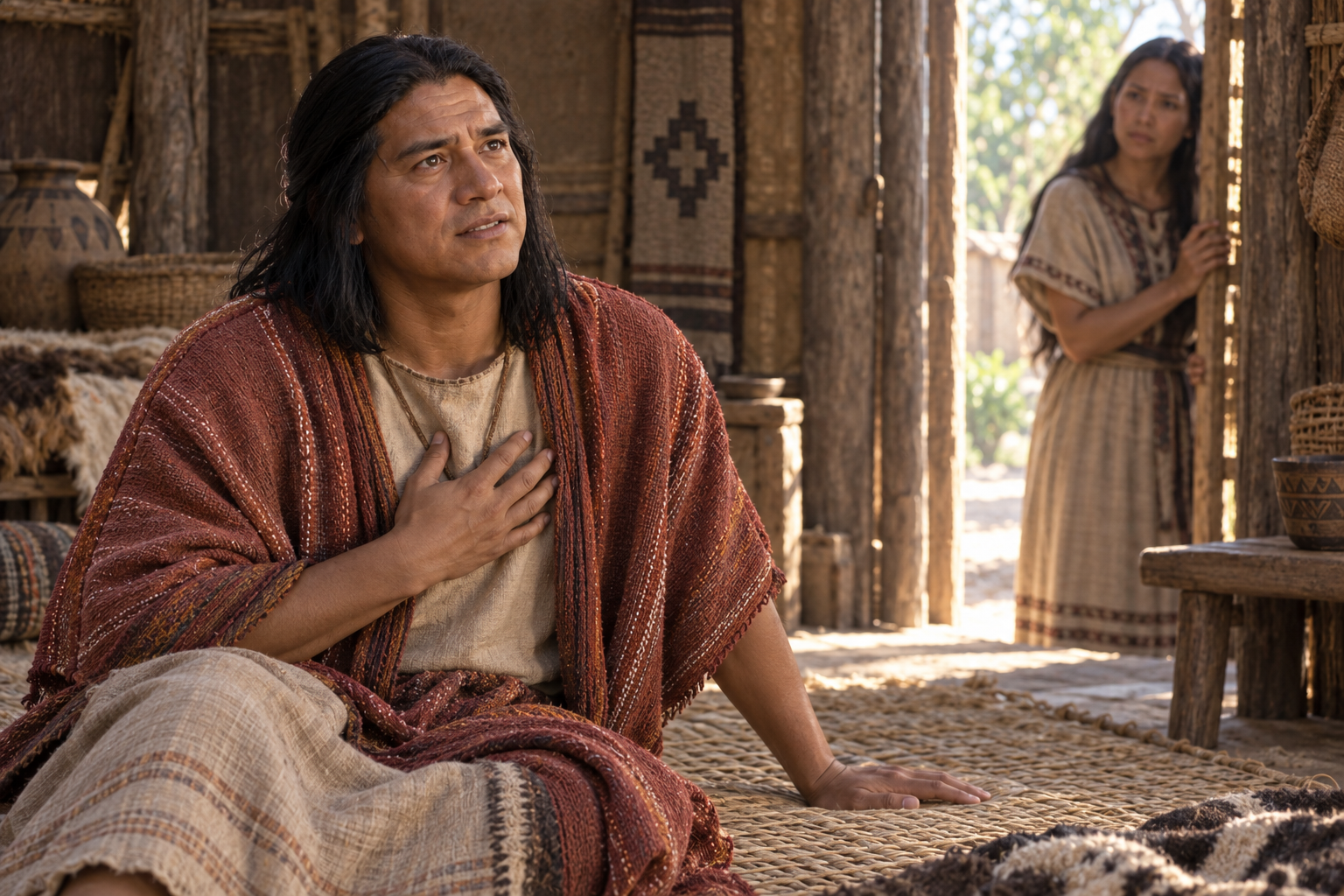
Alma the Younger and the sons of Mosiah begin by trying to destroy the Church. An angel confronts them in Mosiah 27:8–17. The messenger is an angel; this is not a bodily appearance of Jesus. Alma’s father and the priests fast and pray while the younger Alma lies unable to speak. When he rises, his testimony is of being redeemed and changed through God in Mosiah 27:18–29.
Years later, Alma tells his son Helaman what happened within him. Remembering his father’s teaching about Jesus Christ, he cries inwardly for mercy. The anguish of remembering sin gives way to joy in Alma 36:12–21. This deeply personal account does not make another person’s recovery follow the same timetable. It does show that past wrongdoing need not be the final word about a soul.
Alma remembers that his strength returned and he stood again. He then told the people what he had experienced in Alma 36:17–23. The account gives us a prayer that could not yet be spoken aloud: a plea made in the heart, heard by the Savior whose mercy Alma needed.
Explore and study
The memory that opened a way to joy
Alma remembers his father’s teaching about Jesus Christ and cries inwardly for mercy. In his later account to Helaman, anguish gives way to joy and renewed strength.
Repentance becomes visible in their actions. Alma and his companions work to repair the harm they have done in Mosiah 27:32–37. Ammon, Aaron, Omner, and Himni later ask to preach among the Lamanites in Mosiah 28:1–9. Their desire for others to receive mercy grows out of mercy they have needed themselves.
Let repentance include repair
Consider one relationship or responsibility where a change of heart could become a change of action. A sincere apology, a returned possession, or a promise kept may be a beginning. Keep the other person’s needs and freedom in view.
08 · Witnesses in a royal household
Ammon, Aaron, Lamoni’s queen, and Abish
Ammon enters King Lamoni’s service and earns an opportunity to teach. He begins with questions and explains God’s purposes, the Creation, the Fall, and the coming of Christ in Alma 18:24–39. Lamoni’s plea for mercy follows. When the queen seeks Ammon’s help, he recognizes her faith in Alma 19:8–13. She is an active participant in the story, trusting a promise before she sees its fulfillment.
A world filled with life
Ammon teaches Lamoni about the Creation. Explore the scriptural witness of Jesus Christ as Creator.
Abish has believed for years because of a vision associated with her father. Seeing what has happened in the household, she gathers people so they too may believe. The gathering becomes confused and contentious; Abish weeps, then takes the queen by the hand. Alma 19:16–30 gives us a woman whose faithful action includes both disappointment and persistence. The queen rises and praises Jesus.
Meanwhile, Aaron and his companions endure imprisonment before being freed. Later Aaron teaches Lamoni’s father, who asks what he must do to be born of God. In Alma 22:1–18, the king moves from offering his kingdom to being willing to relinquish his sins. The two royal households have distinct stories, but both bring us to the same searching question: what are we willing to give up to know God?
Notice the woman who acts
This illustrated account helps you follow Abish’s part in the events surrounding Lamoni’s household. Watch for what she believes, what she does when the gathering becomes troubled, and how she helps the queen rise.
While Mosiah’s sons teach among the Lamanites, Alma’s ministry follows another path. Amulek welcomes him into his home in Alma 8:19–27. Their witness brings painful opposition, and their story does not reduce discipleship to an easy life. Later, Alma takes Amulek into his own home and cares for him in Alma 15:16–18. The man who first offered shelter now receives it.
Among the Zoramites, people excluded from worship because of their poverty ask Alma where they can turn. Alma 32:1–16 begins with that exclusion. His teaching about faith answers real people who have been told they do not belong. They can desire to believe, give the word a place in their hearts, and nourish what begins to grow in Alma 32:27–43.
Explore and study
Room for those who were turned away
People excluded from worship come to Alma with a painful question. He turns toward them and teaches that their circumstances need not shut them out from God. His later comparison of the word to a seed begins with room to desire and experiment.
Alma then centers their belief on the Son of God in Alma 33:19–23. Amulek teaches Christ’s infinite Atonement and invites prayer in fields, homes, and private places. His invitation immediately includes care for people who are hungry, sick, or without clothing in Alma 34:17–29. Worship cannot be separated from how we treat the person beside us.
10 · Remember what is worth protecting
Captain Moroni raises the title of liberty
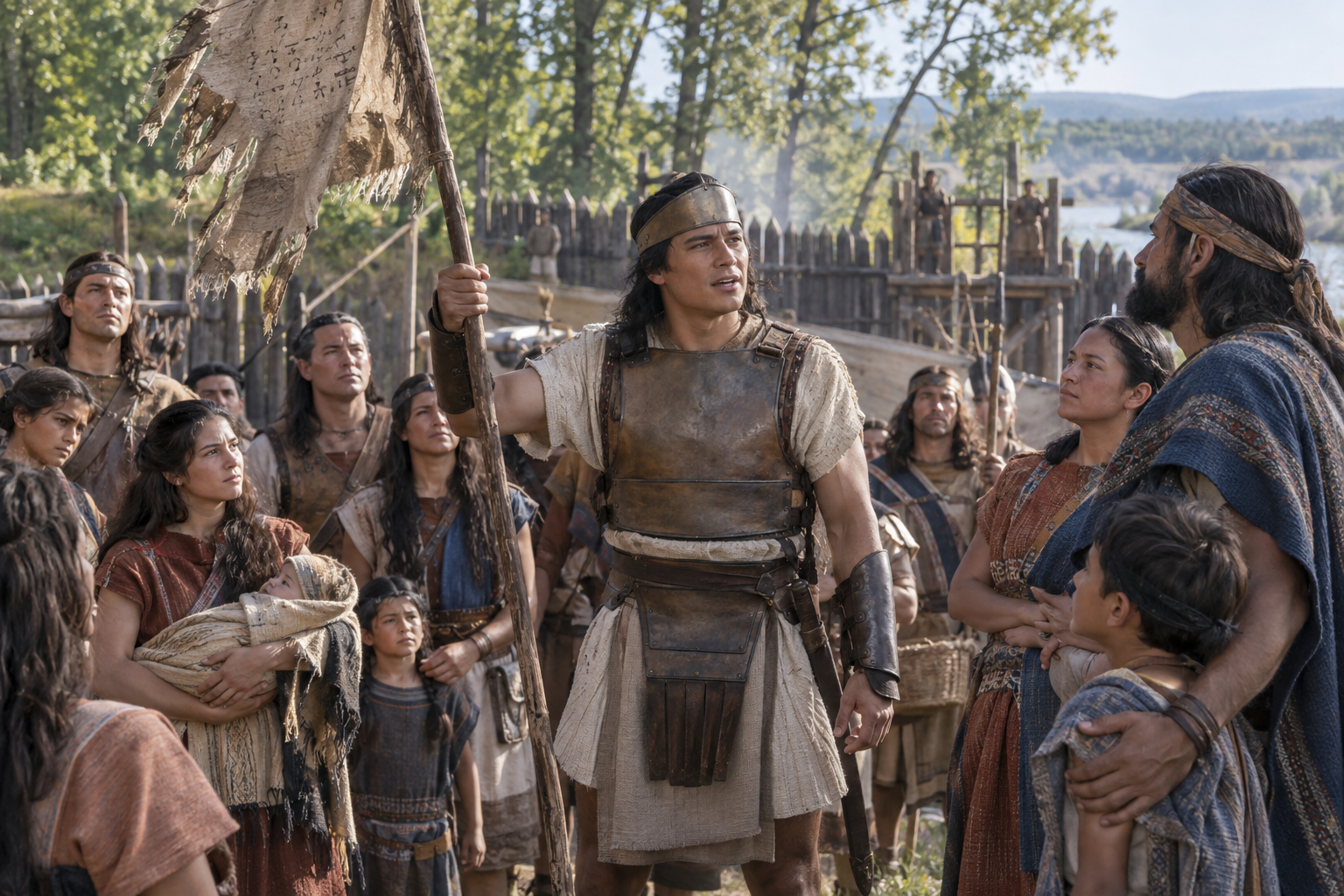
Amalickiah’s pursuit of power threatens the people’s freedom in Alma 46:1–10. Moroni responds with a torn piece of his coat, writing a reminder of their God, their religion, their freedom, their peace, and their families. In Alma 46:12–21, he fastens it to a pole, puts on his armor, and bows in prayer before going among the people. The title of liberty begins with remembered commitments and a plea for God’s help.
Explore and study
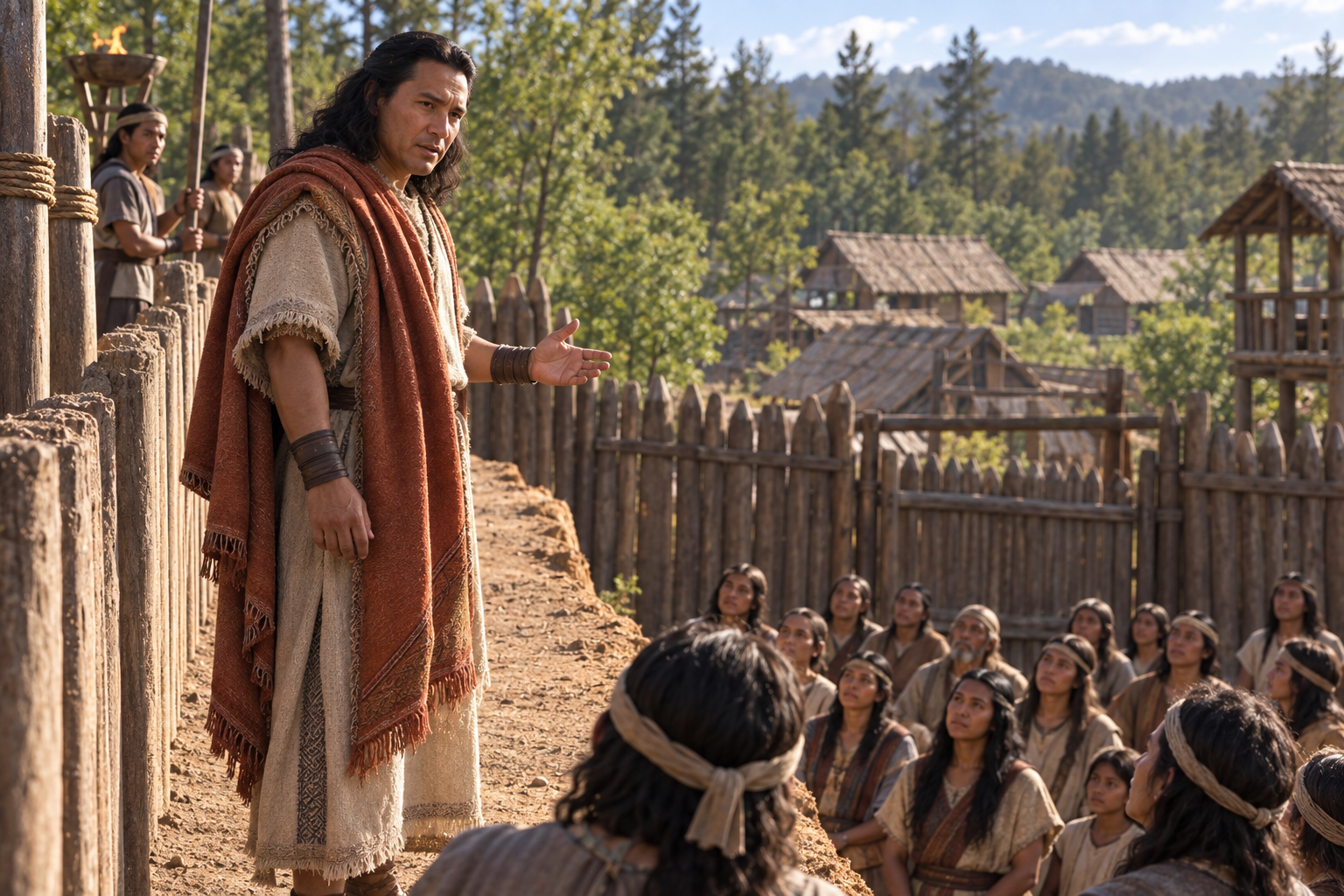
Remember what you are defending
Moroni carries the title of liberty among the people after pouring out his soul in prayer. Its words call them to remember God, their faith, freedom, peace, and families. Read what he asks them to preserve, and how they answer.
When Moroni calls the people to gather, he asks them to enter a covenant to maintain their rights and their religion. They come forward ready to stand together. Read the passage with the homes and ordinary lives behind those words in mind: the peace to worship, to raise children, and to care for one another. Moroni wants the people to remember what their strength is meant to protect.
Mormon’s portrait of him in Alma 48:11–13 is essential to understanding the banner. Moroni is strong and courageous, but he does not delight in bloodshed. His heart is grateful to God, and he labors for the welfare and safety of his people. The account joins courage to gratitude and responsibility. It invites us to consider whether the way we use our own influence serves the people entrusted to our care.
Let conviction lead to care
Which commitments guide the way you use your time, influence, and strength? Name someone whose peace or well-being you can help protect through a truthful word, a promise kept, or patient service.
Make a place at the table
A place at the table offers a moment of welcome. Explore belonging through ordinary acts of care.
A buried weapon, a mother’s teaching, a young person’s choice
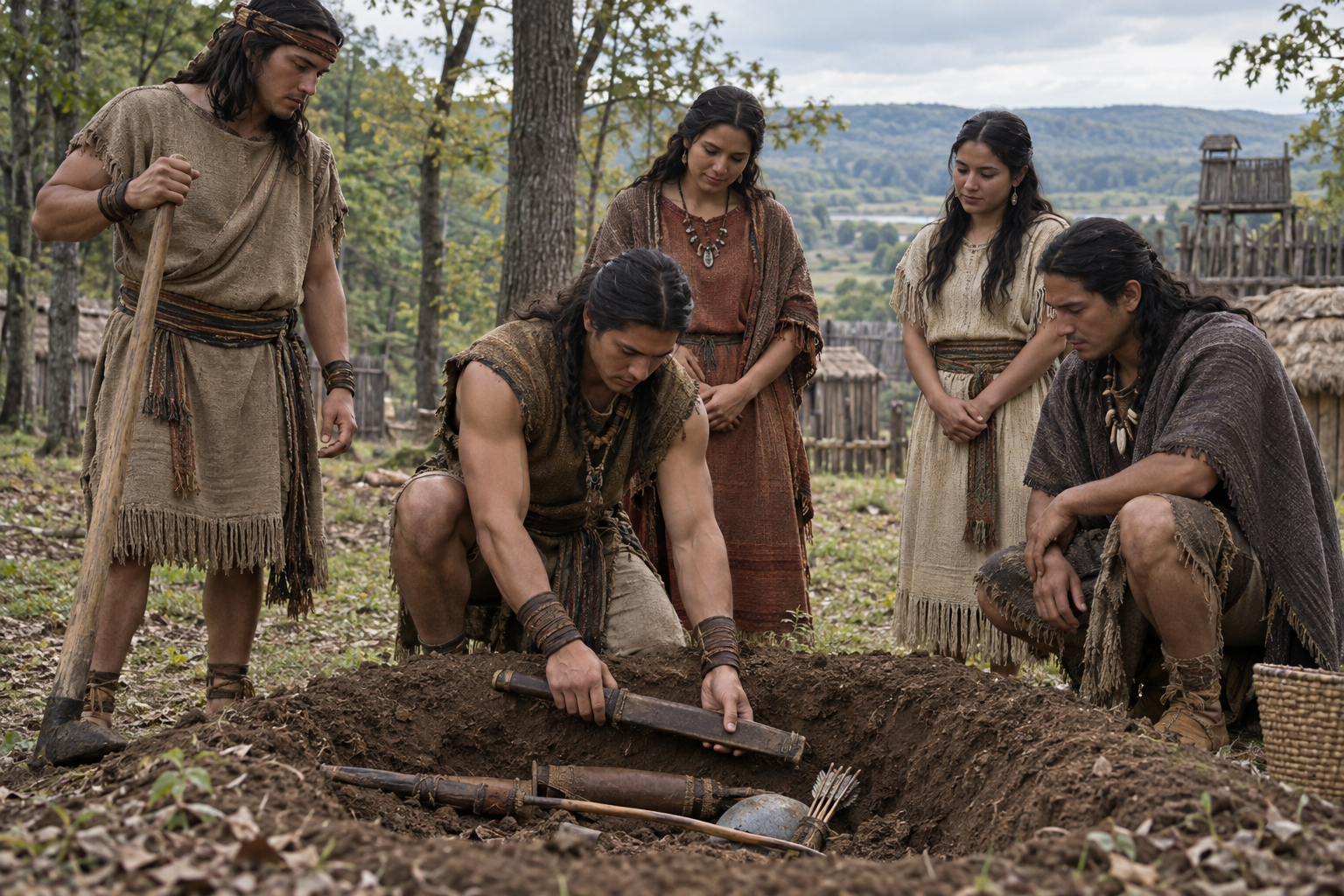
The converted people called Anti-Nephi-Lehies bury their weapons as a witness of their covenant. Alma 24:7–19 places that act within gratitude for forgiveness and a determination not to return to bloodshed. When attacked, they keep their promise at devastating cost. Read Alma 24:20–27 with reverence for those lives.
Explore and study
Laying the weapons down
The Anti-Nephi-Lehies give visible form to a covenant they intend to keep. Their choice grows from gratitude for forgiveness and a determination to turn away from their former violence. Read their own explanation before considering what repentance asks of you.
Later, when war threatens, their sons choose to defend their families. These young men have not made their parents’ covenant, and Helaman, the son of Alma the Younger, becomes their leader in Alma 53:10–22. In Alma 56:43–48, they remember what their mothers taught them about trusting God. Their mothers’ faith matters, and so do the sons’ own choices to act with courage.
Explore and study
What their mothers had taught them
A mother and son turn toward one another in quiet conversation. Read how the young warriors remember their mothers’ teaching, and consider how faith grows through ordinary conversations at home.
These young men volunteer and ask Helaman to lead them. Alma 53:16–22 describes their courage, strength, and faithfulness, along with something less spectacular but just as important: they are true to the responsibilities entrusted to them. Their parents’ covenant remains honored while the sons accept a responsibility of their own.
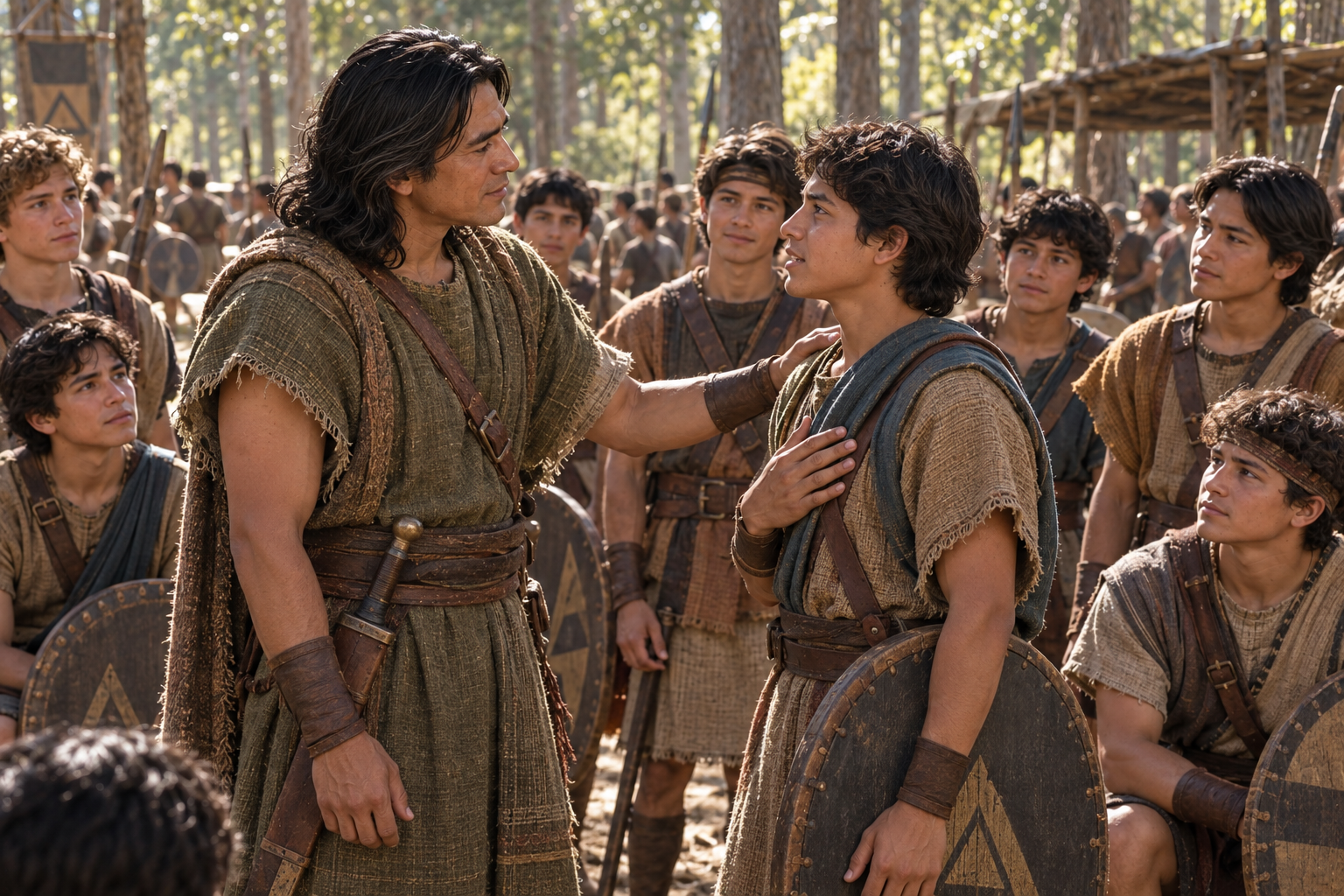
Before a dangerous return to battle, Helaman asks whether they will go with him. In Alma 56:44–48, they answer with trust in God and remember their mothers’ teaching. They call Helaman their father, a tender expression within the relationship between these young soldiers and their chosen leader. He is moved by their courage. Follow their words as young people making a solemn choice, then remember that Helaman must lead and care for the people who have placed that trust in him.
Explore and study
We do not doubt our mothers knew it
The young men answer Helaman with the faith their mothers have taught them. He calls them his sons, and they speak to him as a father. Their courage grows alongside a desire to protect their families and help others in danger.
The account honors their preservation without hiding their suffering: none are killed in the battle described in Alma 57:21–27, but all receive wounds and many faint from loss of blood. Their story invites gratitude and steadfastness. It should never become a promise that faithful families will be spared every wound or loss.
Remember a faithful voice
Who taught you to turn toward God? It may have been a parent, friend, teacher, or someone whose quiet example endured. Write down one teaching worth carrying forward, then choose how you will make it your own.
12 · Leadership under pressure
Captain Moroni defends; Pahoran answers with patience
Moroni’s commitment to his people is tested by more than an opposing army. Exhaustion, shortages, and uncertain news strain the relationship between the commander in the field and Pahoran, the chief judge. Their correspondence lets us see what happens when people working toward the same purpose understand a crisis differently.
Listening with patience
One person listens while another shares a concern. Explore persuasion, gentleness and respect for another person’s agency.
Pressure does not make Moroni’s judgments infallible. When supplies and support fail to arrive, he sends Pahoran a forceful accusation. Pahoran’s reply reveals circumstances Moroni did not know: rebellion has driven him from the judgment seat. In Alma 61:2–9, he explains the crisis and chooses not to take offense at Moroni’s anger.
Pahoran does not pretend there is no problem. He invites Moroni’s help and directs their effort toward deliverance in Alma 61:14–21. Their exchange gives us a useful moment to pause: conviction can be strong while information is incomplete. A patient, truthful answer can turn a strained relationship back toward shared service.
13 · Remember the foundation
Nephi, Lehi, and Samuel call the people to Christ
In a later generation, Helaman, the son of the Helaman who led the young soldiers, teaches his sons Nephi and Lehi to build their lives on Jesus Christ. These are later prophets, not Nephi and Lehi from the opening books. Their father’s counsel in Helaman 5:5–12 becomes the center of their ministry. The Savior is the foundation that can hold when destructive winds come.
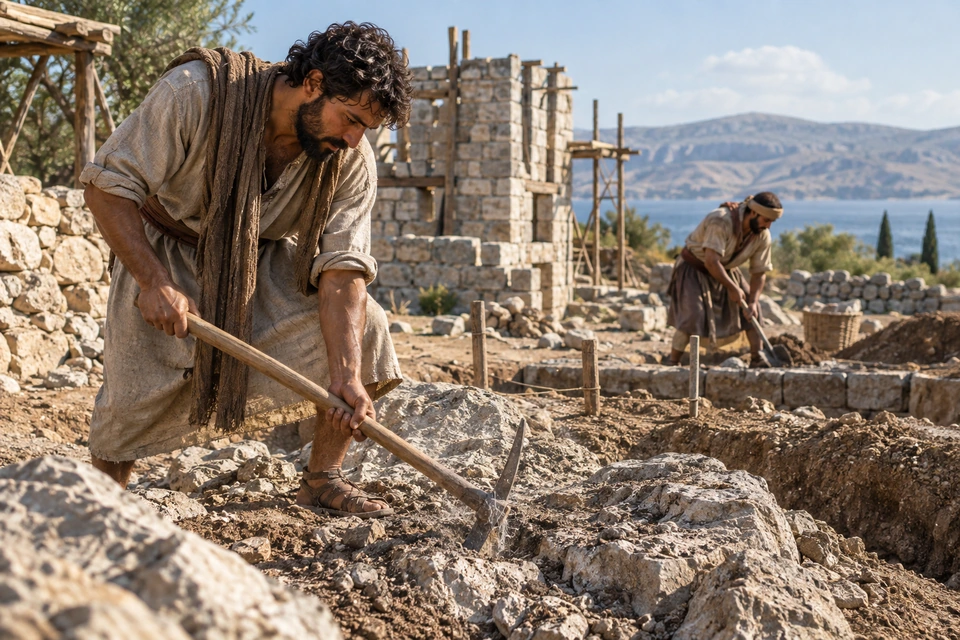
Digging toward a firm foundation
Jesus teaches about building on a firm foundation. Compare His parable with Helaman’s counsel to build upon Christ.
Imprisoned among the Lamanites, the brothers are encircled by fire without being burned. Darkness covers the other people present. Aminadab, who once belonged to the Church, tells them to repent and cry to God. Follow the darkness giving way to peace in Helaman 5:22–48. The account describes divine voices and ministering angels; it does not say that Jesus bodily stands in that prison.
Samuel, a Lamanite prophet, later returns to a city from which he has been driven. Refused entrance, he stands on its wall to speak the words the Lord has put into his heart in Helaman 13:2–5. He foretells the signs of Christ’s birth and death in Helaman 14:2–8 and Helaman 14:20–28. Some believe; others attack him. Helaman 16:1–8 asks us to notice a witness who comes from outside the community’s usual expectations. Will the people hear God’s word when they dislike the messenger?
Explore and study
Samuel will not abandon his message
After being cast out, Samuel returns to deliver the message placed in his heart. His courage serves a call to repentance.
At the beginning of the Savior’s mortal life, believers face a deadline: if Samuel’s promised sign does not appear, they will be killed. The Nephi who prays for them is the son of Nephi and grandson of Helaman, a later generation again. 3 Nephi 1:1–14 holds the threat and the prayer together. The Lord’s voice assures him that the sign will come and that He will be born into the world.
The night arrives without darkness, as Samuel promised. 3 Nephi 1:15–21 records the astonishment and the fulfillment. Yet the chapters that follow show how quickly people can forget what has moved them. A memorable experience still needs a continuing life of faith.
Years later, after the destruction at the time of Christ’s death, the Savior’s voice calls the survivors to turn toward Him. Read the invitation to a broken heart and a contrite spirit in 3 Nephi 9:13–22. Before we reach the personal ministry at Bountiful, the record has already let us hear His desire to receive, heal, and gather.
Words carried home
After teaching the people at Bountiful, Jesus invites them to ponder and pray at home. Continue into the visit that follows the days of destruction.
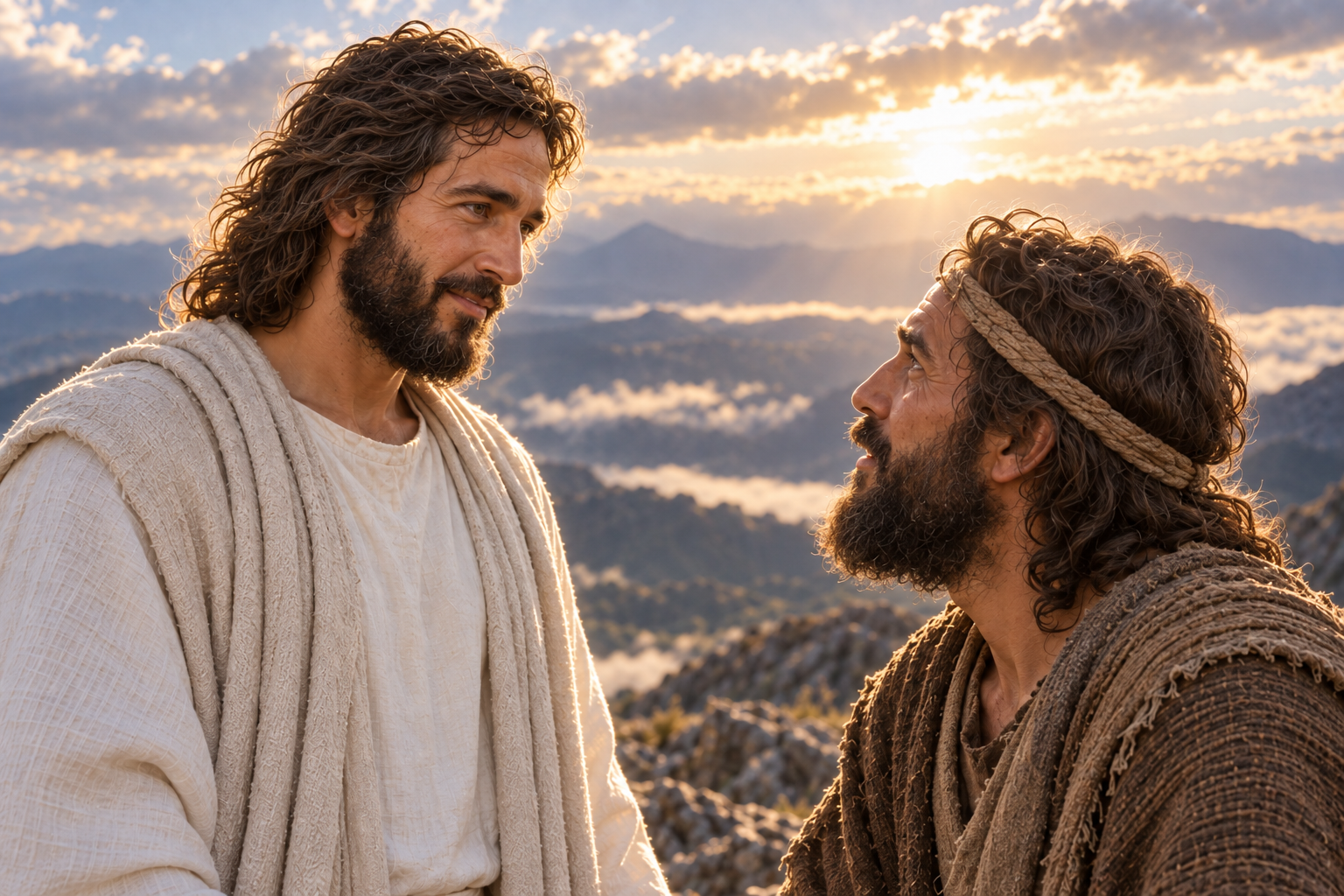
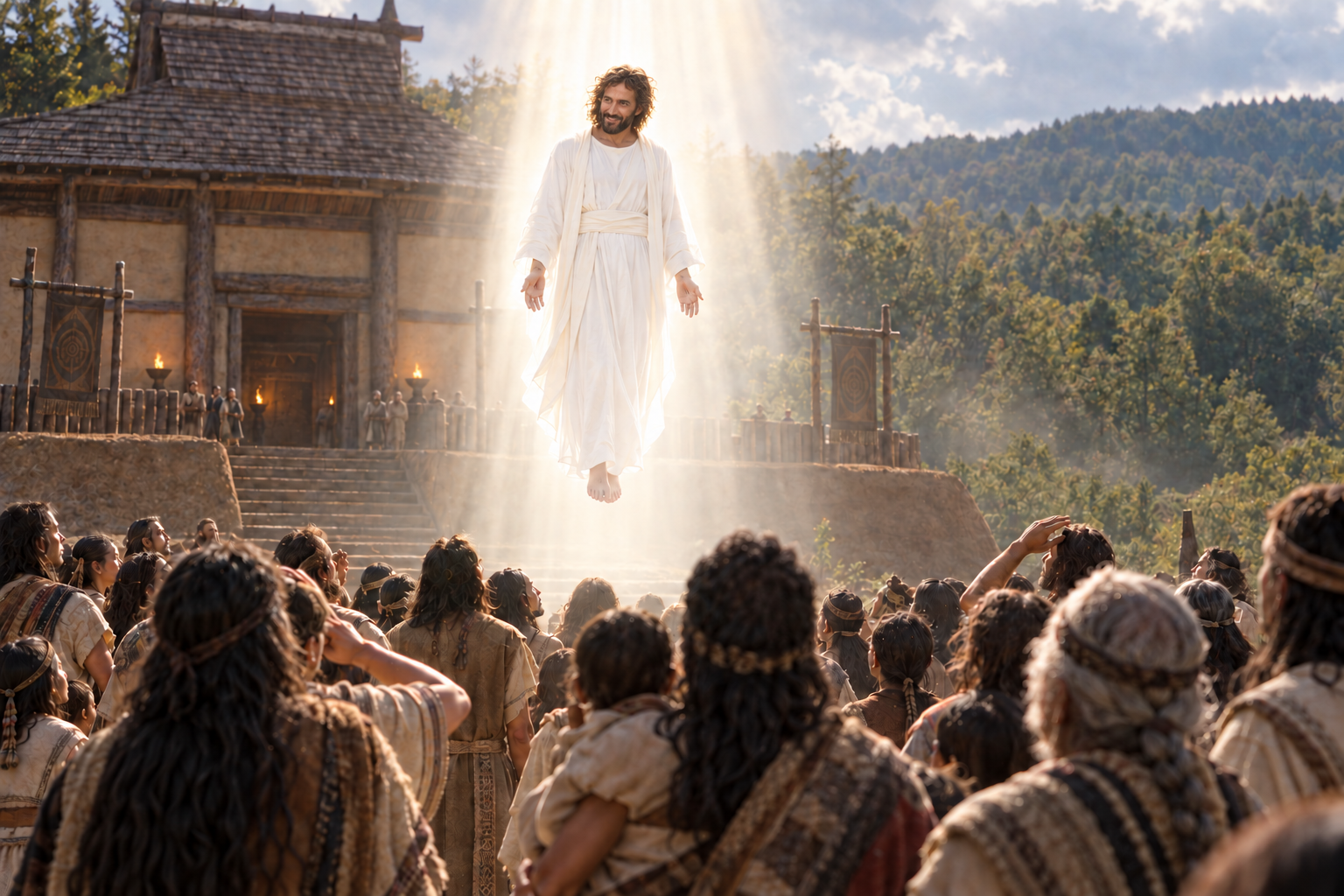
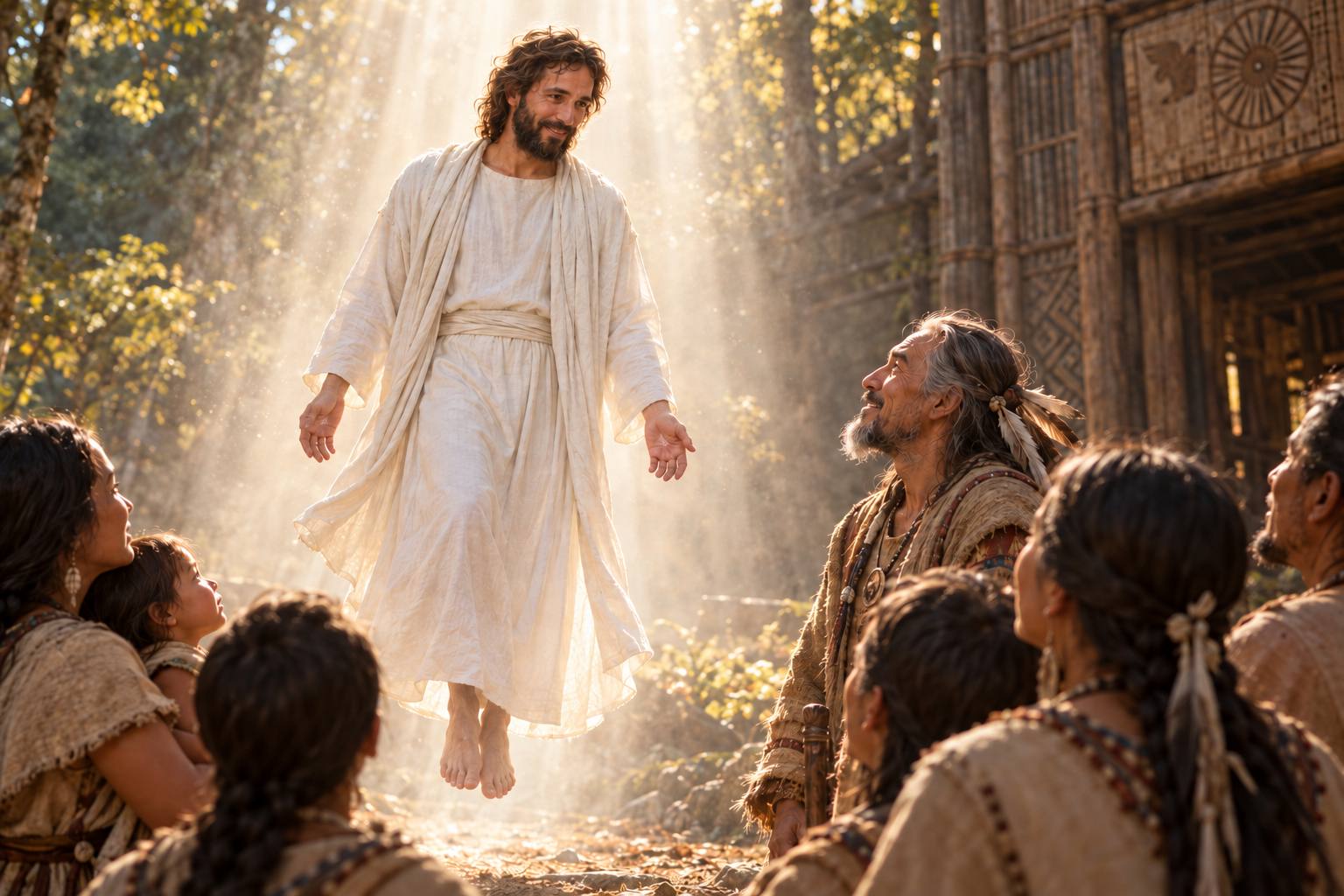
The people gathered at the temple in Bountiful hear a voice they do not understand at first. On the third hearing, they open their ears and understand the Father’s introduction of His Beloved Son. In 3 Nephi 11:1–8, they look toward heaven and see Jesus descending. He comes down and stands among them. The prophets’ promise has become a person before their eyes.
Explore and study
The promised Savior descends
The people turn toward heaven and see a Man descending in a white robe. The Father has invited them to hear His Beloved Son. Pause with the gathering at this moment of wonder, before the Savior speaks.
Stay with the descent for a moment. 3 Nephi 11:8 describes a Man in a white robe coming down to stand among the people. Their eyes turn toward Him, and they fall silent, not yet understanding whom they are seeing. The Savior comes within their reach. Soon they will hear His voice and receive His invitation personally.
Explore and study
Coming down to His people
The distant promise becomes a person before their eyes. Jesus comes down and stands among them. Stay with the quiet attention of this moment, and read the introduction that follows.
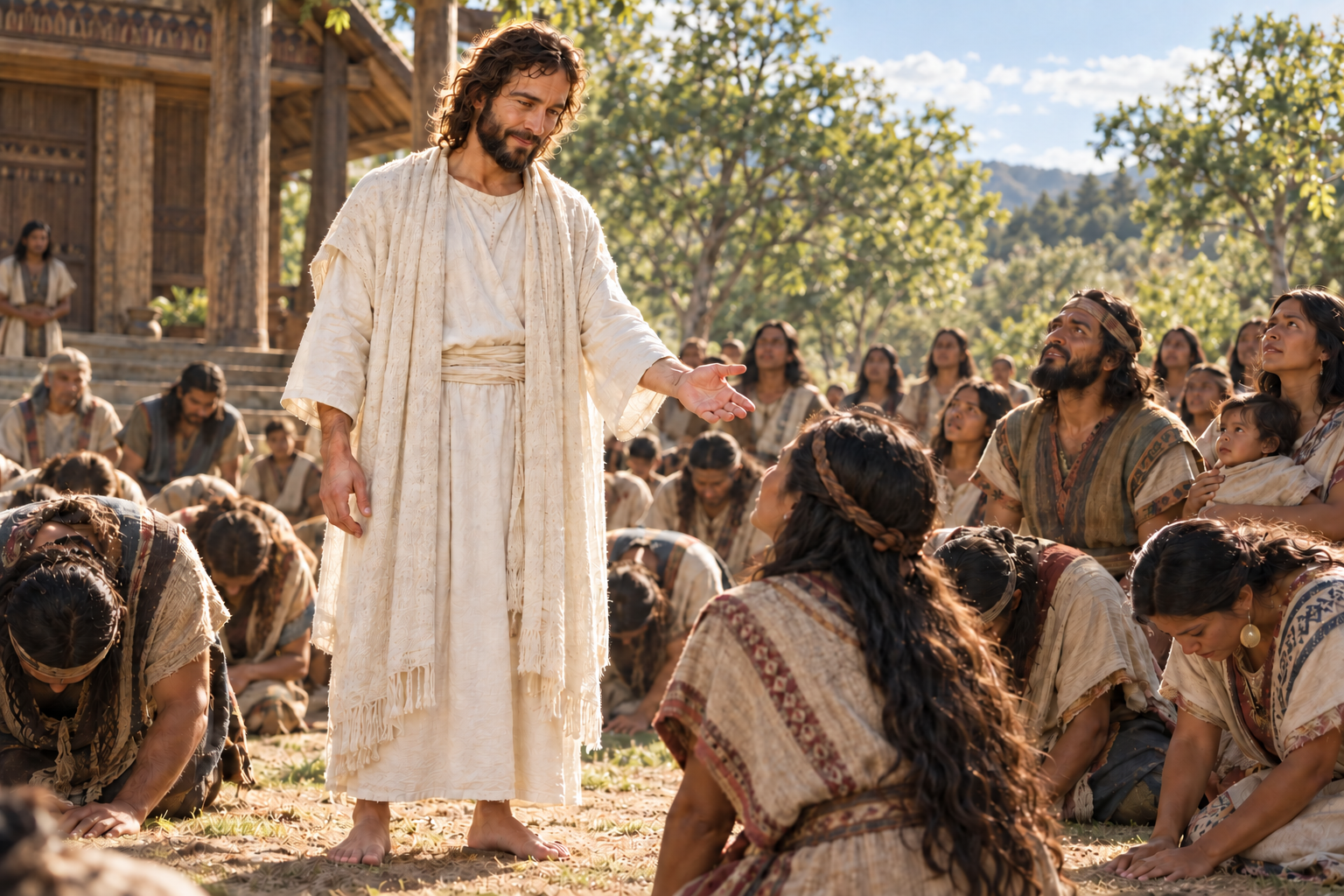
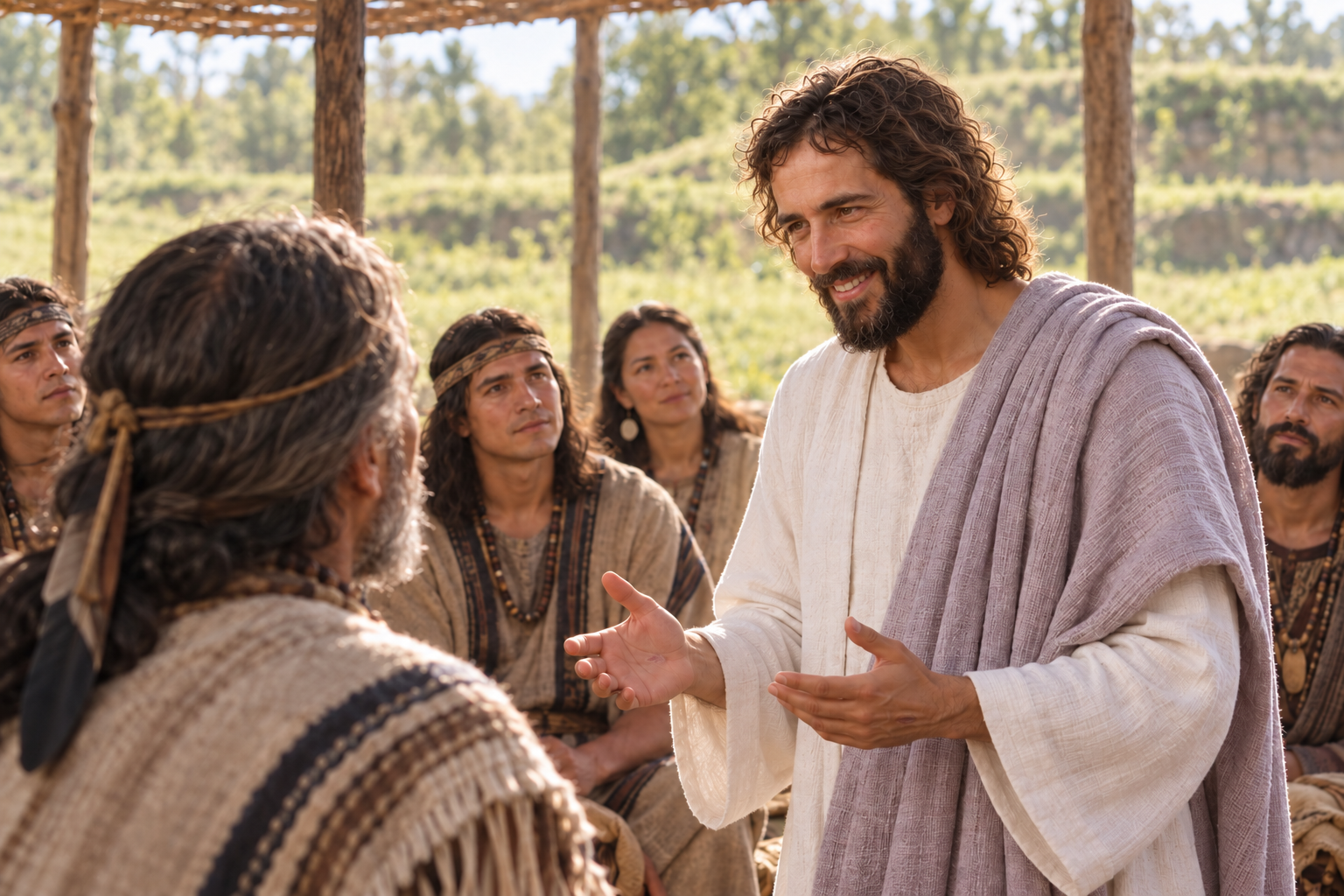
Jesus stretches out His hand and speaks. He identifies Himself as the Christ whom the prophets testified would come, then bears witness of His obedience to the Father and His suffering for the sins of the world. Read 3 Nephi 11:9–12 with His listeners in view. Remembering the prophecy that He would appear to them, the whole multitude falls to the earth. They are in the presence of the Redeemer they have been taught to await.
Explore and study
He stands among them
Jesus identifies Himself as the Christ whom the prophets promised. He speaks of His Atonement and His obedience to the Father. As the people remember the promises they have heard, they fall to the earth before Him.
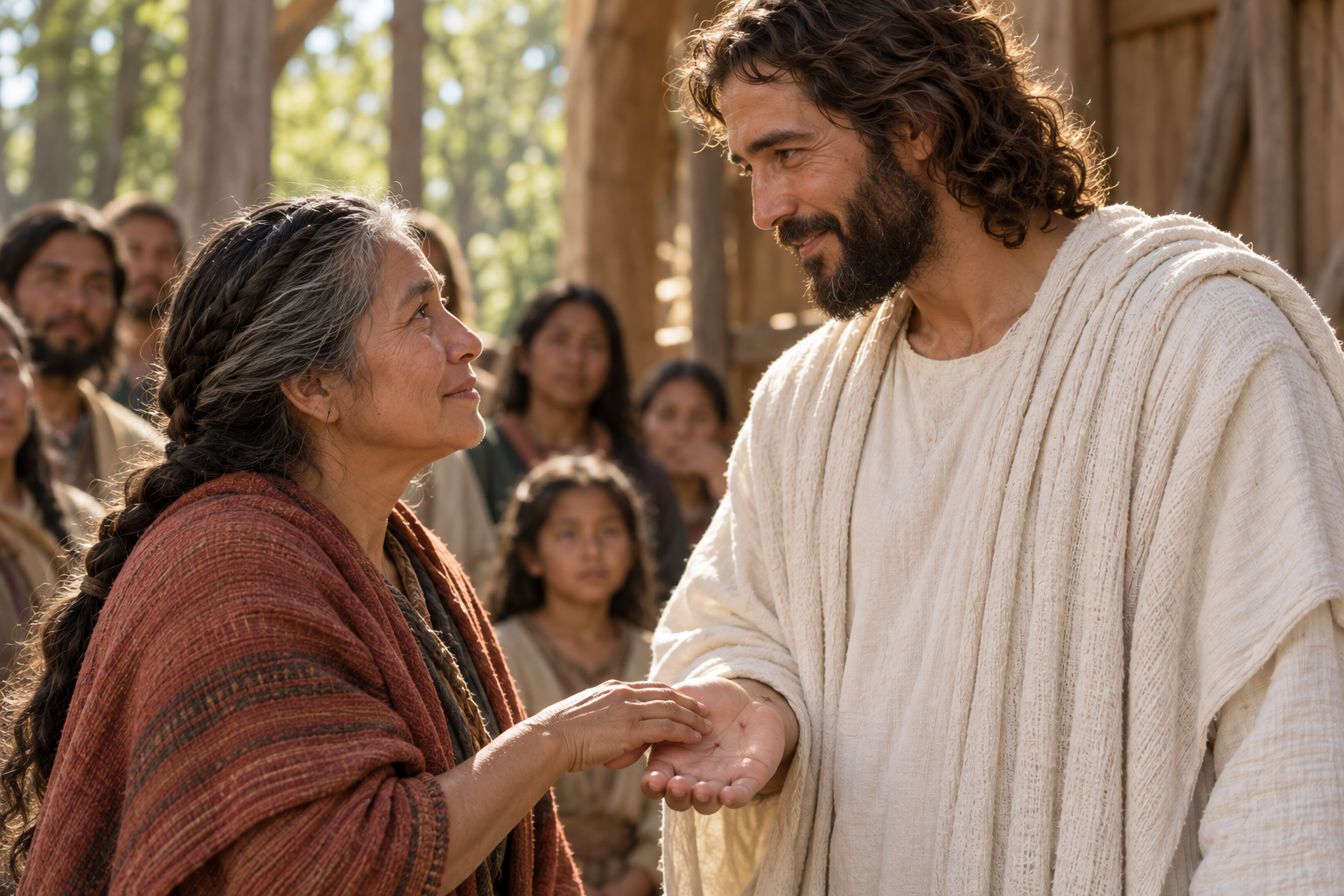
The Savior now asks them to rise and come forward. In 3 Nephi 11:13–17, they feel the wounds in His side, hands, and feet. They approach one by one until every person has witnessed for themselves. A great multitude is gathered, yet the encounter reaches each individual. The Savior gives them time to see and feel for themselves. Each person’s witness becomes part of the testimony this people will preserve.
Explore and study
A witness, one person at a time
The invitation reaches each person: arise and come forward. The multitude becomes a succession of individual witnesses who see and feel for themselves. Consider the patience and personal attention contained in the words one by one.
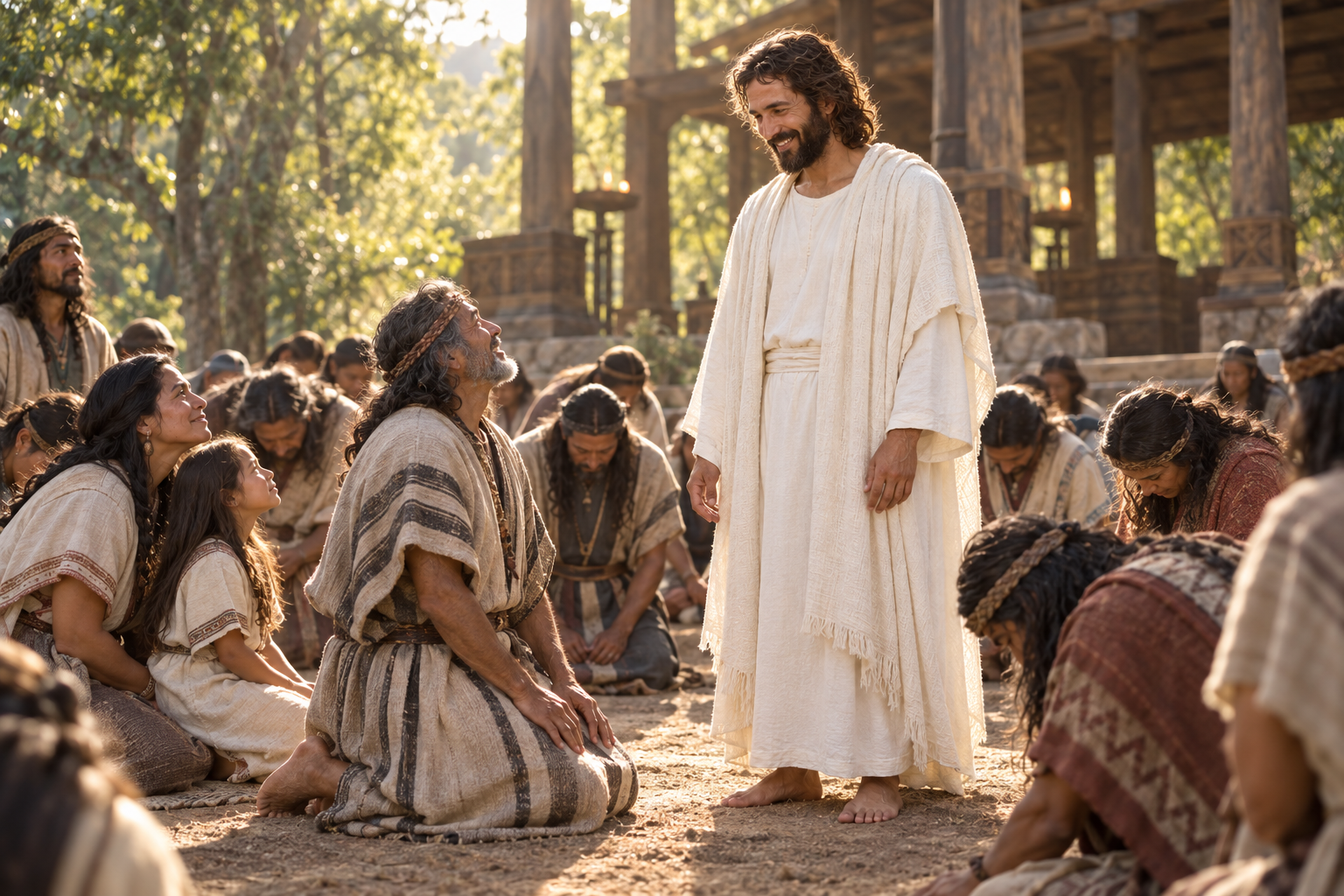
When everyone has come forward, their individual witnesses become a shared cry of praise. In 3 Nephi 11:15–17, they bless the name of the Most High God and fall at Jesus’s feet in worship. Read the movement of the account: first the invitation, then each person’s encounter, and then the multitude’s united response. The living Christ stands at the center of them all.
Explore and study
The multitude answers with worship
After each person has seen and felt for themselves, the people unite in praise and worship. Their common testimony has grown through individual encounters. Notice how the account holds personal knowledge and shared belonging together.
Jesus calls Nephi forward. The prophet bows before Him, and the Savior gives him authority to baptize in 3 Nephi 11:18–22. This Nephi belongs to the generation living at the time of Christ’s visit; he is not the son of Lehi who began the record. The same gospel that has been taught and anticipated across the generations is now being taught by the risen Lord Himself.
Explore and study
Christ calls Nephi forward
After Nephi bows before Him, the Savior asks him to arise and grants authority to baptize. The encounter leads from worship into a specific responsibility to serve. This is the Nephi of Third Nephi.
The Savior teaches how baptism is to be performed in 3 Nephi 11:23–28. His directions are plain, and His warning against contention follows immediately. In 3 Nephi 11:29–40, He teaches faith, repentance, baptism, and the Holy Ghost. The authority and the ordinance serve His invitation to become as a little child and come to Him.
Explore and study
One baptism and an end to contention
The Savior teaches His disciples how to baptize and then speaks directly against contention. Read both parts together: shared ordinances and the spirit in which people treat one another belong to His instruction.
Return to the people coming forward one by one. What do you notice about the Savior’s willingness to be known? Record a question or a hope you would bring to Him, and let it become part of your prayer.
16 · A gospel to live together
Mercy, prayer, and trust in the Father
Blessed are the merciful and the peacemakers
Jesus begins His sermon with blessings for people who turn toward Him: the poor in spirit, those who mourn, the meek, and those who hunger for righteousness. Read 3 Nephi 12:1–12 slowly. The merciful, the pure in heart, and the peacemakers belong in His kingdom. These are qualities a disciple can practice in ordinary conversations long after the multitude has dispersed.
Explore and study
Blessed are the merciful
The Savior speaks of mercy, meekness, peacemaking, and hearts that hunger for righteousness. These blessings invite a way of living with other people. Choose one invitation to carry into an ordinary conversation today.
His teaching reaches beyond those who are easy to love. 3 Nephi 12:43–48 asks His followers to love their enemies and pray for those who misuse them. Begin with one real relationship rather than an imagined perfect response. What would truthfulness, restraint, and a sincere desire for another person’s good look like there?
Speak to a Father who knows your need
In 3 Nephi 13:5–13, Jesus teaches prayer free from performance and empty repetition. He gives words of reverence, dependence, forgiveness, and deliverance. The Father already knows what His children need; prayer brings that need into a trusting relationship. You can pause with one line, speak honestly, and listen instead of trying to make your words impressive.
Explore and study
The Father hears the quiet prayer
Jesus teaches people to pray to their Father without turning prayer into a performance. Read His words slowly and notice the trust, forgiveness, and daily dependence they express.
Jesus then turns specifically to the twelve He has chosen. He tells them not to let anxiety over food and clothing govern their service. In 3 Nephi 13:25–34, birds and lilies become invitations to trust the Father’s care and seek His kingdom. Keep the original listeners in view as you reflect on the teaching. It can deepen trust while you continue the daily responsibilities of caring for yourself and others.
Explore and study
Trust beyond tomorrow
Here the Savior turns specifically to the twelve He has chosen. He teaches them to seek the kingdom of God and trust the Father who knows their needs.
Jesus explains that these people are the other sheep of whom He spoke to His disciples at Jerusalem. 3 Nephi 15:21–24 connects His ministry here with His teaching in the Bible. Their place in His care was real even when another community did not understand it. His voice gathers people across the distances that separate them.
Explore and study
Other sheep hear His voice
The people before Jesus learn that He had spoken of them as His other sheep. They belong to the same Shepherd. Consider what His knowledge of distant people reveals about His care.
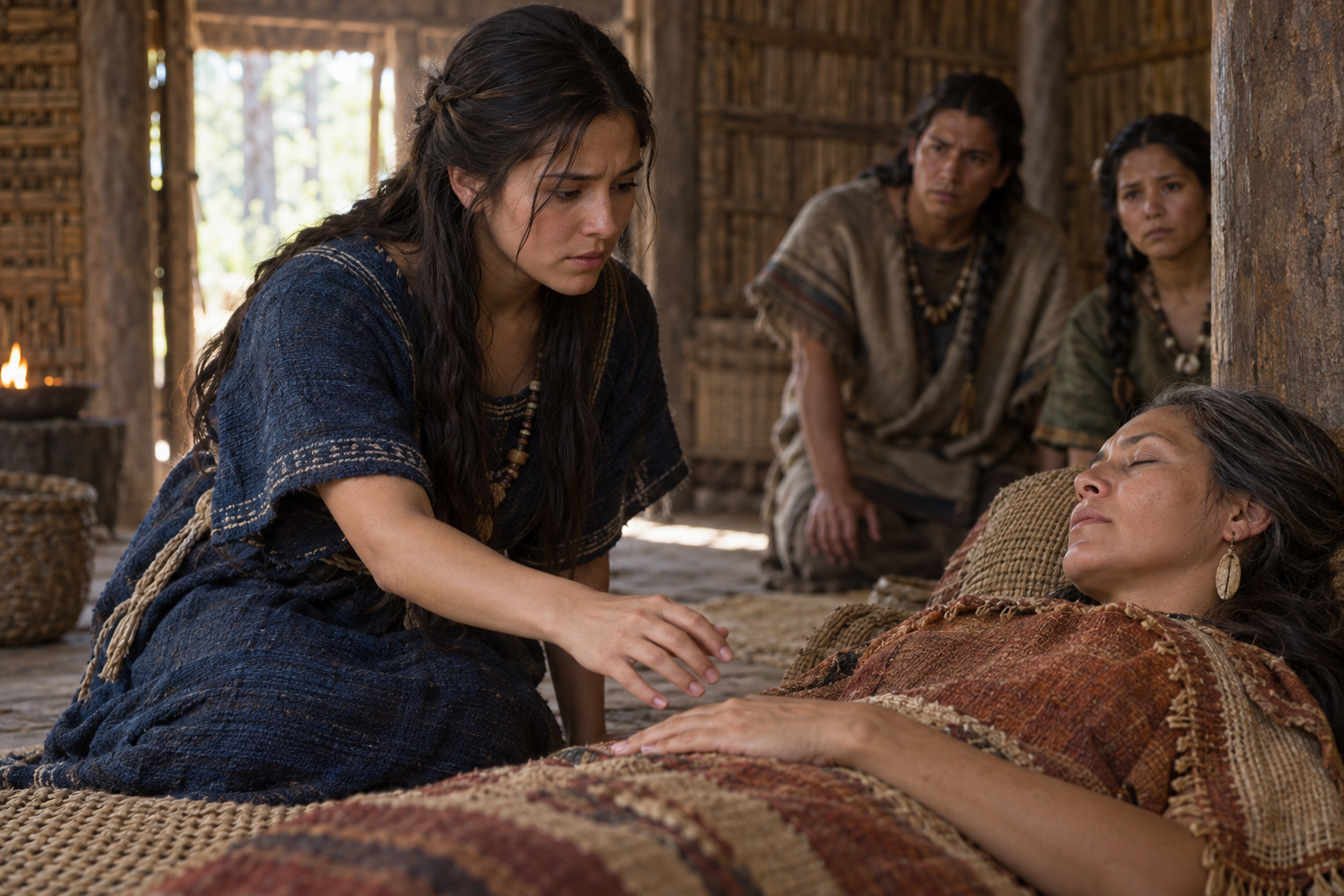
The Savior recognizes that the people cannot yet understand everything He has taught. He invites them to go home, ponder, pray, and prepare in 3 Nephi 17:1–3. Then He sees their tears and stays. 3 Nephi 17:5–8 brings us close to His compassion. He asks them to bring anyone who is sick or afflicted. His invitation reaches every kind of suffering named in the passage and then embraces anyone afflicted in any manner.
They bring the people who need His care
The multitude responds together. 3 Nephi 17:6–10 describes people coming forward with those who are sick, blind, unable to walk, or otherwise afflicted. Notice the people who bring someone as well as those who are brought. Their shared movement toward the Savior lets us see care becoming an action: they respond to His invitation by helping others come.
Explore and study
They bring those who need healing
Jesus invites the people to bring anyone who is afflicted. The multitude responds together, and He heals each person brought to Him. Notice the care of those who help another person approach, as well as the Savior’s compassion.
Jesus heals every one as they are brought forward in 3 Nephi 17:9–10. Those who have been healed and those who were already whole bow together at His feet. Their gratitude belongs to a community that has witnessed His mercy. Linger with one person’s need, and then with the Savior’s attention to that person.
Explore and study
Bring those who need His care
Before departing, Jesus sees the people’s tears and invites them to bring those who suffer. His response is personal and compassionate. Notice both His invitation and the community’s part in bringing people forward.
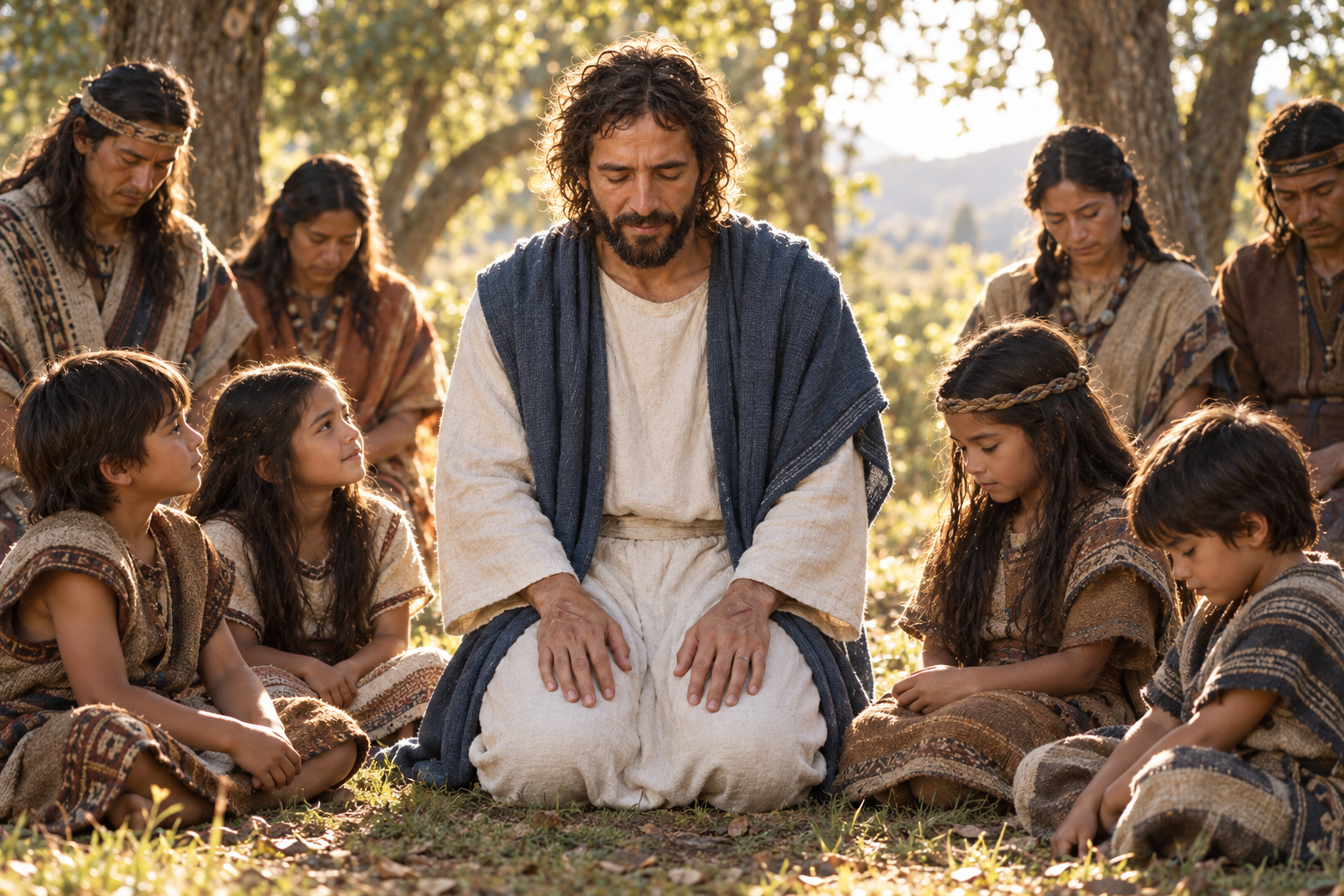
The children are brought forward, and Jesus stands among them. He kneels and prays to the Father in 3 Nephi 17:11–18. The multitude’s joy is beyond what they can put into words.
Explore and study
He prays with the children around Him
The children are brought forward, and Jesus kneels to pray to the Father. The record emphasizes the joy His prayer brings to those who hear it. This scene precedes the later individual blessings and the ministry of angels.
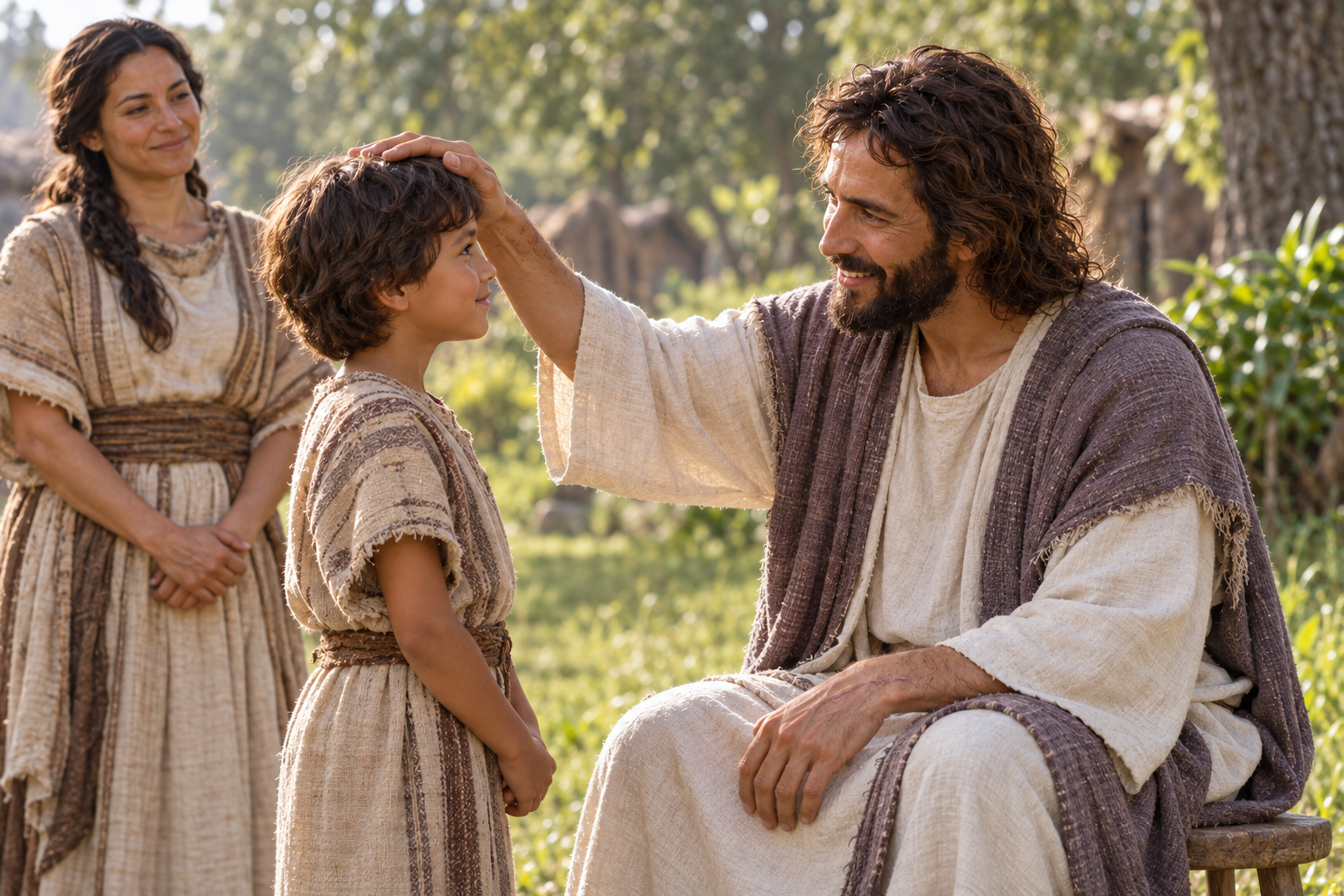
The account then tells of His tears and His blessing of each child in 3 Nephi 17:19–23. Jesus takes the little children one by one, blesses them, and prays to the Father for them. Read it without hurrying past the individual care. Each child receives His attention, and the gathered people witness His tenderness.
Explore and study
Each child receives His attention
The Savior takes the children one by one and blesses them. Each child receives His attention within the larger gathering. Consider how individual care changes the way a community welcomes its children.
The heavens open, and angels minister to the children
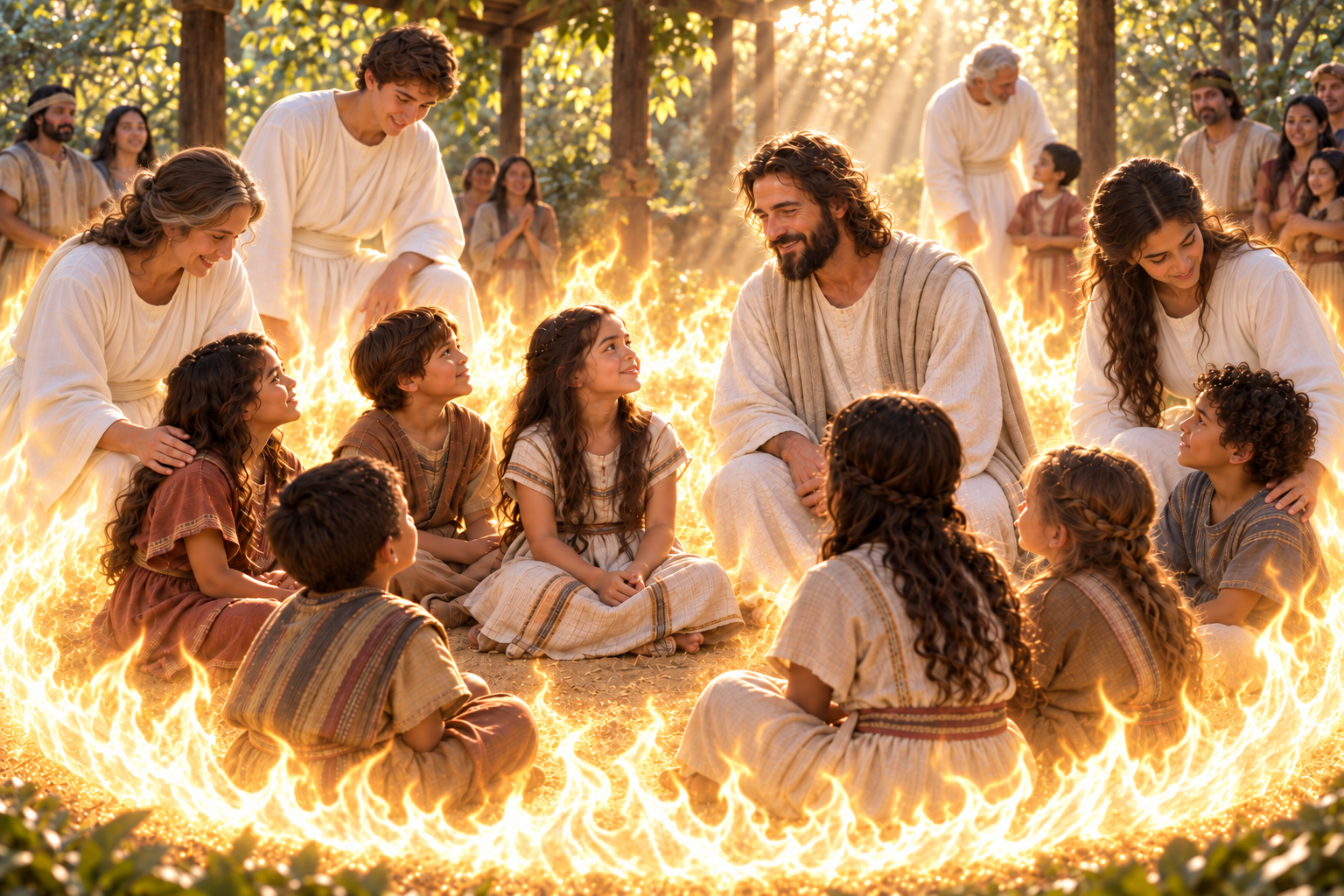
After blessing the children, Jesus weeps again and invites the people to behold their little ones. As they look, the heavens open. 3 Nephi 17:21–25 tells of angels descending as though in the midst of fire, encircling the children, and ministering to them. The record closes this scene with the witness of those who saw and heard: men, women, and children, about twenty-five hundred people. Their children’s place in the Savior’s ministry is something the whole gathering can remember.
Explore and study
Angels minister to the children
After blessing the children one by one, Jesus asks the multitude to behold their little ones. The heavens open, angels descend, and fire encircles the children as the angels minister to them. The people witness this together and preserve their testimony of what they have seen and heard.
Choose a detail: His willingness to stay, His invitation to bring someone forward, His prayer, or His blessing of a child. What does it teach you about His character? Consider one person who could receive your patient attention today.
18 · Carry His gospel forward
Remember Him, search His words, and keep ministering
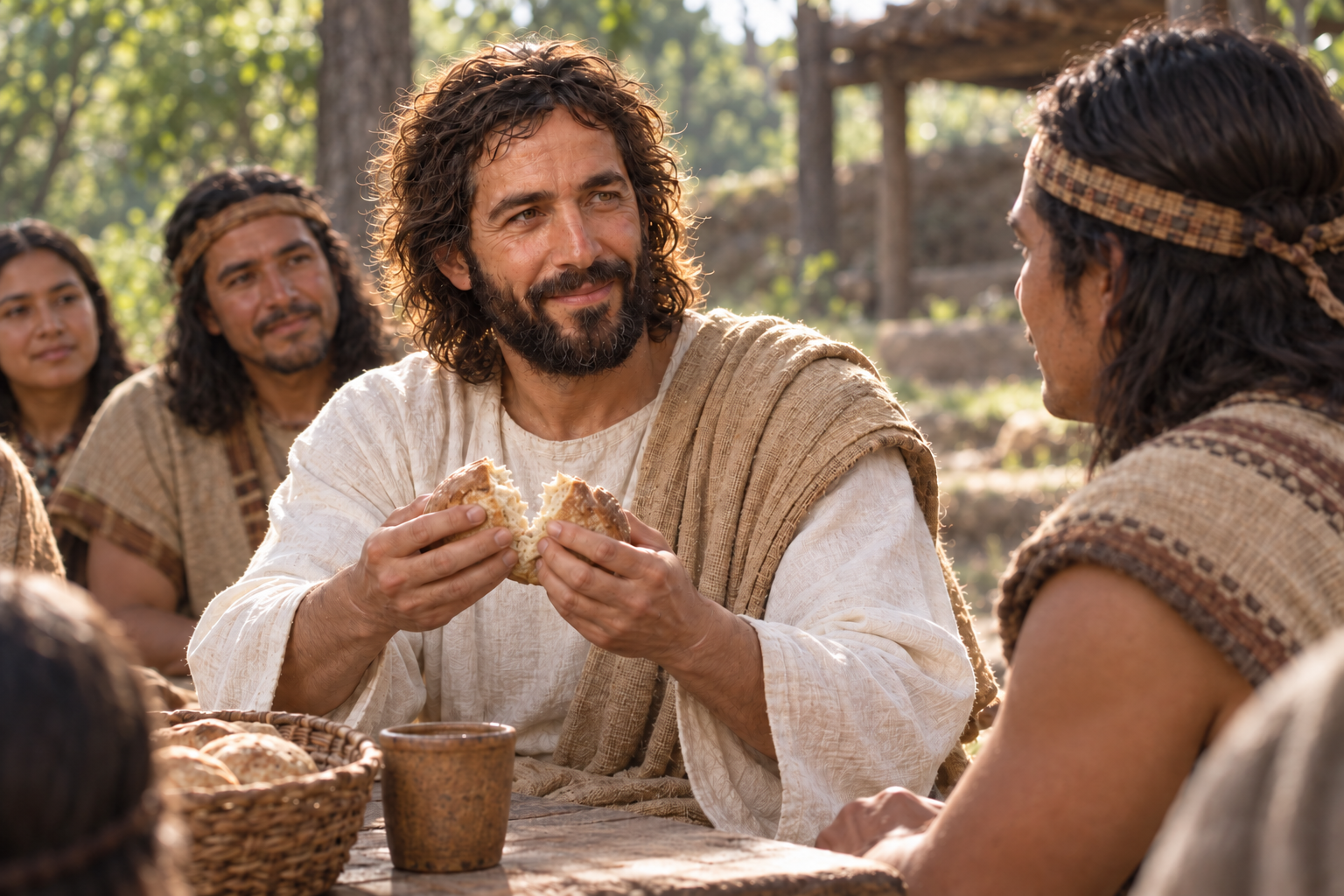
Jesus gives bread and wine and teaches the people to remember His body and blood. 3 Nephi 18:1–14 connects the sacrament with a willingness to follow Him and the promise of His Spirit. He also commands prayer in families and teaches the disciples to welcome those who come among them in 3 Nephi 18:15–25. The sacred gathering is to shape the way they receive people afterward.
Explore and study
Remember Him in the bread
Jesus blesses and breaks bread, gives it to His disciples, and asks them to give it to the multitude. He teaches them to remember His body and witness their willingness to do so. Read how this simple act joins remembrance and discipleship.
On the following day, the disciples teach and the people pray. Jesus withdraws a little distance and prays to the Father in 3 Nephi 19:19–23. His prayer includes people who will believe the disciples’ words. Future listeners are already within the reach of His concern. He returns to the disciples, and His countenance shines upon them in 3 Nephi 19:24–25.
Explore and study
A prayer for those who believe
Jesus steps a little way from the disciples and prays for them and for those who will believe their words. This is His ministry among the people in Third Nephi. Read what He asks of the Father on their behalf.
The Savior commands the people to search the prophets, then asks Nephi to bring the record. Samuel had prophesied that many saints would rise and appear after Christ’s Resurrection, but the fulfillment had not been written. 3 Nephi 23:6–13 records the Lord’s direction to add it. Careful remembrance matters even among people who have seen Him. The witness is to remain available to readers who were not there.
Explore and study
The testimony is written down
Jesus asks Nephi to bring the record and calls attention to a missing fulfillment of Samuel’s prophecy. Careful listening belongs with careful keeping of testimony.
The disciples later pray about what to call the Church. Jesus answers in 3 Nephi 27:1–10 that it must bear His name and be built upon His gospel. He then teaches His Atonement and the invitation to repent and be sanctified in 3 Nephi 27:13–21. The name belongs with a life shaped by Him.
Explore and study
Called by His name
The disciples unite in prayer with a question about the name of the Church. Jesus answers and connects His name with His gospel. Read beyond the question of naming to what He says His Church must be built upon.
His continuing ministry reaches children and future generations: children speak marvelous things in 3 Nephi 26:13–16. He speaks personally with the twelve about their desires in 3 Nephi 28:1–10. Three desire to remain and bring souls to Him. In 3 Nephi 28:4–10, Jesus knows the desire they hesitate to voice and blesses them. His servants are prepared to keep ministering after the extraordinary gatherings end.
Explore and study
A desire to keep serving
Three disciples hesitate to speak the desire of their hearts, but Jesus knows it. They wish to continue bringing souls to Him. Read His answer as an invitation to consider what you most want your own service to accomplish.
After the Savior’s ministry, the record describes a people converted to the Lord. They deal justly with one another and share so that there are no rich and poor among them. 4 Nephi 1:1–5 gives a glimpse of what a community can become when belonging to Christ reaches its ordinary arrangements.
The account does not say that happiness comes from everyone having an identical personality or history. It locates the end of contention in the love of God dwelling in people’s hearts. 4 Nephi 1:15–18 describes a people whose inherited divisions no longer govern their life together. Their unity has moral substance: they are just, loving, and free from the violences the passage names.
That peace is not permanent. Pride in costly clothing, division into classes, and the pursuit of gain return in 4 Nephi 1:24–29. The change invites a searching question for any generation: what everyday habits help preserve love, and what habits quietly teach us to value ourselves above a neighbor?
Care becomes a way of life
Shared necessities picture the mutual care described in 4 Nephi. Consider the habits that help a community remain united.
Mormon receives responsibility for the records while young, then spends his life amid a society moving toward destruction. Mormon 1:1–5 introduces the observant child; Mormon 6:16–22 lets us hear the older man mourning his people. He has commanded armies and preserved their history, but he cannot make the people choose repentance. His sorrow comes through the record he leaves behind.
At the end of that history, Mormon turns toward people who will live after him. In Mormon 7:1–10, he asks them to remember who they are, lay down weapons of war, repent, and believe in Jesus Christ. The Savior has broken the power of death and opened the way to eternal life. These are words of hope from a man who has seen terrible loss.
Explore and study
Mormon’s last invitation
Mormon’s sorrow for his people does not extinguish his hope for those who will read his words. His final appeal asks them to repent, lay down their weapons, and believe in Jesus Christ. Read the invitation he leaves for people he will never meet.
Mormon also joins the witness of this record with the witness that will come from the Jews. His hope reaches beyond the end of his own people’s story. Read his final counsel slowly, noticing what he chooses to place before a future reader: the Resurrection of Christ, reconciliation with God, and an invitation to follow the gospel. The life he cannot preserve through military strength can still be offered to the Redeemer.
What witness would you want to leave?
Think of someone who may need courage after you are no longer able to help directly. What have you learned about Christ that you would want that person to remember? Write it plainly and with kindness.
21 · A record preserved for those still to come
Moroni leaves us a living invitation
Moroni survives to finish his father’s record. He also abridges the much earlier Jaredite history, returning us to the world with which this journey began. Ether’s witness comes amid another society’s collapse. In Ether 12:2–6, faith in God opens a future that present circumstances cannot supply. Moroni adds his own concern about weakness in writing and receives the Lord’s answer about grace in Ether 12:23–27.
Stones carried to the mountain
The brother of Jared carries prepared stones to the mountain. Return to the earlier history that Moroni preserves in Ether.
Moroni preserves his father’s teaching that charity is the pure love of Christ and urges prayer for that gift in Moroni 7:45–48. His final invitation asks us to remember God’s mercy, ponder, and ask with a sincere heart and real intent in Moroni 10:3–5. Then he calls us to come to Christ in Moroni 10:32–33. After so many generations and stories, the book still speaks to one reader willing to turn toward Him.
The Church’s illustrated story introduces Moroni’s care for the record and his invitation to future readers. After reading or watching, return to his final chapter and give yourself time to remember, ponder, and pray.
Book of Mormon Stories · The Church of Jesus Christ of Latter-day Saints
Explore and study
Words kept for a future reader
Moroni addresses people he will never meet in mortality. His invitation joins remembering God’s mercy, pondering, and asking with a sincere heart. Imagine receiving these words as a personal invitation to seek Jesus Christ.
Joseph Smith’s history carries the story of the record into nineteenth-century New York. In Joseph Smith—History 1:51–54, he describes finding the stone box in the hill near Manchester, seeing the plates, and learning from the messenger that he could not yet take them. He returns at the appointed time each year and receives instruction. The first visit and the eventual receiving of the plates are separate events, four years apart.
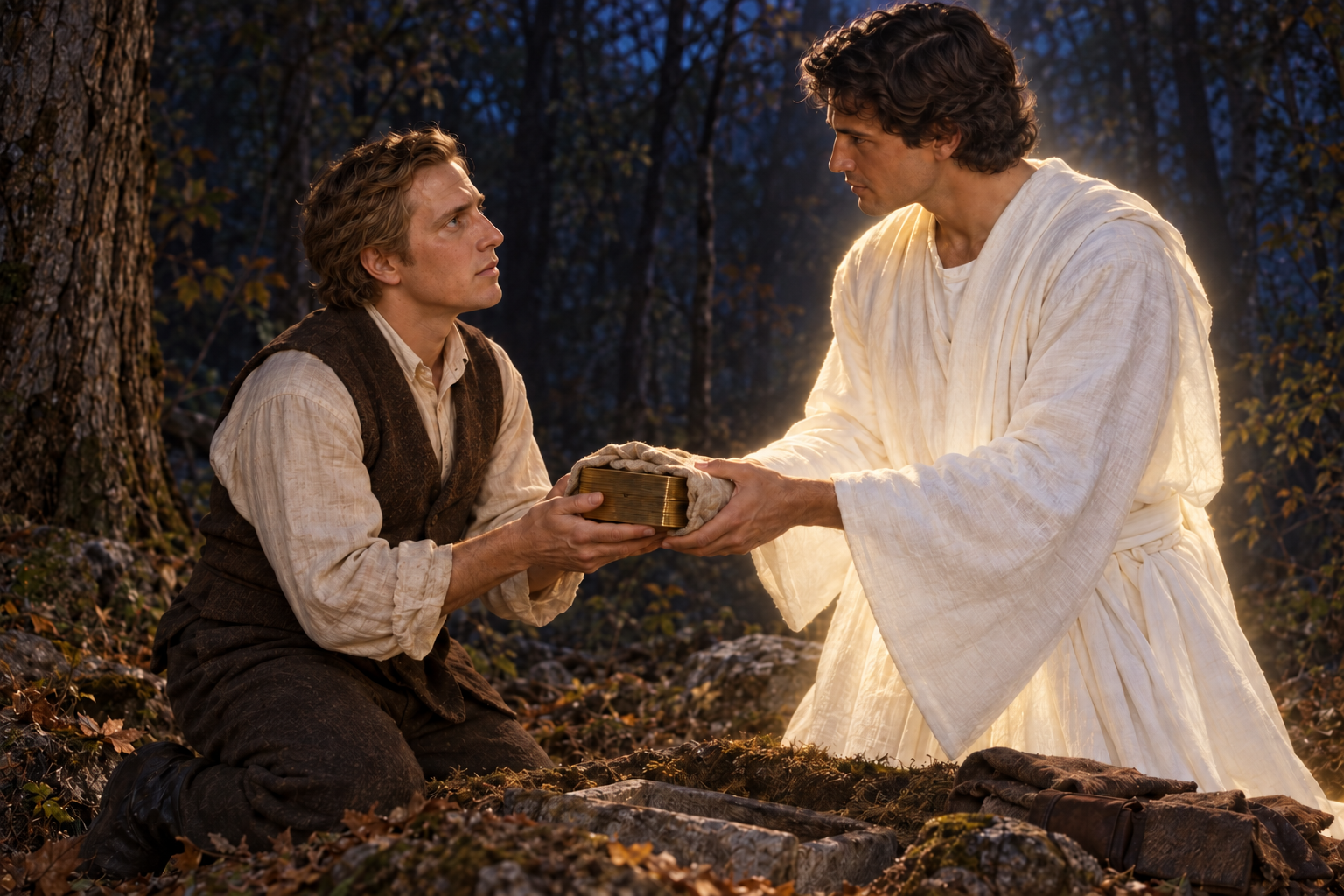
On September 22, 1827, Joseph returns to the place where the plates have been deposited. Joseph Smith—History 1:59 records that the same heavenly messenger delivers them to him with a solemn charge to keep them safe. Joseph is twenty-one years old, based on the birth date he gives in Joseph Smith—History 1:3. The responsibility before him is much larger than the physical act of receiving a record.
Explore and study
A record entrusted to Joseph
Joseph receives the plates on September 22, 1827, after years of preparation. Moroni charges him to care for what has been entrusted to him. The ancient record will now reach a new generation of readers.
The account helps us see the connection between a prophet preserving a witness for future readers and a young man entrusted with bringing that witness forth. Follow the history of the record received and the responsibility attached to it. Continue with the Joseph Smith and Restoration study to follow that history, or return to the Book of Mormon’s invitation to come to Christ.
A First Journey Through Three Kinds of Passage
Explore and study
Pause and ponder the promise
A woman pauses beside a quiet lake with an open book in her lap. The still water and unhurried posture echo Moroni's invitation to remember, ponder and ask God with faith in Christ.
These focusChrist study suggestions offer a way to explore the sources at your own pace.
Explore and study
Let the words settle in the heart
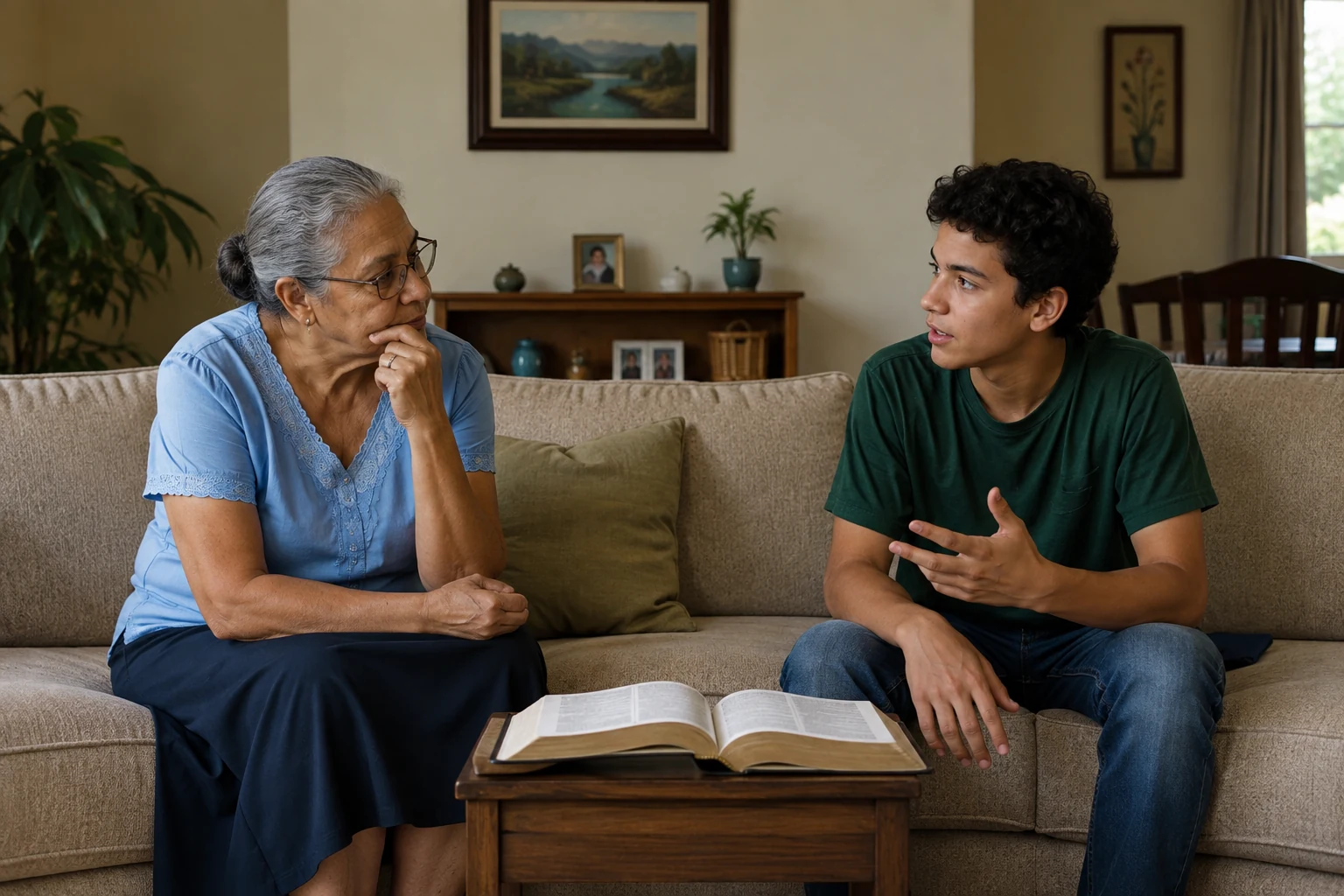
A grandmother listens as a teenage boy shares what he has found in an open book. Together they read, ponder and speak of Christ, letting understanding grow through a patient conversation.
Read 3 Nephi 17:1-9, 21 slowly. Notice how Jesus gives His hearers time, heals those brought to Him, and blesses the children. Write down one detail of His care. You might offer someone patient attention today, while remembering that this account does not set a timetable for healing in your own life.
2. Follow belief into a community
In Mosiah 18:7-10, 21-29, baptism leads into a community that mourns together and shares according to need. Think of someone who could use company, practical help, or a patient listener. Choose one freely offered act of care as you consider what belonging to Christ can mean in daily life.
3. Keep an honest record of your reading
Return to a passage that stayed with you. Keep its reference beside a few notes about Christ, your questions, and a possible next step. Another day, read the surrounding chapter, pray, or invite someone to study with you. Understanding can grow through an honest, continuing conversation with scripture.
Where should I go when my question is historical?
Use the Book of Mormon text to understand its message, then name the historical claim you want to investigate. The Joseph Smith and Restoration study offers a route into the history. Keep textual interpretation, historical evidence, and personal spiritual conviction distinct in your notes.
Make room for the Savior’s words
3 Nephi 17 brings the reader close to a moment of compassion. Jesus notices His listeners’ limits and invites them to ponder and pray. Use these questions to return to the book itself.
Which moment helps you know Him?
Choose one action of Jesus in the chapter and describe it in your own words. What does it add to the introduction you read at the beginning of this page? Keep the verse nearby so you can distinguish the account from your response to it.
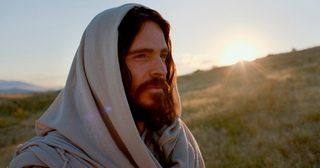
He helps them understand
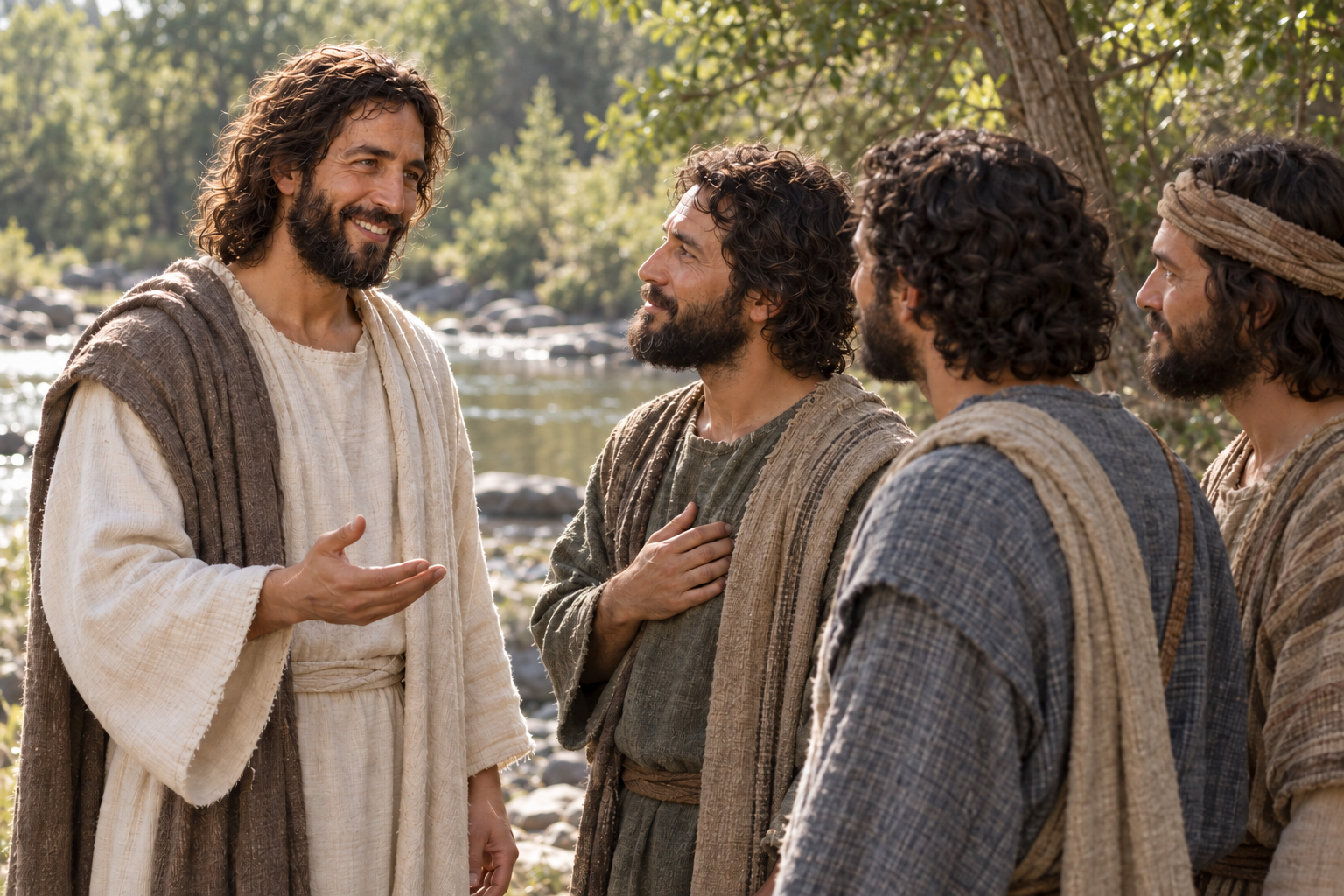
Jesus explains the scriptures to attentive listeners. Continue with His teaching at Bountiful.
Name a teaching you do not yet understand. How could pondering, prayer, or a conversation with a careful reader help you explore it? Give the question a place in your notes rather than expecting yourself to resolve the whole book at once.
Who could receive your attention?
Consider the people Jesus notices in this account. Who in your own life could use patient attention? Choose a small act of care that fits their needs, and ask what would help before deciding for them.
Let another reading deepen your commitment. Explore three accounts of the Savior among the Nephites alongside Elder Andersen’s invitation to read the Book of Mormon again.