Emma Hale was born in Pennsylvania on July 10, 1804, the seventh of Isaac Hale and Elizabeth Lewis Hale’s nine children. Her childhood included Methodist worship with her mother. Before she became part of the story of a new church, she belonged to a family and a community beside the Susquehanna River.
She was twenty-one when she met Joseph Smith in the autumn of 1825. He was nineteen. Her parents opposed their marriage, but Emma chose to marry him on January 18, 1827, in South Bainbridge, New York. She was twenty-two; Joseph was twenty-one. In the years that followed, they raised a family while taking part in the beginnings of the Restoration.
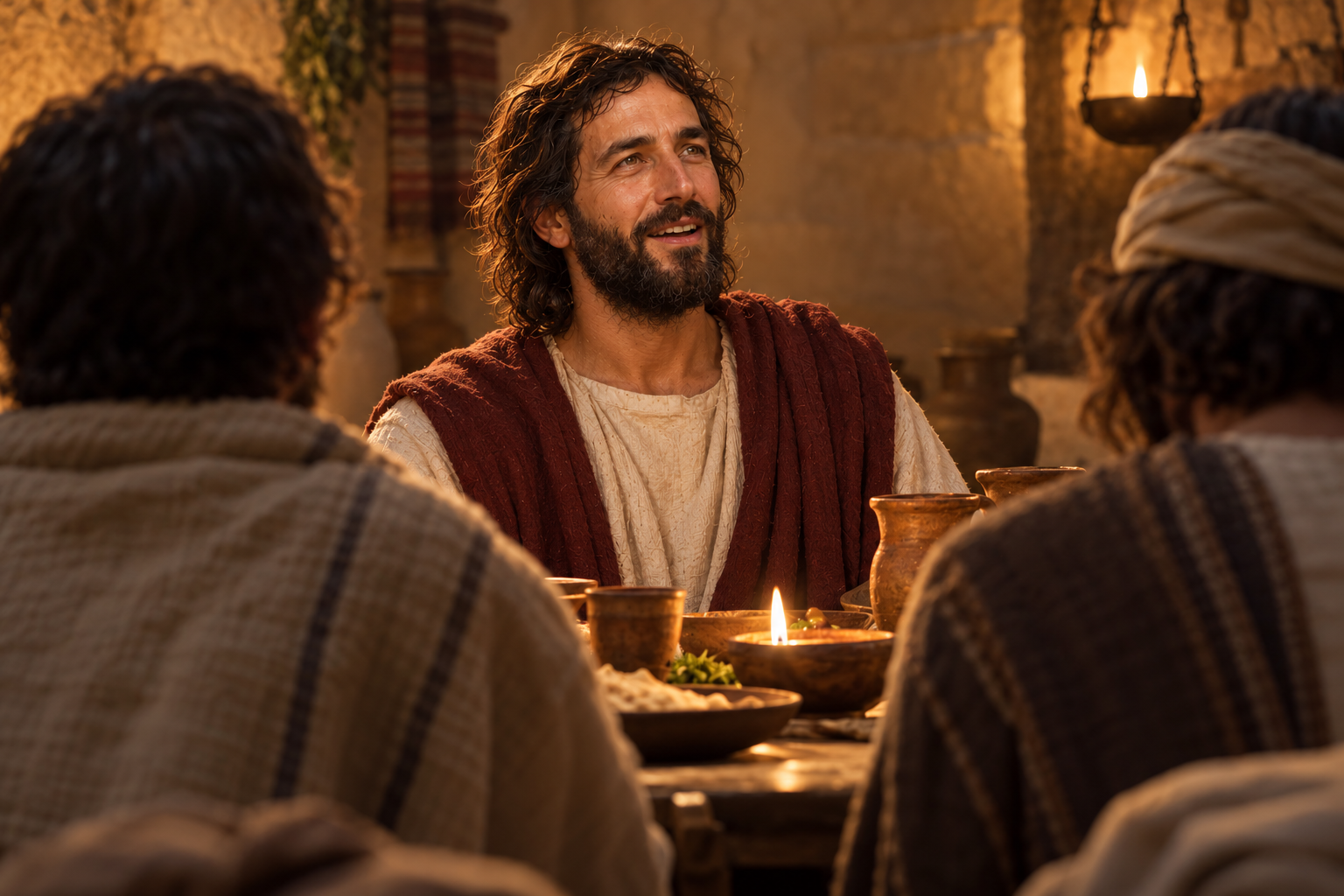
Luke gives us a quiet place to pause before the work ahead: Jesus spends a night praying before choosing the Twelve. Read Luke 6:12–16 invites us to consider prayer within a life of responsibility. It also leaves space to bring our own decisions before God.
A pen, a young family, a calling
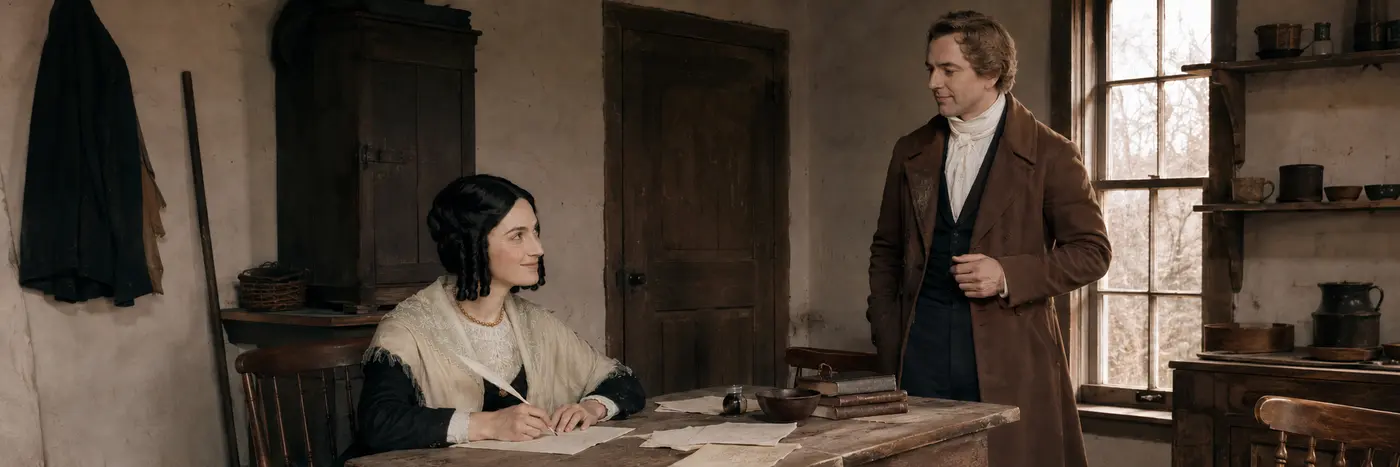
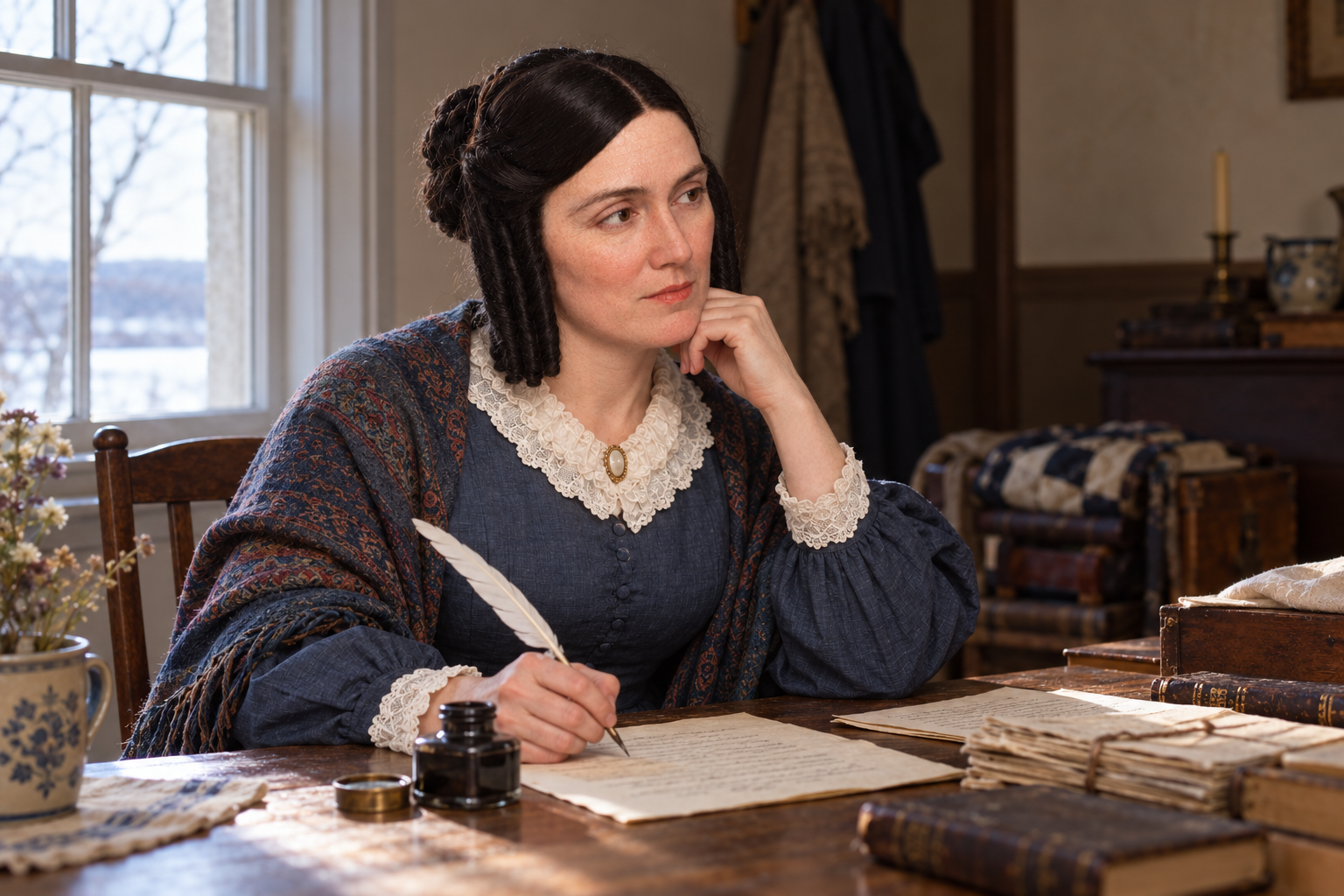
In the spring of 1828, twenty-three-year-old Emma was expecting her first child while helping with the translation at Harmony.
A pen beside the manuscript
Emma’s work as a scribe was part of the translation in Harmony. In the spring of 1828 she was twenty-three and expecting her first child.
In Harmony in 1828, Emma helped write as Joseph dictated the Book of Mormon translation. She was one of several scribes, and later remembered that work as part of her witness of the book. At the same time she was expecting their first child. Their son was born on June 15 and died that day. Emma herself was seriously ill. The work of a young household included recovery and mourning as well as the manuscript.
Emma was baptized on June 28, 1830. The revelation now recorded as Doctrine and Covenants 25 followed in July. It addressed her by name, invited her to learn and teach, and gave her responsibility for selecting sacred hymns. Its counsel connected her learning and gifts with the life and worship of the growing Church.
Emma’s place in the translation story
Emma took part in the early translation work. Martin Harris and Oliver Cowdery also served as scribes, with Oliver writing most of the manuscript that became the published Book of Mormon. Thou Art an Elect Lady places her work and the 1830 revelation in context.
The family moved to Ohio in 1831. That spring Emma’s twins died soon after birth. Emma and Joseph then adopted Joseph and Julia Murdock, whose mother had died. The adopted Joseph died the following March while suffering from measles, after a mob had attacked Joseph Smith. The household’s losses and its welcome to two children were intertwined. Joseph and Emma Hale Smith Family follows the lives of the children and the family they shared.
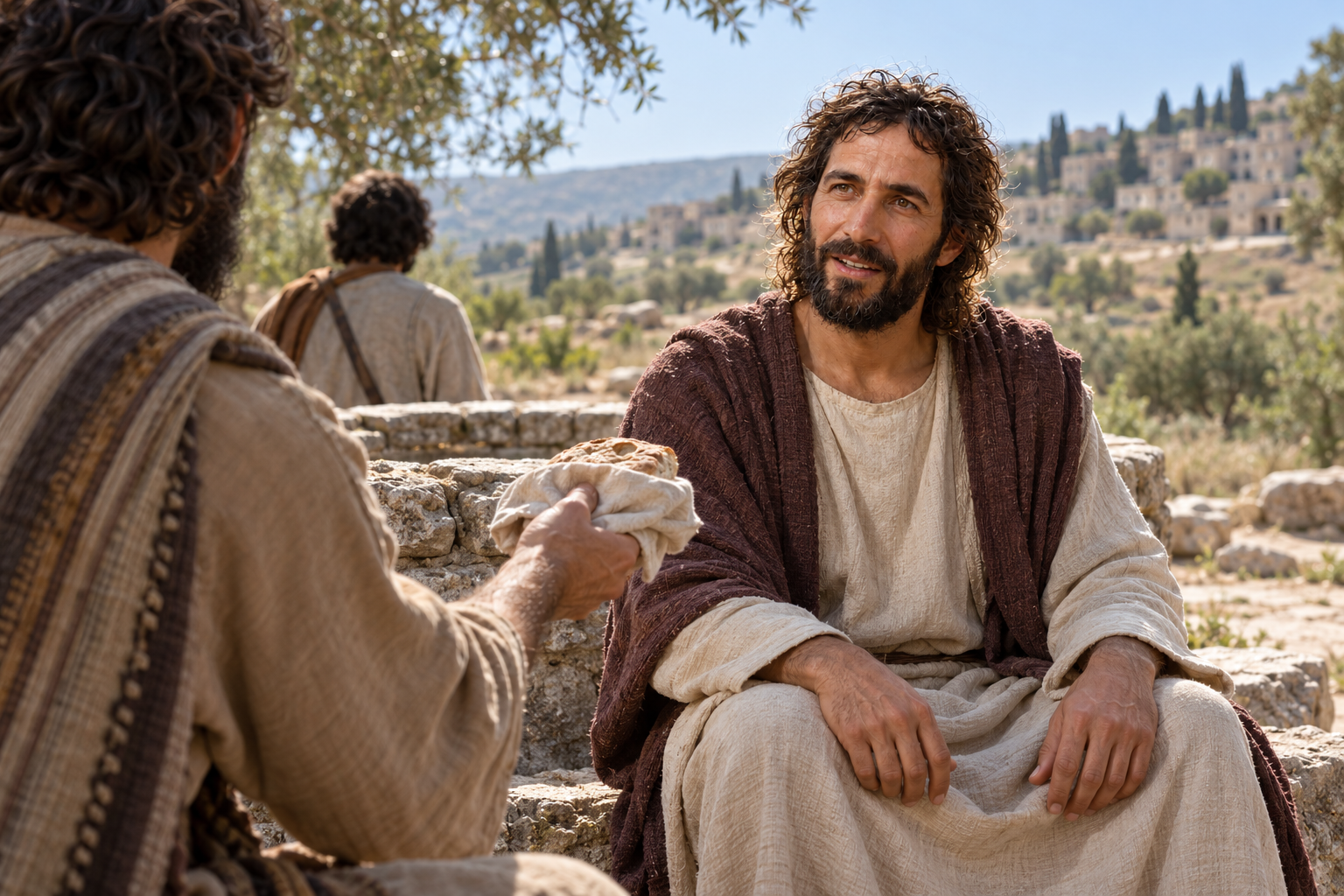
Food beside the well
The disciples urge Jesus to eat. He speaks with them about the work of His Father, while the ordinary care of bringing food remains close at hand.
At Jacob’s well, the disciples urged Jesus to eat. He spoke to them about doing His Father’s will. Read John 4:31–34 beside this part of Emma’s story: service can have a deep purpose while the people who give it still need food, rest and care.
Songs and separation
A son, Joseph III, was born in November 1832. As the family grew, Emma also worked on the collection of hymns. William W. Phelps assisted with revision and arrangement. The resulting book held ninety hymn texts, giving a young religious community words to sing together.
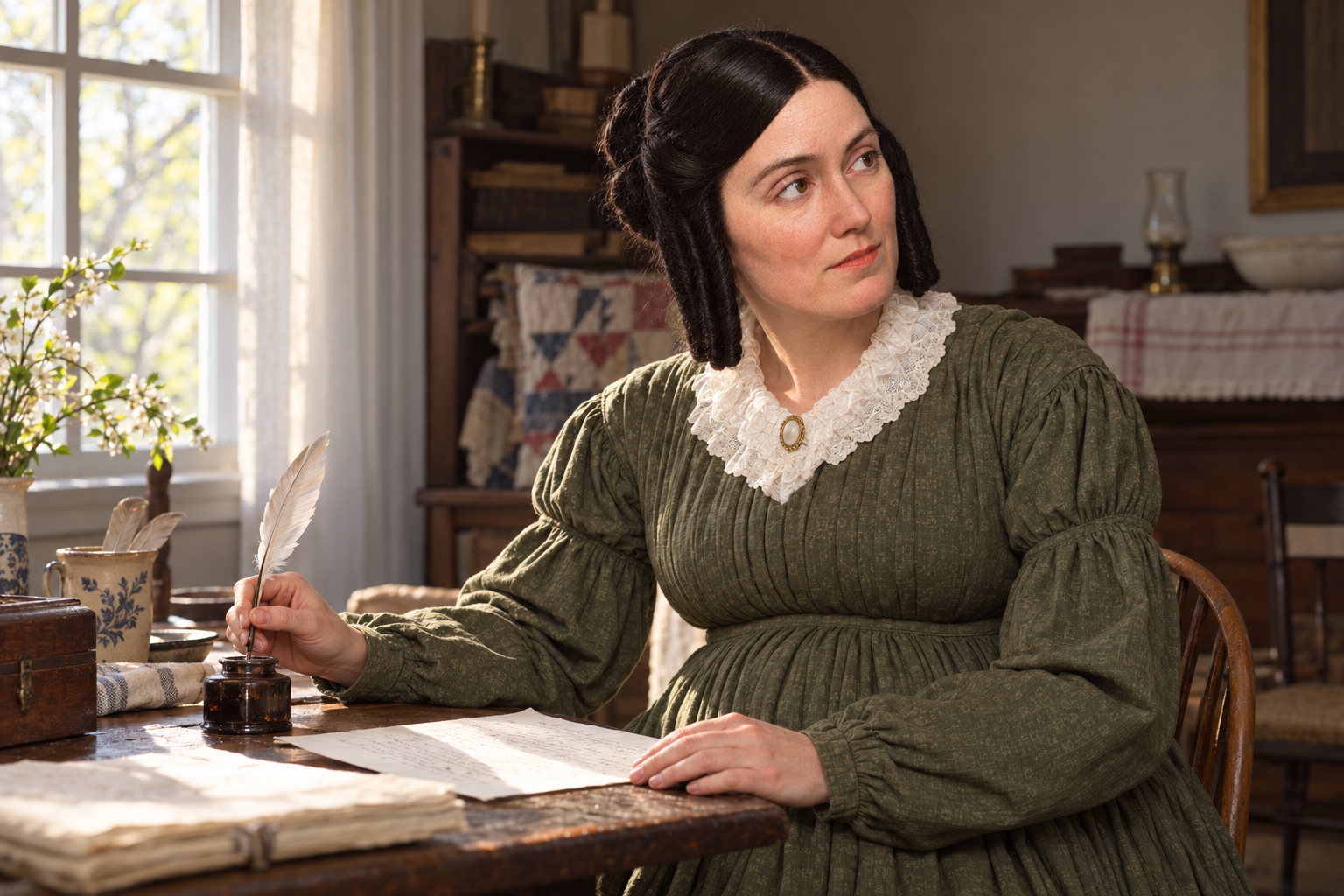
By the autumn of 1835, Emma was thirty-one and bringing the hymn collection toward publication.
Words for a community to sing
Emma works with the words of hymns. The collection she selected gave the Saints songs for worship, gathering and daily faith.
The first edition bears an 1835 date and was apparently available early in 1836. It contains words rather than musical notation, gathering hymns Emma selected for the Saints to sing. Explore the first hymnbook lets you turn through the original pages.
A hymn before the road ahead
Jesus and His disciples sing before leaving for the Mount of Olives. Their shared hymn belongs to an evening of teaching, remembrance and approaching sorrow.
Matthew records that Jesus and His disciples sang a hymn before leaving for the Mount of Olives. Read Matthew 26:26–30. The brief line places singing within an evening of teaching and coming sorrow. A shared song can give a community words when its members do not all know what lies ahead.
Frederick was born in 1836, and Alexander in 1838. Conflict in Missouri then forced another departure. With Joseph imprisoned, Emma brought the children to refuge in Illinois. In her letter of March 7, 1839, she described the burdens of separation and the kindness the family had received in Quincy. She told Joseph about the children and the help that had made their welcome in Quincy possible.
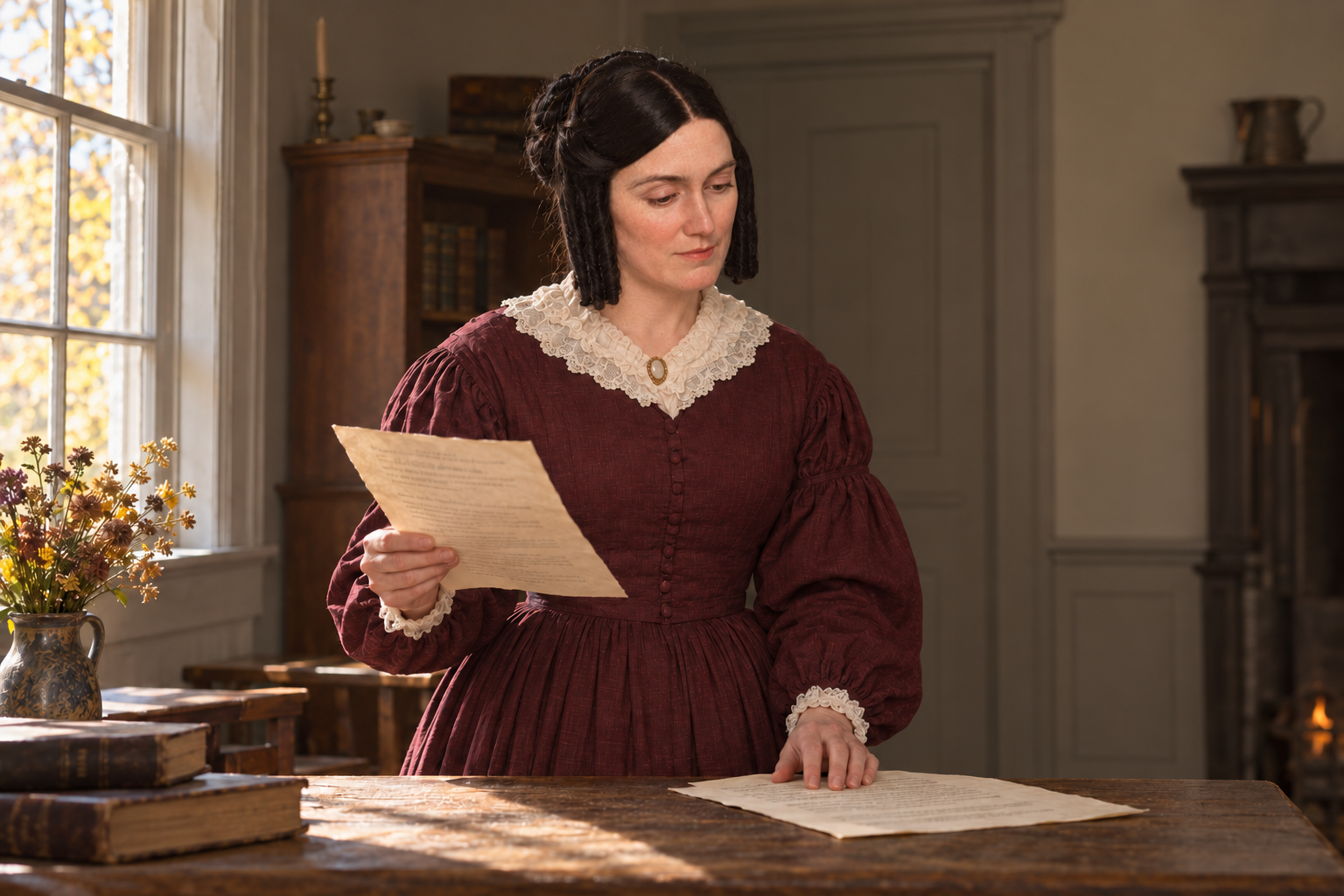
Emma was thirty-four when she wrote from Quincy in March 1839.
A letter across the separation
A letter carries news of children, kindness and separation. Emma’s March 7, 1839 letter reached toward Joseph while he was imprisoned.
Emma’s letter of March 7, 1839 lets us hear about the separation in her own words, from the work of caring for the children to her gratitude for the people who helped them. By May the family was in Commerce, the settlement that became Nauvoo.
Relief and difficult questions
Building a home in Nauvoo did not end the family’s losses. Don Carlos, born in 1840, died at fourteen months. Another son reportedly died on the day of his birth in February 1842. Her responsibilities as a mother continued alongside the service she would undertake among Nauvoo’s women.
Emma was thirty-seven at the March 1842 meeting, just weeks after the loss of her infant son.
Organizing care in Nauvoo
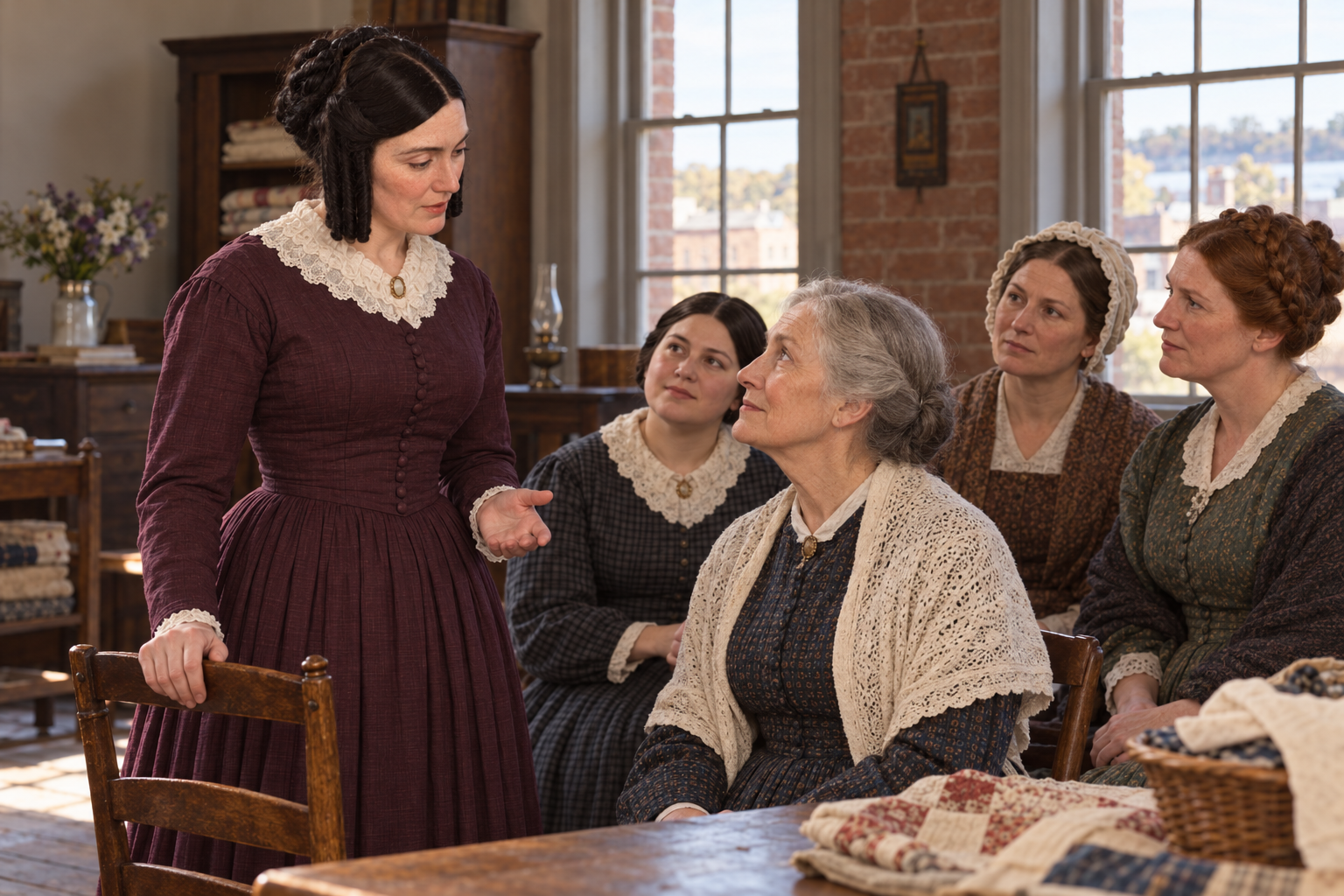
Emma speaks with women gathered for relief. Their attention turns toward the practical work of finding those in distress and supporting women whose work sustained them.
On March 17, 1842, women gathered upstairs in Joseph Smith’s red brick store and elected Emma president of the Female Relief Society of Nauvoo. Sarah Cleveland and Elizabeth Ann Whitney became her counselors. After the men withdrew, Emma rose to speak. The minutes describe practical concerns: finding people in distress and dealing honestly with women whose work helped support them. Care included fair payment, not simply praise for sacrifice.
Reading the first meeting
The first meeting brought together plans for the new society and practical questions about helping neighbors. The women discussed those in distress, the needs of widows and fair payment for their work. Relief Society founding minutes opens the record of that conversation.
Gather what remains
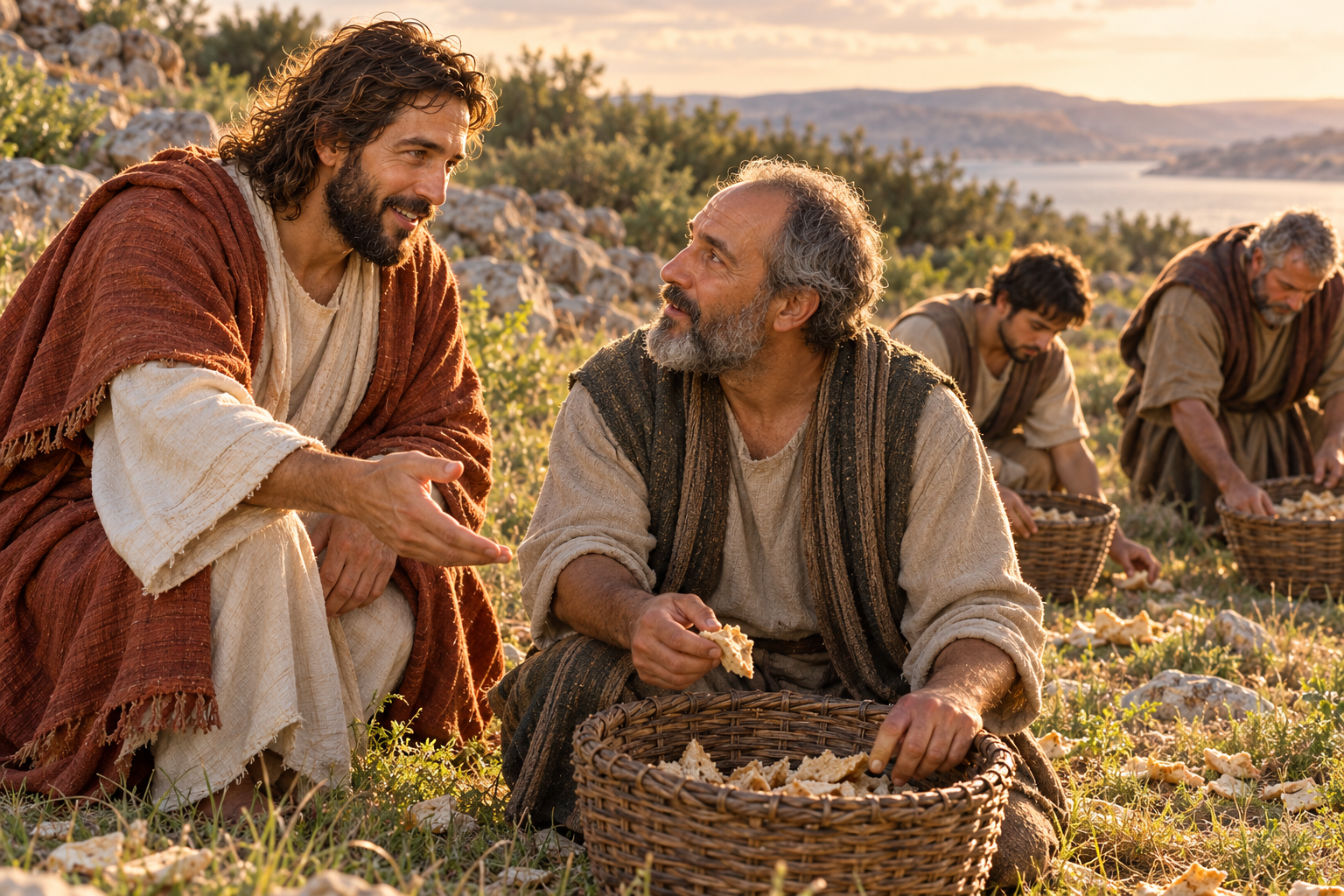
Jesus meets the listener’s attention as the disciples gather the remaining bread. His instruction carries care beyond the meal: let nothing be lost.
After the multitude had eaten, Jesus told the disciples to gather the remaining pieces of bread so that nothing would be lost. Read John 6:10–13. Attention continued after the immediate need was met. The passage offers a companion reflection on the patient, practical work that sustains relief.
Emma’s marriage also faced serious difficulty over plural marriage. She temporarily approved some marriages, likely did not know about all the sealings, and at other times opposed the practice. The Church’s Plural Marriage in Kirtland and Nauvoo discusses this history. The conflict was a painful part of their marriage. Her changing responses deserve careful attention alongside her years of family life and service.
On June 27, 1844, Joseph and his brother Hyrum were killed at Carthage. Emma was thirty-nine and pregnant. Her responsibilities now included mourning her husband and preparing to raise the child who would be born after his death.
A household to sustain
David Hyrum was born on November 17, 1844. Emma had children to support and complicated questions about property and Joseph’s estate to face. The public history of succession and migration unfolded alongside the daily needs of her household.
She did not join the westward migration led by Brigham Young. During the violence surrounding Nauvoo in 1846, she temporarily took refuge in Fulton, Illinois, returning to Nauvoo in February 1847. That December she married Lewis Crum Bidamon. Her later home and family life continued in Illinois.
Different paths after 1844
In 1860 Emma affiliated with the Reorganized Church of Jesus Christ of Latter Day Saints, now Community of Christ, as Joseph III became its president. This was a different institutional path from the Church led west by Brigham Young. Emma Hale Smith: Joseph Smith Papers follows the choices and changes of her later life.
Remembering these years keeps Emma from disappearing at the end of Joseph’s life. She lived for nearly thirty-five more years, with relationships, work and decisions of her own. Her story asks us to make room for those years too.
The remaining years
Frederick died in 1862. Of Emma’s nine biological children and two adopted children, five reached adulthood; Frederick’s death brought another loss after those early bereavements.
By the autumn of 1871, Emma was sixty-seven. She and Lewis had moved into the completed portion of the Nauvoo House, operated as the Riverside Mansion boardinghouse. Welcoming boarders and caring for the household became part of these later years, nearly three decades after Joseph’s death.
The work of a welcoming home
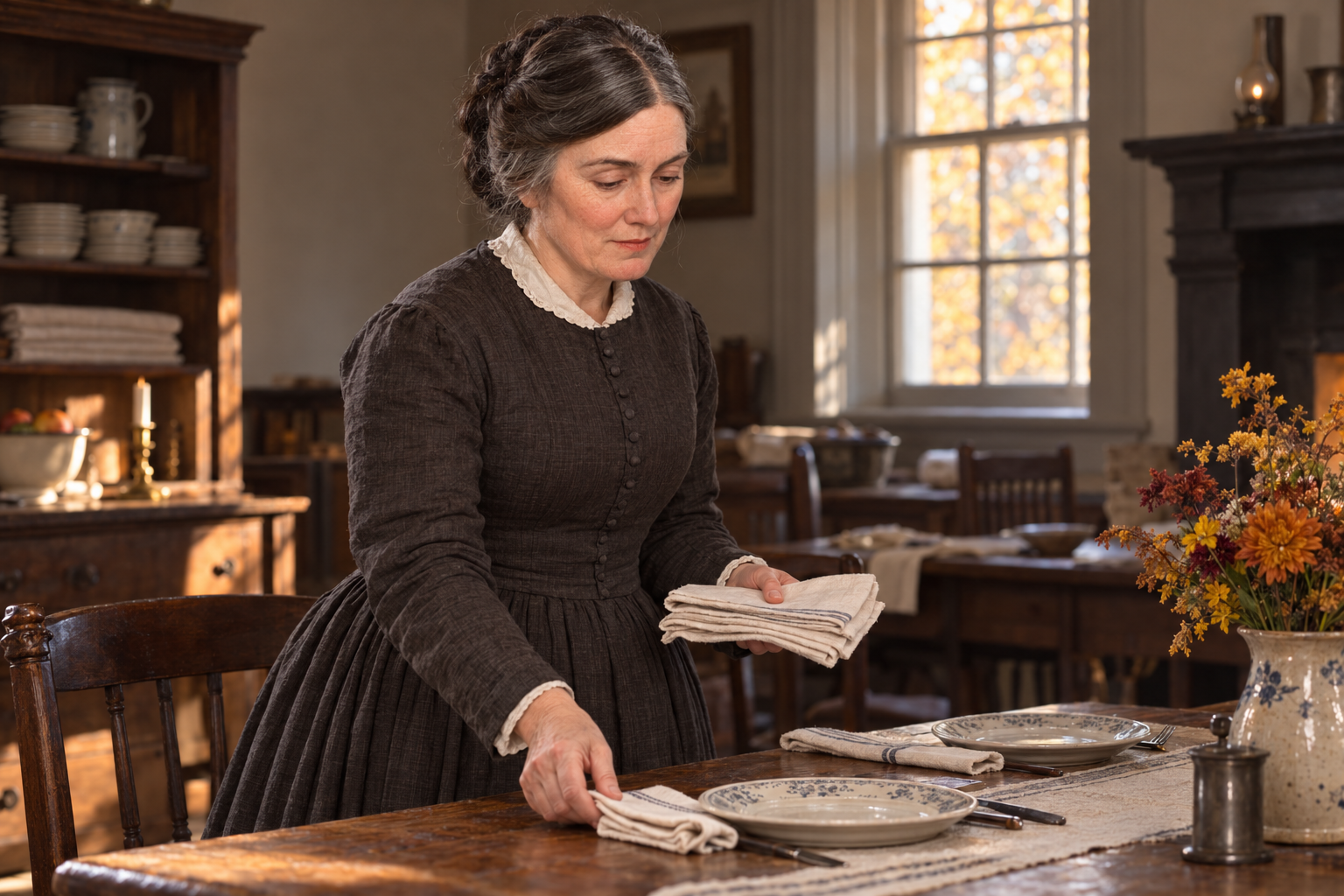
Emma’s hands attend to the linen in her later home. At sixty-seven, the work of the Riverside Mansion boardinghouse belonged to a life that continued long after Joseph’s death.
The Riverside Mansion was Emma’s home for the last eight years of her life. The Nauvoo House was a different building from the Mansion House, where she and Lewis had lived before. Nauvoo House and Riverside Mansion describes the setting; My Great-Great-Grandmother, Emma Hale Smith traces this part of her family’s chronology.
A place apart
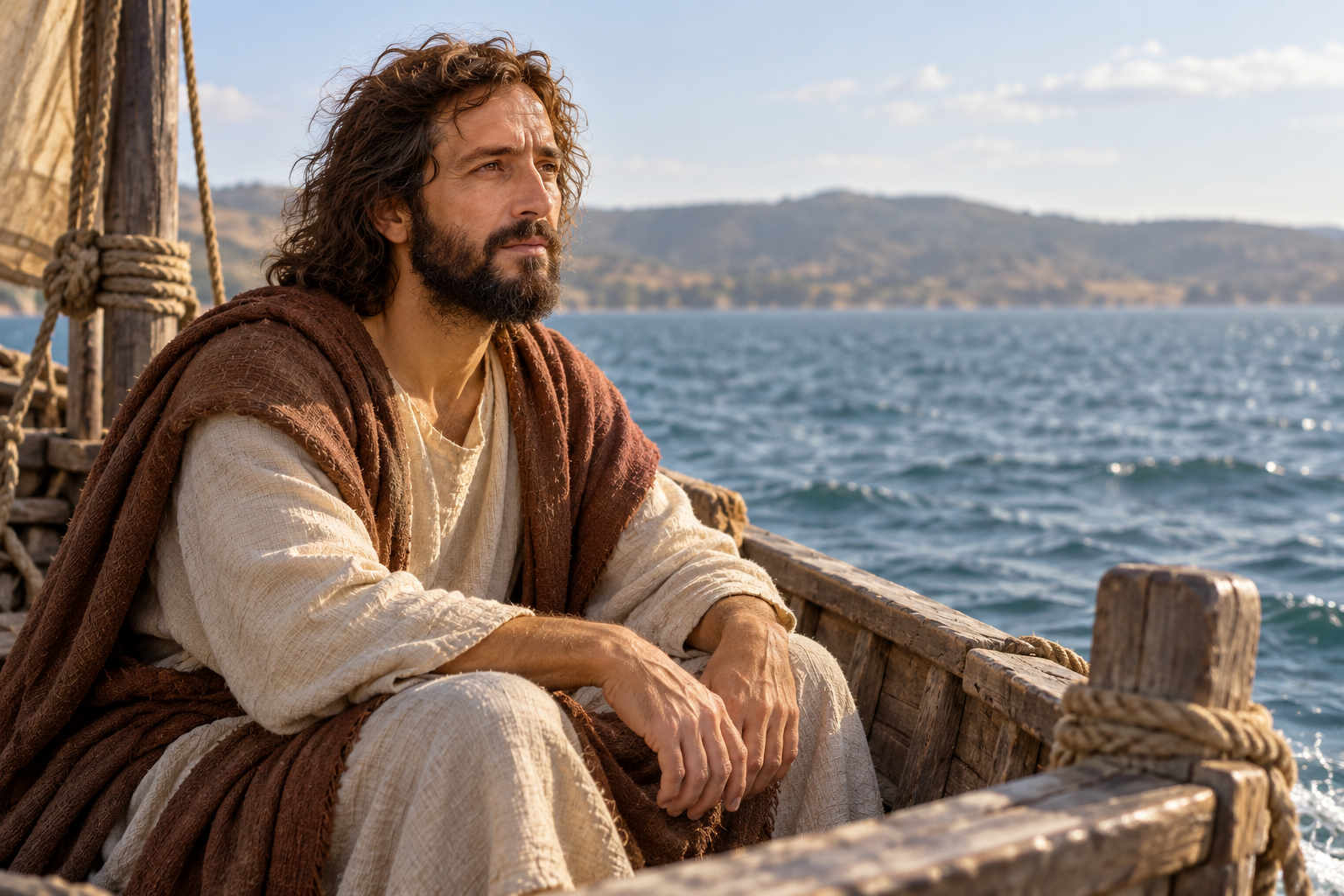
After hearing of John the Baptist’s death, Jesus withdraws by boat. The passage continues with His compassion for the people who follow Him.
After John the Baptist’s disciples reported his death, Jesus withdrew by boat to a place apart. Read Matthew 14:12–14. The passage holds withdrawal and compassion near one another. It gives us room to approach another person’s losses gently, without demanding that grief follow a schedule.
In 1877, David’s severe mental-health difficulties led to hospitalization. His illness brought lasting concern to the family, and he remained in institutional care for the rest of his life.
In an interview near the end of her life, Emma continued to affirm her belief in the Book of Mormon. Her son Joseph III recorded the interview, which was published after her death. She died in Nauvoo on April 30, 1879, at seventy-four. Emma Hale Smith: Church History Topics brings together her service, family life and later witness.
Emma was a daughter and wife, a scribe and mother, a hymn selector and leader, a woman making a home through changes and losses. We can learn from her service and meet the difficult parts of her story with patience, honesty and compassion.
Pause and reflect
What useful work can go unnoticed in someone’s story?
Think of one person whose steady care has made your life easier. Consider a specific way to acknowledge or share that work.
How can help become concrete?
Emma’s first Relief Society meeting included concern for distress and fair payment. What practical need could you meet without assuming you know the whole situation?
Which part of Emma’s life would you like to understand better?
Choose a letter, a hymn or an account of her later years. Spend a little time with it and consider what it adds to your understanding of her life.
Read Emma’s story together
Follow the six parts of her life at your own pace. This companion leaves room for questions and handwritten notes.
Emma Hale Smith: printable companion
Emma Hale Smith
Personal or family study · A life of faith, work, and care