Read and discover
A question about fasting
Explore and study
Joy while the bridegroom is present
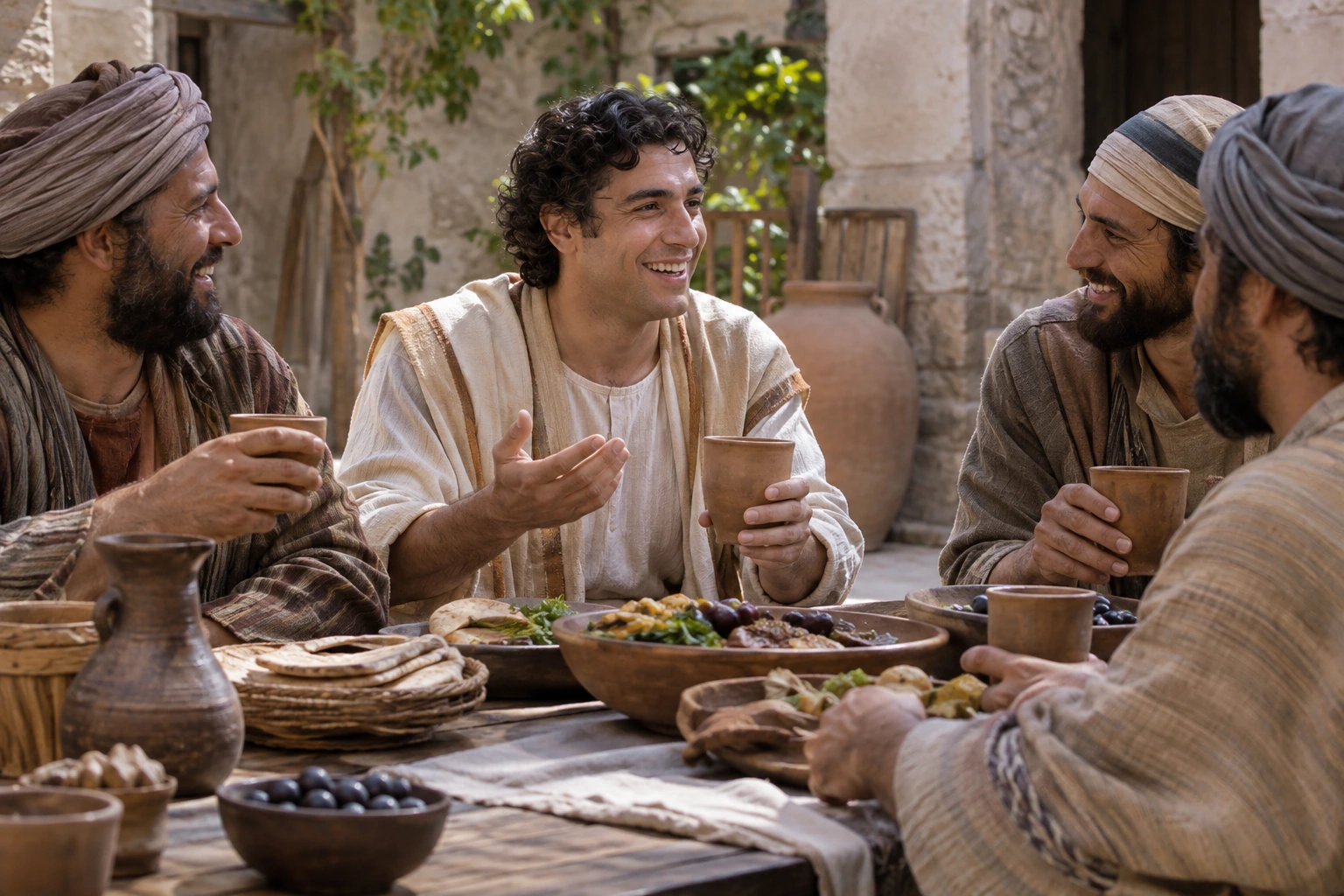
Jesus compares His presence with the joy of wedding companions while the bridegroom is with them. This imagined gathering illustrates that comparison, rather than the wedding at Cana or a portrait of Jesus.
A question about fasting leads Jesus to speak of wedding guests and a bridegroom. While the bridegroom is with them, the guests have a reason for joy. His presence changes what is fitting for that moment. Jesus also says a time will come when the bridegroom is taken away. Matthew 9:14-17
Read and discover
Joy, presence, and coming absence
The comparison answers the question through the significance of Jesus Himself, rather than through a simple rejection of fasting. The future absence belongs in the answer as much as the present joy. A practice is being understood in relation to His presence and mission. Mark 2:18-20
Luke preserves this exchange before the new garment and wineskin comparisons. Read together, the images resist forcing Jesus' disciples into an expectation that ignores what His coming means. This is not the same story as the ten virgins waiting for a bridegroom. Luke 5:33-35
Read and discover
Remember whom the practice serves
Reflection might ask how knowledge of Christ gives meaning to a religious practice. A practice can become more than a repeated outward action when its relationship to Him is remembered. The passage invites understanding the occasion, rather than judging another person's devotion solely by whether their practice matches yours.
Continue with Jesus Christ
The New Patch
A damaged garment helps Jesus answer a question about fasting. The small comparison asks His hearers to understand His ministry before forcing it into familiar expectations.
Open study →New Wine and Wineskins
Wine needs a vessel able to receive it. Jesus uses this ordinary image to help His hearers consider the significance of His presence and teaching.
Open study →The Kingdom of God
Continue through the connected teachings in this collection and compare their distinct settings.
Open study →