Read and discover
The question about a neighbor

Explore and study
Wounded traveler on the road
The wounded traveler lies alone beside the road. Jesus begins His parable with a person's urgent need, before asking who will draw near to help.
A lawyer asks what he must do to inherit eternal life. Jesus directs him to the law, and the reply joins love of God with love of neighbor. When the man then asks who his neighbor is, Jesus answers with a traveler on the road from Jerusalem to Jericho. Luke 10:25-37
Read and discover
Three travelers encounter a need
Explore and study
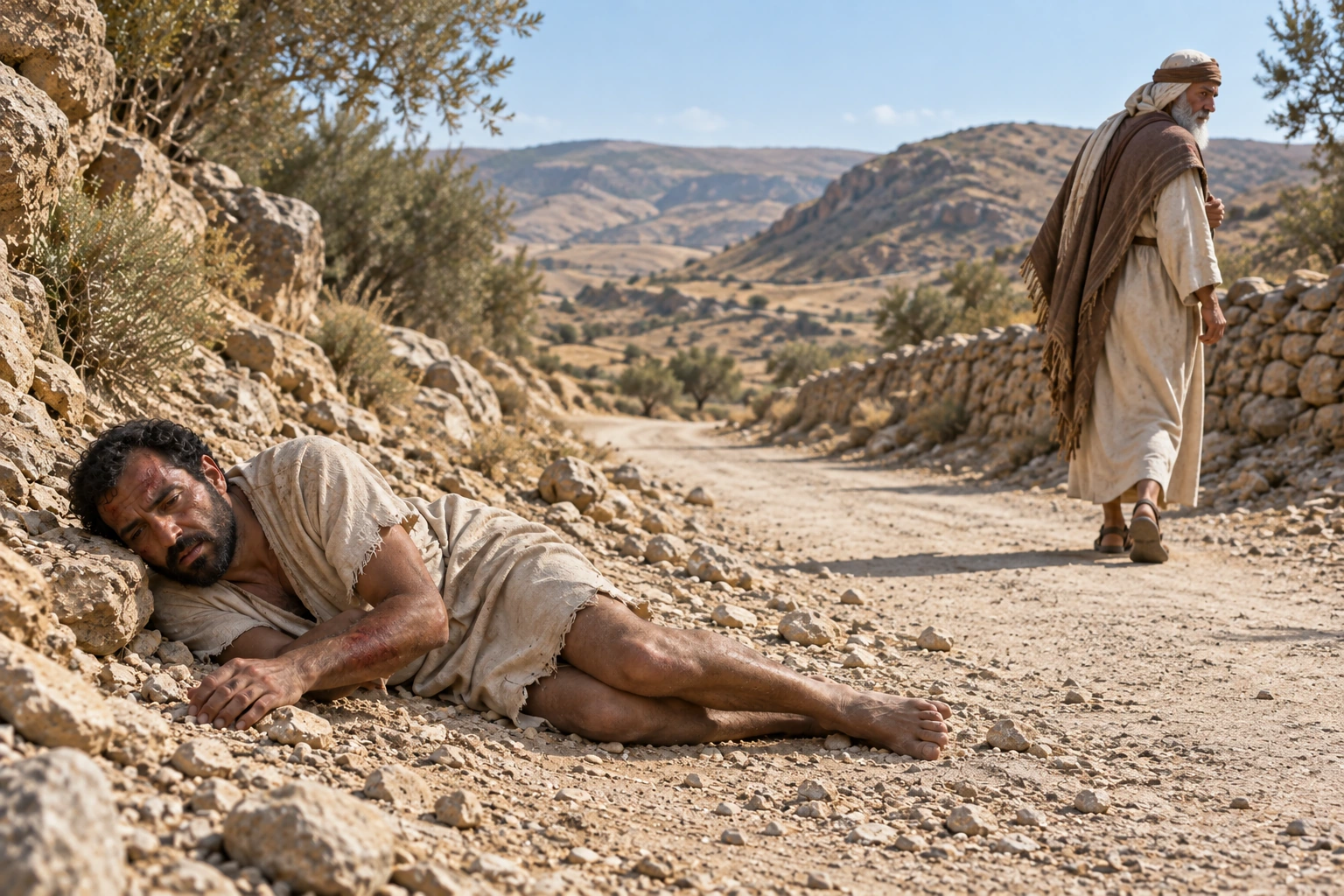
Priest passing at a distance
The priest continues along the other side while the traveler remains on the ground. Jesus tells us that he saw the man and passed by, without explaining his private reasons.
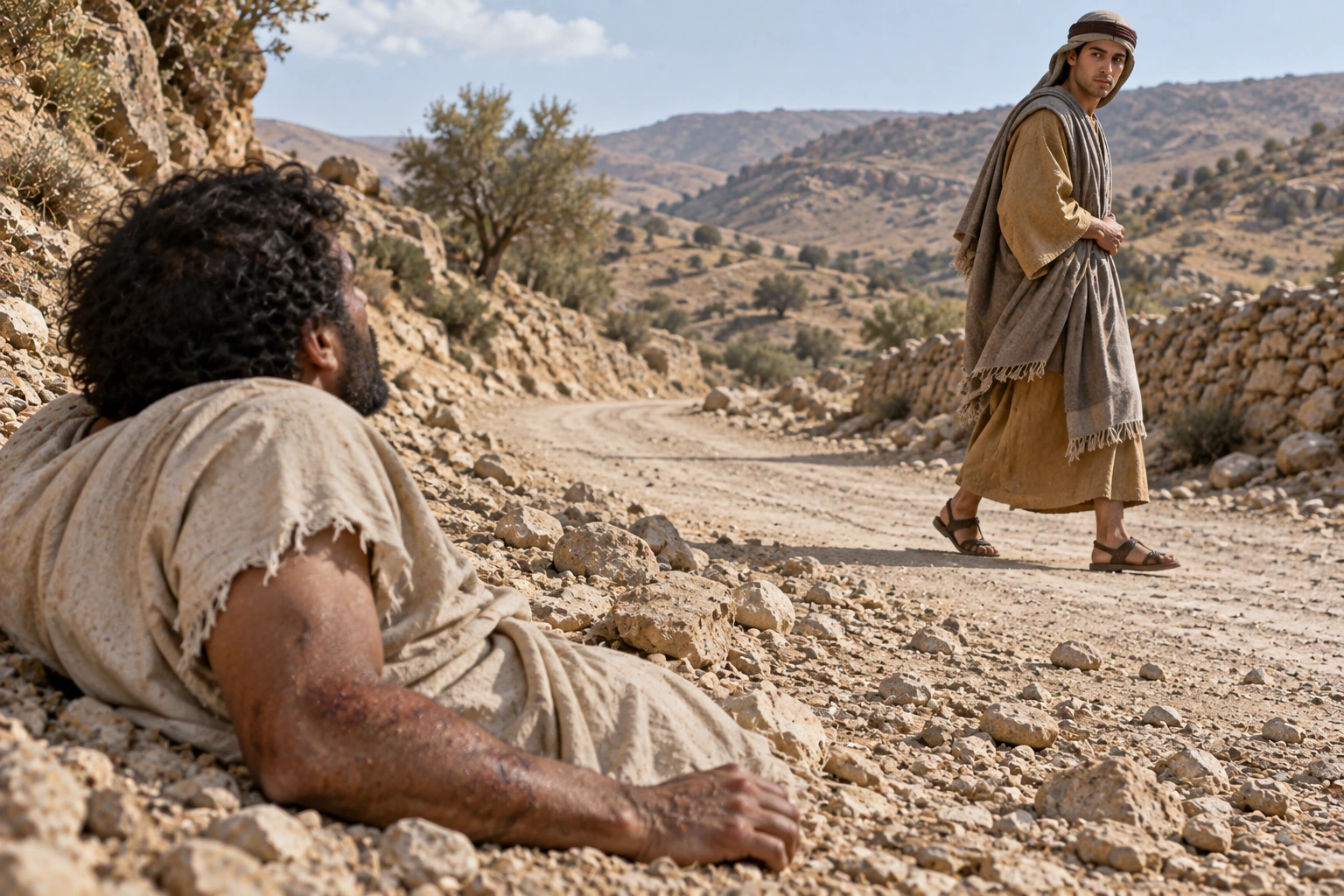
Robbers strip and beat the traveler, leaving him half dead. A priest sees him and passes on the other side. A Levite also sees him and passes by. Jesus records their actions without explaining their private reasons; a careful retelling should not invent motives for either.
Explore and study
Levite passing
The Levite looks toward the injured traveler but continues past him. In Jesus' account, coming near and seeing the need do not yet become an act of care.
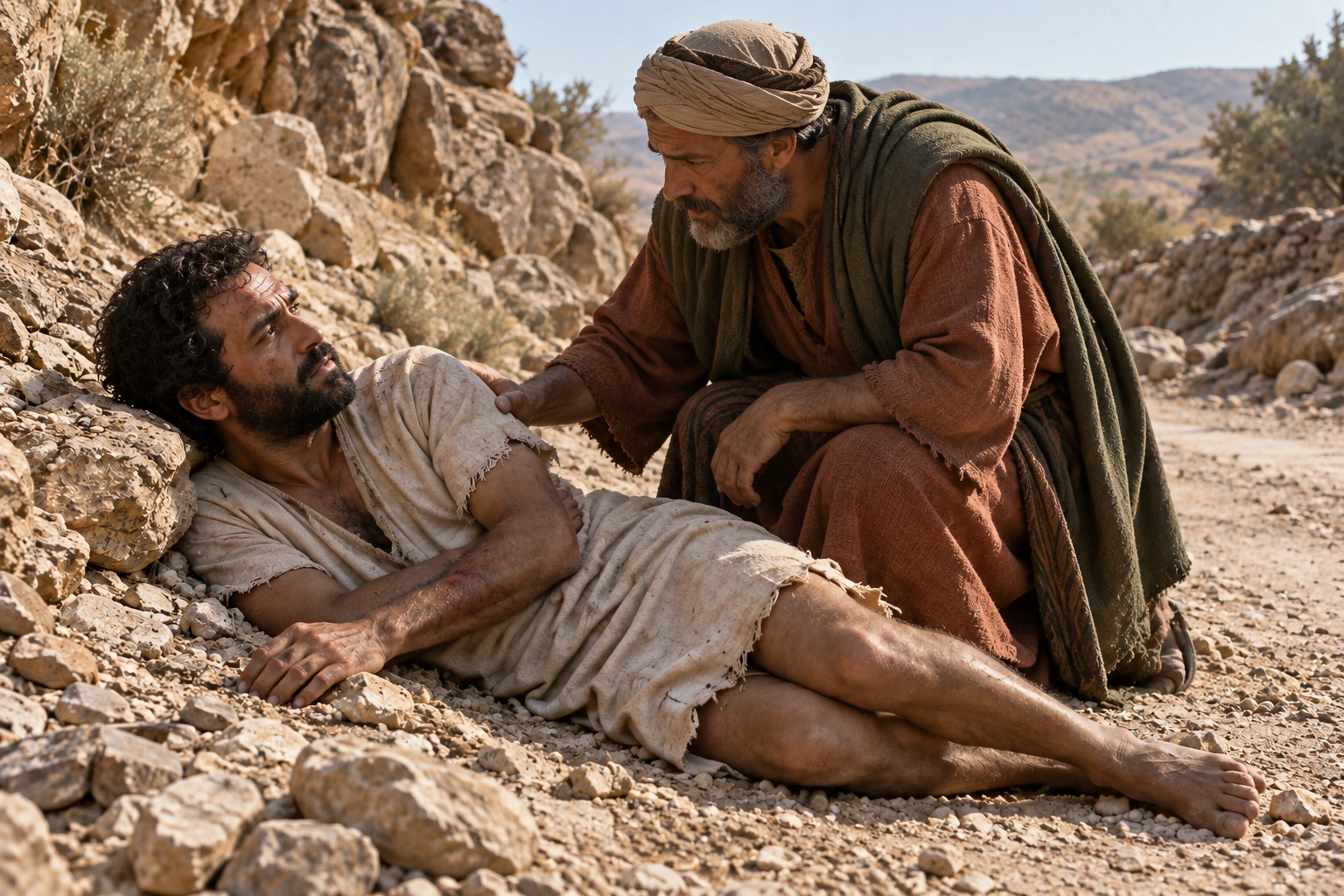
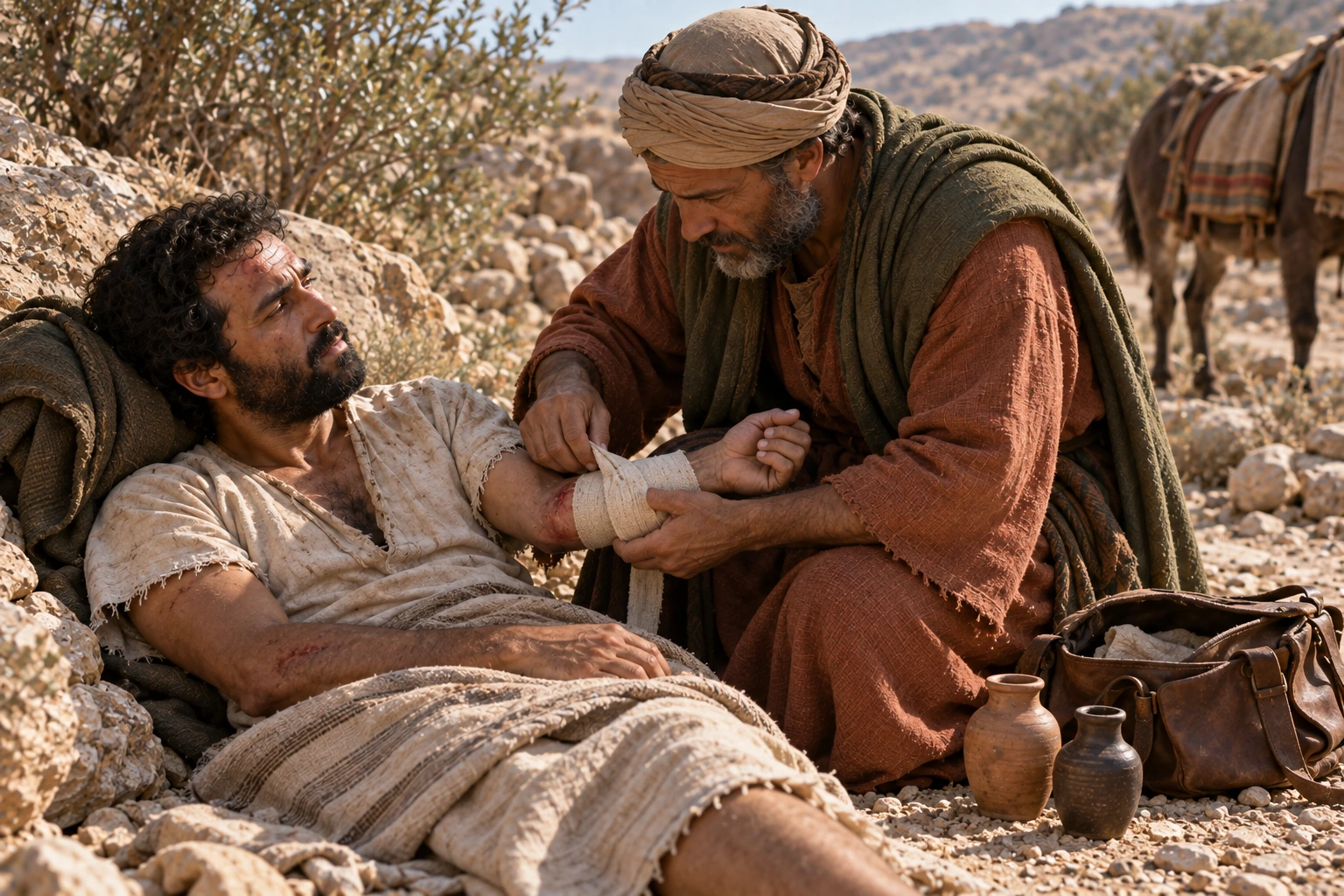
A Samaritan comes near, sees the wounded man, and is moved with compassion. That compassion becomes practical work. He binds the wounds, uses oil and wine, places the man on his own beast, and takes him to an inn.
Explore and study
The Samaritan stops beside him
The Samaritan kneels beside the injured traveler and meets his eyes with a hand resting gently on his shoulder. Jesus describes compassion that brings the stranger close enough to help.
Explore and study
Binding the traveler's wounds
The Samaritan bends over the traveler's arm, supporting it while he wraps a strip of cloth around the wound. In Jesus's story, compassion becomes practical care as he binds the wounds and tends them with oil and wine.
Explore and study
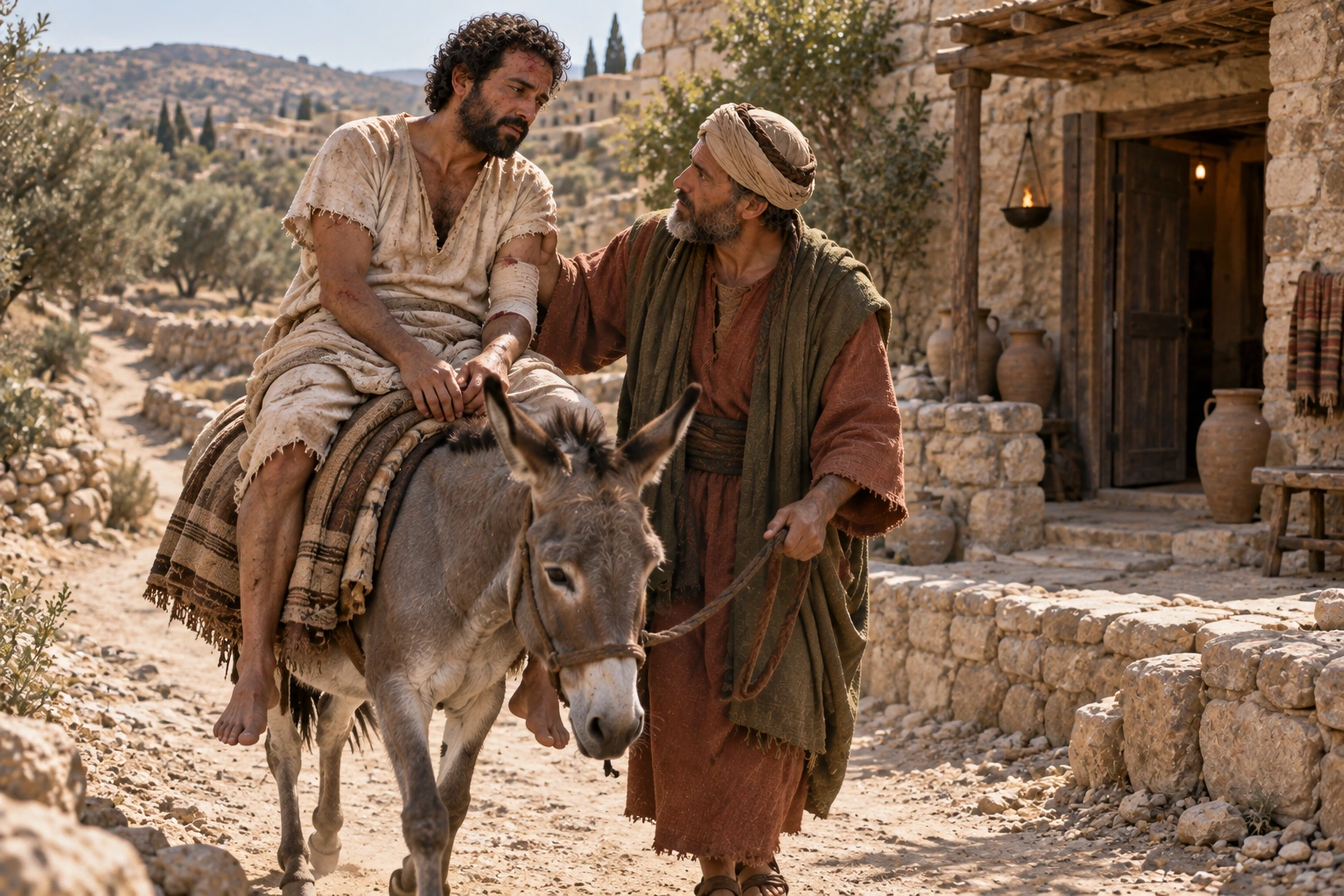
Carrying him toward care
The traveler sits on the animal's woven covering while the Samaritan steadies his arm and holds the lead. Jesus tells how the Samaritan brought him to an inn, continuing the care he had begun beside the road.
Explore and study
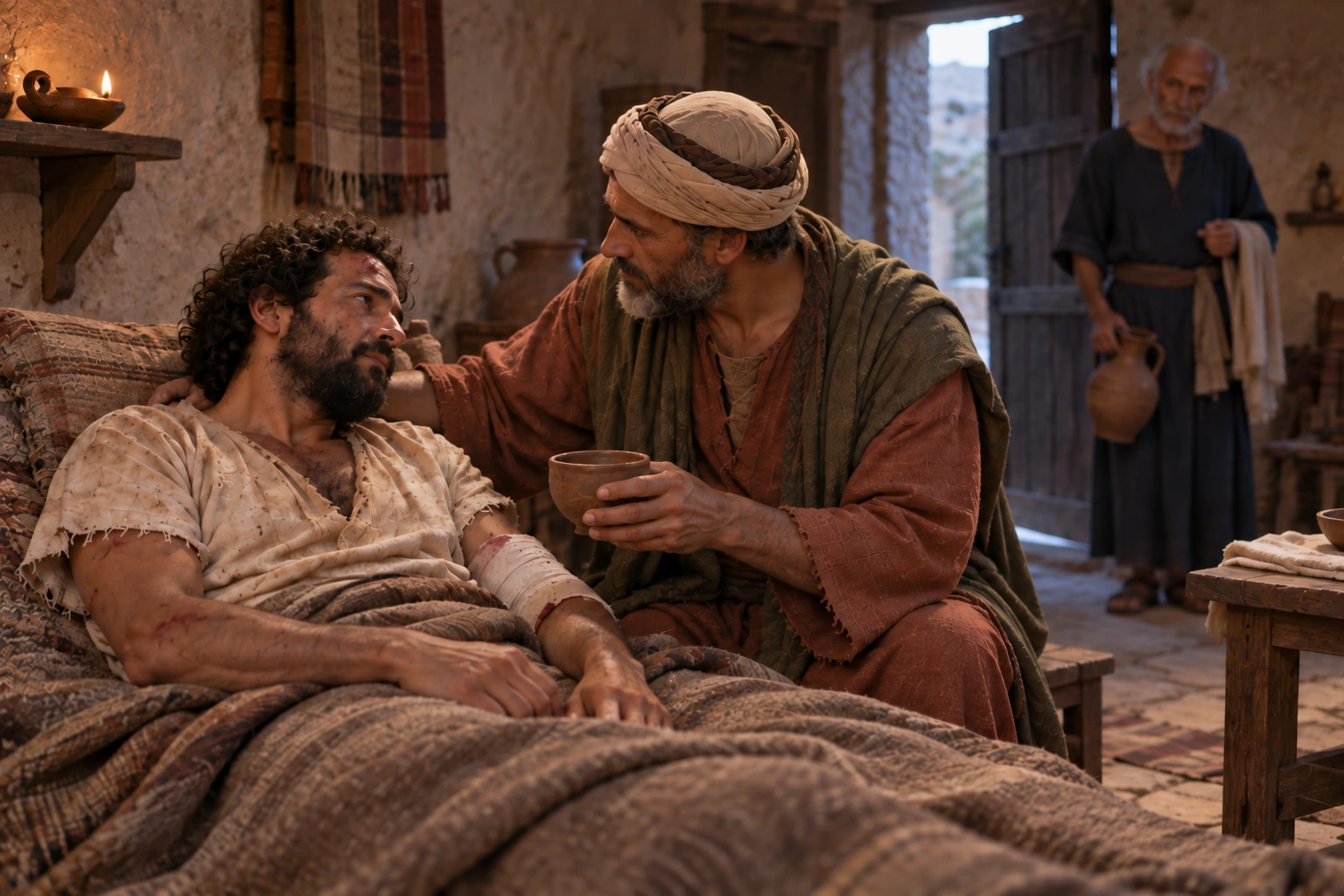
Care continues at the inn
At the inn, the Samaritan remains beside the injured man and cares for him. The cup and reassuring touch picture that continuing attention, carrying mercy beyond the roadside.
Read and discover
Mercy that continues beyond the road

Explore and study
Provision for continued care
The Samaritan gives the innkeeper two pence and asks him to care for the traveler. He promises to repay any further expense when he returns, providing for care that will continue after he leaves.
The care continues after the first emergency. The Samaritan tends the traveler, gives money to the host, and undertakes further expense if needed. Mercy in the story includes interruption, transport, provision, and follow-through.
Jesus' final question changes the direction of the lawyer's original question. Rather than drawing a boundary around who qualifies for help, He asks which person became a neighbor to the wounded man. The lawyer identifies the one who showed mercy, and Jesus calls him to act likewise.
Read and discover
Becoming a neighbor
The contrast with a Samaritan would matter to the story's original hearers, but we should not turn that contrast into caricatures of whole communities. Nor should we identify the unnamed traveler or the innkeeper as historical people whose biographies are known.
As you reflect, notice both the first moment of stopping and the later work of sustaining care. A person may need more than an expression of sympathy. What responsible, practical help can you offer, and when should you involve others who can provide the care you cannot?
Continue with Jesus Christ
The Sheep and the Goats
The King remembers meals, visits, clothing, and welcome. This judgment scene places ordinary acts of care within our response to Christ.
Open study →The Great Supper
The supper is ready, but the first invitees excuse themselves. The widening invitation brings overlooked people toward a place at the table.
Open study →Loving Our Neighbor
Continue through the connected teachings in this collection and compare their distinct settings.
Open study →