Read and discover
Words about the kingdom at a meal
Explore and study
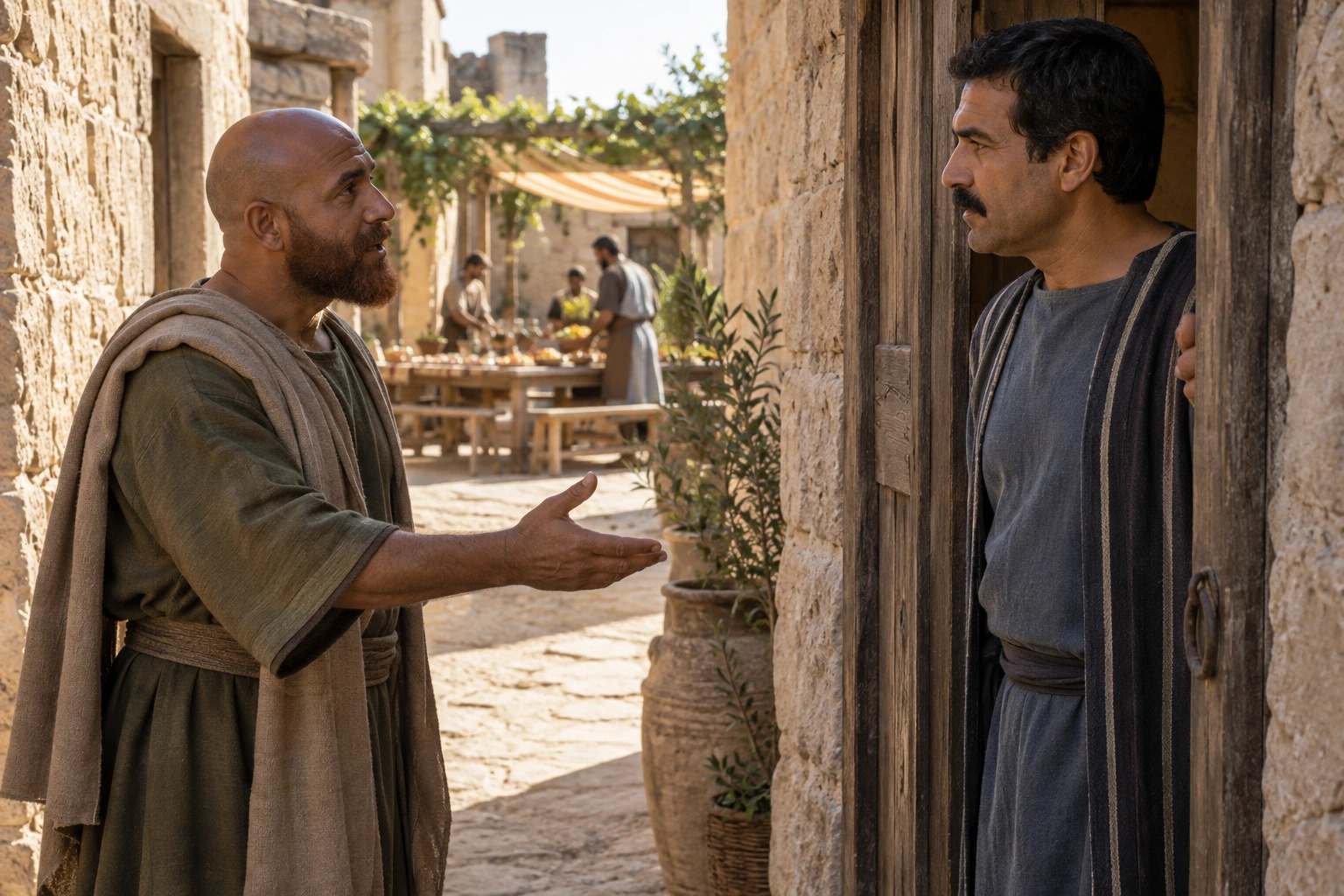
Servant announcing supper
The servant announces that the supper is ready. Jesus begins the story with a prepared meal and an invitation to come.
At a meal, a guest speaks of the blessedness of eating bread in God's kingdom. Jesus replies with a story about a man who prepares a great supper. When it is ready, his servant goes to summon the invited guests. The account asks how a warmly spoken idea becomes an actual response. Luke 14:12-24
Read and discover
Excuses and an expanding invitation
Explore and study
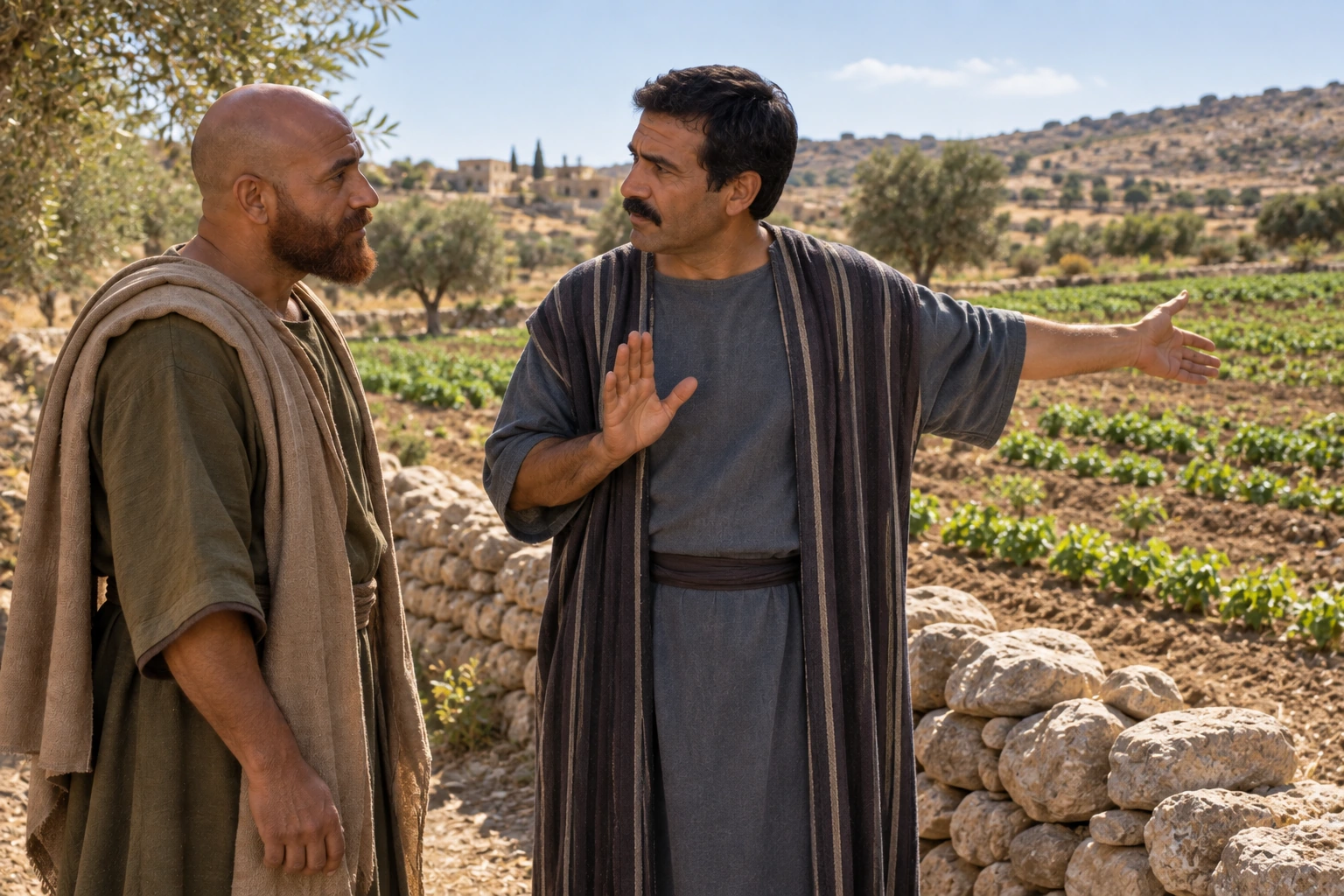
The field excuse
An invited man gestures toward his field as he asks to be excused. This scene pictures the first refusal Jesus describes, before the invitation reaches others.
The invitees excuse themselves through a purchased field, newly bought oxen, and a marriage. Their differing reasons produce the same result: they do not come. The story does not require every ordinary responsibility to be treated as wrong; it exposes refusal of this invitation.
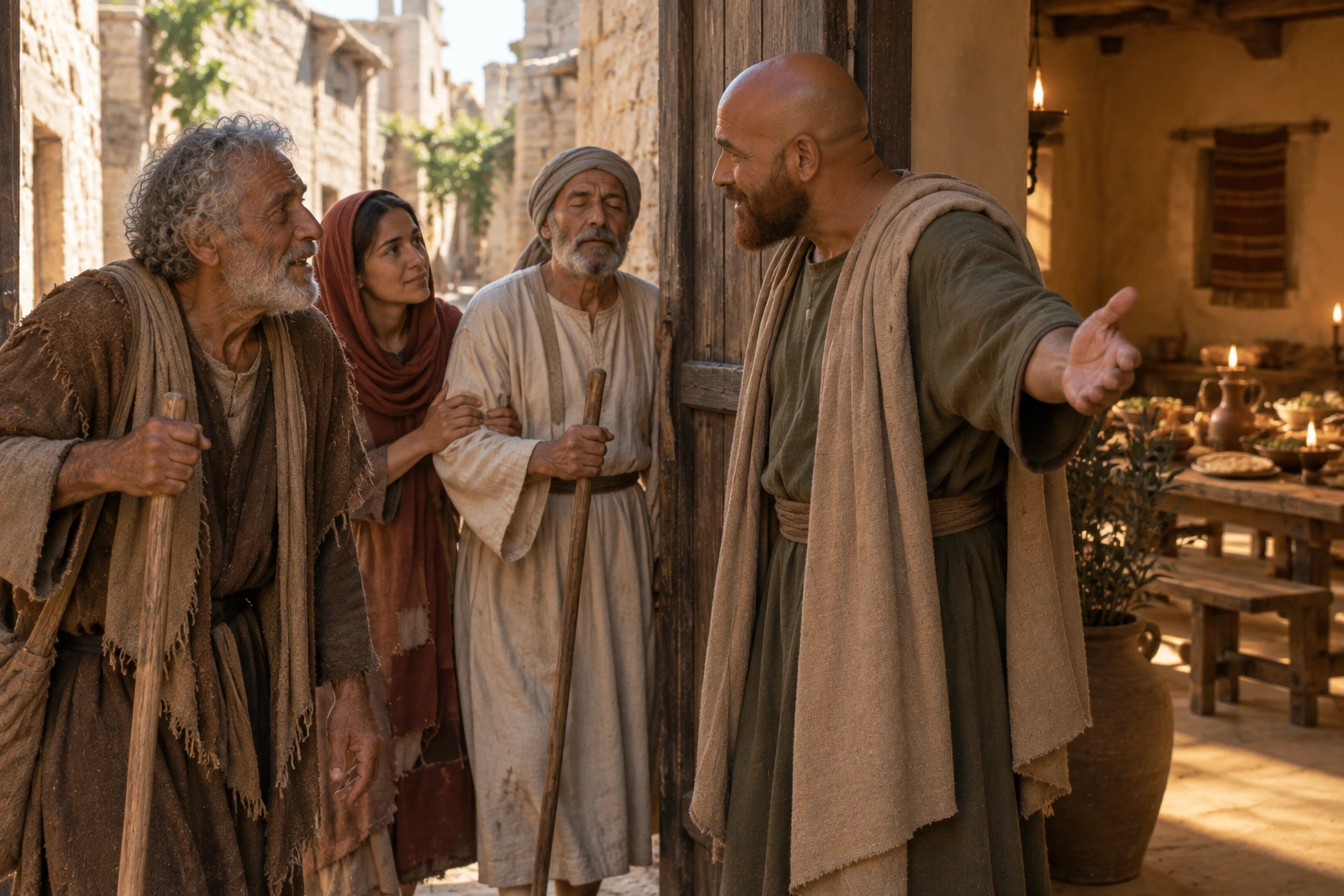
The host sends the servant into the streets to bring people ordinarily left at the margins. When room remains, the invitation extends farther. The movement is toward a filled house, with welcome reaching beyond those who first received the summons.
Explore and study
Guests welcomed from streets
At the doorway, the servant welcomes a group into the waiting supper. Jesus describes the invitation reaching people in the streets and lanes who had not been at the center of the first guest list.
Explore and study
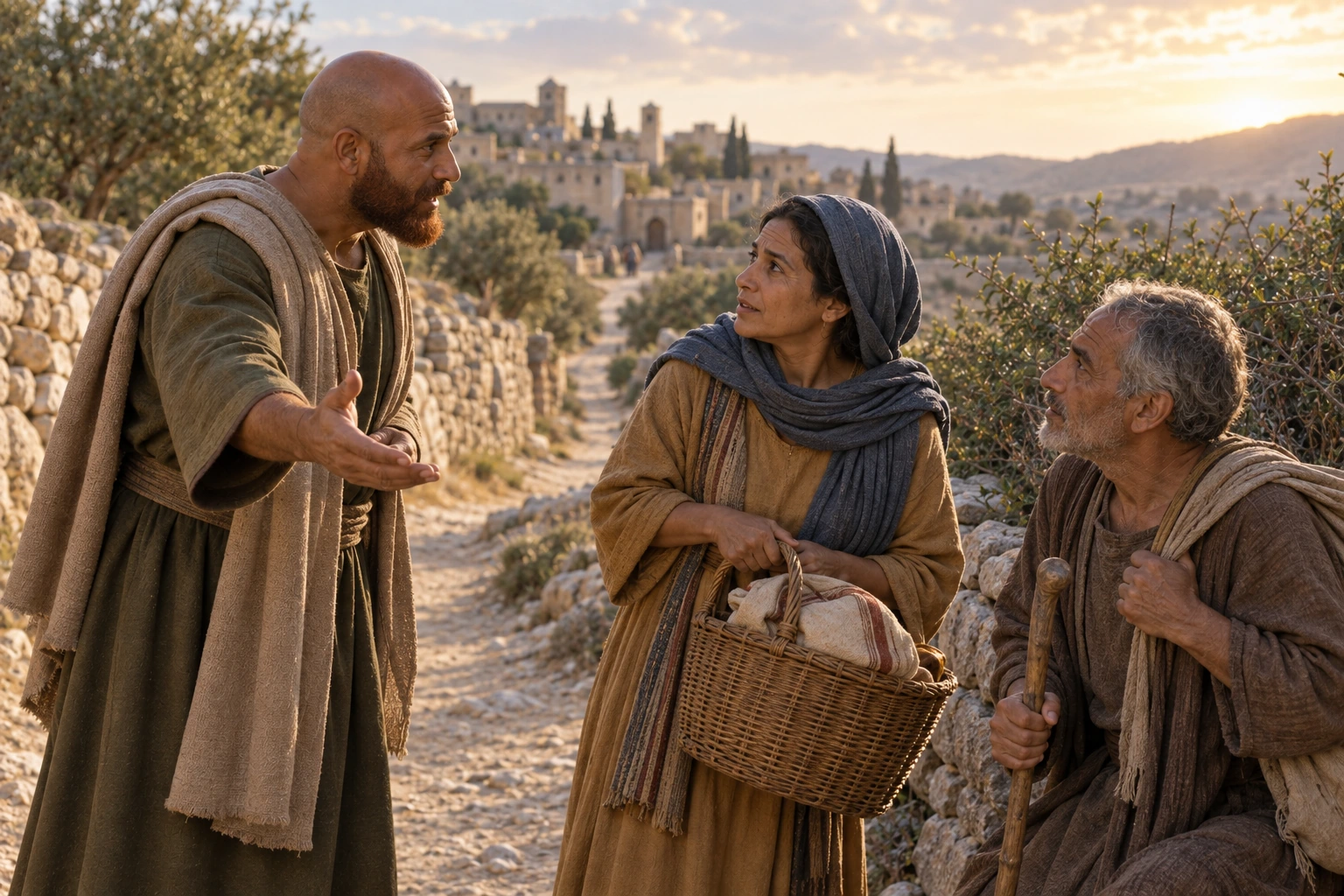
The invitation extending beyond the town
The servant carries the invitation out beyond the town, meeting people along the way. The master's wish is that his house be filled, widening the welcome beyond those first invited.
Read and discover
Consider both receiving and welcoming
This account should remain distinct from Matthew's royal wedding. Luke does not add a king's son or a wedding-garment encounter. Its particular force lies in the ready supper, the excuses, and the widening welcome.
Reflection can attend to both sides of the table. What makes it difficult for you to respond to a meaningful invitation? And when you are in a position to welcome others, who might need a place that is offered with dignity rather than as a display of your generosity?
Continue with Jesus Christ
The Wedding of the King's Son
The wedding invitation is refused, widened, and finally answered. Matthew's account asks readers to take both the welcome and their response seriously.
Open study →Choosing the Lower Place
At a meal, Jesus notices the places people choose. His teaching moves from seeking honor to offering generous welcome.
Open study →Loving Our Neighbor
Continue through the connected teachings in this collection and compare their distinct settings.
Open study →