Read and discover
The invitation is ready
Explore and study
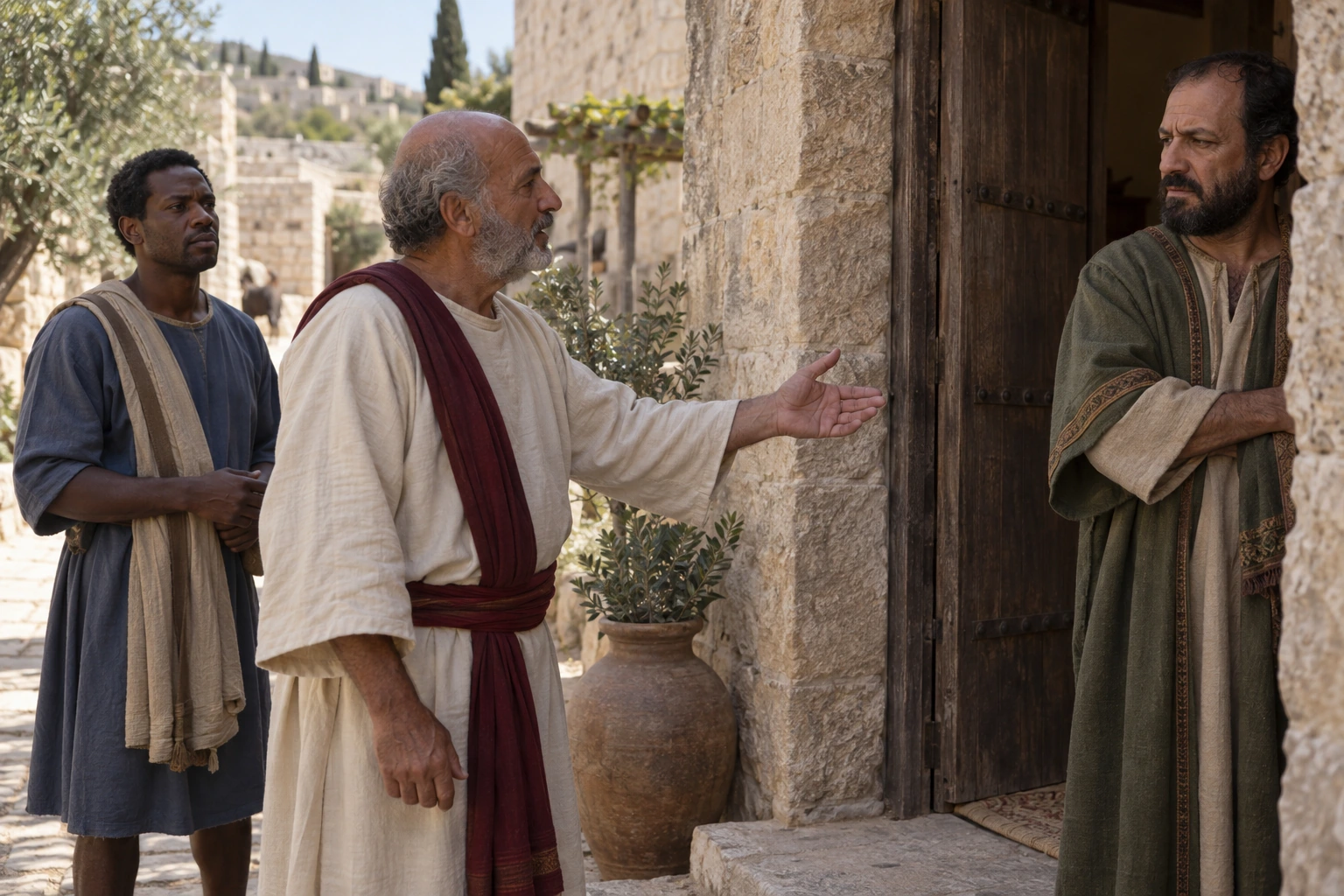
The invitation is spoken
The servants bring the king's invitation, but those first invited will not come. The doorway scene pictures an oral summons rather than a written invitation.
A king prepares a wedding for his son and sends servants to summon invited guests. Their refusal is followed by another invitation announcing that everything is ready. Some go to their own affairs; others mistreat and kill the servants. The story gives the rejection serious weight. Matthew 22:1-14
Read and discover
Refusal, welcome, and the garment
Explore and study
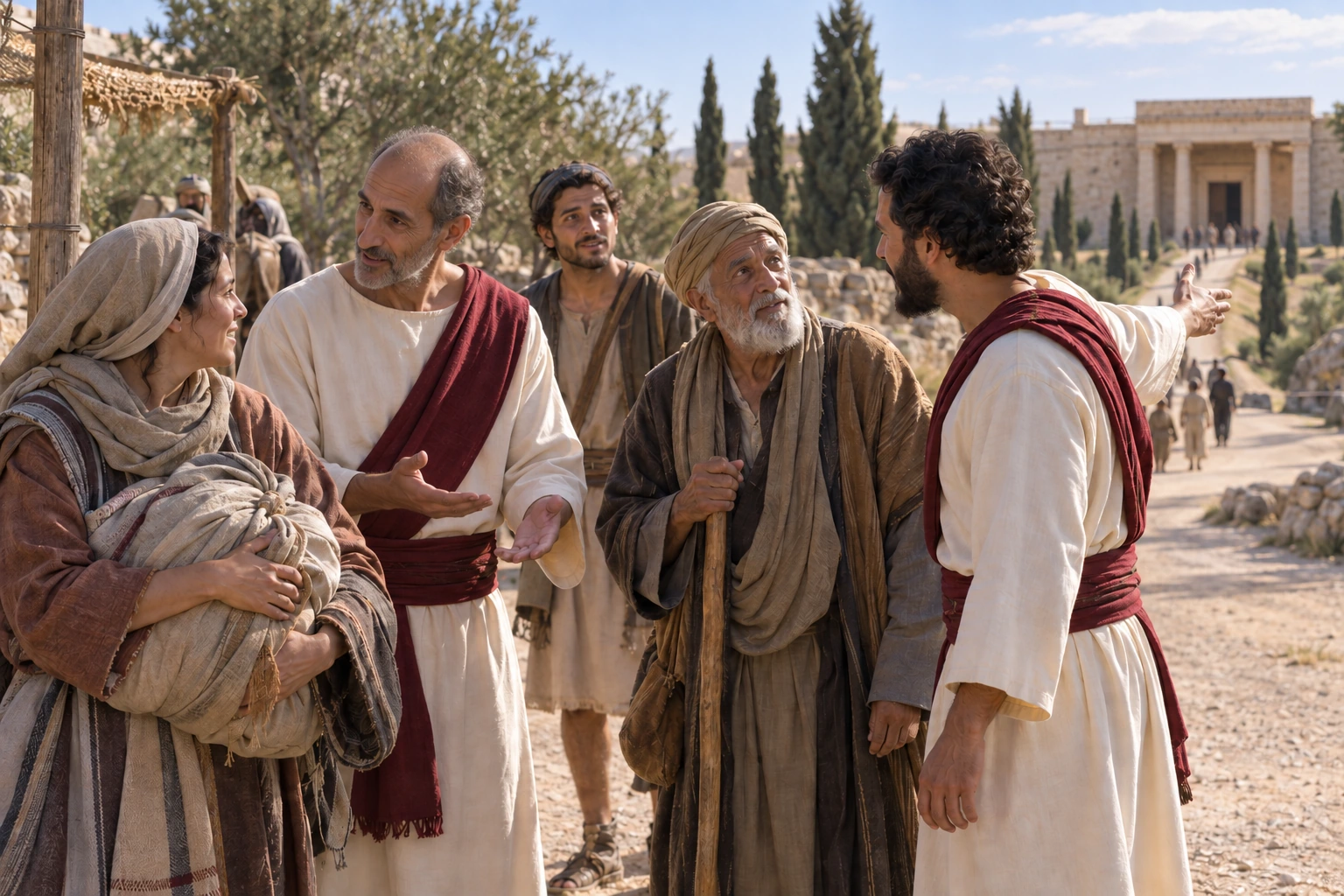
The invitation reaches the roads
The servants go out to the roads and gather everyone they find. The king's invitation reaches beyond the original guests, and the wedding hall begins to fill.
The king then sends servants to the roads to gather people they find. The wedding fills with guests described as both bad and good. The widening invitation is a central movement, but the account does not end at the doorway. The king enters and addresses a guest without wedding clothing.
That final exchange prevents a reading in which receiving an invitation makes every response irrelevant. At the same time, the text does not itself supply a detailed history of how wedding garments were distributed. An explanation should not turn an unverified custom into the key on which the whole passage depends.
Explore and study
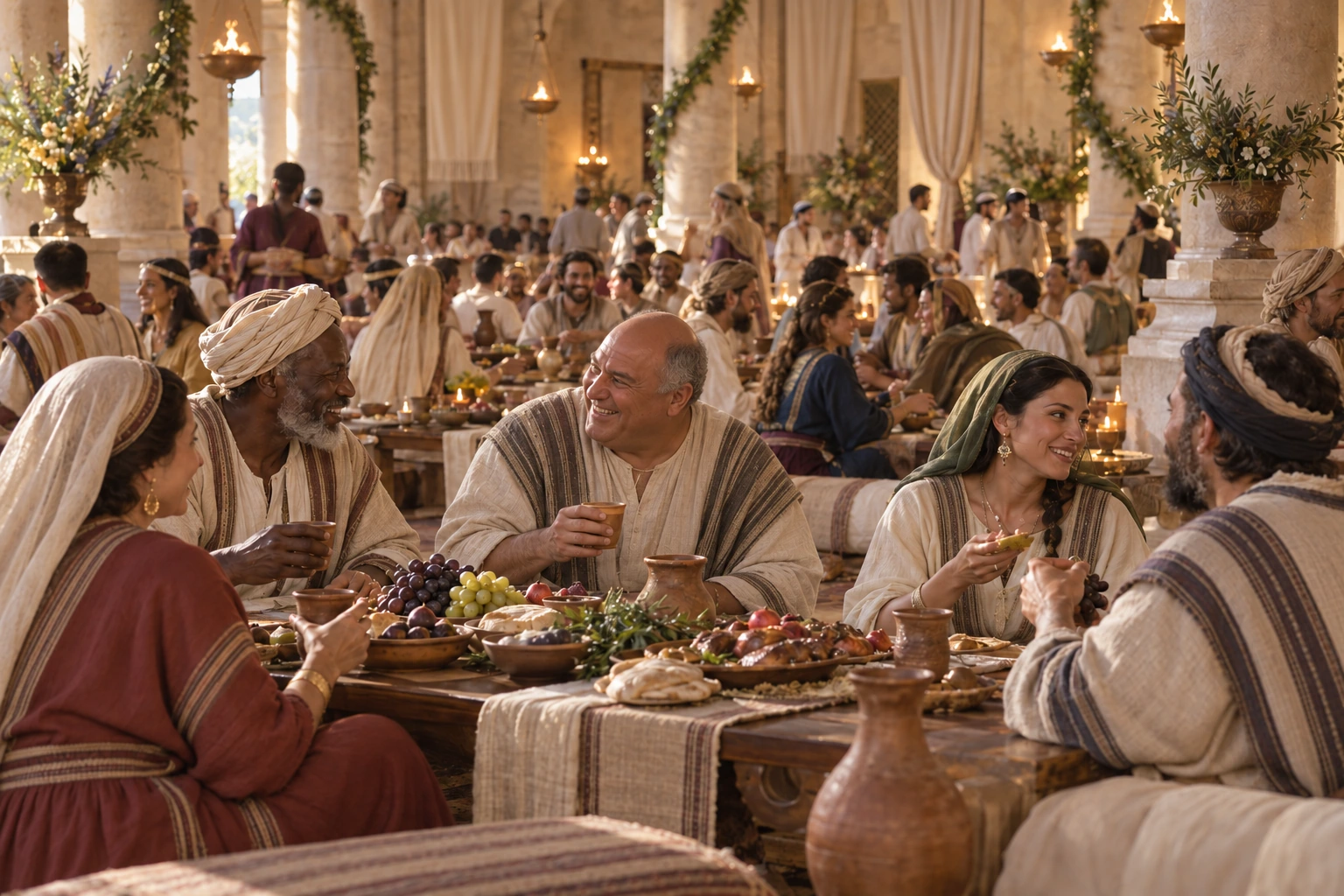
The wedding hall is filled
The wedding hall is filled with guests gathered by the servants. Faces turn toward one another around the tables, picturing the breadth of the invitation in Jesus' story.
Read and discover
An invitation that calls for response
Explore and study
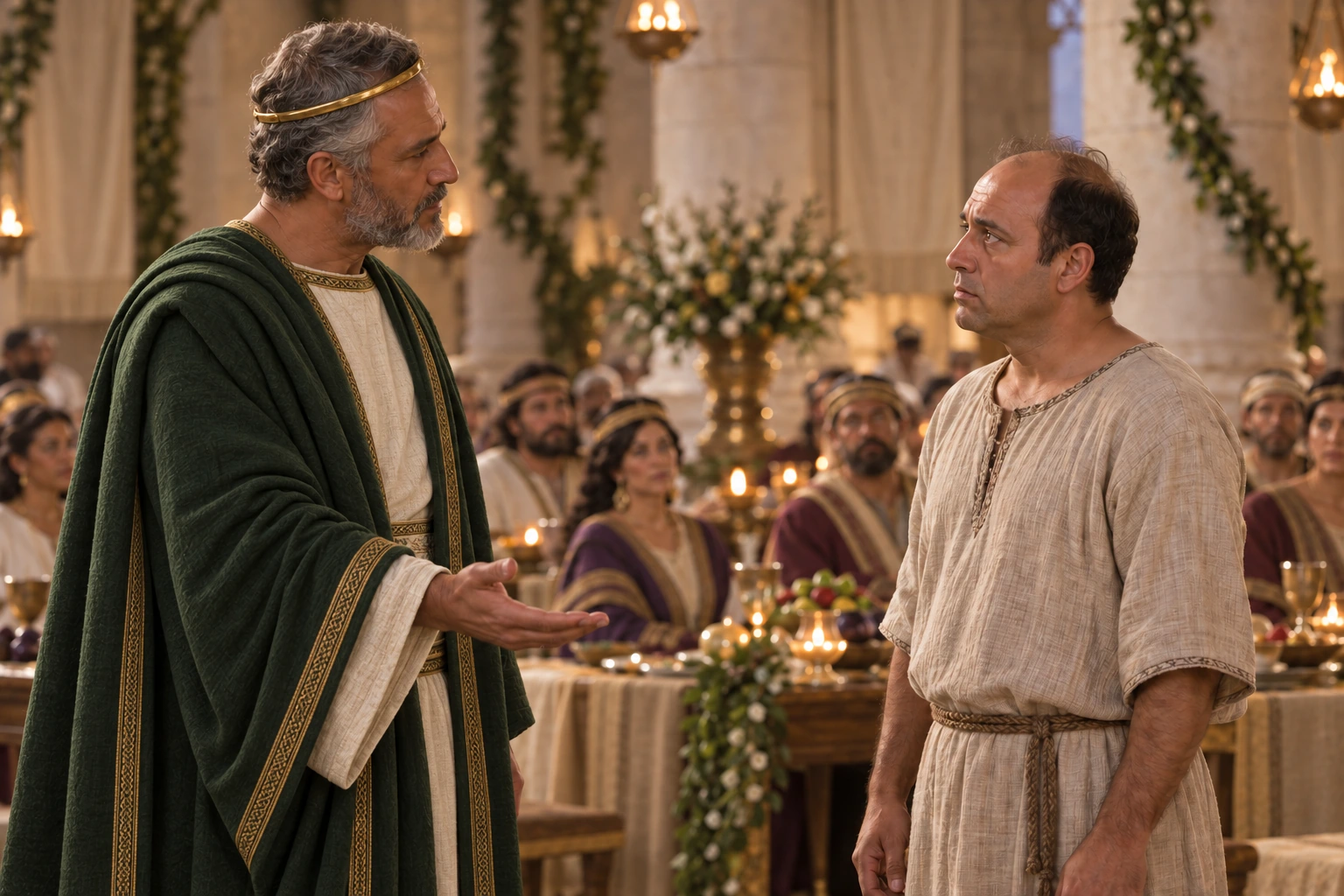
The king questions a guest
The king notices a guest without a wedding garment and asks how he entered. The man has no answer. Jesus' story holds the wide invitation together with the seriousness of responding to it.
Matthew's story is distinct from Luke's great supper. The king's son, the violence, and the garment episode belong here and should not be silently inserted into Luke. Keeping the accounts separate allows each to ask its own questions about invitation, refusal, and response.
You might consider what draws your attention away from an invitation that matters. Reflection can also ask how preparation expresses respect for what has been offered. The passage is a summons to a serious response, not permission to decide which present-day people belong outside the feast.
Continue with Jesus Christ
The Great Supper
The supper is ready, but the first invitees excuse themselves. The widening invitation brings overlooked people toward a place at the table.
Open study →The Ten Virgins
All ten wait and all ten sleep, but their preparation differs. The midnight announcement reveals what they have brought to the waiting.
Open study →The Kingdom of God
Continue through the connected teachings in this collection and compare their distinct settings.
Open study →