Read and discover
Why Jesus tells of the missing one
Explore and study
Turning toward the one who is missing
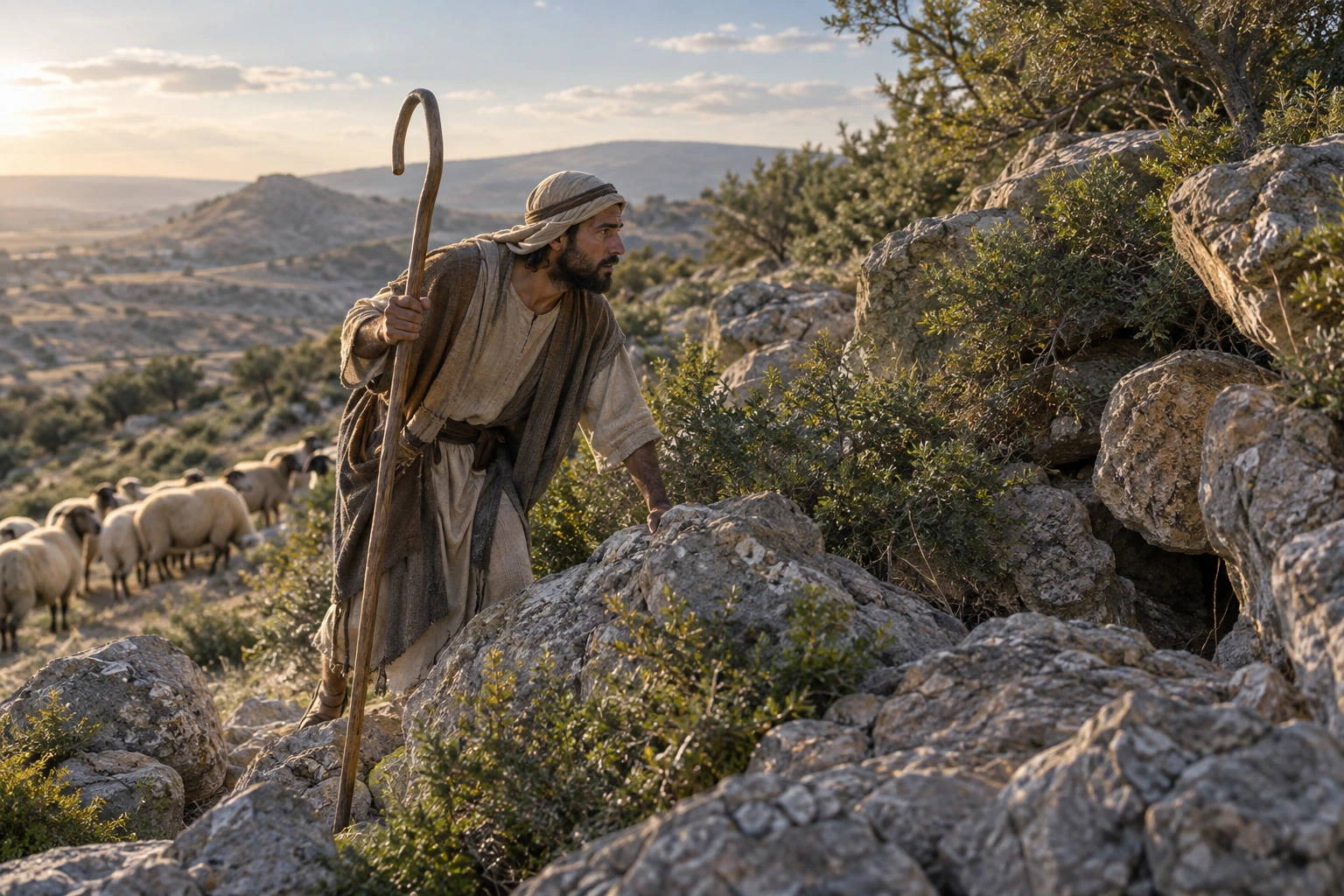
The flock remains behind as the shepherd turns his attention toward the rocky hillside. Jesus asks whether a man with one wandering sheep would leave the others and seek it. This image shows the beginning of that search, pointing toward the Father's care that none of His little ones should perish.
Luke places the lost sheep at the beginning of Jesus' answer to people who complain that He receives sinners and eats with them. Before we enter the story, that criticism helps us understand why the search and the celebration matter. Jesus is answering an objection to His welcome. Luke 15:1-7
Read and discover
The search and the shared joy
Explore and study
The sheep is found
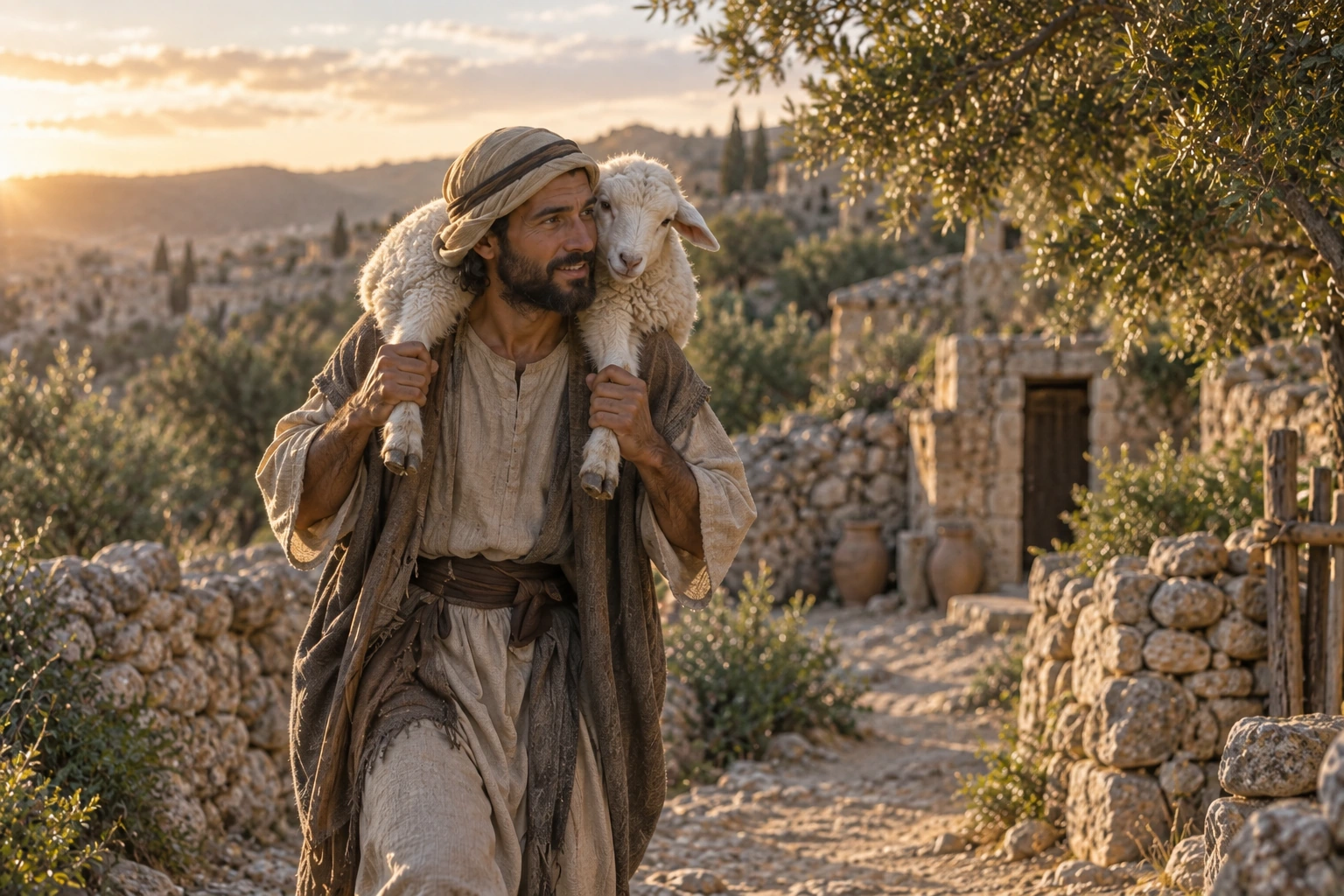
The search has given way to relief. Luke describes the shepherd laying the found sheep on his shoulders with joy. Jesus uses the recovery to speak of heaven's joy over a sinner who repents.
A shepherd notices that one of a hundred sheep is missing. He goes after it, finds it, carries it on his shoulders, and calls friends and neighbors to share his joy. The sheep's recovery is not treated as a minor correction to the flock's total. It is an occasion worth celebrating.
Matthew preserves the comparison in teaching about care for the little ones. There Jesus concludes that the Father does not will that one of them should perish. The two contexts illuminate the value of the one without requiring us to pretend they have identical surrounding conversations. Matthew 18:12-14
Read and discover
Notice who is absent
Explore and study
Rejoicing with neighbors
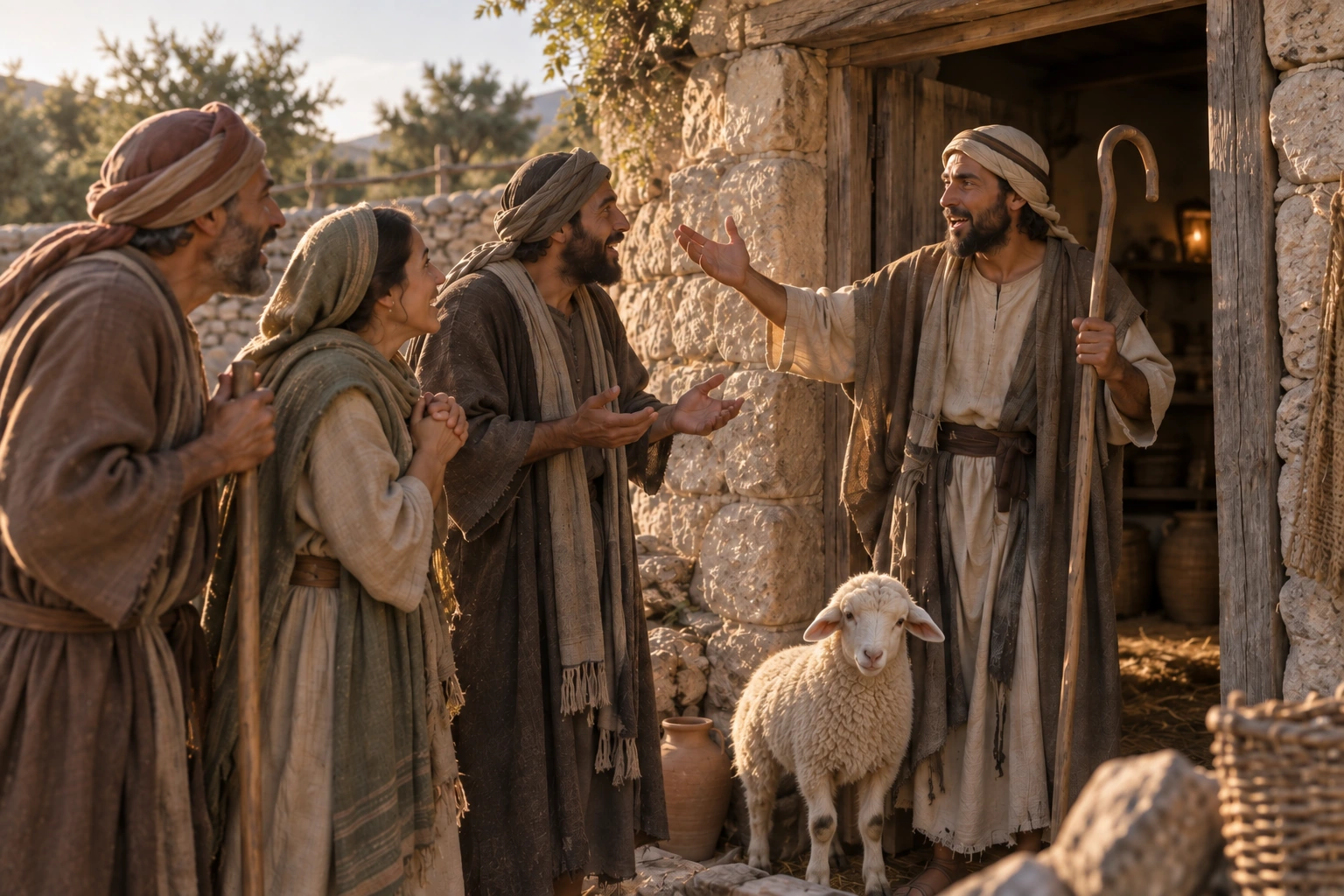
The shepherd calls others to share his joy over the sheep he has found. Luke's account carries the recovery beyond a private moment into rejoicing with friends and neighbors, then connects that joy with repentance. The welcome invites us to receive another person's return with gladness.
You might begin reflection with someone who is easy to overlook. The story does not supply a formula for approaching another person or permission to disregard their agency. It invites care that notices absence, makes a sincere effort, and rejoices in another person's good without making the searcher the center.
Continue with Jesus Christ
The Lost Coin
A lamp, a broom, and a careful search show that one missing coin still matters. Its recovery calls neighbors into the joy.
Open study →The Prodigal Son and His Brother
One son comes home from far away; the other stands outside the celebration. The father goes toward both, and the story leaves an invitation before us.
Open study →Mercy, Repentance, and the Joy of Returning
Continue through the connected teachings in this collection and compare their distinct settings.
Open study →