Read and discover
Read the welcome in its setting
Begin Luke 15 with the complaint that Jesus receives sinners. The searches and celebration answer that complaint. They are not isolated stories about sentimental kindness; they invite the hearers to reconsider what it means for a person to be found and welcomed. Luke 15:1–32
Read the whole movement of each account before deciding which character seems most like you. The returning son and the brother outside both matter. The forgiven servant's later conduct matters. A selected happy moment can be true to the story while still leaving out the question Jesus intends to ask. Matthew 18:21–35
Begin with the passage, then listen for the explanation Jesus gives before considering your own response. The modern pictures in this collection imagine mercy in ordinary life: searching carefully, listening honestly and giving someone time to take a next step.
Read and discover
Notice the one who is missing

Explore and study
A search worth the effort
Two people search the ground together beside a path. Their patient attention recalls the woman searching for her lost coin and asks how carefully we notice what matters to someone else.
The shepherd searches for one sheep, and the woman searches for one coin. Their effort makes the value of the missing one visible. Jesus joins both searches with joy over repentance, asking His hearers to recognize the good in the welcome they have criticized. Luke 15:4–10
Attention can be a beginning in ordinary life. Someone may need practical help finding what was lost, or a clear way back into participation after an absence. Those actions are applications of attentive care; they do not make us responsible for controlling another person's response or completing their journey for them.
Explore and study
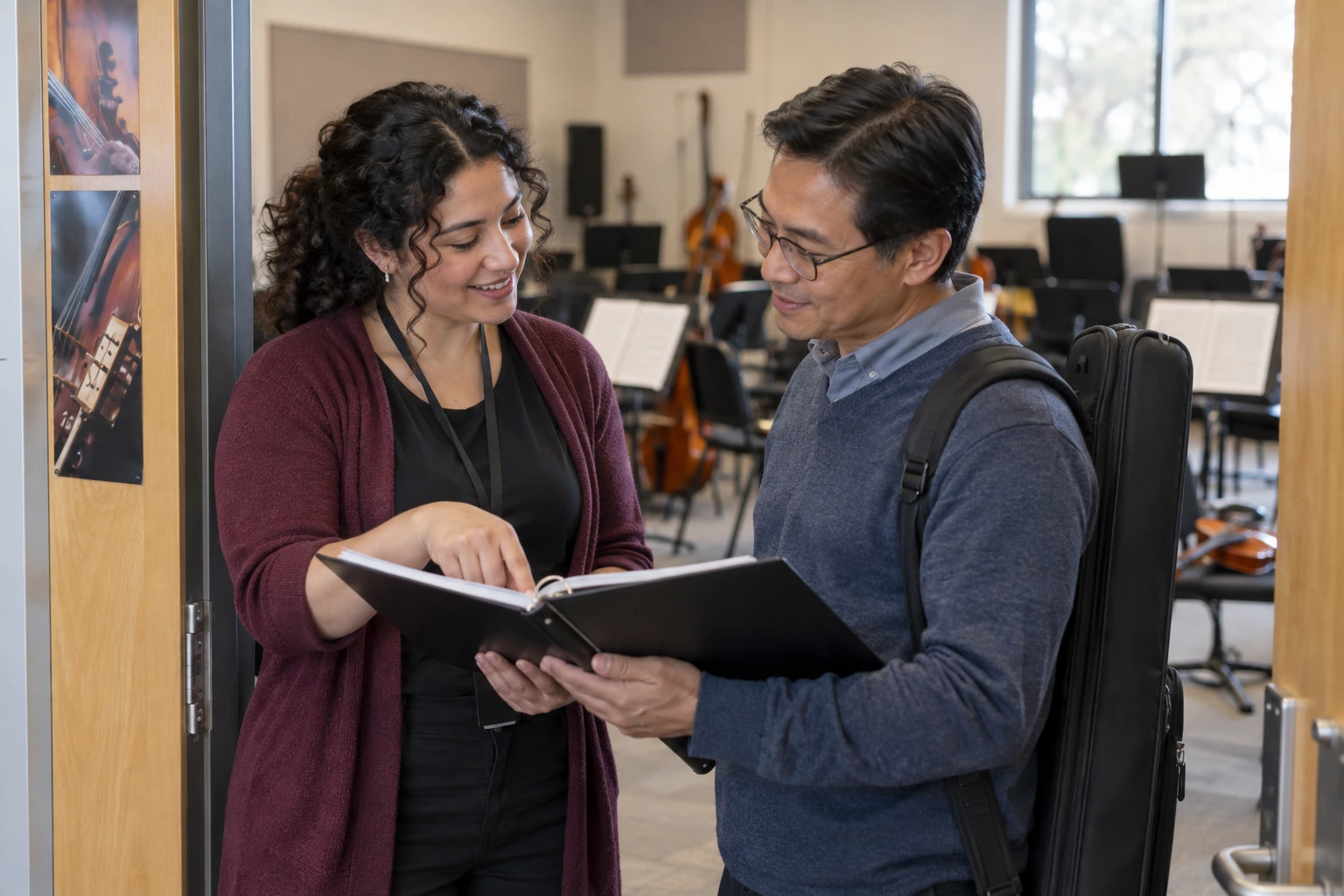
A route back into participation
At the music-room doorway, a woman helps a man with an open rehearsal folder. A practical welcome can help someone take a next step toward joining in.
Read and discover
Let mercy meet an honest response

Explore and study
Truth about a damaged bicycle
A teenager speaks beside a bicycle with a damaged basket while an adult listens. The returning son's confession invites us to begin making things right with honest words and willing action.
The younger son decides to return and speak truthfully about what he has done. The father's welcome does not require him to hide that truth. In the unmerciful servant, a released debt becomes the measure of a response the servant refuses to give. Mercy and accountability are not treated as unrelated matters. Luke 15:17–24
An application may begin with acknowledging an error and taking a responsible step to correct it. Receiving mercy also asks how we treat the next person who needs patience. Forgiveness does not require pretending harm was harmless, abandoning appropriate boundaries, or restoring unsafe access. Matthew 18:27–35

Explore and study
Correcting a mistake openly
Two people examine a record together, one pointing while the other writes. Jesus' story of the two sons asks whether a change of mind becomes a change in what we do.
Read and discover
Make room for patient cultivation

Explore and study
Patient cultivation
Two gardeners tend the soil around a small tree. The gardener's patient care in Jesus' fig-tree parable encourages us to consider the time and attention growth may need.
Before the barren fig tree, Jesus rejects the assumption that victims of tragedy were worse sinners. The gardener then asks for time to dig and nourish rather than cut the tree down at once. The story holds urgency and patient care together, and it does not report the tree's later outcome. Luke 13:1–9
Learning a different response can take practice. A person may need guidance, support, and a chance to put a better choice into action. Patient care is not indifference to fruit, but neither is it a demand that growth arrive on the observer's schedule. An illustration of cultivation invites reflection; it cannot explain why a particular person suffers.

Explore and study
Learning a merciful response
Two people talk across an open notebook, giving one another time to speak. The call to forgive can lead us to practice listening, honesty, and restraint while keeping appropriate boundaries.
Read and discover
Learn to share the joy

Explore and study
Sharing another person's joy
A woman applauds a graduate holding flowers and a folder. Beside the elder son's story, their celebration asks whether we can share another person's joy.
The elder son remains outside the celebration, and the father goes out to him. His brother's welcome feels like a judgment on his own service. The father answers that resentment without denying the elder son's place with him. The story leaves the son's final response open. Luke 15:25–32
Another person's welcome, recognition, or progress can stir feelings we would rather conceal. We can acknowledge those feelings without making them the final word. The debtors' story also asks how awareness of mercy can deepen love. A small act of shared gladness may be a meaningful place to begin. Luke 7:41–47

Explore and study
Making room for shared joy
A group applauds as one woman receives a small card. The father's welcome in Jesus' story invites us to join in joy rather than measure who deserves the most attention.
Read and discover
Bring the teaching into your own reflection
Read and discover
Explore every study in this collection
Parables and story pictures
The Lost Sheep
Luke places the search amid criticism of Jesus receiving sinners; Matthew emphasizes care for the little ones. Let visitors read both contexts.
Open study →The Unmerciful Servant
Peter asks about forgiveness. The enormous forgiven debt throws the servant's refusal of mercy into sharp relief; forgiveness does not require returning to danger.
Open study →The Two Debtors
Jesus tells the brief debt story during a meal with Simon, then relates it to the woman's love and forgiveness. Do not identify the unnamed woman as Mary Magdalene.
Open study →The Barren Fig Tree
Read the gardener's request for time and care after Jesus rejects assumptions that victims were worse sinners. Repentance and patient cultivation belong together.
Open study →The Lost Coin
A woman searches carefully and calls others to share her joy. Jesus connects the recovery with joy over repentance.
Open study →The Prodigal Son and His Brother
Follow both sons and the father's invitations. The elder brother's response remains open; do not invent a final reconciliation absent from the account.
Open study →Related comparisons and allegories
The Good Shepherd and the Door
Jesus identifies Himself as the door and good shepherd who lays down His life. The Bible Dictionary calls this an allegory; Harmony uses the broader parable label.
Open study →The Hen Gathering Her Chicks
Jesus laments over Jerusalem with a picture of protective gathering. Preserve both His invitation and the sorrow of refusal.
Open study →Continue with Jesus Christ
Loving Our Neighbor
Follow mercy into practical help, hospitality, and continued attention to a person's needs.
Open study →Hearing and Living His Word
Explore how a changed mind becomes a changed response in the two sons and the builders.
Open study →Prayer, Readiness, and His Return
Consider humble prayer and persistent trust when change or justice takes time.
Open study →