Read and discover
A father and two sons
Explore and study
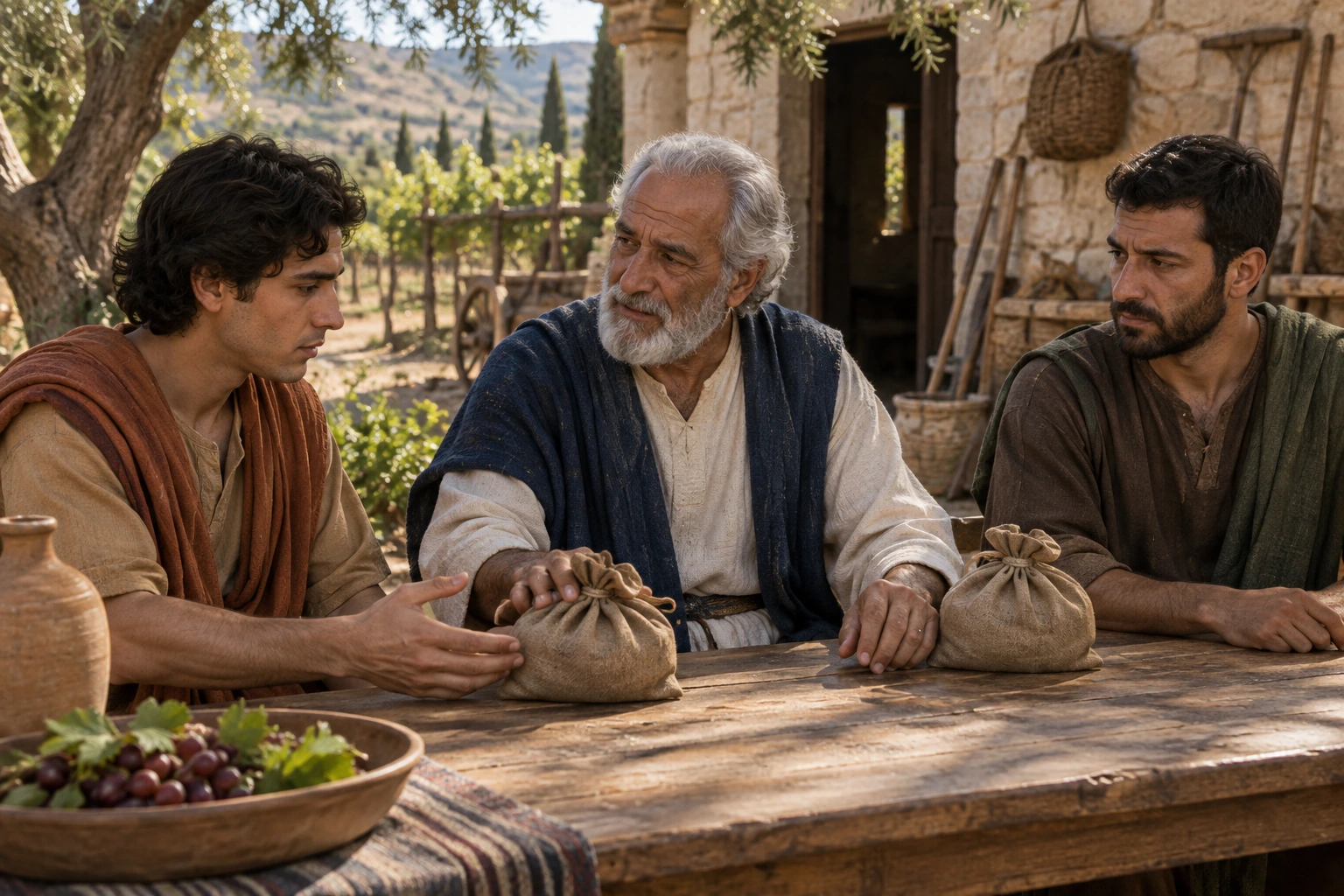
The inheritance divided
The younger son asks his father for the portion of goods that belongs to him. The father divides his living between his sons, pictured here through the bags placed before them.
Jesus tells of a father with two sons after people criticize His welcome of sinners. That opening context matters throughout the account. The story includes the son who leaves, but it also includes a son who remains near home and struggles to share the father's joy. Luke 15:1-32
Read and discover
The road away and the road home
Explore and study
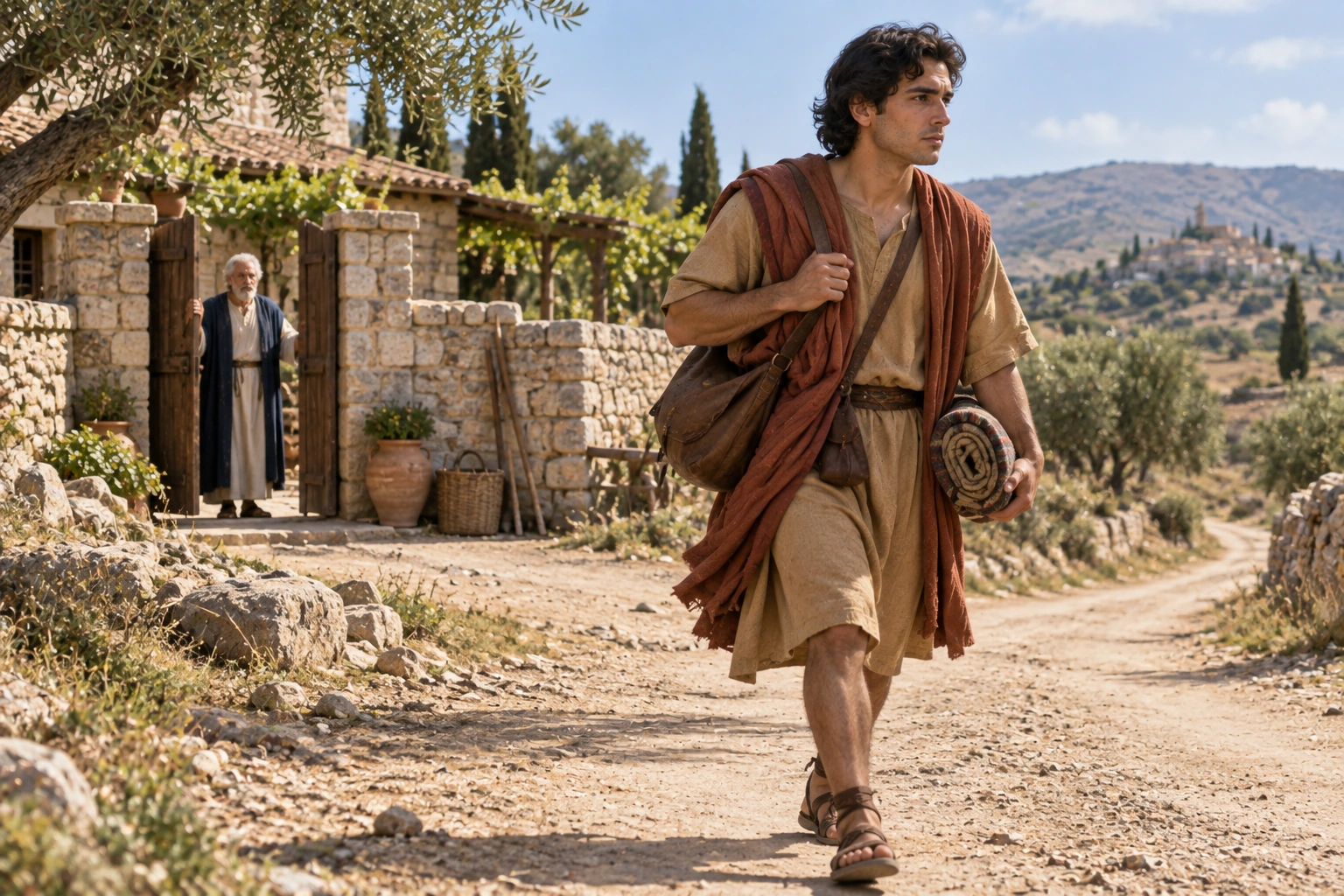
Leaving for the far country
Not many days later, the younger son gathers his belongings and journeys to a far country. The father watching at the gate is an artistic detail that gives the departure a personal setting.
The younger son asks for his portion of the property, leaves for a distant country, and wastes what he has. When a famine comes, he is in need. He takes work feeding swine and longs for food, yet no one gives him what he needs.
Explore and study
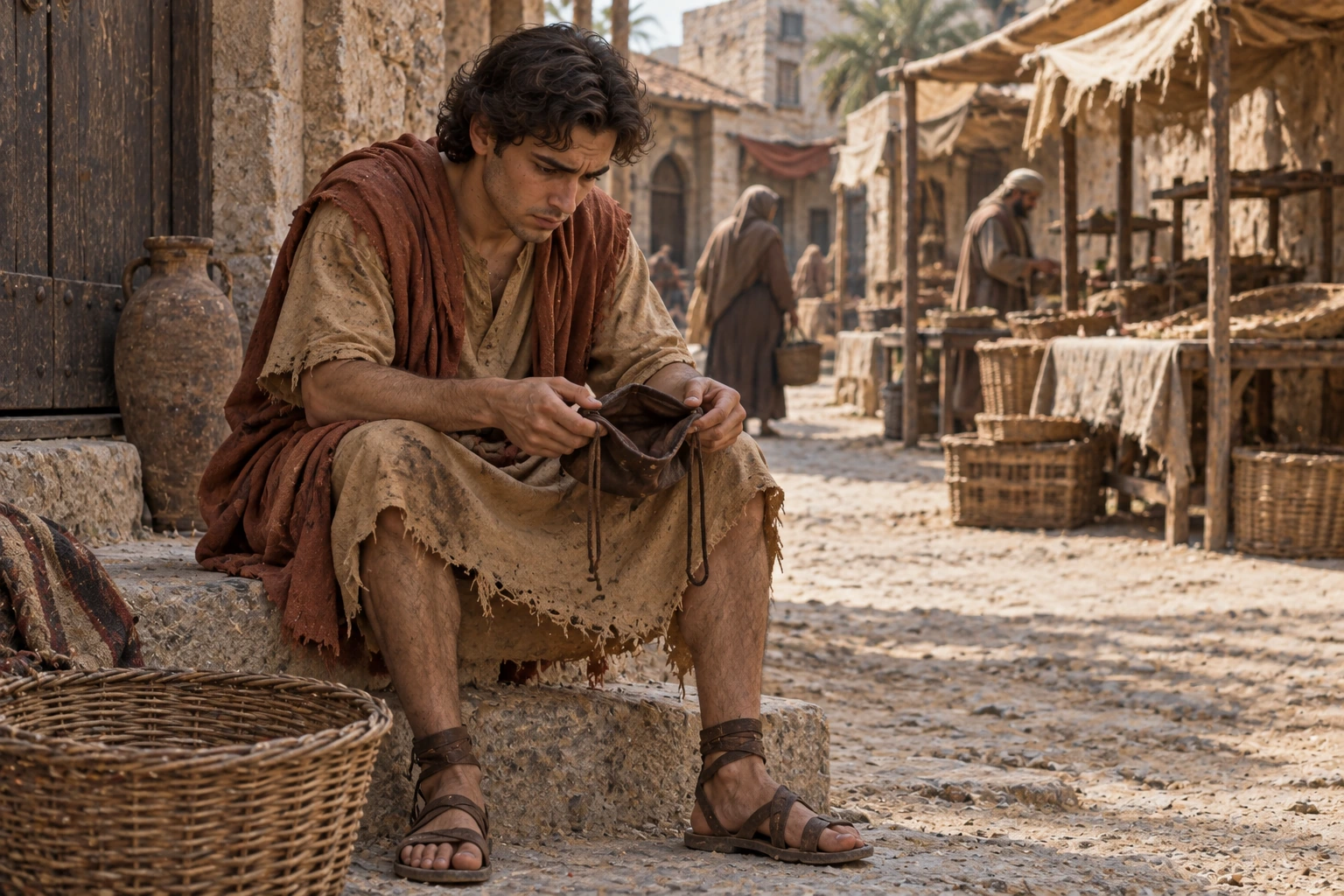
Resources gone, need begins
In the far country, the younger son wastes his substance in reckless living. After he has spent everything, a severe famine arises and he begins to be in want.
Explore and study
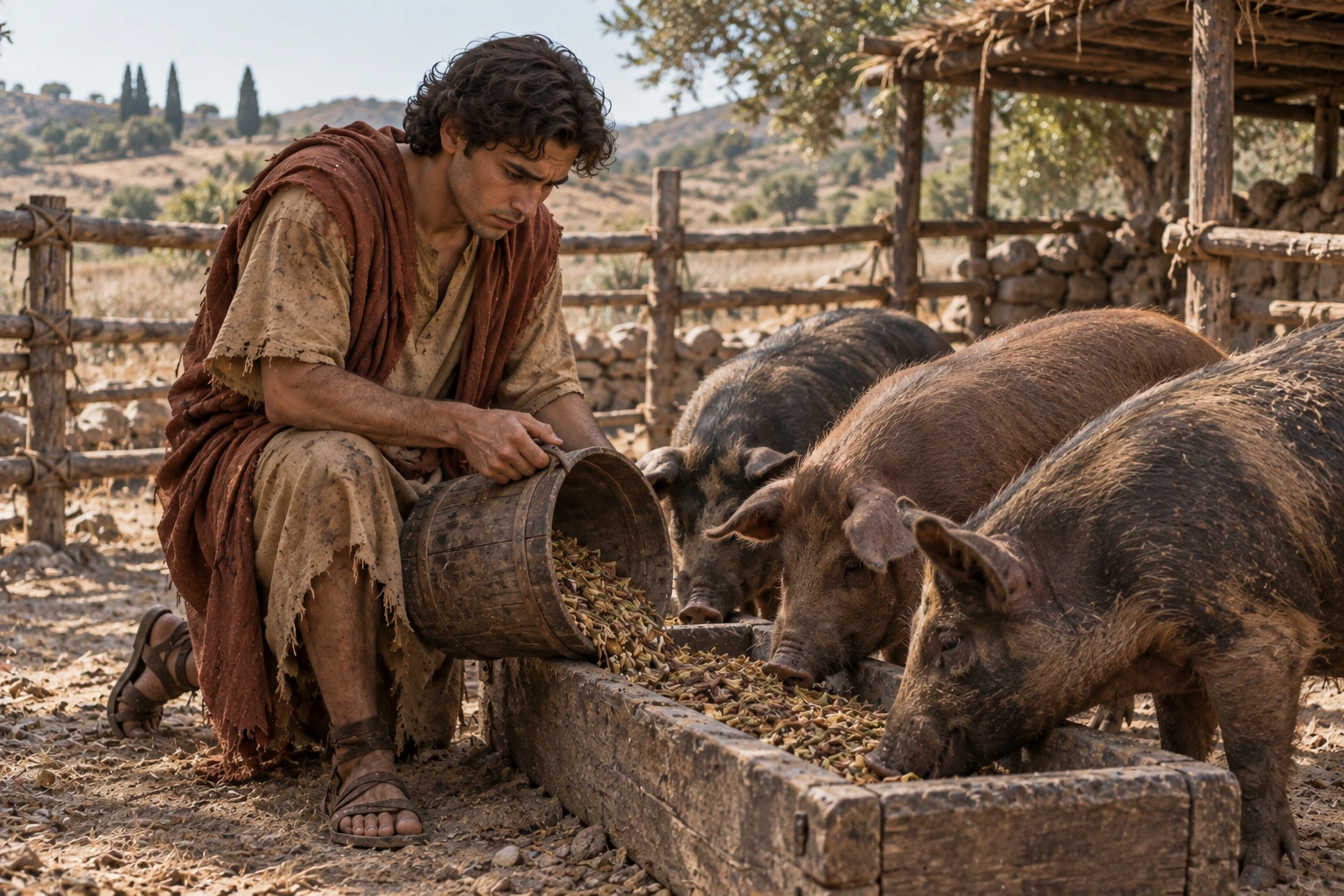
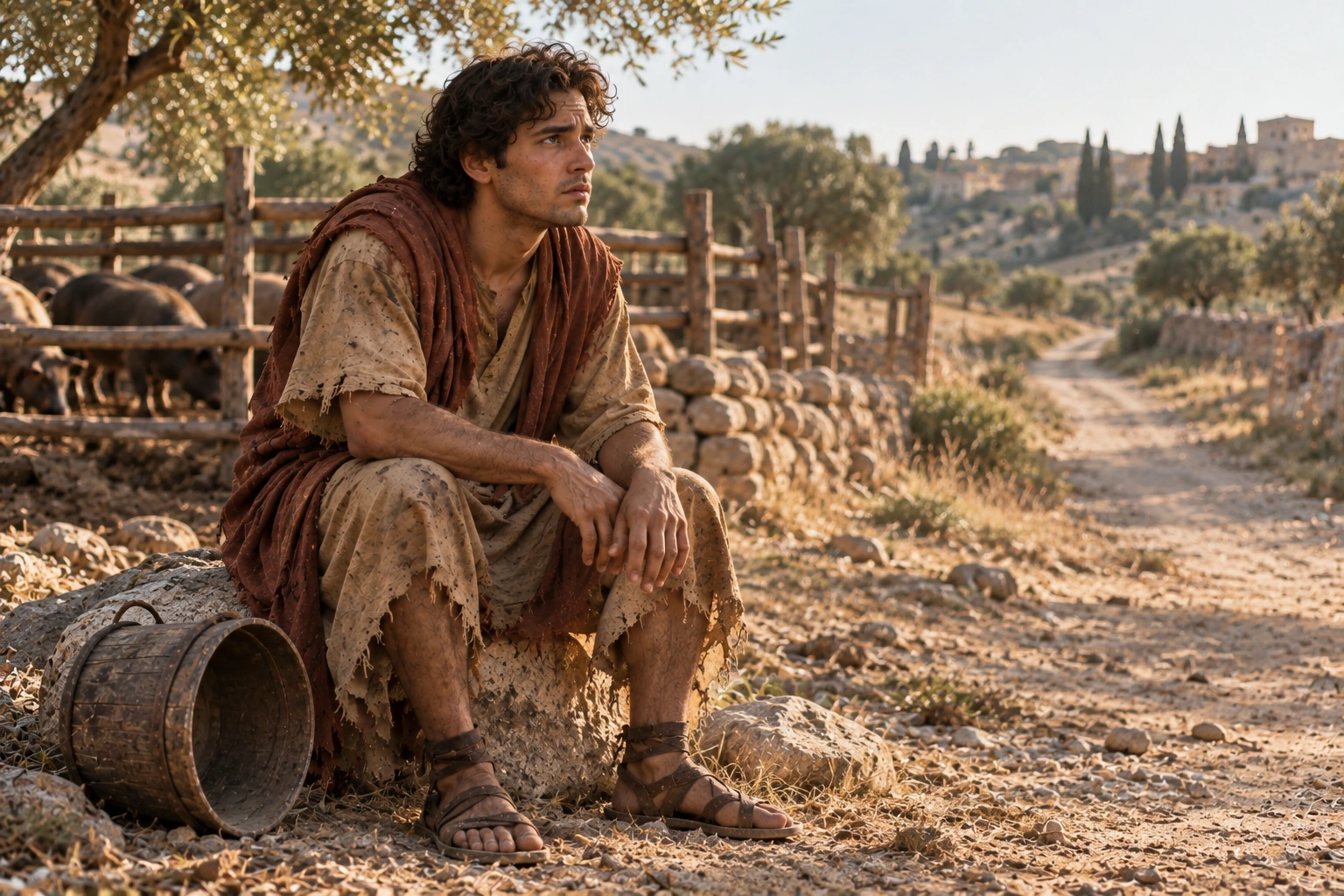
Feeding swine in the far country
The younger son feeds swine while hunger deepens his need. Jesus says he longs for the food the animals eat, bringing the story to the painful distance between his earlier abundance and his present want.
In that low place he remembers that his father's hired servants have bread. He resolves to return, acknowledge his sin, and ask for the place of a servant. The movement toward home includes a changed recognition of his condition and a willingness to speak truthfully.
Explore and study
Remembering his father's house
The son remembers that his father's hired servants have bread enough while he is hungry. He resolves to return and acknowledge his sin, a decision pictured here before the journey home begins.
Read and discover
Welcome and the brother outside
Explore and study
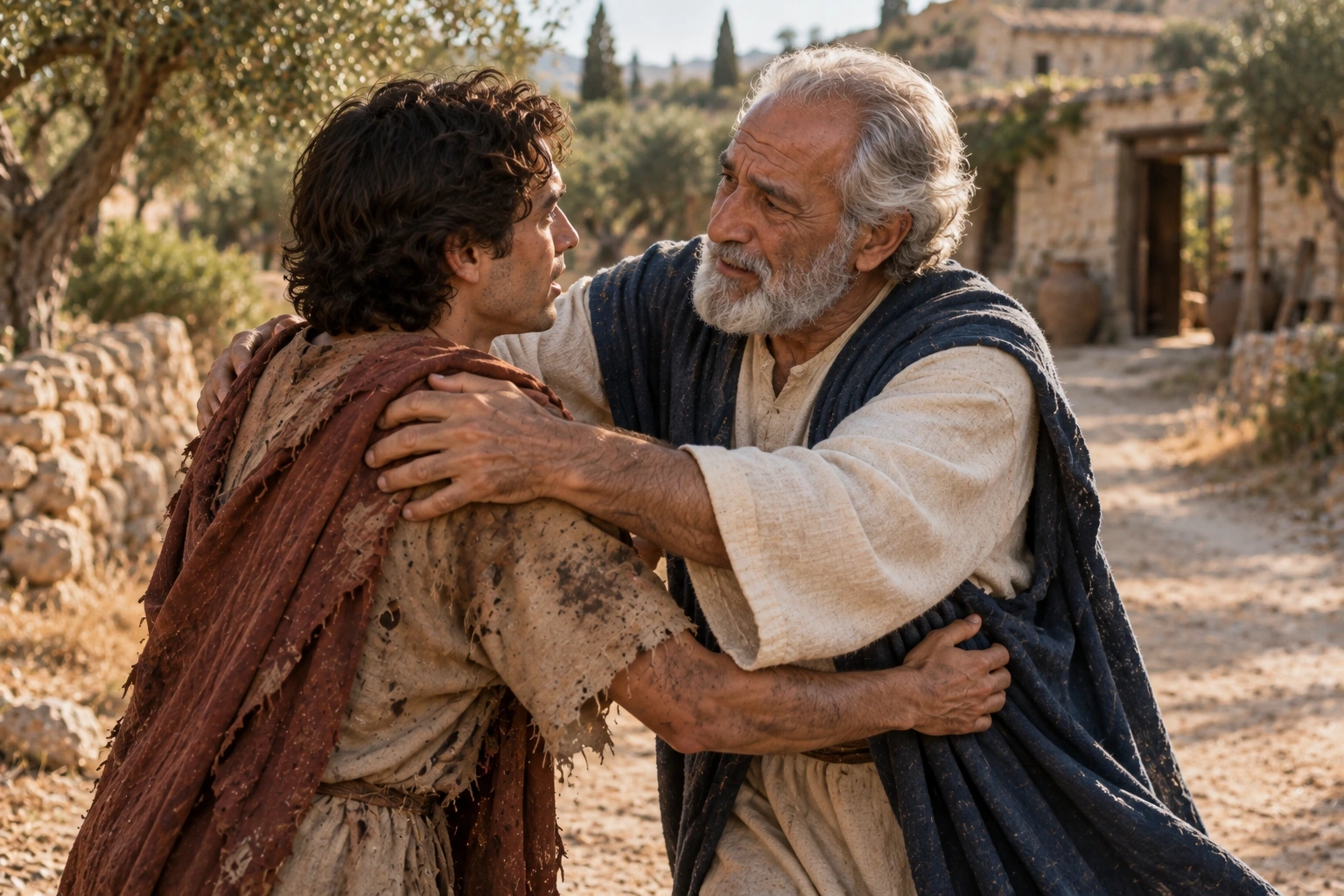
The father welcomes his son
The father meets his returning son with compassion and draws him close. Their embrace pictures the welcome Jesus describes as the son comes home in need.
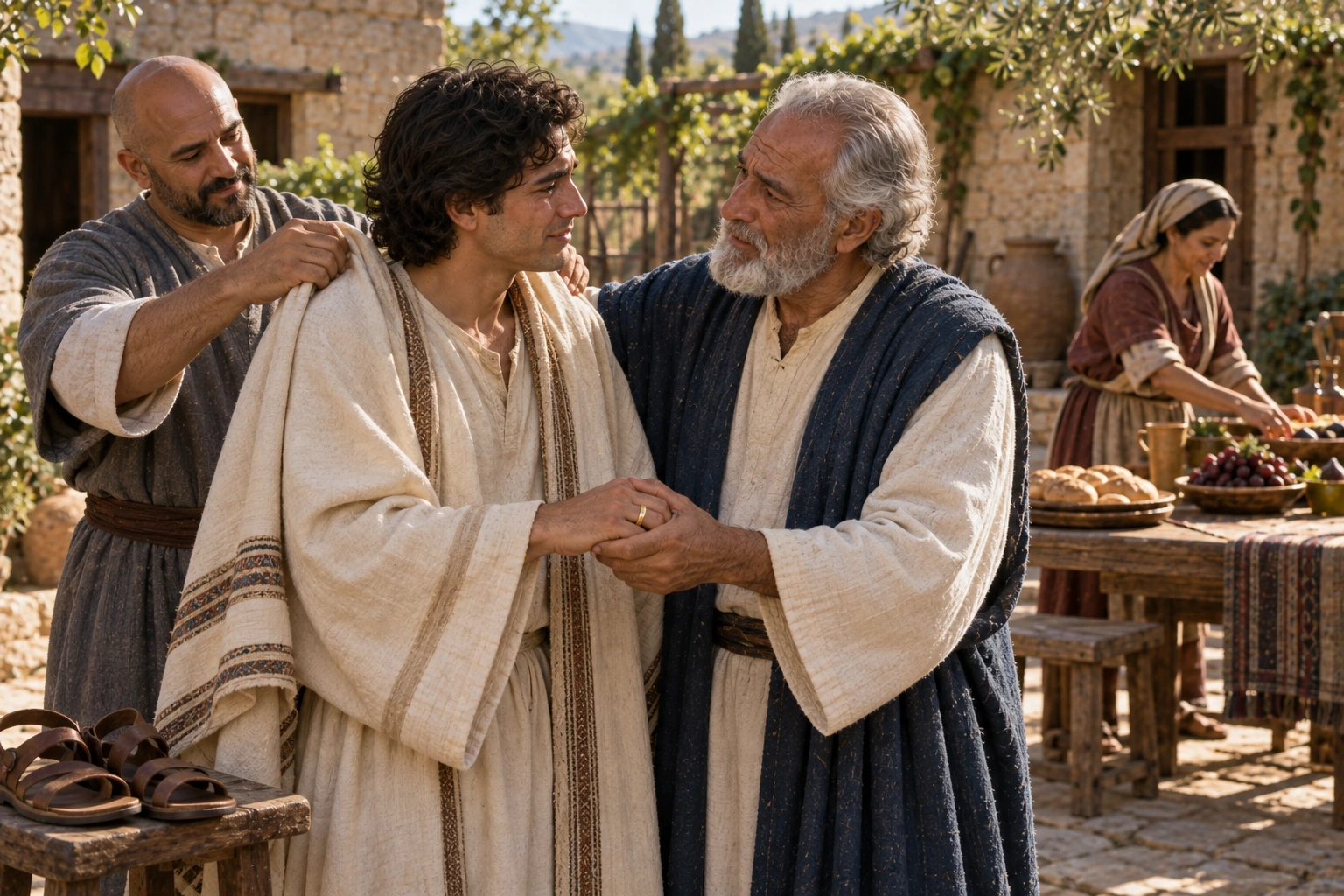
While the son is still far away, the father sees him and runs to meet him. He embraces and kisses him. The son begins his confession, and the father calls for a robe, a ring, shoes, and a feast. The welcome is not delayed until the son has repaid the lost inheritance.
Explore and study
Welcomed as a son
The father calls for the best robe, a ring, and shoes for his son, and orders a feast. His welcome celebrates the son who was lost and is found.
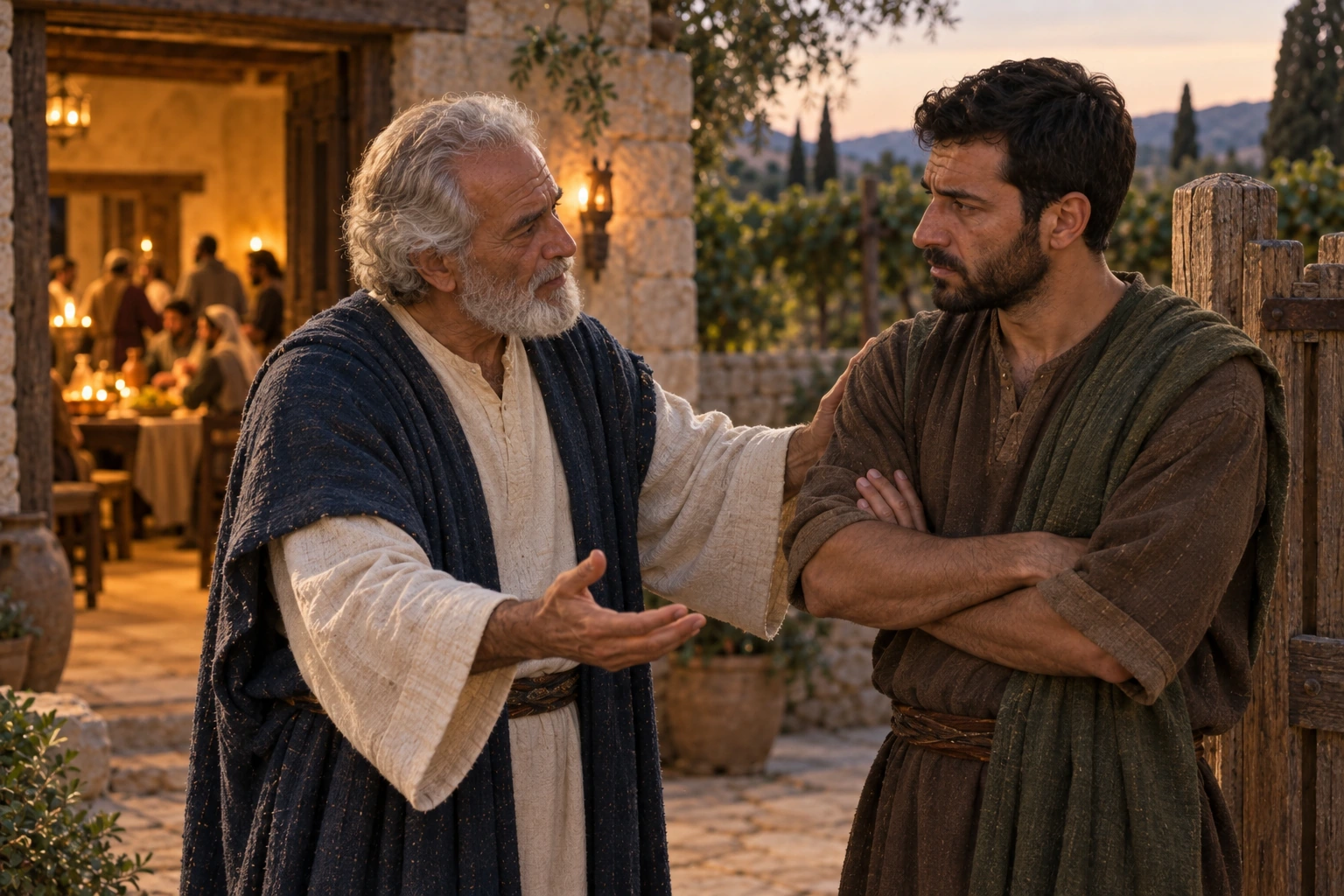
The elder son hears music and learns why there is a celebration. Angry, he refuses to enter. The father goes out to him as well. Their conversation reveals the elder son's sense that long service has gone unrecognized and that his brother's welcome diminishes his own place.
Explore and study
The father comes out to the elder son
When the elder son refuses to enter, his father comes out and pleads with him. He affirms their enduring bond and explains why the return of this brother calls for rejoicing.
Read and discover
The invitation remains open
The father affirms the elder son's place with him while insisting that the brother's return is reason for joy. The story ends without telling us whether the elder son enters. We should not invent a final embrace or use the open ending to announce that he is permanently beyond mercy.
Both conversations can invite honest reflection. Some readers may recognize the difficulty of coming home with failure to acknowledge; others may recognize resentment when mercy seems more generous than their accounting allows. Neither recognition requires pretending that real family wounds resolve as quickly as a story is read.
You might pause with the father's movement toward each son: running to the returning one and going out to the one who will not enter. The invitation to reconciliation does not erase agency. The account leaves room to ask what receiving mercy and rejoicing in another person's return might require of you.
Continue with Jesus Christ
The Lost Sheep
The missing one is worth a search and the finding is worth a celebration. Read how Jesus answers criticism of His welcome.
Open study →The Laborers in the Vineyard
Equal generosity becomes difficult for workers who expected more. The vineyard story examines gratitude, comparison, and resentment.
Open study →Mercy, Repentance, and the Joy of Returning
Continue through the connected teachings in this collection and compare their distinct settings.
Open study →