Read and discover
Why the kingdom does not appear immediately
Explore and study
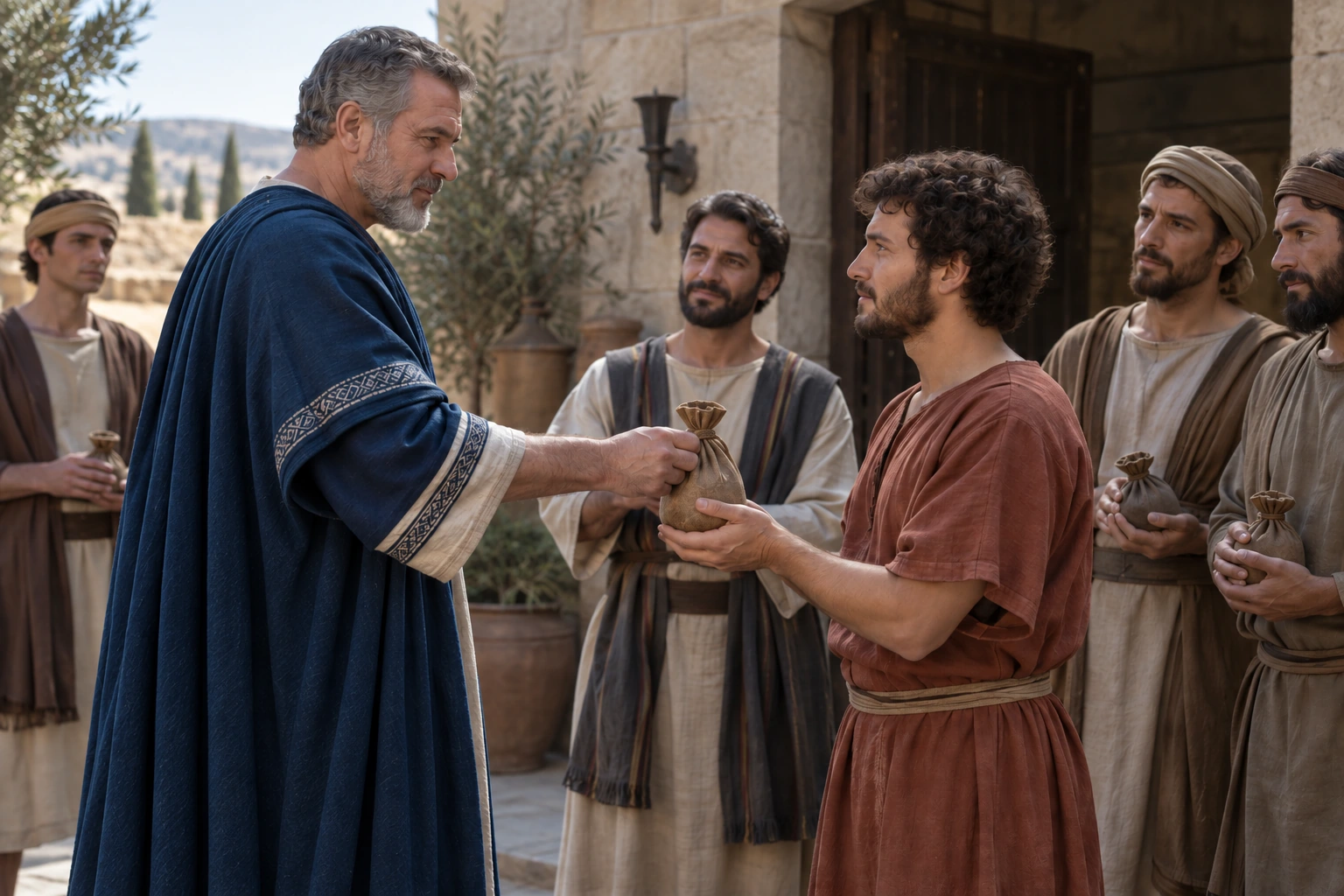
Entrusted with money
Before leaving to receive a kingdom, a nobleman entrusts money to ten servants and tells them to trade until he returns. Each begins with one mina, and this partial group pictures their shared responsibility.
Luke explains why Jesus tells this parable: He is near Jerusalem, and people suppose the kingdom of God will appear immediately. A nobleman who travels to receive a kingdom and then return provides a story about an interval, entrusted work, and later accountability. Luke 19:11-27
Read and discover
Work during the nobleman's absence
Explore and study
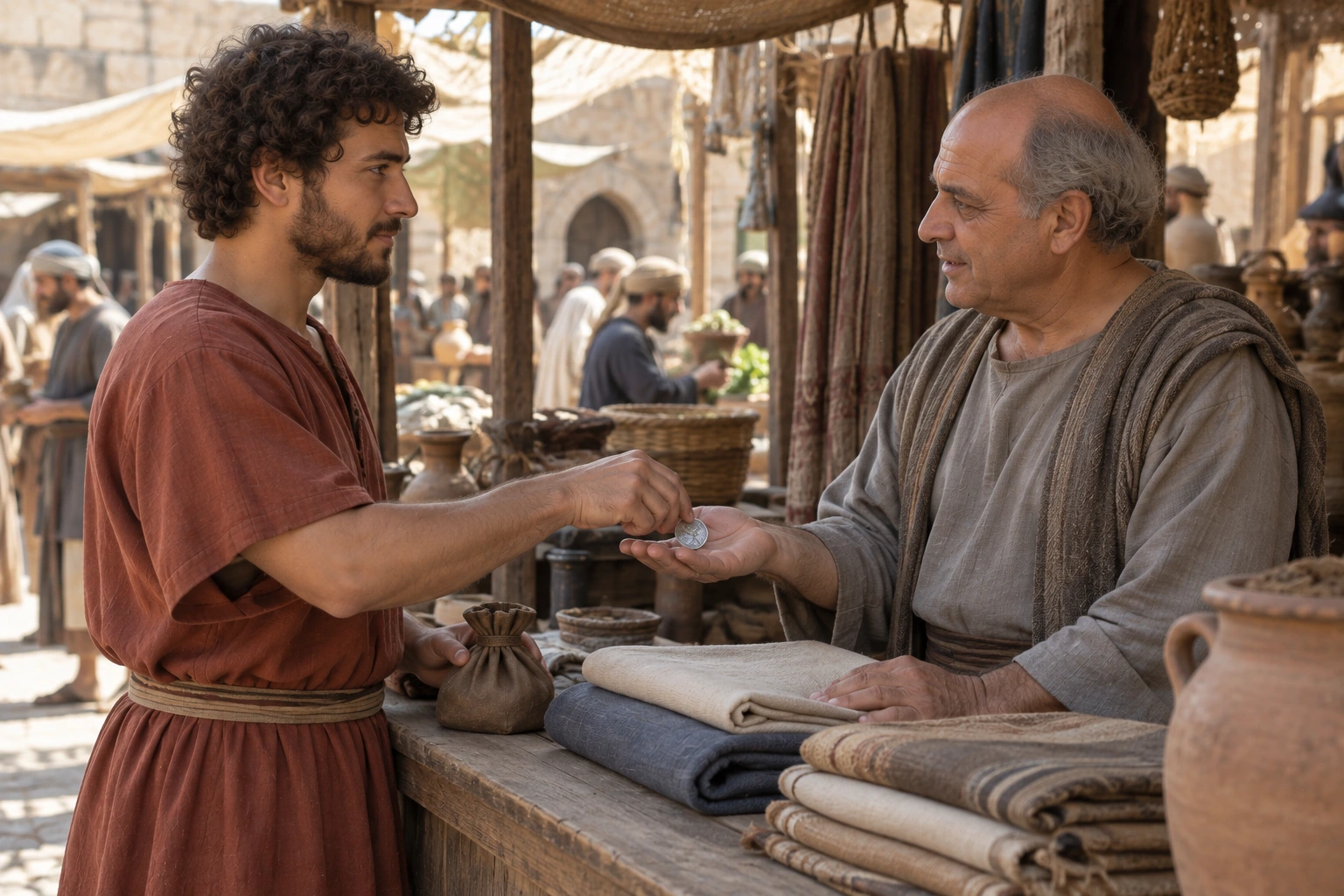
Putting the money to work
The servants are charged to trade with what they have received, and later report what their money has gained. This cloth-market exchange is an illustration of that activity, not merchandise specified in the parable.
The nobleman gives ten servants money and directs them to put it to use. Citizens who oppose him send a message rejecting his rule. When he returns, he calls the servants to learn what they have gained. The servants' work has taken place during the contested and uncertain interval.
Explore and study
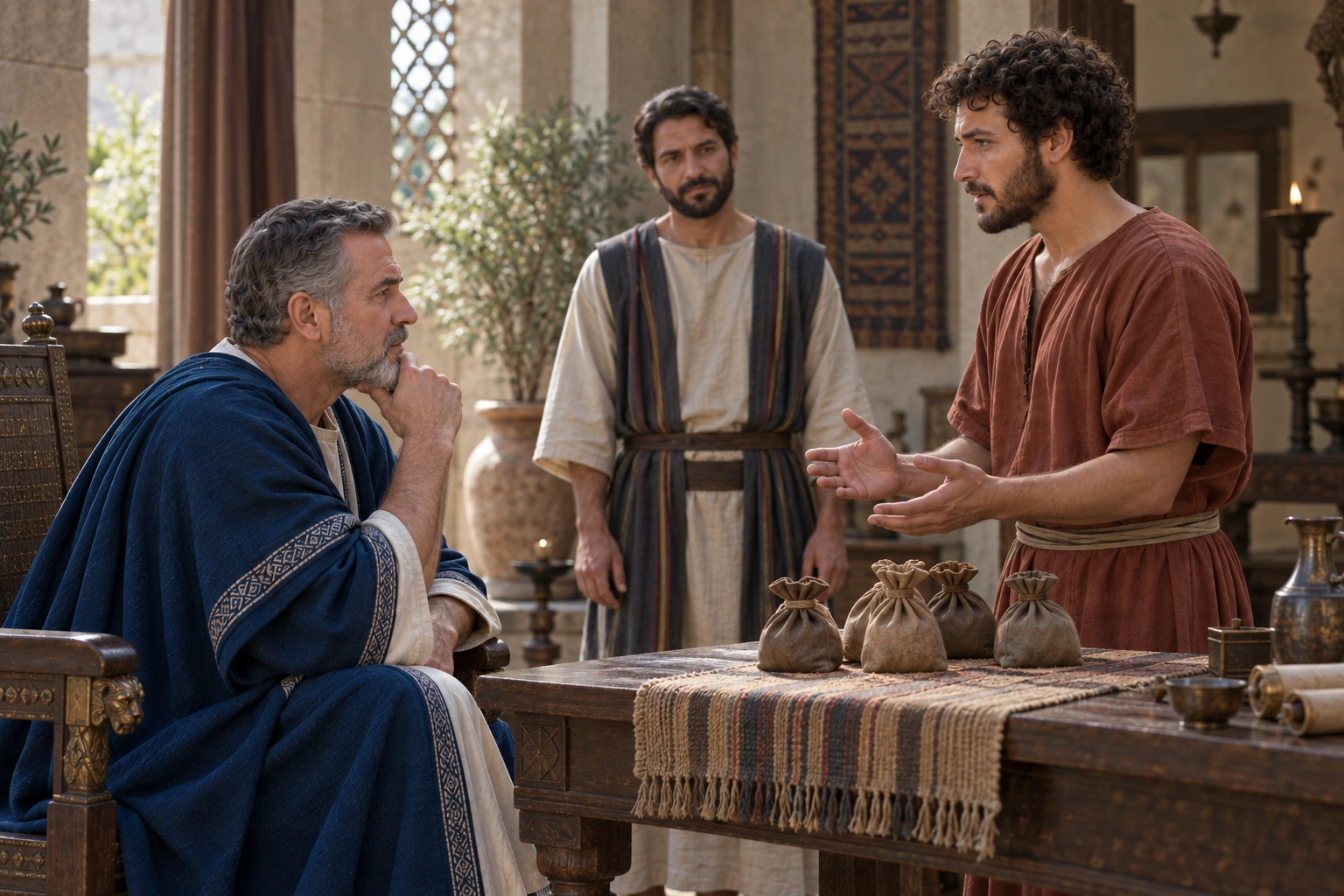
An account on the nobleman's return
After receiving the kingdom and returning, the nobleman calls the servants to learn what each has gained by trading. The meeting pictures that reckoning, with the results to be heard from those he entrusted.
One reports ten pounds gained and another five. A further servant has kept the pound wrapped in a cloth, explaining his inaction through fear. The account examines what the servants do with the trust, not merely whether they retain possession of the original coin.
Explore and study
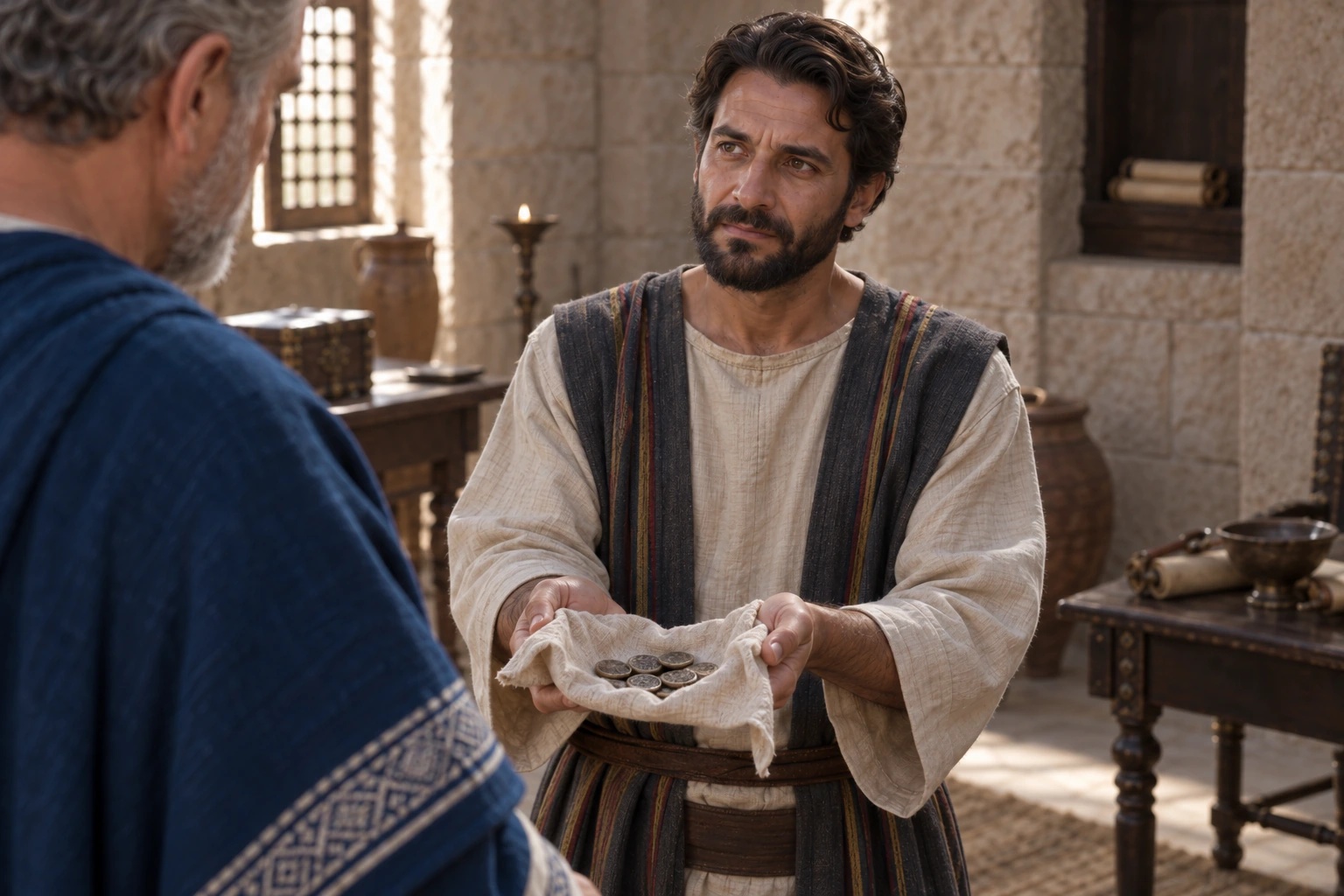
Money kept unused in cloth
Another servant returns the mina he has kept laid away in a cloth. His explanation reveals that the entrusted money was preserved unused rather than put to work.
Read and discover
The account at his return
The nobleman orders the unused pound taken from the servant and given to the one who has ten. The closing words also command that the opponents who rejected his rule be brought before him and slain. Luke records that command without narrating its execution; these severe features belong to the story Jesus tells, not to instructions for His hearers to harm others.
The nobleman's harsh features should not be treated as a complete portrait of God. A parable compares particular aspects of a story with a teaching; it does not require every action of every character to be imitated or assigned directly to the Savior.
Keep this account distinct from Matthew's talents. Luke includes ten servants, equal initial pounds, opposition to the nobleman, and authority over cities. Its opening specifically challenges the expectation of an immediate manifestation of the kingdom.
Read and discover
Faithfulness during the interval
As an application, consider what faithful work belongs to a season of waiting. Uncertainty about a larger outcome does not erase the responsibility that is already in your hands. The story invites attention to that responsibility while resisting both passivity and speculative timetables.
Continue with Jesus Christ
The Talents
Different amounts are entrusted to different servants. The returning master asks what each has done with the responsibility received.
Open study →The Doorkeeper
The master leaves work for each servant and watchfulness for the porter. The unknown hour does not erase their present responsibility.
Open study →Faithful Stewardship and the Cost of Discipleship
Continue through the connected teachings in this collection and compare their distinct settings.
Open study →