Read and discover
Begin with the particular trust
The talents and the ten pounds are related accounts, not interchangeable versions to blend. Matthew describes differing sums given to three featured servants. Luke describes ten servants, equal starting pounds, and a nobleman's journey while people expect the kingdom to appear immediately. Matthew 25:14–30
Read difficult stories through their conclusions. The unjust steward's shrewd preparation is not approval of dishonesty; Jesus continues by teaching faithfulness and the impossibility of serving God and mammon. The character in a comparison is not a complete portrait of God or a model to imitate in every detail. Luke 16:1–13
The imagined present-day scenes bring stewardship into plans, shared resources and ordinary responsibilities. In the talents parable, the entrusted gift is money; applying it to our skills is a further reflection. Faithfulness asks how we use what we receive, without promising wealth, ease or status.
Read and discover
Consider what the commitment requires

Explore and study
Planning the work
Three people compare a plan with lumber and a tape measure. Jesus' example of counting before building asks us to consider what a commitment will require.
The tower builder considers whether the work can be finished before laying a foundation. The king considers his forces before confrontation. Jesus places both comparisons within teaching about discipleship's cost. Careful consideration supports a real commitment rather than an impressive beginning alone. Luke 14:28–33
Preparation and accurate records are ordinary ways to honor trust. Measuring materials before building or correcting an account openly can protect the people who depend on the work. These applications do not reduce discipleship to efficient administration; they ask whether faithfulness reaches the details of what is entrusted. Luke 16:10–12

Explore and study
Checking entrusted records
Two people check receipts against an open ledger. Faithfulness in small things includes care and openness with what has been entrusted to us.
Read and discover
Use the portion actually received

Explore and study
Sharing a useful skill
Two people study a bicycle brake, one pointing while the other holds a tool nearby. The talents parable asks how we will use what we receive, including skills we can share.
The servants begin with differing amounts. The first two put their portions to use and receive the same welcoming commendation. Their shared faithfulness matters more than a competition to have received the largest starting sum. The third servant's fear leads instead to a buried trust. Matthew 25:14–30
Skills, tools, time, or an opportunity to teach can provide present-day applications. A person may be able to help with a simple repair or preserve a shared resource without having impressive equipment. The question is what a faithful use of the actual portion might be, not whether it resembles someone else's.

Explore and study
Caring for a shared resource
A woman smooths repair cloth along a worn book's spine. Caring for an ordinary responsibility can be one quiet expression of faithful stewardship.
Read and discover
Let responsibility become care

Explore and study
Planning together
Three people discuss a board of notes, each taking part in the planning. Responsible care includes listening to those who will carry out the work.
The faithful steward provides food at the proper time. When entrusted authority becomes an excuse to mistreat the household, the responsibility has been betrayed. Jesus makes the needs of those served central to the assessment of the servant's conduct. Luke 12:42–48
Listening to a team's capacity and completing a final unnoticed task are applications of that attention. The servant's-duty comparison also challenges the idea that completed service gives us leverage over God. This does not deny human worth or excuse exploitation; it asks what attitude accompanies our work. Luke 17:7–10
Explore and study
Care when the room is quiet
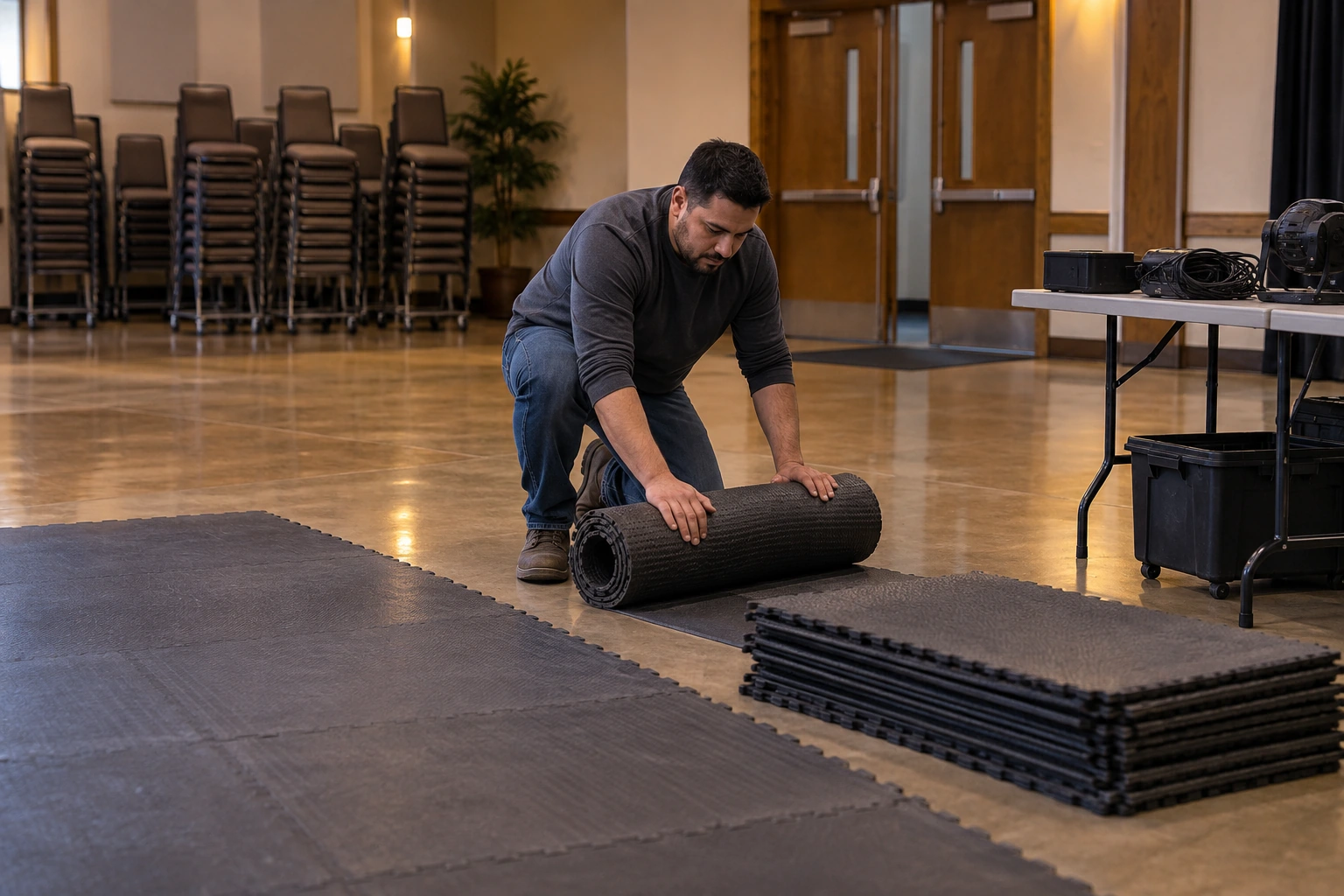
A man rolls a floor mat in a quiet hall beside stacked chairs. Jesus' teaching about duty asks whether we will serve faithfully when there is little recognition.
Read and discover
Serve without making blessing a contest

Explore and study
Appreciating another contribution
An older man speaks warmly to another participant across a planning drawing. The vineyard laborers' story asks how we respond when generosity is shown to someone else.
The early vineyard workers receive their agreed wage, yet resent the owner's generosity to the latecomers. The rich fool imagines that larger barns can secure the future he desires. In different ways, the stories reveal how possessions and comparison can govern a person's response. Matthew 20:1–16
An application might involve appreciating a newcomer or reconsidering possessions kept only for oneself. Such choices are not a formula for earning greater material blessings. They invite us to ask what gratitude, generosity, and trust could change in the resources and relationships already before us. Luke 12:13–21

Explore and study
Considering what can be shared
A man gathers hand tools into a wooden box. Beside the rich fool's story, this moment asks what our possessions might do beyond remaining in our keeping.
Read and discover
Bring the teaching into your own reflection
Read and discover
Explore every study in this collection
Parables and story pictures
The Laborers in the Vineyard
Different starting times expose resentment at generosity. Read with Matthew 19:27-30; avoid making the story a formula for modern wages.
Open study →The Wicked Tenants
Tenants reject servants and the owner's son. Keep the confrontation with particular leaders in context; do not turn the account into hostility toward Jewish people.
Open study →The Talents
Servants receive differing sums and later account for their stewardship. Explain the original monetary meaning of talent before offering applications to abilities.
Open study →The Rich Fool
An inheritance dispute prompts a warning about covetousness. More storage does not secure life; the account contrasts possessions with being rich toward God.
Open study →The Tower Builder
Counting construction costs illustrates the serious commitment of discipleship. Read the short picture within Jesus' surrounding teaching.
Open study →The King Considering War
A king considers whether his forces are sufficient and seeks peace. This companion comparison concerns counting the cost of discipleship, not an endorsement of aggression.
Open study →The Unjust Steward
The steward prepares for losing his position. Distinguish commendation of shrewd preparation from approval of dishonesty, then read Jesus' teaching on faithfulness and serving God.
Open study →The Servant's Duty
Ordinary service challenges a sense of entitlement. Do not use the language of an unprofitable servant to deny a person's worth or justify exploitation.
Open study →The Ten Pounds or Minas
Jesus answers expectations that the kingdom will appear immediately. Preserve the nobleman's journey and ten servants; do not silently substitute the different talents account.
Open study →Continue with Jesus Christ
Loving Our Neighbor
See how entrusted resources can become concrete help and sustained care.
Open study →Hearing and Living His Word
Explore the movement from an agreed intention to a practiced response.
Open study →The Kingdom of God
Consider the worth of the treasure and pearl alongside the cost of wholehearted commitment.
Open study →