Read and discover
What the master entrusts
Explore and study
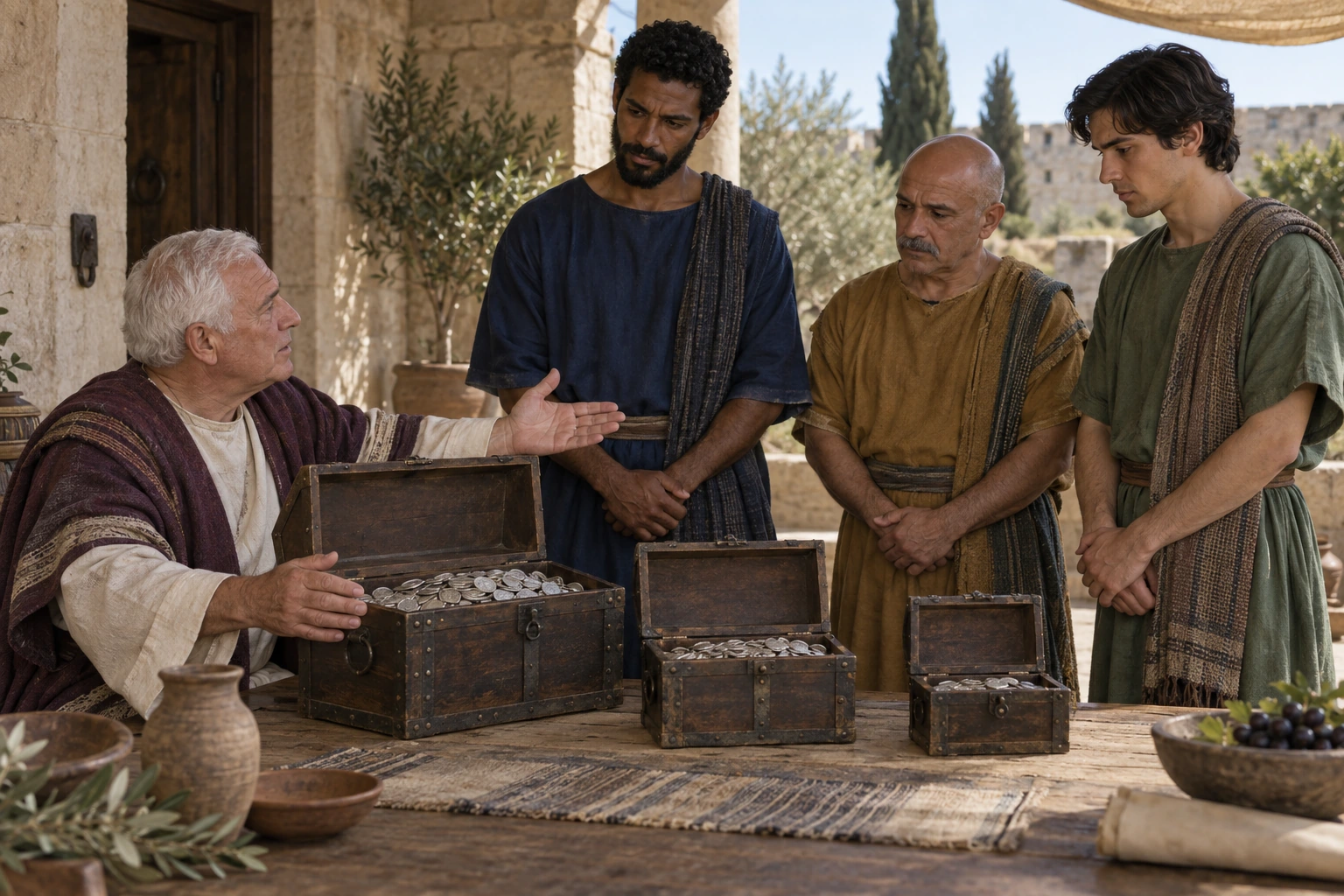
Resources entrusted to three servants
Before leaving, the master entrusts his property to three servants, giving different amounts according to their ability. Each receives a substantial sum and a responsibility to care for it.
A man going away entrusts property to his servants. One receives five talents, another two, and another one, each according to ability. In the story a talent is a large monetary amount. The familiar modern use of the word for personal gifts can be an application, but it is not the original object being distributed. Matthew 25:14-30
Read and discover
Different amounts, faithful work
Explore and study
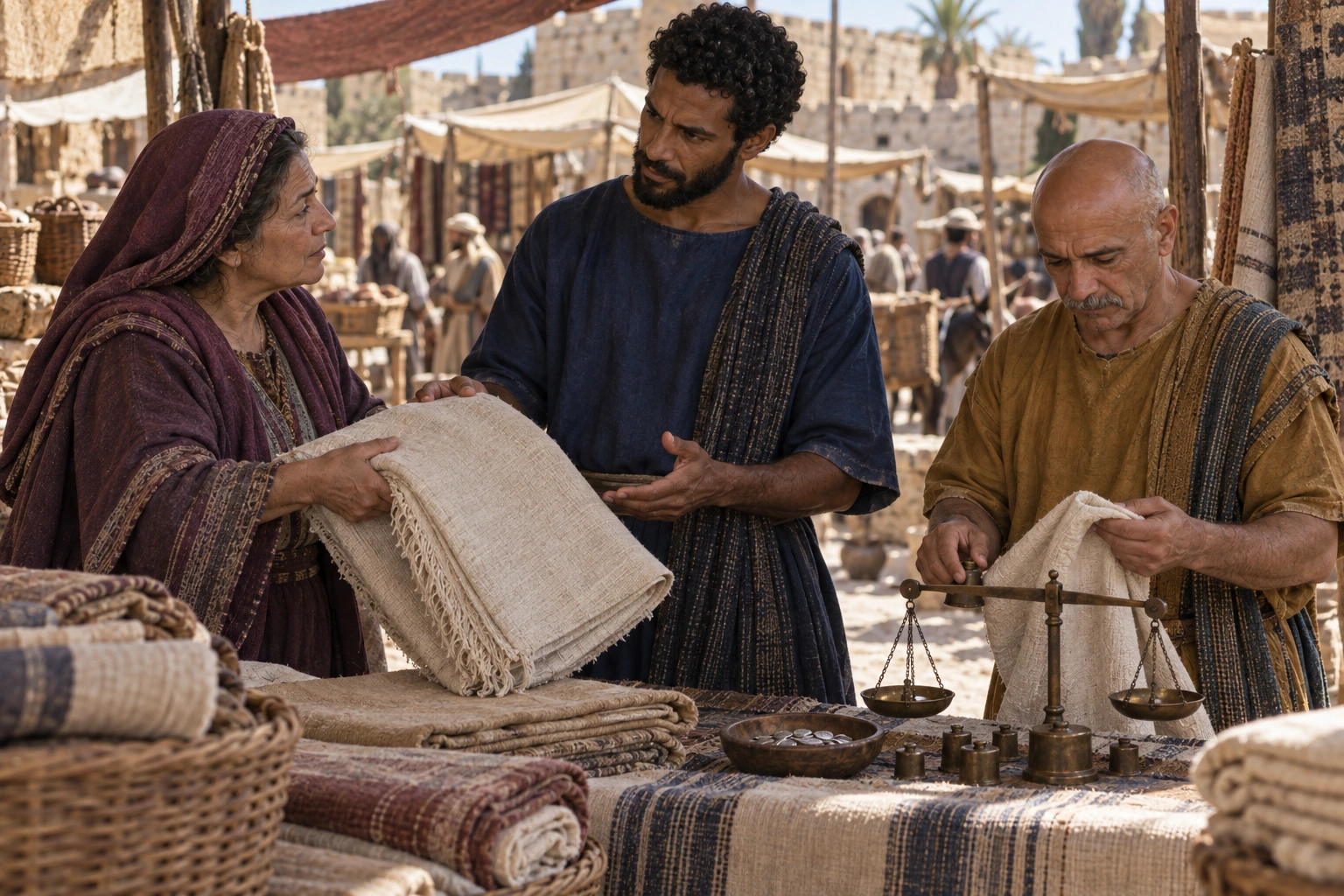
Putting the entrusted money to work
The servants put what they have received to work. The cloth market pictures their trading; Jesus does not specify the merchandise or the particular transactions.
The first two servants work with what they receive and increase it. The third digs in the ground and hides his master's money. Their different starting amounts do not prevent the first two from being described through the same pattern of faithful action.
Explore and study
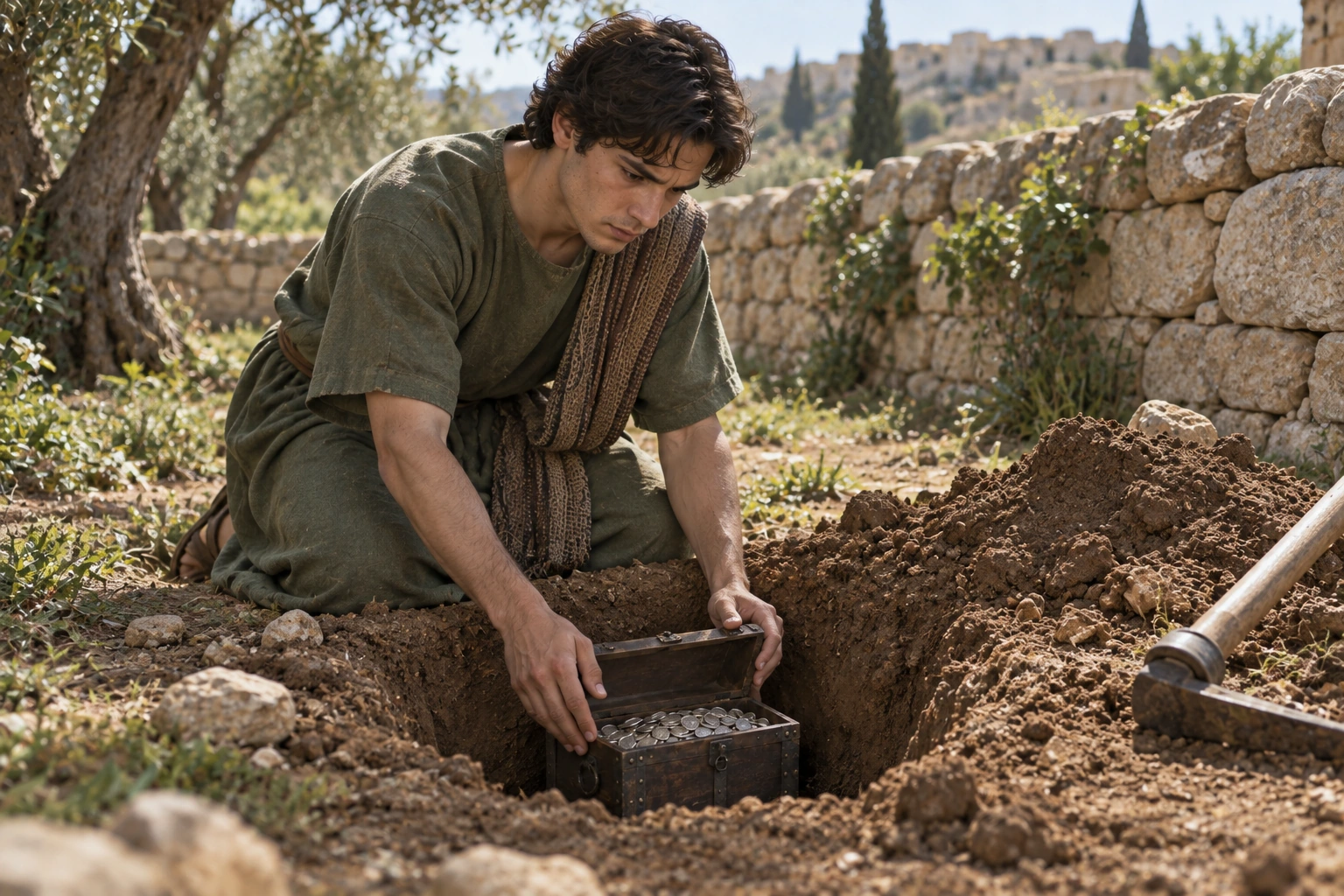
The money hidden in the ground
The servant who received one talent hides his master's money in the ground. The open chest pictures the act of concealment, before the earth covers it.
After a long time, the master returns and settles accounts. The first and second servants each report what they have done and receive the same welcoming commendation. The story does not make equal starting resources the condition for faithful service.
Explore and study
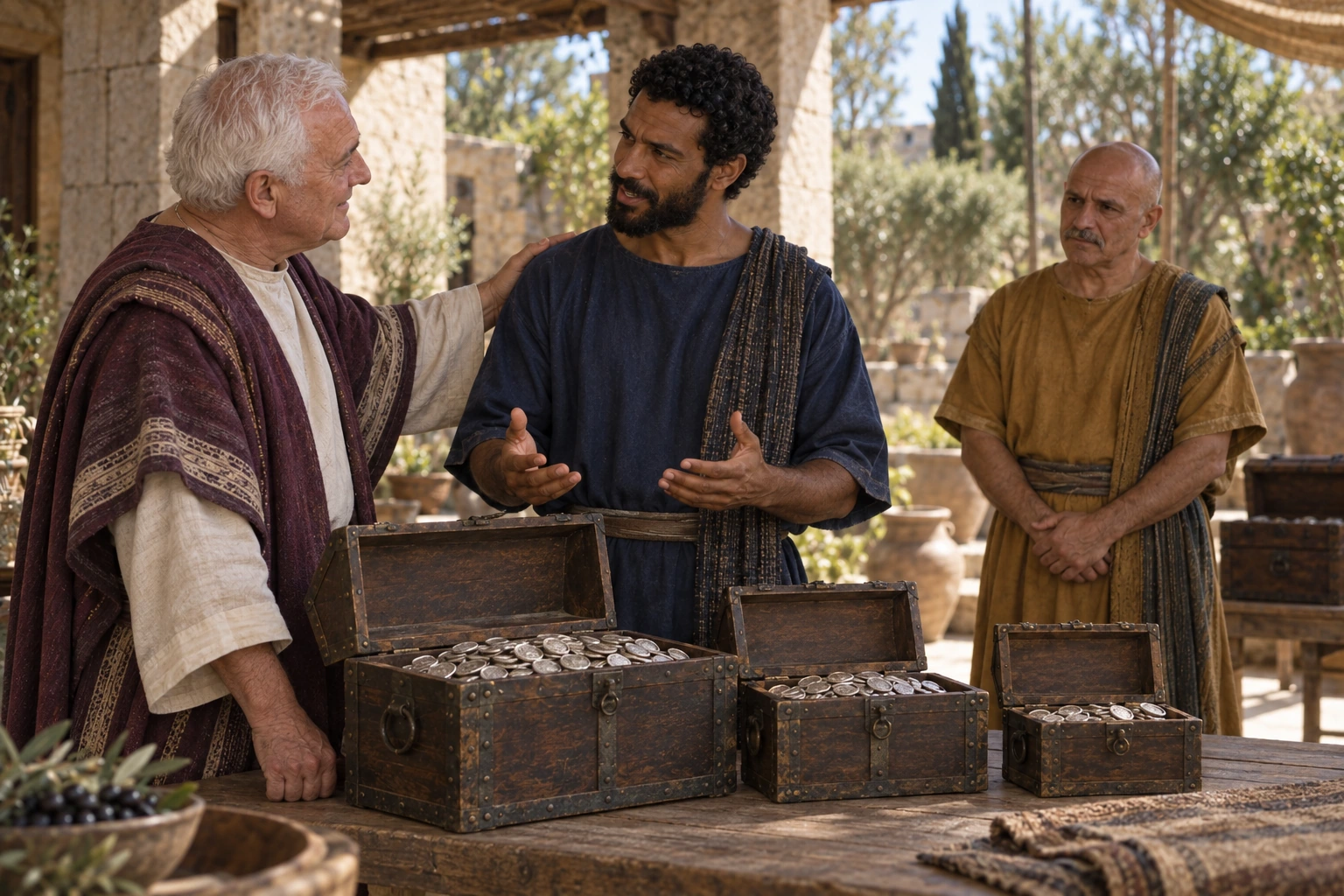
The first servant gives his account
The servant reports what he has gained with the five talents entrusted to him. His master welcomes the faithful response and invites him to enter into his joy.
Read and discover
Fear and the buried trust
The third servant explains his inaction through fear and his view of the master. He returns what he hid but has done nothing productive with the trust. The exchange exposes the consequence of allowing fear to govern the whole stewardship.
This account should remain distinct from Luke's ten pounds. The number of servants, initial distributions, surrounding events, and details of the accounting differ. Keeping those differences allows readers to hear Matthew's story rather than a blended version.
Read and discover
Use what is actually in your hands
A present-day reflection may consider resources, ability, time, or opportunities that have actually been entrusted to you. The invitation is faithful use, not comparison with someone else's amount. It is also not a promise of investment returns: the spiritual question concerns your response to trust and responsibility.
Continue with Jesus Christ
The Ten Pounds or Minas
People expect the kingdom immediately; Jesus tells of work during an absence. Luke's account joins waiting with stewardship.
Open study →The Faithful and Unfaithful Servant
Someone else's daily bread is placed in a servant's care. The master's absence reveals how that trust will be used.
Open study →Faithful Stewardship and the Cost of Discipleship
Continue through the connected teachings in this collection and compare their distinct settings.
Open study →