Read and discover
The need beside the gate
Explore and study
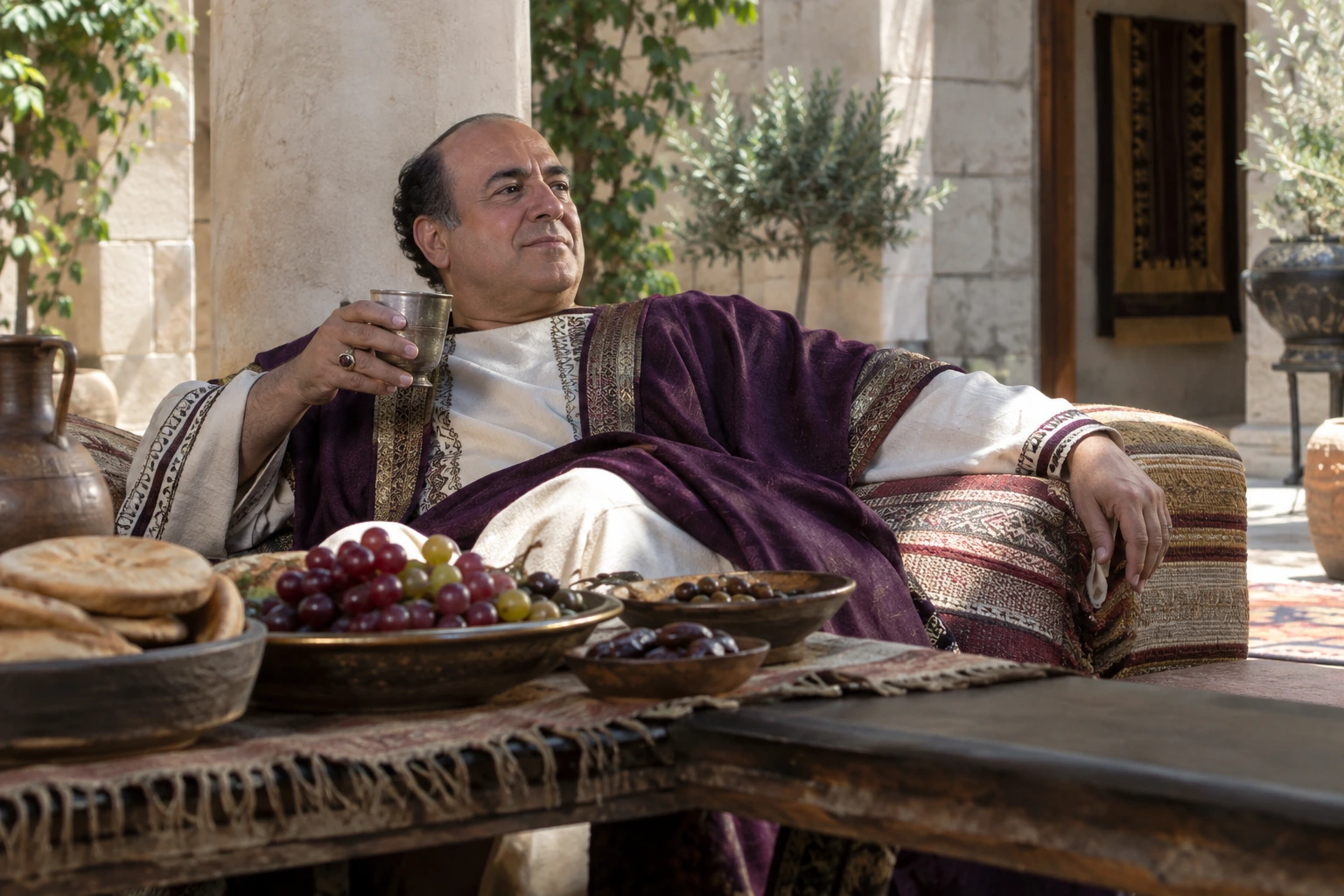
The rich man's abundance
Jesus describes a rich man clothed in purple and fine linen who feasts splendidly every day. The abundant table pictures his comfort before the account turns to the suffering at his gate.
Jesus describes a rich man who dresses splendidly and feasts daily, while Lazarus lies in need at his gate. The contrast is close at hand rather than far away. The suffering person is visible within the rich man's ordinary surroundings. Luke 16:19-31
Explore and study
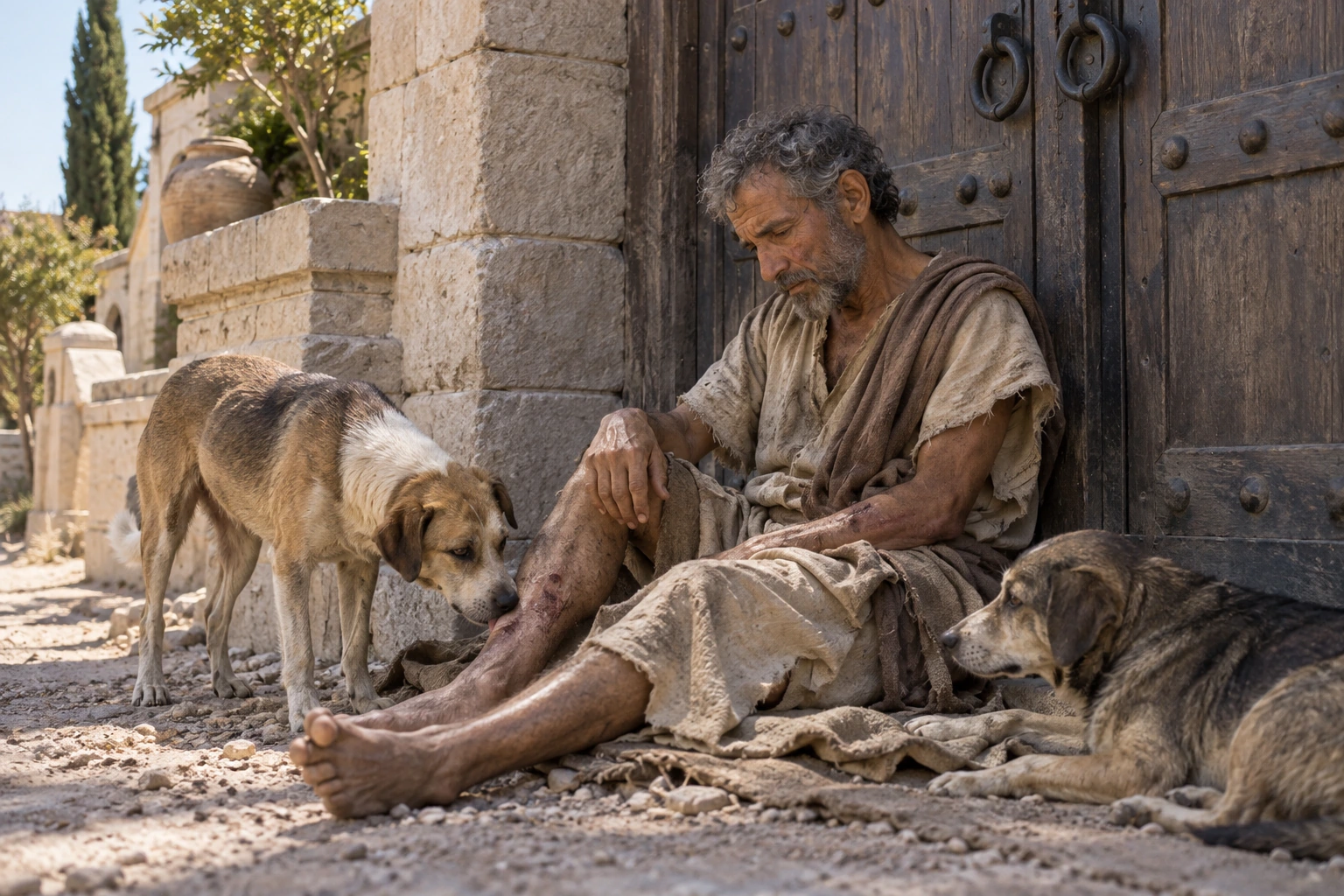
Lazarus at the gate
Lazarus lies at the rich man's gate, covered with sores and longing for what falls from the table. Even the dogs come and lick his sores, underscoring the need beside the rich man's abundance.
Read and discover
A reversal and a plea
Explore and study
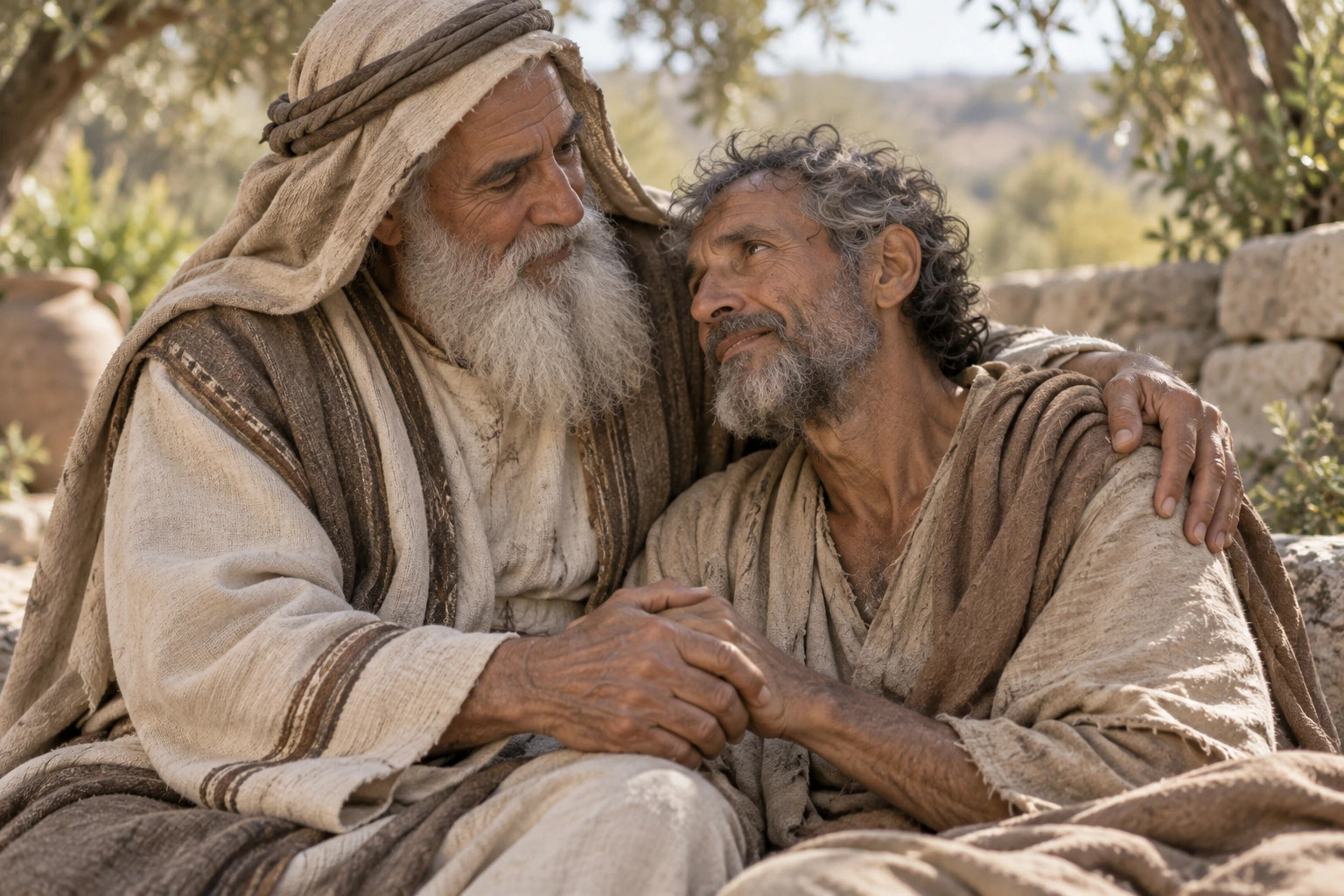
Lazarus comforted with Abraham
After Lazarus dies, Jesus describes him being carried by angels to Abraham's bosom, where he is comforted. This embrace pictures that comfort symbolically; its surroundings and bodily appearance are artistic choices, not a literal map of the afterlife.
Death changes the scene. Lazarus is carried to Abraham's bosom, while the rich man experiences torment. His request for relief receives an answer that recalls their former conditions and the gulf now between them.
The rich man then asks that Lazarus be sent to warn his brothers. Abraham directs attention to Moses and the prophets. The final exchange challenges the assumption that an extraordinary sign would produce the response that the hearers have refused to give to scripture.
Read and discover
Hear the word already given
The account should not be treated as a complete diagram of every aspect of life after death. Nor is this Lazarus identified as the man of Bethany whom Jesus raises. The story's moral force does not depend on merging those figures.
You might reflect first on the gate: who is near enough to notice, yet remains outside your attention? The ending also asks what you already know from God's word that calls for a response. Waiting for a more dramatic message can become a way of postponing an ordinary act of mercy.
Continue with Jesus Christ
The Rich Fool
A rich harvest promises the owner many comfortable years. The story asks what possessions can and cannot secure.
Open study →The Good Samaritan
A question about who counts as a neighbor becomes a story about acting as one. Follow the mercy that begins on the road and continues at the inn.
Open study →Loving Our Neighbor
Continue through the connected teachings in this collection and compare their distinct settings.
Open study →