Read and discover
The rescue everyone understands
Explore and study
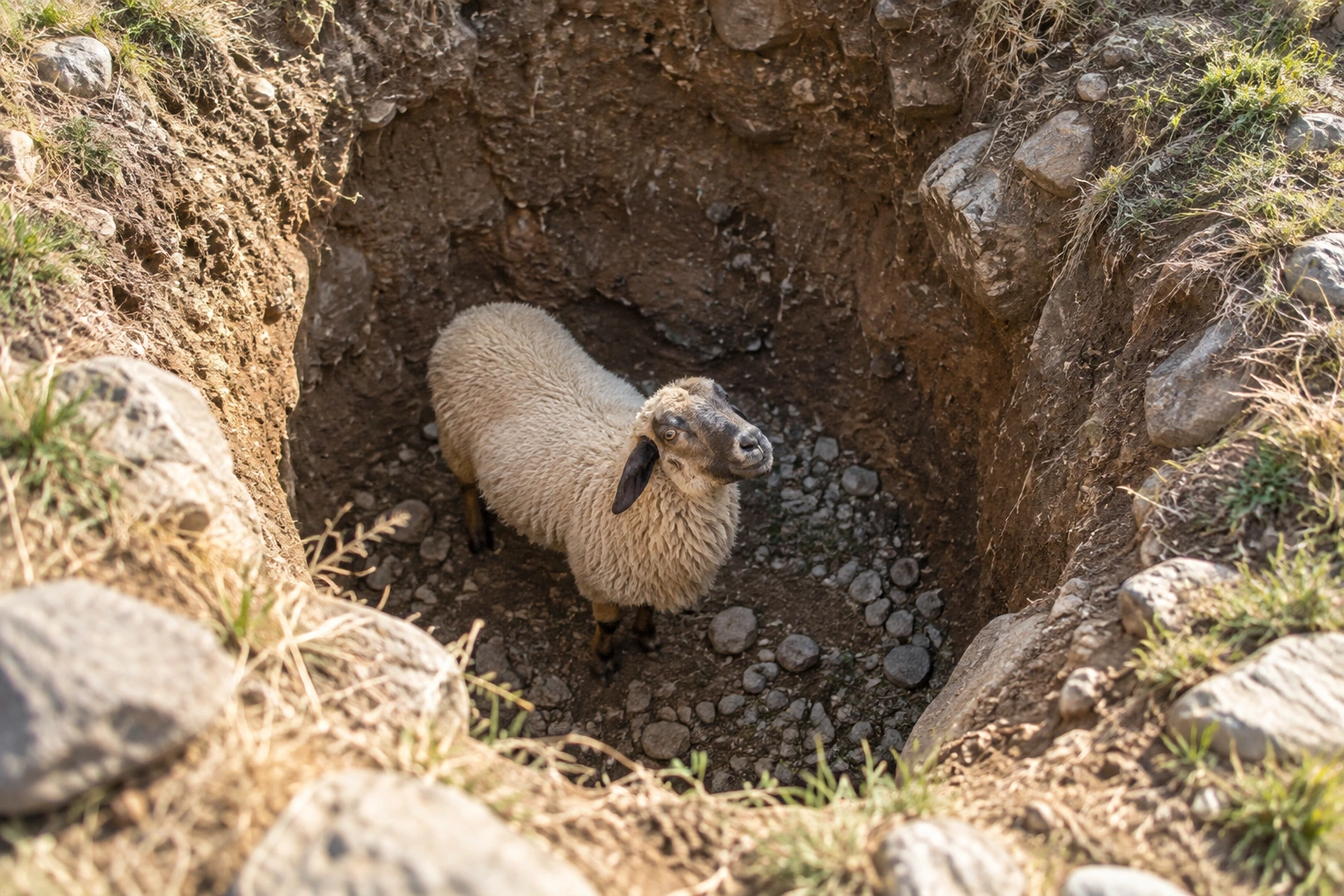
A sheep in a pit
Jesus asks His hearers to consider a sheep that has fallen into a pit on the Sabbath. The vulnerable animal makes His question about practical care immediate and recognizable.
During a dispute about healing on the Sabbath, Jesus asks what a person would do if a sheep fell into a pit. The expected rescue exposes a practical care His hearers already recognize. He then turns attention to the greater value of a person. Matthew 12:9-13
Explore and study
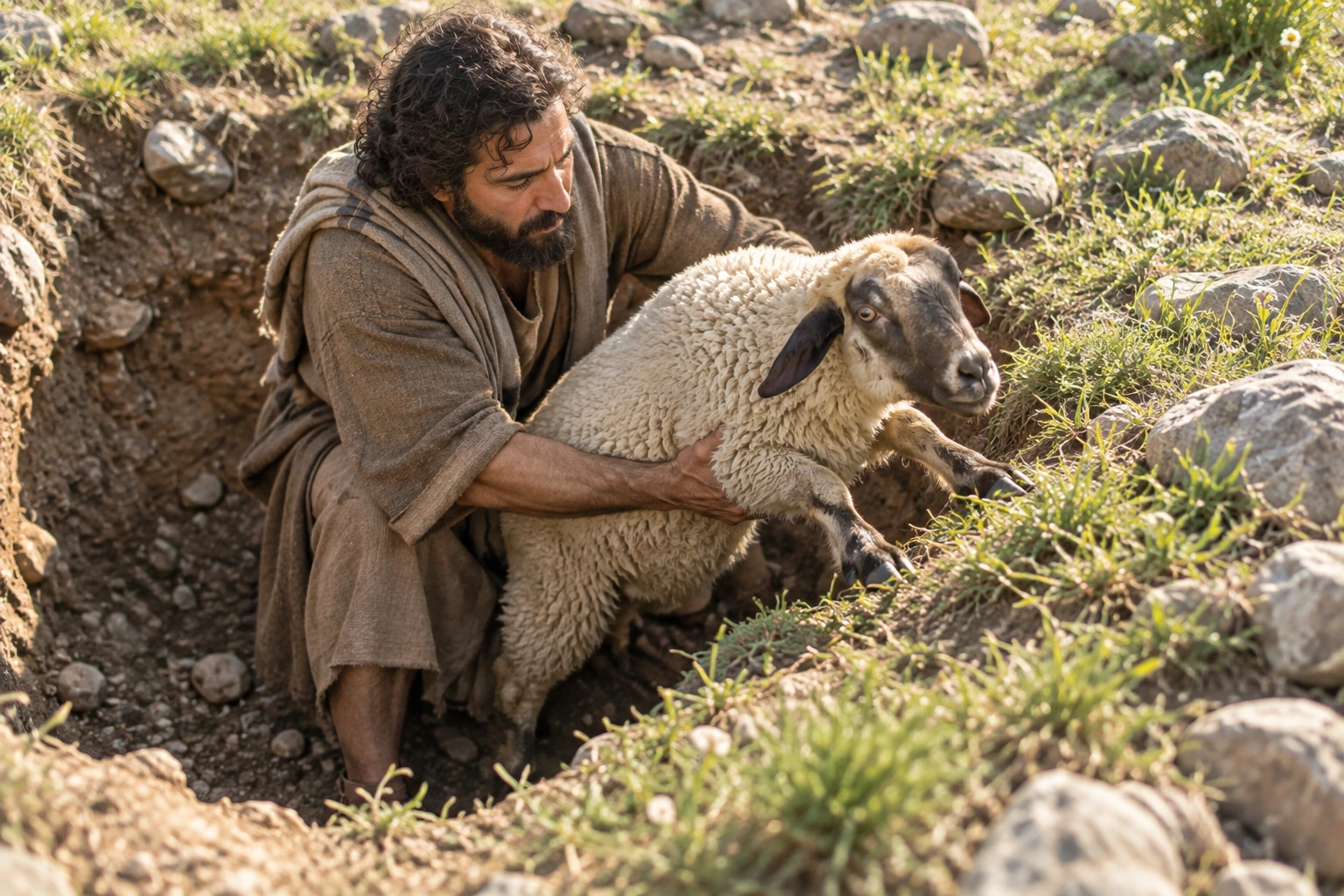
Lifting the sheep from the pit
In Jesus' comparison, a person takes hold of the sheep and lifts it out. This imagined rescue pictures the ordinary care He uses to challenge resistance to doing good on the Sabbath.
Read and discover
The person before the rule
The argument reaches a clear conclusion: it is lawful to do good on the Sabbath. Jesus' comparison is not separated from the person before Him whose hand needs healing. Mercy is not an abstract exception considered at a safe distance from need.
Luke records a related question about an ass or ox fallen into a pit while Jesus heals a man. These are related comparisons in distinct accounts; a retelling should not blend the animals and encounters into one event. Each connects recognized care with a challenge to resistance toward healing. Luke 14:1-6
Read and discover
Let compassion clarify the good
You might reflect on whether a concern for correct observance sometimes prevents you from seeing the person the observance should help you love. Careful practice and compassion need not be enemies. In this passage Jesus brings the good of the person clearly into view.
Continue with Jesus Christ
The Good Samaritan
A question about who counts as a neighbor becomes a story about acting as one. Follow the mercy that begins on the road and continues at the inn.
Open study →The Sheep and the Goats
The King remembers meals, visits, clothing, and welcome. This judgment scene places ordinary acts of care within our response to Christ.
Open study →Loving Our Neighbor
Continue through the connected teachings in this collection and compare their distinct settings.
Open study →