Read and discover
Authority, John, and response
Explore and study
The father's request
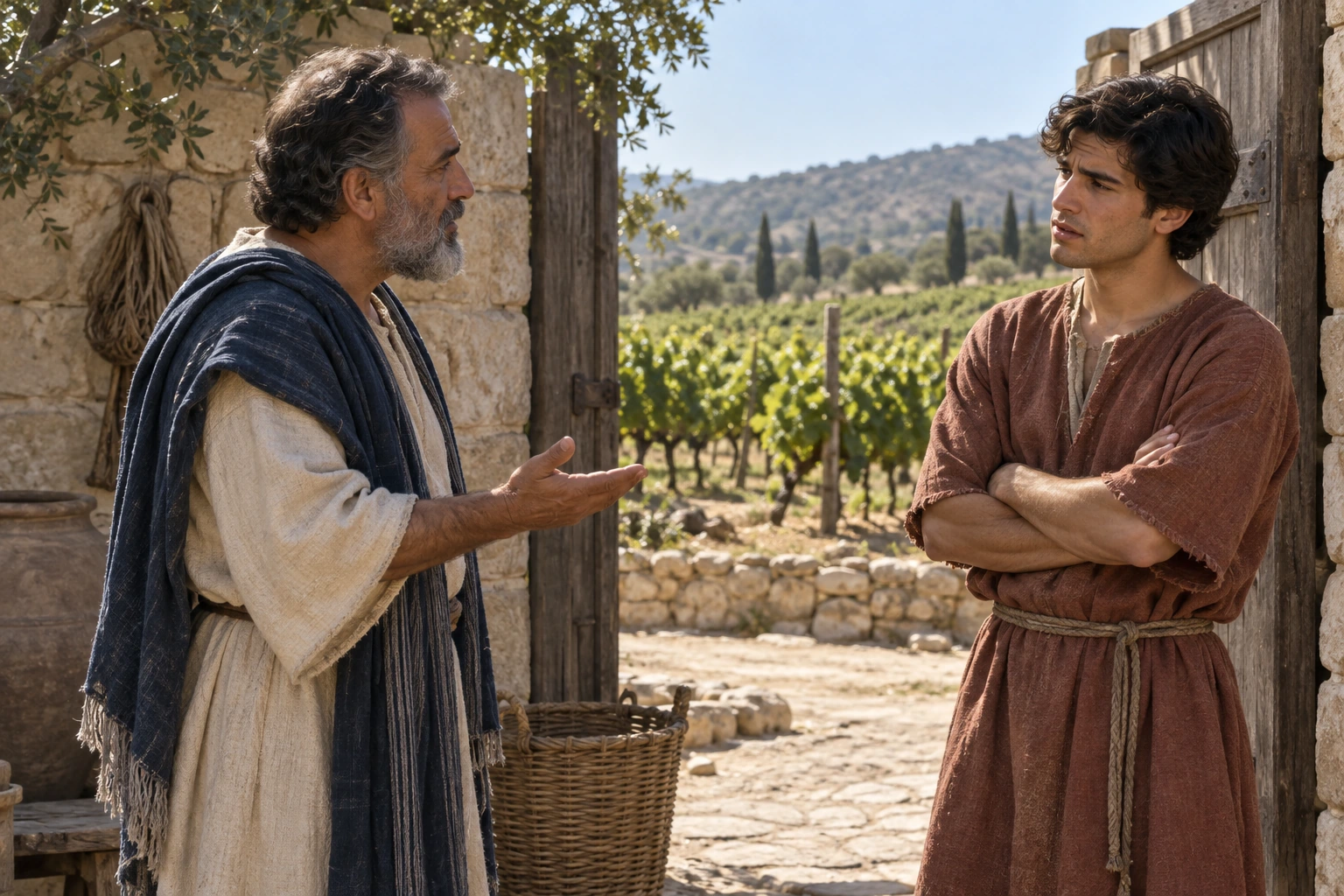
The father addresses his son beside the open vineyard gate. Jesus begins with a request to work, then shows how the son's first refusal will give way to a different response.
Jesus tells this story in Jerusalem after religious leaders challenge His authority. The discussion has turned to John the Baptist and their response to him. A father asking two sons to work in his vineyard provides a direct way to examine the difference between words and obedience. Matthew 21:23-32
Read and discover
What the sons actually do
Explore and study
A changed mind becomes action
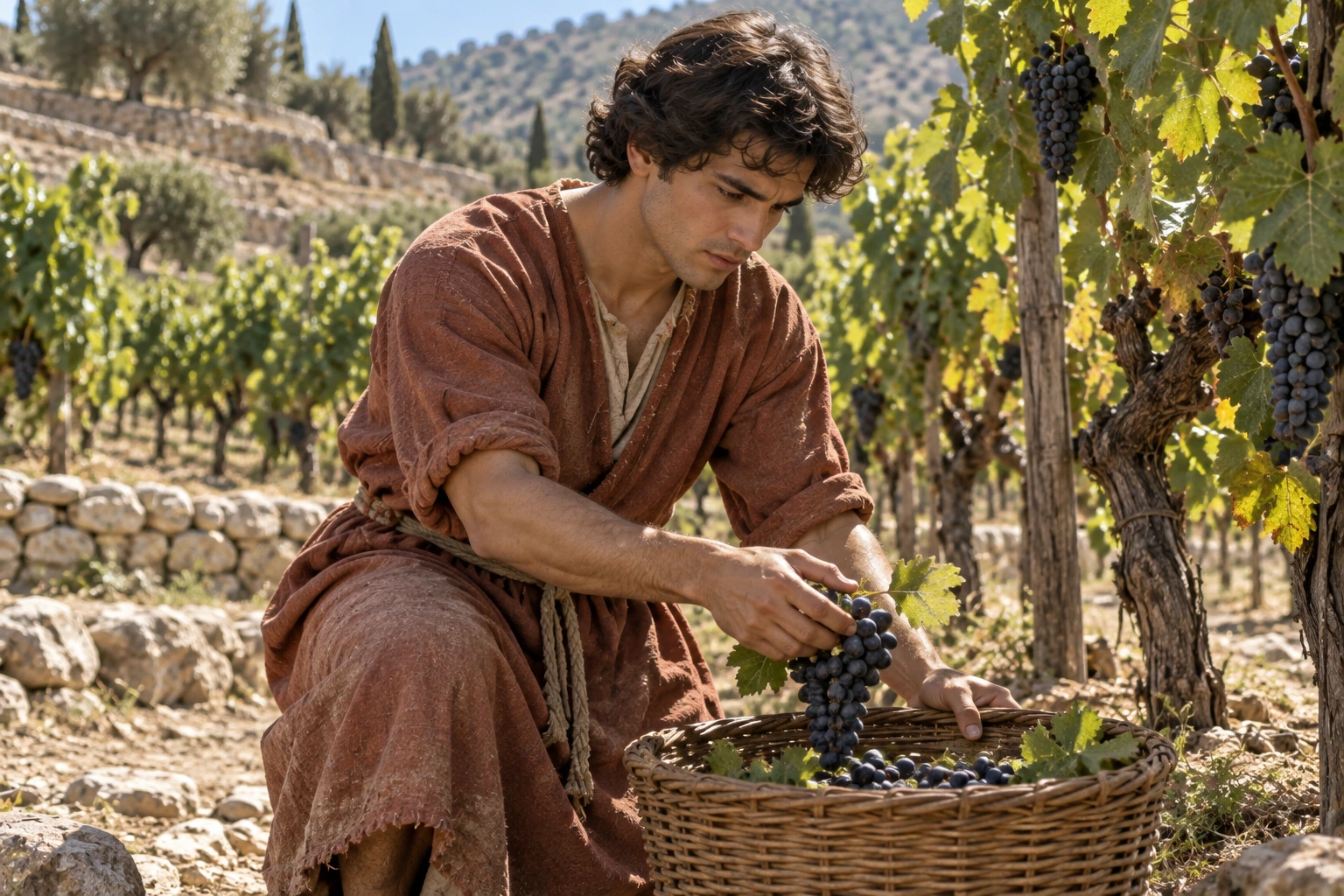
The son is now at work among the vines, gathering grapes into a basket. Jesus says he changed his mind and went, giving substance to repentance through what he did.
The first son refuses, then changes his mind and goes. The second speaks agreeably but does not go. Jesus asks which did the father's will. The question is simple enough to answer, but its simplicity exposes the distance between a respectable response and an actual response.
Jesus applies the account to people who believed John and to hearers who, even after seeing that response, did not repent and believe. The story is therefore not merely praise for independent action. Its setting concerns receiving a call from God and allowing that call to change conduct.
Read and discover
There is still room to change
Explore and study
Words that still need action
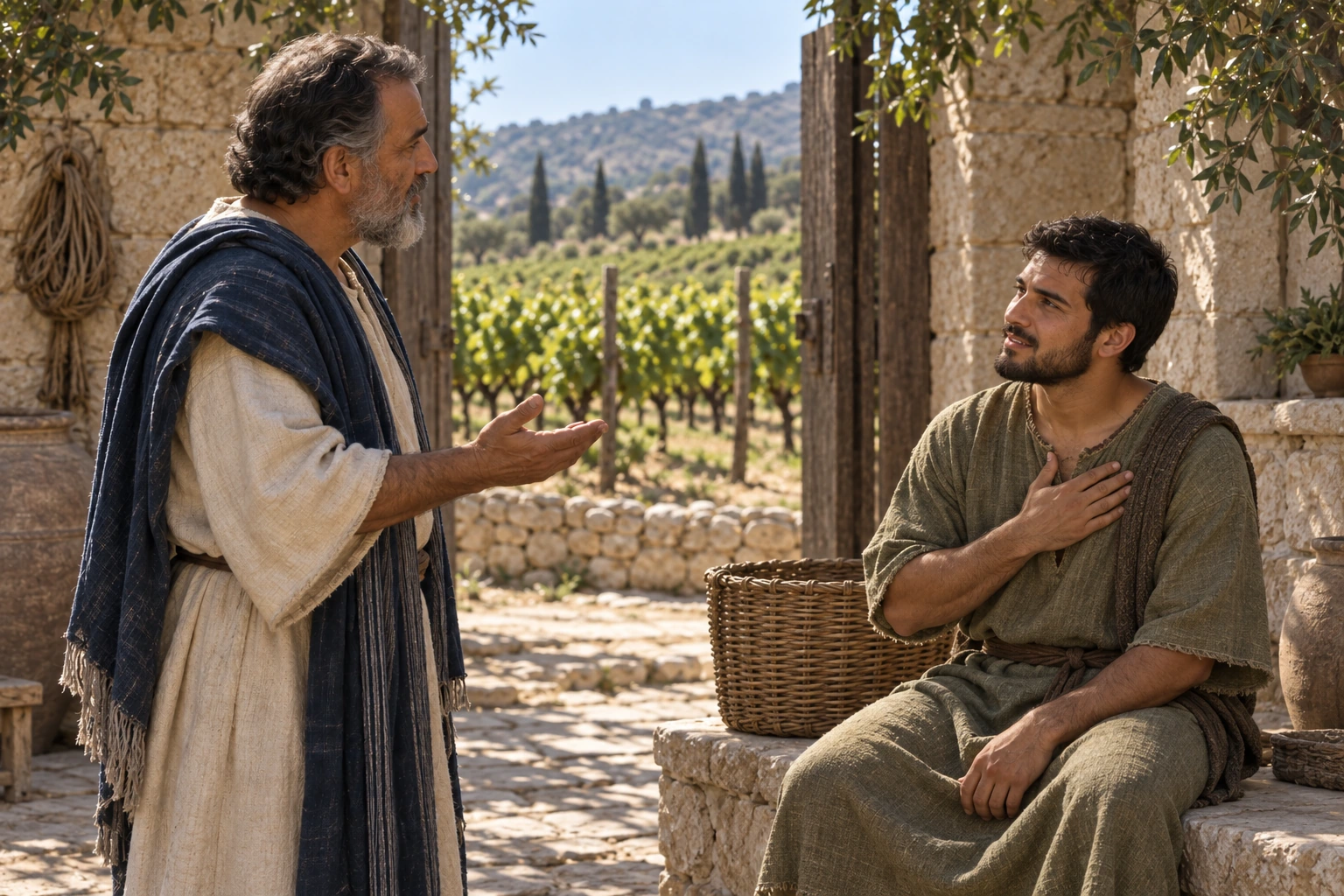
The second son looks toward his father with a hand against his chest as he answers. Jesus says that this son agreed to go but did not, asking us to weigh obedience by action as well as words.
There is hope in the first son's changed mind. An earlier refusal need not be the last word. You might consider one promise that remains only words, or one neglected good you can still begin. The passage invites a concrete response without requiring a polished account of your intentions.
Continue with Jesus Christ
The Wise and Foolish Builders
Jesus pictures a life that can stand by taking us beneath the walls to the foundation. His invitation is to let heard words become practiced truth.
Open study →The Barren Fig Tree
The gardener asks for time to dig and nourish. Jesus places urgent repentance beside a patient opportunity to bear fruit.
Open study →Hearing and Living His Word
Continue through the connected teachings in this collection and compare their distinct settings.
Open study →