Read and discover
The steward faces an account
Explore and study
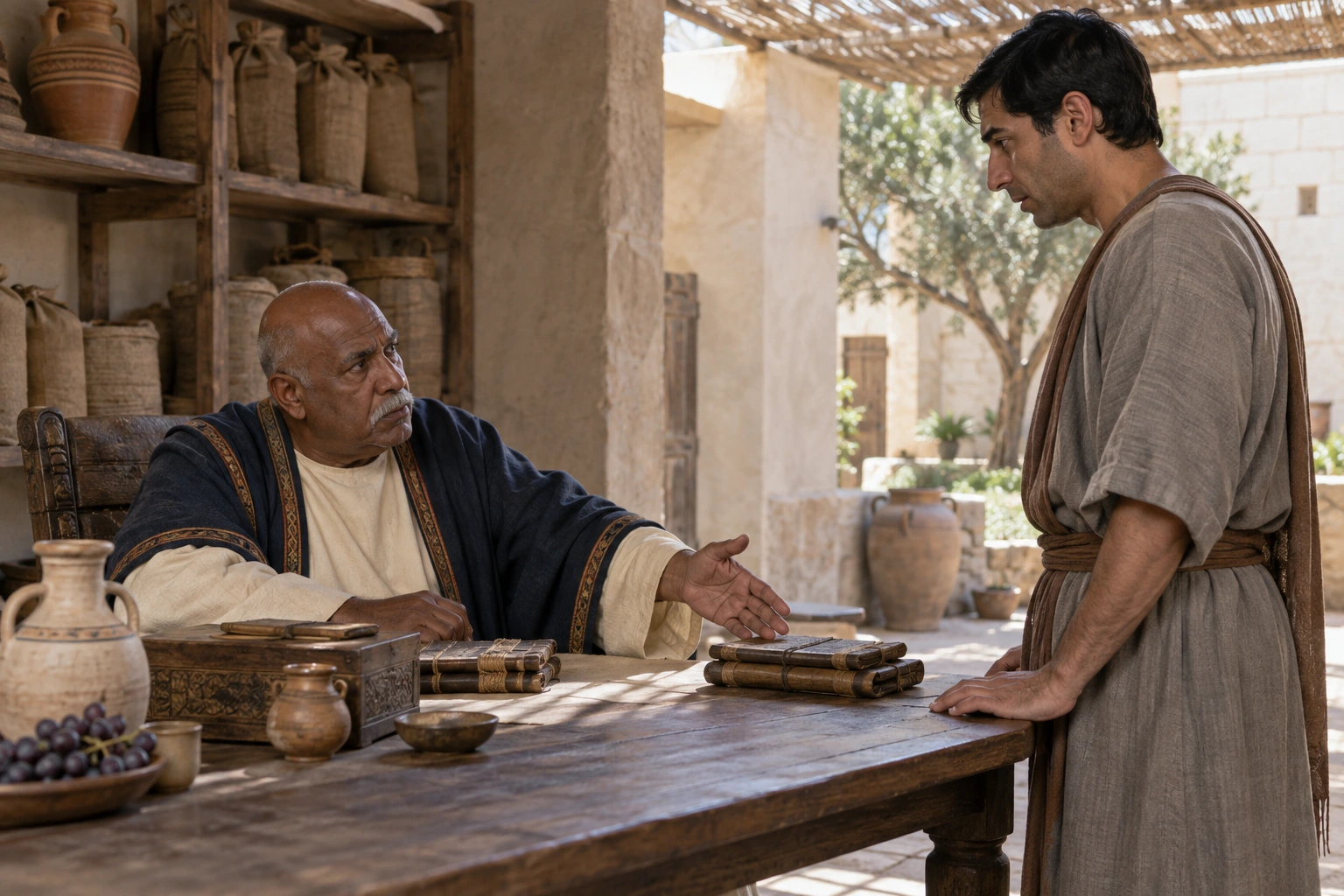
Called to give an account
A rich man hears that his steward has been wasting his goods and calls him to account. He tells the steward that he can no longer remain in charge of the household's management.
A rich man hears that his steward has wasted his goods and calls him to account. Facing removal, the steward considers how he will live afterward. The story begins with failing stewardship and an urgent attempt to prepare for a changed future. Luke 16:1-13
Read and discover
Preparation without approval of dishonesty
Explore and study
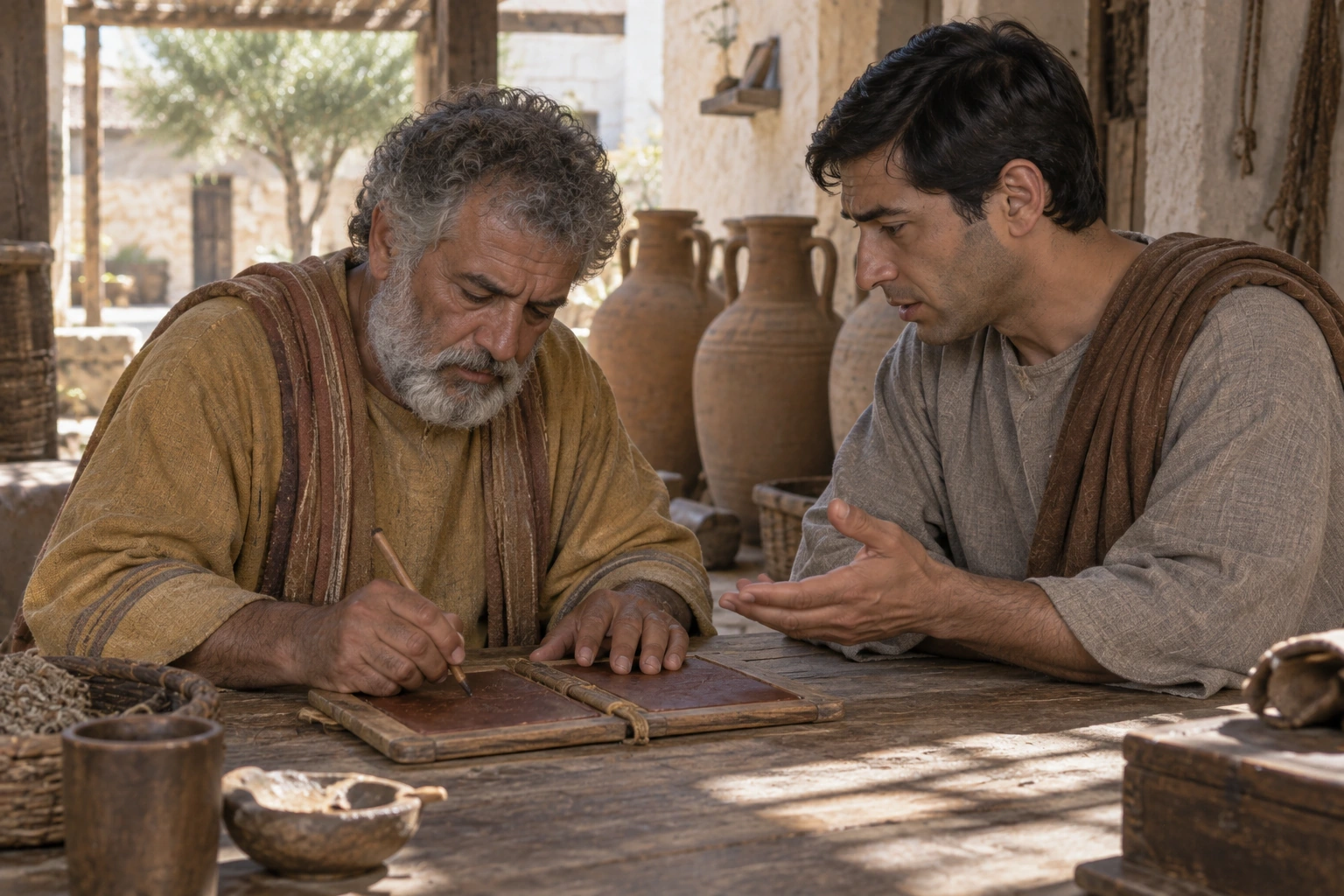
The oil debt reduced
The steward directs a debtor to change a hundred measures of oil to fifty. The writing follows the steward's scheme to secure welcome after he loses his position.
He calls his master's debtors and reduces their bills. One who owes oil is told to write a smaller amount, and another who owes wheat does the same. His purpose is to secure welcome in their houses when he loses his position.
Explore and study
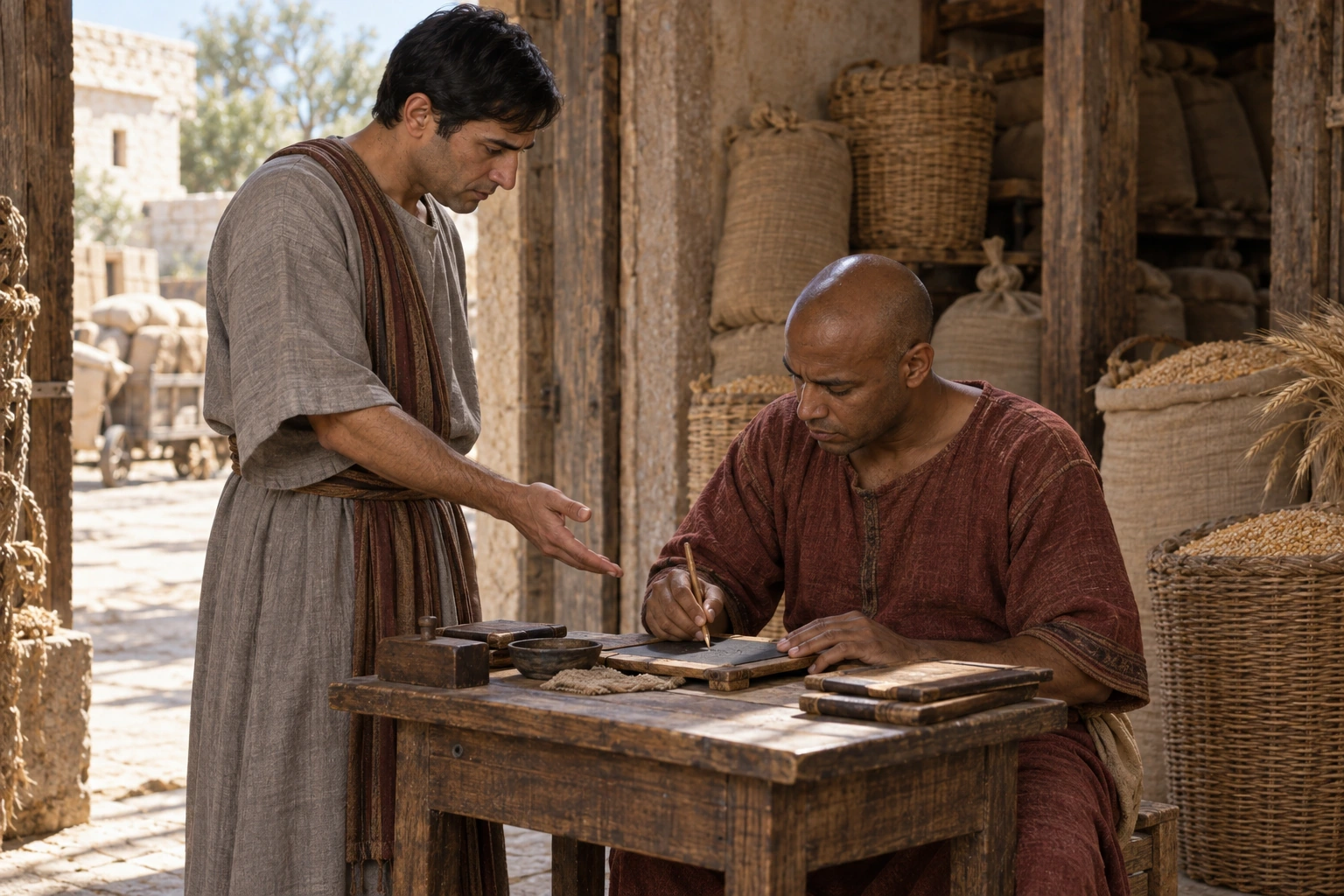
The wheat debt reduced
The steward tells another debtor to reduce a hundred measures of wheat to eighty. The altered account continues his dishonest scheme as he prepares for the loss of his position.
The commendation concerns his shrewd action in view of what is coming. It does not turn the story into approval of dishonesty. Jesus' following words stress faithfulness in little and much, responsibility with what belongs to another, and the impossibility of serving both God and mammon.
Read and discover
Read the story with Jesus' conclusion
The surrounding teaching is essential because the narrative character is not a complete model for discipleship. The Bible Dictionary likewise cautions against treating every trait of a parable's character as part of the spiritual comparison. We can learn from foresight without approving the steward's conduct.
Reflection may ask how present choices prepare you for future responsibility. Resources can be used thoughtfully and generously while integrity remains nonnegotiable. The account's difficulty is a reason to read its conclusion carefully, not to excuse manipulation when it seems likely to produce a useful result.
Continue with Jesus Christ
The Rich Fool
A rich harvest promises the owner many comfortable years. The story asks what possessions can and cannot secure.
Open study →The Talents
Different amounts are entrusted to different servants. The returning master asks what each has done with the responsibility received.
Open study →Faithful Stewardship and the Cost of Discipleship
Continue through the connected teachings in this collection and compare their distinct settings.
Open study →