Continue the study
Paul invites Athens to seek God
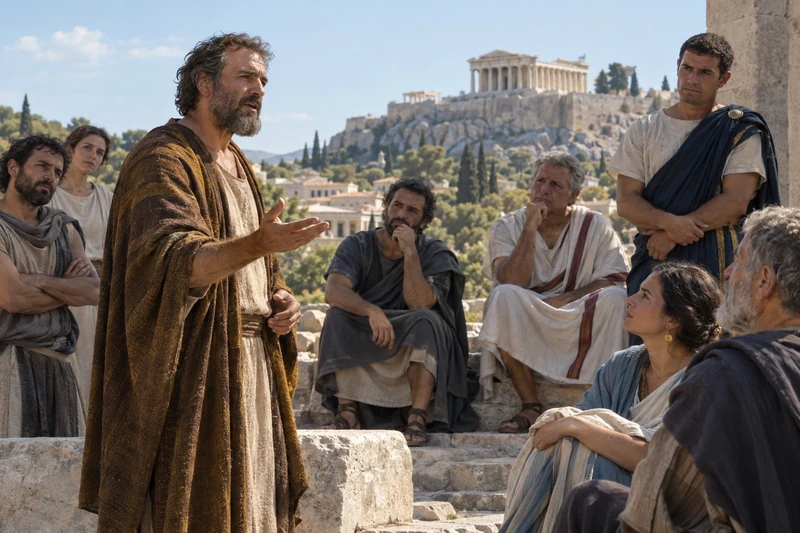
Paul invites the people of Athens to seek the God who gives life. Follow his words toward the promise of resurrection and judgment.
Answers · Foundational study
Where we came from, why this life matters, and the hope Jesus Christ makes possible.
ContinueSome questions reach into every part of life: Who am I? Why are we here? What happens when someone dies? Latter-day Saints look to the Father's plan of salvation for answers, with Jesus Christ at its center.
You can follow the whole journey or begin with the question closest to you. The scriptures do not answer every detail, but they teach why your life matters and why there is reason to turn toward Christ.
A new child can make familiar questions feel very close: Who is this person? What will this life hold? The scriptures begin our story before that first breath. Abraham learned that human life had a history before the earth was made. The Church teaches that we lived with our heavenly parents as Their spirit children.
That teaching gives every person a worth that does not depend on usefulness, achievement or recognition. We arrive here to receive a body and learn to choose, love and grow. We do not remember that earlier life, and we cannot read someone's mortal circumstances as a measure of their premortal worth.
The book of Moses also places Jesus Christ at the beginning of this story. The Beloved Son accepts the Father’s will, while Satan seeks to take away human agency. Our hope rests in the Savior who honors the Father and makes a willing response possible.
Abraham 3:22–26 Plan of Salvation Moses 4:1–4

Explore and study
A child is welcomed into mortal life. Abraham’s account invites us to see each person as someone whose story began before birth.
What might change in how you treat yourself or another person if you begin with belonging?
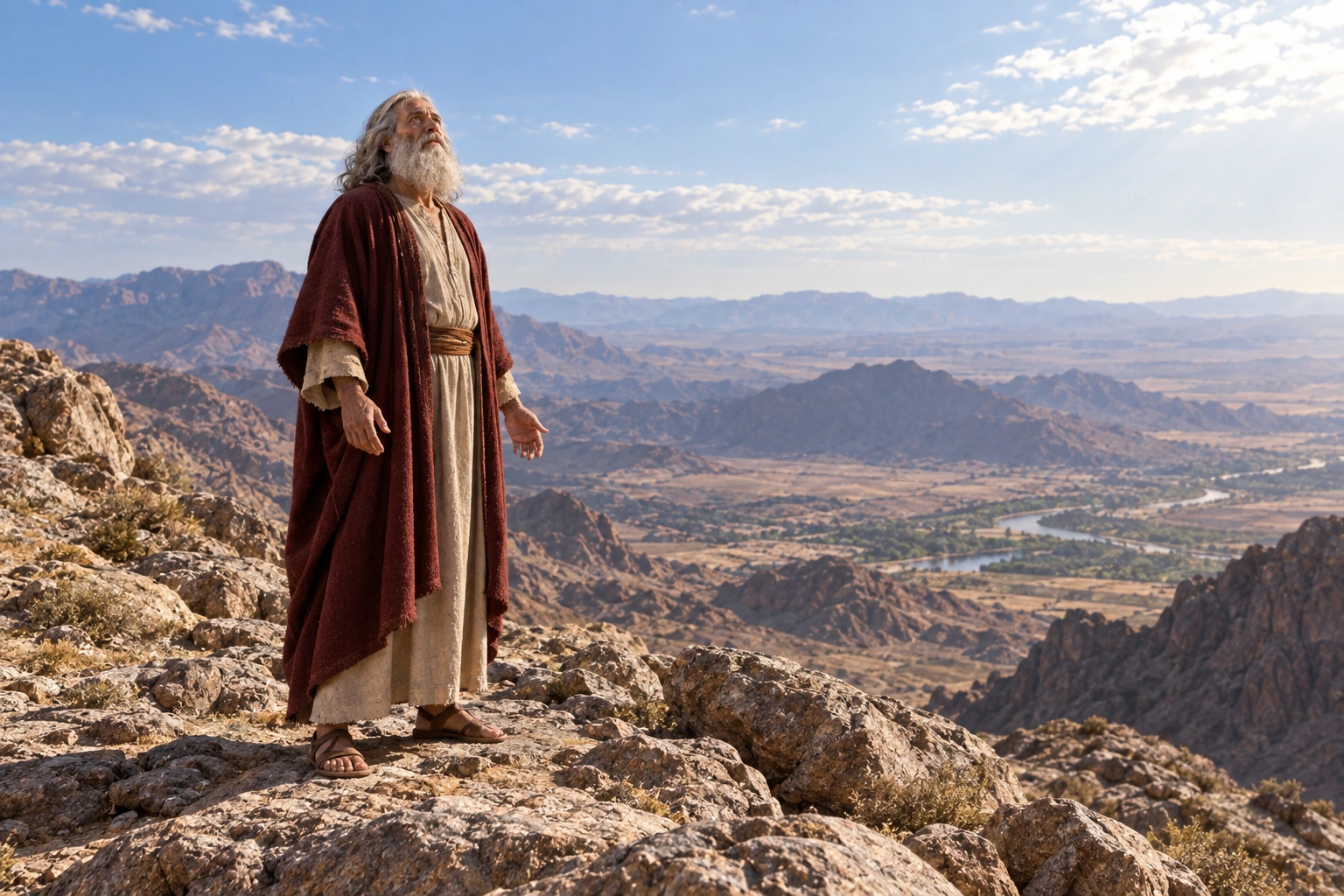
Moses beholds the earth and its inhabitants by the Spirit, then asks why these things exist. The Lord answers with a purpose that reaches to every person: immortality and eternal life. Through Jesus Christ, all will rise from the dead. Eternal life means life with God, made possible through the Savior.
It can be hard to think beyond the next responsibility. Yet purpose need not make ordinary work feel small. Caring for a person, learning patience and beginning again after a mistake can all belong to a life turned toward God. The destination helps us decide how to live today.
Moses 1:27–40 Moses 1:39 Preach My Gospel, lesson 2
Explore and study
Moses looks out from the mountain. As he asks why the earth and its people exist, God answers with His purpose: our immortality and eternal life.
Which ordinary responsibility could you approach with a little more love today?
Moses describes the earth taking shape through the Only Begotten. Dry land appears, and plants bear seed and fruit. The account directs our attention to a world that can sustain life and to the divine purpose behind it.
The Creation belongs at the beginning of this study because bodies and earthly experience matter. Food, shelter and the living world are part of our mortal home. Looking closely at a leaf or a piece of fruit can be a simple way to remember how much we receive before we have done anything to earn it.
Explore and study
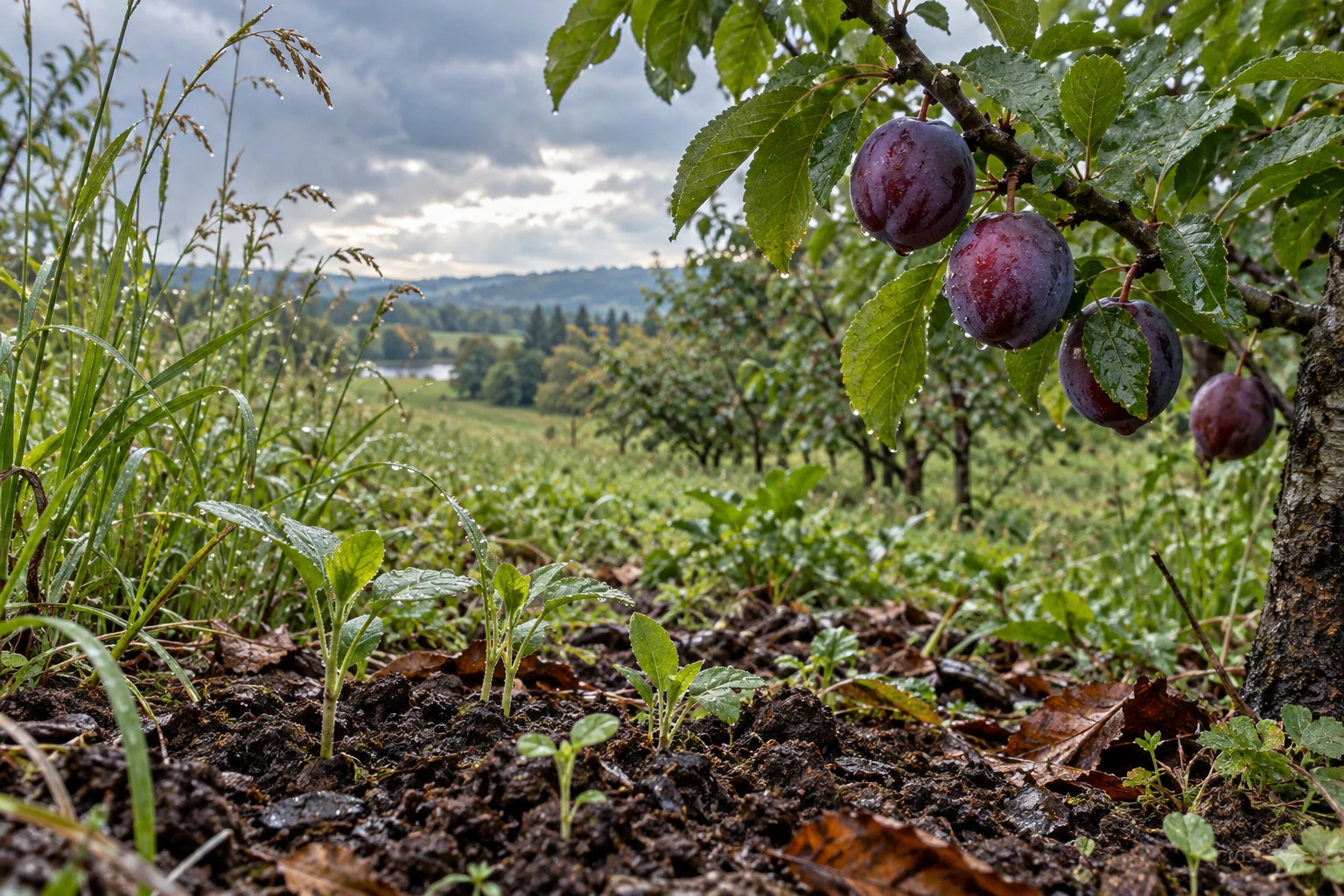
Seedlings take root and a branch bears fruit. The Creation account describes an earth where life can grow and be sustained.
What part of the created world helps you feel gratitude?
Genesis describes women and men in the image of God and gives them responsibility within the living world. Human dignity and responsibility appear together. The earth is a gift, and our use of it affects other people and other forms of life.
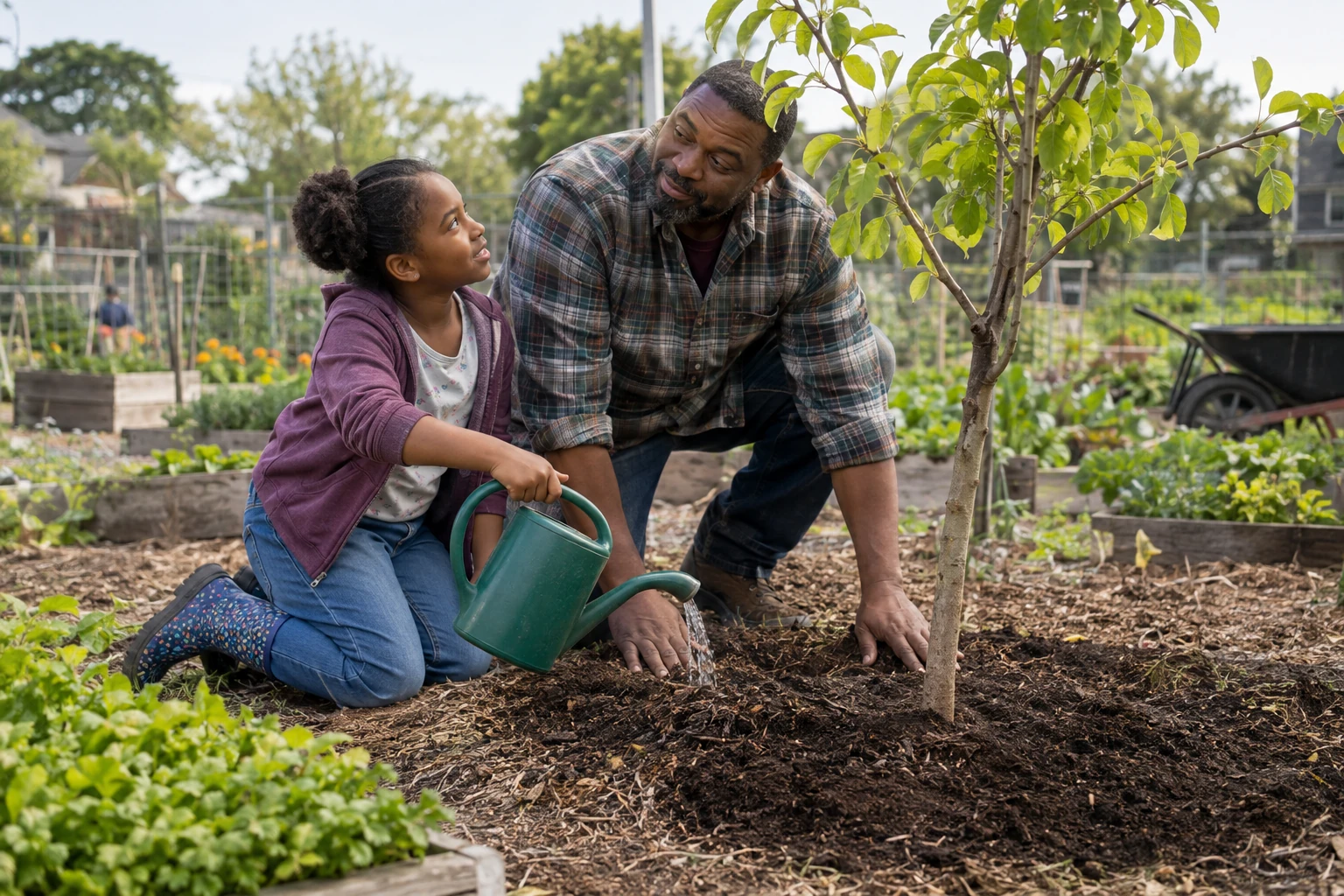
A child learning to tend a young tree can discover something simple: growth needs care. We can receive the world gratefully while also protecting what another generation will need. Our place in the Creation invites attention rather than indifference.
Explore and study
An adult and child care for a young tree together. Receiving the earth as a gift also gives us work to do for the life around us.
What is one small part of the world that has been entrusted to your care?
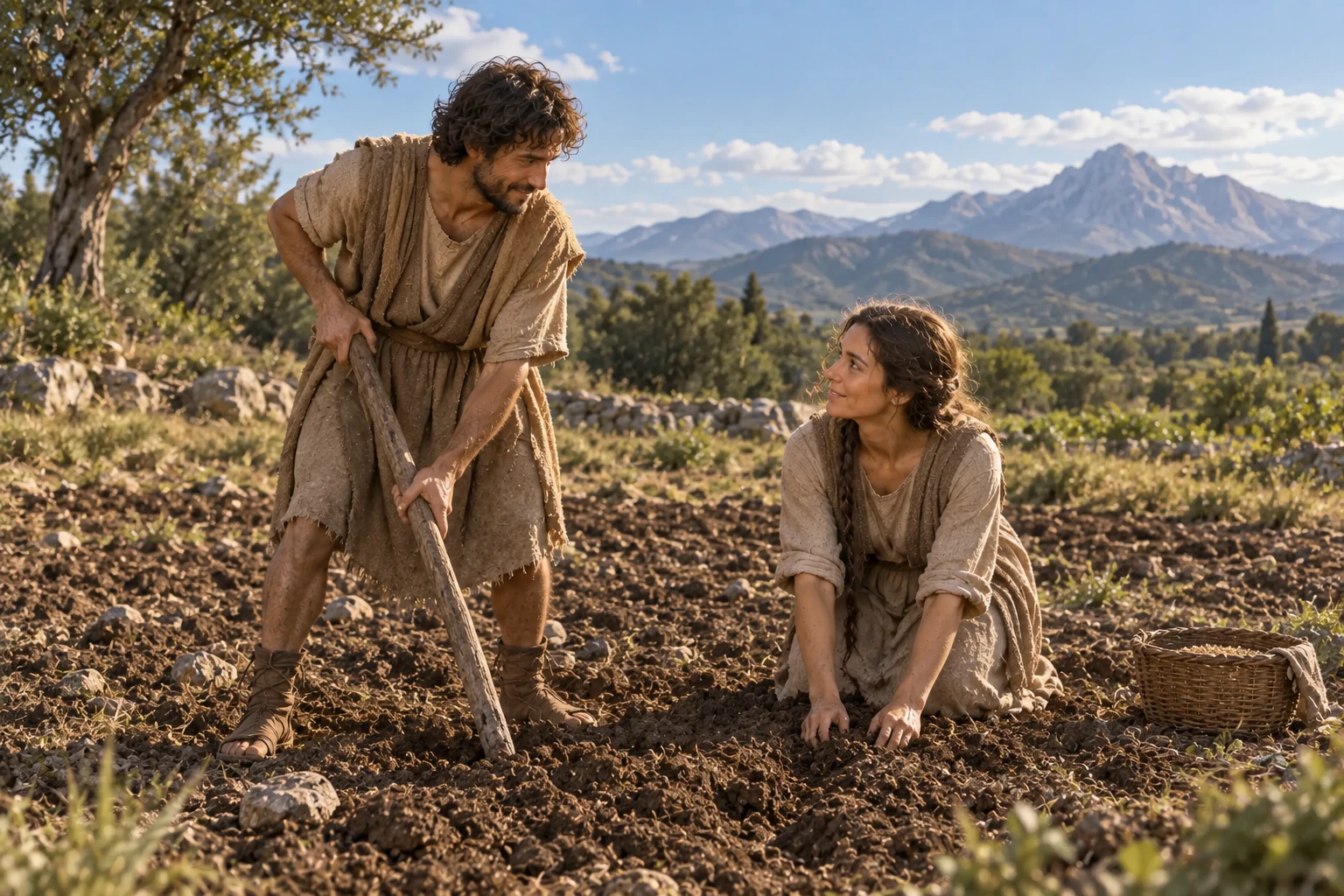
After leaving Eden, Adam tills the earth, and Eve works with him. Moses places them together in the labor of mortal life. They have children, call upon God and learn that redemption will come through His Son.
Their story includes loss, learning and hope. Eve speaks of knowing good and evil and of the joy of redemption. The Fall opens the way to mortal experience; Christ opens the way through its sin and death. We do not have to blame Eve or dismiss the cost of mortality to recognize both truths.
Explore and study
Adam and Eve work the soil together. Their story continues beyond Eden through shared labor, family life and learning to call upon God.
What do Adam and Eve's shared work and worship help you notice about partnership?
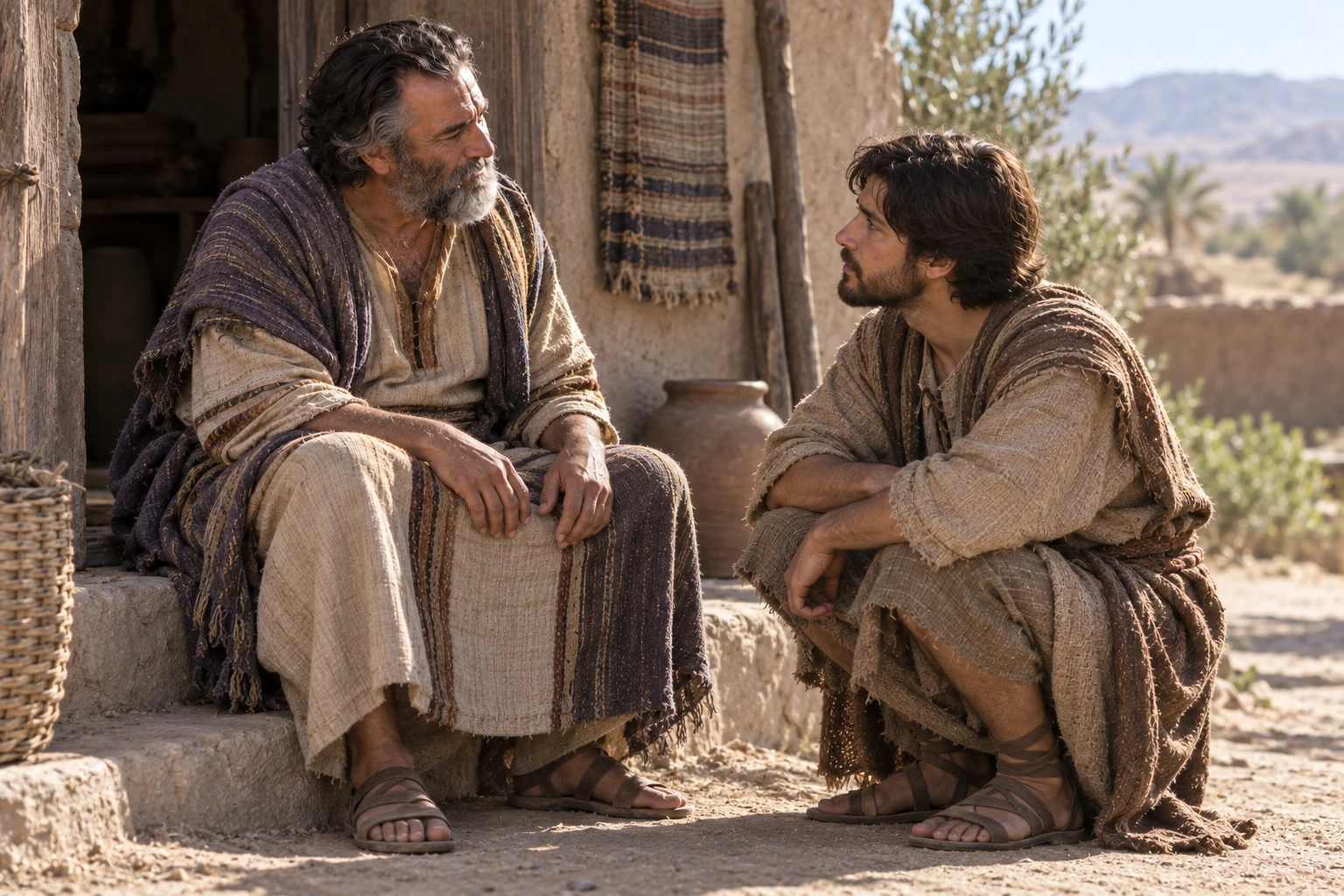
Lehi speaks to Jacob as a father who knows that his son has suffered. He does not pretend that those early hurts were good. He turns Jacob toward the Redeemer and teaches how opposition, choice and redemption belong to mortal life.
Lehi's invitation is to choose liberty and eternal life through the Messiah. Agency is more than being left alone with consequences. Christ makes repentance and a different future possible. We can take responsibility for our choices without calling another person's harm our fault.
Explore and study
Lehi speaks with Jacob near the end of his life. His counsel connects agency with the Redeemer who makes freedom possible.
Where do you need help to make a freer, more faithful choice?
A body lets us work, learn, rest and reach toward someone we love. It also makes us vulnerable. Illness and disability can change the shape of a day or a life, but they do not lessen the worth of the person living it.
When the disciples asked whose sin had caused a man's blindness, Jesus rejected their proposed blame. Alma teaches that Christ knows His people's pains and infirmities. Those passages can lead us toward practical compassion: listening, seeking appropriate care and making room for a person's own voice.

Explore and study
A nurse listens while a relative holds the patient’s hand. Christ’s knowledge of suffering gives us reason to turn toward people in pain with care.
How could you offer help while respecting the other person's wishes?
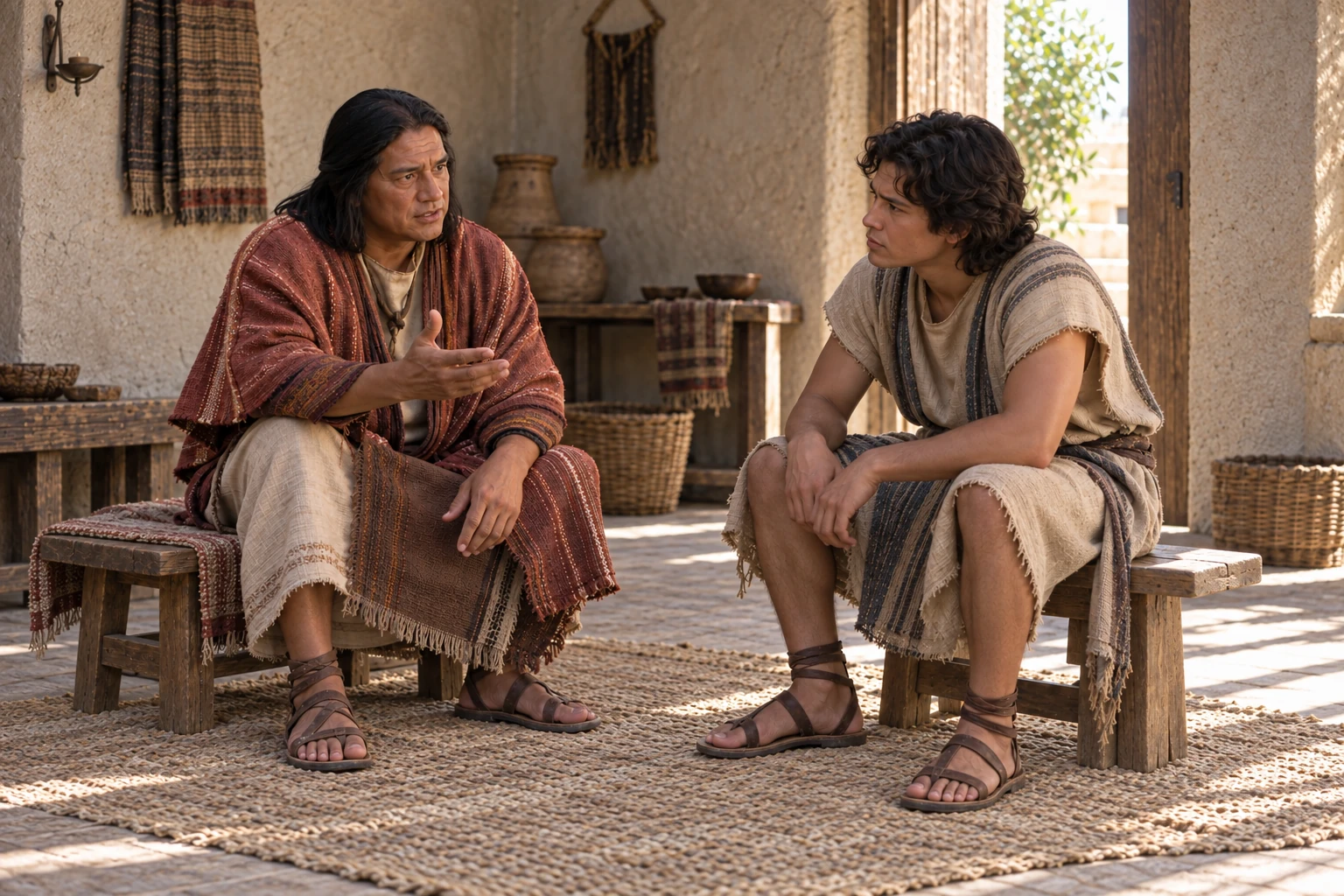
Alma's teaching about the plan comes in a conversation with his son Corianton. He addresses wrongdoing seriously, then explains mercy through the Atonement. His purpose is to bring his son to repentance rather than leave him trapped in excuses or despair.
At the end, Alma sends Corianton to teach truth and help others repent. A changed life still has work to do. For us, returning to Christ may include confessing, repairing what we can and accepting help as we learn to live differently.
Explore and study
Alma speaks to Corianton with an open hand. He addresses his son’s wrongdoing without leaving him without a way to repent and return.
What would a sincere next step toward repair look like?
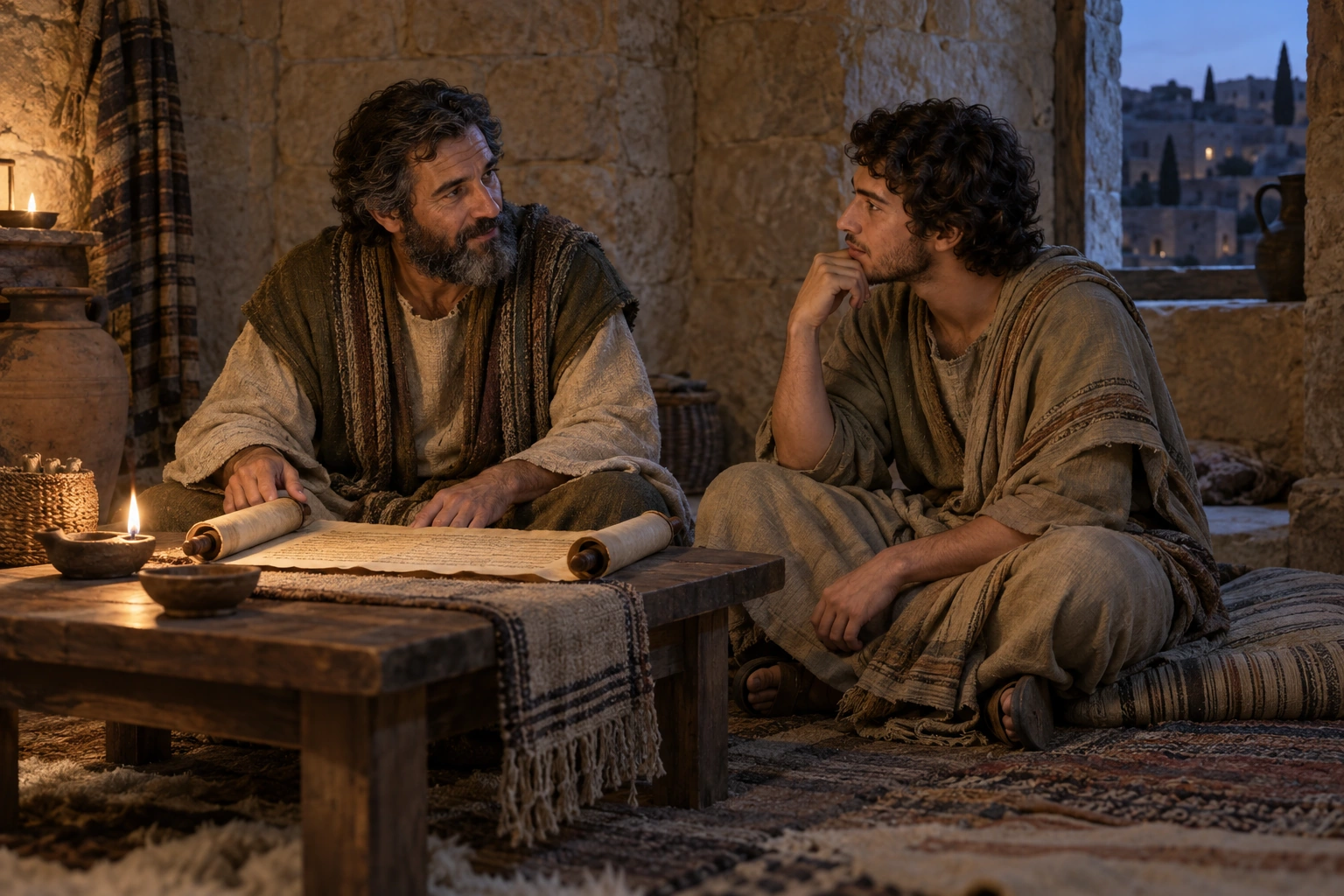
Isaiah describes a servant acquainted with grief who bears the burdens of others. Christians read this passage in the light of Jesus Christ. His suffering is not distant from the pain people carry; it belongs at the center of the promise of redemption.
Alma adds that the Savior will take upon Himself sickness, infirmity, death and sin. These are not all the same experience, and people need more than one kind of help. We can seek forgiveness for wrongdoing and seek comfort or care for suffering we did not cause.
Explore and study
Two readers discuss an open scroll together. Isaiah’s words about the suffering servant help us study the Savior’s willingness to bear sorrow and sin.
Which part of Christ's compassion do you most need to understand today?
Jesus lifts His eyes to heaven and prays to the Father. He speaks of the glory He had before the world and of the work He has done on earth. The same prayer names eternal life as knowing the Father and Jesus Christ.
Before His suffering, the Savior's prayer reaches beyond those immediately around Him to people who will believe through their witness. The plan is personal: a relationship with the Father and Son, made possible through Christ. His prayer gives us more to seek than simply a life without difficulty.
John 17:1–5, 20–23 Doctrine and Covenants 19:16–19
As you read His prayer, what do you learn about the life Jesus wants to share with us?
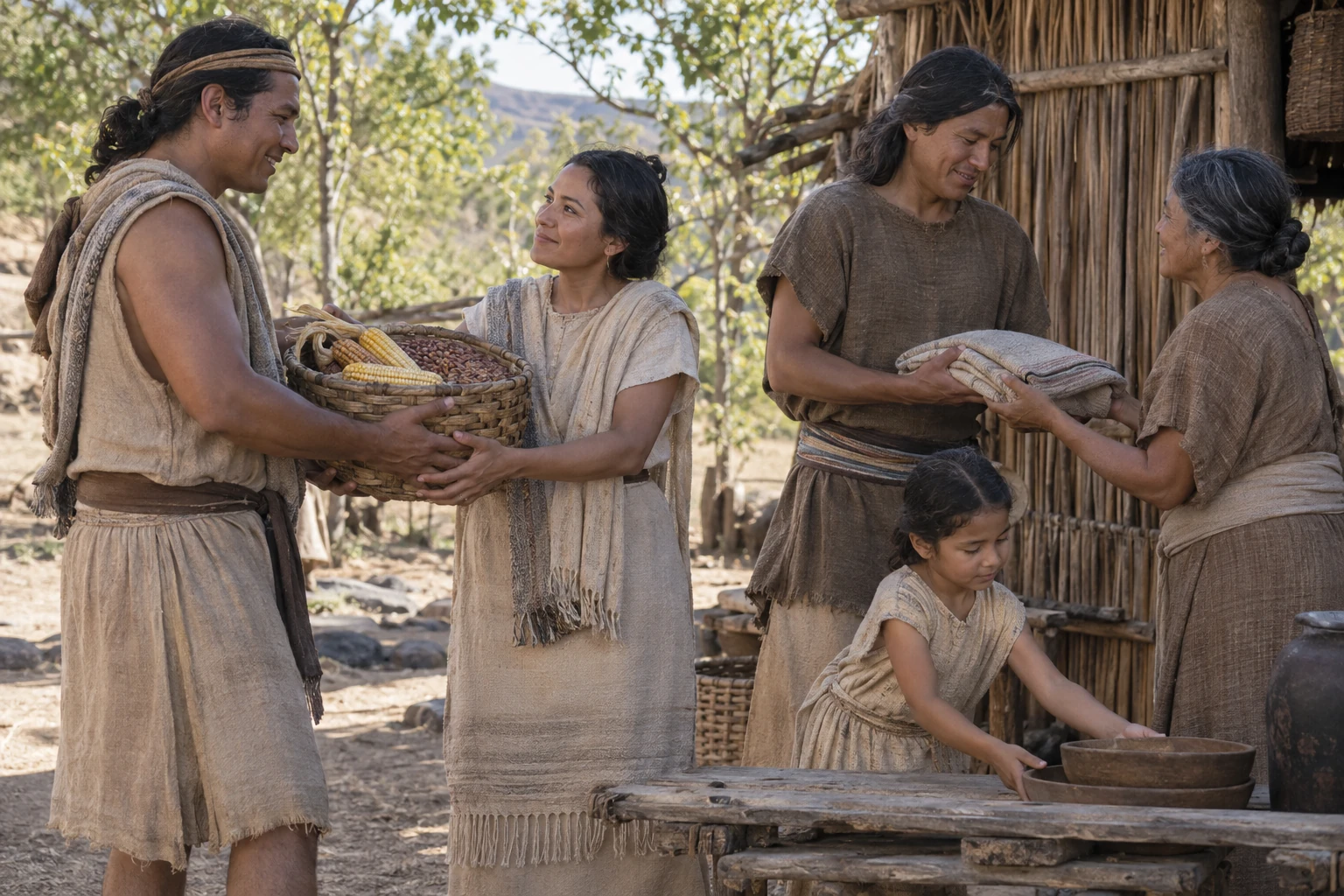
At the waters of Mormon, Alma connects baptism with a willingness to bear burdens, mourn with those who mourn and stand as a witness of God. A covenant is a committed relationship with God, and it changes how we approach His children.
Later in the chapter, people share what they have according to their ability and others' needs. Someone who has little is not required to pretend to have much. The invitation is willing care, shaped by the real needs and capacities of a community.
Nephi describes the way into this life of discipleship through faith in Christ, repentance, baptism and the gift of the Holy Ghost. Then we continue with hope, love and trust in the Savior. Covenants are not a substitute for His grace; they commit us to follow Him and receive the help He offers.
Mosiah 18:8–10, 27–29 2 Nephi 31:17–21
Explore and study
Food and cloth pass from one person to another. The people gathered by Alma shared according to need as they learned to live their covenant together.
Whose burden could you help carry in a way that is useful to them?
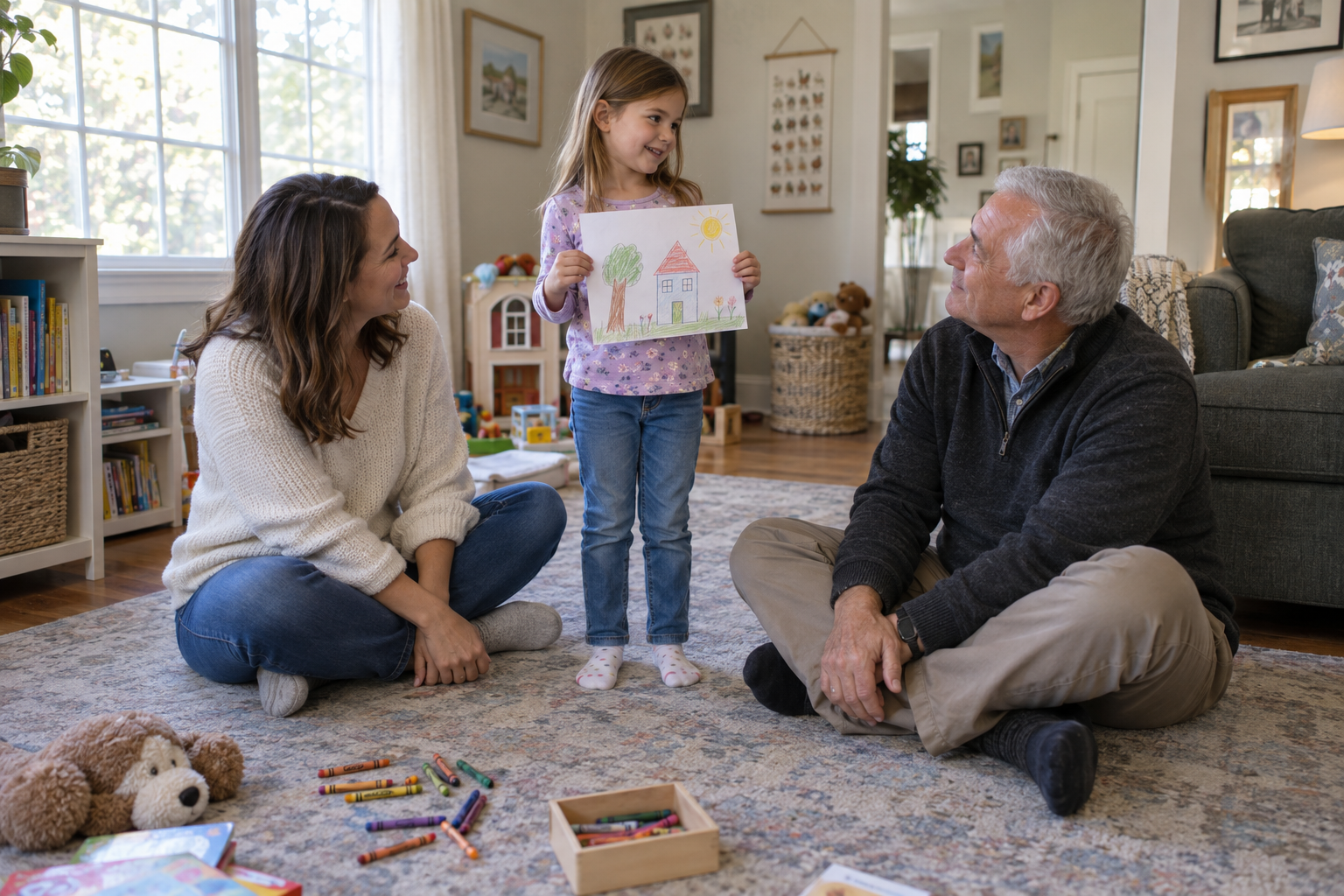
Third Nephi records that Jesus ministered to children and enabled them to speak marvelous things to their fathers. The record does not give us their words. It does show that children were participants in His ministry, not merely background to the adults' experience.
The chapter goes on to describe people teaching, serving and dealing justly with one another. Learning Christ's gospel can change both whom we listen to and how we live together. A child, a quiet neighbor or a new learner may deserve more patient attention than we first realize.
Explore and study
A child shows her drawing to adults who stop to listen. The account in Third Nephi reminds us that children have a place in a community gathered around Christ.
Who could you listen to more patiently this week?
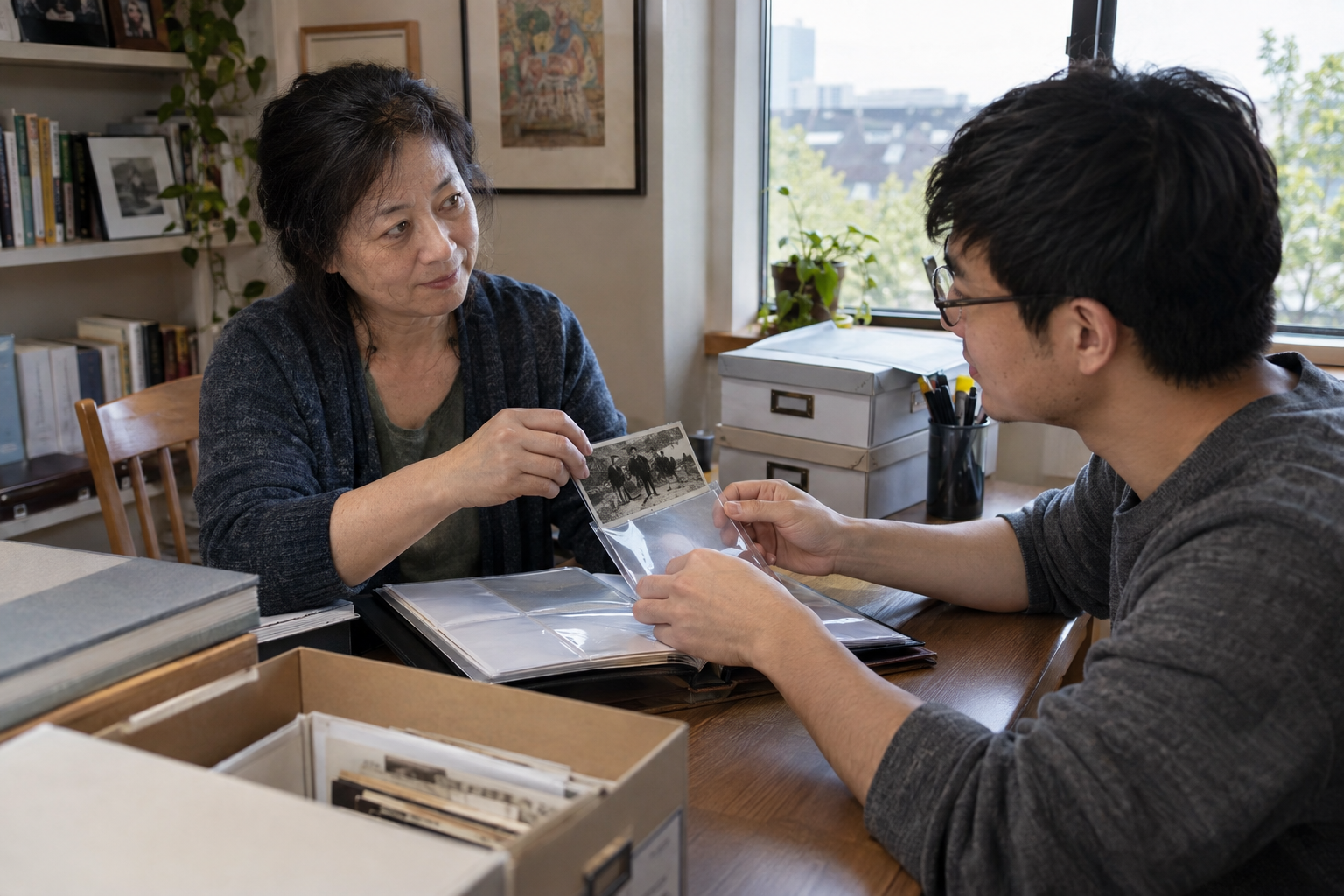
Alma distinguishes death from resurrection. Between them, the spirit continues to live. He describes peace for the righteous and also the painful condition of those who have chosen wickedness. This is an intermediate state, not the final resurrection or a complete map of eternity.
For someone grieving, those teachings may sit beside longing and unanswered questions. Faith does not require us to stop missing a person. We can speak honestly about loss while holding to Christ's promise that death will not have the last word.
Explore and study
Two relatives preserve a family photograph together. Alma’s teaching offers hope that a person’s life continues beyond death while resurrection is still ahead.
What would help you remember someone with both honesty and hope?
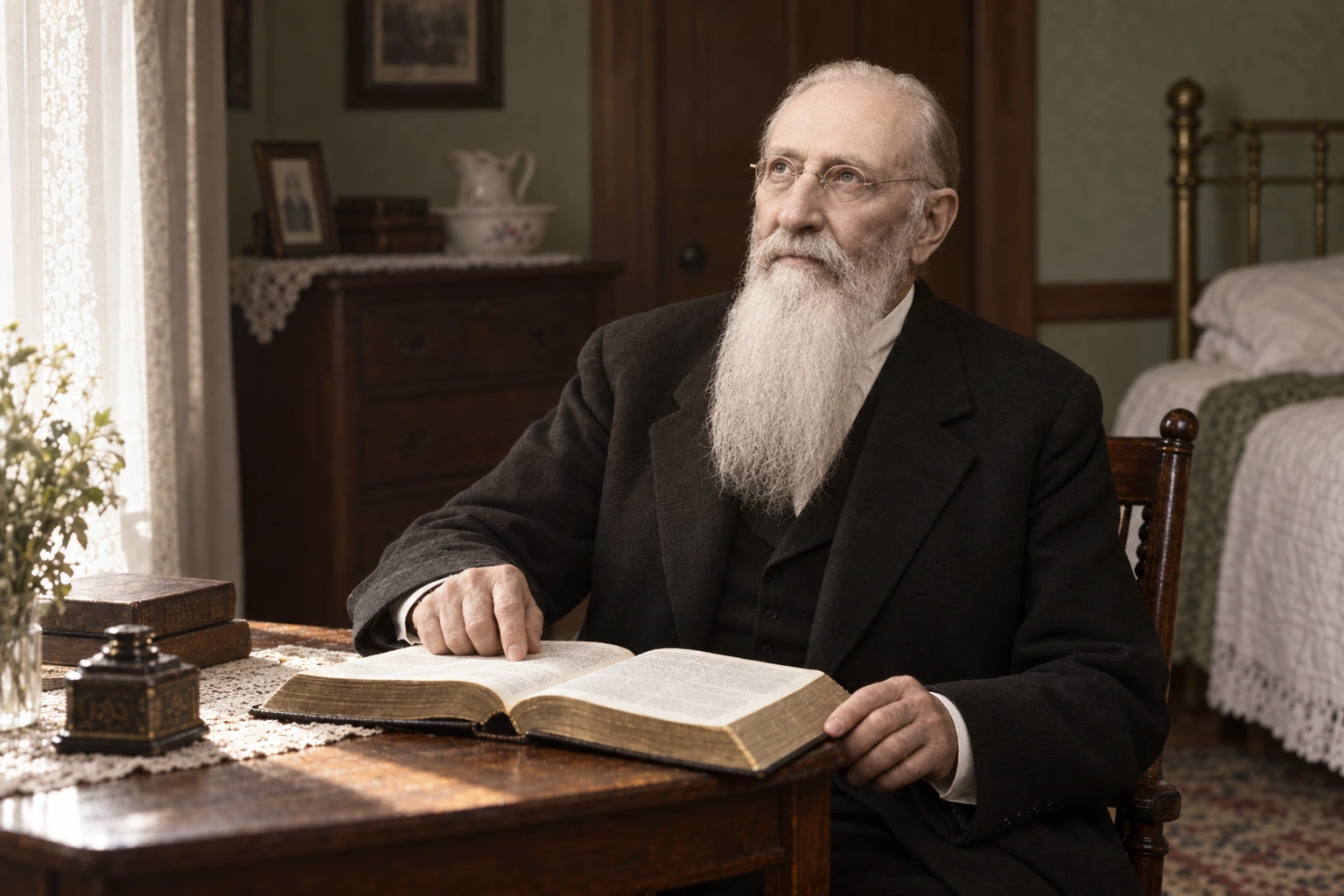
Joseph F. Smith's vision begins as he ponders the scriptures and the Savior's redeeming sacrifice. He learns that Christ organized messengers to carry the gospel to the dead. Those who lacked its knowledge are not simply forgotten.
The revelation names faith, repentance and ordinances performed on behalf of the dead. It preserves a willing response: redemption is not forced on anyone. Family history and temple service can therefore be acts of love for people whose lives continue beyond our sight.
Doctrine and Covenants 138:1–11, 29–35, 58–59
Explore and study
Joseph F. Smith sits with an open Bible. His account begins with pondering the scriptures and leads to a wider understanding of Christ’s work among the dead.
How does the possibility of learning beyond death affect your view of God's mercy?
Paul teaches the Resurrection in letters and in public. In Athens he speaks of the Creator, our relationship to God and the risen One through whom God will judge the world. In his letter to Corinth, he makes the promise clear: as death reaches all through Adam, life through Christ will reach all as well.
Paul also compares the body laid down in death with a seed that grows into a different form. The comparison helps him teach transformation without making the body worthless. Our final hope rests in what Christ has done, even while many details of that future remain beyond our experience.
1 Corinthians 15:20–26, 35–44 Alma 40:6–14, 21–23 Acts 17:22–31
Continue the study
Paul invites the people of Athens to seek the God who gives life. Follow his words toward the promise of resurrection and judgment.
How might belief in resurrection shape the way you care for your own body or someone else's?
Jesus teaches that the Father has entrusted judgment to the Son. The One who judges is also the One who gives life. His judgment is just; we do not have to turn our incomplete understanding of someone into a final verdict.
Joseph Smith's vision of Alvin teaches that the Lord considers both works and the desires of the heart, including what people would have received had they known the gospel. Children who die before accountability are also included in the promise of celestial life. These truths leave room for both accountability and profound trust.
John 5:22–30 Doctrine and Covenants 137:5–10
Continue the study
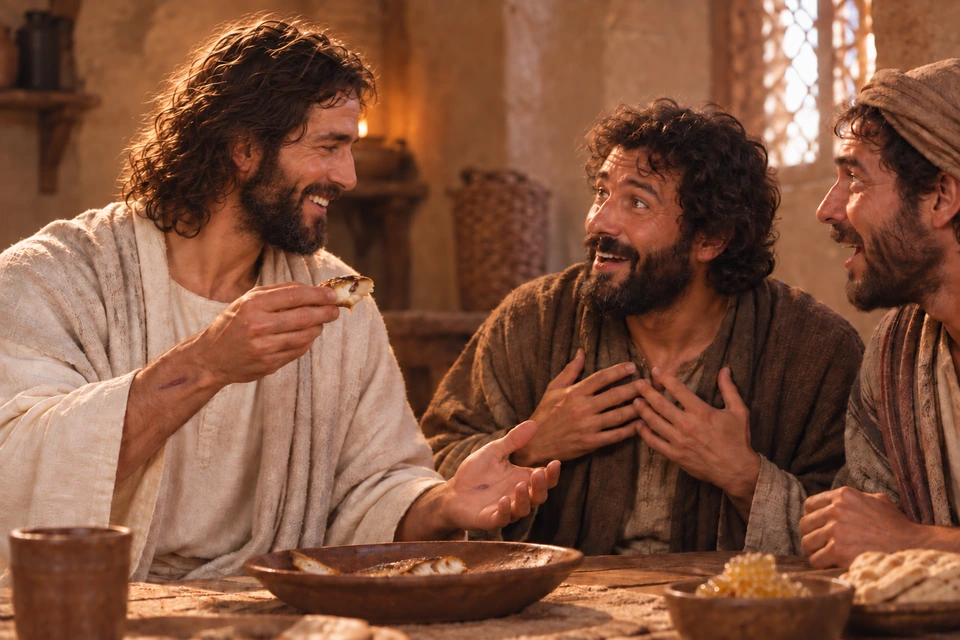
The risen Jesus who ate with His disciples is also the Son entrusted with judgment. Return to their witness of His living body.
What judgment about another person could you leave in Christ's hands?
Doctrine and Covenants 76 describes celestial, terrestrial and telestial glory. These are not three stages of mortal life, and they are not labels for sorting the people around us. The revelation expands our understanding of God's mercy while taking our response to Christ seriously.
President Dallin H. Oaks teaches that God's plan offers His children kingdoms of glory and invites them to receive the fulness of life with Him. The highest hope is not an achievement we manufacture alone. The revelation describes people made perfect through Jesus Christ.
Doctrine and Covenants 76:50–70, 71–81, 89–92 Kingdoms of Glory — Dallin H. Oaks, October 2023
Continue the study
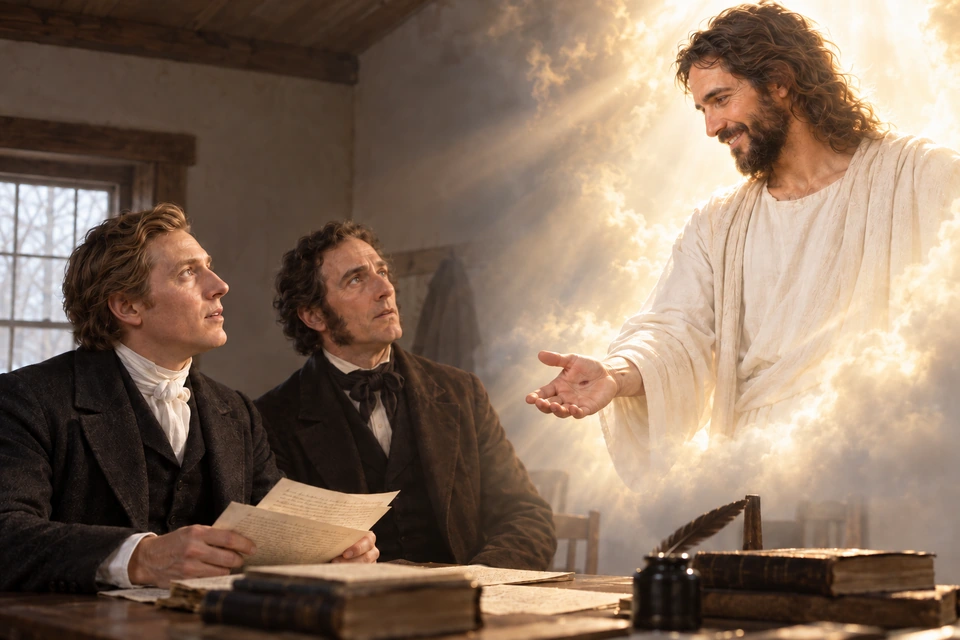
Joseph Smith and Sidney Rigdon began their account with testimony of the living Christ. Read that witness alongside the promises of glory.
What helps you seek God's highest gifts without judging someone else's final future?
Eternal life means more than living for a very long time. Jesus describes it as knowing the Father and the Son. The celestial promise includes dwelling in Their presence, with lives changed through the Savior.
Covenants teach us to love and remain faithful as we move toward that promise. We should not use another person's present family circumstances to declare what God will withhold from them. We can seek the blessings He offers and trust Him with what we cannot yet see.
John 17:1–5, 20–23 Doctrine and Covenants 76:50–70, 71–81, 89–92 Preach My Gospel, lesson 2

Explore and study
People greet one another on the temple grounds. Covenants invite us to prepare for life with God through the choices and relationships of daily life.
John 17:1–5, 20–23 Doctrine and Covenants 76:50–70, 71–81, 89–92 Preach My Gospel, lesson 2
What practice helps you know Christ rather than only know facts about Him?
President Russell M. Nelson invites us to take an eternal view of our choices and put Jesus Christ first. That counsel can reach into very ordinary decisions: how we respond to frustration, what we give our attention to and whether we seek help when we need it.
You do not have to change every part of life at once to take a sincere step. Choose something specific enough to practice. A difficult apology, a needed conversation or time set aside for prayer may matter more today than an elaborate plan that never becomes an action.
Think Celestial! — Russell M. Nelson, October 2023

Explore and study
A father sets aside his phone to listen to his daughter. An eternal perspective can begin with giving someone our attention today.
What is one decision you want to make with Christ in mind?
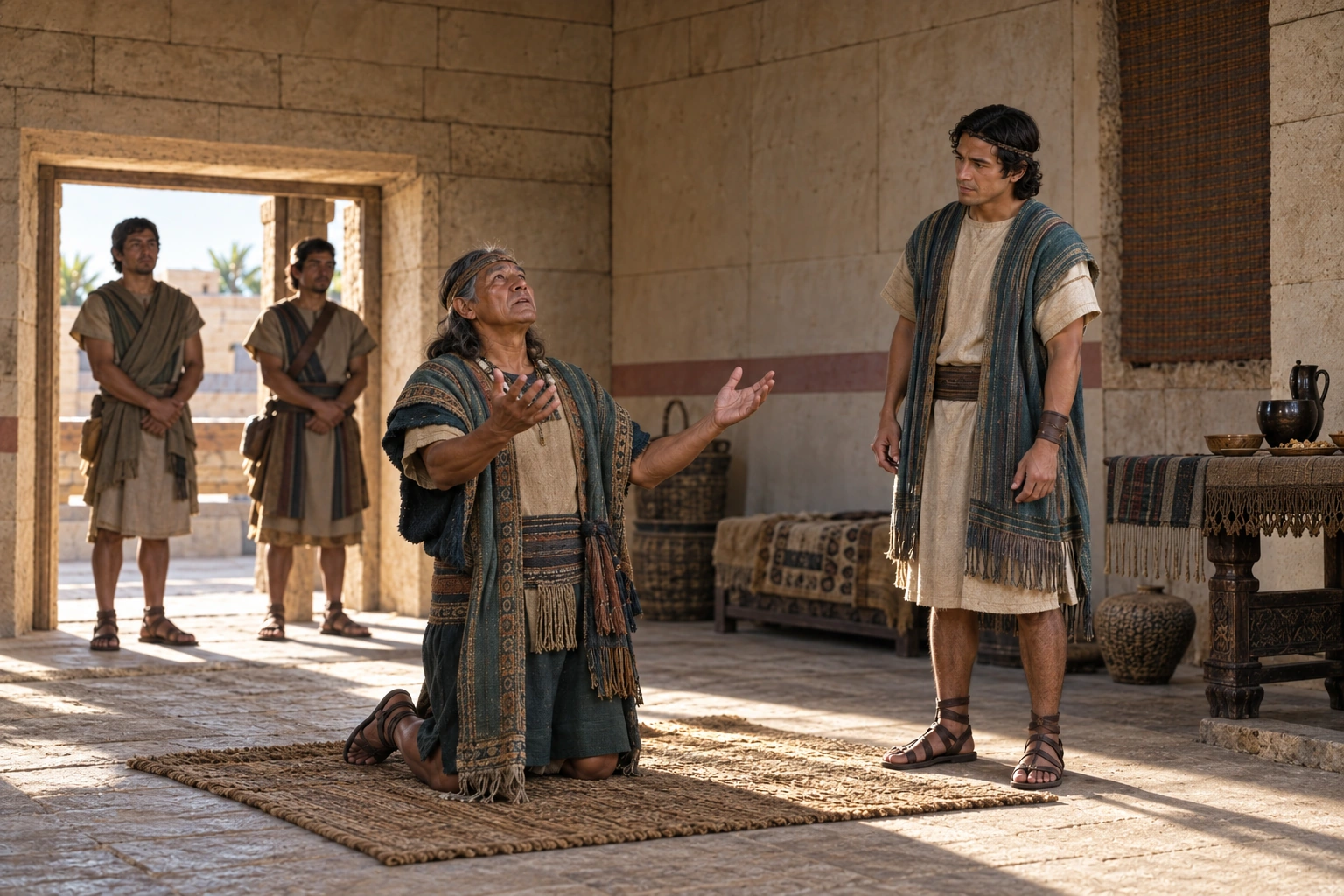
Aaron teaches Lamoni’s father from the scriptures, beginning with Creation and the Fall and continuing to redemption through Christ. The king responds with a personal question: what must he do to receive eternal life? He is willing to give up his possessions, but Aaron directs him toward faith, repentance and prayer.
The king kneels and asks God to make Himself known, offering to give up his sins. The story brings this whole journey back to a willing heart. You may still have questions about the plan. You can keep learning while choosing one honest step toward Christ today.
Explore and study
Lamoni’s father kneels in prayer while Aaron stands nearby. His willingness to give up his sins turns a question about eternal life into a personal response to God.
What would you like to ask God, and what are you willing to change?
General conference
Read the plan as a whole, then return to the chapter that raised your next question.
Dallin H. Oaks · April 2020
General conference
Consider one choice you can make today without trying to control another person’s choice.
Dale G. Renlund · October 2018
General conference
Read the witnesses in John 20 alongside the talk’s explanation of Resurrection.
D. Todd Christofferson · April 2014
General conference
Notice how the Fall and the Savior’s redeeming work belong to one story.
Jeffrey R. Holland · April 2015
General conference
Consider how relying on Christ can change the way you approach repentance and tomorrow.
J. Devn Cornish · October 2016
General conference
Notice the practical ways President Nelson connects faith in Christ with daily life. Bring your own questions about joy and suffering to the study.
Russell M. Nelson · October 2016