Read and discover
A gift at Bethany
Explore and study
Mary's gift at Bethany
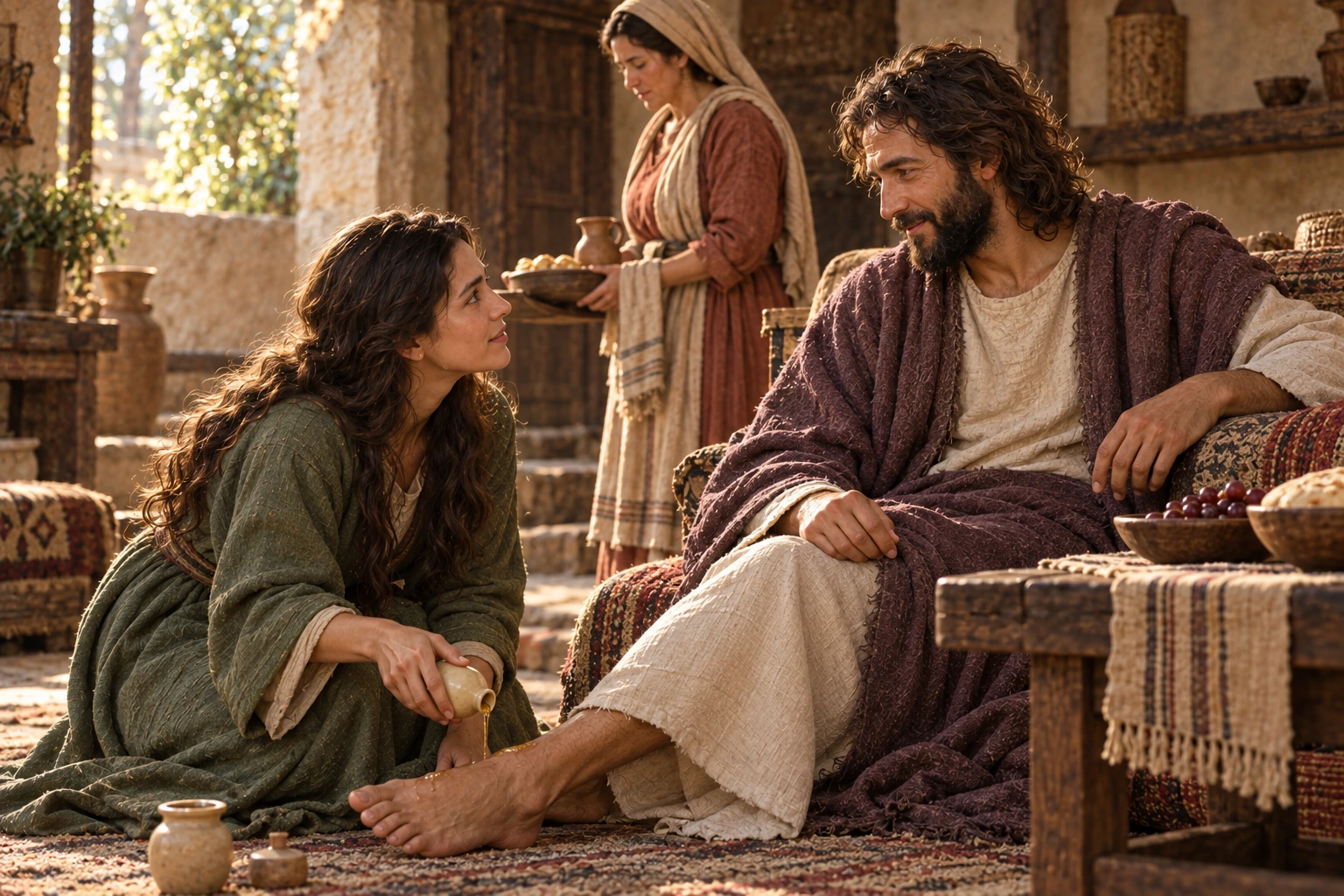
Ointment falls from Mary's small vessel onto the Savior's feet. He meets her gaze with quiet attention while Martha serves nearby, and Mary's gift fills the house with fragrance.
At a meal in Bethany, Martha serves and Lazarus is among those at the table. In John 12:1–8, Mary anoints Jesus’s feet with costly ointment and wipes them with her hair. When the gift is criticized, Jesus receives it in connection with His approaching burial. John lets a household act of devotion stand beside the gathering weight of what is coming.
This Mary belongs to the household of Martha and Lazarus. Her gift takes place among people whose lives have already been touched by Jesus, and John preserves its fragrance, cost and reception. Love becomes a concrete act at a time when the meaning of His approaching death is not yet fully understood. The scene invites us to consider the care we can offer now, while a person is still before us, instead of waiting until every feeling can be perfectly explained.
Read and discover
Remembering Him in bread and cup
Explore and study
The morsel at the table
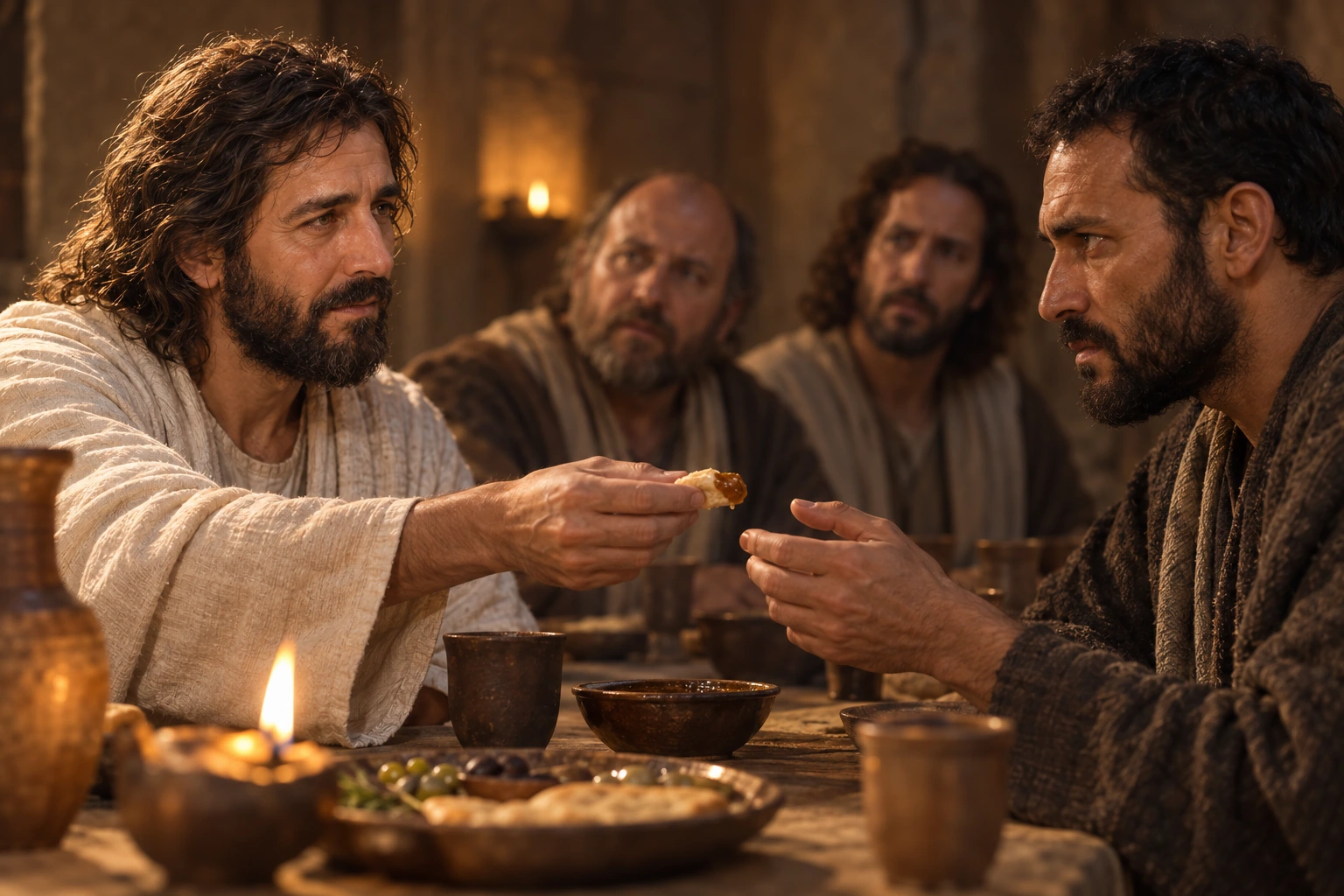
Jesus holds out the morsel, His troubled gaze meeting Judas across the table. The disciples nearby do not yet understand the departure that will follow.
At the Passover meal, Jesus speaks of His desire to eat with His apostles before His suffering. In Luke 22:14–20, He gives thanks, breaks bread and connects bread and cup with His body and blood. The actions take place before His arrest, giving the disciples a way to remember the sacrifice toward which He is moving.
The sacrament turns remembrance into something a community receives and practices. In Latter-day Saint worship, that remembrance continues with covenant promises and renewed attention to the Savior. The meal is not merely a farewell gathering; it belongs to His deliberate preparation of His followers. Reading it slowly can help us approach our own worship with greater awareness of whom we remember and why.
At the same meal, John 13:21–30 records Jesus speaking of betrayal and giving Judas a morsel. The disciples do not understand why Judas leaves. The small gesture belongs to an evening in which the Savior shares the table with His friends while facing the suffering ahead.
Read and discover
His will offered to the Father
Explore and study
Could ye not watch with me?
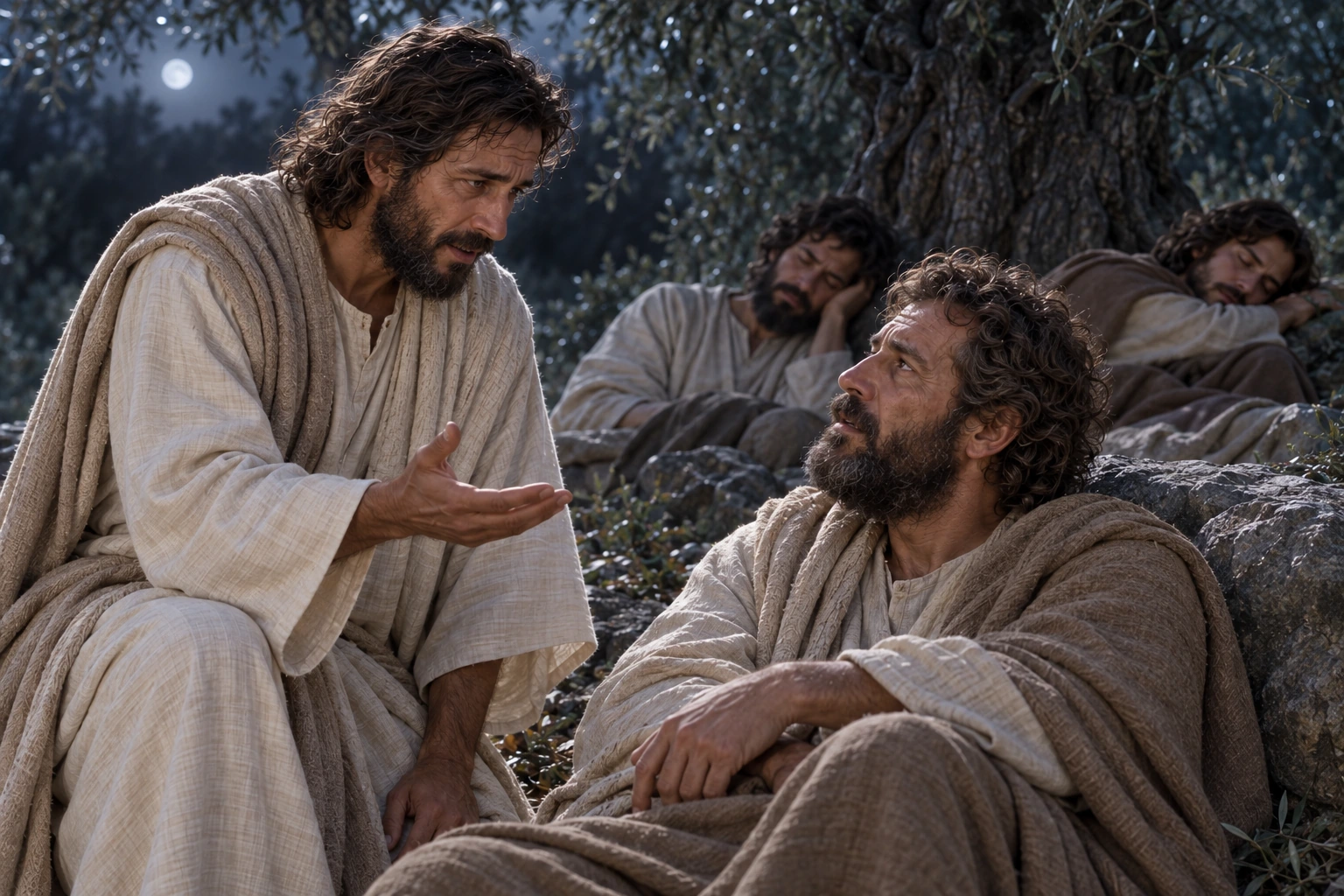
Jesus returns from prayer and finds the disciples asleep. Peter looks up as the Savior calls him to watch and pray.
On the Mount of Olives, Jesus withdraws from His disciples and kneels in prayer. In Luke 22:39–46, He speaks openly of the cup before Him and submits His will to the Father. Luke records an angel strengthening Him and describes His agony, while His disciples sleep in sorrow. The scene gives us prayer within suffering, rather than a picture of suffering as effortless.
In Doctrine and Covenants 19:16–19, the Savior’s own words connect His suffering with the invitation to repent. Together the passages help us approach the Atonement with gratitude and reverence. We need not imagine that we can measure everything He endured to receive the help He offers. Nor should His submission be used to tell a hurting person to hide honest anguish: His prayer itself holds both the plea and the willing response.
Matthew 26:36–41 also records His return to the sleeping disciples. Their weakness and His invitation to watch and pray remain beside His solitary anguish, giving the garden account a deeply human setting.
Read and discover
A kingdom beyond coercion
Explore and study
My kingdom is not of this world
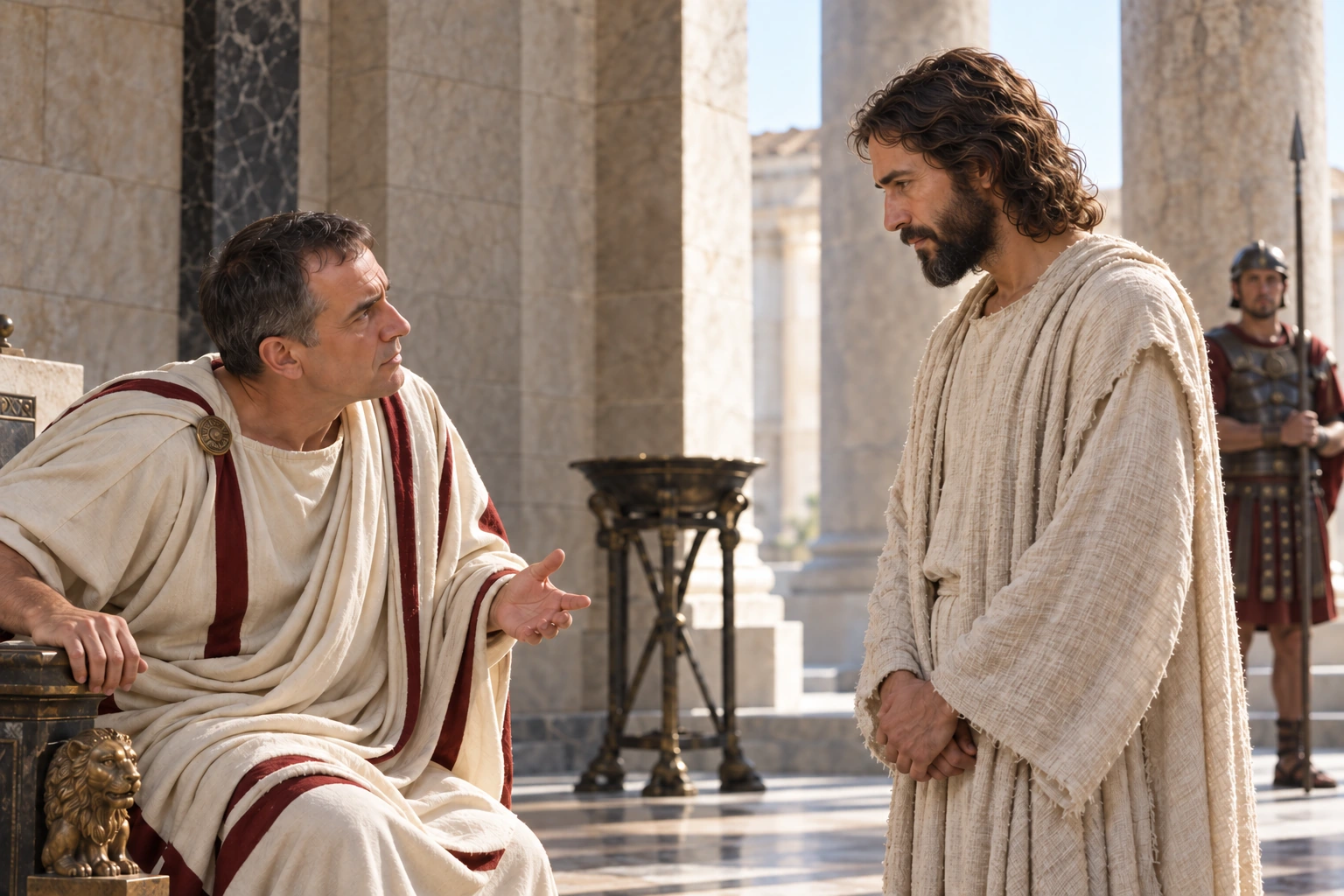
Pilate leans forward with a question, and Jesus meets him with quiet resolve. Their exchange turns to His kingdom and the truth He came to bear witness of.
Pilate questions Jesus about kingship. In John 18:33–38, Jesus distinguishes His kingdom from the world’s familiar contest for power and speaks about bearing witness to truth. Pilate’s questions take place within a trial whose consequences are deadly, so the exchange should not be detached from the vulnerability of the prisoner standing before him.
Jesus’s words turn attention from whether He can defeat an opponent by force to the nature of His mission. He does not abandon truth because political authority questions Him. This account also calls for care in how the Passion is told: responsibility belongs to the people and institutions described, never to Jewish people collectively. The Savior’s own Jewish life and the Gospel’s specific voices must remain visible.
Read and discover
Someone bears the cross after Him
Explore and study
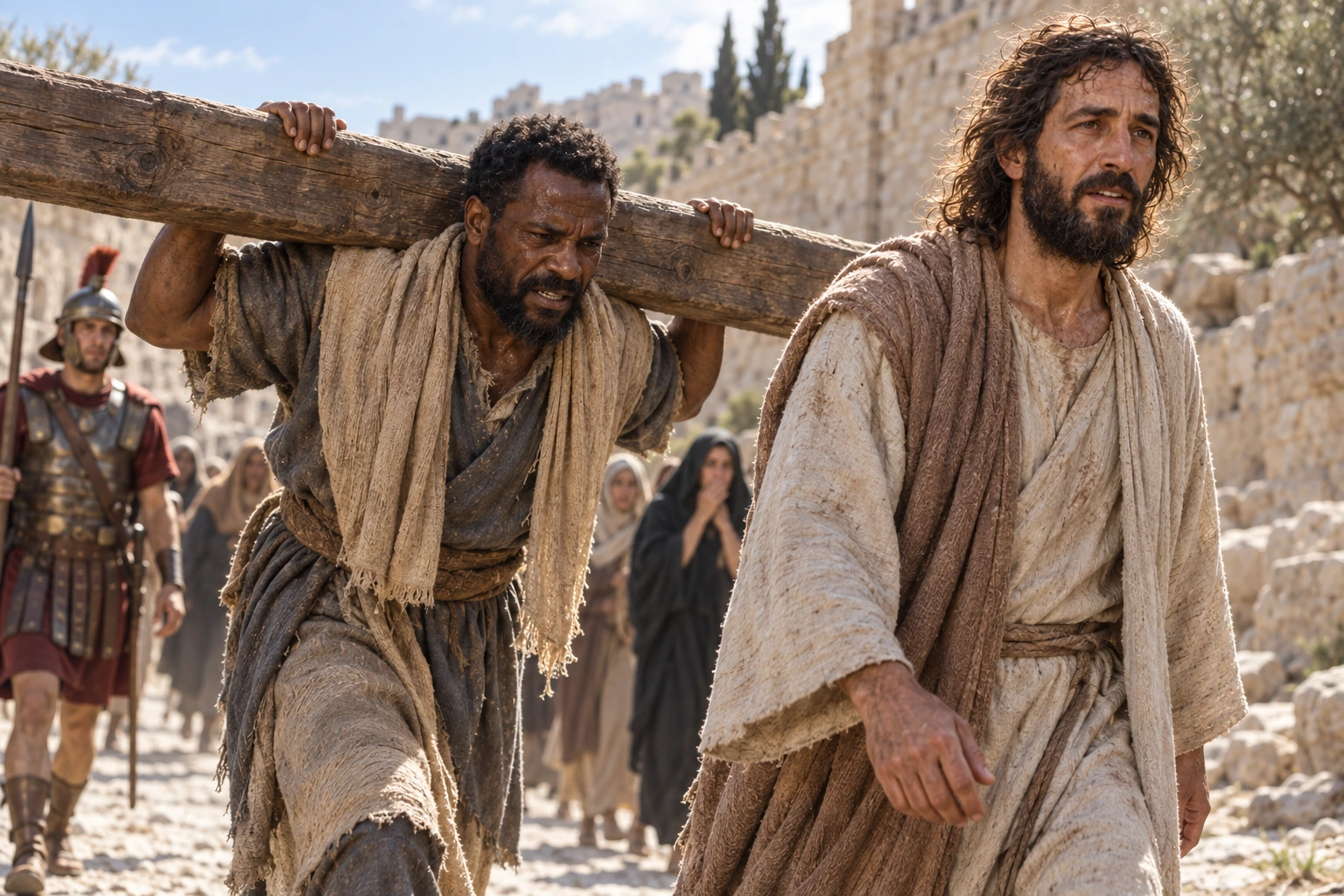
Bearing the cross behind Jesus
Simon bends beneath the beam and follows Jesus along the road. Behind them, women mourn as the Savior continues toward Calvary.
As Jesus is led away, Simon of Cyrene is compelled to carry the cross behind Him. Luke 23:26–31 also describes people and women following in lamentation, and Jesus speaking to the women about what lies ahead. The road to the place of execution includes both forced participation and the grief of witnesses.
Luke leaves Simon’s inner response unrecorded, but gives his service a visible place on the road. A person arriving from the country suddenly bears a burden within the Savior’s suffering. As reflection, the encounter can help us examine how we respond when another person’s pain becomes impossible to keep at a distance. Compassion often begins with the concrete task before us, even when we have no complete explanation for what has happened.
Read and discover
Care for His mother at the cross
John places Jesus’s mother and other women near the cross, with the disciple Jesus loves. In John 19:25–30, Jesus entrusts His mother and that disciple to one another. The passage then records His thirst, the completion of His work and His death. Human care remains present within the account of His sacrifice.
This moment does not lessen the suffering of the Crucifixion; it lets us see the Savior attending to a relationship within it. The Christian proclamation of His Atonement concerns His willing gift for the world, and the scene also keeps a mother and a disciple from disappearing into that broad statement. Reverent study can hold the universal reach of His redemption alongside the particular people at the cross.
Read and discover
The care of Joseph and Nicodemus
Explore and study
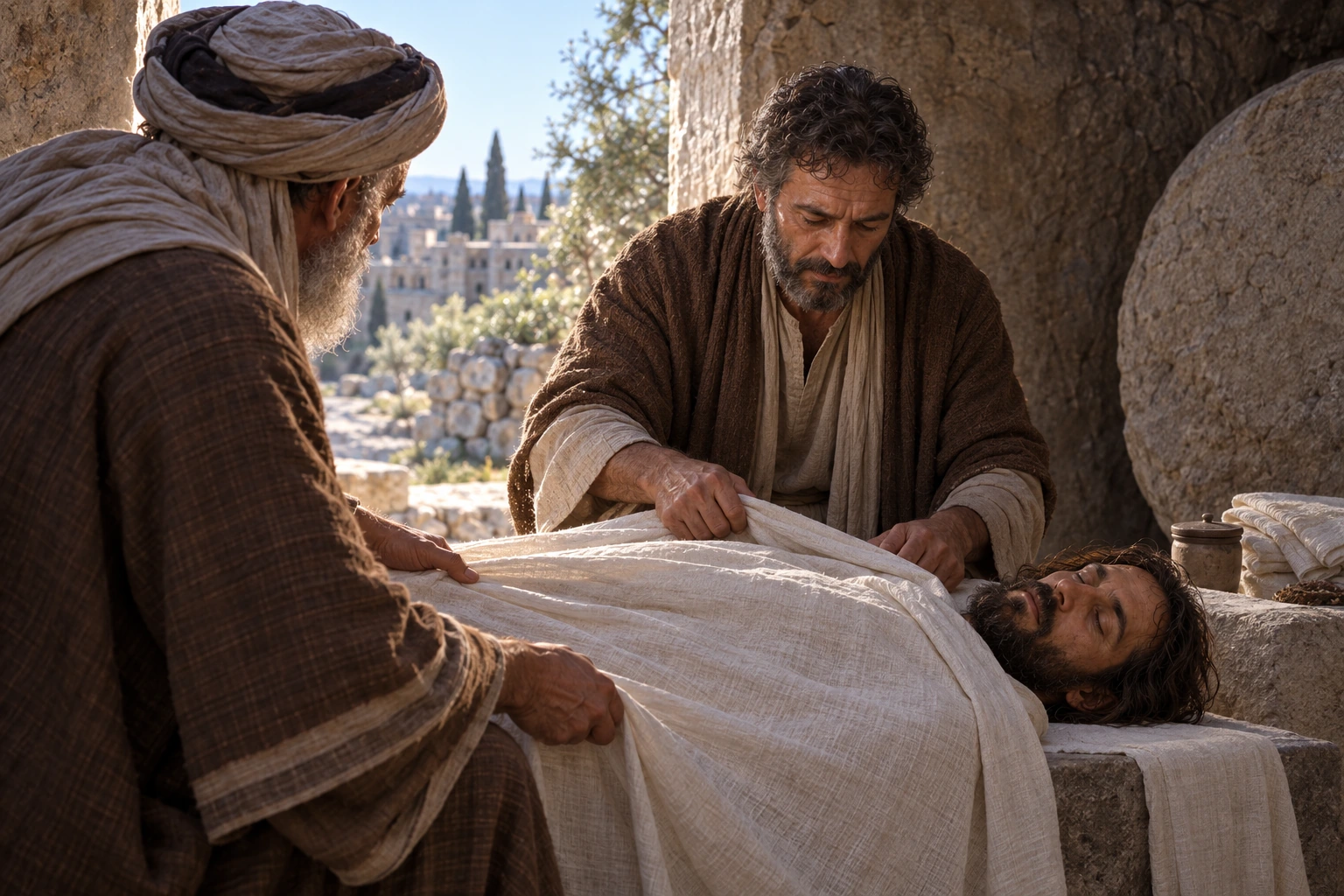
Laid in a garden tomb
Joseph and Nicodemus draw the linen gently over Jesus's body. Their careful hands offer a final service of love as they prepare Him for burial in the nearby garden tomb.
Joseph of Arimathea asks Pilate for Jesus’s body. Nicodemus brings myrrh and aloes, and together they prepare the body with linen and spices. John 19:38–42 places the burial in a new tomb within a garden near the place of Crucifixion. These details give the hours after His death a quiet, concrete gravity.
Joseph of Arimathea is a different person from Joseph in the Nativity accounts. Nicodemus is identified here with the earlier nighttime visitor to Jesus. Their actions do not yet read like a triumphant Easter announcement; they perform the care that can be given to a body after death. Before moving to Resurrection, it is worth allowing this part of the story its silence and the faithful work of those present.
Read and discover
The risen Lord stands among them
Explore and study
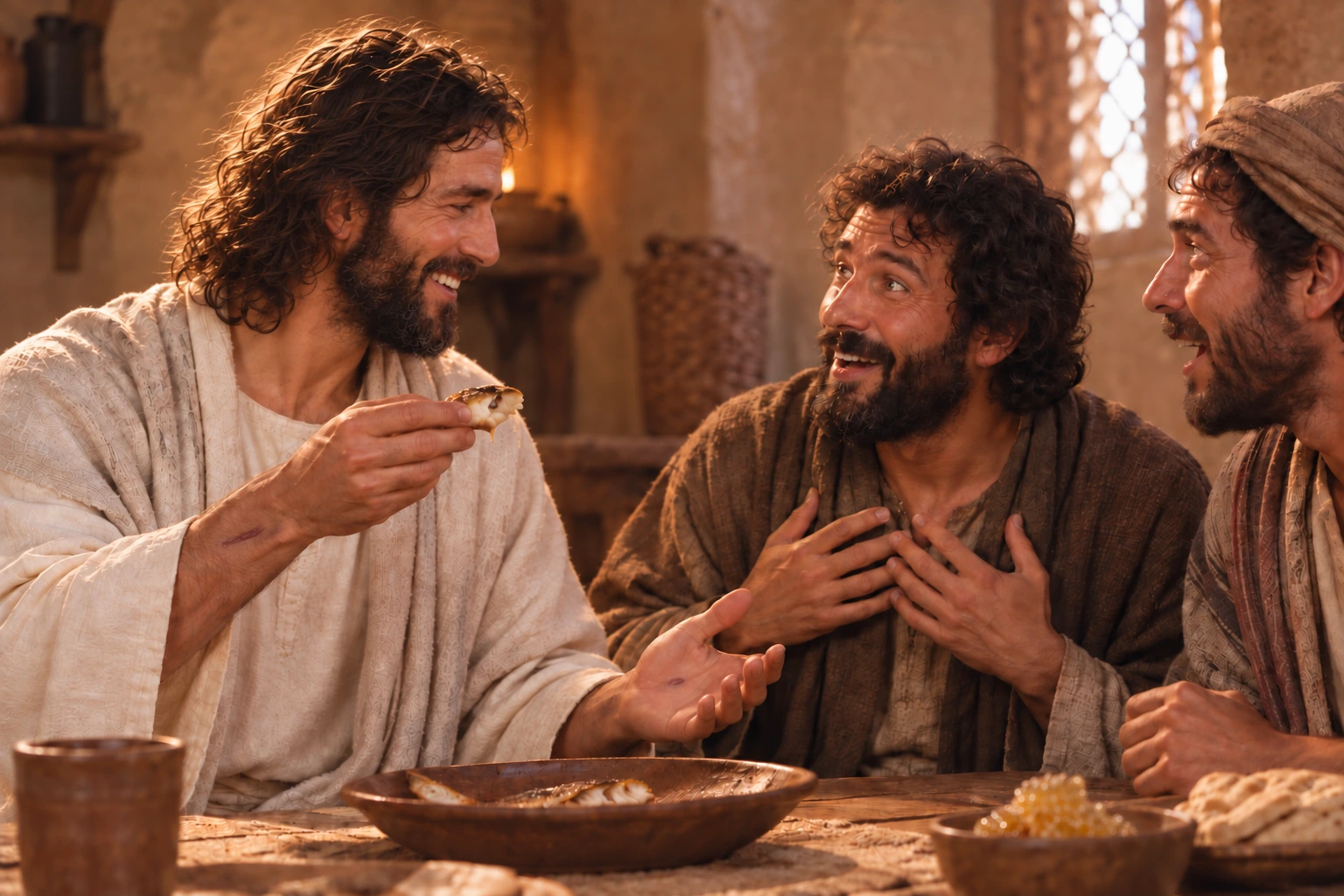
He eats before them
The risen Jesus eats before His disciples in Luke's account. This imagined indoor scene gives their astonished joy a personal focus, distinct from the shore breakfast in John 21.
The disciples are startled when Jesus stands among them. In Luke 24:36–49, He invites them to see His hands and feet, speaks of flesh and bones, and eats food before them. He then opens their understanding of the scriptures and connects His suffering and rising with the message they are to carry.
Luke’s witness joins a real risen body with a renewed understanding of God’s purposes. Resurrection is more than the survival of an idea or the disciples keeping His memory alive. The same Jesus who died lives, and His followers are to become witnesses of repentance and forgiveness in His name. Their astonishment is part of the account; understanding grows as He teaches them what His victory means.
Read and discover
Witnesses sent into the world
Explore and study
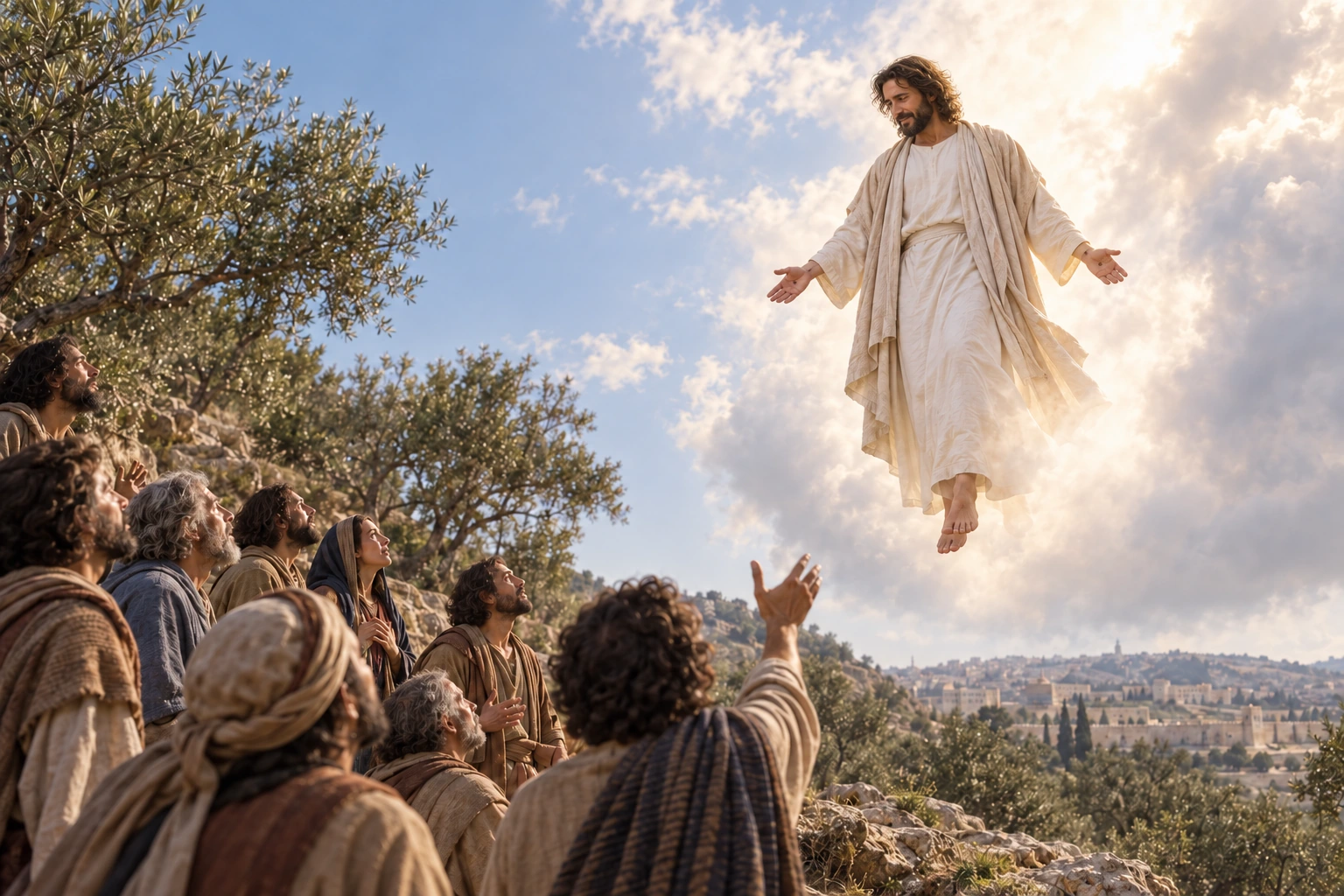
A cloud receives Him
The disciples watch as Jesus is taken up and a cloud receives Him. Their upturned faces bring us into the parting Acts describes.
Before His Ascension, the disciples ask about the restoration of the kingdom to Israel. In Acts 1:4–11, Jesus turns them from a timetable to the power and witness they are to receive. They will testify near home and outward to the ends of the earth. A cloud receives Him, and heavenly messengers speak of His return.
The Ascension does not leave the disciples with only the task of watching the sky. The account places hope in His return beside a present commission. That combination still matters: we can await the Savior while attending to the people, responsibilities and opportunities for witness already before us. His promise does not authorize a predicted date; His instruction gives His followers useful work to do now.
Continue with Jesus Christ
The Atonement of Jesus Christ
Continue into the existing full study of His sacrifice, grace, repentance and Resurrection.
Open study →The Risen Savior among the Nephites
Meet another scriptural witness of His risen body, teaching and compassion.
Open study →The Living Christ in the Restoration
Follow the testimony that His ministry continues.
Open study →The Birth of Christ
Return to the beginning of His mortal life and see it within the whole mission.
Open study →