
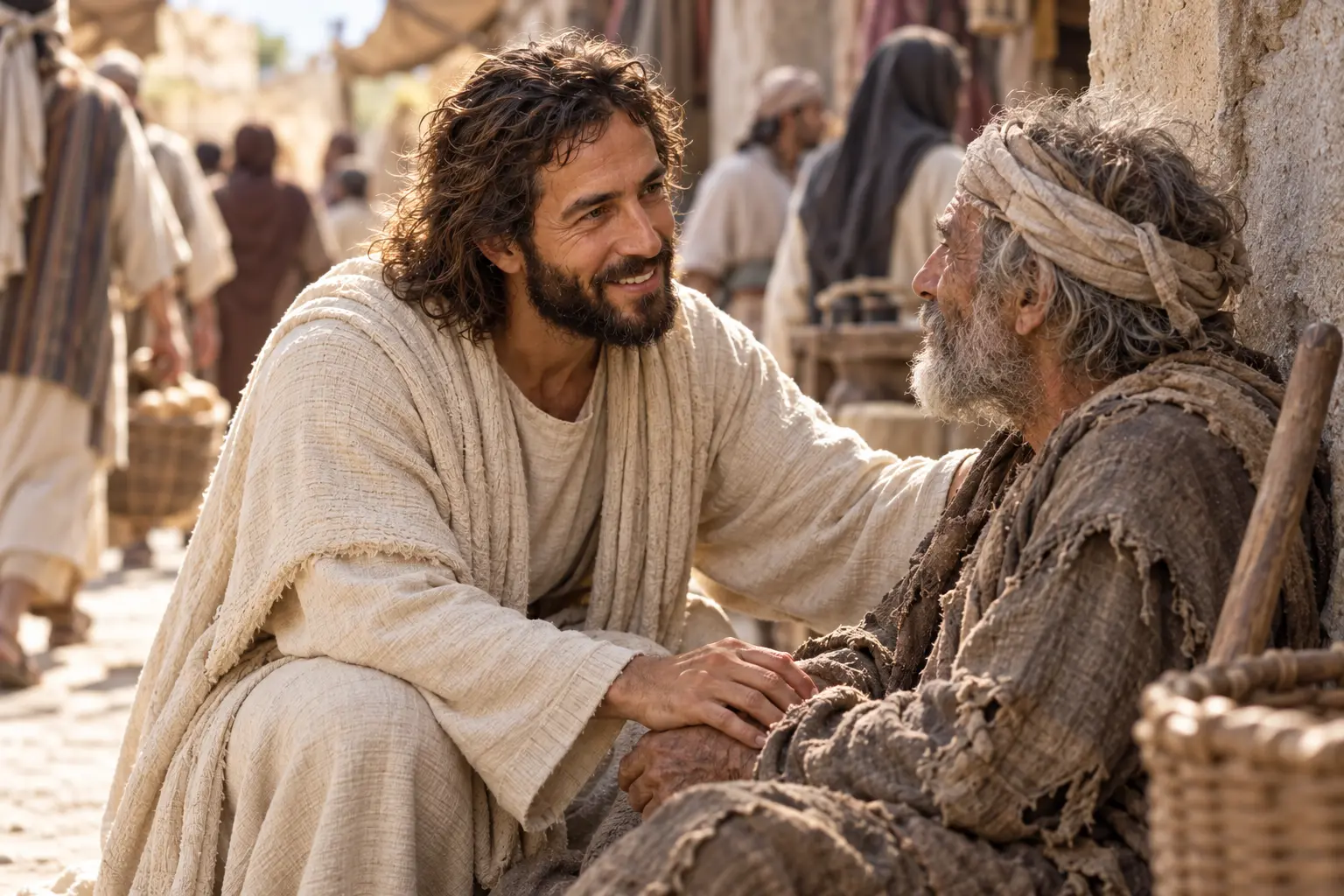
Notice the Savior's expression and the people nearest Him in the crowded street.
Amid the crowded street, the Savior’s gentle expression invites us to remember His care for the one.
A path through this study
Listen for the Shepherd's Voice
Notice the Savior’s face among the people. John 10 tells of the Shepherd who knows His sheep and gives His life for them.
Listen for every action Jesus uses to describe the Good Shepherd in John 10.
Consider one person you can notice, call, or walk beside with greater care.
Scripture study
Known, Led, and Loved
In John 10:1-18, Jesus describes the Shepherd who knows His sheep, calls them, and gives His life for them. They recognize His voice and follow.
Psalm 23 speaks of rest, guidance, and the Shepherd’s presence, even through the valley of the shadow of death.
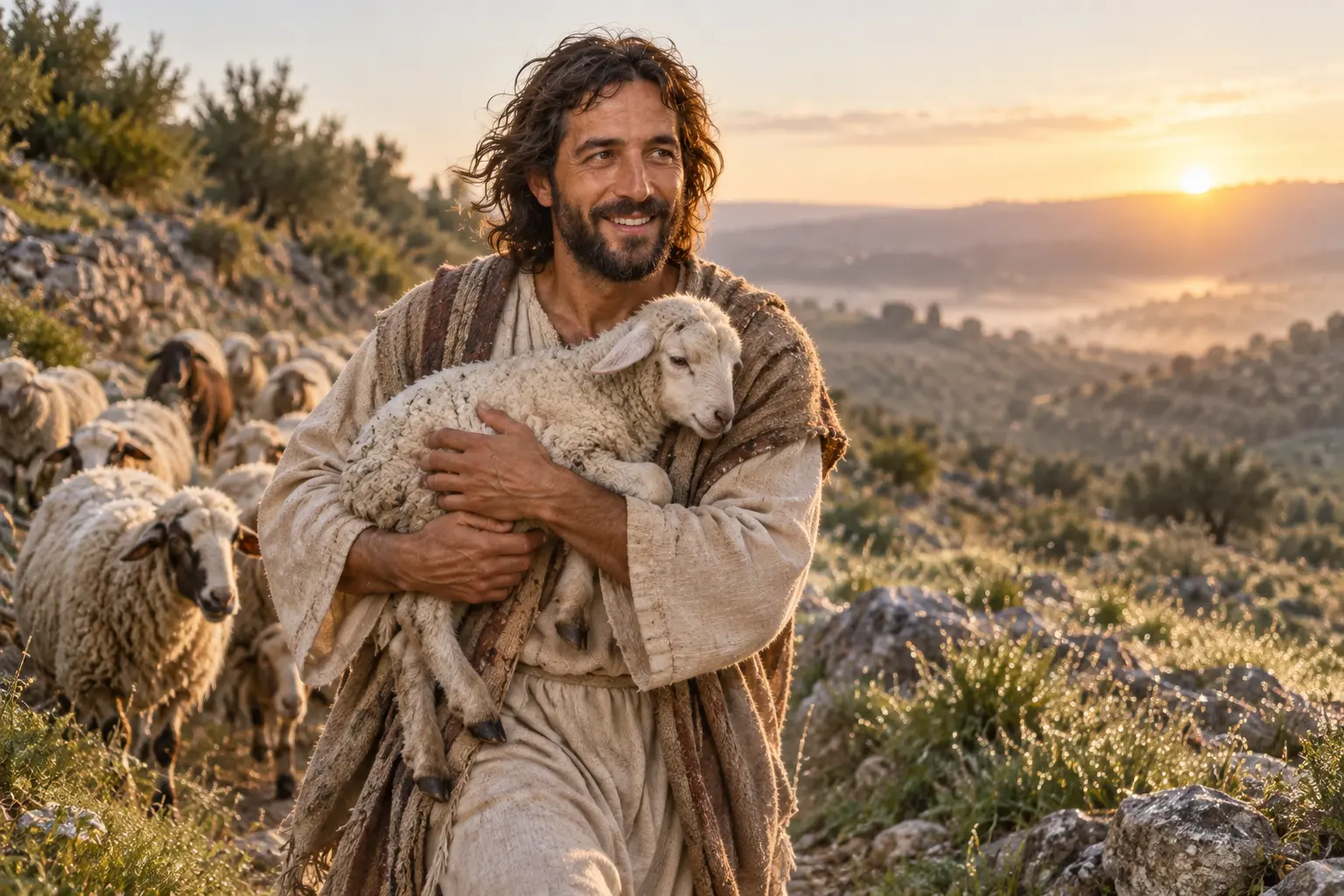
The sheep beyond the present fold
Jesus speaks of “other sheep” in John 10:16. In 3 Nephi 15:11-24, He tells the people at Bountiful that they are those sheep.
He Binds What Is Hurt
Ezekiel begins by confronting shepherds who feed themselves while leaving the flock scattered. In Ezekiel 34:1–6, the failure is specific: the weak are not strengthened, the sick are not cared for, and the lost are not sought. The Lord answers with His own promise to search, gather, feed and bind what is broken. Notice how each promise answers a neglected need.
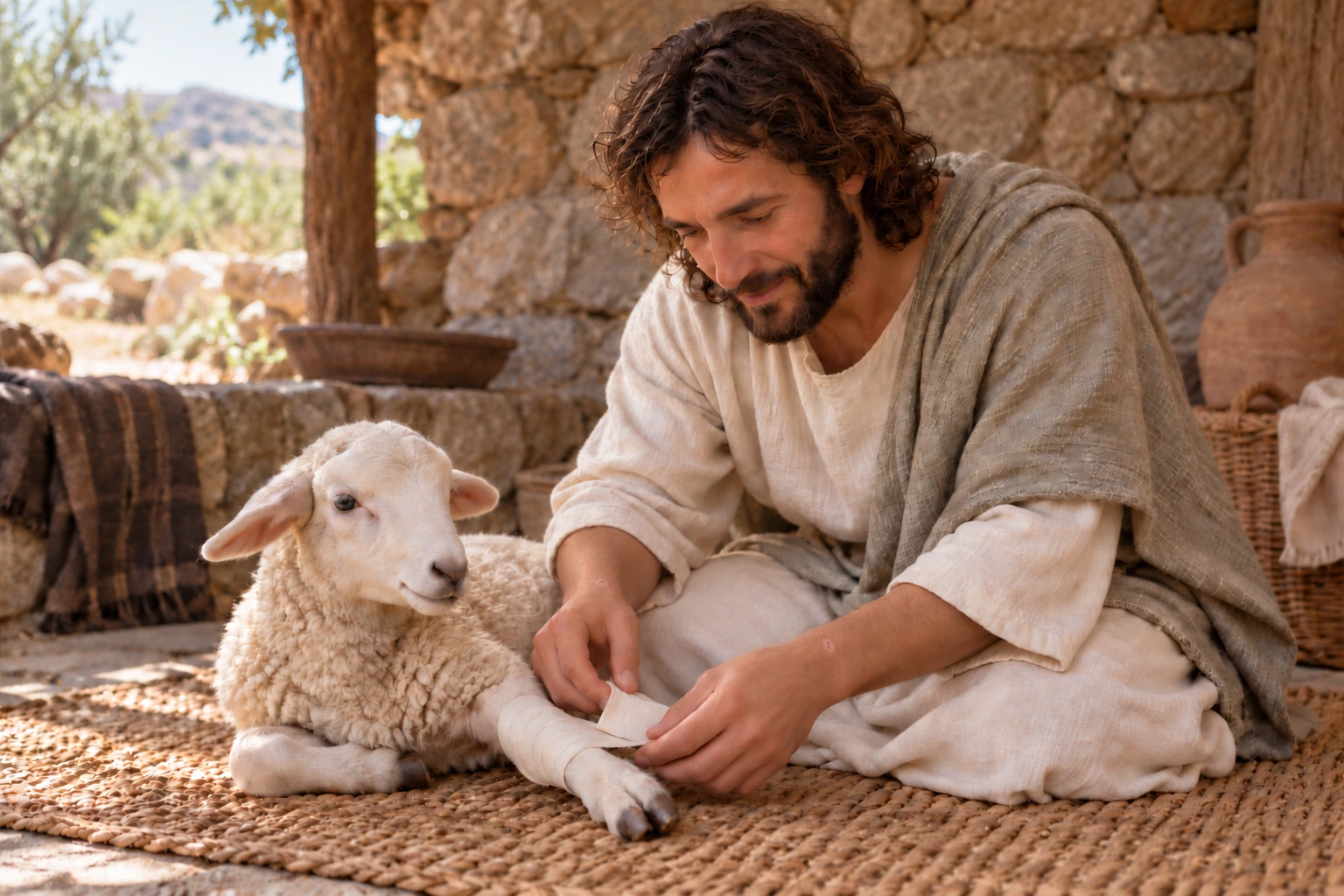
The chapter finally identifies the flock as people in Ezekiel 34:30–31. Its shepherd imagery helps us consider the care of the Savior, who calls Himself the Good Shepherd in John 10:11–18. His care includes knowing His sheep and freely giving His life for them. Read the two passages together, looking for both tenderness and the cost of faithful care.
Consider: Which action in Ezekiel 34:11–16 speaks most closely to a need you carry, and which could shape your care for someone else?
Leave Room at the Water
Ezekiel turns from the failed shepherds to harm within the flock. Some have eaten good pasture and drunk clear water, then spoiled what others must use. In Ezekiel 34:17–19, having enough does not excuse making life harder for those who come afterward. The image of crowded water gives that question a visible setting: who can reach what is needed?

The Lord also confronts those who push the weak aside in Ezekiel 34:20–22. He promises to save His flock and judge between its members. Read this beside the promise of one shepherd in Ezekiel 34:23–24. Belonging to the flock carries a responsibility to one another; the passage calls attention to conduct, not to a person’s appearance or size.
Consider: Where could you make access easier for another person instead of assuming that an open invitation is enough?
Look again
The Shepherd Draws Near
Pause with each scene, then follow its scripture into the Savior’s care.


Care That Keeps Someone Warm
James imagines a brother or sister lacking clothing and daily food. A wish for warmth and peace leaves the need unanswered if nothing useful is offered. In James 2:14–18, faith becomes visible through what a person does. The repair on the table offers a small way to consider that teaching: a skill, some time and careful attention can become practical help.

King Benjamin grounds generosity in our shared dependence on God. Read Mosiah 4:19–21 before his counsel about relief in Mosiah 4:26–27. He names material and spiritual needs, then joins diligence with wisdom and strength. Thoughtful service asks what is needed and what we can actually give, without making assumptions about the person receiving it.
Consider: What ordinary skill could you offer this week, after first asking whether it would help?
Seen in the passing crowd

Explore and study
Quiet company for an uncertain journey.
A traveler keeps her hand on her suitcase while she and Christ look toward the departure board. They wait side by side in the evening light. The journey remains hers to make.
Before His departure, Jesus promised His disciples comfort and peace. Waiting beside someone can be a quiet expression of that care. We can listen to their hopes, share the uncertainty and let them make their own choices. A journey into unfamiliar places can also lead to friendship and a new welcome.
When could your unhurried company help someone feel less alone?
Quiet reflection
Hear and Follow
Choose the prompt that feels most honest today.
Where have I noticed the Shepherd's care?
Read Psalm 23 slowly. Where have you felt His care? Give thanks for one person or moment that brought comfort.
Which voice am I learning to trust?
John 10 describes sheep recognizing His voice. Which thoughts help you follow Him with love?

Who might need someone to walk beside them?
Think of someone who feels unseen. Offer a listening ear, a meal, or help with a daily task.
Help With What Is Needed
In Mosiah 4:16–21, Benjamin challenges the impulse to judge someone’s need before offering help. He reminds the people that all depend on God for life and for what sustains it. That humility can change an ordinary encounter: we can listen to what another person needs instead of turning the moment into a judgment about them.

Benjamin’s counsel is both generous and practical. Mosiah 4:26–27 directs relief according to people’s needs and the giver’s means, with diligence that respects strength. A dropped set of keys is a modest example of attention becoming useful. The larger invitation is to offer help that fits the situation, welcomes the other person’s knowledge and follows through carefully.
Consider: When someone asks for help, what would let you understand the task before choosing a solution?
Watch, read, and reflect
A companion for your study
These official Church resources offer another way to explore this subject. Read or watch at your own pace, then return to the passages above.

Church video
The Savior’s Abiding Compassion
Consider the Shepherd’s compassion and how disciples can see and care for people as He does.
The Church of Jesus Christ of Latter-day Saints

Church video
The Good Shepherd and Other Sheep I Have
Read John 10:1-18 alongside this portrayal of Jesus teaching about the Good Shepherd. Notice how knowing His sheep and giving His life explain His care.
The Church of Jesus Christ of Latter-day Saints
Make the Word Easier to Hear
Paul follows a chain of questions in Romans 10:14–17: how will people call upon someone they have not believed in, and how will they believe without receiving the message? His subject is the preaching of Christ and the faith that responds to it. Helping another person find a usable way to study can serve that purpose through audio, readable text, signed communication or another format they choose.

In John 10:3–5, the sheep recognize their shepherd’s voice and follow him. Jesus returns to knowing and following in John 10:27. Read these words as a relationship of trust and response to Him. In the picture, patient assistance leaves the learner in charge of the controls; the person’s own participation matters as much as completing the setup.
Consider: What would make scripture study easier for someone you know, and how could you ask without deciding for them?
Keep walking
Where Would You Like to Go Next?
Faith Through the Valley
Continue from Psalm 23 with scripture and encouragement for difficult days.
The Joy of Returning
Follow the Shepherd's restoring care into repentance, grace, and forgiveness.
Welcome the One Before You
See how the Savior receives children when others would send them away.