Read and discover
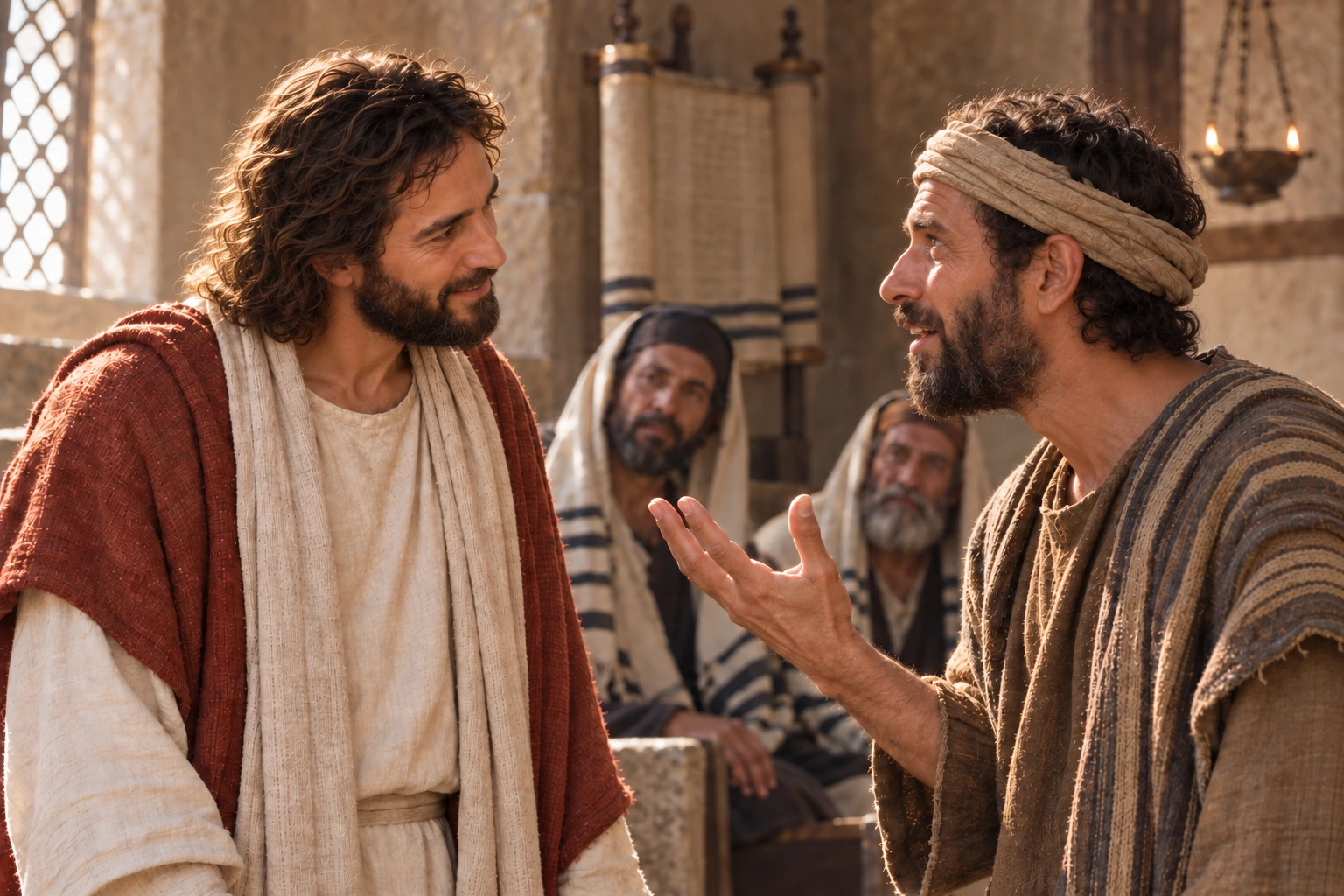
He reaches toward an excluded man
A man with leprosy kneels before Jesus and asks to be made clean. In Mark 1:40–45, Jesus responds with compassion, reaches out and touches him. He then tells the healed man to show himself to the priest and fulfill the requirements connected with cleansing. The encounter concerns both a bodily affliction and a person’s place within his community.
Explore and study
Stretch out your hand
The man meets Jesus after the restoration of his hand. This imagined moment of gratitude stays close to the personal care at the heart of Luke's Sabbath healing account.
The touch makes the scene deeply personal. Jesus does not treat the man as a problem to be kept at a distance. The story invites us to examine how we respond to someone whose illness or circumstances make others withdraw. Following Christ may involve listening, practical help and appropriate care; it does not require pretending we can promise another person the same immediate healing.
Another encounter, Mark 3:1–5, brings compassion into a synagogue dispute. Jesus asks the man to stand and stretch out his hand. The restored hand gives concrete weight to His question about doing good on the Sabbath.
Read and discover
Healing within a home
Explore and study
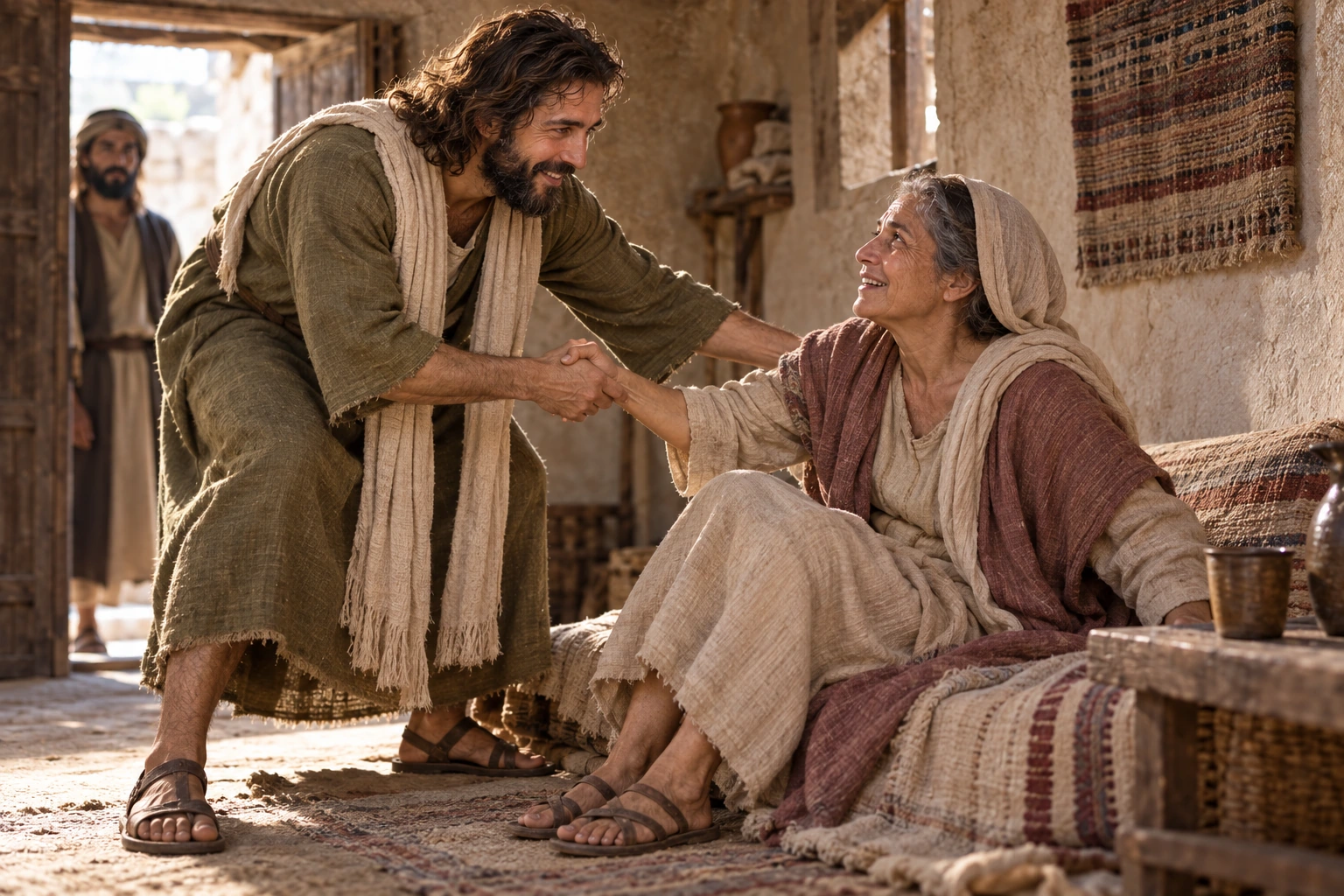
He lifts her by the hand
Jesus takes Simon's mother-in-law by the hand and lifts her up. Mark records that her fever leaves and she begins to serve those in the home.
After leaving the synagogue, Jesus enters the home of Simon and Andrew with James and John. Simon’s mother-in-law is ill with a fever. Mark 1:29–31 describes Jesus taking her hand and lifting her, after which the fever leaves her and she serves those present. The account is brief, but its household setting gives it an intimate scale.
The scene reveals His attention in ordinary rooms as well as public places. The woman is neither named nor given a long speech, yet her need matters within the Gospel story. Her service follows her recovery; it should not be turned into an expectation that people who are ill must prove their faith by working. We can honor the account by noticing both the help she receives and the life she resumes.
Read and discover
Trust carried by messengers
Explore and study
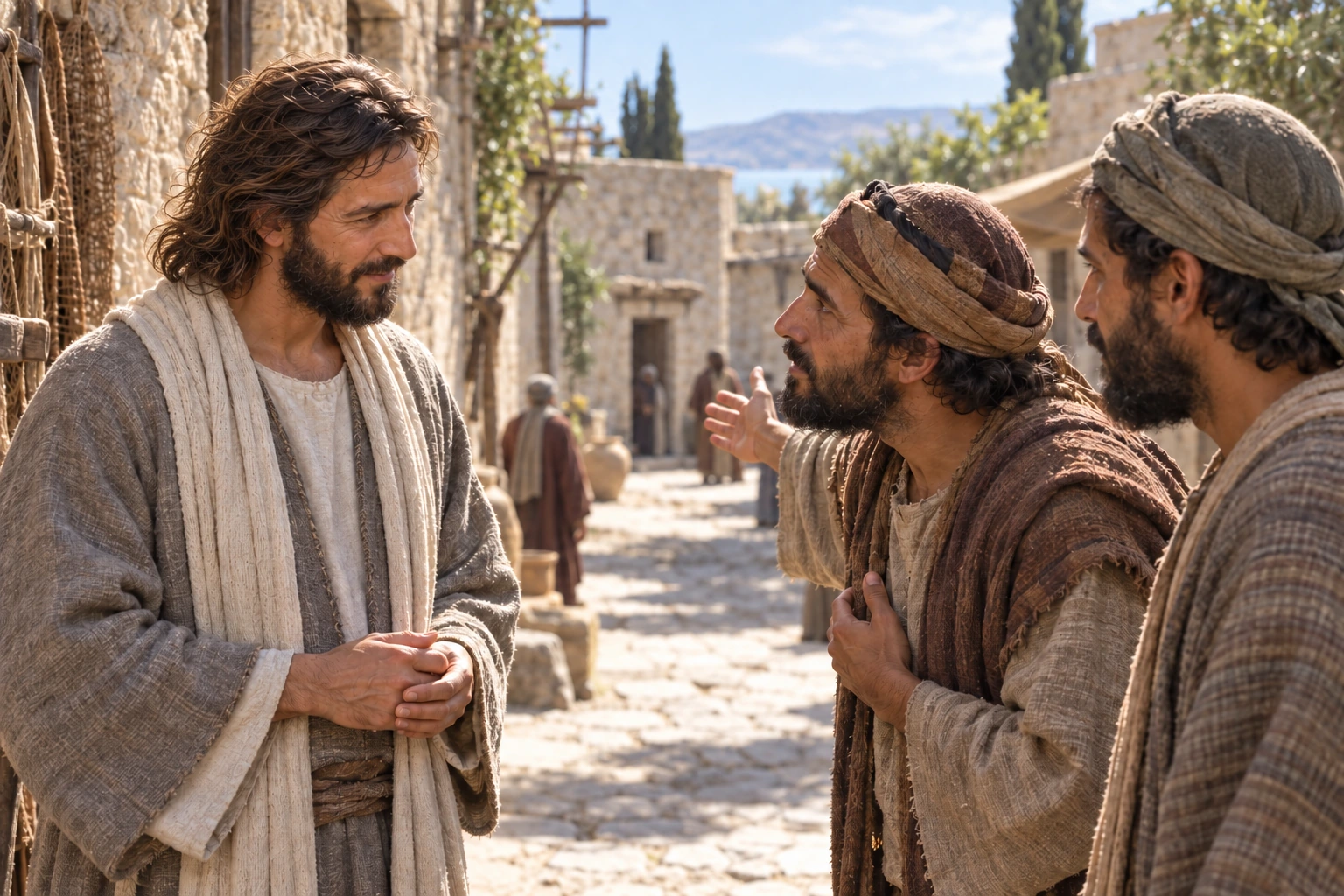
A message of trust
Friends bring the centurion's message to Jesus. Luke places the conversation with these messengers, while the centurion expresses trust in the authority of Jesus' word.
A centurion’s valued servant is gravely ill. In Luke’s account, Luke 7:1–10, Jewish elders first approach Jesus on the officer’s behalf. Friends later carry the centurion’s message that Jesus need not enter his house: he trusts the authority of His word. Jesus responds to this faith, and those returning find the servant well.
Luke’s messengers matter. They show relationships crossing social boundaries and keep us from casually replacing this account with a different Gospel’s presentation. The centurion understands authority through his own experience, but directs that understanding toward a power beyond military command. His trust is accompanied by concern for someone dependent on him, giving this encounter a practical question for anyone entrusted with responsibility over others.
Read and discover
A child’s hand in His

Explore and study
A child rises at His word
The twelve-year-old girl sits upright and meets Jesus's eyes as He holds her hand. Her parents and the three disciples witness the life He restores.
News reaches Jairus that his daughter has died while Jesus is still on the way. In Mark 5:35–43, Jesus continues to the house, takes the girl’s parents and three disciples into the room, and takes the child by the hand. She rises and walks. Mark tells us she is twelve years old and records Jesus’s instruction that she be given food.
The final request brings care back to the child’s immediate needs. A remarkable act is followed by the ordinary kindness of feeding her. This return to mortal life is not yet the permanent Resurrection Jesus will inaugurate. The account witnesses His power over death while letting us remain gentle with those who mourn a child: their sorrow is not evidence that they or their child were less loved.
Read and discover
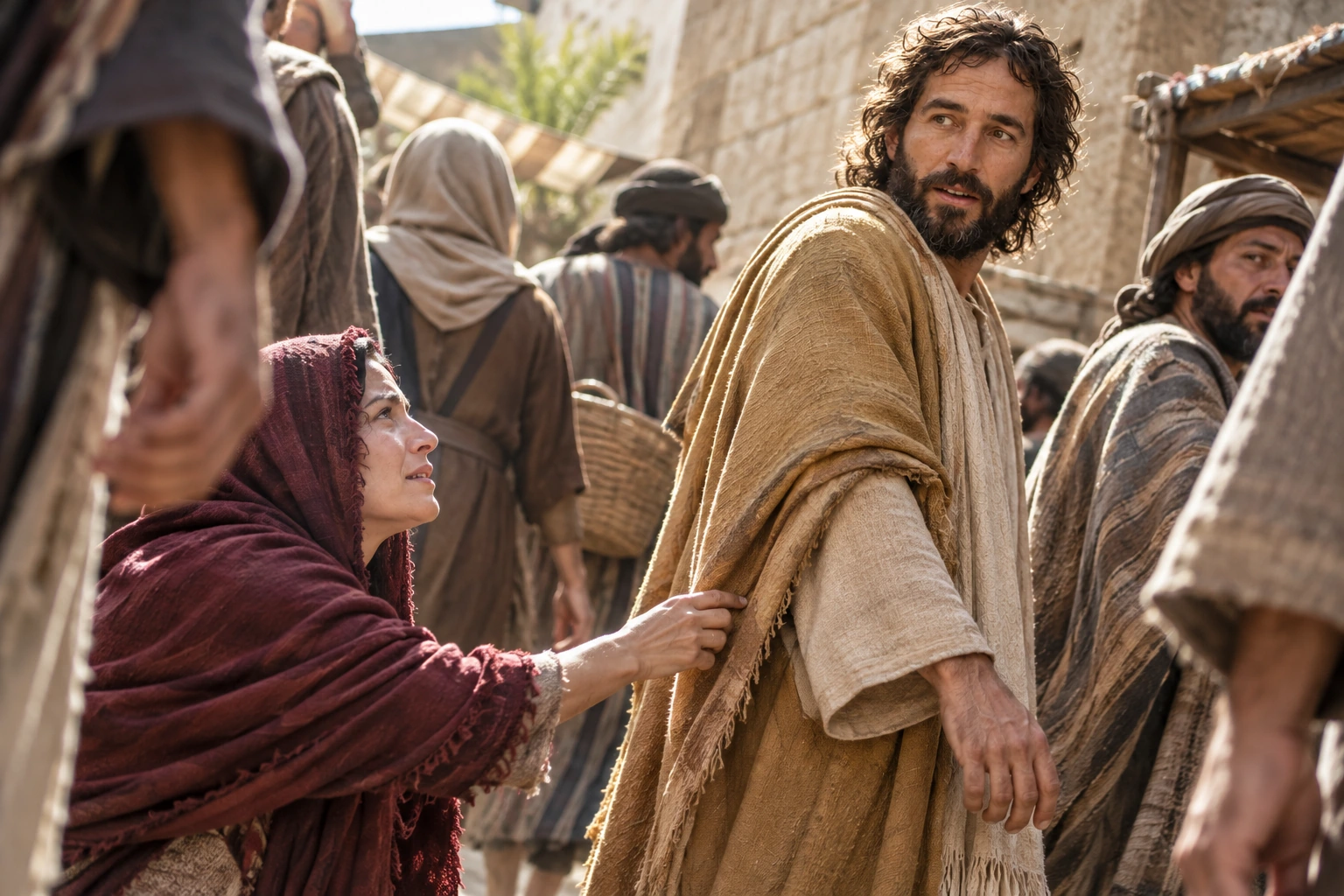
He turns toward a woman in the crowd
Explore and study
An unseen reach in the crowd
The woman reaches through the crowd and touches Jesus's clothing. Mark then records Him turning to ask who touched Him, drawing a hidden act of faith toward a personal encounter.
On the way to Jairus’s home, a woman who has suffered bleeding for twelve years reaches for Jesus’s clothing. Mark 5:25–34 describes the cost and difficulty of her search for relief before she comes to Him. After she is healed, Jesus stops and asks who touched Him. She comes forward and tells Him what has happened.
The account gives her more than an anonymous place at the edge of a miracle. Jesus addresses her directly and sends her in peace. Her long suffering helps us hear the weight of that attention. The passage does not authorize judging someone else’s faith by a medical outcome. It offers a particular witness of His power and of a woman whom He allows the crowd to see as a person.
Explore and study
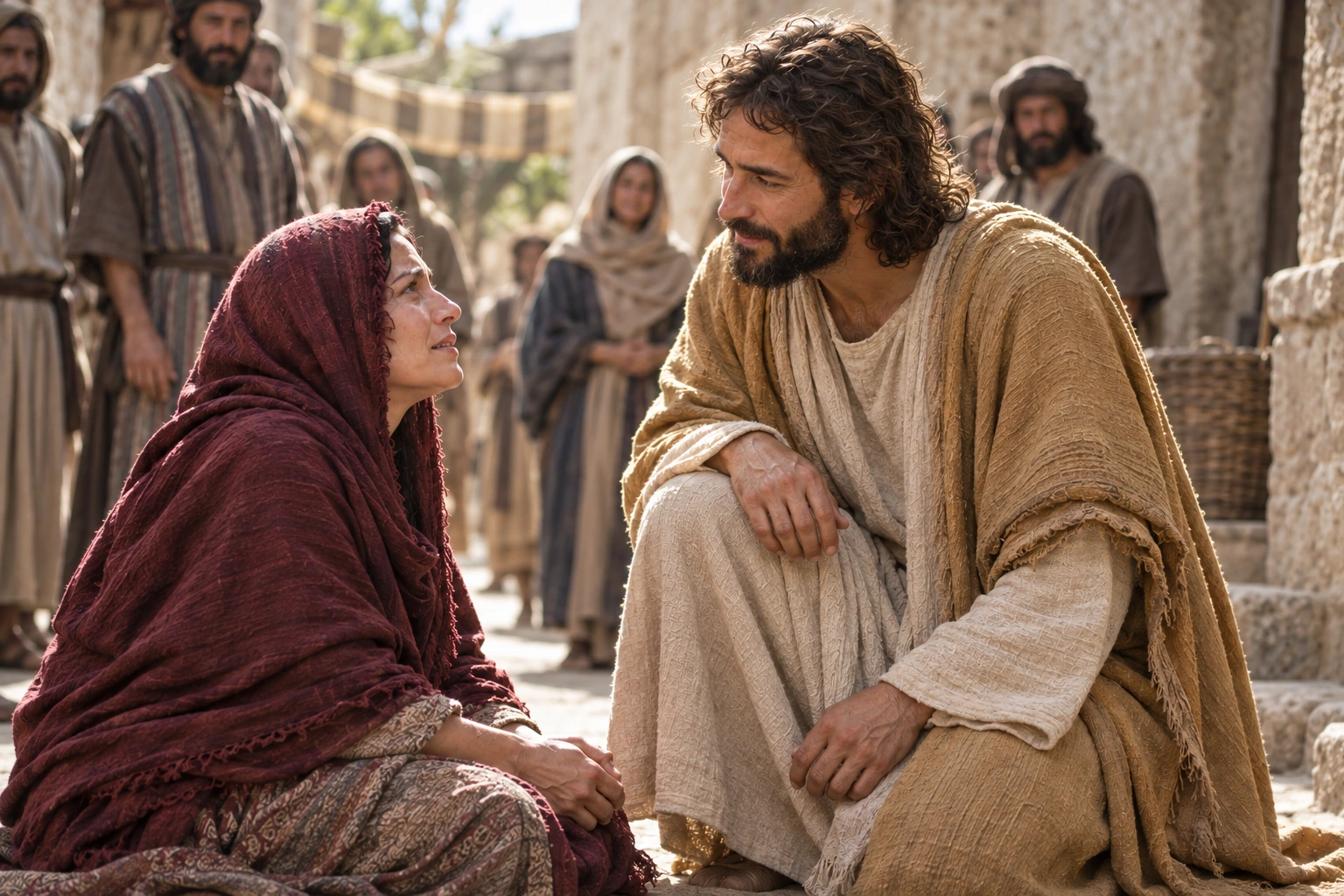
Daughter, go in peace
Jesus gives the woman His attention after she tells what has happened. He calls her daughter, recognizes her faith and sends her in peace. Scripture describes her falling before Him; this companion picture imagines Him kneeling beside her, bringing His recorded reassurance to eye level.
Read and discover
Away from the crowd
People bring Jesus a man who is deaf and has difficulty speaking. In Mark 7:31–37, Jesus takes him aside from the multitude before acting. Mark records a physical, personal encounter, Jesus looking toward heaven and sighing, and the man’s hearing and speech being restored. The people’s amazement follows what the man himself has received.
The movement away from the crowd is worth noticing. Another person’s need is not treated simply as a public spectacle. People who live with deafness or a speech disability have dignity and full human worth before any change in their condition. As an invitation to discipleship, this account can lead us to make communication more accessible and to ask how a person wishes to receive support.
Read and discover
He leads the man by the hand
Explore and study
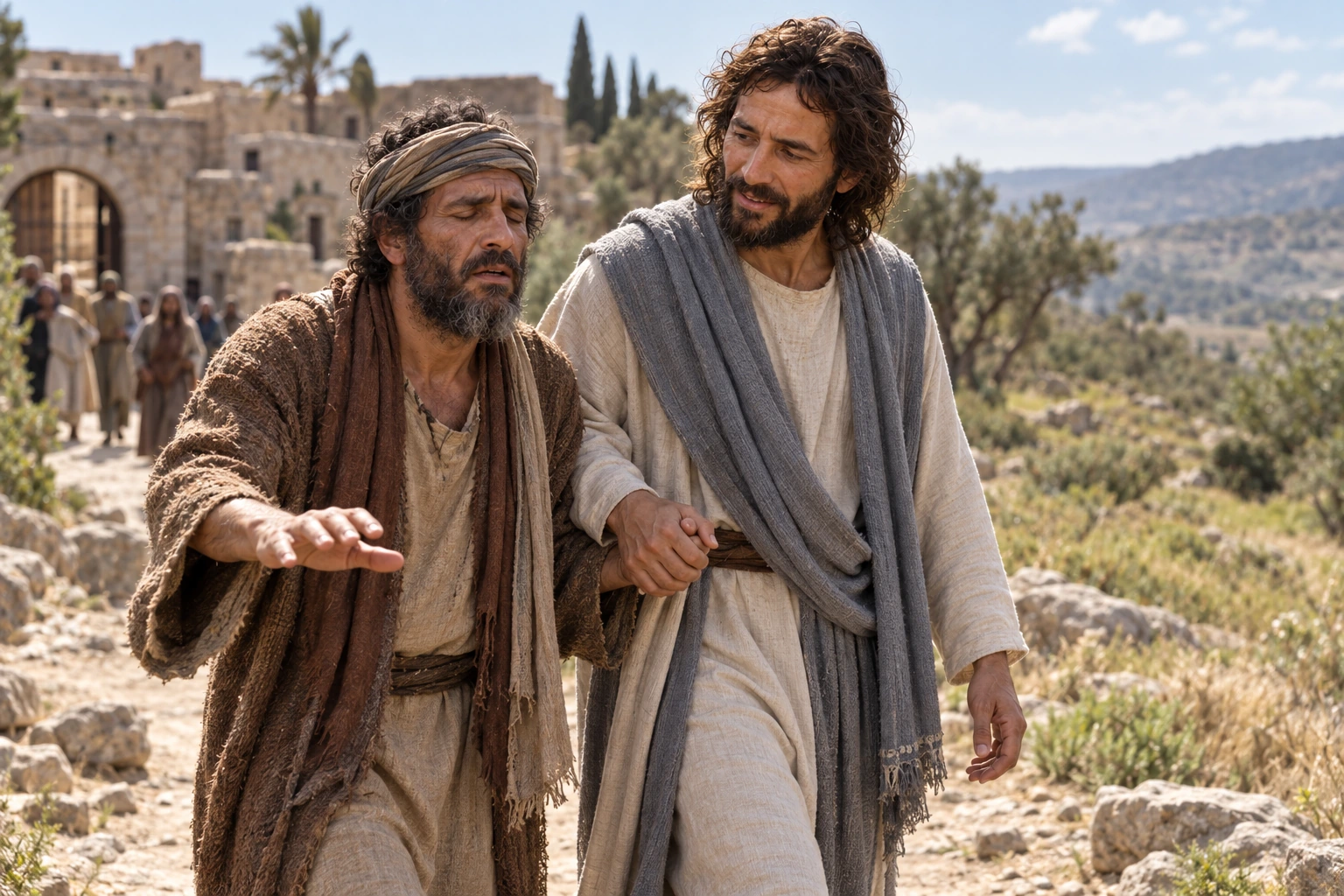
He leads the man outside
Jesus takes the blind man's hand and leads him out of Bethsaida. Before the healing, Mark lets us see the Savior walking beside him.
At Bethsaida, people bring a blind man to Jesus. Mark 8:22–26 says that Jesus takes his hand and leads him out of the town. The healing unfolds in two stages: after the first touch the man describes indistinct sight, and Jesus touches him again until he sees clearly. Mark includes that intermediate answer rather than compressing the encounter into a single instant.
This account differs from the man born blind in John 9 and should be allowed its own details. The two stages do not supply a universal explanation for gradual recovery or incomplete answers in our own lives. They do show the Savior attending to this man’s actual response. His question and continued care invite us to listen carefully rather than assuming we already know how another person is doing.
Read and discover
A question about blame becomes a work of mercy
Explore and study
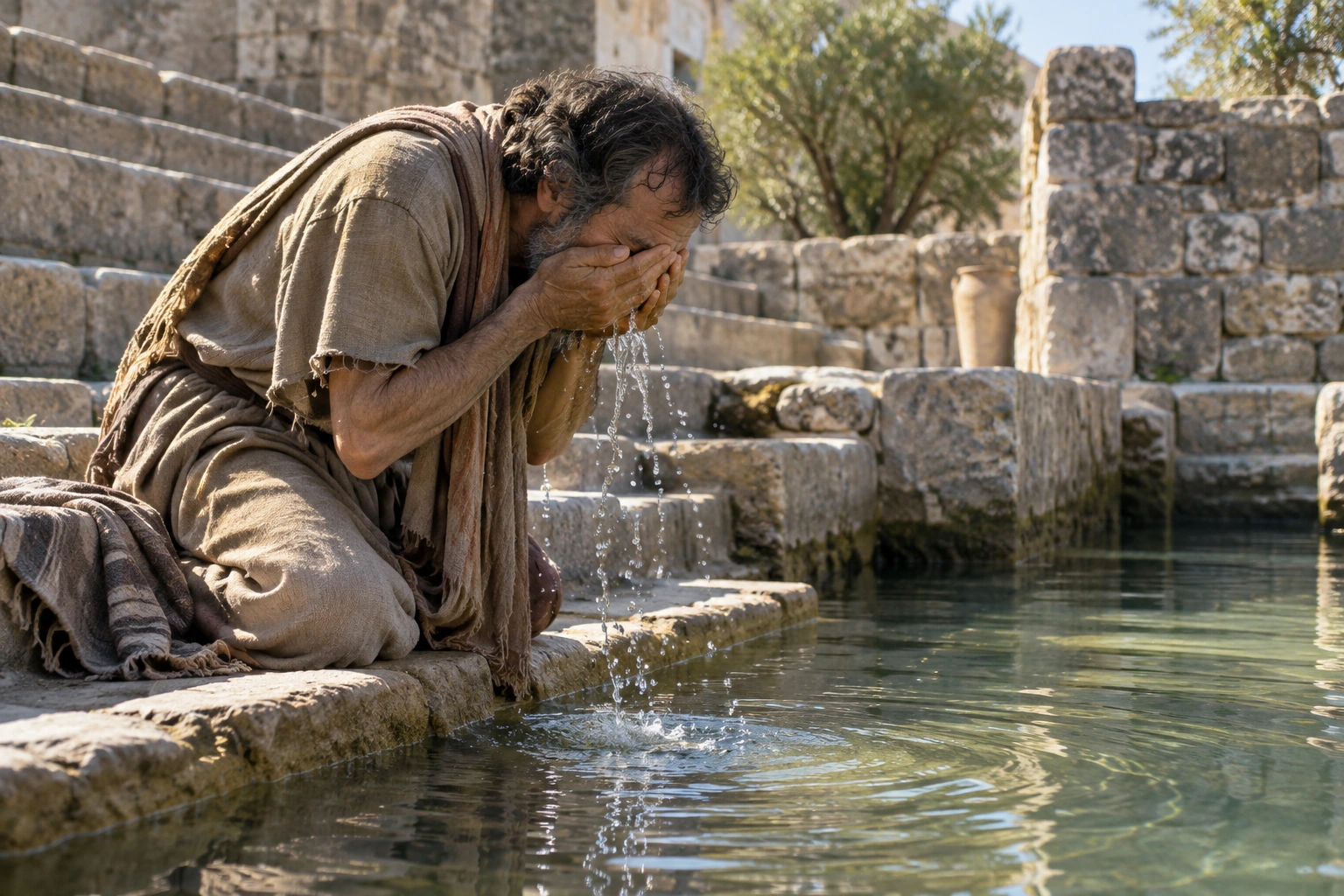
Water at Siloam
The man washes after following Jesus' instruction to go to Siloam. Water runs through his hands in this quiet moment of response.
When the disciples see a man blind from birth, they ask whose sin caused his condition. In John 9:1–7, Jesus rejects the proposed choice between the man’s guilt and his parents’ guilt. He makes clay, places it on the man’s eyes and sends him to wash at Siloam. The man goes, washes and returns able to see.
John’s chapter continues through questioning, conflict and the man’s growing witness. Later, in John 9:35–38, Jesus finds him again and speaks with him about belief in the Son of God. The story is larger than a cure: it follows a person learning who Jesus is. Its opening also asks us to resist explanations that make disability a verdict on someone’s moral worth or turn another person’s life into an easy lesson.
Read and discover
One returns
Ten men with leprosy call to Jesus from a distance. In Luke 17:11–19, He tells them to show themselves to the priests, and they are cleansed as they go. One turns back, praises God and falls at Jesus’s feet in thanks. Luke identifies him as a Samaritan, and Jesus draws attention to his return.
Explore and study
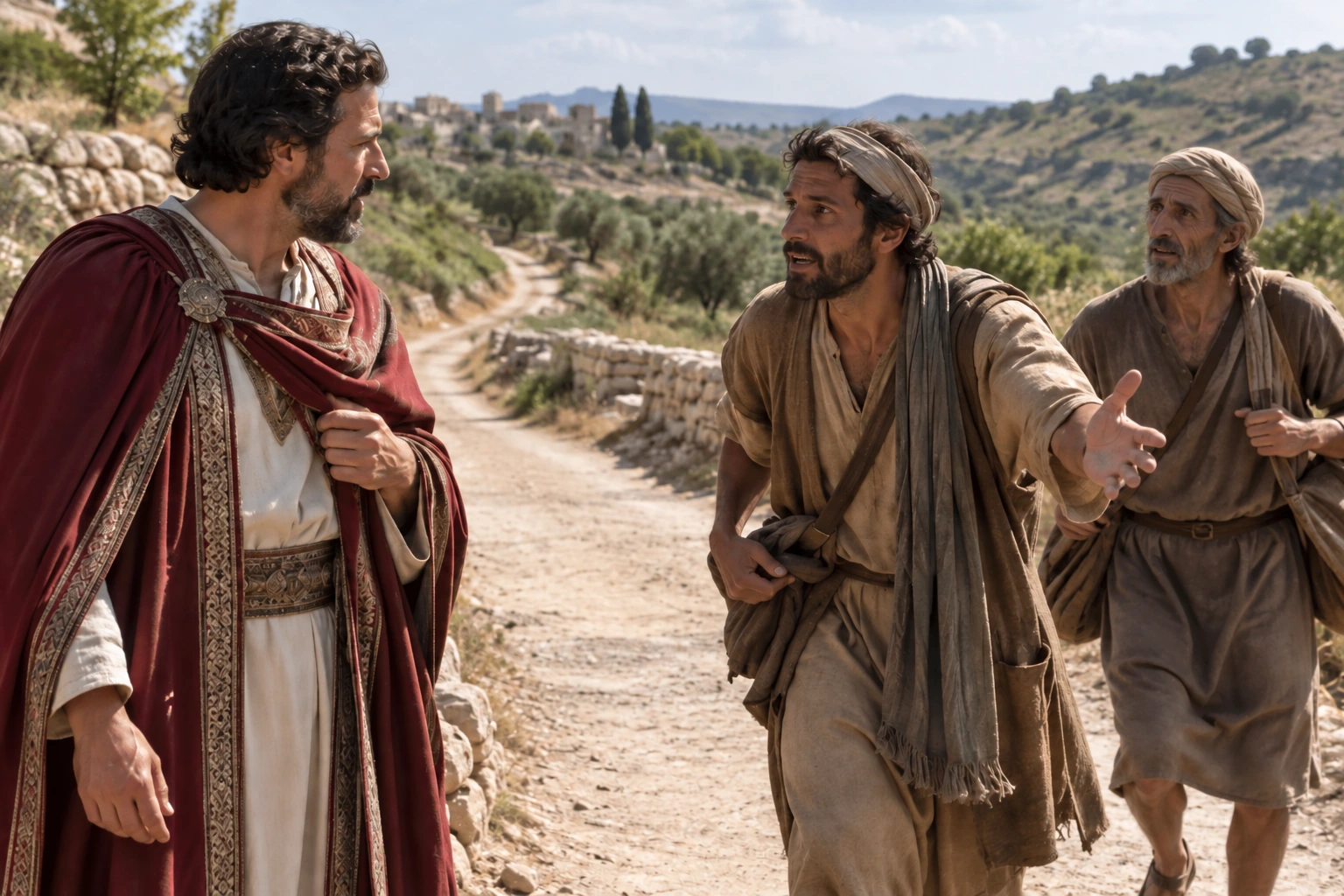
Good news on the road home
Servants meet the official on his way home with news that his son is alive. He listens and asks when the recovery began.
All ten receive cleansing; the account does not say that only the thankful man was healed. The returning man lets the story move from receiving a gift to recognizing its giver. Gratitude here is personal and expressed. We can practice it without comparing whose blessings are greater: remembering a kindness, speaking thanks and allowing received mercy to change the care we give others.
John 4:46–53 tells of another household receiving help: an official believes Jesus’s word about his son and starts home. Servants meet him with news of recovery. The story is distinct from the centurion’s servant and gives trust a place on the road before the father sees the child.
Continue with Jesus Christ
Walk through His Ministry
Place these encounters within the Savior’s larger mortal mission.
Open study →Grief and Faith
Continue with a study that gives sorrow space while looking toward Christ.
Open study →His Victory over Death
Distinguish restoration to mortal life from the Savior’s permanent Resurrection.
Open study →Learn from His Teaching
Connect His acts of mercy with His invitations to love and serve.
Open study →