Something Extraordinary: Emma and the Relief Society of Nauvoo
On a March afternoon in 1842, twenty women climbed the stairs above a red brick store in Nauvoo and organized a society. The society's Nauvoo meetings would one day pause, but the pattern set that afternoon was carried west in the society's own minute book and organized again, and it is the pattern Relief Society follows still. Emma Smith, elected its president that day, told them what to expect: "We are going to do something extraordinary." This page tells how she led it.
A seamstress's idea, a prophet's pattern
The society began with practical kindness. Margaret Cook, a seamstress, noticed that the men building the Nauvoo Temple needed shirts, and she and her employer Sarah Kimball gathered friends to sew. When their draft constitution reached Joseph Smith, he said the Lord had something better in mind: the women would be organized after the pattern of the priesthood and given a lasting place in the Church.
On March 17, 1842, twenty women met in the large room above Joseph's Red Brick Store. They elected Emma president by unanimous vote, and she chose Sarah Cleveland and Elizabeth Ann Whitney as her counselors. Joseph read to them the 1830 revelation given to Emma, the one that called her an elect lady, and taught that she was to expound the scriptures and teach the women of the community, and that other women could attain the same blessings. Then Emma rose and set the tone for everything that followed: "We are going to do something extraordinary. We expect extraordinary occasions and pressing calls."
Relief that relieved
Joseph taught the society two purposes: it was "not only to relieve the poor, but to save souls." Under Emma's presidency the women did both with their sleeves rolled up. They found families in distress, carried food and clothing to destitute immigrants arriving from Missouri and the British Isles, arranged exchanges of work so that widows could be paid fairly for their labor, and kept careful minutes of all of it. Emma insisted that care include honest dealing, not only kind feelings. At home she practiced the same pattern, opening her own door to the sick, the orphaned, and the homeless in a city where malaria moved from house to house.
The society grew quickly. By March 1844, more than 1,300 women had been admitted as members. Emma taught doctrine in the meetings, guided who should be received into the society, and spoke plainly about moral purity. The women counseled one another, bore testimony, and discussed the scriptures together. Lucy Mack Smith, who told the sisters she feared she could not meet with them many more times because of her age, stood among them and left her testimony that the Book of Mormon is the book of God.
An open door
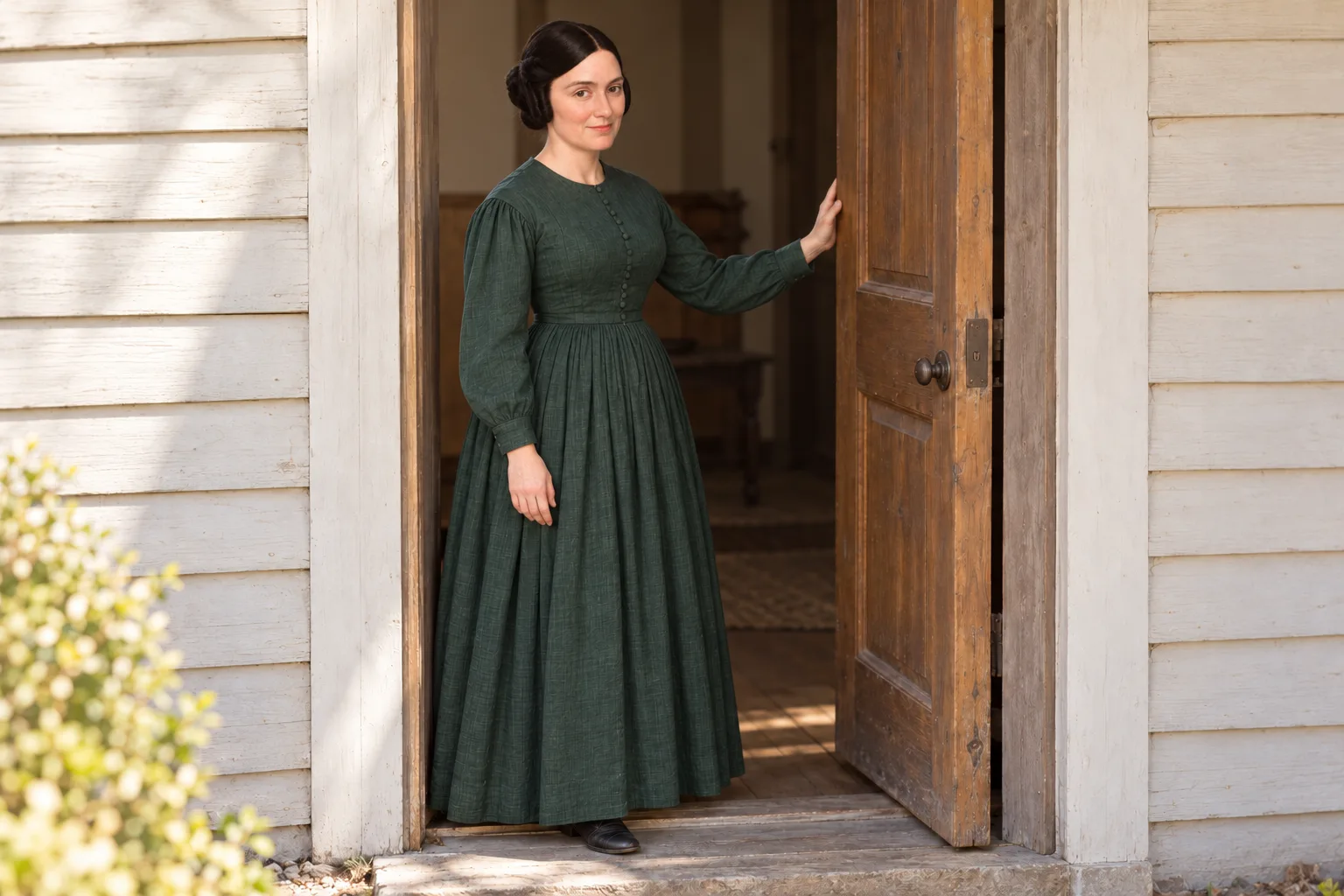
Across her Nauvoo years, Emma opened her home again and again to the sick, the orphaned, and the homeless. It was a practice, not one day's kindness: a door held open by the woman of the house, with the welcome ready before anyone is seen. She stands in her doorway with one hand resting on the open door, ready for whoever needed shelter next.
A pattern that outlasted Nauvoo
The Nauvoo society met through 1842 and 1843. In March 1844 Emma spoke at four meetings on the need for moral purity, and after those meetings the society did not gather again in Nauvoo. It might have become a closed chapter. Instead, Eliza R. Snow carried the society's minute book west, and when Brigham Young later asked her to help reestablish the Relief Society in Utah, she used that book as the pattern. Ward by ward, women organized again with Nauvoo's minutes open in front of them, recounting the founding story and Emma's presidency as their beginning.
That is why March 17, 1842 still matters to a sister who joins Relief Society today. The society she enters was shaped at its start by a woman who expected extraordinary occasions, and who believed that relieving the poor and saving souls belonged in the same pair of hands.
Pause and reflect
Emma expected "extraordinary occasions and pressing calls." What pressing call might be waiting in your own neighborhood or ward?
The Nauvoo sisters watched for needs close to home. A pressing call may be nearer than you think.
The Nauvoo sisters paid widows fairly instead of only praising their sacrifice. What is one practical, honest form of relief you could offer this month?
Relief in Nauvoo was practical and honest, not only kind. Let yours be both.