Read and discover
The Word was with God

Explore and study
Life above the waters
Fish move through clear water as birds fly above the shore. Genesis names the life of sea and sky among the wonders of creation.
John opens his Gospel before the manger, before the ministry and before the world. In John 1:1–5, the Word already exists with God, and creation comes through Him. John then identifies this divine life with the One who enters human experience in John 1:14. The child born into the world did not begin to exist when He was born.
Latter-day Saints understand this witness as an introduction to the premortal Jesus Christ, distinct from the Father and united with Him in divine purpose. John holds His majesty and His nearness together: the source of life comes to dwell among people. As you continue into His earthly encounters, remember that His attention to an individual is the attention of the Lord through whom the world was made.
Genesis 1:20–23 gives the creation witness tangible subjects: the waters teem with life and birds move above the earth. These creatures invite us to notice the abundance within the world John says was made through the Word.
Read and discover
A willing Son before the world
Abraham’s vision in Abraham 3:24–28 places earthly life within a larger divine purpose. An earth will be prepared, people will have the opportunity to obey God, and a messenger will be sent. Read it beside Moses 4:1–4, where the Beloved Son accepts the Father’s will while Satan seeks to destroy human agency and claim the Father’s honor.
Explore and study
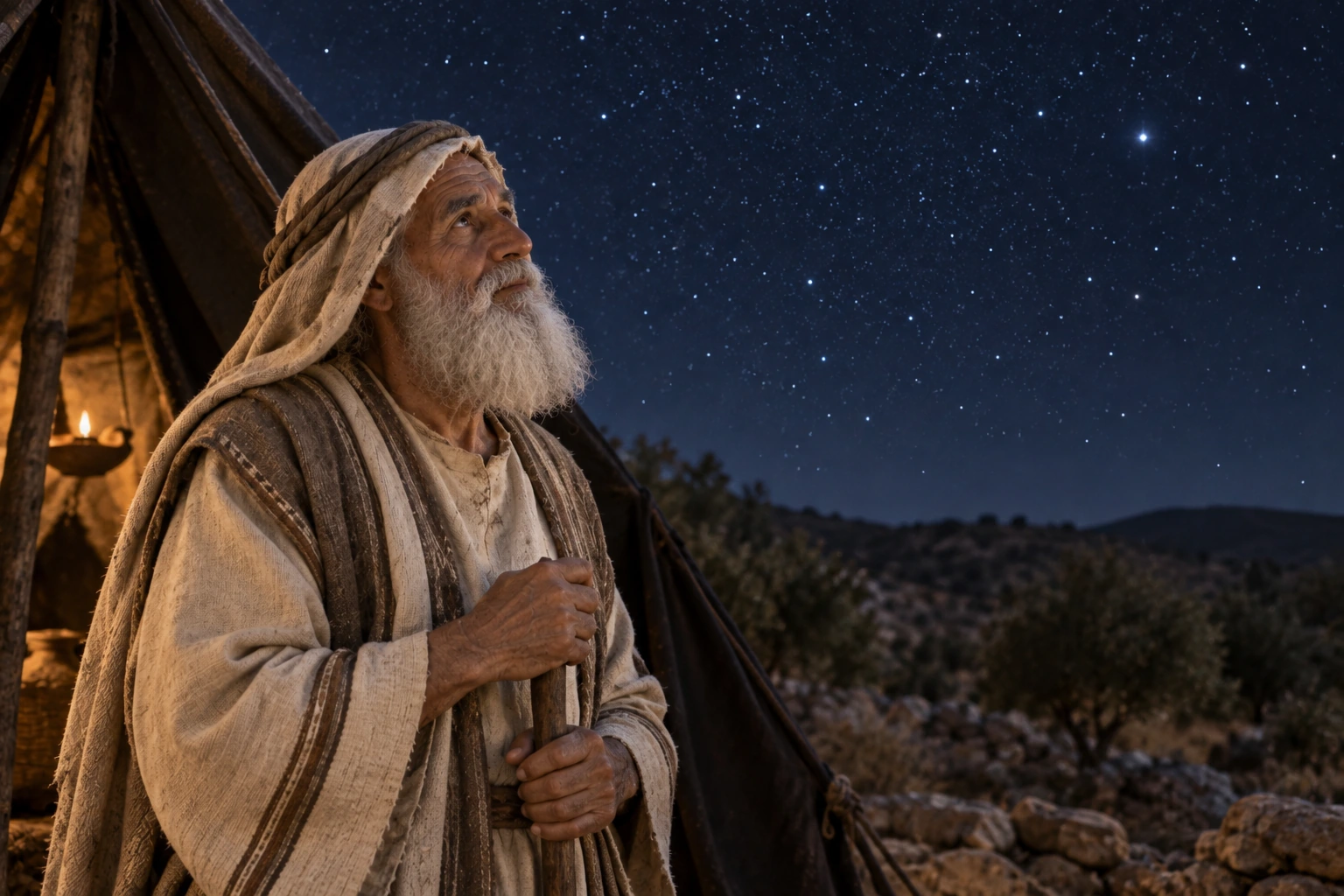
Abram looks toward the stars
Abram looks into the night sky. The Lord directs his attention to the stars as He promises descendants beyond his counting.
The contrast helps explain the kind of Savior Jesus is. His mission grows from willing obedience and love, rather than a plan to force every person into righteousness. His later invitations to follow, repent and believe belong to that same respect for agency. The choice of the Beloved Son prepares us to recognize the willingness we will hear again in His prayers and see in His service during mortality.
The purposes formed before mortality reach a particular household in Genesis 15:1–6. Abram is brought outside to consider the stars and receives a promise concerning his descendants. His trust becomes part of the covenant history through which later generations learn to await the Redeemer.
Read and discover
Created through the Only Begotten
Moses asks about the earth and its inhabitants. In Moses 1:31–39, God answers by connecting creation to the Only Begotten Son and then placing human immortality and eternal life at the heart of His work. The passage lets Moses see his own world within a much larger creation, while keeping God’s concern for His children in view.
This gives the natural world a place in a study of Christ. Mountains, water and living things invite gratitude for the Creator, and human life deserves reverence because people belong within the Father’s purpose. The vastness of the vision does not make Moses’s life insignificant. God speaks to him personally about a work that reaches far beyond him. We can receive that same invitation to wonder while caring faithfully for the lives and places close to us.
Read and discover
Moses hears the Lord at the bush
Explore and study
Moses turns aside
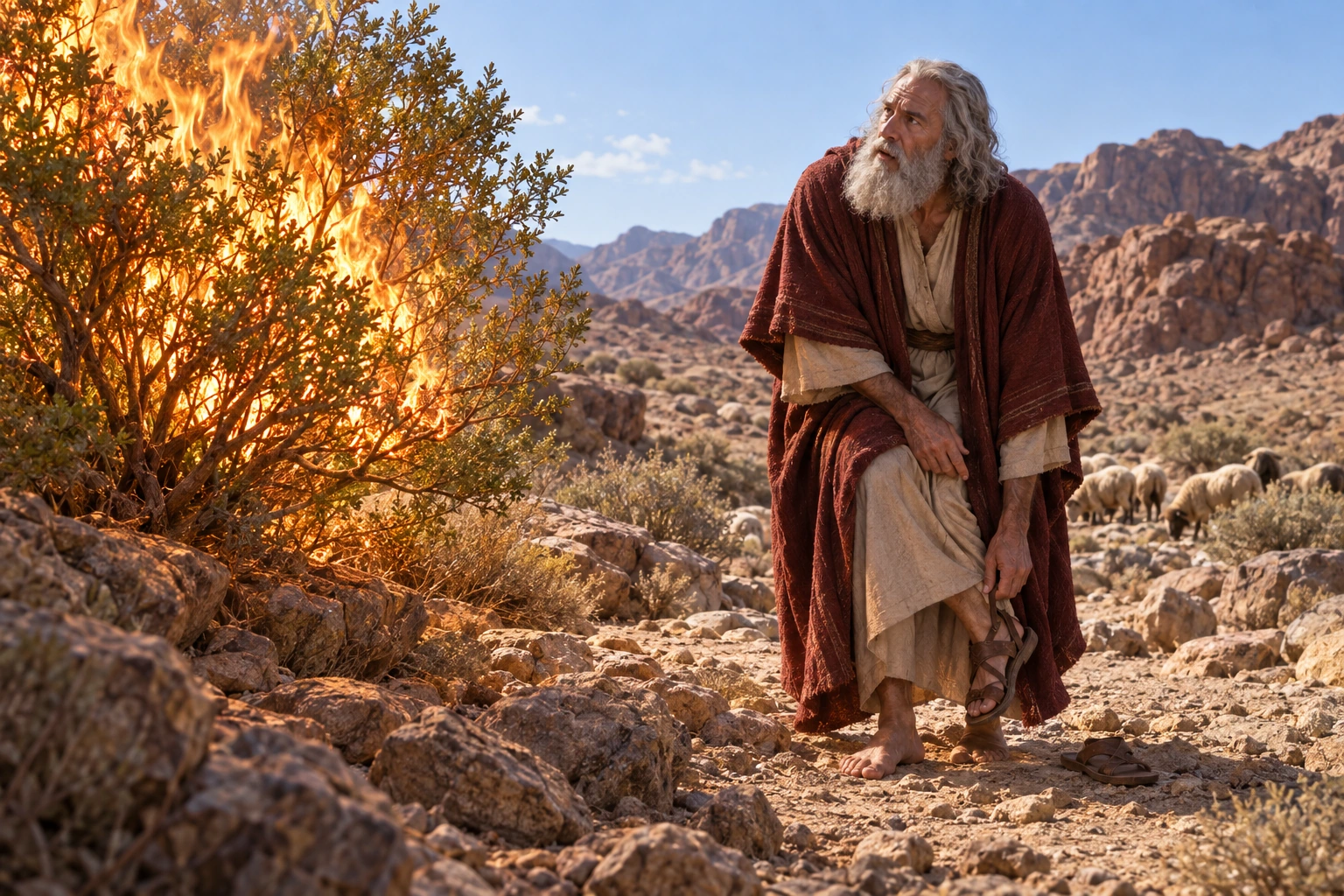
Moses pauses beside the burning bush and removes his sandal. An ordinary place of shepherding becomes holy ground as the Lord calls him.
Moses is tending a flock when a bush that burns without being consumed draws his attention. In Exodus 3:1–15, the Lord calls him by name, identifies the place as holy and speaks of Israel’s suffering. The encounter leads toward a task: Moses is to go to Pharaoh and bring the people out of Egypt. Divine holiness and concern for an oppressed people meet in the same account.
Latter-day Saint teaching identifies Jehovah, the covenant Lord of Israel, with the premortal Jesus Christ. John’s record of Jesus speaking about Abraham in John 8:56–58 belongs to the New Testament witness of His identity. Read the bush account on its own terms as well: Moses hears a commission, raises questions and receives the promise of divine presence. His uncertainty does not prevent the Lord from calling him to serve.
Read and discover
A way through the sea
Explore and study
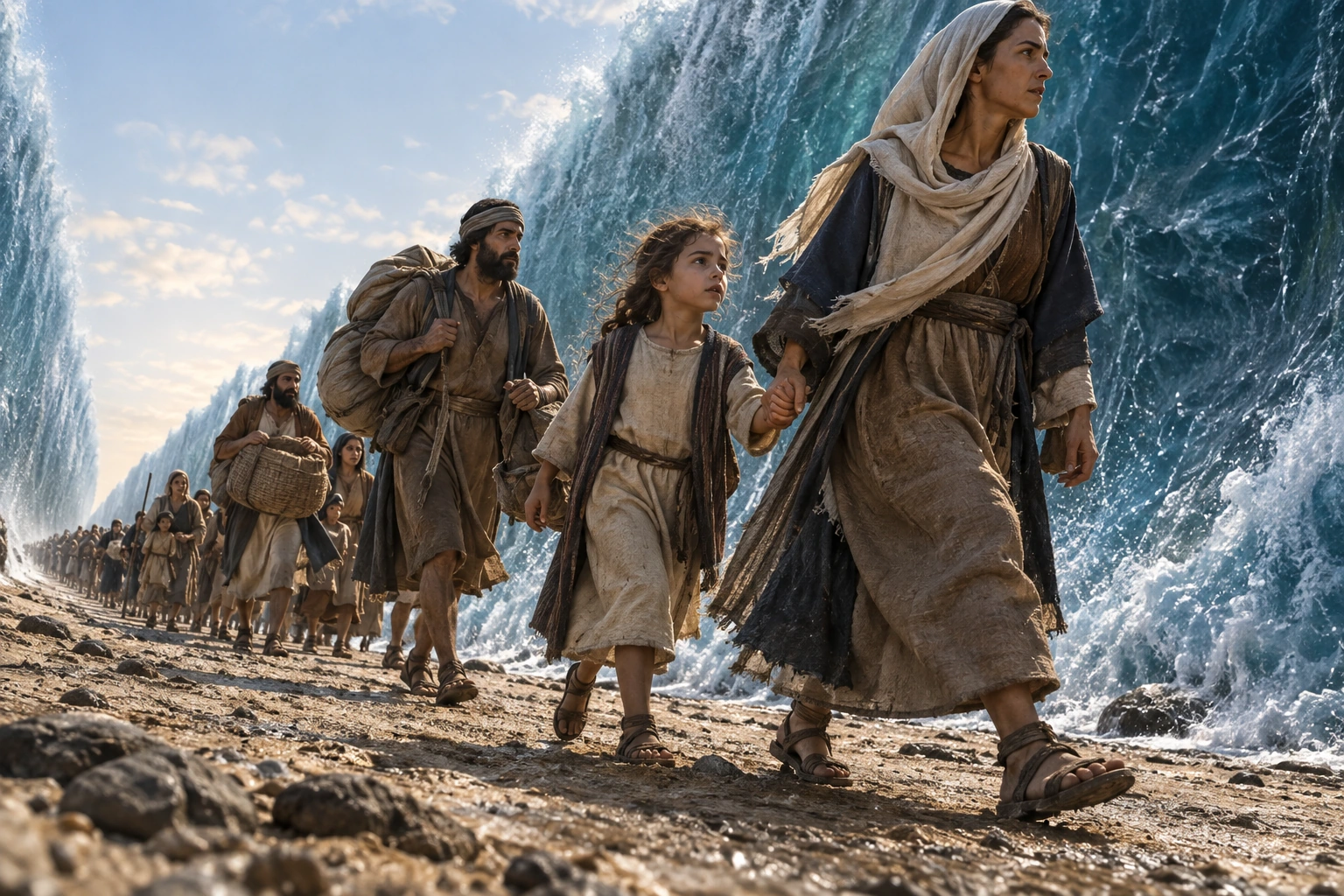
A path through the sea
The travelers move forward on dry ground with water on either side. Exodus tells of the way the Lord opened for His people when the sea lay before them.
Israel’s escape reaches a moment when the sea lies ahead and the Egyptian army approaches behind. In Exodus 14:13–31, Moses is told to stretch his hand over the water, and the people cross on dry ground. The pillar that has accompanied them stands between the camps. The account remembers deliverance as the Lord’s work, received by a people who still have to move forward.
For a study of Jesus Christ, the Exodus helps give depth to the word Redeemer: the Lord frees people from bondage and leads them toward covenant life. That connection does not make every hard experience an equivalent of Israel at the sea, nor promise that every danger will end in the same way. It invites us to see the Savior’s power to deliver as part of a long scriptural witness, reaching toward His victory over sin and death.
Read and discover
Bread in the wilderness
Explore and study
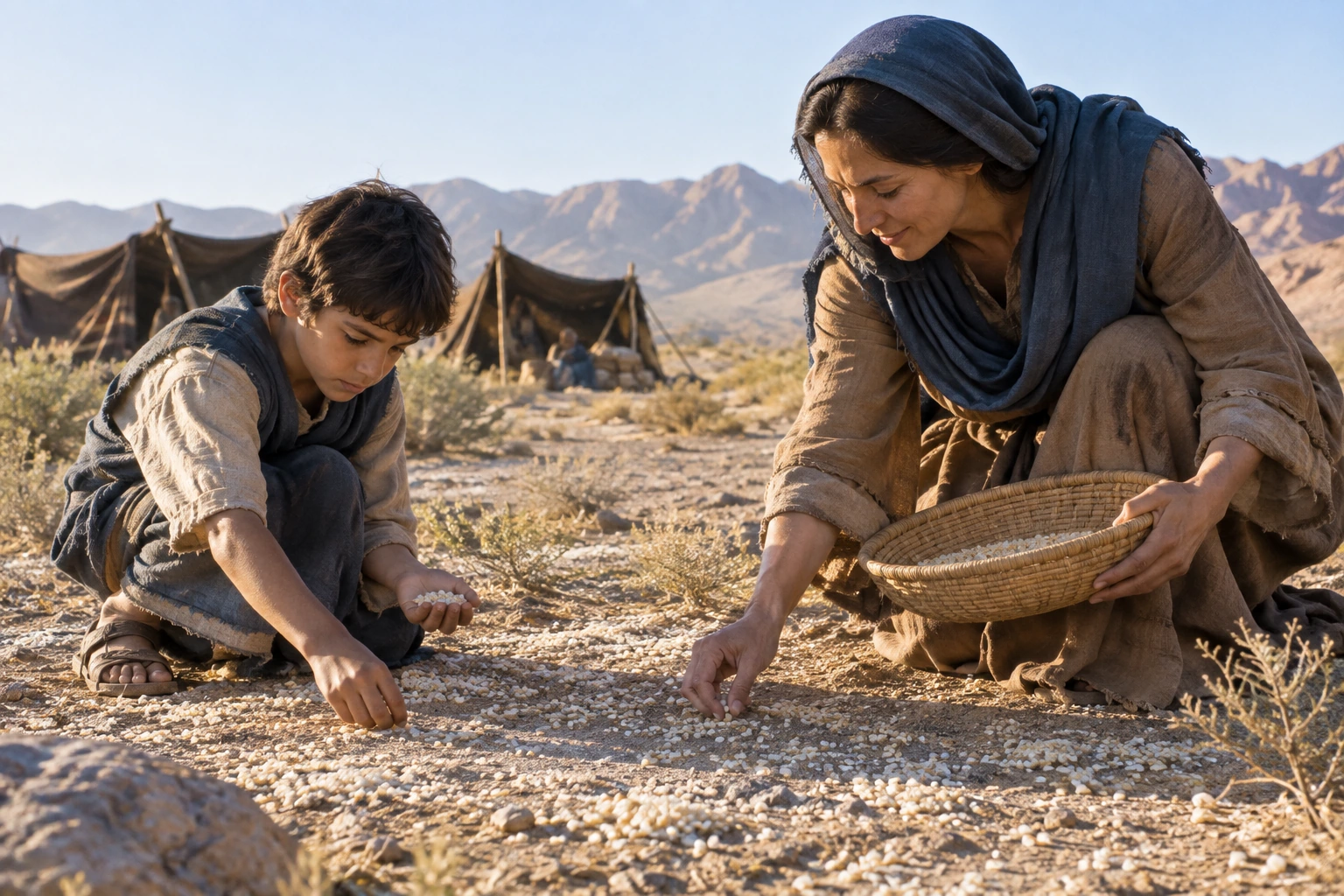
Enough for the household
People bend to gather the food the Lord has provided. Day by day, the wilderness teaches them to trust Him for their bread.
After deliverance comes the need to live day by day. Exodus 16:11–18 describes food given to Israel in the wilderness and gathered according to the needs of each household. The passage turns our attention from a great crossing to an ordinary morning, when people must gather what will sustain them.
In John 6:31–35, Jesus recalls the manna while teaching about bread from heaven. He points His listeners toward the Father's gift and names Himself the bread of life. The daily gathering in the wilderness helps us hear that invitation: mortal hunger brings people to seek food, and the Savior calls them to receive the lasting life He offers.
Read and discover
The Lord speaks with Moses
Explore and study
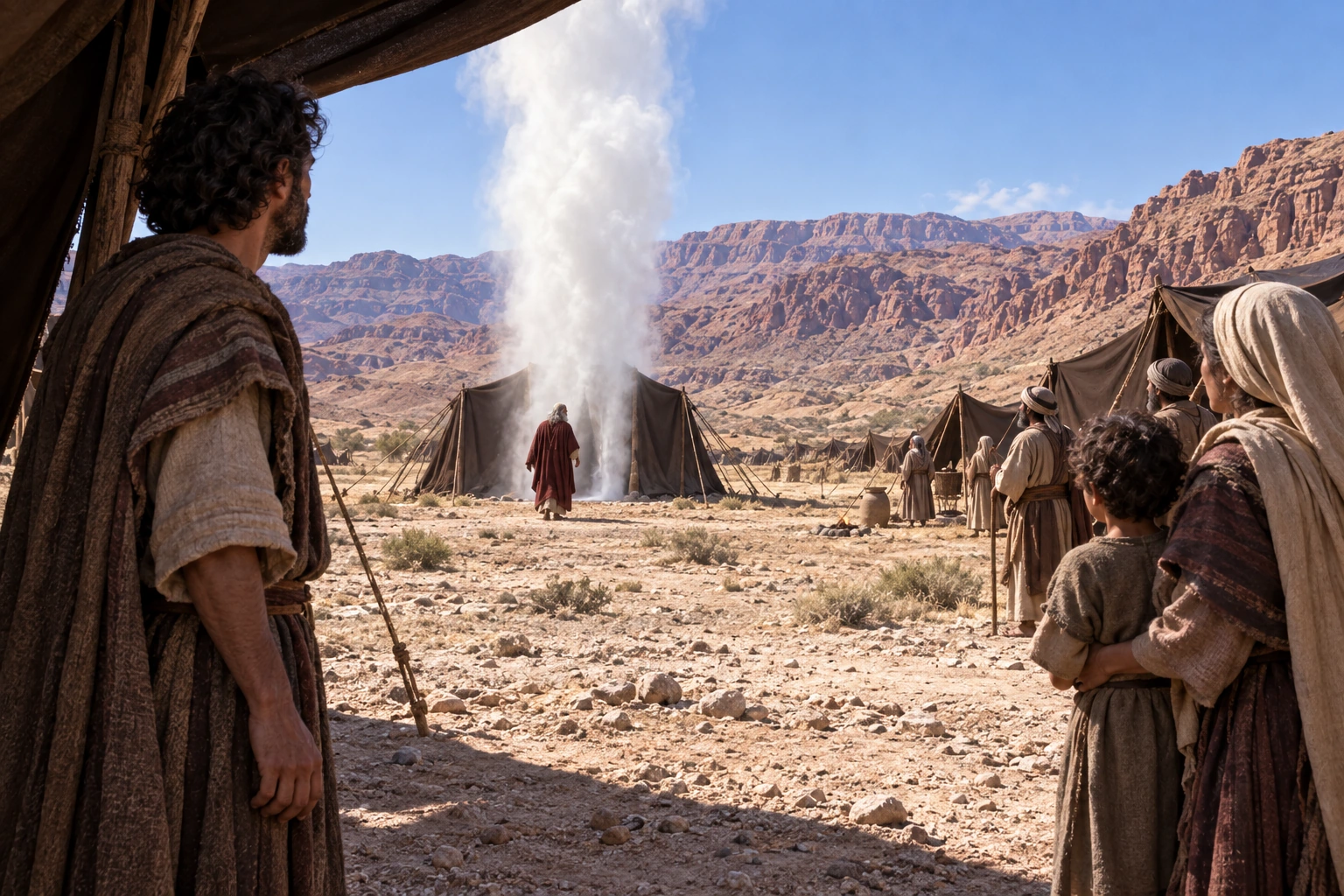
The people watch from their tent doors
The people watch from their tent doors as Moses goes to the tent of meeting. The cloud at its entrance accompanies the account of the Lord speaking with him.
In Exodus 33:7–11, Moses goes to the tent of meeting outside the camp. The people watch from their own tent doors as the cloudy pillar descends, and the Lord speaks with Moses with the directness of a person speaking to a friend. Joshua remains at the tent. The details locate the encounter within a community learning to recognize and respond to God’s presence.
The passage adds relationship to the themes of creation and deliverance. Moses is more than a messenger carrying distant instructions; he speaks with the Lord. The people’s response at their tent doors makes this more than an isolated private moment. The covenant Lord communicates, and His community learns to worship and listen. A patient reading can help us recognize both the personal nearness and the shared responsibility within covenant life.
Read and discover
From prepared stones to knowing the Redeemer
Explore and study
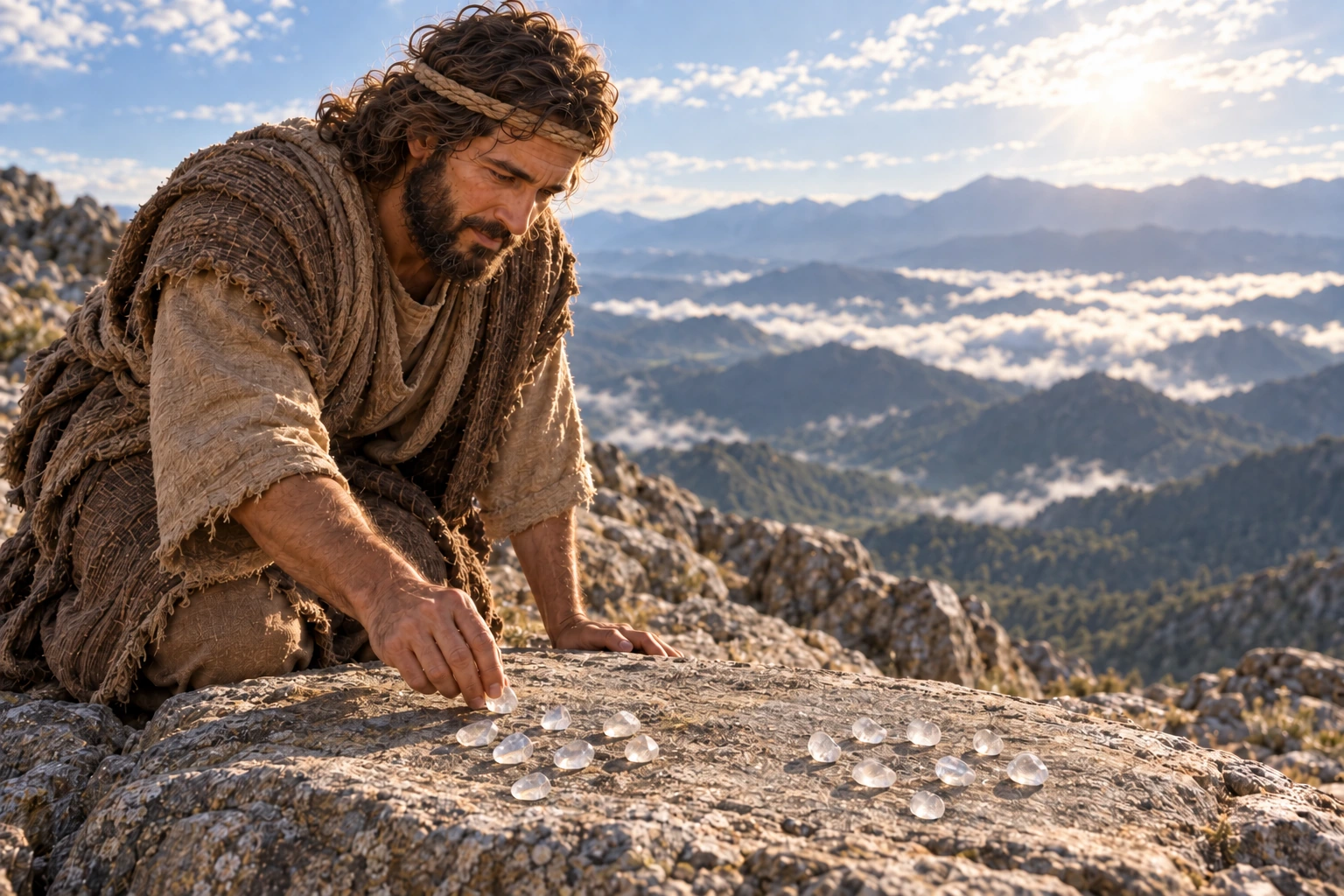
Stones carried to the mountain
The brother of Jared prepares sixteen stones on the mountain before asking the Lord to give them light. His careful preparation leads into an earnest prayer.
First, the brother of Jared prepares and carries sixteen small stones to the top of Mount Shelem. In Ether 3:1-5, he asks the Lord to touch them so they can give light in the vessels. This preparation and prayer come before the touching and before he sees the Lord. The man in this account is the brother of Jared, not Jared himself.
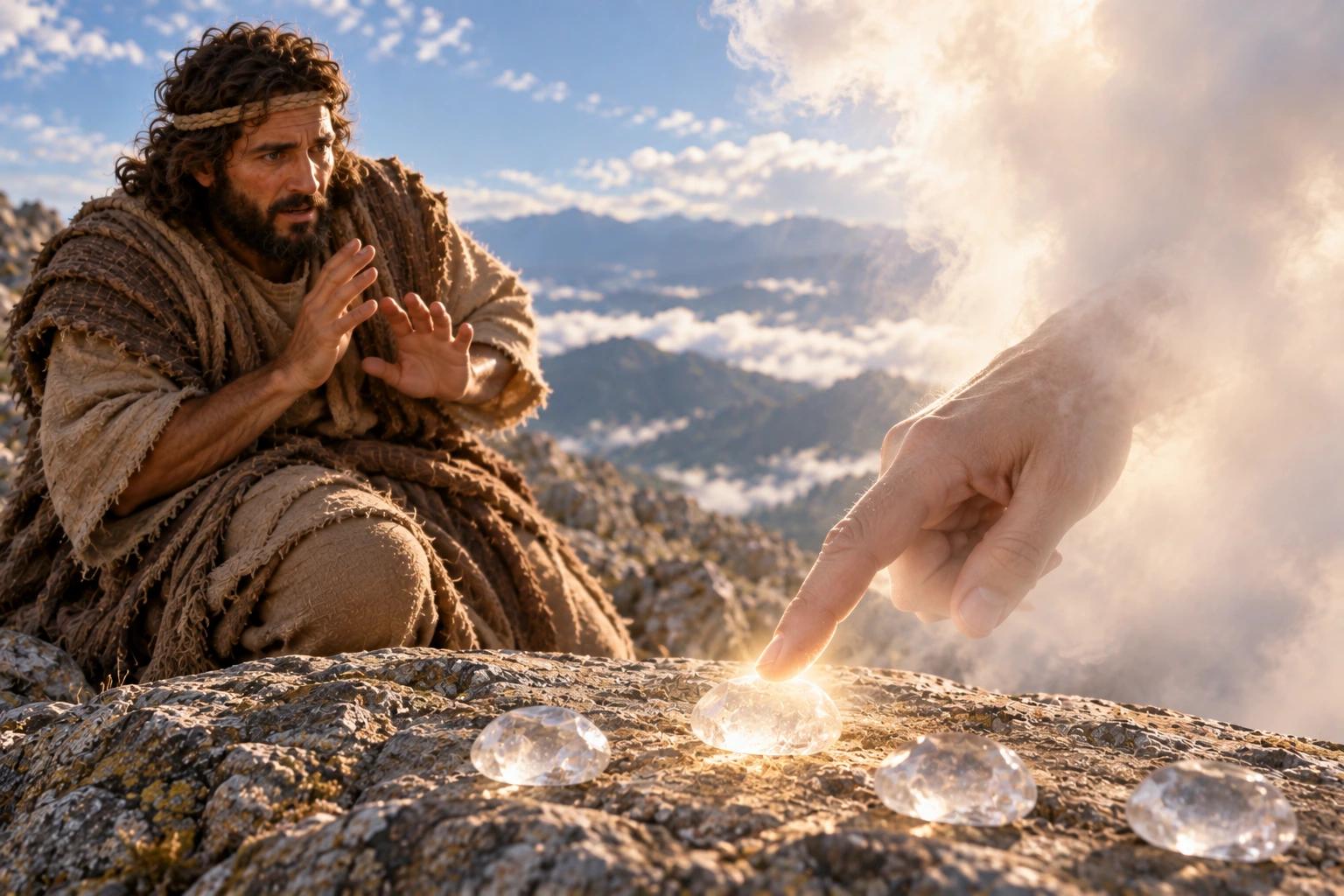
Next, Ether 3:6-10 describes the Lord touching the stones one by one. The veil is taken from the brother of Jared's eyes, and he sees the Lord's finger, which appears like a human finger. He falls in fear. The Lord explains that He will take upon Himself flesh and blood and asks whether the man has seen more. The brother of Jared says he has not, then asks the Lord to show Himself. The full revelation has not yet happened at this point.
Explore and study
He sees the finger of the Lord
The brother of Jared draws back as he sees the Lord's finger touch a stone. Ether records his fear before the Lord reveals Himself more fully.
Then, after the brother of Jared affirms his trust in the Lord's words, Ether 3:11-16 records the Lord showing Himself and identifying Himself as Jesus Christ, prepared to redeem His people. He explains that the body now seen is the body of His spirit and that He will appear in the flesh. This is the premortal Savior, before His birth, death and Resurrection. The existing picture in the connected Book of Mormon study illustrates this later encounter, after the finger has first been seen.
Earlier, Ether 2:4 and Ether 2:14 describe the Lord speaking with the brother of Jared in a cloud. Ether 3:6 instead describes the veil being taken from his eyes. A cloudlike atmosphere around the finger can connect these readings artistically, but the text does not explicitly describe a cloud at that moment. Keeping the stages distinct lets the practical request for light unfold into a much greater witness of who the Lord is.
Read and discover
The suffering servant and the coming Redeemer
Explore and study
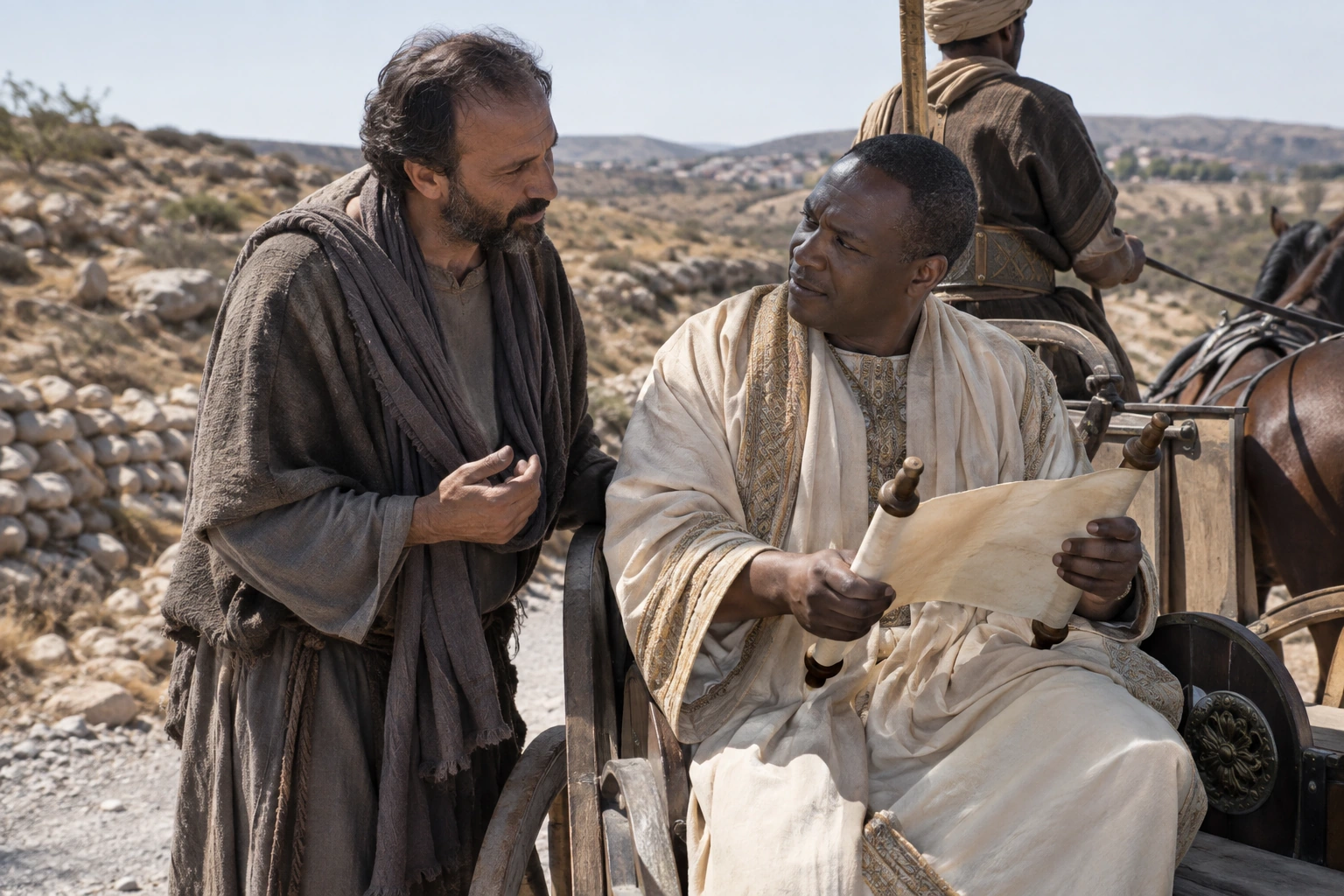
A traveler asks about Isaiah
A traveler turns from his reading to seek understanding. Philip joins him in the account where Isaiah becomes a starting point for teaching about Jesus.
Isaiah’s servant passage in Isaiah 53:1–12 speaks of rejection, suffering, transgression and the bearing of others’ sorrows. Christians read these words in relation to Jesus Christ. Acts 8:26–35 provides a scriptural example of that reading: Philip meets a traveler studying Isaiah and begins with the passage to teach him about Jesus.
This is a fitting place to turn from expectation toward the Savior’s mortal life. The story ahead will contain healing and welcome, but also rejection and a freely given sacrifice. Isaiah’s language should be read carefully in its prophetic setting, with the New Testament connection made openly. The separate Birth of Christ and Atonement studies follow those parts of His mission in greater detail.
In Acts 8:27–35, the Ethiopian official asks for help with the passage he is reading. Philip meets him at that question and begins to teach him about Jesus. A shared reading becomes a personal invitation to know the Savior.
Continue with Jesus Christ
The Birth of Christ
Follow the promises into the Nativity accounts, with their witnesses and distinct settings.
Open study →The Mortal Ministry of Jesus Christ
Meet the Son of God as He calls, teaches and travels among people.
Open study →The Atonement of Jesus Christ
Explore the Redeemer’s willing sacrifice and the hope it opens.
Open study →The Living Christ Today
Continue from ancient covenant witness to the Restoration and present discipleship.
Open study →