Read and discover
The Son enters the water
Explore and study
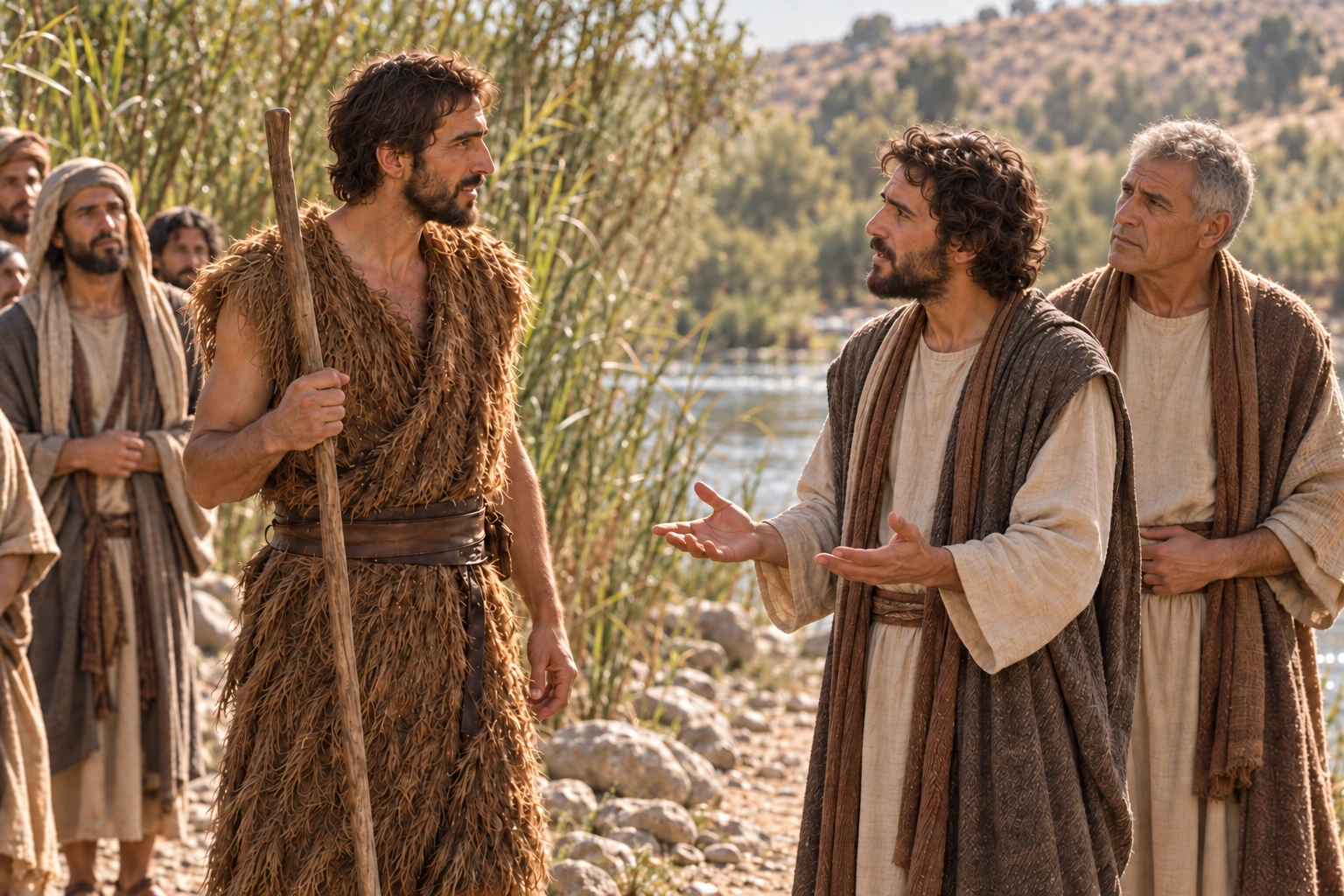
What should we do?
People bring John a practical question about how to live. His answers turn repentance toward sharing, honesty and the fair treatment of others.
Jesus comes from Galilee to John at the Jordan. In Matthew 3:13–17, John hesitates, recognizing that Jesus is greater than he is. Jesus asks him to proceed so that righteousness may be fulfilled. After the baptism, the Spirit descends like a dove and a heavenly voice identifies Jesus as the beloved Son.
The scene joins obedience with divine witness. Father, Son and Holy Ghost are distinguishable in the account: the Son receives baptism, the Spirit descends and the Father speaks. 2 Nephi 31:5–10 reflects on why the Holy One is baptized and connects His obedience to the path He invites others to follow. His example gives baptism meaning beyond a ceremony performed in isolation from a life turned toward God.
Before Luke records Jesus’s baptism, people ask John what they should do. His answers in Luke 3:10–14 concern sharing necessities, honest collection and refusing extortion. Repentance has a practical shape in the lives of those preparing to receive the Lord.
Read and discover
An invitation becomes a friendship
Two of John the Baptist’s disciples follow Jesus after hearing John identify Him as the Lamb of God. In John 1:35–42, Jesus asks what they seek and invites them to come and see where He stays. Andrew then finds his brother Simon and brings him to Jesus. The account begins with testimony but moves into personal encounter.
Andrew’s part is modest and meaningful. He shares what he has found and helps another person come to the Savior. This meeting should be kept distinct from the later fishing scenes in the Gospels; John gives this encounter its own sequence and purpose. It invites us to consider how a sincere introduction, a shared passage or time spent listening may help someone explore faith without pressure.
Read and discover
A question is met with an invitation
Philip tells Nathanael that they have found the One anticipated in the law and prophets. Nathanael questions whether anything good can come from Nazareth. In John 1:43–51, Philip answers by inviting him to come and see. Jesus then addresses Nathanael personally, and the conversation opens into a testimony of His identity.
The passage does not explain what happened beneath the fig tree or why Jesus’s knowledge of it mattered so much to Nathanael. We can let that detail remain open while attending to what is recorded: a question did not end the encounter. Nathanael came, listened and responded. The invitation to know Christ can include honest questions, even when the answers unfold differently from what a person first expected.
Read and discover
A need at a wedding
Explore and study
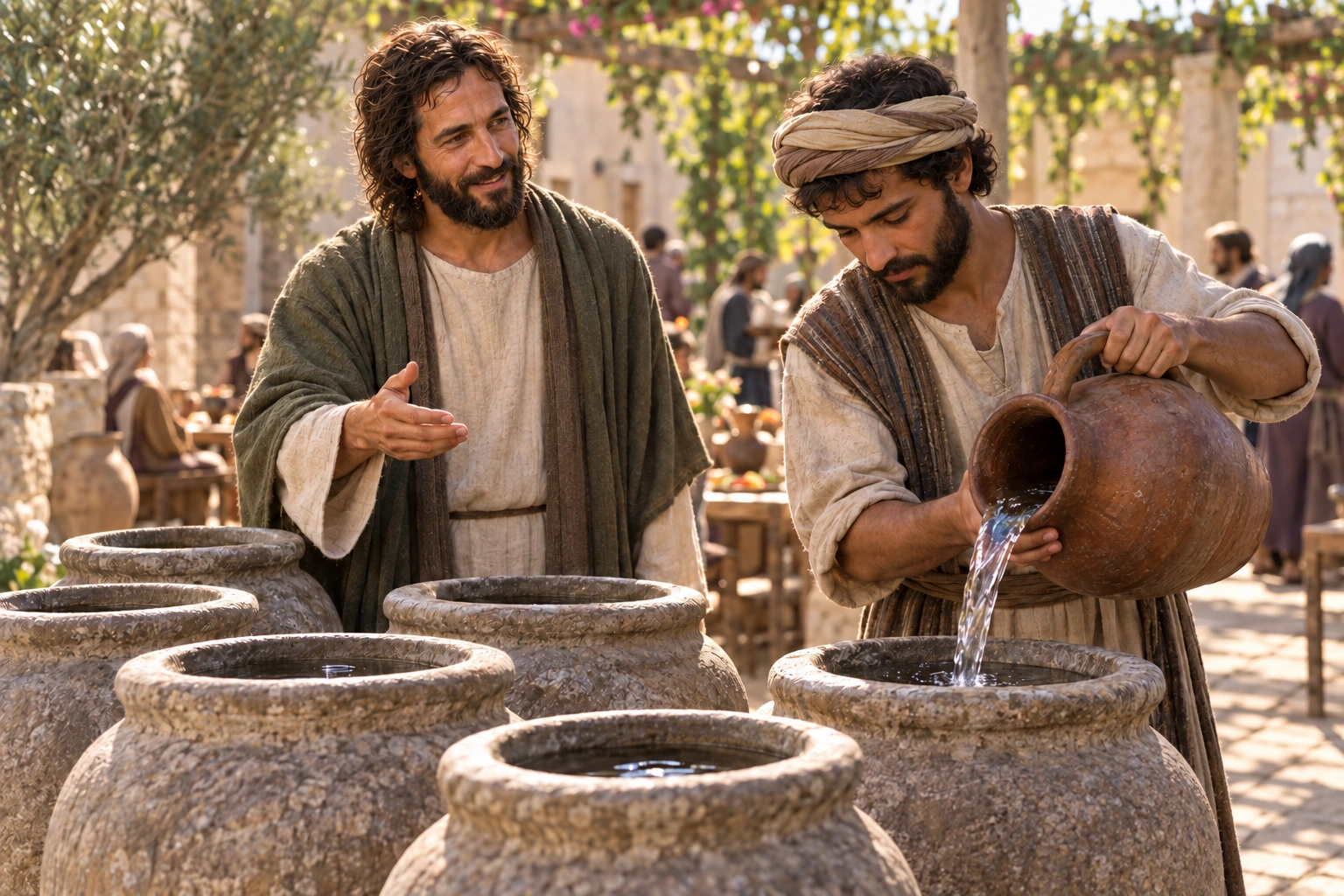
Fill the jars
The servants attend to the stone waterpots at Jesus's direction. At Cana, their ordinary work becomes part of the first sign John records.
At a wedding in Cana, Mary brings the lack of wine to Jesus’s attention. In John 2:1–11, servants fill six stone waterpots, draw from them and take what has become wine to the person overseeing the feast. John presents this as the beginning of Jesus’s signs and connects it with His disciples’ belief.
The account places His power within a shared human occasion. Mary’s instruction directs the servants toward what Jesus says, and the servants participate through concrete actions. John does not identify the bride and bridegroom or tell us their relationship to Jesus; those details need not be supplied to appreciate the scene. The sign points beyond the provision itself toward the glory of the One who gives it.
Explore and study
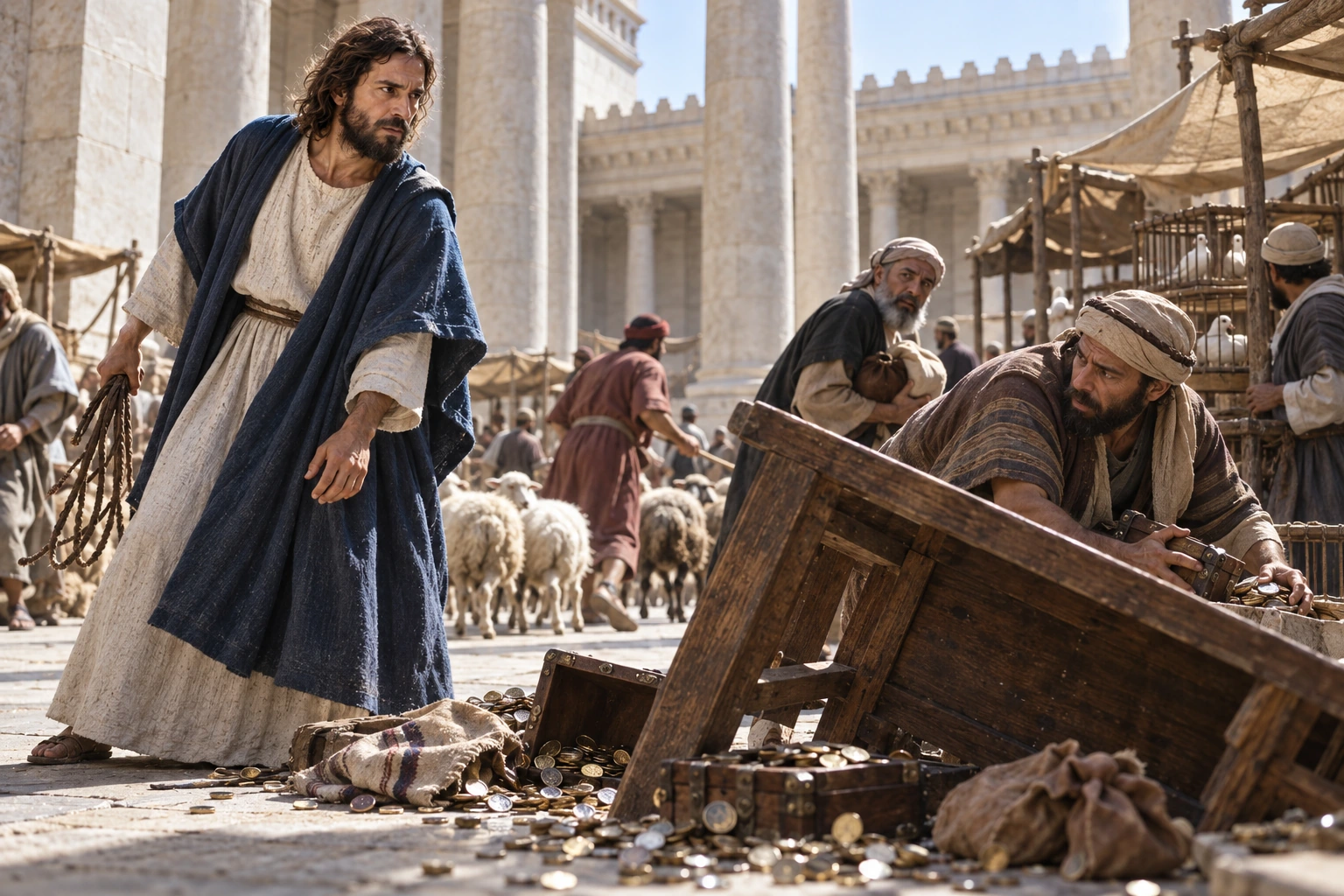
His Father’s house
Jesus acts with resolve among the temple tables. John records His challenge to those who had made His Father's house a place of merchandise.
John next records Jesus going to Jerusalem and clearing the temple precinct in John 2:13–17. The sign at Cana reveals His power, while this action reveals His concern for the reverence owed to His Father’s house.
Explore and study
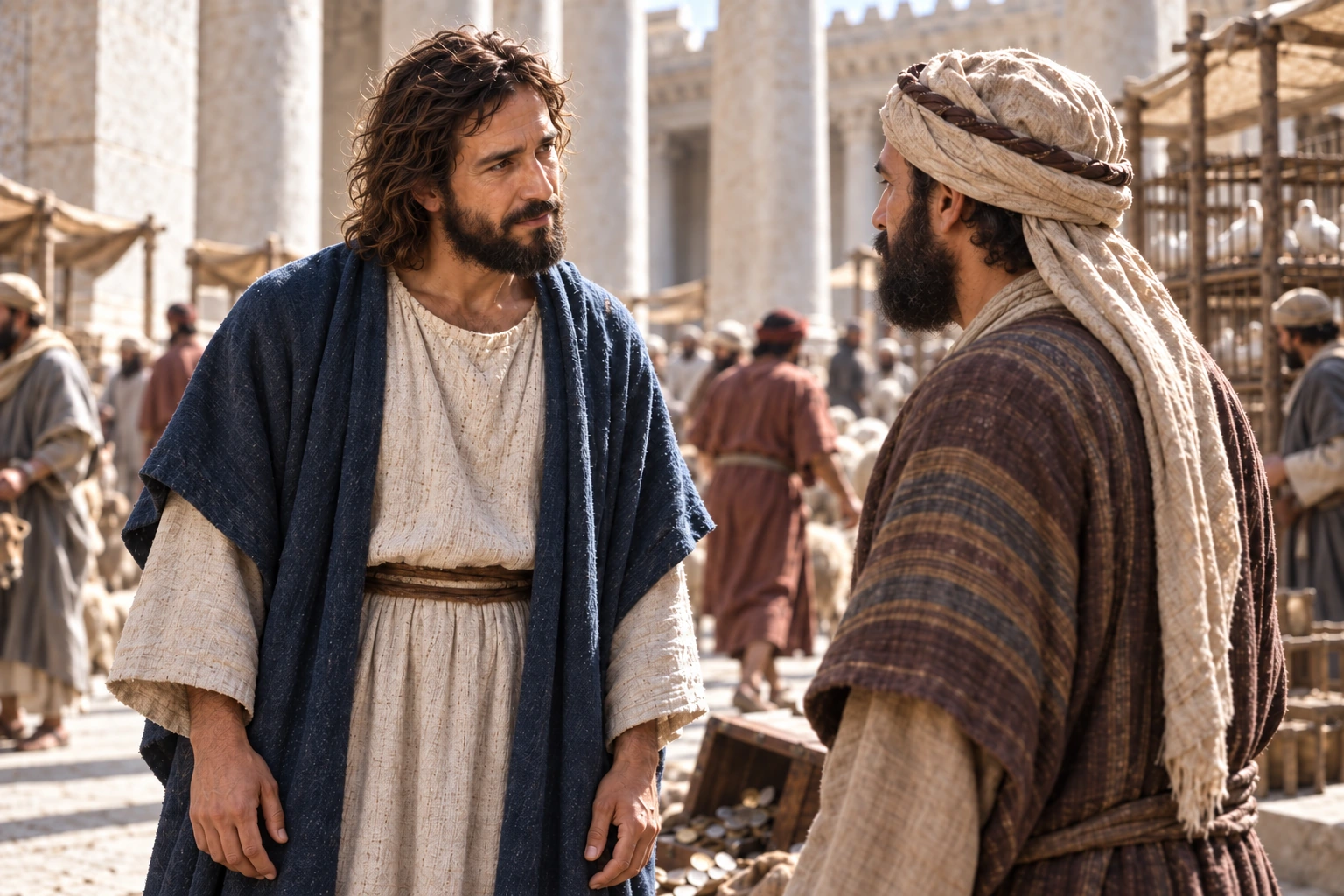
Compassion in His Father’s house
Amid the temple's upheaval, Jesus turns His attention to a person before Him. This imagined companion moment reflects on His compassion beside John's account of the cleansing; John does not record this particular conversation.
Read and discover
A place at the table
Explore and study
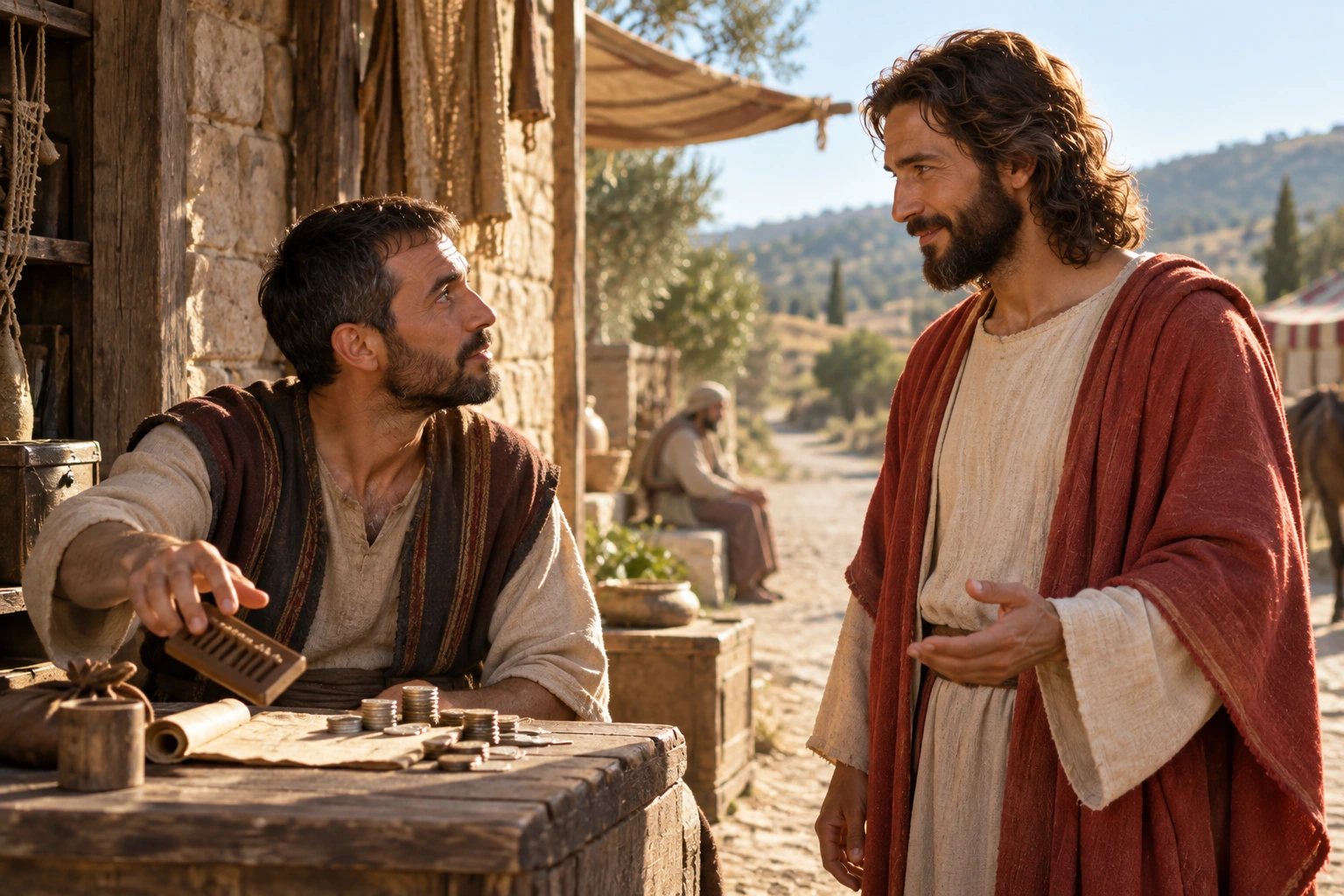
Jesus calls Levi
Jesus meets Levi at his work and calls him to follow. Levi looks toward Him, his attention turning from the counter to the invitation.
Jesus sees Levi at the place where taxes are collected and calls him to follow. Mark 2:13–17 moves from that invitation to a meal with tax collectors, people described as sinners and Jesus’s disciples. When religious teachers question the company He keeps, Jesus answers by speaking of a physician’s work among those who need healing.
Jesus's welcome and His call to repentance belong together. He draws near enough to share a meal and invites Levi into a changed life. The account asks us to look beyond the labels that can make a person easy to dismiss. Jesus sees Levi at his work and calls him toward what he can become as a disciple.
Read and discover
Women along the road
Explore and study
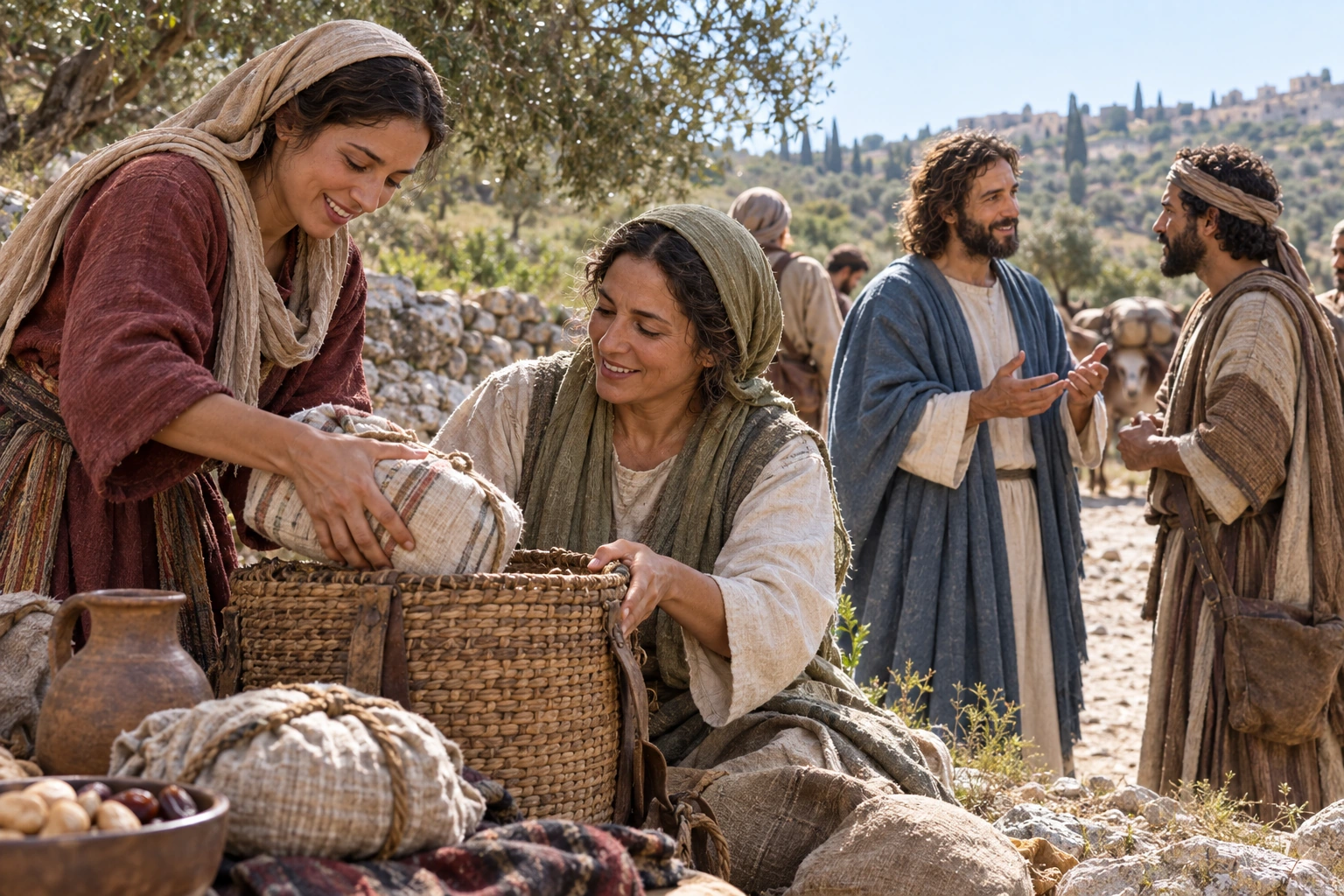
Service along the road
Hands prepare provisions for the road ahead. These unnamed women picture the practical support Luke remembers from women who gave of their resources to sustain Jesus's ministry.
Luke names Mary Magdalene, Joanna and Susanna among the women associated with Jesus’s traveling ministry. In Luke 8:1–3, the Twelve are with Him, and women who have received healing help support the work from their own resources. The brief passage brings people into view whose service can be missed when attention stays only on the most familiar disciples.
Each named woman has her own identity. Mary Magdalene is not identified here as Mary of Bethany or as the unnamed woman in another anointing account. Joanna is identified through her connection to Chuza, and Susanna is named without an extended biography. Their presence gives us enough to recognize that the ministry drew on real commitment and practical support, while leaving room for what the record does not tell us.
Read and discover
The Twelve are sent
Explore and study
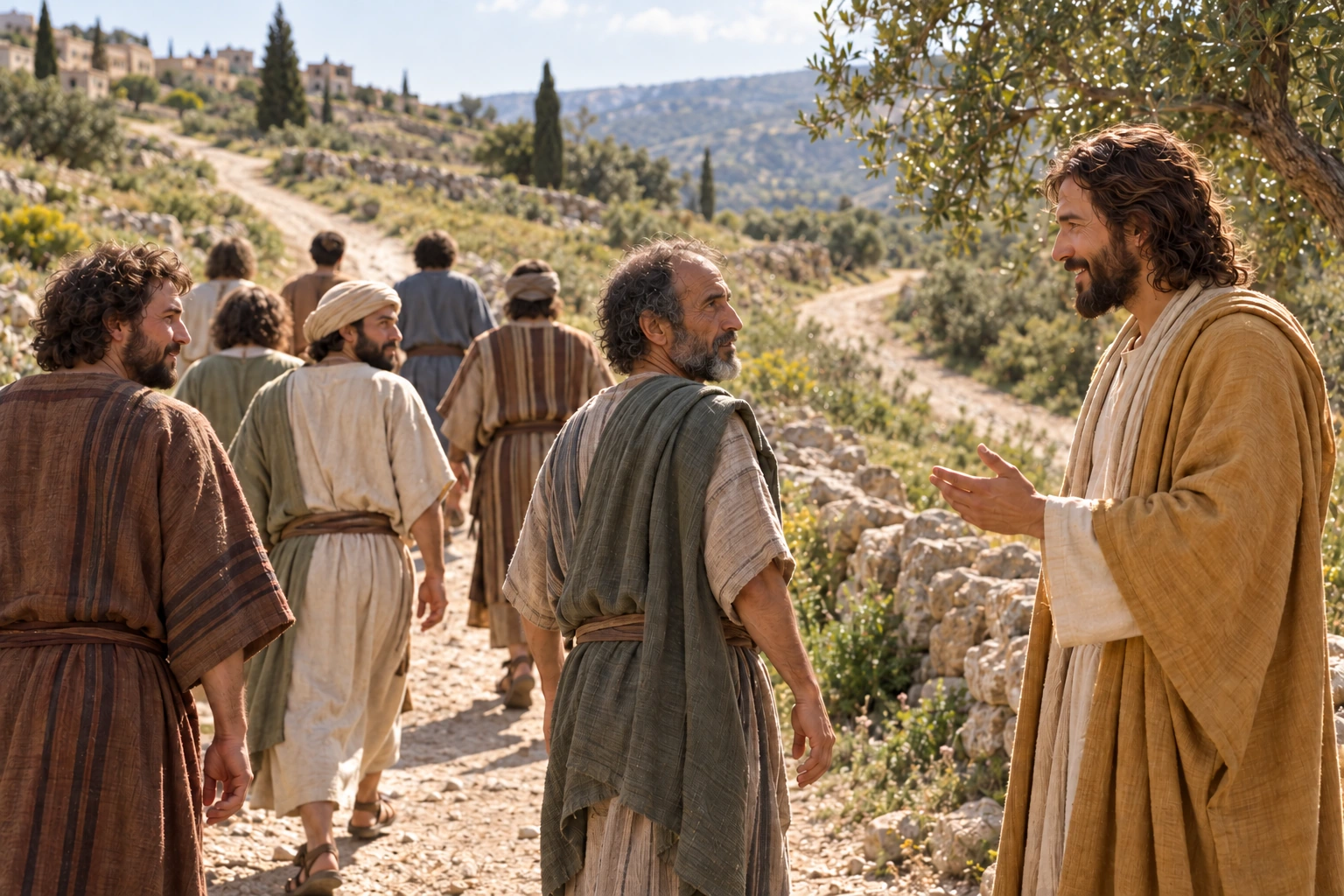
Sent to preach and heal
The disciples begin the journey Jesus has entrusted to them. This partial gathering recalls His charge to the Twelve to proclaim the kingdom and heal.
In Luke 9:1–6, Jesus gives the Twelve authority and sends them to proclaim God's kingdom and heal. He asks them to travel simply and receive the hospitality offered along the way. Their service begins with His trust and with the message and authority He gives them.
The disciples move from watching His ministry to participating in it. The simplicity of their preparation places attention on the commission and the households that will receive them. They leave as people entrusted with a message, not as spectators collecting another memorable experience. We can ask what we have received from the Savior that could now become useful service, and what unnecessary concerns make us slower to respond.
Read and discover
Hear the beloved Son
Explore and study
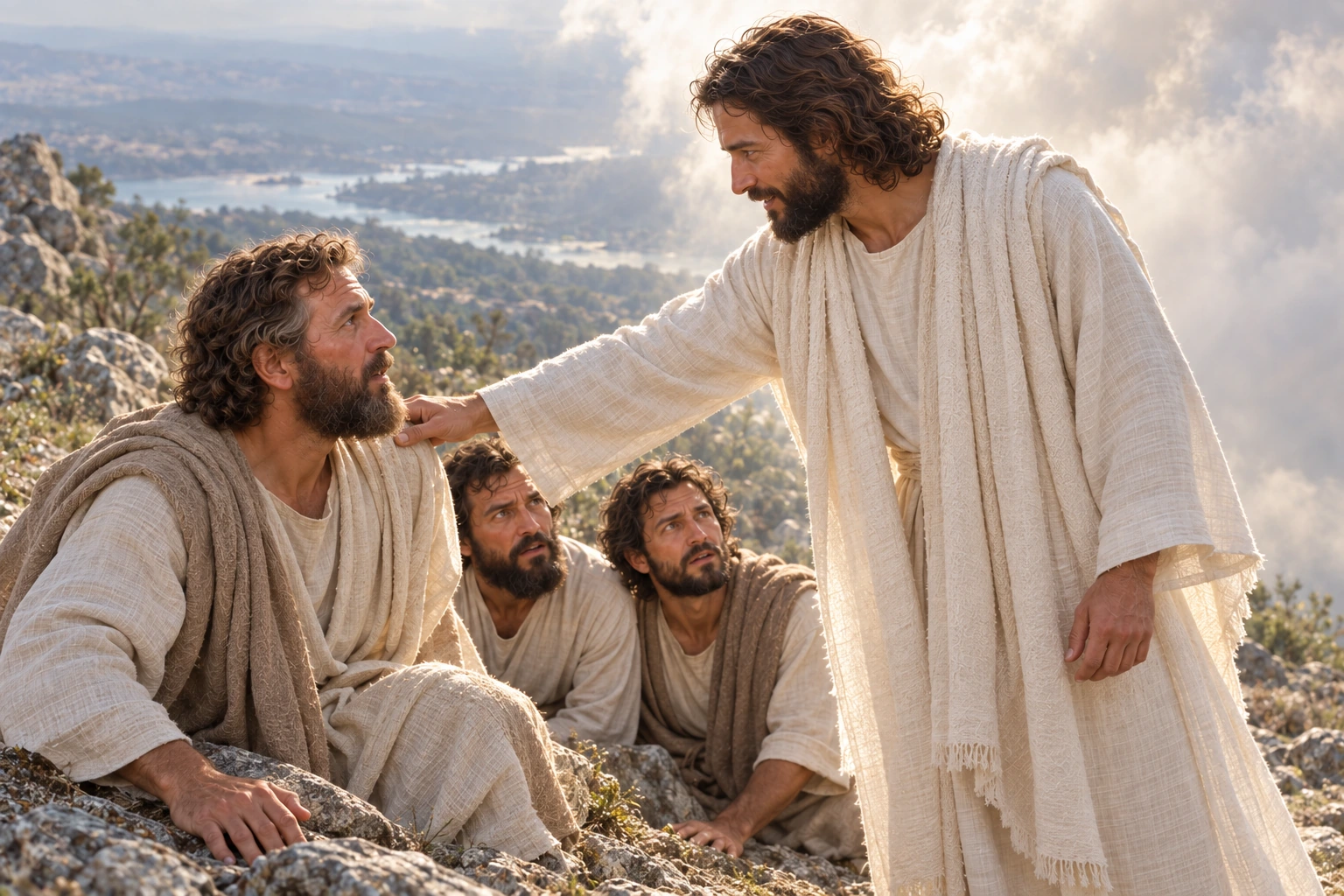
Arise, and be not afraid
Jesus comes to the frightened disciples and touches them. As Peter looks up, the Savior's quiet attention accompanies His invitation to rise without fear.
Jesus takes Peter, James and John up a high mountain. In Matthew 17:1–9, His appearance changes, Moses and Elias appear, and a voice from the bright cloud directs the disciples to hear the beloved Son. The disciples fall in fear; Jesus approaches, touches them and tells them to rise without fear. When they look up, they see Jesus alone.
The scene brings glory and gentleness close together. The One whose face shines also reaches toward frightened followers. This happens during His mortal ministry, before His death and Resurrection, as the disciples are still learning what His mission will require. The Father’s direction to hear the Son gives them a way forward when they cannot yet understand everything they have witnessed. Listening will matter as much on the road ahead as it does on the mountain.
Read and discover
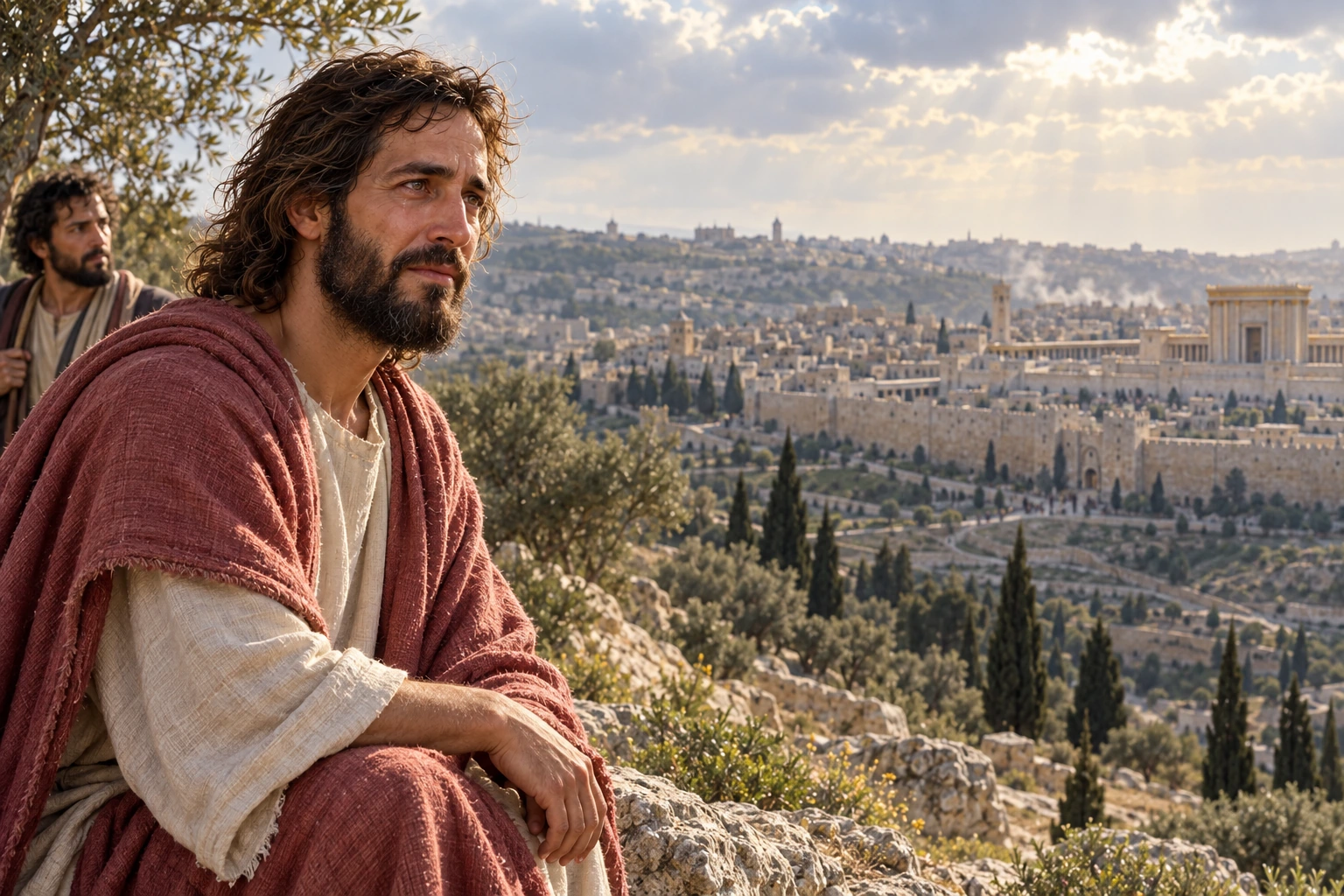
He sees the city and weeps
Explore and study
He weeps over the city
Jesus looks toward Jerusalem and weeps. Luke records His sorrow for a city that has not recognized the things that belong to its peace.
As Jesus comes near Jerusalem, Luke 19:41–44 records Him looking at the city and weeping. He speaks of the peace it has not recognized and the destruction that will come upon it. The scene is distinct from His tears at Lazarus’s tomb: here His sorrow reaches toward a city and its people.
His words have gravity, and His tears keep us from reading them as cold satisfaction at another’s suffering. The account invites a deeper understanding of His love, one that includes both grief and a call to recognize what leads to peace. It must never become a reason for contempt toward Jewish people. Jesus’s own life and this encounter belong within the Jewish world in which He ministered.
Continue with Jesus Christ
Before Bethlehem
Read the divine identity that stands behind these human encounters.
Open study →Miracles and Compassion
Slow down with individual people who received His healing and attention.
Open study →His Teachings and Parables
Study the words and invitations that give direction to discipleship.
Open study →The Redeemer and Risen Lord
Follow the journey toward His sacrifice and Resurrection.
Open study →