Read and discover
Peter asks about forgiveness
Explore and study
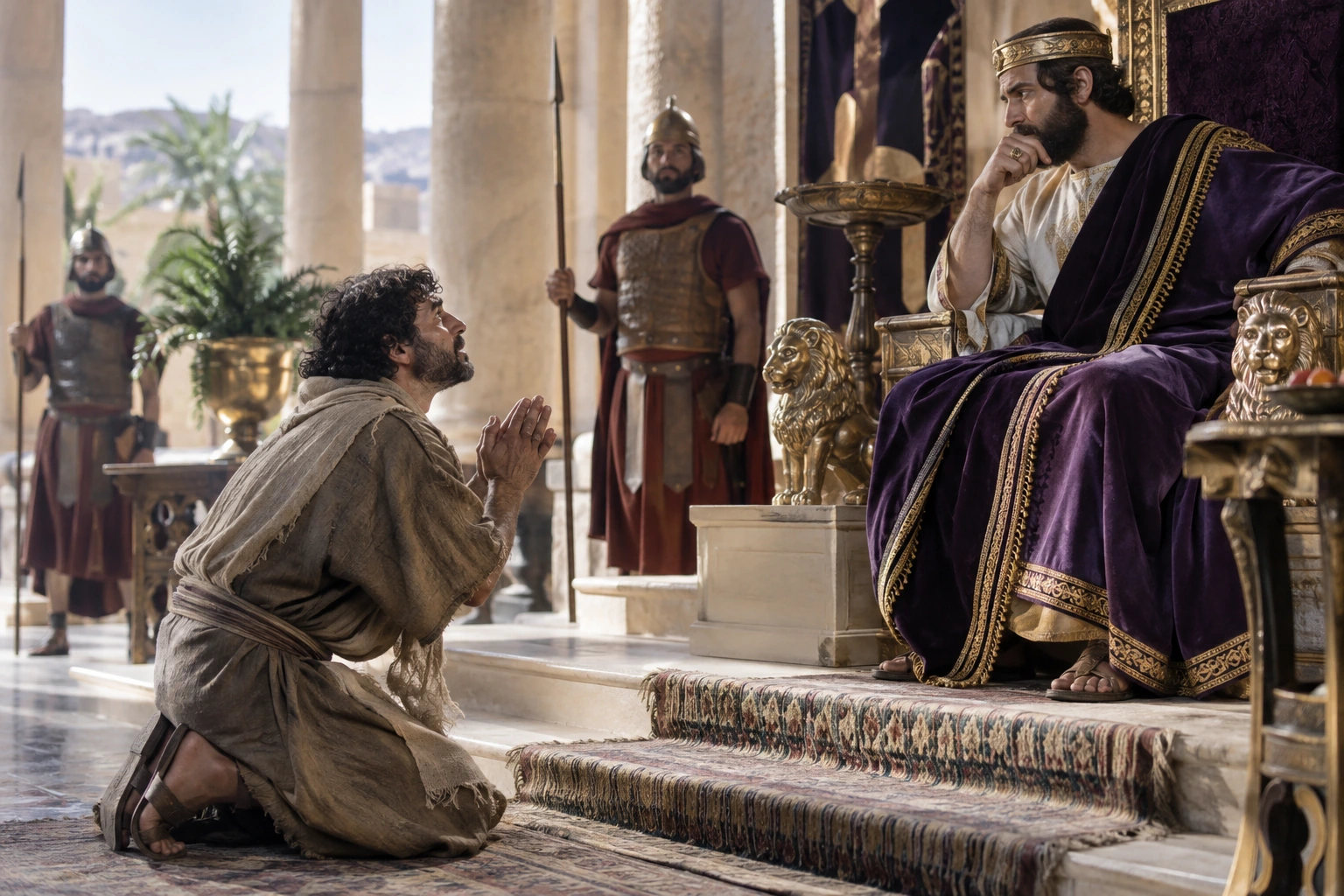
A plea for patience
The servant kneels before the king with a debt he cannot pay. In Jesus' story he asks for patience and promises repayment, setting the scene for an extraordinary act of mercy. The question will soon become whether the mercy he receives changes the way he treats someone who owes him far less.
Peter asks Jesus how often he must forgive a brother who sins against him. Jesus answers with a story about a king settling accounts. One servant owes an immense sum and cannot pay. Faced with consequences that reach his whole household, he begs for patience. Matthew 18:21-35
Read and discover
A debt released and mercy refused
Explore and study
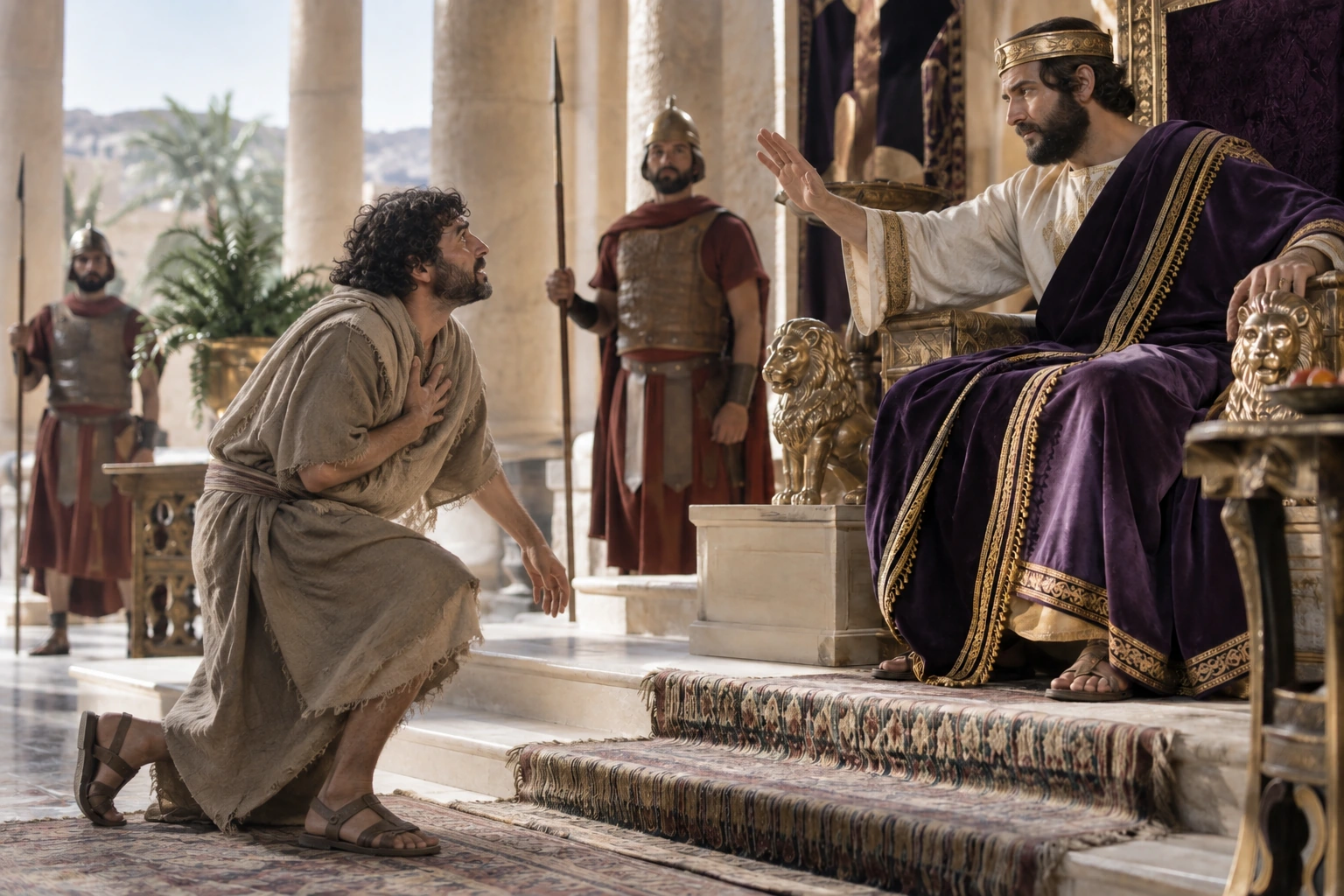
Mercy beyond the plea
The king's response exceeds the servant's request for more time. Moved with compassion, he releases him and forgives the debt. Jesus gives this mercy a central place before testing whether the servant will extend mercy to another.
The king does more than extend the deadline: moved with compassion, he forgives the debt. The servant then encounters a fellow servant who owes him far less. Despite hearing a plea resembling his own, he seizes the man and has him imprisoned. The contrast makes his refusal of mercy unmistakable.
Other servants are distressed and report what happened. The king's question brings the central issue into the open: should the man who received compassion not also have shown it? Jesus concludes by directing attention to forgiveness from the heart. The forgiven debt is meant to change the way the servant treats others.
Explore and study
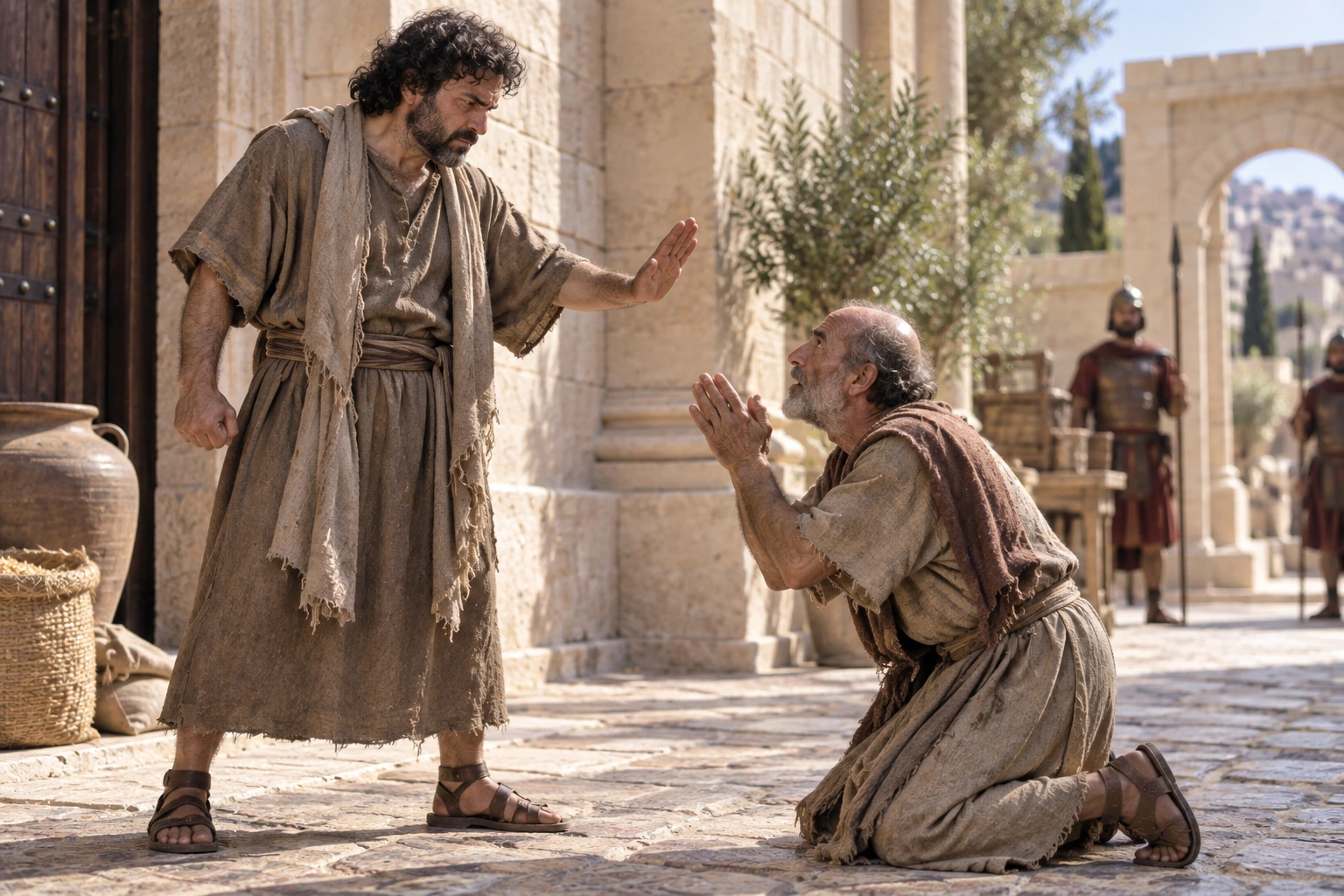
A plea the servant refuses
The plea for patience now comes from someone else. The servant who received mercy confronts a fellow servant owing far less and refuses the appeal. Jesus makes the echo of the earlier plea difficult to miss, exposing the gap between receiving forgiveness and extending it.
Explore and study
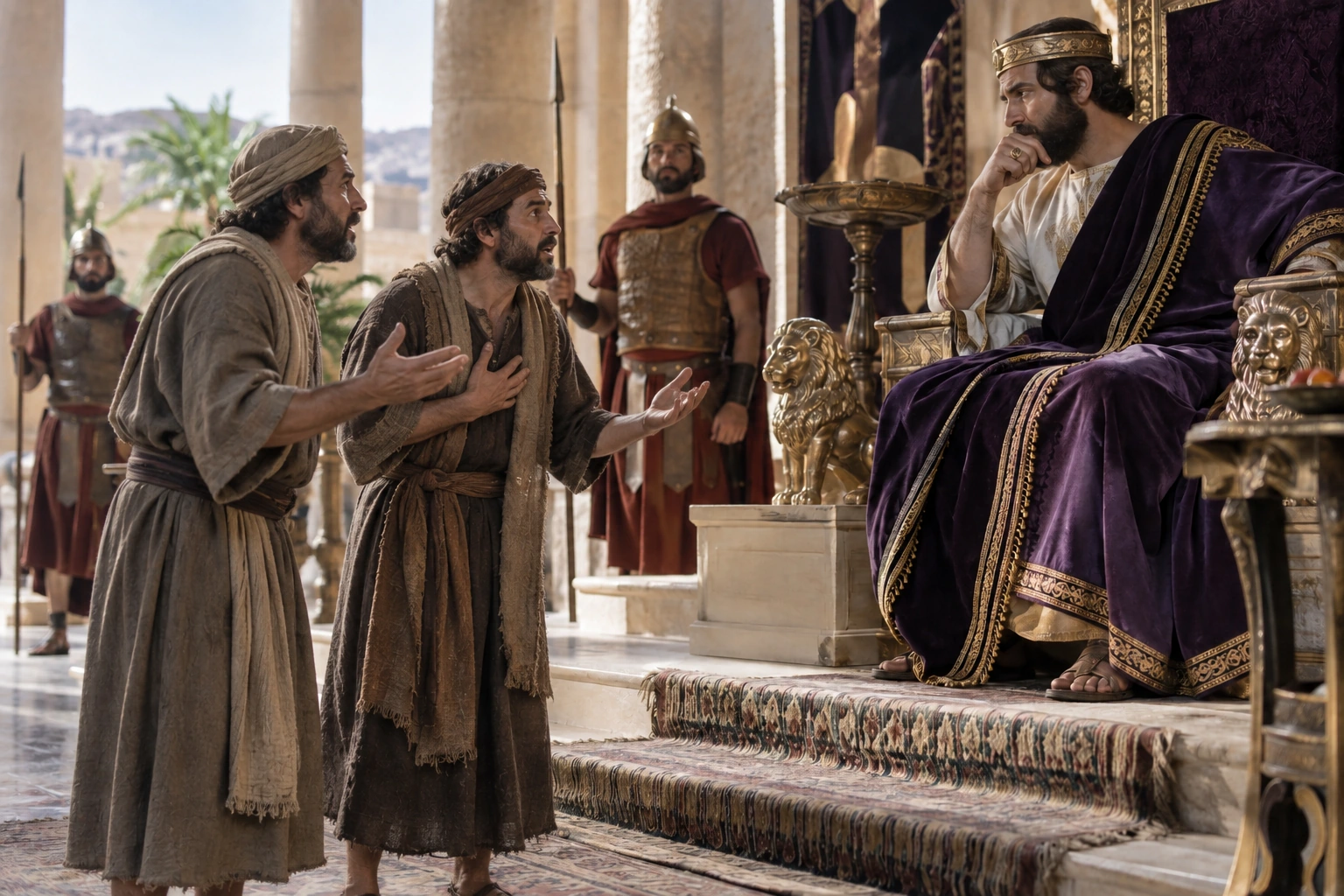
The wrong is reported
Other servants are deeply troubled by what has happened and tell their lord. Their response brings the unmerciful treatment before the one who had granted forgiveness. The story does not treat cruelty toward another person as a private matter without consequence.
Read and discover
Receiving mercy changes the question
Explore and study
The king confronts the servant
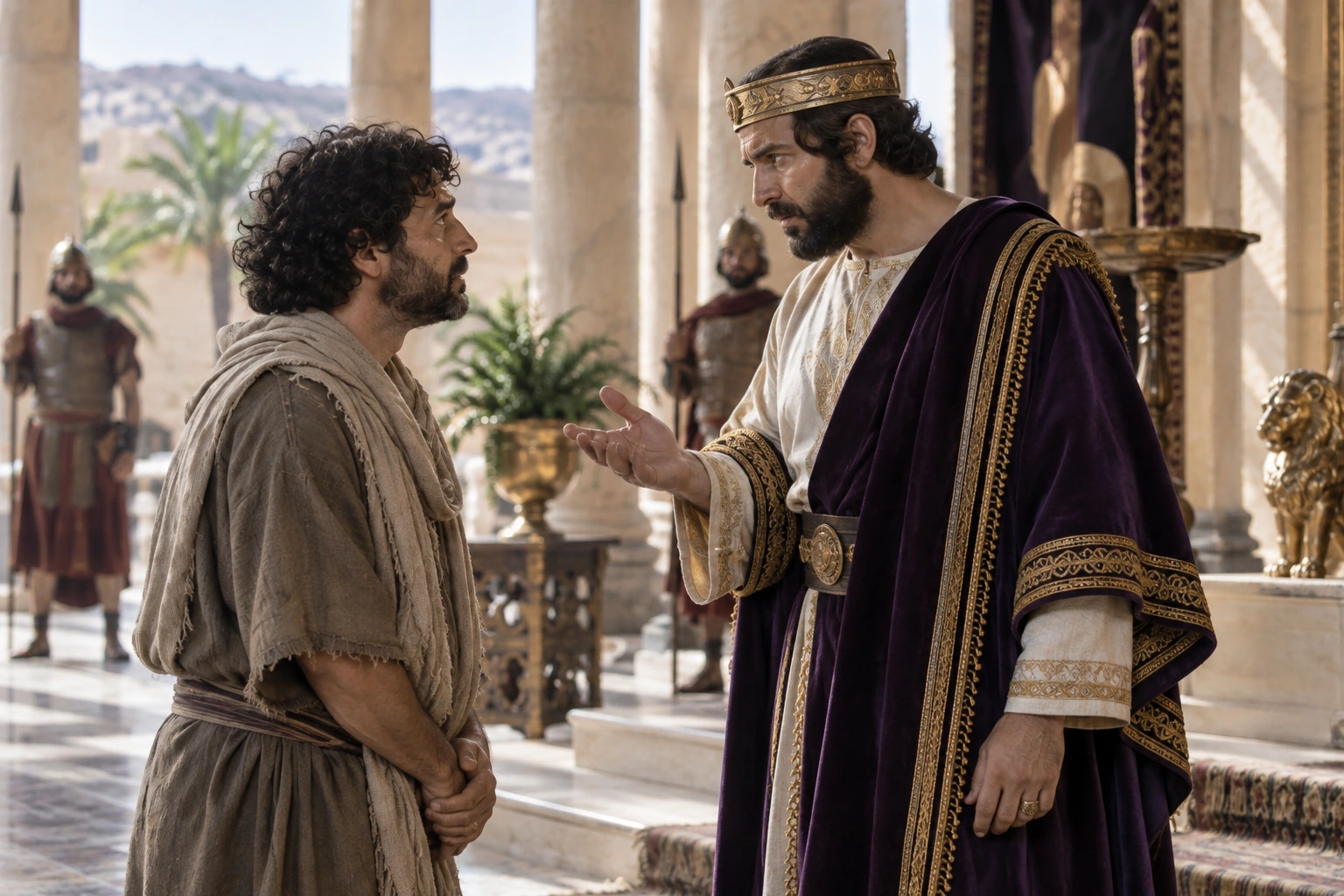
The servant stands before the king again. His master recalls the mercy he received and asks why he did not show compassion to his fellow servant. The confrontation brings the story's central failure into view: mercy received had not become mercy given.
The parable does not make cruelty harmless or demand that a wounded person restore unsafe access. Its call is to relinquish a merciless posture while taking wrongdoing seriously. Reflection can begin with the difference between necessary boundaries and the desire to keep another person permanently under your judgment.
Forgiveness may involve difficult and repeated work. A reader carrying deep injury need not pretend that the feeling has already changed. The account invites an honest turning toward the mercy of God and a willingness to consider what receiving that mercy might make possible in one's own heart.
Continue with Jesus Christ
The Two Debtors
A brief story changes the conversation at Simon's table. Forgiveness invites him to look again at a woman whose love he has overlooked.
Open study →The Prodigal Son and His Brother
One son comes home from far away; the other stands outside the celebration. The father goes toward both, and the story leaves an invitation before us.
Open study →Mercy, Repentance, and the Joy of Returning
Continue through the connected teachings in this collection and compare their distinct settings.
Open study →