Read and discover
They learn to hear the voice
A multitude has gathered around the temple in Bountiful, speaking about the changes in the land and about Jesus Christ. In 3 Nephi 11:1–7, they hear a voice but do not understand it at first. On the third hearing they open their ears and look toward heaven. The Father introduces His beloved Son and directs them to hear Him.
The introduction leads into the personal witness recorded in 3 Nephi 11:8–17, when the risen Savior descends and invites the people to come to Him. Reading the two passages together preserves the movement from hearing to recognition. The Book of Mormon presents this as another witness of the same Jesus whose Resurrection the New Testament records, while giving these people their own encounter, place and testimony.
Read and discover
He gives them time to understand
After teaching, Jesus tells the people that they cannot yet understand all He has been commanded to say. In 3 Nephi 17:1–6, He invites them to go home, ponder, pray to the Father in His name and prepare for His return. Then He sees their tears and their desire for Him to remain, and responds with compassion.
Explore and study
Words carried home
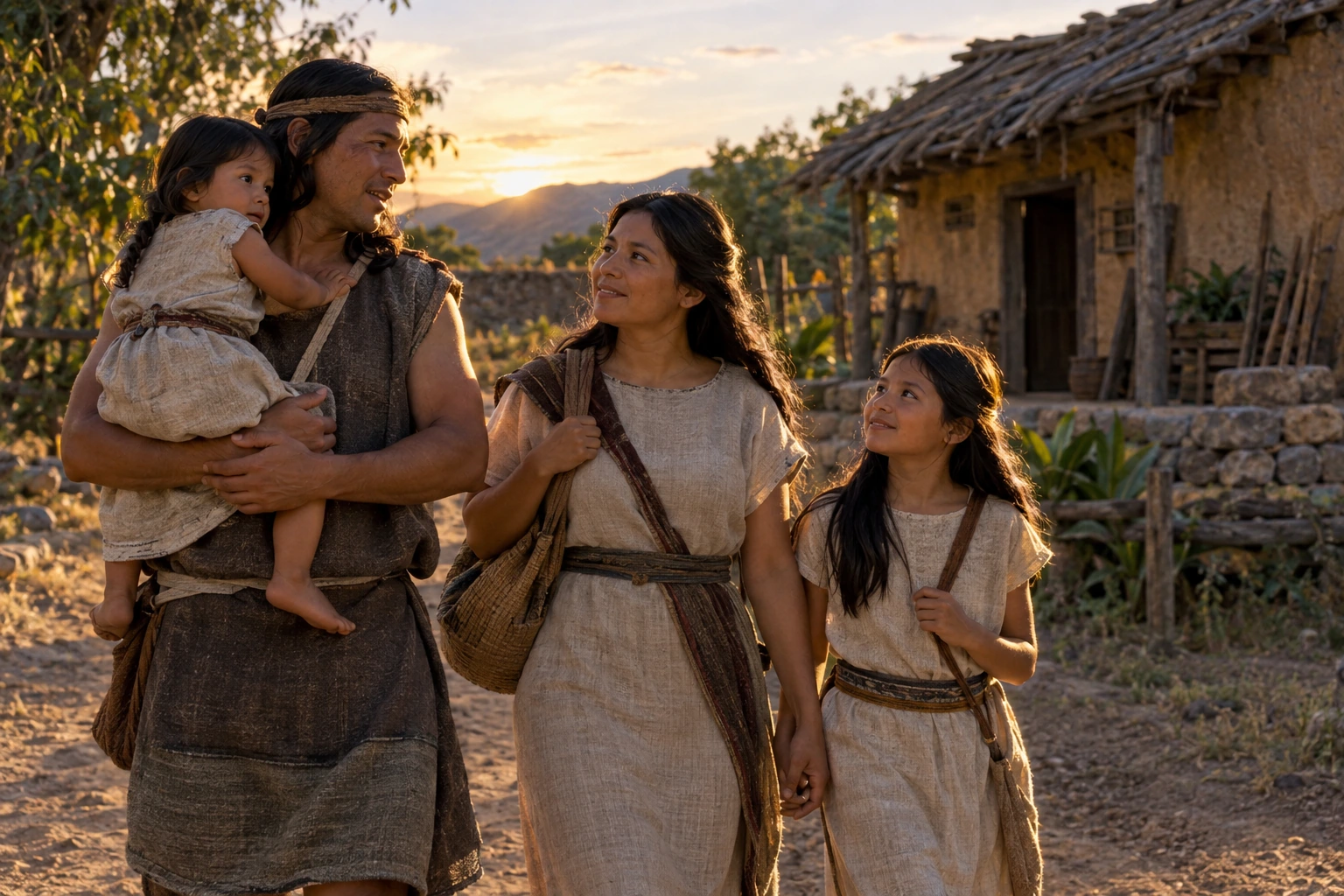
The people make their way home after Jesus departs. His invitation goes with them: ponder what they have heard, pray to the Father and prepare for His return.
The invitation to ponder is not followed by an immediate departure. The healing and blessings in the rest of the chapter grow from His attention to the people before Him. This is a generous model of learning: a listener may need time, prayer and another meeting with a passage. We do not have to confuse the amount we have read with the depth of what we have understood.
The actual return home comes after His later departure. Third Nephi 19:1 records the people dispersing to their households. The invitation to ponder can now be carried into the life of a home.
Read and discover
Make room for those who come
Explore and study
Room for the gathered people
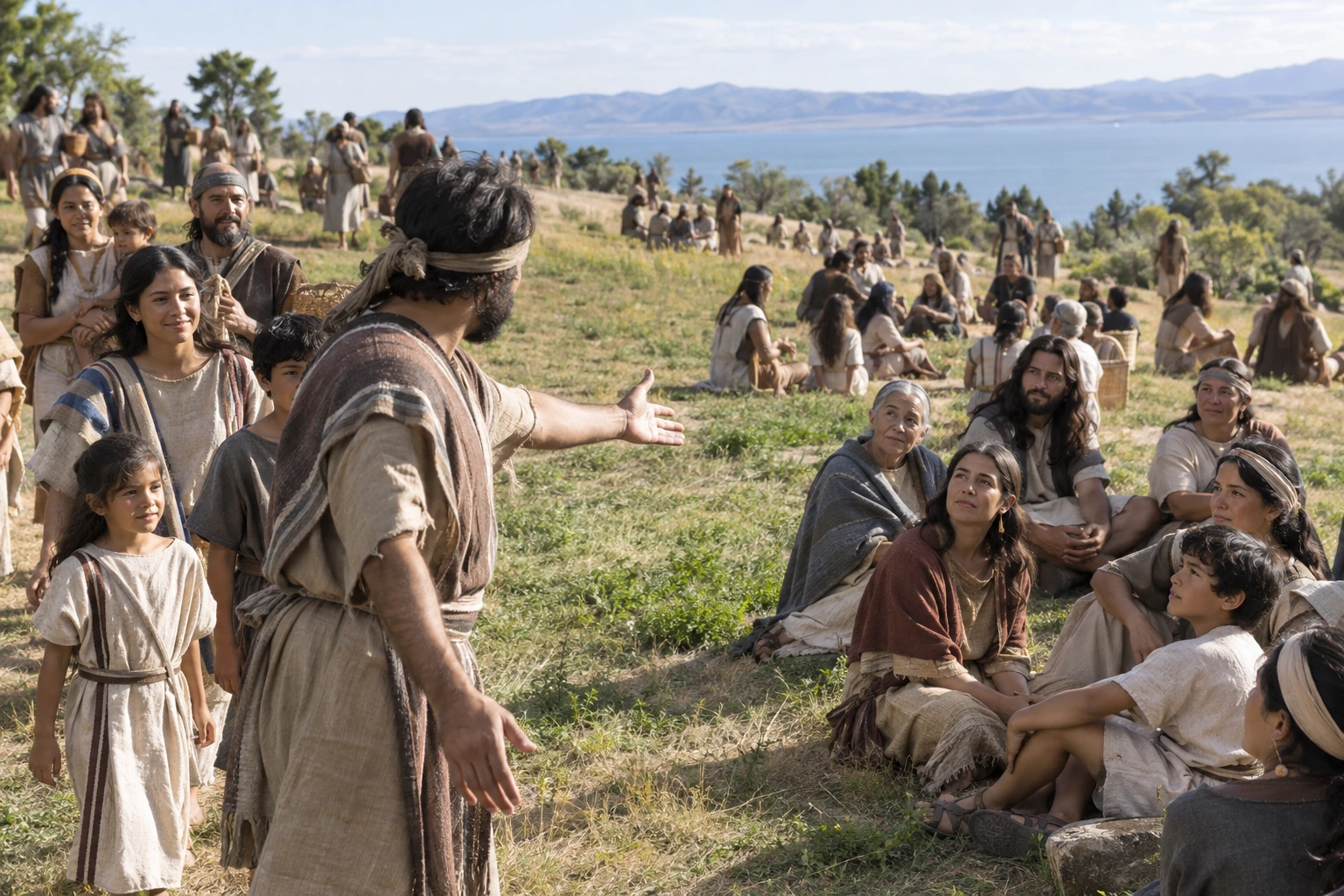
People find their places as the gathering forms twelve groups. The disciples prepare to teach those who have come to hear.
Jesus instructs the people to meet together often and allow others to come among them. In 3 Nephi 18:22–25, He tells them to pray for those who join them and to hold up the light of His own example. His invitation to the multitude becomes a pattern for how they are to receive others.
The passage connects worship with welcome. A community that remembers Christ is asked to consider the experience of the person entering it. Its light is not simply a claim to possess truth; it is the Savior’s example made visible in its conduct. A present-day application might be as ordinary as learning a visitor’s name, helping someone follow the study or making space for a person who does not yet feel at home.
When the people gather the next morning, the disciples organize them into twelve groups and teach the words Jesus has given them. Third Nephi 19:4–8 shows welcome taking practical form through attention to those who need to hear.
Read and discover
He entrusts a ministry to the disciples
Explore and study
Overshadowed as He departs
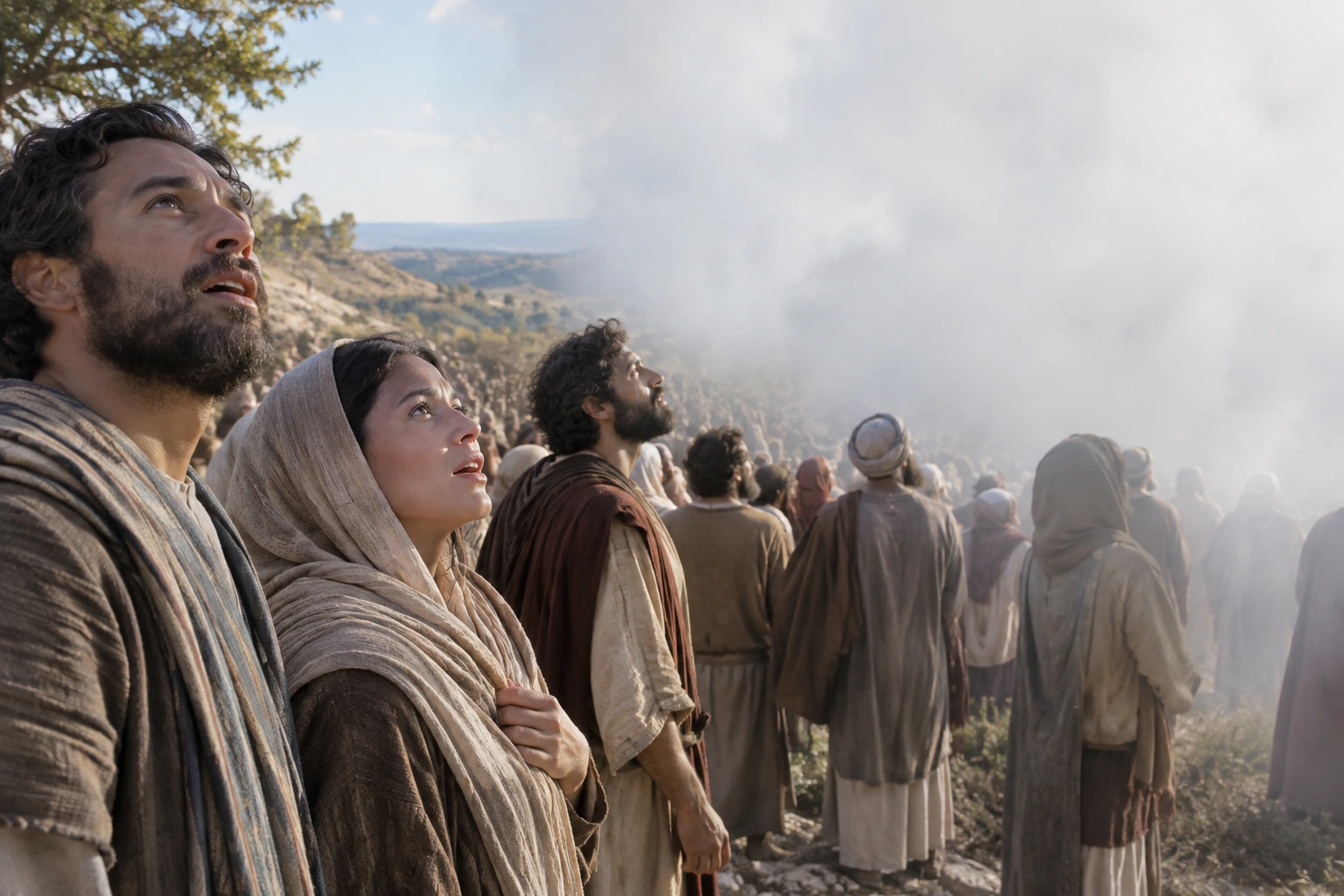
A cloud hides Jesus from the multitude as He departs. The disciples bear witness that He ascends into heaven.
At the close of this part of the visit, Jesus touches the chosen disciples one by one and speaks to them. 3 Nephi 18:36–39 distinguishes what the multitude witnesses from what the disciples report: the people do not hear the words, while the disciples bear record of receiving power to give the Holy Ghost. A cloud then overshadows the people as He departs.
The distinction between witnesses is useful. The record does not ask us to pretend that every person saw and heard everything. It identifies how testimony reaches the community and shows that Christ prepares others to continue ministering. His departure therefore belongs to a story of entrusted service as well as an extraordinary appearance.
Read and discover
The people gather again
Explore and study
The news travels through the night
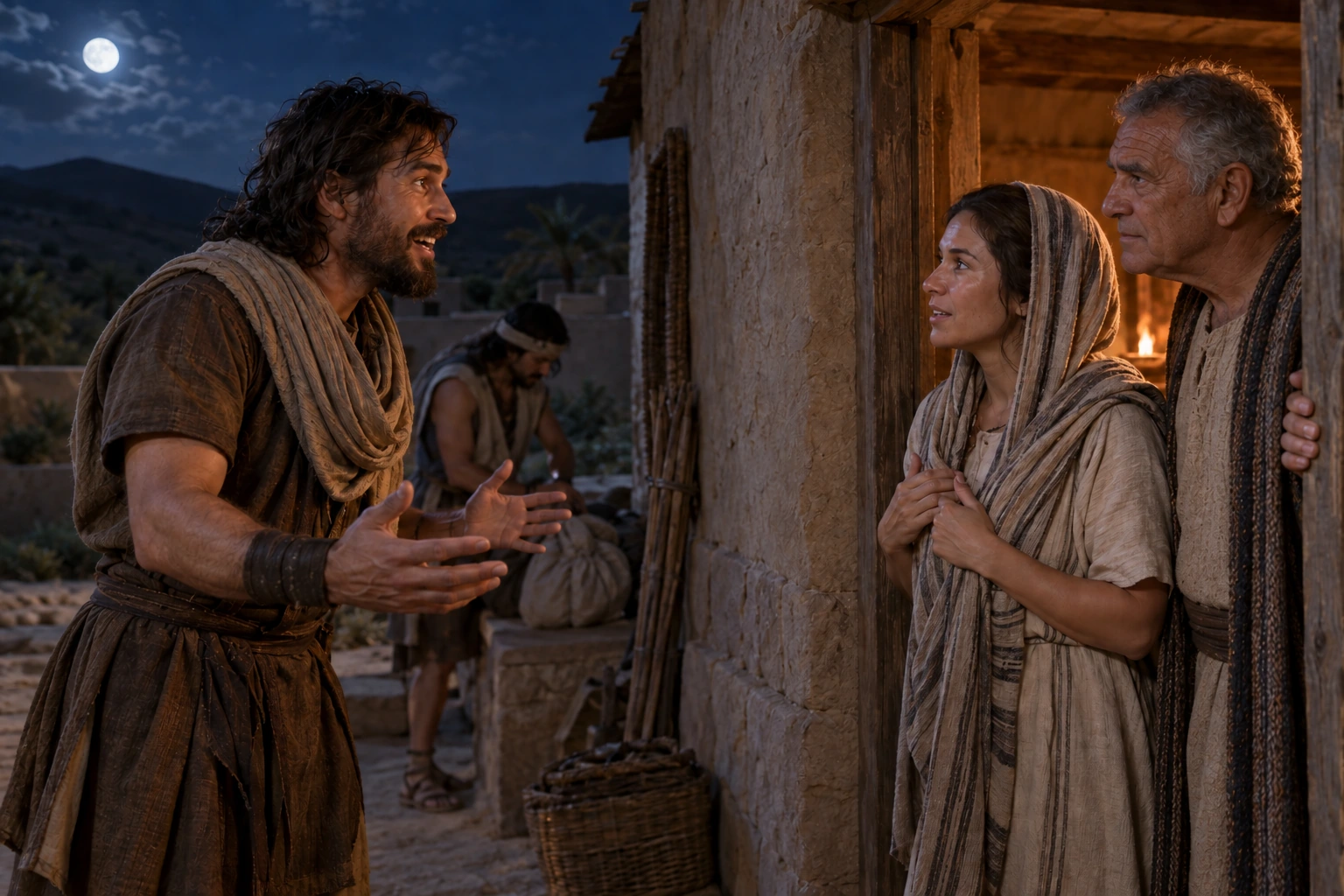
News of the Savior's visit reaches a household in the night. Attentive faces receive the message as others prepare to gather the next day.
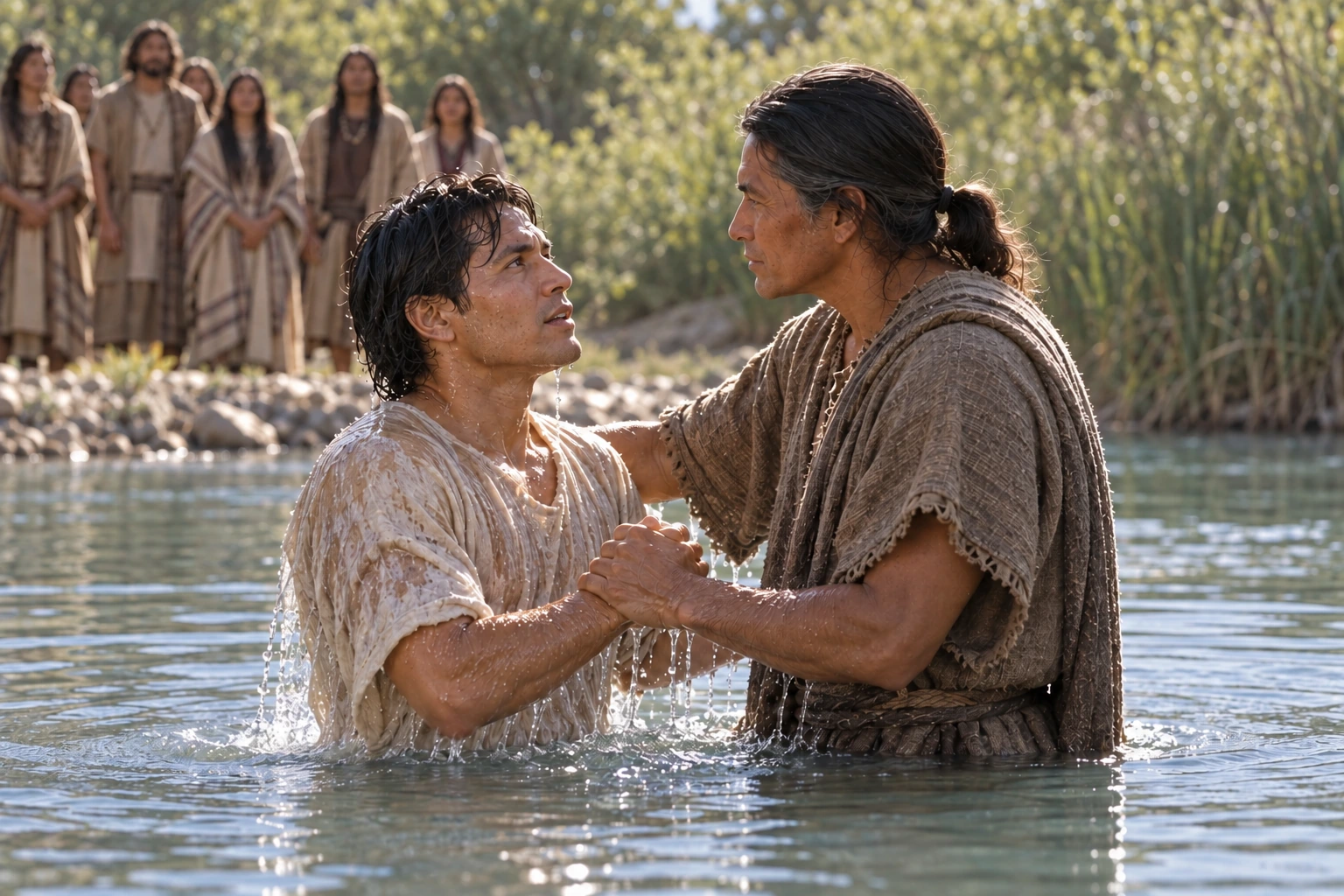
News of the Savior’s visit spreads before dark and through the night. In 3 Nephi 19:1–14, many labor to reach the place where He is expected the next day. The disciples arrange the multitude into twelve groups, repeat what Jesus taught and pray with them. Nephi is baptized and then baptizes the others Jesus has chosen.
These preparations receive more space in the record than a simple statement that the people were excited. They travel, gather, listen, pray and receive ordinances. The disciples’ care to teach the same words underscores whose ministry this is. Their example can prompt us to consider how preparation changes the way we receive worship or scripture, without assuming every gathering will reproduce their extraordinary signs.
Explore and study
Into the water
Water runs from the young disciple's robe as Nephi steadies him. After receiving baptism himself, Nephi baptizes those Jesus has chosen.
Read and discover
Children of the covenant
Explore and study
Encircled as if by fire
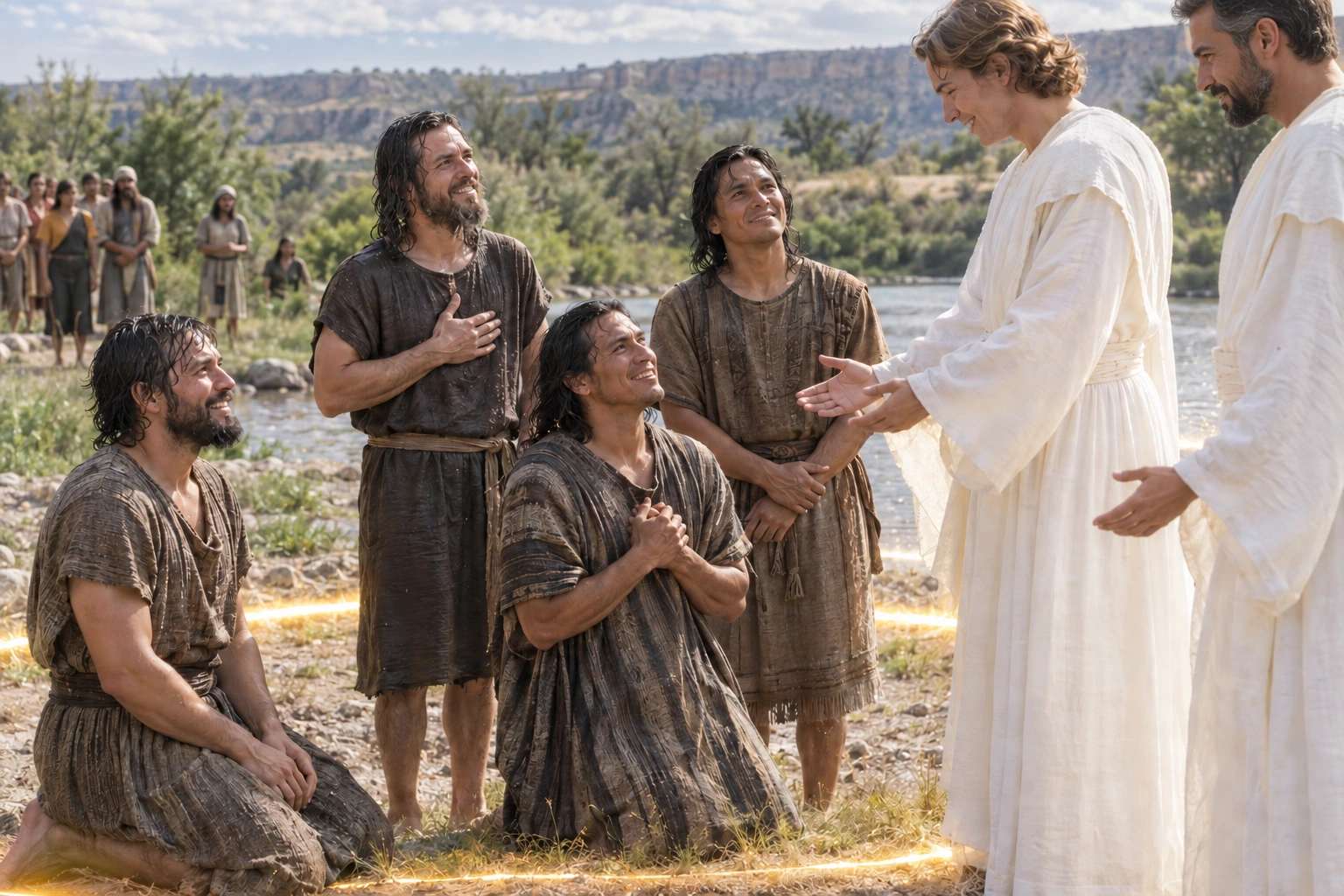
Still in their wet clothing, the disciples look up to receive the angels' ministry. The light around them recalls the heavenly fire witnessed by the multitude after their baptism.
Jesus connects the people before Him with the prophets, the house of Israel and the covenant made with Abraham. In 3 Nephi 20:25–31, He describes blessing in terms of turning people from iniquity and speaks of the covenant reaching beyond the immediate gathering. Their encounter with Him belongs within a purpose extending across peoples and generations.
This covenant language can be unfamiliar, but its reach is important. It joins the Old Testament promise to Abraham with the risen Savior’s ministry and the invitation to live differently. The passage is not a license for pride over ancestry or contempt for another people. It invites readers to see divine blessing as a responsibility and a gift that is intended to reach outward.
Earlier in the visit’s second day, 3Nephi19:13–14 records the disciples receiving the Holy Ghost after baptism. The covenant teaching is heard among people who have already begun responding through prayer and ordinances.
Read and discover
He opens the scriptures to future generations
Jesus gives the people words associated with Malachi and then explains them. Read 3 Nephi 24:1–6 and 3 Nephi 25:1–6 alongside the explanation in 3 Nephi 26:1–5. He says these scriptures had not been in their possession and were given for the benefit of future generations. The act of teaching includes preserving words that later readers will need.
The sequence helps explain why this record is concerned with both immediate listeners and people who come after them. The Savior’s teaching reaches from creation toward judgment, placing particular prophetic words within a larger purpose. We can follow that example by reading the supplied passages in context instead of reducing them to isolated phrases about the future.
Read and discover
Children have something to give
In 3 Nephi 26:14–16, Jesus ministers to the children and enables them to speak marvelous things to their parents. The record then describes another gathering on the following day, after His departure, when even infants speak. It explicitly says that the marvelous words were not to be written. The account gives us the event while withholding its content.
Explore and study
A man restored to life
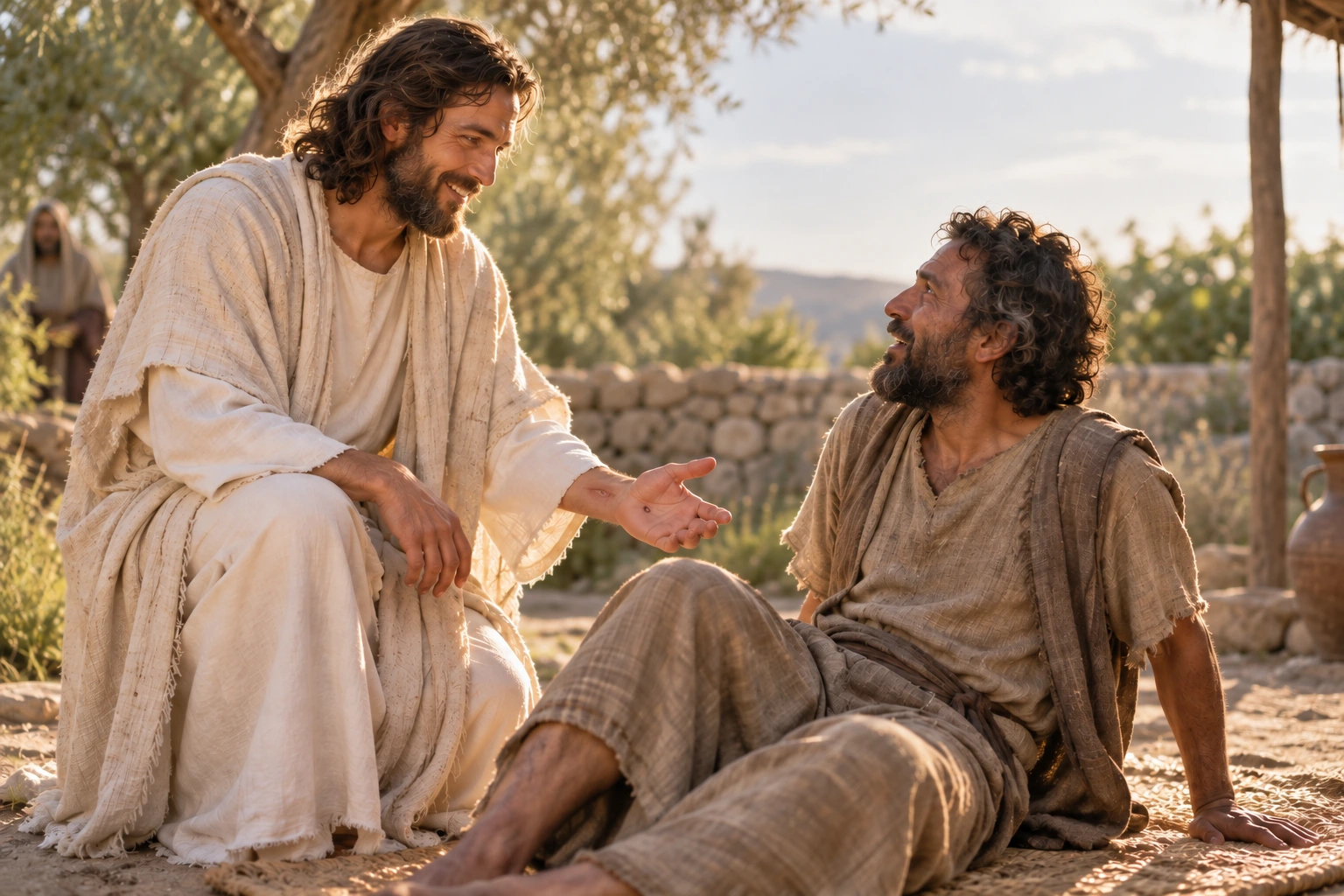
A man who had died stands alive before the Savior. Third Nephi records this miracle briefly, leaving us to consider the life restored to him.
This scene differs from the blessing of the children in 3 Nephi 17. Keeping the moments distinct helps us appreciate the range of their place in His ministry: children receive His care, and they also have something the adults are asked to hear. Our reflection can begin with attentive listening to children today, without inventing the unrecorded teachings or making claims about what a particular child must know.
The brief summary in 3Nephi26:15 also records a man being raised from the dead. No extended account is supplied, but the detail adds another witness of the Savior’s power within these days of ministry.
Read and discover
The life He asks His disciples to follow
Explore and study
Care becomes a way of life
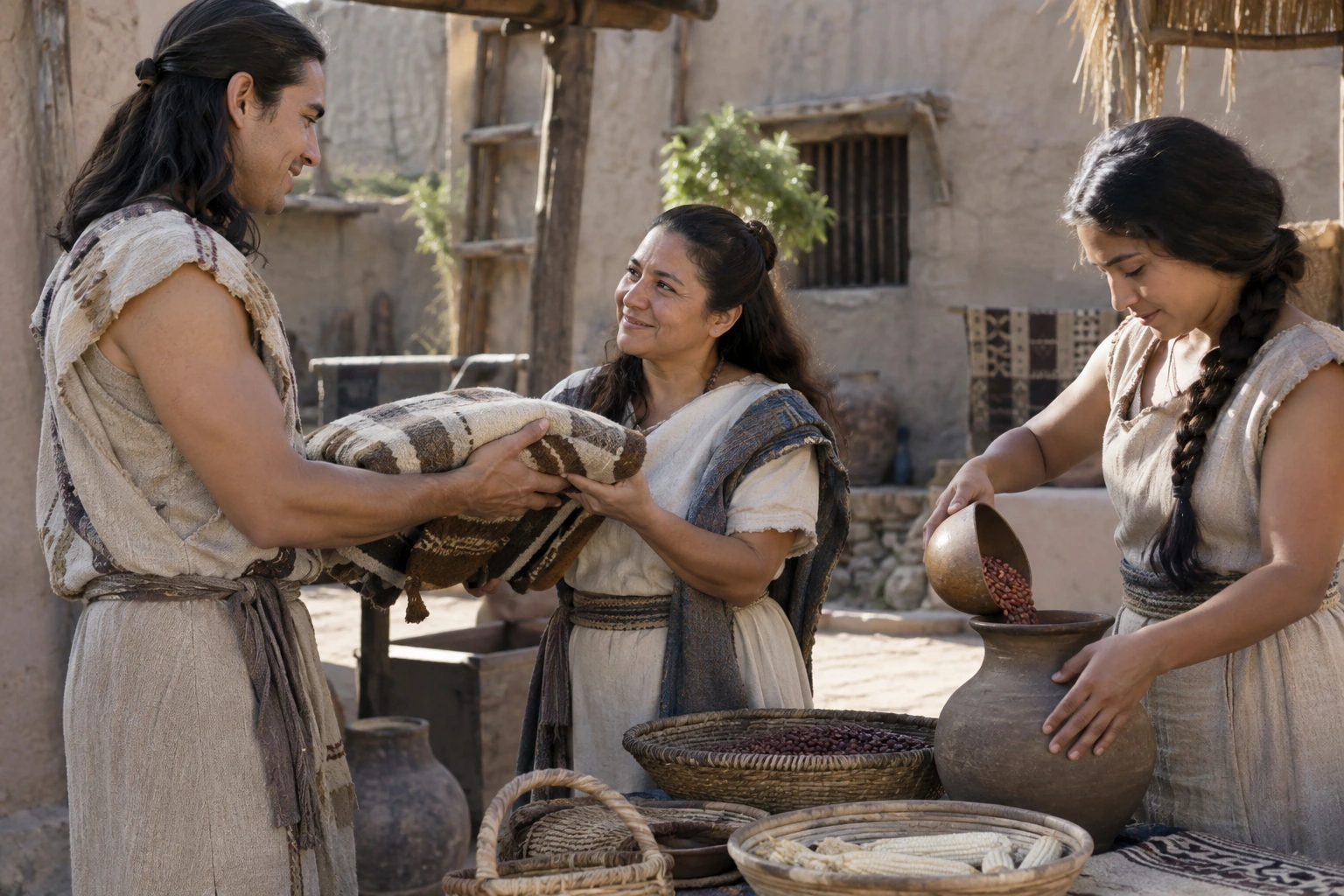
The people minister to one another and hold things in common. Shared necessities give an imagined everyday form to the mutual care recorded after the Savior's ministry.
Jesus explains His gospel through His coming to do the Father’s will, His being lifted upon the cross and His drawing people to judgment. In 3 Nephi 27:13–21, repentance, baptism, faithfulness and sanctification belong within the response to His redeeming work. The teaching begins with what He has done and then calls people into a life shaped by that gift.
In 3 Nephi 27:27, He directs the disciples to His own example as the pattern for what they should become. That question reaches beyond outward resemblance or occasional acts of kindness. It asks how His honesty, mercy, obedience and willing service can shape a person over time. The record’s broad invitation is therefore deeply personal: learn who He is, receive His gospel and let His example work its way into the choices before you.
Third Nephi 26:19–20 describes a community changed in its ordinary relationships. The people minister to one another, share what they have and deal justly. His gospel becomes visible in their common life.
Continue with Jesus Christ
Explore the Book of Mormon
Continue into the existing illustrated stories and their larger record.
Open study →Read Both Witnesses Together
Compare related passages without erasing the differences between their settings.
Open study →The New Testament Resurrection Witness
Return to the risen Lord’s encounters recorded by the Gospel writers.
Open study →His Living Ministry Today
Connect the Savior’s example with Restoration witness and daily discipleship.
Open study →