Six paths through His teaching
Explore the parables of Jesus

Mercy, Repentance, and the Joy of Returning
Jesus teaches mercy through searches, debts, patient care, and the welcome of a father. These studies invite us to receive His compassion, respond honestly, and make room for another person's return.
Open study →
Loving Our Neighbor
The neighbor in Jesus' teaching is someone whose need calls for attention. Explore the difference between noticing, welcoming, and following through with care.
Open study →
Hearing and Living His Word
Jesus' teaching asks for more than recognition. Follow the movement from listening and understanding to patience, discernment, and action.
Open study →
The Kingdom of God
Jesus teaches the kingdom through growth, discovery, invitation, and judgment. Each image contributes something particular; none needs to carry the whole meaning by itself.
Open study →
Faithful Stewardship and the Cost of Discipleship
Jesus asks how people use what has been entrusted to them. These studies explore responsibility, generosity, honest preparation, and the freedom to serve without comparison.
Open study →
Prayer, Readiness, and His Return
Jesus joins prayer with humility, readiness with service, and hope with honest attention to uncertainty. These studies invite steady faithfulness without pretending to know the time or outcome.
Open study →Jesus teaches through stories and comparisons drawn from ordinary life. These six paths help you explore their settings, notice their questions, and consider how to receive His word. Read each teaching in its Gospel context; the themes are study aids.
The library includes 47 main parables and judgment pictures, together with 16 related comparisons and allegories. Counts vary according to how short comparisons are grouped. These labels describe this study library, not an official fixed count.
Read and discover
The life He calls blessed
Matthew introduces the Sermon on the Mount with Jesus seated and His disciples coming to Him. In Matthew 5:1–12, He speaks of people who are poor in spirit, who mourn, who are meek, merciful or pure in heart, and who hunger for righteousness. His words place blessing beside circumstances and qualities that are not always honored by the world.
These sayings deserve more than a quick list of desirable traits. Each joins a human condition or response to a promise within God’s kingdom. Mourning is not called pleasant, and persecution is not something to seek for its own sake. Jesus addresses lives that may be difficult while teaching what His kingdom values. Choose one saying to read slowly, noticing both the person described and the promise attached to it.
Immediately after the Beatitudes, Matthew 5:13–16 turns to salt and light. These ordinary images ask what a disciple’s life contributes to the people around it. The city on a hill in verse 14 makes that visibility communal as well as personal.

Explore and study
A city that cannot be hidden
A hillside town remains visible above the valley. The imagined setting illustrates Jesus' comparison of His disciples to a city on a hill, within His teaching about good works that glorify the Father.
Read and discover
Pray to your Father
In Matthew 6:5–15, Jesus speaks about the purpose of prayer before giving a model for it. He contrasts prayer aimed at public recognition with prayer addressed sincerely to the Father. The pattern He gives includes reverence, the Father’s will, daily need, forgiveness and help in the face of temptation.
The order widens prayer beyond a list of requests. We bring real needs, but also learn to desire God’s purposes and to consider our relationships with others. The warning against empty repetition is not a ban on returning to the same honest concern. It calls us to speak as people seeking God, rather than treating words as a performance or a mechanism that obliges Him to respond on our timetable.
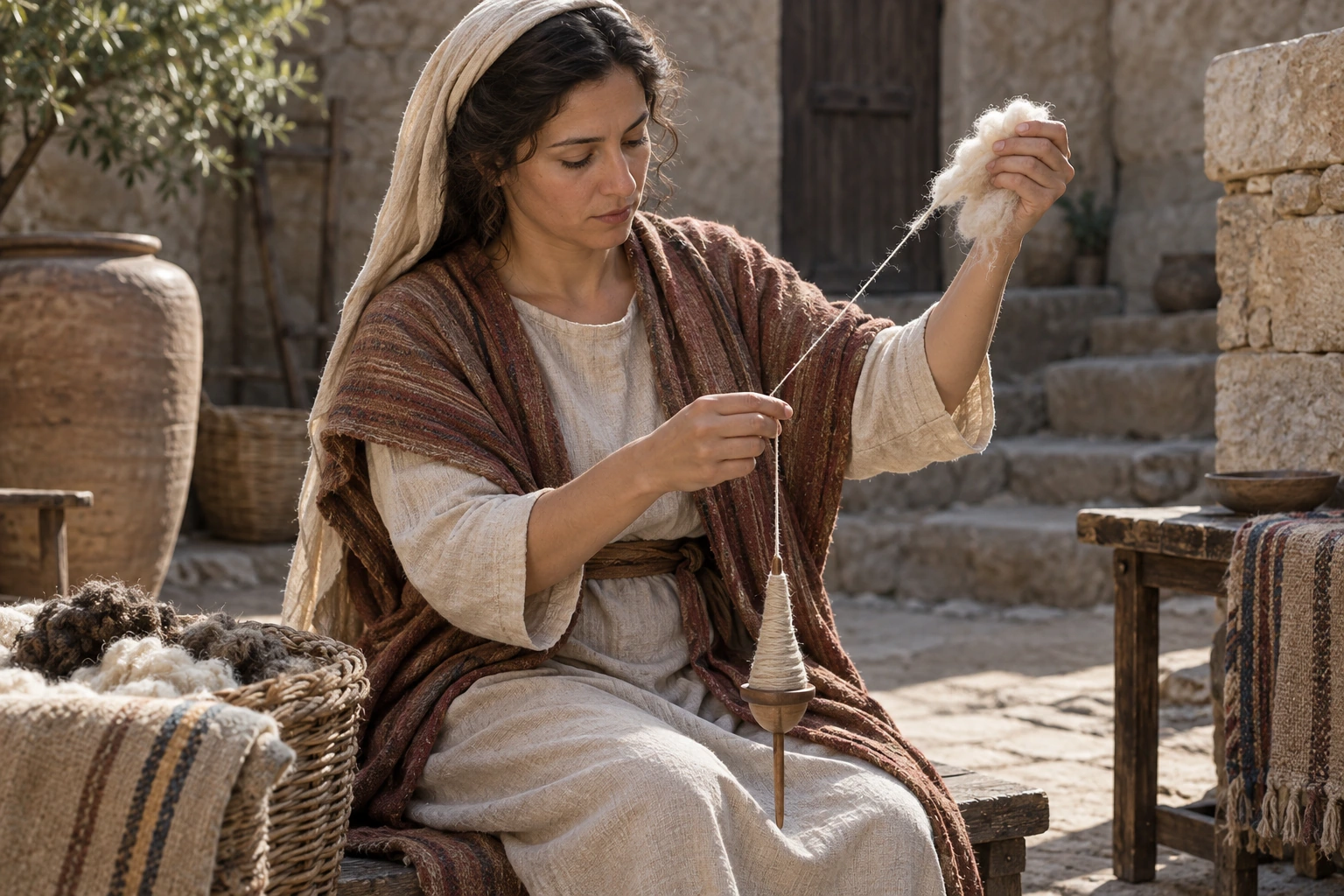
Jesus continues in Matthew 6:25–30 by pointing to birds and flowers. Attention to the ordinary living world becomes part of His teaching about trust and the Father’s care. His reference to spinning brings the familiar work of making clothing into the comparison, without dismissing the need for practical work.
Explore and study
They neither toil nor spin
A woman spins wool into thread. This ordinary work of making clothing gives context to Jesus' contrast with the lilies, which neither toil nor spin, as He teaches about the Father's care.
Read and discover
Love God and your neighbor
Explore and study
A thoughtful answer
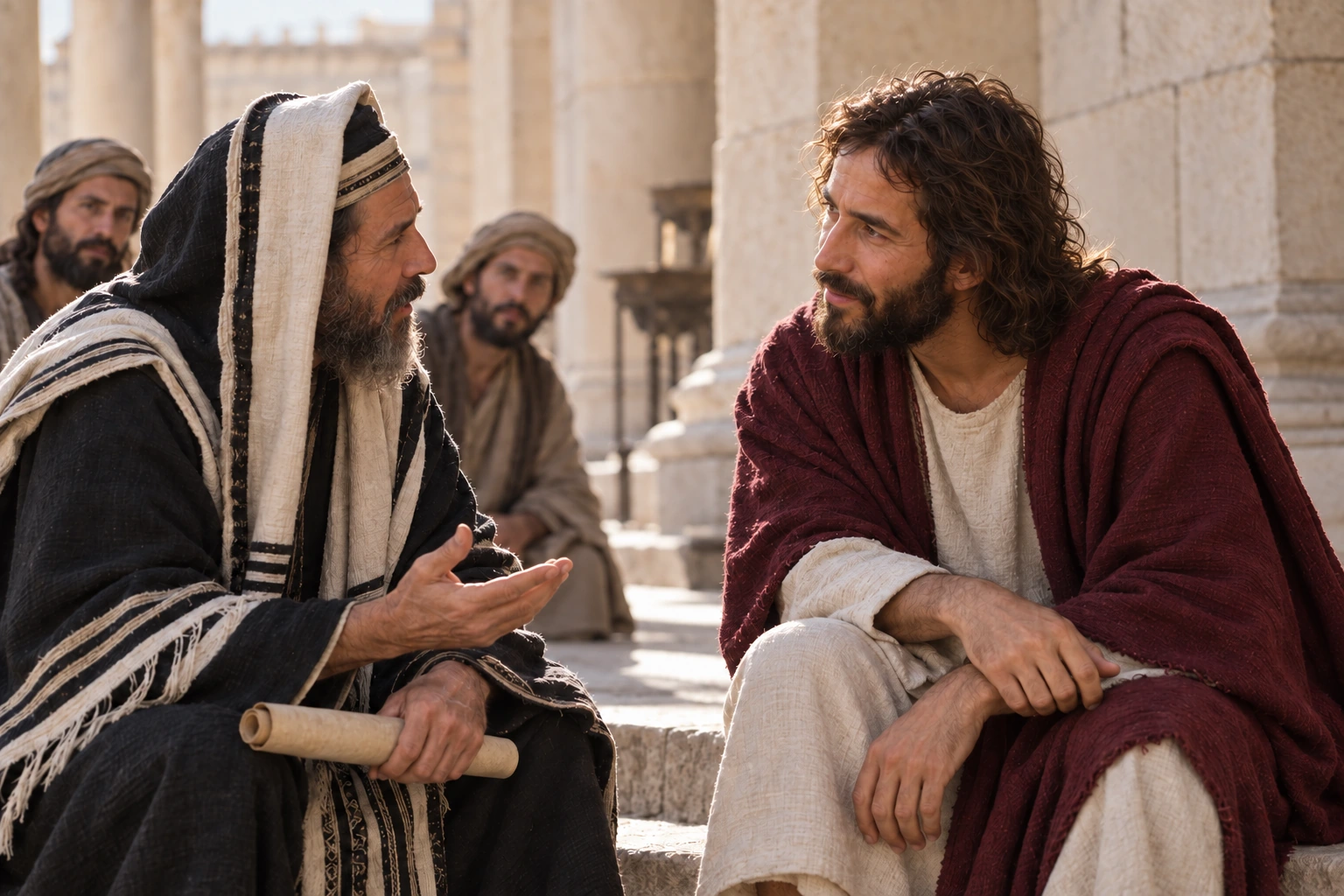
Jesus gives the scribe His attention as they speak about loving God and neighbor. Mark records a sincere question, a thoughtful answer and the Savior's recognition of the man's understanding.
A scribe who has heard Jesus answer well asks about the foremost commandment. In Mark 12:28–34, Jesus answers from Israel’s scriptures, joining love for God with love for one’s neighbor. The scribe responds thoughtfully, and Jesus recognizes the understanding in his answer. This is a conversation worth hearing with its mutual attention intact.
The exchange gathers religious life around love that involves heart, soul, mind and strength. Love of neighbor is not an unrelated second subject; it belongs beside devotion to God. The account also resists a flat picture of every religious teacher as hostile to Jesus. Here a sincere question opens into recognition, inviting us to listen for understanding even across a difference of position or background.
Read and discover
He notices two small coins
Jesus sits opposite the treasury and watches people give. In Mark 12:41–44, a poor widow places two small coins among the offerings. He calls His disciples’ attention to her because the size of her gift cannot be understood apart from what she has to live on. An amount that looks small to an observer carries great cost for her.
The scene asks us to look beyond visible totals when considering devotion. It should not become a way to pressure a person in need to give money they cannot safely spare. Jesus sees the widow’s circumstances, and readers should not overlook them. Her story can deepen gratitude for quiet sacrifice and make us more attentive to the people whose contributions are easily dismissed.
Read and discover
Listening within a busy home
Martha welcomes Jesus into her home, while her sister Mary sits at His feet and listens. In Luke 10:38–42, Martha asks Him to tell Mary to help with the work. Jesus responds to Martha’s troubled attention and affirms Mary’s choice to receive His words. Both the hospitality and the conversation belong to this particular household moment.
Explore and study
Peter notices the withered tree
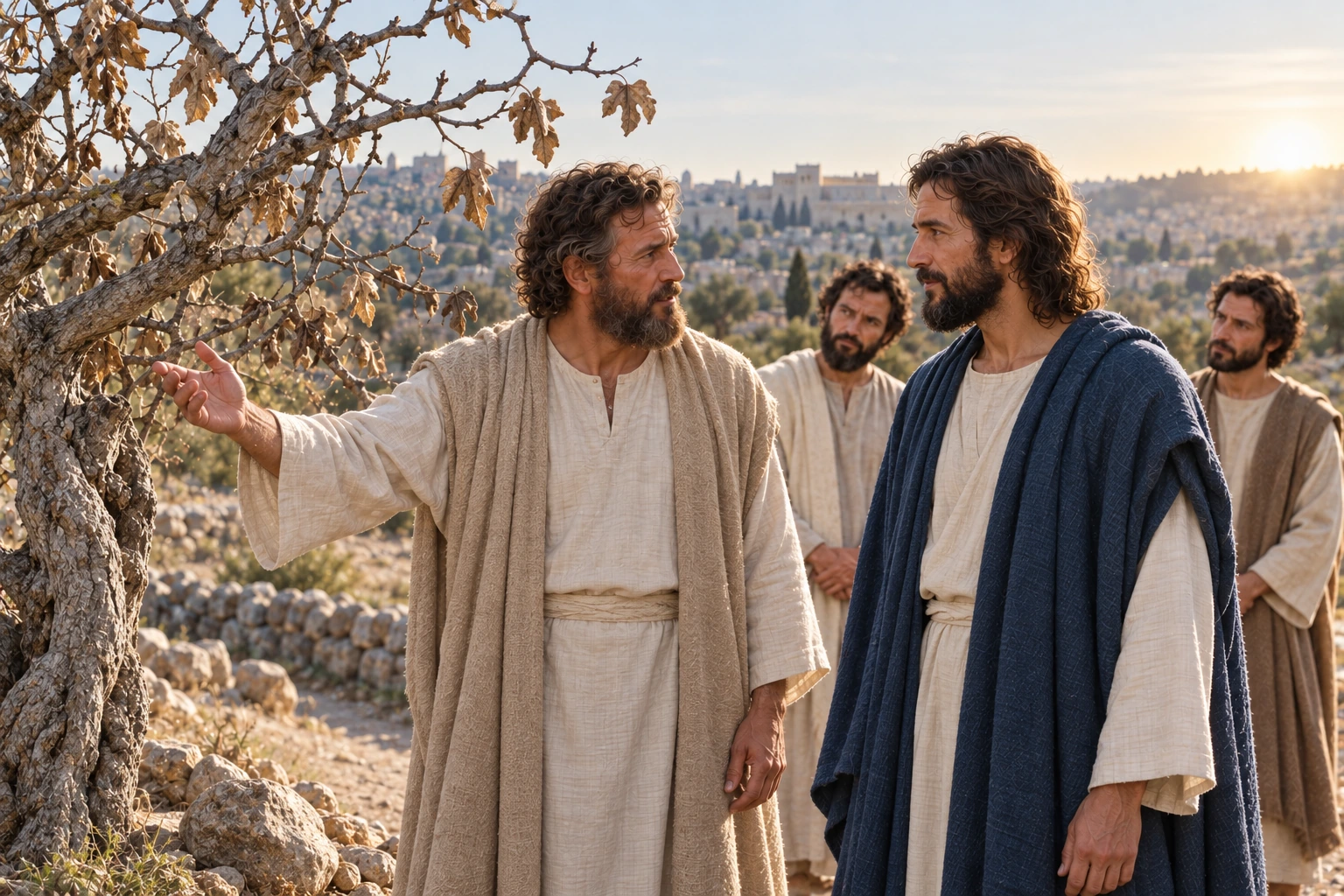
Peter stops beside the dry branches and turns to Jesus. What he has noticed on the road opens a teaching about faith, prayer and forgiveness.
Martha’s service is real, and Jesus addresses her with personal concern. The question is what is drawing her attention at that moment. Even worthwhile responsibilities can become entangled with resentment or worry; time with the Savior’s words may help us return to those responsibilities with a different heart. Mary’s place at His feet also makes her a receiving disciple, someone whose attention and learning are welcomed within this home.
Listening continues outside a home as well. In Mark 11:20–25, Peter notices the withered fig tree and Jesus teaches about faith, prayer and forgiveness. A moment on the road becomes an invitation to bring both trust and relationships before the Father.
Read and discover
An invitation spoken with love
Explore and study
A promise to make things right
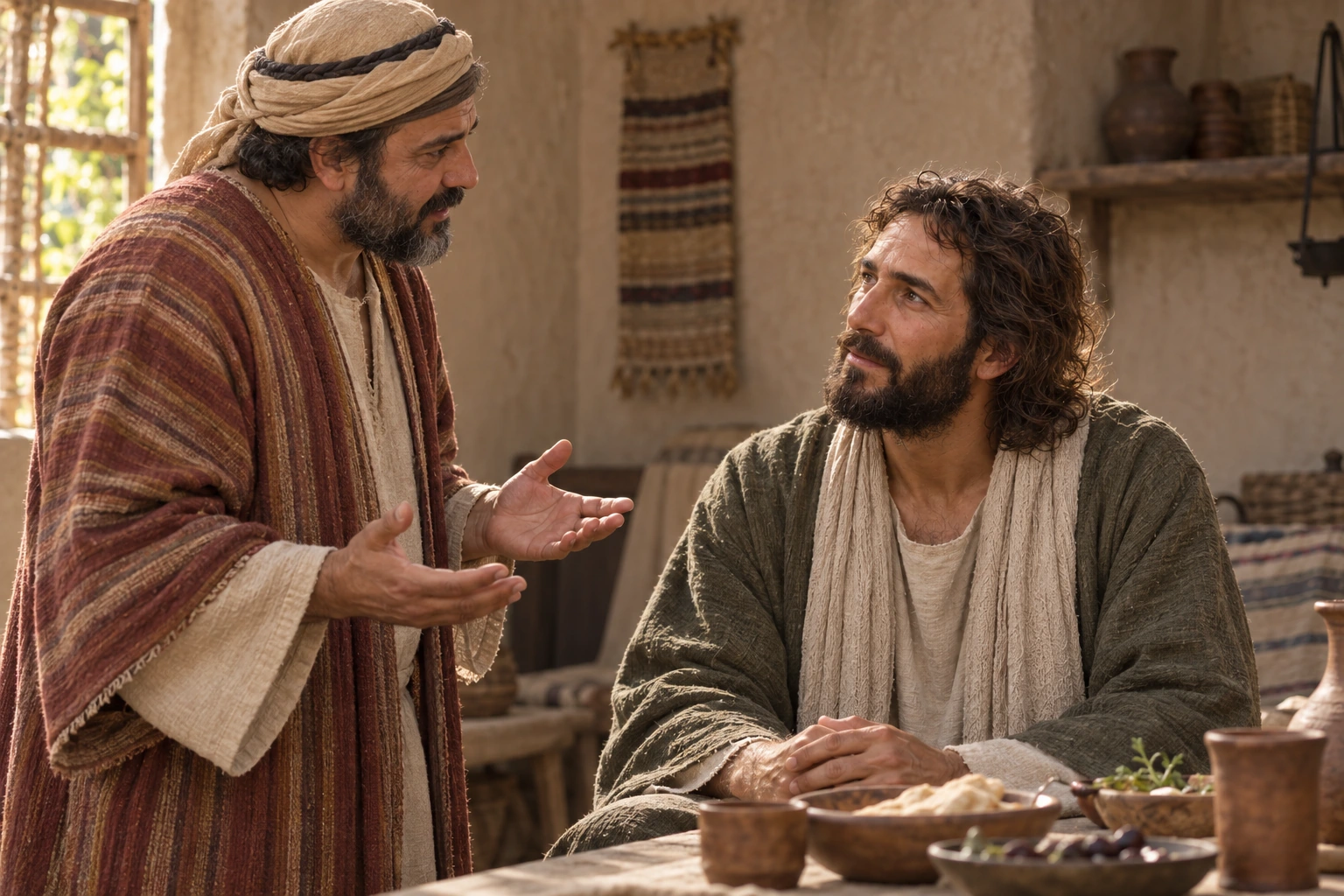
Zacchaeus stands before Jesus with open hands and a promise: to share with the poor and repay those he has wronged. The Savior listens as welcome becomes a changed way of living.
A man runs to Jesus, kneels and asks about eternal life. In Mark 10:17–27, Jesus speaks of commandments and then looks on him with love before inviting him to sell his possessions, help the poor and follow Him. The man goes away grieving. Mark allows both Jesus’s love and the difficulty of the invitation to remain visible.
This is a recorded encounter, not a parable. Its challenge should not be softened into the idea that possessions never shape discipleship, nor flattened into the claim that wealth automatically measures a person’s spiritual worth. The disciples are astonished by what follows, and Jesus directs them to what is possible with God. The story asks what we find hardest to release when His invitation reaches beyond our familiar obedience.
Another wealthy man responds differently in Luke 19:5–10. Zacchaeus speaks of giving and restitution, and Jesus speaks of salvation coming to his house. Set beside the grieving rich man, his response invites reflection on the practical changes that welcome can make possible.
Read and discover
A coin and a deeper allegiance
Some Pharisees and Herodians approach Jesus with a question intended to trap Him over tribute to Caesar. In Mark 12:13–17, He asks for a coin and draws attention to its image and inscription. His answer distinguishes what is owed to Caesar from what belongs to God, and the questioners marvel.
Explore and study
He stoops to the ground
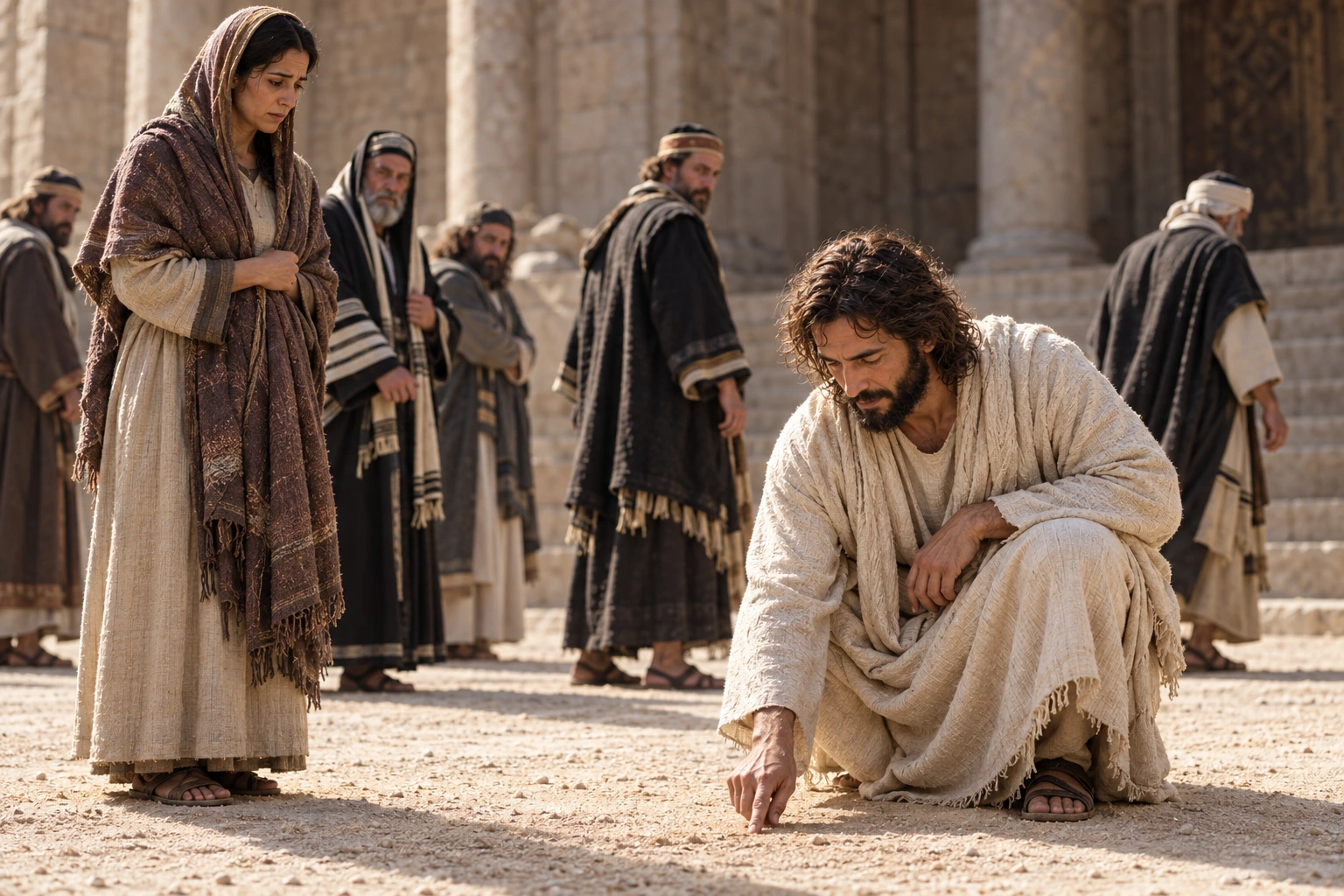
Jesus bends to write on the ground while the woman stands before Him. We are not told what He writes. As the accusers leave, His words join mercy with a call to leave sin behind.
The exchange does not provide a complete rulebook for every later political dispute. It exposes an attempt to force Jesus into a narrow choice and turns the discussion toward obligation and allegiance. A reader can begin by asking what belongs to God in a life that also includes civic duties. That question reaches into honesty, conduct and the way we treat people, rather than remaining only a debate about what others should do.
John 8:3–11 records another question intended to test Him, this time at the expense of a woman brought before Him. Jesus’s response interrupts the accusation and joins mercy with an invitation to leave sin. The text records His writing on the ground without revealing the words.
Read and discover
The Teacher takes the towel
Explore and study
Following the sign Jesus gave
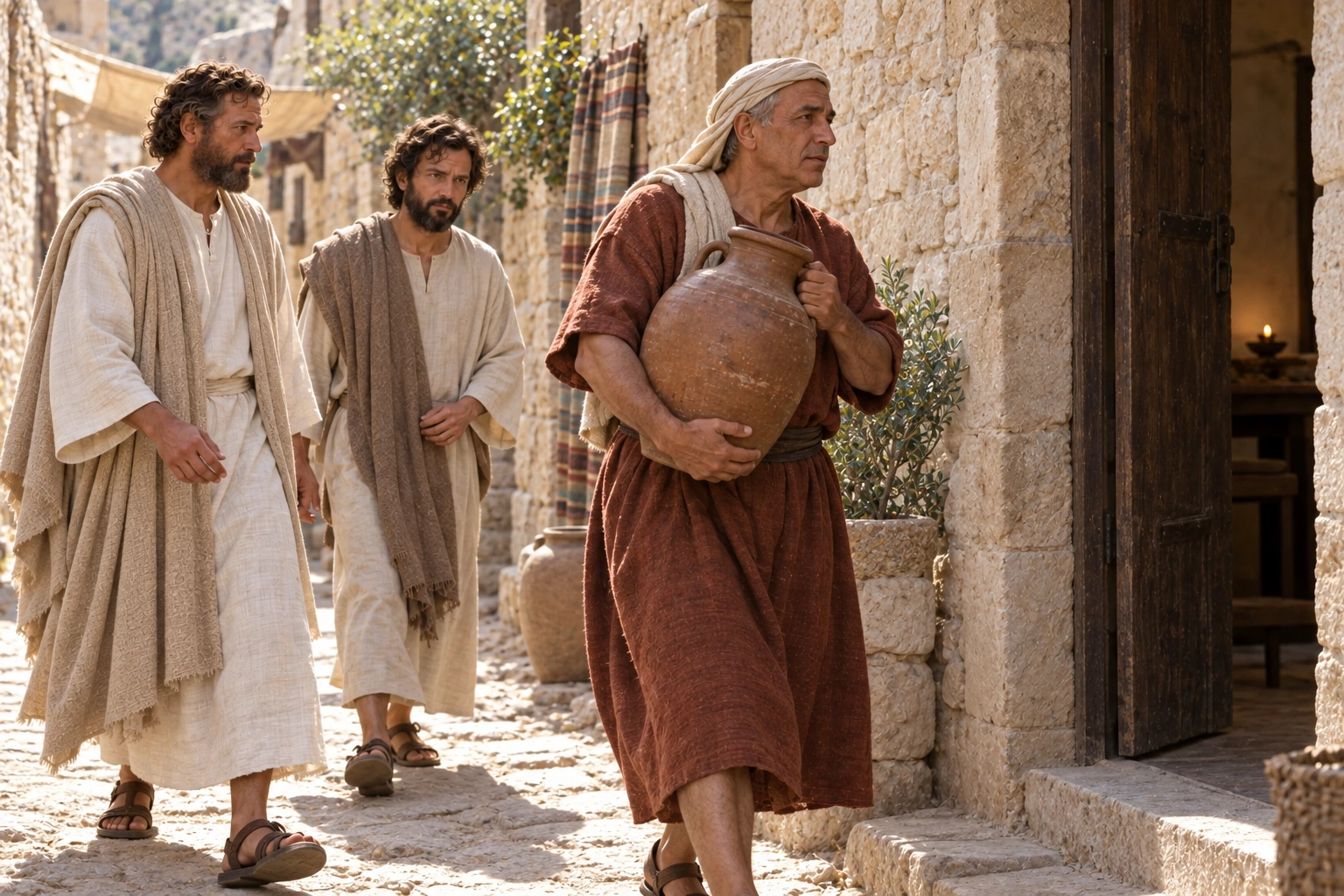
The water jar rests securely in the man's arms as Peter and John follow him through the lane. Jesus's simple instruction leads them toward the place where they will prepare the Passover.
John frames the washing of the disciples’ feet with Jesus’s knowledge of His relationship to the Father. In John 13:3–17, He rises from supper, takes a towel and basin, and begins to wash their feet. Peter’s resistance brings a conversation about receiving what Jesus offers. The Teacher then explains the example He has given them.
His authority is expressed through willing service. Yet the passage begins with disciples needing to receive His care, not simply deciding to become useful themselves. Both movements belong in discipleship: allowing Christ to cleanse and teach us, and extending humble service to others. The basin and towel give that teaching a concrete form that cannot be reduced to kind feelings alone.
Before the meal, Luke 22:7–13 describes Peter and John preparing a place according to Jesus’s instructions. Their ordinary work gives another form to service before the Teacher takes the towel.
Read and discover
A life that remains in Him
In John 15:1–17, Jesus describes Himself as a vine, His Father as the gardener and His disciples as branches. The image develops into teaching about remaining in Him, bearing fruit, keeping His commandments and loving one another. The passage is an extended comparison, and its value grows as its connected parts are read together.
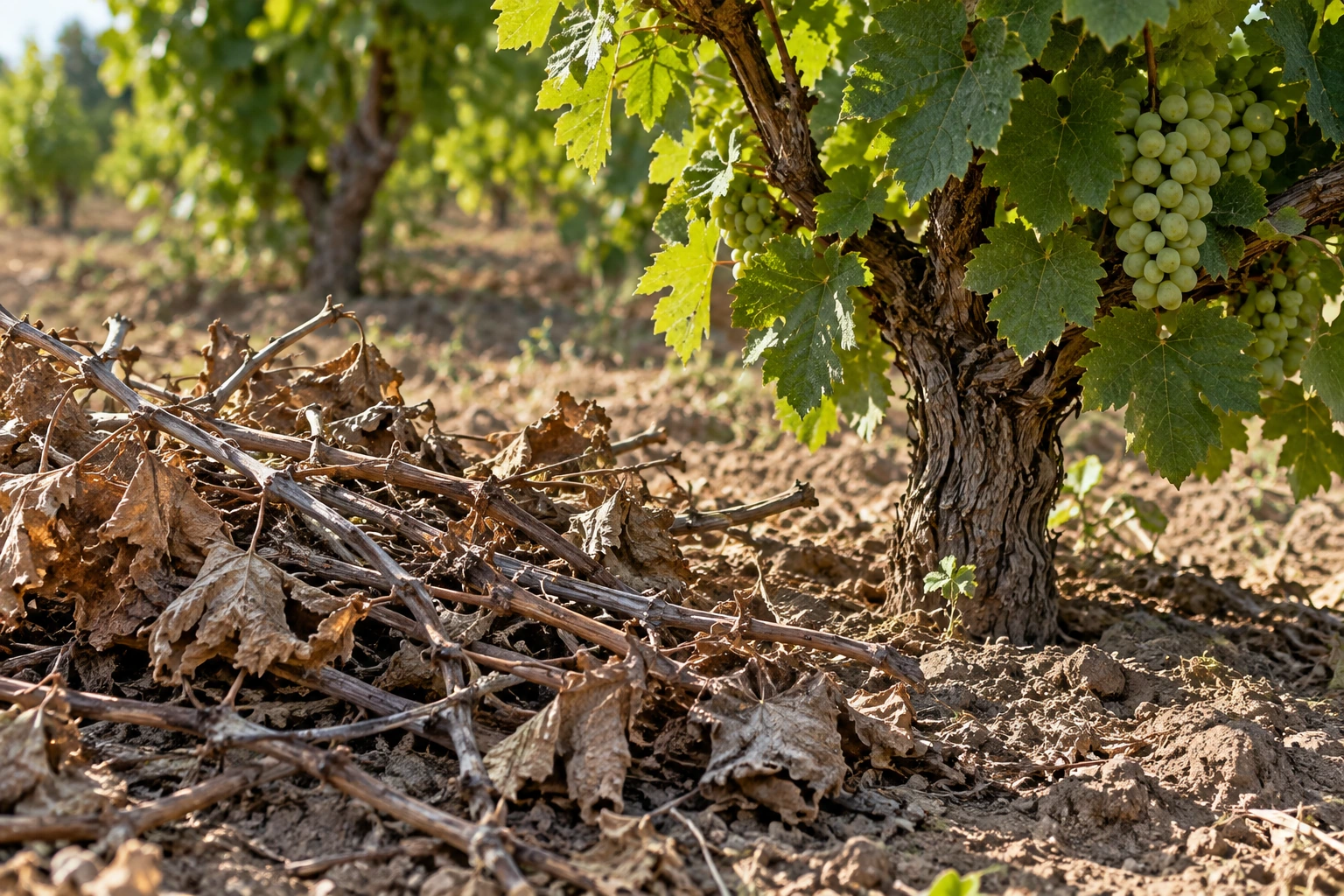
The image points toward dependence and a continuing relationship. A branch does not create its own source of life, yet it truly bears fruit. Jesus’s teaching likewise joins what His disciples receive from Him with what they become and do. His parables often invite this kind of attentive reading: notice the picture, listen for His explanation and allow the teaching to challenge your life without inventing a fixed meaning for every small detail. Verse 6 also gives the sober image of detached branches that wither and are gathered for burning. Read that warning within the invitation to remain in Christ; it is not a warrant to diagnose another person’s suffering as divine rejection.
Explore and study
Branches apart from the vine
Detached branches lie withered beside a living vine. John 15:6 gives this sober counterpart to the fruitful branches as Jesus teaches His disciples to remain in Him.
Continue with Jesus Christ
The Teacher in His Ministry
Return to the people and settings in which His invitations were heard.
Open study →The Compassion He Practiced
See how His actions give weight to His teaching about love.
Open study →His Love and His Sacrifice
Follow the service of the upper room toward the Atonement.
Open study →His Teaching among the Nephites
Compare related teachings while respecting the different setting and audience.
Open study →